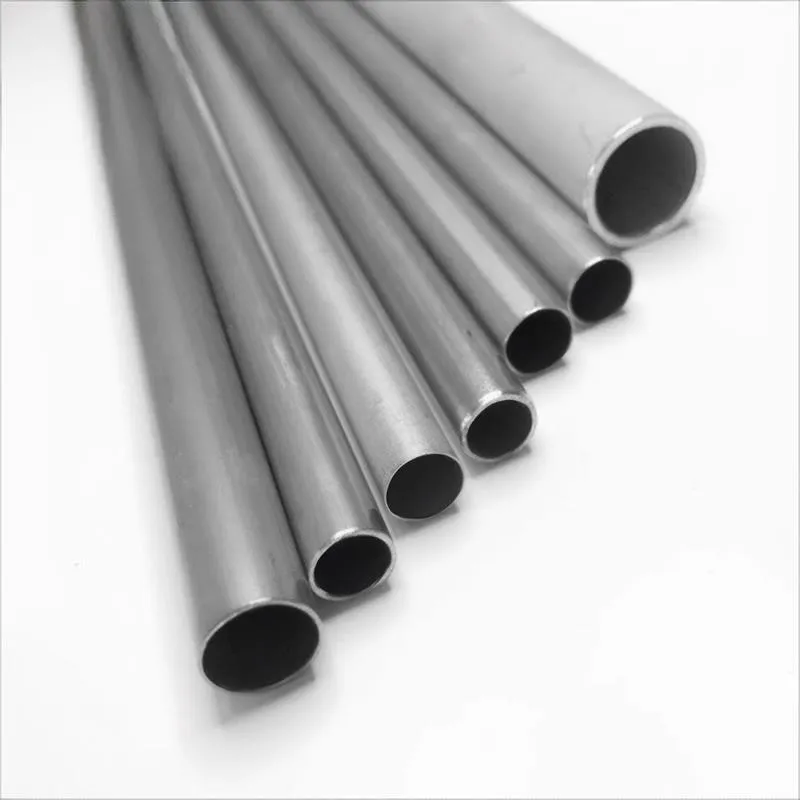
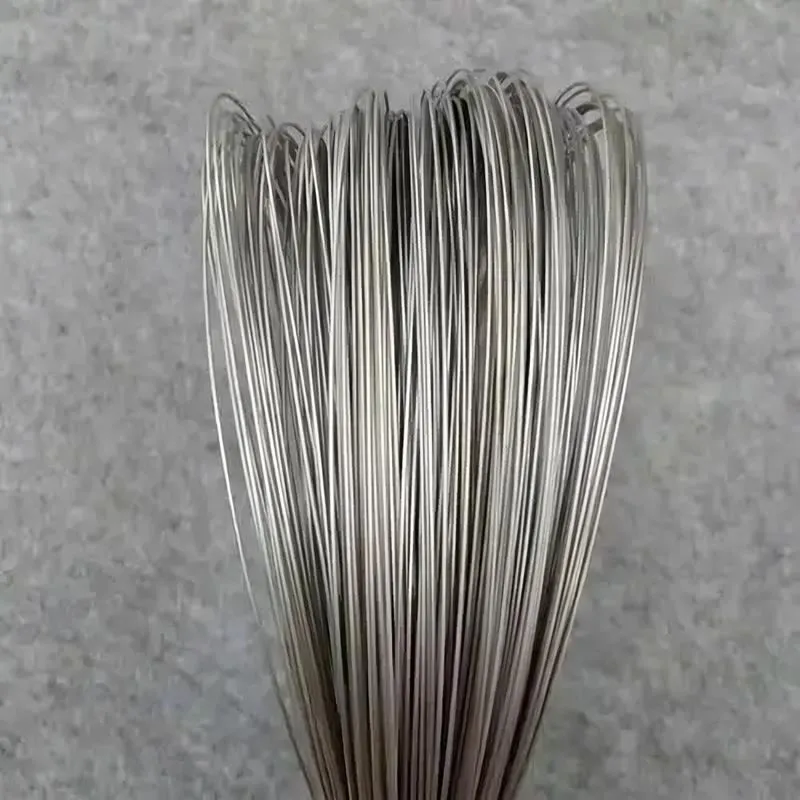
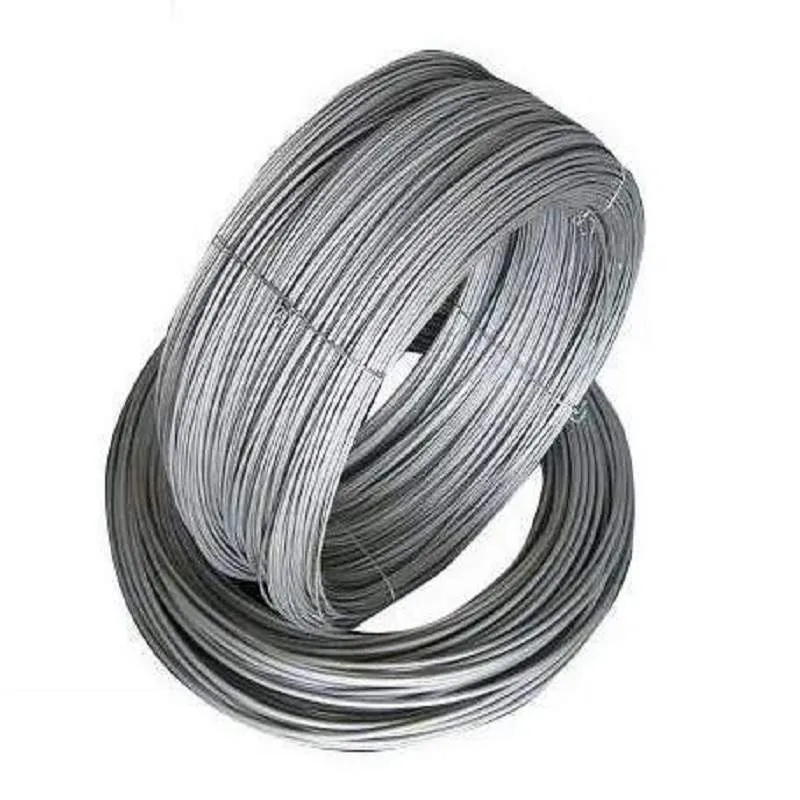
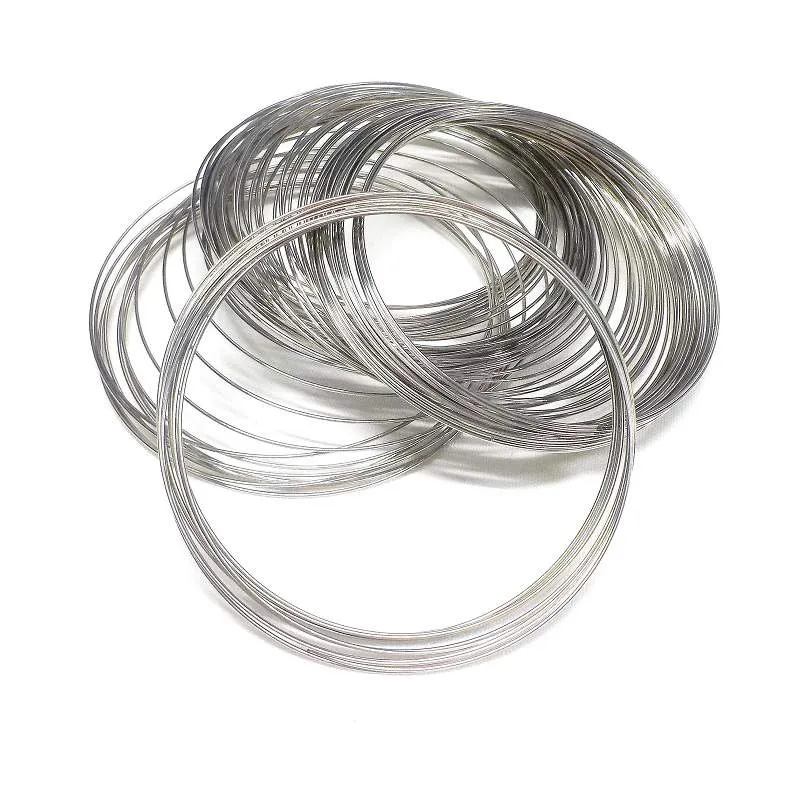
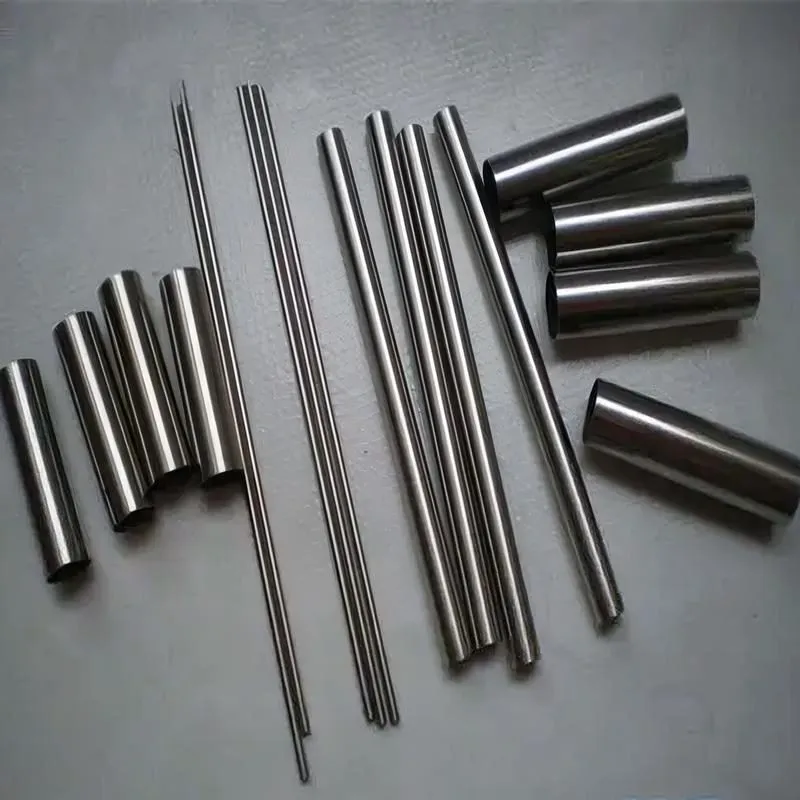
AISI Type A7 Tool Steel Tube,Pipe
Product Code : STI-GSTI-011-CU
We provide AISI Type A7 Tool Steel Tube is available in Bar (Round bar, Flat bar), Ribbon, Wire, Rods, Tube,Seamless Tube,Pipe, Ingots, Plate, Sheet, Strip and Forging Stock.,Purity, chemical composition, size, etc. can all be customized to meet specific requirements.AISI Type A7 Tool Steel Pipe
Please contact us if you need customized services. We will contact you with the price and availability in 24 hours.
AISI Type A7 Tool Steel Tube Product Information
-:-
For detailed product information, please contact sales.
-:
AISI Type A7 Tool Steel Tube Synonyms
-:-
For detailed product information, please contact sales.
-:
AISI Type A7 Tool Steel Product Information
-:-
For detailed product information, please contact sales.
-:
# **Product Introduction: AISI Type A7 Tool Steel**
## **Overview**
AISI Type A7 is a **premium-grade, high-carbon, high-vanadium air-hardening tool steel** representing one of the most **wear-resistant materials** available in the cold work tool steel family. Characterized by an exceptionally high vanadium content for maximum abrasion resistance and a substantial carbon-chromium matrix for deep hardenability, A7 is specifically engineered for the most severe abrasive wear applications where tool longevity under extreme conditions is paramount. While its extreme wear resistance comes at the expense of toughness and machinability, A7 delivers unparalleled performance in applications where gradual abrasive wear is the primary failure mode.
---
## **Chemical Composition (Typical Weight %)**
The composition is optimized for maximum carbide formation and wear resistance.
| Element | Content (%) |
| :--- | :--- |
| Carbon (C) | 2.00 - 2.30 |
| Chromium (Cr) | 5.00 - 5.75 |
| Molybdenum (Mo) | 0.70 - 1.40 |
| Manganese (Mn) | 0.20 - 0.80 |
| Silicon (Si) | 0.15 - 0.50 |
| **Vanadium (V)** | **4.75 - 5.25** |
| Sulfur (S) | ≤ 0.03 |
| Phosphorus (P) | ≤ 0.03 |
| **Iron (Fe)** | **Balance** |
**Key Role of Elements:**
* **Very High Carbon (2.00-2.30%):** Combined with high vanadium to form an extensive network of ultra-hard vanadium carbides (VC), providing exceptional abrasion resistance.
* **Extremely High Vanadium (4.75-5.25%):** The defining feature of A7. Forms a high volume fraction of extremely hard (≈2800 HV) vanadium carbides, giving it the highest wear resistance among standard tool steels.
* **Chromium (5.00-5.75%):** Provides deep air-hardening capability, contributes chromium carbides for secondary wear resistance, and improves overall hardenability.
* **Molybdenum:** Enhances hardenability, promotes secondary hardening during tempering, and refines grain structure.
---
## **Physical & Mechanical Properties**
*Properties are highly dependent on heat treatment; values shown are for hardened and tempered condition.*
| Property | Typical Value / Description |
| :--- | :--- |
| **Density** | ~7.70 g/cm³ (Slightly lower due to high alloy content) |
| **Hardness (Annealed)** | 235 - 269 HB (Brinell) |
| **Hardness (Hardened & Tempered)** | **60 - 67 HRC** (Capable of achieving 65-67 HRC, among the highest of all tool steels) |
| **Wear Resistance** | **Exceptional.** The highest of all standard A-series steels and superior to D2 and D3. Comparable to specialized high-vanadium grades like A11. |
| **Toughness** | **Low.** The trade-off for extreme wear resistance. More brittle than A2, A4, or D2. Susceptible to chipping under impact or uneven loading. |
| **Dimensional Stability** | **Good.** Air-hardening provides better stability than oil-hardening grades, but high alloy content can lead to some distortion. Stress relieving is critical. |
| **Machinability (Annealed)** | **Poor** (Approx. 25-30% of 1% carbon steel). Extremely difficult due to hard vanadium carbides; requires carbide tools and low speeds. |
| **Grindability** | **Very Poor.** One of the most difficult tool steels to grind. Requires specialized abrasive wheels (e.g., CBN or diamond), light cuts, and excellent cooling. |
| **Thermal Conductivity** | Low (~20 W/m·K) |
| **Coefficient of Thermal Expansion** | ~10.2 × 10⁻⁶/°C (20-100°C) |
---
## **Heat Treatment Guidelines**
Heat treatment requires careful control due to high carbon and alloy content.
| Process | Parameters |
| :--- | :--- |
| **Annealing** | Heat to 870-900°C (1600-1650°F), slow furnace cool at ≤15°C/hour to 480°C (900°F), then air cool. Full annealing is essential for machinability. |
| **Stress Relieving** | 650-675°C (1200-1250°F) for 2+ hours, slow cool. |
| **Preheating** | **Critical:** Double preheat at 550-650°C (1025-1200°F) and 800-850°C (1475-1560°F) to minimize thermal shock. |
| **Austenitizing** | 970-1010°C (1775-1850°F). Soak time must be sufficient to dissolve carbides but not excessive to prevent grain growth. |
| **Quenching** | **Air quench** in still or forced air. High-pressure gas quenching is recommended for complex parts. |
| **Tempering** | **Mandatory and multiple.** Double or triple temper immediately at 480-540°C (900-1000°F) for 2+ hours each cycle. Tempering below 480°C may not fully transform retained austenite. |
---
## **Product Applications**
AISI A7 is reserved for the most demanding wear applications where no other steel provides adequate service life.
### **Primary Applications:**
1. **Abrasive Material Processing Tools:** Dies, liners, and blades for cutting or forming highly abrasive materials (fiberglass, carbon composites, reinforced plastics, sand-filled rubber).
2. **Powder Compaction Dies & Punches:** For pressing metal, ceramic, or carbide powders where extreme die wear occurs.
3. **Wire Drawing Dies & Guides:** For drawing abrasive wires (e.g., steel, specialty alloys).
4. **Slitter Knives & Rotary Cutters:** For continuous cutting of abrasive papers, textiles, or thin metals.
5. **Punching & Perforating Tools:** For abrasive sheet materials in long production runs.
6. **Wear Parts in Mining & Mineral Processing:** Liners, nozzles, and components subjected to severe sand or ore abrasion (where impact is minimal).
7. **Thread Rolling Dies:** For hard or abrasive workpieces.
### **Industry Usage:**
- **Composites Manufacturing**
- **Powder Metallurgy**
- **Wire Production**
- **Paper & Abrasive Materials Processing**
- **Mining & Heavy Industry (Wear Parts)**
---
## **International Standards & Cross-Reference**
AISI A7 is a specialized grade with few direct international equivalents.
| Standard | Designation | Equivalent / Similar Grade |
| :--- | :--- | :--- |
| **AISI/SAE (USA)** | **Type A7** | - |
| **UNS (USA)** | **T30107** | - |
| **ASTM (USA)** | A681 | Grade A7 |
| **Europe (EN)** | **~1.2606** (*approximate*) | X153CrMoV12 (Lower V content) |
| **Germany (DIN)** | **~1.2606** | X153CrMoV12 |
| **Japan (JIS)** | - | No direct common equivalent |
| **Similar Grade** | **AISI A11** | T30111 (Slightly different C/Cr/V balance) |
**Note:** The very high vanadium content makes A7 unique. European 1.2606 is sometimes referenced but contains only ~0.7-1.0% V. A11 is the closest domestic equivalent.
---
## **Advantages & Considerations**
### **Advantages:**
1. **Unrivaled Wear/Abrasion Resistance:** Best-in-class performance for severe abrasive applications.
2. **Very High Hardness Capability:** Can achieve 65+ HRC, providing excellent resistance to indentation.
3. **Good Dimensional Stability (Relative):** Air-hardening is superior to oil-hardening for complex shapes.
4. **Long Tool Life:** In the right application, outlasts all other standard tool steels, justifying its high cost and processing difficulty.
### **Considerations:**
1. **Very Low Toughness:** Brittle; prone to chipping and catastrophic failure under impact or point loading.
2. **Extremely Poor Machinability & Grindability:** High fabrication costs, specialized tooling required.
3. **Complex Heat Treatment:** Requires precise control and multiple tempering cycles.
4. **High Cost:** Due to high vanadium content and difficult processing.
5. **Not a General-Purpose Steel:** Should only be used when extreme wear is the *only* significant service factor.
---
## **Technical Comparison Summary**
- **vs. D2:** A7 has **far superior wear resistance** but **much lower toughness and machinability**.
- **vs. A2:** A7 is in a different category—**specialized vs. general-purpose**.
- **vs. A11:** Very similar; A11 has slightly higher Cr and lower C, often considered interchangeable for extreme wear applications.
## **Availability & Processing Notes**
- **Forms:** Typically available in rounds, flats, and blocks. Less common than A2 or D2.
- **Machining:** **Carbide tools mandatory.** Use low speeds, heavy feeds to fracture chips, and ample coolant.
- **Grinding:** Use **CBN or diamond wheels**. Light infeeds, cross-feeds, and flood coolant to prevent burning.
- **EDM:** Possible but slow; requires post-EDM tempering to relieve white layer stresses.
---
## **Conclusion**
AISI Type A7 tool steel is a **highly specialized, premium material engineered for one primary purpose: to resist extreme abrasive wear.** Its formidable combination of very high carbon and exceptional vanadium content makes it the ultimate choice for applications where gradual material loss due to abrasion is the dominant failure mechanism, and where impact or shock loading is minimal. While its **low toughness, difficult processing, and high cost** preclude its use for general tooling, A7 delivers **unmatched service life and cost-per-part efficiency** in the severe applications for which it is designed. It represents the pinnacle of wear-resistant tool steel technology and is a critical material for industries processing highly abrasive substances.
-:-
For detailed product information, please contact sales.
-:
AISI Type A7 Tool Steel Specification
Dimensions
Size:
Diameter 20-1000 mm Length <6667 mm
Size:We can customized as required
Standard:
Per your request or drawing
We can customized as required
Properties(Theoretical)
Chemical Composition
-:-
For detailed product information, please contact sales.
-:
AISI Type A7 Tool Steel Properties
-:-
For detailed product information, please contact sales.
-:
Applications of AISI Type A7 Tool Steel Tube
-:-
For detailed product information, please contact sales.
-:
Chemical Identifiers AISI Type A7 Tool Steel Tube
-:-
For detailed product information, please contact sales.
-:
Packing of AISI Type A7 Tool Steel Tube
-:-
For detailed product information, please contact sales.
-:
Standard Packing:
-:-
For detailed product information, please contact sales.
-:
Typical bulk packaging includes palletized plastic 5 gallon/25 kg. pails, fiber and Steel Tube drums to 1 ton super sacks in full container (FCL) or truck load (T/L) quantities. Research and sample quantities and hygroscopic, oxidizing or other air sensitive materials may be packaged under argon or vacuum. Solutions are packaged in polypropylene, plastic or glass jars up to palletized 3138 gallon liquid totes Special package is available on request. E FORUs’ is carefully handled to minimize damage during storage and transportation and to preserve the quality of our products in their original condition