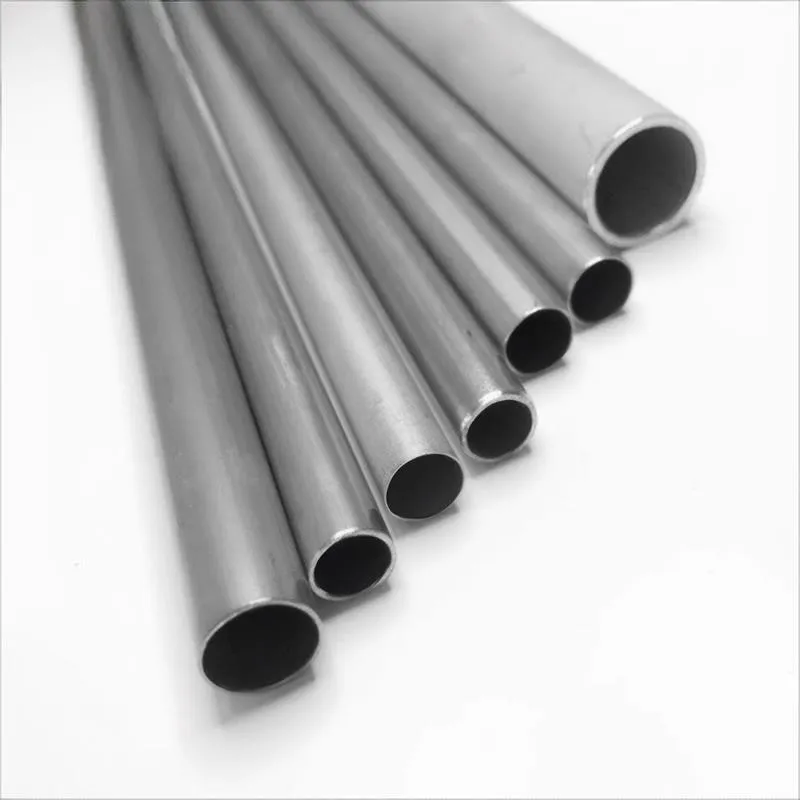
AISI Type D3 Tool Steel
Product Code : STI-GSTI-022-CU
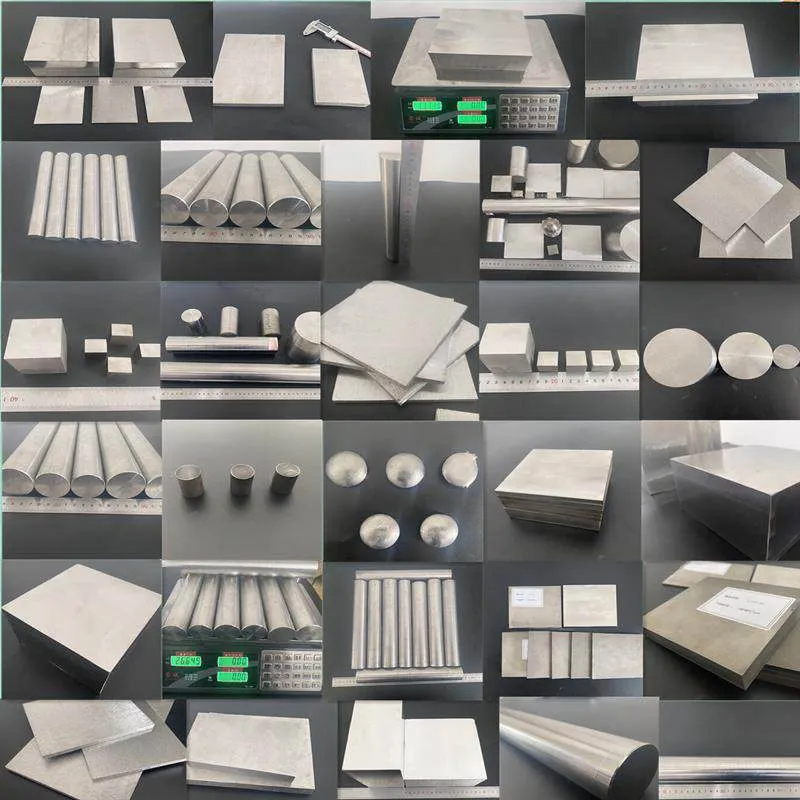
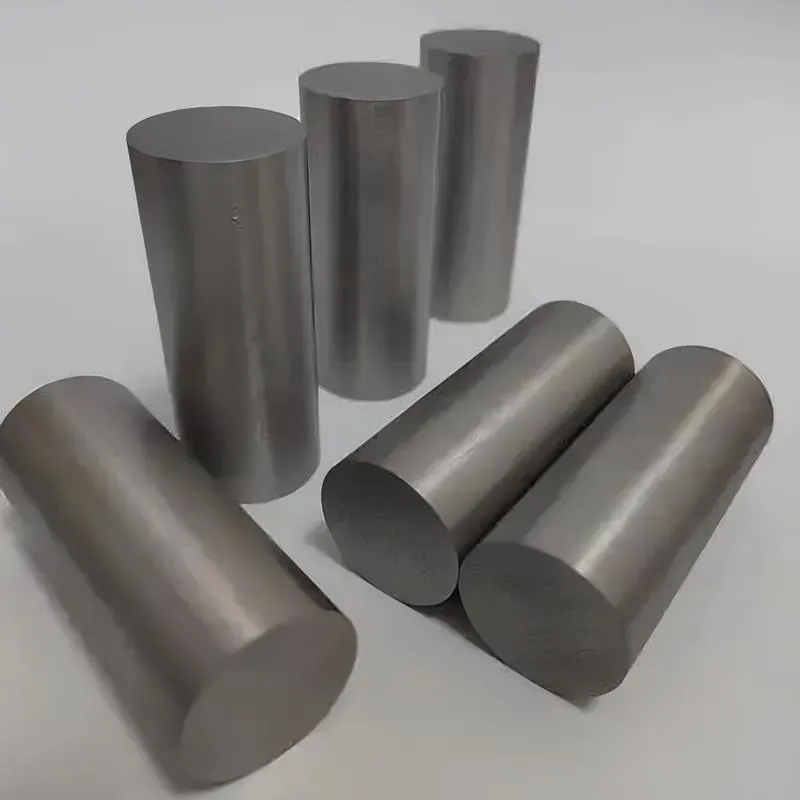
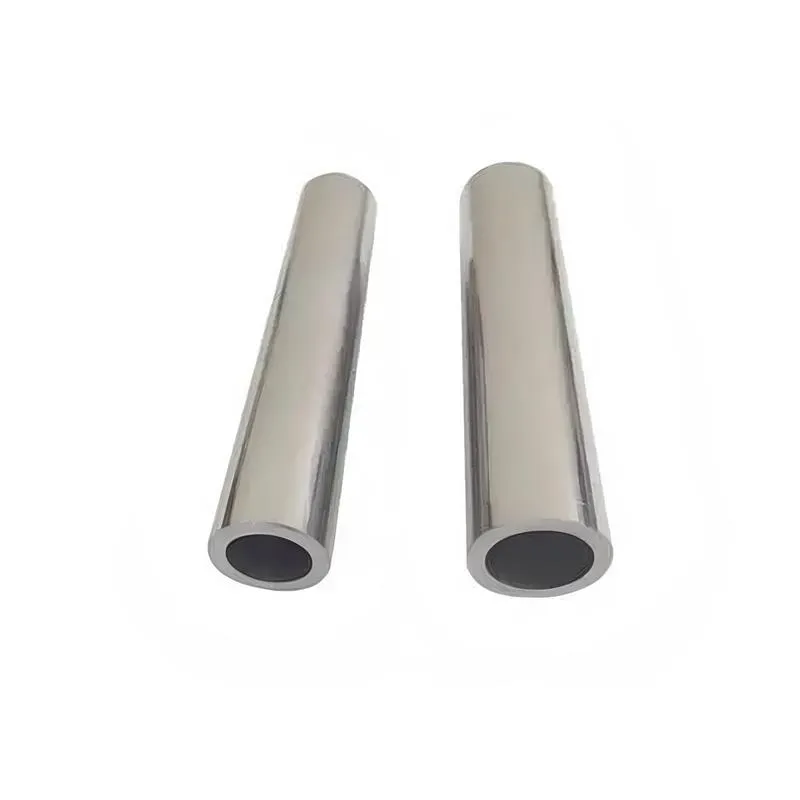
We provide AISI Type D3 Tool Steel, oil-quenched from 980°C (1800°F), tempered at 450°C is available in Bar (Round bar, Flat bar), Ribbon, Wire, Rods, Tube,Seamless Tube,Pipe, Ingots, Plate, Sheet, Strip and Forging Stock.,Purity, chemical composition, size, etc. can all be customized to meet specific requirements.
Please contact us if you need customized services. We will contact you with the price and availability in 24 hours.
AISI Type D3 Tool Steel, oil-quenched from 980°C (1800°F), tempered at 450°C Product Information
-:-
For detailed product information, please contact sales.
-:
AISI Type D3 Tool Steel, oil-quenched from 980°C (1800°F), tempered at 450°C Synonyms
-:-
For detailed product information, please contact sales.
-:
AISI Type D3 Tool Steel, oil-quenched from 980°C (1800°F), tempered at 450°C Product Information
-:-
For detailed product information, please contact sales.
-:
# **Product Introduction: AISI Type D3 Tool Steel (Oil-Quenched from 980°C, Tempered at 450°C)**
## **Overview**
**AISI Type D3** is an ultra-high carbon, high-chromium oil-hardening cold work tool steel celebrated for its **extraordinary abrasion resistance**. When subjected to the specific heat treatment of **austenitizing at 980°C (1800°F), oil quenching, and tempering at 450°C (842°F)**, D3 undergoes a profound transformation. This higher-temperature tempering unlocks **exceptional toughness and dimensional stability** while retaining substantial wear resistance by leveraging the secondary hardening response. This condition repositions D3 from a brittle, wear-only material to a **robust engineering-grade steel** capable of withstanding significant mechanical stress and thermal exposure in demanding wear applications.
---
## **Chemical Composition (Typical Weight %)**
*Standard D3 composition enables secondary hardening through its high alloy content.*
| Element | Content (%) | Role in Secondary Hardening & Properties |
| :--- | :--- | :--- |
| **Carbon (C)** | 2.00 - 2.35 | Provides carbon for martensite and feeds precipitation of fine secondary carbides (Mo₂C, Cr₂₃C₆) during tempering. |
| **Chromium (Cr)** | 11.00 - 13.50 | Forms primary chromium carbides (M₇C₃) for wear resistance; contributes chromium carbides to secondary hardening. |
| **Molybdenum (Mo)** | 0.70 - 1.20 (if present) | **Critical for secondary hardening.** Precipitates as fine Mo₂C carbides at 450-550°C, increasing hardness and thermal stability. |
| **Vanadium (V)** | 0.50 - 1.10 | Promotes grain refinement and forms stable V₄C₃ carbides that enhance secondary hardening and wear. |
| **Silicon (Si)** | 0.10 - 0.60 | Retards tempering, improves high-temperature strength. |
| **Manganese (Mn)** | 0.20 - 0.60 | Aids hardenability. |
| **Sulfur (S)** | ≤ 0.03 | - |
| **Phosphorus (P)** | ≤ 0.03 | - |
| **Iron (Fe)** | **Balance** | - |
**Key Insight:** While D3 is known for its massive *primary* carbides, tempering at 450°C initiates **secondary hardening**, where *fine* alloy carbides precipitate within the martensite matrix. This precipitation strengthens the matrix, compensating for the hardness loss from tempering the martensite itself.
---
## **Heat Treatment & Resulting Microstructure**
**Specific Parameters: Austenitize at 980°C → Oil Quench → Temper at 450°C (842°F)**
| Process Step | Parameters & Metallurgical Objective |
| :--- | :--- |
| **Austenitizing @ 980°C (1800°F)** | **Purpose:** To achieve a supersaturated martensite upon quenching. The high temperature ensures sufficient dissolution of Cr, Mo, and V to enable a strong secondary hardening response.
**Soak Time:** 30-60 min/inch.
**As-Quenched State:** Very hard (~64-66 HRC), highly stressed martensite with significant retained austenite (15-25%). |
| **Quenching: Warm, Agitated Oil** | **Purpose:** To achieve full martensitic transformation in the section. Oil quenching is necessary for D3 to achieve maximum as-quenched hardness, especially in thicker sections (>25mm).
**Practice:** Quench to 65-95°C (150-200°F) before tempering to minimize cracking risk. |
| **Tempering @ 450°C (842°F)** | **Purpose:** To activate the **secondary hardening mechanism**, dramatically improve toughness, completely relieve quenching stresses, and eliminate retained austenite.
**Practice: TRIPLE TEMPERING IS ABSOLUTELY ESSENTIAL.** 2+ hours per cycle. The first temper precipitates secondary carbides and transforms some retained austenite. Subsequent tempers temper the fresh martensite formed from this transformation. |
---
## **Physical & Mechanical Properties (After 980°C Oil Quench + 450°C Temper)**
| Property | Typical Value / Description | Significance of 450°C Temper |
| :--- | :--- | :--- |
| **Final Hardness** | **56 - 58 HRC** | Represents the **onset of the secondary hardening peak**. Hardness is higher than after a 400°C temper. The fine secondary carbides strengthen the matrix. |
| **Wear Resistance** | **Very Good to Excellent.** | Slightly lower than lower temper conditions, but remains high due to the large, unaffected primary carbide network. The precipitation-strengthened matrix provides better support for these carbides under load. |
| **Toughness** | **Very Good (for D3).** | **The primary achievement of this treatment.** Impact resistance is **5-10 times higher** than at a 200°C temper. The material transitions from being "glass-like" to having appreciable ductility and shock resistance. |
| **Dimensional Stability** | **Exceptional.** | The high tempering temperature provides near-complete relief of quenching stresses. The full transformation of retained austenite ensures no future dimensional changes. This is the most dimensionally stable condition for D3. |
| **Thermal Stability** | **Excellent.** | Can withstand intermittent exposure to temperatures up to ~400°C (750°F) without significant softening, suitable for some warm work applications. |
| **Residual Stress** | **Very Low.** | Minimizes risk of stress-corrosion cracking and improves fatigue life. |
| **Grindability** | **Fair to Poor.** | Improved over lower tempers due to lower hardness and relieved stress, but primary carbides still pose a challenge. |
| **Retained Austenite** | **Negligible (< 1-2%).** | Eliminated by the multiple tempering cycles. |
---
## **Product Applications**
This tempering condition is engineered for **high-reliability, high-stress wear applications** where tool fracture is a greater concern than marginal increases in abrasive wear life.
### **Primary Applications:**
1. **Heavy-Duty Shearing and Punching Tools:** For thick or high-strength materials where shock loading and high stresses are prevalent (e.g., structural steel punching).
2. **Large Forming and Coining Dies:** Subject to high compressive and bending loads where die integrity is paramount.
3. **Cold Extrusion Tooling for Tough Materials:** Where the combination of wear and extreme pressure demands both abrasion resistance and high toughness.
4. **Wear Parts in Heavy Machinery:** Bushings, liners, and guides in mining or aggregate processing that experience both abrasion and impact.
5. **Thread Rolling Dies for High-Strength Alloys:** Where high pressure and potential misalignment require robust tooling.
6. **Master Gauges and Precision Tools:** Requiring supreme dimensional stability over long periods.
7. **Tools for Intermittent Warm Work (up to 400°C):** Such as certain forging inserts or hot trimming operations.
### **Industry Usage:**
- **Heavy Fabrication & Metal Stamping**
- **Forging & Cold Forming**
- **Mining & Mineral Processing Equipment**
- **Precision Tooling & Gauge Manufacturing**
---
## **International Standards & Cross-Reference**
| Standard | Designation | Equivalent / Similar Grade |
| :--- | :--- | :--- |
| **AISI/SAE (USA)** | **Type D3** | - |
| **UNS (USA)** | **T30403** | - |
| **ASTM (USA)** | A681 | Grade D3 |
| **Europe (EN)** | **1.2080** | X210Cr12 |
| **Germany (DIN)** | **1.2080** | X210Cr12 |
| **Japan (JIS)** | **SKD1** | - |
| **Sweden (SS)** | **2312** | - |
---
## **Advantages & Considerations of the 450°C Temper**
### **Advantages:**
1. **Maximum Toughness for D3:** Achieves the highest possible impact and shock resistance this grade can offer.
2. **Superior Dimensional and Thermal Stability:** Ideal for precision components and tools exposed to variable temperatures.
3. **Activated Secondary Hardening:** Enhances matrix strength, hot hardness, and wear resistance compared to tempering at 300-400°C.
4. **Elimination of Failure-Prone Microstructures:** Removes both brittle, low-tempered martensite and unstable retained austenite.
5. **Greatly Reduced Service Risk:** Transforms D3 into a predictable, reliable engineering material.
### **Considerations:**
1. **Sub-Maximum Wear Resistance:** For applications dominated by pure, low-stress abrasion (e.g., cutting sandpaper), a lower temper will yield longer life.
2. **Complex, Critical Heat Treatment:** **Triple tempering is non-negotiable.** Inadequate tempering leaves untempered martensite, which is extremely brittle.
3. **Oil Quenching Distortion:** The inherent distortion from oil quenching must still be managed, though final stress is low.
4. **Specific Performance Niche:** Its value is realized in high-stress, high-reliability applications. It is over-engineered for simple, low-stress wear parts.
---
## **Tempering Response & Comparison for D3**
| Tempering Temperature | Hardness | Key Property Emphasis | Application Philosophy |
| :--- | :--- | :--- | :--- |
| **200°C (390°F)** | 60-62 HRC | **Maximum Abrasion Resistance / Maximum Brittleness** | "Wear at all costs" for simple, perfectly aligned tools. |
| **315°C (600°F)** | 58-60 HRC | **General-Purpose Wear/Toughness Balance** | The practical workhorse condition for most D3 applications. |
| **450°C (842°F)** | **56-58 HRC** | **High Toughness / Stability / Secondary Hardening** | "Reliability at all costs" for high-stress, critical tools. |
---
## **Conclusion**
**AISI Type D3 tool steel, oil-quenched from 980°C and tempered at 450°C, represents a sophisticated, performance-optimized state that fundamentally redefines the material's capability.** This treatment harnesses **secondary hardening** to transcend the traditional wear-toughness trade-off, creating a steel that is **uniquely suited for the most demanding applications where severe wear coexists with high mechanical or thermal stress.** By prioritizing toughness and stability, this condition mitigates D3's historical weakness, making it a viable choice for **critical, high-value tooling where catastrophic failure is unacceptable.** For the tooling engineer facing complex failure modes involving abrasion, impact, and pressure, D3 in this 450°C tempered condition offers a robust, high-performance solution that delivers not just long life, but also predictable and safe operation under extreme conditions.
-:-
For detailed product information, please contact sales.
-:
AISI Type D3 Tool Steel, oil-quenched from 980°C (1800°F), tempered at 450°C Specification
Dimensions
Size:
Diameter 20-1000 mm Length <6678 mm
Size:We can customized as required
Standard:
Per your request or drawing
We can customized as required
Properties(Theoretical)
Chemical Composition
-:-
For detailed product information, please contact sales.
-:
AISI Type D3 Tool Steel, oil-quenched from 980°C (1800°F), tempered at 450°C Properties
-:-
For detailed product information, please contact sales.
-:
Applications of AISI Type D3 Tool Steel, oil-quenched from 980°C (1800°F), tempered at 450°C
-:-
For detailed product information, please contact sales.
-:
Chemical Identifiers AISI Type D3 Tool Steel, oil-quenched from 980°C (1800°F), tempered at 450°C
-:-
For detailed product information, please contact sales.
-:
Packing of AISI Type D3 Tool Steel, oil-quenched from 980°C (1800°F), tempered at 450°C
-:-
For detailed product information, please contact sales.
-:
Standard Packing:
-:-
For detailed product information, please contact sales.
-:
Typical bulk packaging includes palletized plastic 5 gallon/25 kg. pails, fiber and steel drums to 1 ton super sacks in full container (FCL) or truck load (T/L) quantities. Research and sample quantities and hygroscopic, oxidizing or other air sensitive materials may be packaged under argon or vacuum. Solutions are packaged in polypropylene, plastic or glass jars up to palletized 3149 gallon liquid totes Special package is available on request. E FORUs’ is carefully handled to minimize damage during storage and transportation and to preserve the quality of our products in their original condition