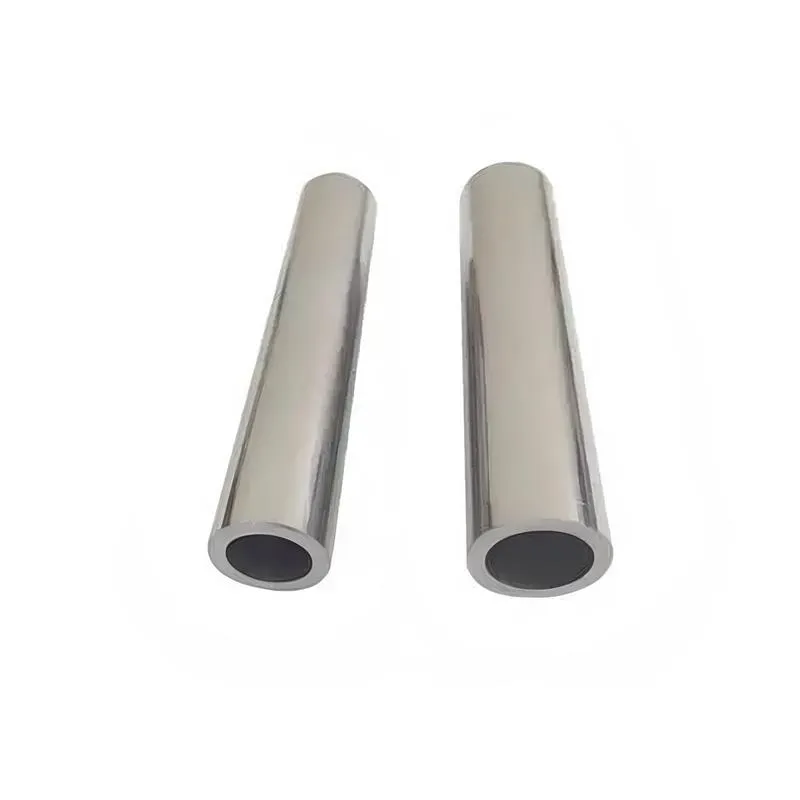
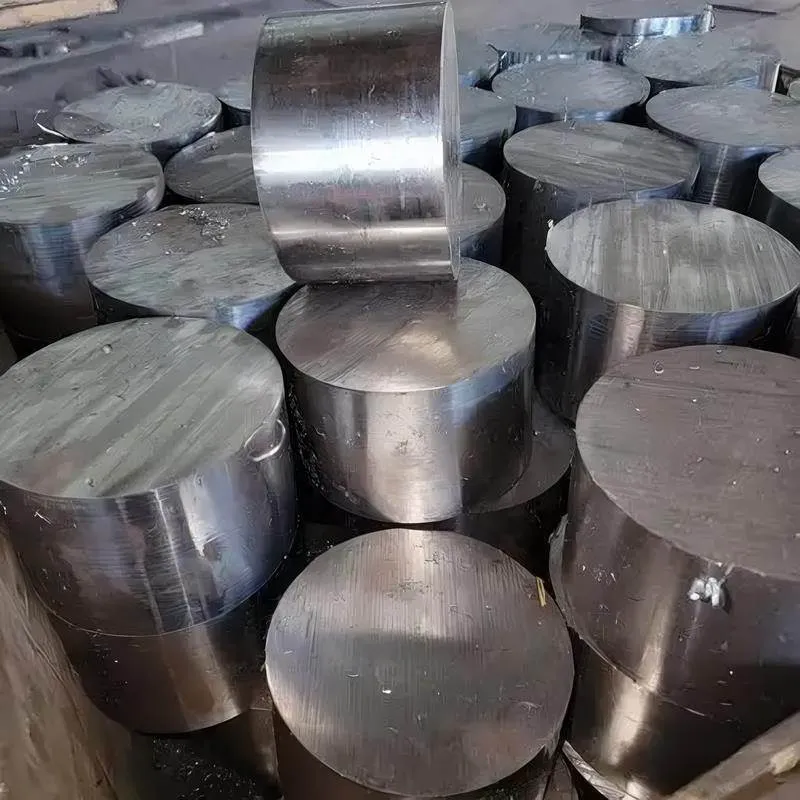
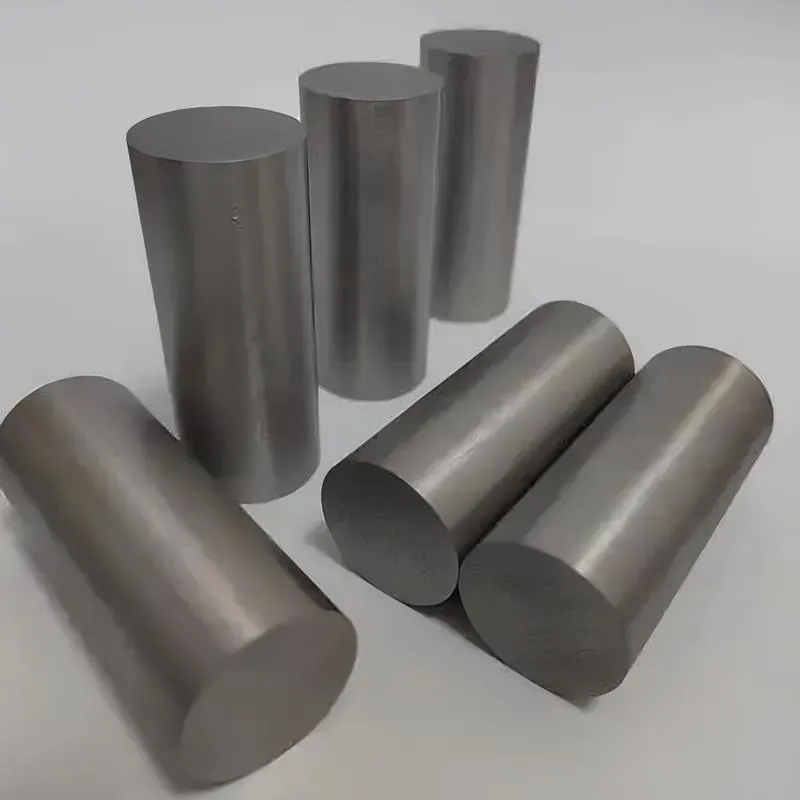
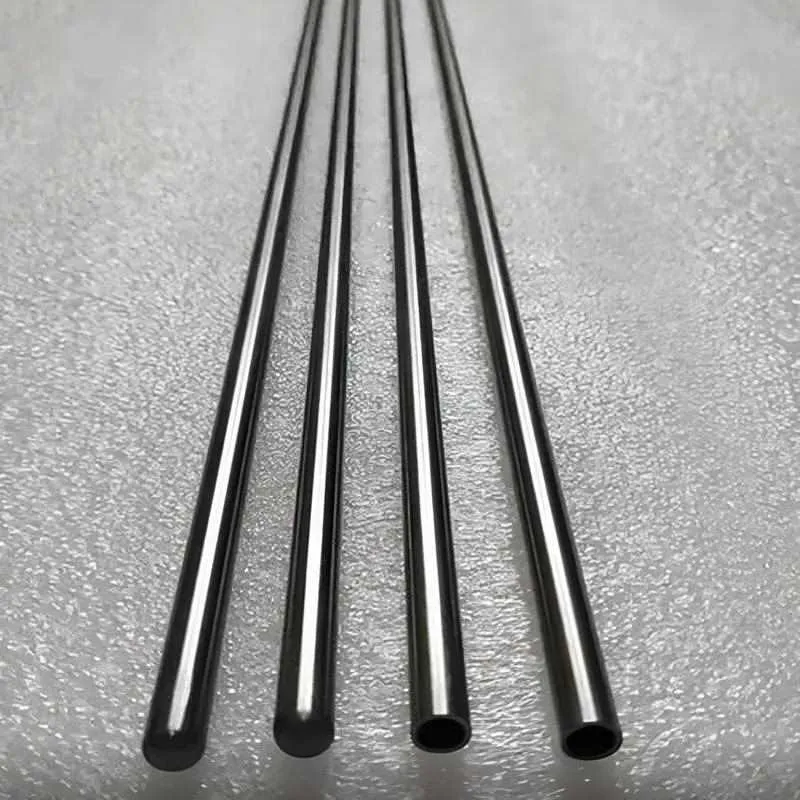
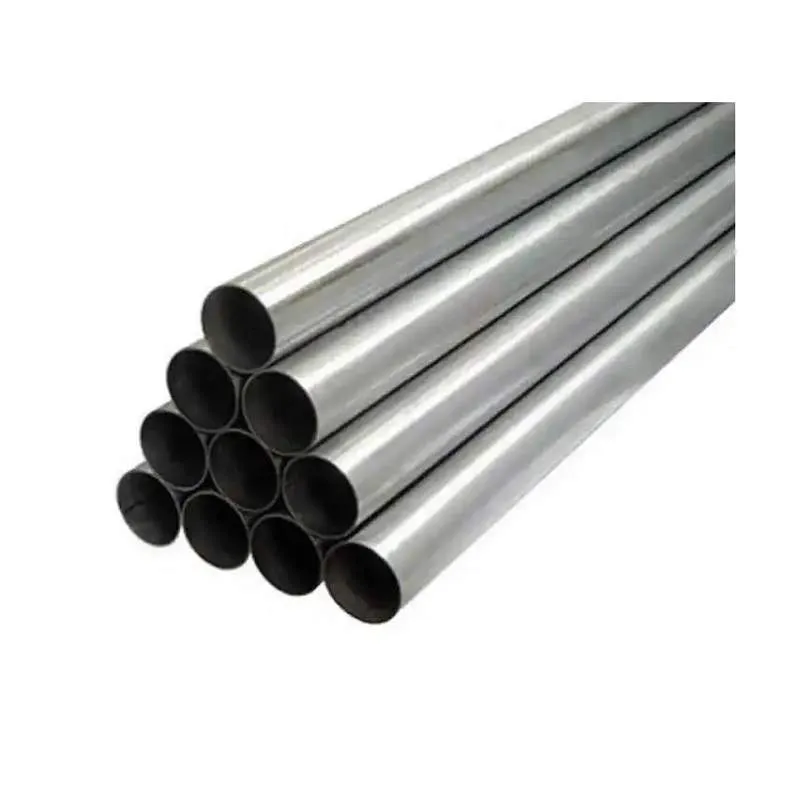
AISI Type T3 High Speed Tool Steel Tube,Pipe
Product Code : STI-GSTI-112-CU
We provide AISI Type T3 High Speed Tool Steel Tube is available in Bar (Round bar, Flat bar), Ribbon, Wire, Rods, Tube,Seamless Tube,Pipe, Ingots, Plate, Sheet, Strip and Forging Stock.,Purity, chemical composition, size, etc. can all be customized to meet specific requirements.AISI Type T3 High Speed Tool Steel Pipe
Please contact us if you need customized services. We will contact you with the price and availability in 24 hours.
AISI Type T3 High Speed Tool Steel Tube Product Information
-:-
For detailed product information, please contact sales.
-:
AISI Type T3 High Speed Tool Steel Tube Synonyms
-:-
For detailed product information, please contact sales.
-:
AISI Type T3 High Speed Tool Steel Product Information
-:-
For detailed product information, please contact sales.
-:
# **Product Introduction: AISI Type T3 High-Speed Tool Steel**
## **Overview**
**AISI T3** is a historical **tungsten-cobalt high-speed steel (HSS)** developed as an early attempt to enhance the red-hardness of the classic T1 (18-4-1) grade by adding **cobalt**. It represents an intermediate evolutionary step in the development of premium high-speed steels, sitting between the original T1 and the later, more advanced high-cobalt grades like **T4, T5, and T15**. Characterized by a moderate cobalt addition, T3 was designed to improve cutting performance on hard and high-temperature alloys. It is important to note that **AISI T3 is not a standard grade listed in current ASTM A600 specifications** and is primarily of historical and metallurgical interest, having been largely superseded by more optimized formulations.
## **1. Historical Chemical Composition (Nominal %)**
Based on historical references, T3's composition was a modification of T1 with added cobalt.
| Element | Historical Content (%) | Primary Function |
|---------|-----------------------|------------------|
| **Carbon (C)** | ~0.70 - 0.85 | Similar to T1; provides matrix hardness and supports carbide formation. |
| **Tungsten (W)** | ~17.00 - 19.00 | Primary element for red-hardness via tungsten carbides. |
| **Chromium (Cr)** | ~3.75 - 4.50 | Ensures hardenability and oxidation resistance. |
| **Vanadium (V)** | ~1.00 - 1.50 | Provides wear resistance through vanadium carbide formation; slightly higher than T1 in some references. |
| **Cobalt (Co)** | **~4.00 - 5.00** | **Defining addition.** Increases red-hardness and tempering resistance by solid solution strengthening of the matrix. |
| **Iron (Fe)** | Balance | Base metal. |
**Key Chemistry Note:** T3 introduced the **strategic use of cobalt** to the tungsten HSS family. The **cobalt content (likely around 4-5%)** was a significant development, as cobalt does not form carbides but dissolves in the ferrite matrix, dramatically raising the temperature at which the steel begins to soften. This made T3 better suited for machining materials that generated high cutting temperatures. Its composition can be thought of as **"T1 + Co"**, a logical but early-stage enhancement before more balanced, high-carbon, high-vanadium cobalt grades (like T15) were developed.
## **2. Inferred Physical & Mechanical Properties**
*Inferred properties if heat treated to a typical working hardness (~64-66 HRC).*
| Property | Estimated Typical Value / Condition |
|----------|-------------------------------------|
| **Density** | ~8.70 g/cm³ |
| **Hardness (Annealed)** | ~241-285 HB |
| **Hardened & Tempered Hardness** | **64-66 HRC** (Capable of high hardness due to cobalt's effect on secondary hardening). |
| **Red Hardness** | **Very Good to Excellent.** Superior to T1/T2 due to cobalt; maintains hardness effectively at elevated cutting temperatures. |
| **Abrasion Resistance** | **Good to Very Good.** Similar to or slightly better than T1, depending on vanadium content. |
| **Toughness** | **Moderate to Low.** The addition of cobalt, while increasing hot hardness, tends to reduce toughness compared to cobalt-free grades at the same hardness. |
| **Grindability** | **Poor.** Comparable to other tungsten HSS grades. |
| **Key Historical Advantage** | Improved performance in **high-speed machining of hard or tough materials** where cutting edges reached higher temperatures. |
## **3. Historical & Approximate Cross-References**
Given its obsolete status, direct modern equivalents are not maintained.
| Standard / Era | Approximate Equivalent / Context | Notes |
|----------------|-----------------------------------|-------|
| **Historical AISI** | T3 | Obsolete designation. |
| **Modern AISI/ASTM** | **Not Listed** (ASTM A600). | Superseded by more defined grades. |
| **Conceptual Successors** | **T4 (5% Co), T5 (8% Co), T15 (5% Co, High-V, High-C)** | Later grades with more optimized cobalt and carbide balance. |
| **ISO (Conceptual)** | A cobalt-bearing version of **HS 18-0-1** type. | |
| **Common Description** | **Cobalt-Bearing Tungsten High-Speed Steel (Early Type)** | |
## **4. Historical & Niche Applications**
T3 was developed for applications that pushed the limits of standard T1 and T2 grades, particularly where thermal softening was the failure mode.
**Theoretical/Historical Applications:**
* **High-Speed Machining of Tough Alloys:** For cutting high-strength steels, nickel-based alloys, and other materials that work-harden or generate high cutting temperatures.
* **Heavy-Duty Single-Point Tools:** Lathe tools and planer tools for severe cuts where edge temperature was a concern.
* **Form Tools and Cutters:** For extended production runs on abrasive materials where both wear and thermal edge stability were important.
**Why It Was Superseded:** The simple addition of cobalt to the T1 base, while beneficial for hot hardness, did not optimally address wear resistance. Later grades like **T15** combined cobalt with **significantly increased carbon and vanadium** to create a steel with both extreme red-hardness and supreme abrasion resistance. Furthermore, the development of the **M-series cobalt grades (e.g., M35, M42)** provided similar or better performance with improved grindability and more consistent carbide structures due to molybdenum's grain-refining effects, leading to the decline of the early T-cobalt grades.
## **5. Modern Perspective & Legacy**
**AISI T3 is best understood as a historical milestone** in the quest for higher-performance tool steels. It demonstrated the clear benefits of cobalt for hot hardness, validating the development path that led to today's premium super high-speed steels.
For any contemporary application that might have historically specified T3, modern engineers should consider:
1. **For general-purpose HSS with cobalt:** **AISI M35 (Co5%)** or **M42 (Co8%)**. These offer superior grindability, toughness, and more consistent performance.
2. **For maximum wear resistance and red-hardness:** **AISI T15** or **M4 (for high wear) / M48 (for extreme wear+hot hardness)**.
3. **For cost-effective general HSS:** **AISI M2** or **T2**.
**Conclusion:** T3's legacy lies in its role as an early pioneer of cobalt alloying in high-speed steels. Its formulation, while logical for its time, was soon surpassed by grades with more sophisticated balances of carbon, vanadium, and cobalt, as well as by the rise of the more manufacturable M-series. It serves as an important case study in the evolution of tool steel metallurgy but has no place in modern tooling specification.
---
**Disclaimer:** This profile is based on historical technical literature. **AISI T3 is not a currently standardized, commercially available tool steel.** The information is provided for educational and historical reference only. For any practical high-speed tooling application, consultation with a modern tool steel producer and selection of an active, standardized grade (e.g., M2, M35, M42, T15) is essential. Properties and processing data for actual, legacy T3 material are not standardized and can vary significantly.
-:-
For detailed product information, please contact sales.
-:
AISI Type T3 High Speed Tool Steel Specification
Dimensions
Size:
Diameter 20-1000 mm Length <6768 mm
Size:We can customized as required
Standard:
Per your request or drawing
We can customized as required
Properties(Theoretical)
Chemical Composition
-:-
For detailed product information, please contact sales.
-:
AISI Type T3 High Speed Tool Steel Properties
-:-
For detailed product information, please contact sales.
-:
Applications of AISI Type T3 High Speed Tool Steel Tube
-:-
For detailed product information, please contact sales.
-:
Chemical Identifiers AISI Type T3 High Speed Tool Steel Tube
-:-
For detailed product information, please contact sales.
-:
Packing of AISI Type T3 High Speed Tool Steel Tube
-:-
For detailed product information, please contact sales.
-:
Standard Packing:
-:-
For detailed product information, please contact sales.
-:
Typical bulk packaging includes palletized plastic 5 gallon/25 kg. pails, fiber and Steel Tube drums to 1 ton super sacks in full container (FCL) or truck load (T/L) quantities. Research and sample quantities and hygroscopic, oxidizing or other air sensitive materials may be packaged under argon or vacuum. Solutions are packaged in polypropylene, plastic or glass jars up to palletized 3239 gallon liquid totes Special package is available on request. E FORUs’ is carefully handled to minimize damage during storage and transportation and to preserve the quality of our products in their original condition