PSM Industries,PM Krupp M-2 Powder Metallurgy Steel Rod/Bar Alloy
Product Code : STI-GSTI-452-CU
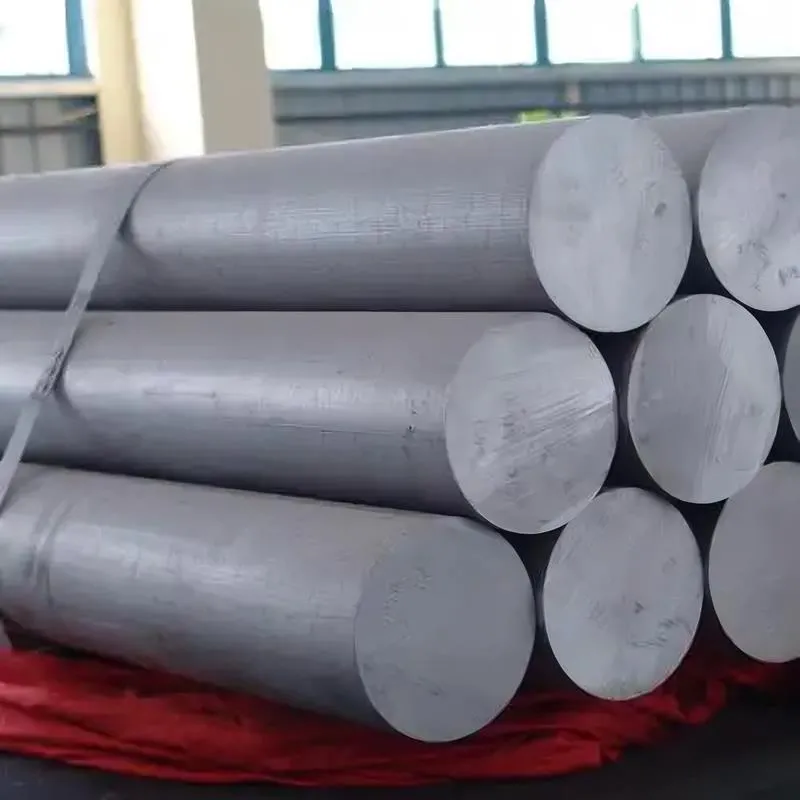
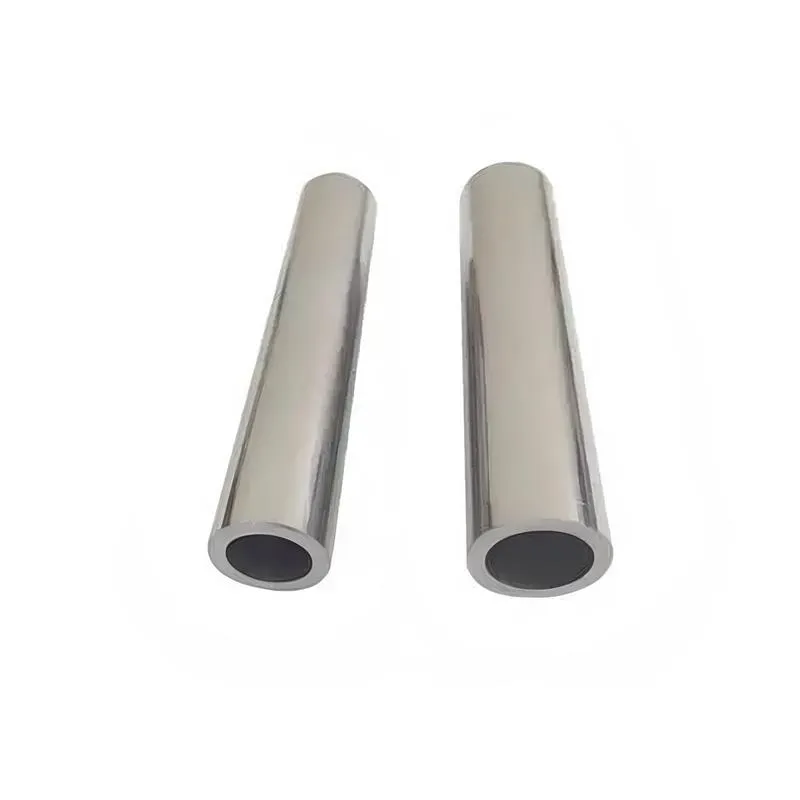
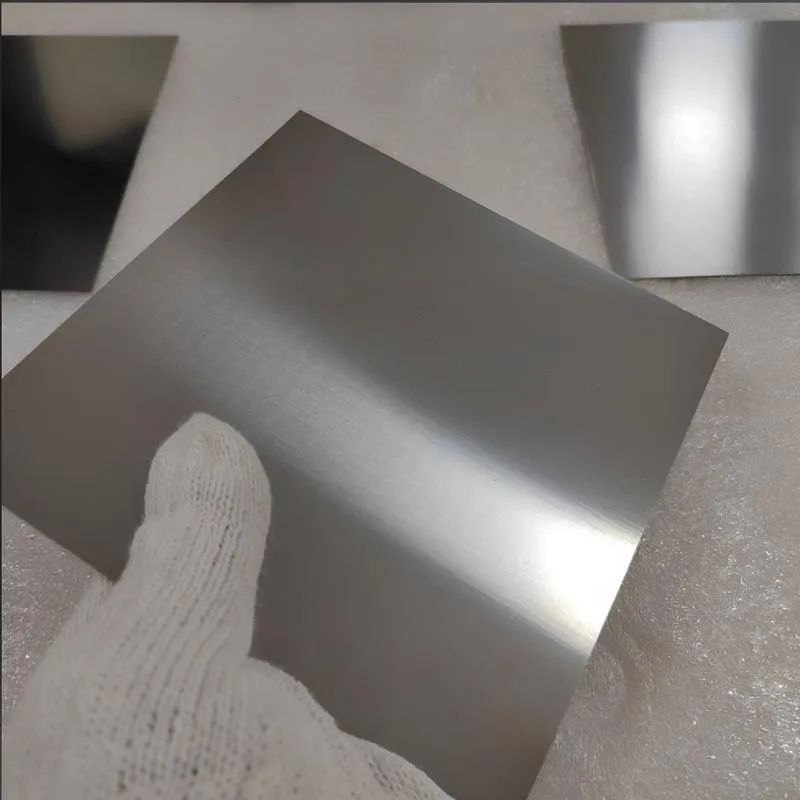
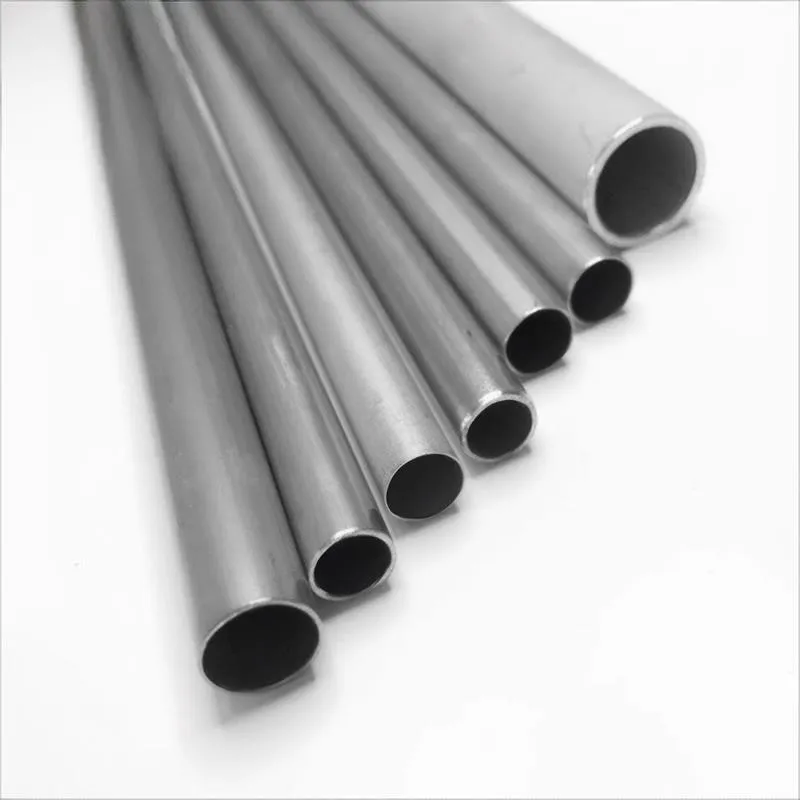
We provide PSM Industries PM Krupp M-2 Powder Metallurgy Steel Rod/Bar Alloy is available in Bar (Round bar, Flat bar), Ribbon, Wire, Rod/Bars, Tube,Seamless Tube,Pipe, Ingots, Plate, Sheet, Strip and Forging Stock.,Purity, chemical composition, size, etc. can all be customized to meet specific requirements.
Please contact us if you need customized services. We will contact you with the price and availability in 24 hours.
PSM Industries PM Krupp M-2 Powder Metallurgy Steel Rod Alloy Product Information
-:-
For detailed product information, please contact sales.
-:
PSM Industries PM Krupp M-2 Powder Metallurgy Steel Rod Alloy Synonyms
-:-
For detailed product information, please contact sales.
-:
PSM Industries PM Krupp M-2 Powder Metallurgy Steel Alloy Product Information
-:-
For detailed product information, please contact sales.
-:
# **PSM Industries PM Krupp M-2 | Premium Powder Metallurgy High-Speed Steel**
## **Overview**
PSM Industries' PM Krupp M-2 represents the gold standard in powder metallurgy (PM) high-speed steel technology, delivering a transformative advancement over conventional wrought M2 (AISI M2 / 1.3343 / HS6-5-2). Through advanced gas atomization and hot isostatic pressing (HIP) manufacturing processes, this alloy achieves an exceptionally fine, homogeneous microstructure that eliminates the carbide segregation, banding, and coarse primary carbides inherent in ingot metallurgy. The result is a material with isotropic mechanical properties, superior toughness, enhanced grindability, and consistent performance predictability. PM Krupp M-2 is engineered for high-performance cutting tools and demanding applications where edge retention, thermal resistance, and reliability under extreme conditions are critical.
## **Key Features:**
- **Ultra-Fine Homogeneous Microstructure:** Complete elimination of carbide segregation through PM processing
- **Exceptional Isotropy:** Identical properties in all directions - no transverse weakness
- **Superior Toughness:** 25-50% higher transverse rupture strength compared to conventional M2
- **Enhanced Grindability:** Reduced grinding forces, improved surface finishes, and extended wheel life
- **Excellent Red Hardness:** Maintains cutting hardness up to 540°C (1000°F)
- **Minimal Distortion:** Superior dimensional stability during heat treatment
- **High Purity:** Significantly reduced non-metallic inclusions
- **Consistent Performance:** Excellent lot-to-lot uniformity ensures predictable tool life
- **Optimized Carbide Distribution:** Fine, uniform MC and M₆C carbides (1-4 μm)
---
## **Material Specifications: PM Krupp M-2**
### **1. Chemical Composition (wt%)**
| Element | Content Range (wt%) | Function & Notes |
|---------|---------------------|------------------|
| **Carbon (C)** | 0.85 - 0.95% | Optimized for carbide formation and matrix hardness |
| **Chromium (Cr)** | 3.80 - 4.40% | Provides hardenability and wear/corrosion resistance |
| **Molybdenum (Mo)** | 4.80 - 5.50% | Primary carbide former, enhances hot hardness |
| **Tungsten (W)** | 6.00 - 6.50% | Secondary carbide former, improves red hardness |
| **Vanadium (V)** | 1.70 - 2.00% | Forms hard MC carbides for wear resistance |
| **Cobalt (Co)** | ≤ 0.50% | Optional trace amounts |
| **Silicon (Si)** | 0.20 - 0.40% | Deoxidizer and solid solution strengthener |
| **Manganese (Mn)** | 0.20 - 0.40% | Improves hardenability and strength |
| **Sulfur (S)** | ≤ 0.010% | Minimized for improved toughness |
| **Phosphorus (P)** | ≤ 0.020% | Minimized for enhanced ductility |
| **Iron (Fe)** | Balance | Matrix |
**PM-Specific Advantages:**
- **Tighter Compositional Control:** ±0.02% for critical elements
- **No Micro-segregation:** Homogeneous element distribution
- **Controlled Carbide Chemistry:** Precise MC/M₆C carbide ratios
### **2. Physical & Mechanical Properties**
#### **Physical Properties:**
| Property | Typical Value | Test Standard |
|----------|---------------|----------------|
| **Density** | 8.10 g/cm³ | ASTM B311 |
| **Melting Range** | 1430-1480°C | - |
| **Thermal Conductivity** | 24.0 W/m·K @ 20°C | ASTM E1461 |
| **Coefficient of Thermal Expansion** | 10.4 × 10⁻⁶/K (20-400°C) | ASTM E228 |
| **Modulus of Elasticity** | 220 GPa | ASTM E111 |
| **Specific Heat Capacity** | 460 J/kg·K @ 20°C | ASTM E1269 |
| **Electrical Resistivity** | 0.50 μΩ·m @ 20°C | ASTM B193 |
#### **Mechanical Properties (Hardened & Triple Tempered):**
| Tempering Condition | Hardness (HRC) | Transverse Rupture Strength (MPa) | Impact Toughness (Charpy, J) | Compressive Strength (MPa) |
|----------------------|----------------|-----------------------------------|-----------------------------|----------------------------|
| **3× 540°C** | 64-66 | 4,000-4,500 | 20-25 | 3,000-3,300 |
| **3× 560°C** | 63-65 | 4,200-4,700 | 22-28 | 2,900-3,200 |
| **3× 580°C** | 62-64 | 4,400-5,000 | 24-30 | 2,800-3,100 |
#### **High-Temperature Properties:**
| Temperature | Hot Hardness (HV) | Hot Yield Strength (MPa) | Retained Hardness (% of RT) |
|-------------|-------------------|--------------------------|------------------------------|
| **400°C** | 750-800 | 1,800-2,000 | 85-90% |
| **500°C** | 650-700 | 1,200-1,400 | 75-80% |
| **550°C** | 550-600 | 800-1,000 | 65-70% |
| **600°C** | 450-500 | 500-700 | 50-55% |
#### **Performance Comparison vs. Conventional M2:**
| Property | PM Krupp M-2 | Conventional M2 | Improvement |
|----------|--------------|-----------------|-------------|
| **Carbide Size** | 1-4 μm | 10-25 μm | 75-85% reduction |
| **Transverse Toughness** | 100% (Reference) | 60-70% | 40-50% |
| **Fatigue Life** | 100% (Reference) | 50-60% | 60-80% |
| **Wear Resistance** | 100% (Reference) | 90-95% | 5-10% |
| **Grinding Ratio** | 100% (Reference) | 50-60% | 60-80% |
### **3. Microstructural Characteristics**
- **Carbide Volume Fraction:** 10-12%
- **Average Carbide Size:** 1-4 μm (100% ≤ 6 μm)
- **Carbide Types:** MC (Vanadium-rich), M₆C (Molybdenum/Tungsten-rich)
- **Carbide Distribution:** Uniform, isotropic
- **Grain Size:** ASTM 10-12
- **Inclusion Rating:** ASTM E45: A ≤ 0.5, B ≤ 0.5, C ≤ 0.5, D ≤ 0.5
- **Microcleanliness:** ≤ 0.3% area fraction non-metallic inclusions
### **4. Applicable & Reference Standards**
- **ISO 4957:** Tool steels (Grade HS6-5-2)
- **ASTM A600:** Standard Specification for Tool Steel High Speed (Grade M2)
- **DIN 1.3343:** German standard for high-speed steel
- **JIS G4403:** High speed tool steels (Grade SKH51)
- **AMS 6491:** Aerospace Material Specification
- **UNS T11302:** Unified Numbering System
- **GB/T 9943:** Chinese standard (Grade W6Mo5Cr4V2)
- **Customer-Specific Specifications:** Widely adopted in cutting tool industries
---
## **Heat Treatment Guidelines**
### **Annealing:**
- **Temperature:** 850-870°C (1560-1600°F)
- **Soak Time:** 2-4 hours
- **Cooling Rate:** 10-20°C/hour to 600°C, then furnace cool
- **Resulting Hardness:** 220-240 HB
- **Microstructure:** Fine spheroidized carbides
### **Stress Relieving:**
- **After Rough Machining:** 600-650°C (1110-1200°F), 2 hours
- **After EDM:** 150-200°C (300-400°F) below final temper, 2-4 hours
### **Hardening:**
1. **Preheating:**
- First Stage: 450-500°C (840-930°F)
- Second Stage: 800-850°C (1470-1560°F)
2. **Austenitizing:**
- **Temperature:** 1190-1220°C (2175-2230°F)
- **Soak Time:** 2-5 minutes per 25mm thickness
- **Atmosphere:** Vacuum or salt bath preferred
3. **Quenching Options:**
- **Gas Quench:** 4-6 bar nitrogen/argon (minimal distortion)
- **Oil Quench:** Fast oil at 40-60°C
- **Salt Bath:** Marquench at 500-550°C
### **Tempering:**
- **Minimum:** Triple tempering required
- **Temperature Range:** 540-600°C (1000-1110°F)
- **Time:** 60-120 minutes per temper
- **Cooling:** Air cool between tempers
- **Cryogenic Treatment:** Optional between 1st and 2nd tempers
### **Surface Treatments:**
- **Nitriding:** Plasma or gas, 480-520°C, case depth 0.05-0.15mm
- **PVD Coatings:** Excellent adhesion for TiN, TiCN, TiAlN, AlCrN
- **Oxidation:** Steam tempering for reduced friction
---
## **Machining & Grinding**
### **Machining (Annealed Condition):**
- **Hardness:** 220-240 HB (good machinability)
- **Cutting Tools:** Carbide tools recommended
- **Turning Parameters:**
- Speed: 50-70 m/min
- Feed: 0.15-0.25 mm/rev
- Depth of Cut: 2-4 mm
- **Milling Parameters:**
- Speed: 70-90 m/min
- Feed per Tooth: 0.08-0.15 mm
- **Drilling Parameters:**
- Speed: 15-20 m/min
- Feed: 0.08-0.15 mm/rev
### **Grinding (Hardened Condition):**
- **Wheel Selection:**
- Aluminum Oxide (A): 46-60 I-J
- CBN: 80-120 concentration, vitrified bond
- **Parameters:**
- Speed: 25-30 m/s
- Feed: 0.005-0.015 mm/pass
- Cross-feed: 1-3 mm/pass
- **Coolant:** Essential - high volume, directed flow
### **Electrical Discharge Machining (EDM):**
- **Excellent Suitability:** Fine microstructure enables superior finishes
- **Wire EDM:** Multiple skim cuts for best results
- **Sinker EDM:** Graphite electrodes, fine finish settings
- **White Layer:** Typically 5-15 μm
- **Post-EDM Treatment:** Stress relieve immediately
### **Polishing:**
- **Capable of:** Fine finishes ≤ 0.02 μm Ra
- **Progression:** 220 → 320 → 400 → 600 → 800 grit
- **Final Polish:** Diamond compound for optical quality
---
## **Product Applications**
### **Metal Cutting Tools:**
- **End Mills:** Solid and indexable for steels and cast irons
- **Drills:** Twist drills, gun drills, deep hole drills
- **Reamers:** Precision hole finishing tools
- **Broaches:** Internal and surface broaching tools
- **Gear Cutters:** Hobs, shaper cutters, shaving tools
- **Threading Tools:** Taps, dies, thread mills
- **Saw Blades:** Bandsaw and circular saw blades
### **Forming Tools:**
- **Punches and Dies:** For cold forming operations
- **Extrusion Tools:** Forward and backward extrusion
- **Roll Forming Rolls:** For profile forming
- **Heading Dies:** For bolt and fastener production
### **Special Applications:**
- **Woodworking Tools:** For hardwoods and composites
- **Plastic Molding Tools:** For abrasive filled plastics
- **Knives:** Industrial cutting blades
- **Wear Parts:** Bushings, guides, wear plates
### **Industry-Specific Applications:**
- **Automotive:** Transmission components, engine parts
- **Aerospace:** Structural components, turbine parts
- **Medical:** Surgical instrument components
- **Energy:** Turbine blades, valve components
- **Die & Mold:** Injection molds, die casting dies
---
## **Quality Assurance**
### **Testing Protocol:**
1. **Chemical Analysis:** Optical emission spectroscopy (OES)
2. **Hardness Testing:** Brinell, Rockwell, microhardness
3. **Microstructural Analysis:**
- Carbide size distribution (image analysis)
- Inclusion rating per ASTM E45
- Grain size measurement
4. **Non-Destructive Testing:**
- Ultrasonic testing
- Dye penetrant inspection
5. **Mechanical Testing:** (When specified)
- Transverse rupture strength
- Impact toughness
- Fatigue testing
### **Certification:**
- **Material Certificate 3.1** per EN 10204
- **Heat Treatment Certificate**
- **Ultrasonic Test Report** (when specified)
- **Micrographic Analysis**
### **Traceability:**
- Full heat/lot traceability
- Complete processing history
- Chemical analysis certificate
- Heat treatment records
---
## **Comparative Advantages**
### **Technical Advantages:**
| Aspect | Benefit | Impact |
|--------|---------|--------|
| **Isotropic Properties** | Equal properties in all directions | Eliminates transverse weakness |
| **Fine Carbides** | 1-4 μm vs. 10-25 μm | Sharper edges, better finishes |
| **No Carbide Banding** | Uniform distribution | Consistent wear patterns |
| **Higher Toughness** | 25-50% improvement | Reduced chipping |
| **Better Grindability** | 60-80% improved ratio | Lower finishing costs |
### **Economic Benefits:**
- **Extended Tool Life:** 20-40% longer service life
- **Reduced Downtime:** More predictable performance
- **Higher Productivity:** Ability to run at higher parameters
- **Lower Total Cost:** Improved cost per part
- **Reduced Scrap:** More consistent performance
### **Performance in Specific Applications:**
- **End Mills:** 30-50% longer life in steels
- **Drills:** 20-40% improvement in difficult materials
- **Taps:** Reduced breakage in hard materials
- **Forming Tools:** Less chipping in cold forming
---
## **Technical Support Services**
PSM Industries provides:
- **Application Engineering:** Material selection and optimization
- **Heat Treatment Support:** Customized cycles
- **Failure Analysis:** Root cause determination
- **Field Performance Monitoring:** Ongoing support
- **Technical Training:** Workshops and seminars
---
**Disclaimer:** The information contained herein is based on typical data and represents general guidelines. Actual performance may vary depending on specific application conditions, heat treatment procedures, geometric factors, and operational parameters. This document does not constitute a warranty or guarantee of performance. Users should conduct appropriate testing and validation for their specific applications. PSM Industries reserves the right to modify product specifications and processing recommendations without notice. For critical applications, consultation with PSM technical personnel is strongly recommended.
-:-
For detailed product information, please contact sales.
-:
PSM Industries PM Krupp M-2 Powder Metallurgy Steel Alloy Specification
Dimensions
Size:
Diameter 20-1000 mm Length <7108 mm
Size:We can customized as required
Standard:
Per your request or drawing
We can customized as required
Properties(Theoretical)
Chemical Composition
-:-
For detailed product information, please contact sales.
-:
PSM Industries PM Krupp M-2 Powder Metallurgy Steel Alloy Properties
-:-
For detailed product information, please contact sales.
-:
Applications of PSM Industries PM Krupp M-2 Powder Metallurgy Steel Rod Alloy
-:-
For detailed product information, please contact sales.
-:
Chemical Identifiers PSM Industries PM Krupp M-2 Powder Metallurgy Steel Rod Alloy
-:-
For detailed product information, please contact sales.
-:
Packing of PSM Industries PM Krupp M-2 Powder Metallurgy Steel Rod Alloy
-:-
For detailed product information, please contact sales.
-:
Standard Packing:
-:-
For detailed product information, please contact sales.
-:
Typical bulk packaging includes palletized plastic 5 gallon/25 kg. pails, fiber and Steel Rod drums to 1 ton super sacks in full container (FCL) or truck load (T/L) quantities. Research and sample quantities and hygroscopic, oxidizing or other air sensitive materials may be packaged under argon or vacuum. Solutions are packaged in polypropylene, plastic or glass jars up to palletized 3579 gallon liquid totes Special package is available on request. E FORUs’ is carefully handled to minimize damage during storage and transportation and to preserve the quality of our products in their original condition