1,We Manufacturing processes are primarily classified into four types:
1:Forging,
2:Casting,
3:Cutting,
4:Rolling.
2,We can manufacture in accordance with these standards.
Standards:
GB Series (Chinese Standards), JB Series (Machinery Standards), HG Series (Chemical Industry Standards), ASME B16.5 (American Standards), BS4504 (British Standards), DIN (German Standards), and JIS (Japanese Standards).
Internationally, there are two primary systems of pipe flange standards: the European system, represented by the German DIN standards (including those of the former Soviet Union), and the American system, represented by the US ANSI pipe flange standards. Other common standards include: the Chinese Ministry of Machinery Industry standards (JB series), the Ministry of Chemical Industry standards (HG series), the Chinese National Standard *GB/T 9112–9124-2010 Steel Pipe Flanges*, as well as US standards (ASME B16.5), British standards (BS4504), German standards (DIN), Japanese standards (JIS), and marine standards (CBM), among others.
The nominal pressure ratings for the PN series are designated by "PN" and comprise the following nine levels: PN2.5, PN6, PN10, PN16, PN25, PN40, PN63, PN100, and PN160.
The nominal pressure ratings for the Class series are designated by "Class" and comprise the following six levels: Class150, Class300, Class600, Class900, Class1500, and Class2500.
Flange Classification
1. **According to Chemical Industry Standards:** Flanges are classified as follows:
Plate Flat Welding Flange (PL), Necked Flat Welding Flange (SO), Necked Butt Welding Flange (WN), Integral Flange (IF), Socket Welding Flange (SW), Threaded Flange (Th), Butt Welding Ring Loose Flange (PJ/SE), Blind Flange (BL), Flat Welding Ring Loose Flange (PJ/PJ), and Lined Blind Flange (BL(s)).
2. **According to Petrochemical (SH) Industry Standards:** Flanges are classified as follows:
Threaded Flange (PL), Butt Welding Flange (WN), Flat Welding Flange (SO), Socket Welding Flange (SW), Loose Flange (LJ), and Blind Flange (no specific designation).
3. **According to Machinery (JB) Industry Standards:** Flanges are classified as follows:
Integral Flange, Butt Welding Flange, Plate Flat Welding Flange, Butt Welding Ring Plate Loose Flange, Flat Welding Ring Plate Loose Flange, Lap Joint Ring Plate Loose Flange, and Blind Flange.
4. **According to Connection Method/Type:** Flanges are classified as follows:
Plate Flat Welding Flange, Necked Flat Welding Flange, Necked Butt Welding Flange, Socket Welding Flange, Threaded Flange, Blind Flange, Necked Butt Welding Ring Loose Flange, Flat Welding Ring Loose Flange, Ring-Type Joint (RTJ) Flange and Blind Flange, Large-Diameter Plate Flange, Large-Diameter High-Neck Flange, Figure-8 Blind Plate, Butt Welding Ring Loose Flange, etc.
5. **According to the Component Being Connected:** Flanges can be classified into Vessel Flanges and Pipe Flanges.
6. **According to Structural Type:** Flanges include Integral Flanges, Threaded Flanges, Flat Welding Flanges, Butt Welding Flanges, Lap Joint (Loose/Swivel) Flanges, and Blind Flanges.
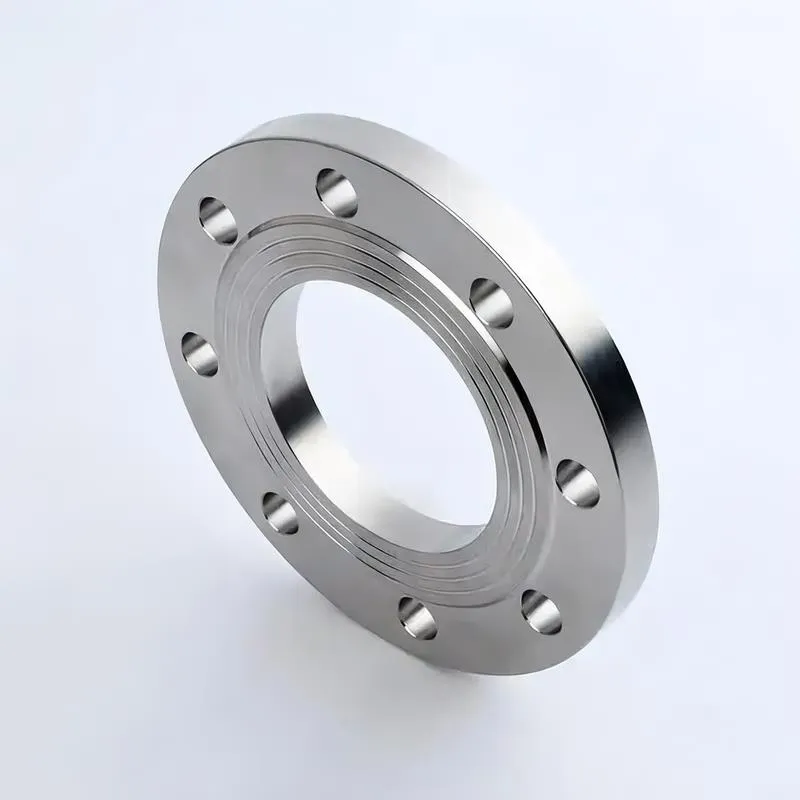
A flange—also referred to as a flange plate or rim—is a component used to connect shafts to one another, or, more commonly, to join the ends of pipes. Flanges are also utilized at the inlet and outlet ports of equipment to facilitate connections between two devices—for instance, the flange on a speed reducer. A "flange connection" or "flanged joint" refers to a detachable joint assembly comprising three interconnected elements—a flange, a gasket, and bolts—that together form a sealed structural unit. In the context of piping systems, a "pipe flange" specifically denotes a flange used for plumbing within the installation; when applied to equipment, it refers to the inlet or outlet flange of that specific device. Flanges feature a series of holes through which bolts are inserted to securely fasten the two flanges together, while a gasket placed between the flanges ensures a leak-proof seal. Flanges are broadly categorized into three types: threaded (screw-in) flanges, welded flanges, and clamp-type flanges. Flanges are invariably used in pairs; threaded flanges are suitable for low-pressure piping applications, whereas welded flanges are required for systems operating at pressures exceeding 4 kilograms per square centimeter. A sealing gasket is inserted between the two flange plates, which are then firmly secured using bolts. The thickness of a flange—as well as the specifications of the bolts used to fasten it—vary depending on the specific pressure rating required for the application. When connecting equipment such as water pumps or valves to piping systems, the corresponding connection points on these devices are often manufactured in the shape of a matching flange; this method of attachment is also referred to as a "flange connection." Generally, any connecting component that utilizes bolts to join and seal the perimeters of two flat surfaces—such as the joints in ventilation ducts—is termed a "flange"; such components may collectively be classified as "flange-type parts." However, since such a connection often constitutes merely a *portion* of a larger device—for instance, the interface between a flange and a water pump—it would be inappropriate to classify the entire water pump itself as a "flange-type part." Conversely, smaller components—such as valves—that feature such flanged interfaces may indeed be appropriately categorized as "flange-type parts."
-:-
For detailed product information, please contact sales.
-:
AISI 1340H Steel Flange, Product Information
-:-
For detailed product information, please contact sales.
-:
AISI 1340H Steel Flange, Synonyms
-:-
For detailed product information, please contact sales.
-:
AISI 1340H Steel, Product Information
-:-
For detailed product information, please contact sales.
-:
# **Product Introduction: AISI 1340H Hardenability-Controlled Alloy Steel**
## **Executive Summary**
**AISI 1340H** represents the engineered, consistency-focused version of standard AISI 1340 medium-carbon manganese steel. The "H" suffix designates material produced under controlled hardenability specifications, ensuring predictable and uniform response to heat treatment. This grade provides manufacturers with guaranteed mechanical property consistency across production batches, particularly valuable for components where reliability, fatigue performance, and dimensional stability during heat treatment are critical design parameters.
---
## **1. Chemical Composition & Hardenability Control**
### **Chemical Composition Ranges**
AISI 1340H features carefully balanced chemistry with controlled variations to achieve specific hardenability bands while maintaining essential performance characteristics.
| Element | Content Range (% by weight) - **AISI 1340H** |
| :--- | :--- |
| **Carbon (C)** | 0.37 - 0.44 |
| **Manganese (Mn)** | 1.35 - 2.05 |
| **Phosphorus (P)** | 0.035 max |
| **Sulfur (S)** | 0.040 max |
| **Silicon (Si)** | 0.15 - 0.35 |
| **Iron (Fe)** | Balance |
### **Hardenability Control Philosophy**
Unlike standard grades with fixed composition limits, AISI 1340H allows controlled chemical variation within specified bands to achieve guaranteed hardenability response:
- **Carbon Adjustment:** 0.37-0.44% range enables fine-tuning of core hardness and strength
- **Manganese Range Expansion:** 1.35-2.05% provides primary control over hardenability depth
- **Production Flexibility:** Different heats may have varying chemistries but yield identical hardenability curves
- **Certification Requirement:** Each lot includes actual Jominy end-quench test results
---
## **2. Physical & Mechanical Properties**
### **A. Fundamental Physical Properties**
| Property | Value/Range | Conditions/Notes |
| :--- | :--- | :--- |
| **Density** | 7.85 g/cm³ (0.284 lb/in³) | At 20°C |
| **Elastic Modulus** | 200-210 GPa (29,000-30,500 ksi) | - |
| **Shear Modulus** | 80-82 GPa (11,600-11,900 ksi) | - |
| **Poisson's Ratio** | 0.29 | - |
| **Thermal Conductivity** | 46.5 W/m·K | At 100°C |
| **Specific Heat Capacity** | 472 J/kg·K | At 100°C |
| **Thermal Expansion Coefficient** | 11.6 × 10⁻⁶/°C | 20-100°C range |
| **Electrical Resistivity** | 0.22 μΩ·m | At 20°C |
### **B. Mechanical Properties by Heat Treatment Condition**
#### **Annealed Condition (Typical Machining State)**
- **Hardness:** 187-229 HB (Brinell)
- **Tensile Strength:** 620-750 MPa (90,000-109,000 psi)
- **Yield Strength:** 415-550 MPa (60,000-80,000 psi)
- **Elongation:** 20-25% in 50mm
- **Reduction of Area:** 45-55%
#### **Quenched & Tempered Properties**
*Table: Mechanical Properties at Various Tempering Temperatures*
| Tempering Temp | Hardness (HRC) | Tensile Strength | Yield Strength | Elongation | Impact Energy |
| :--- | :--- | :--- | :--- | :--- | :--- |
| **150-200°C** | 52-56 | 1650-1850 MPa | 1400-1600 MPa | 8-10% | 15-25 J |
| **350-400°C** | 45-49 | 1350-1500 MPa | 1200-1350 MPa | 12-15% | 30-45 J |
| **500-550°C** | 35-39 | 1050-1200 MPa | 950-1100 MPa | 16-20% | 50-70 J |
| **600-650°C** | 28-32 | 850-950 MPa | 750-850 MPa | 20-25% | 70-90 J |
### **C. Hardenability Characteristics (Jominy Test Data)**
The guaranteed hardenability band ensures consistent through-hardening:
- **Surface Hardness:** 55-59 HRC at Jominy position 1/16" (1.6mm)
- **50% Martensite Position:** Typically between Jominy distances 8-14 (6.4-11.2mm from quenched end)
- **Critical Diameter (D₅₀):** 40-60mm (1.6-2.4") for oil quenching to 50% martensite
- **Full Hardening Depth:** Up to 25mm (1") diameter in oil quench
- **Band Consistency:** Hardness at any Jominy position guaranteed within 5-7 HRC range
---
## **3. International Standards & Specifications**
### **Primary Governing Standards**
| Standard/Organization | Designation | Scope/Application |
| :--- | :--- | :--- |
| **SAE International** | SAE J1268 | Standard Hardness and Hardenability Requirements |
| **SAE International** | SAE J1868 | Hardenability Bands for Carbon and Alloy H-Steels |
| **ASTM International** | ASTM A304 | Standard for Carbon and Alloy Steel Bars Subject to End-Quench Hardenability |
| **ASTM International** | ASTM A29/A29M | General Specification for Steel Bars (H-Grade Supplement) |
### **International Equivalents & Cross-References**
| Country/Region | Equivalent Grade | Standard | Notes |
| :--- | :--- | :--- | :--- |
| **United States** | **H13400** | UNS Numbering System | Primary identification |
| **International** | **Type H2-H4** | ISO 683-18 | Hardenability steel classification system |
| **Germany** | **- (No direct H-equiv)** | DIN 17210 | 40Mn6 (1.5066) similar in composition |
| **European Union** | **- (No direct H-equiv)** | EN 10083-3 | Material specified by properties, not H-bands |
| **Japan** | **- (No direct H-equiv)** | JIS G4106 | SMn438 similar in composition |
| **China** | **40Mn2H** | GB/T 5216 | Chinese hardenability-controlled equivalent |
**Important Note:** The "H" designation and guaranteed hardenability bands are predominantly North American practices. International procurement should specify hardenability requirements explicitly rather than relying solely on grade name equivalency.
---
## **4. Product Applications & Industries**
### **Available Product Forms**
- **Hot-rolled bars:** 10-300mm diameter rounds, squares, flats
- **Cold-drawn bars:** Precision ground, turned, or polished surfaces
- **Forging stock:** Billets, blooms for closed-die forging
- **Wire rod:** For cold forming of high-strength components
- **Special sections:** Custom profiles for specific applications
### **Primary Industry Applications**
#### **Automotive & Transportation (Core Market)**
- **Drivetrain Components:**
- Transmission shafts and gears (manual/automatic)
- Drive shafts for trucks and SUVs
- Axle shafts for medium-duty vehicles
- Differential gears and pinions
- **Suspension & Steering:**
- Steering knuckles and arms
- Tie rods and drag links
- Suspension linkage components
- Torsion bars and stabilizer links
- **Engine & Powertrain:**
- Crankshafts (medium-duty engines)
- Connecting rods
- Camshafts and follower arms
- Timing gear components
#### **Heavy Equipment & Machinery**
- **Construction Equipment:**
- Excavator bucket pins and bushings
- Loader linkage components
- Crane boom sheave pins
- **Agricultural Machinery:**
- Tractor PTO shafts
- Combine harvester drive components
- Implement gearbox shafts
- **Industrial Machinery:**
- Gearbox shafts and gears
- Pump shafts and impeller hubs
- Compressor crankshafts
- Conveyor drive components
#### **Specialized Applications**
- **Fastener Industry:** Grade 10.9 and 12.9 high-strength bolts
- **Tool Manufacturing:** Wrenches, sockets, specialized hand tools
- **Defense Applications:** Track components, weapon system parts
- **Energy Sector:** Pump shafts, valve components (non-corrosive environments)
---
## **5. Heat Treatment Technology**
### **Standard Heat Treatment Cycles**
#### **1. Full Annealing**
- **Temperature:** 830-850°C (1525-1560°F)
- **Soak Time:** 1 hour per inch of thickness minimum
- **Cooling Rate:** Furnace cool to 550°C (1020°F) at ≤20°C/hour
- **Resulting Hardness:** 187-229 HB
- **Purpose:** Optimal machinability, stress relief
#### **2. Normalizing**
- **Temperature:** 870-900°C (1600-1650°F)
- **Soak Time:** 30 minutes per inch
- **Cooling:** Still air
- **Resulting Hardness:** 225-275 HB
- **Purpose:** Grain refinement, hardness uniformity
#### **3. Hardening (Quenching)**
- **Austenitizing:** 815-830°C (1500-1525°F)
- **Soak Time:** 20-30 minutes per inch, minimum 30 minutes
- **Quench Medium:** Fast oil (Houghton G, Park AAA, etc.)
- **Quench Temperature:** 40-60°C (100-140°F) with moderate agitation
- **Critical Step:** Transfer to quench within 5-10 seconds
#### **4. Tempering (Critical for Properties)**
- **Immediate Tempering:** Within 2 hours of quenching (preferably immediately)
- **Temperature Range:** 150-650°C (300-1200°F) based on requirements
- **Time at Temperature:** 1-2 hours per inch, minimum 2 hours
- **Double Tempering:** Recommended for highest dimensional stability
- **Cooling:** Air cool after tempering (water quenching after tempering not recommended)
### **Advanced Heat Treatment Options**
- **Induction Hardening:** Surface hardness 55-60 HRC, case depth 1-6mm
- **Flame Hardening:** For large or irregularly shaped components
- **Nitriding/Carbonitriding:** For enhanced surface hardness (700-900 HV) and fatigue resistance
- **Austempering:** For exceptional toughness at high hardness (not commonly specified)
---
## **6. Manufacturing & Fabrication Characteristics**
### **Machinability Assessment**
- **Annealed Condition:** 60-65% of B1112 free-machining steel
- **Hardness for Machining:** Optimal at 187-229 HB (annealed)
- **Cutting Parameters:**
- Turning: 60-90 m/min (200-300 SFM) with carbide inserts
- Drilling: 20-30 m/min (65-100 SFM) with HSS drills
- Milling: 80-120 m/min (260-400 SFM) with carbide cutters
- **Tool Geometry:** Positive rake angles, sharp cutting edges
- **Coolant Requirements:** Essential for productivity and tool life
### **Weldability & Joining**
**Rating: POOR (Extensive precautions required)**
#### **Welding Precautions (Mandatory)**
1. **Preheating:** 250-350°C (480-660°F) depending on section thickness
2. **Interpass Temperature:** Maintain 200-300°C (390-570°F)
3. **Post-Weld Heat Treatment:**
- Stress relief: 595-650°C (1100-1200°F) immediately after welding
- Full re-heat treatment recommended for critical applications
4. **Welding Processes:**
- Preferred: GTAW (TIG) with filler
- Acceptable: SMAW with low-hydrogen electrodes (E11018-M)
- Limited: GMAW (MIG) with appropriate wire and gas
5. **Filler Metal Selection:**
- Matching: AWS ER80S-D2 or similar
- Non-matching: Austenitic stainless (309L) or nickel-based alloys for dissimilar welding
### **Forging & Hot Working**
- **Heating Temperature:** 1150-1200°C (2100-2200°F) maximum
- **Forging Temperature Range:** 1150-900°C (2100-1650°F)
- **Finishing Temperature:** ≥850°C (1560°F)
- **Cooling After Forging:** Slow cooling in furnace or insulating medium
- **Post-Forging Treatment:** Anneal or normalize before machining
### **Cold Forming Capability**
- **Limited:** Suitable only for simple bends in annealed condition
- **Intermediate Annealing:** Required for multiple forming operations
- **Springback:** Significant, requiring compensation in tool design
---
## **7. Quality Assurance & Testing**
### **Standard Certification Requirements**
1. **Hardenability Report:** Actual Jominy curve with lot-specific data
2. **Chemical Analysis:** Heat analysis and product verification
3. **Mechanical Test Reports:** When specified per purchase order
4. **Dimensional Reports:** For precision-ground materials
5. **Surface Quality Certification:** Per ASTM A29 or customer specification
### **Optional Testing Services**
- Ultrasonic testing for internal soundness
- Magnetic particle inspection for surface defects
- Macroscopic examination (etch testing)
- Grain size determination per ASTM E112
- Non-decarburization certification
### **Traceability Requirements**
- Heat number traceability maintained through all processing steps
- Mill test reports with complete processing history
- Certification to applicable industry standards (automotive, aerospace, etc.)
---
## **8. Design & Engineering Guidelines**
### **Advantages of Specifying 1340H**
1. **Predictable Performance:** Eliminates heat treatment variability
2. **Consistent Quality:** Uniform properties across production batches
3. **Design Reliability:** Engineers can design to specific property guarantees
4. **Reduced Scrap Rates:** Minimizes heat treatment-related rejections
5. **Process Optimization:** Enables automation of heat treatment processes
6. **Warranty Confidence:** Consistent material performance reduces field failures
### **Design Considerations**
- **Section Size Limitations:** Design within guaranteed hardenability capabilities
- **Stress Concentration:** Account for notch sensitivity in hardened condition
- **Fatigue Design:** Consider surface finish and residual stress effects
- **Dimensional Stability:** Plan for predictable transformation during heat treatment
- **Cost-Benefit Analysis:** Evaluate premium vs. performance benefits
### **Economic Justification**
The additional cost of AISI 1340H versus standard 1340 is typically justified by:
- Reduced scrap and rework in heat treatment
- Fewer production interruptions for process adjustment
- Lower inspection costs due to consistent quality
- Improved product reliability and reduced warranty claims
- Enhanced manufacturing efficiency through predictable processes
---
## **9. Comparative Analysis: 1340 vs. 1340H**
| Parameter | AISI 1340 (Standard) | AISI 1340H (Hardenability Controlled) |
| :--- | :--- | :--- |
| **Chemical Control** | Fixed composition limits | Controlled to achieve hardenability band |
| **Hardenability** | Typical ranges only | Guaranteed minimum and maximum bands |
| **Heat Treatment Consistency** | Variable between heats | Highly consistent, predictable |
| **Production Applications** | General purpose, non-critical | Critical components, high volume |
| **Certification** | Standard mill test reports | Jominy hardenability curve included |
| **Cost** | Standard pricing | 10-25% premium depending on quantity |
| **Design Approach** | Conservative safety factors | Optimized, performance-based design |
---
## **10. Industry-Specific Specifications**
### **Automotive Applications**
- **General Motors:** GM 4340M (similar performance category)
- **Ford Motor Company:** Specific engineering material specifications
- **Chrysler:** Component-specific material callouts
- **Heavy Truck:** Often specified for drivetrain components
### **Aerospace References**
- **AMS 6347:** Forging quality, aircraft control components
- **Similar Grades:** Often used as more economical alternative to 4340 for non-flight-critical parts
### **Fastener Industry**
- **ASTM A574:** Socket head cap screws
- **SAE J429:** Grade 8 fasteners (when properly heat treated)
- **IFI 100/107:** High-strength structural bolts
---
## **Technical Summary & Selection Guidelines**
**AISI 1340H** is the material of choice when:
1. **Consistency is Critical:** For components where uniform hardness and strength are mandatory
2. **Production Volume is High:** Where process stability reduces total manufacturing cost
3. **Component Reliability is Paramount:** In safety-critical or high-warranty-cost applications
4. **Design Optimization is Required:** When engineers need predictable material response
5. **Heat Treatment Automation is Implemented:** For programmed heat treatment cycles
**Not Recommended When:**
- Component size exceeds guaranteed hardenability capabilities
- Cost is the primary driver and performance consistency is not critical
- Welded fabrication is the primary manufacturing method
- Corrosion resistance is a key requirement (consider stainless alternatives)
---
## **Future Developments & Trends**
1. **Digital Heat Treatment:** Integration with Industry 4.0 for real-time process adjustment
2. **Advanced Simulation:** Predictive modeling of heat treatment outcomes
3. **Sustainable Processing:** Reduced energy heat treatment technologies
4. **Additive Manufacturing:** Development of compatible wire/powder forms
5. **Enhanced Testing:** Automated hardenability verification systems
---
**AISI 1340H** represents the convergence of material science and production engineering, transforming a capable alloy steel into a predictable, performance-guaranteed engineering material. Its specification represents a commitment to manufacturing excellence, product reliability, and design optimization that delivers value throughout the product lifecycle.
-:-
For detailed product information, please contact sales.
-:
AISI 1340H Steel, Specification
Dimensions
Size:
Diameter 20-1000 mm Length <4007 mm
Size:We can customized as required
Standard:
Per your request or drawing
We can customized as required
Properties(Theoretical)
Chemical Composition
-:-
For detailed product information, please contact sales.
-:
AISI 1340H Steel, Properties
-:-
For detailed product information, please contact sales.
-:
Applications of AISI 1340H Steel Flange,
-:-
For detailed product information, please contact sales.
-:
Chemical Identifiers AISI 1340H Steel Flange,
-:-
For detailed product information, please contact sales.
-:
Packing of AISI 1340H Steel Flange,
-:-
For detailed product information, please contact sales.
-:
Standard Packing:
-:-
For detailed product information, please contact sales.
-:
Typical bulk packaging includes palletized plastic 5 gallon/25 kg. pails, fiber and Steel Flange drums to 1 ton super sacks in full container (FCL) or truck load (T/L) quantities. Research and sample quantities and hygroscopic, oxidizing or other air sensitive materials may be packaged under argon or vacuum. Solutions are packaged in polypropylene, plastic or glass jars up to palletized 478 gallon liquid totes Special package is available on request. E FORUs’ is carefully handled to minimize damage during storage and transportation and to preserve the quality of our products in their original condition