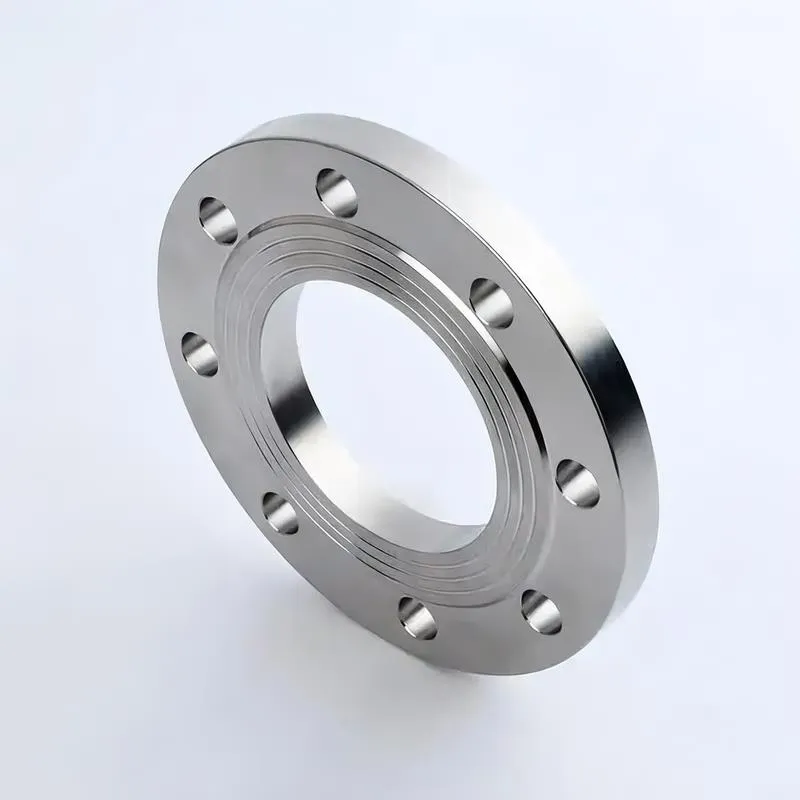
1,We Manufacturing processes are primarily classified into four types:
1:Forging,
2:Casting,
3:Cutting,
4:Rolling.
2,We can manufacture in accordance with these standards.
Standards:
GB Series (Chinese Standards), JB Series (Machinery Standards), HG Series (Chemical Industry Standards), ASME B16.5 (American Standards), BS4504 (British Standards), DIN (German Standards), and JIS (Japanese Standards).
Internationally, there are two primary systems of pipe flange standards: the European system, represented by the German DIN standards (including those of the former Soviet Union), and the American system, represented by the US ANSI pipe flange standards. Other common standards include: the Chinese Ministry of Machinery Industry standards (JB series), the Ministry of Chemical Industry standards (HG series), the Chinese National Standard *GB/T 9112–9124-2010 Steel Pipe Flanges*, as well as US standards (ASME B16.5), British standards (BS4504), German standards (DIN), Japanese standards (JIS), and marine standards (CBM), among others.
The nominal pressure ratings for the PN series are designated by "PN" and comprise the following nine levels: PN2.5, PN6, PN10, PN16, PN25, PN40, PN63, PN100, and PN160.
The nominal pressure ratings for the Class series are designated by "Class" and comprise the following six levels: Class150, Class300, Class600, Class900, Class1500, and Class2500.
Flange Classification
1. **According to Chemical Industry Standards:** Flanges are classified as follows:
Plate Flat Welding Flange (PL), Necked Flat Welding Flange (SO), Necked Butt Welding Flange (WN), Integral Flange (IF), Socket Welding Flange (SW), Threaded Flange (Th), Butt Welding Ring Loose Flange (PJ/SE), Blind Flange (BL), Flat Welding Ring Loose Flange (PJ/PJ), and Lined Blind Flange (BL(s)).
2. **According to Petrochemical (SH) Industry Standards:** Flanges are classified as follows:
Threaded Flange (PL), Butt Welding Flange (WN), Flat Welding Flange (SO), Socket Welding Flange (SW), Loose Flange (LJ), and Blind Flange (no specific designation).
3. **According to Machinery (JB) Industry Standards:** Flanges are classified as follows:
Integral Flange, Butt Welding Flange, Plate Flat Welding Flange, Butt Welding Ring Plate Loose Flange, Flat Welding Ring Plate Loose Flange, Lap Joint Ring Plate Loose Flange, and Blind Flange.
4. **According to Connection Method/Type:** Flanges are classified as follows:
Plate Flat Welding Flange, Necked Flat Welding Flange, Necked Butt Welding Flange, Socket Welding Flange, Threaded Flange, Blind Flange, Necked Butt Welding Ring Loose Flange, Flat Welding Ring Loose Flange, Ring-Type Joint (RTJ) Flange and Blind Flange, Large-Diameter Plate Flange, Large-Diameter High-Neck Flange, Figure-8 Blind Plate, Butt Welding Ring Loose Flange, etc.
5. **According to the Component Being Connected:** Flanges can be classified into Vessel Flanges and Pipe Flanges.
6. **According to Structural Type:** Flanges include Integral Flanges, Threaded Flanges, Flat Welding Flanges, Butt Welding Flanges, Lap Joint (Loose/Swivel) Flanges, and Blind Flanges.
A flange—also referred to as a flange plate or rim—is a component used to connect shafts to one another, or, more commonly, to join the ends of pipes. Flanges are also utilized at the inlet and outlet ports of equipment to facilitate connections between two devices—for instance, the flange on a speed reducer. A "flange connection" or "flanged joint" refers to a detachable joint assembly comprising three interconnected elements—a flange, a gasket, and bolts—that together form a sealed structural unit. In the context of piping systems, a "pipe flange" specifically denotes a flange used for plumbing within the installation; when applied to equipment, it refers to the inlet or outlet flange of that specific device. Flanges feature a series of holes through which bolts are inserted to securely fasten the two flanges together, while a gasket placed between the flanges ensures a leak-proof seal. Flanges are broadly categorized into three types: threaded (screw-in) flanges, welded flanges, and clamp-type flanges. Flanges are invariably used in pairs; threaded flanges are suitable for low-pressure piping applications, whereas welded flanges are required for systems operating at pressures exceeding 4 kilograms per square centimeter. A sealing gasket is inserted between the two flange plates, which are then firmly secured using bolts. The thickness of a flange—as well as the specifications of the bolts used to fasten it—vary depending on the specific pressure rating required for the application. When connecting equipment such as water pumps or valves to piping systems, the corresponding connection points on these devices are often manufactured in the shape of a matching flange; this method of attachment is also referred to as a "flange connection." Generally, any connecting component that utilizes bolts to join and seal the perimeters of two flat surfaces—such as the joints in ventilation ducts—is termed a "flange"; such components may collectively be classified as "flange-type parts." However, since such a connection often constitutes merely a *portion* of a larger device—for instance, the interface between a flange and a water pump—it would be inappropriate to classify the entire water pump itself as a "flange-type part." Conversely, smaller components—such as valves—that feature such flanged interfaces may indeed be appropriately categorized as "flange-type parts."
-:-
For detailed product information, please contact sales.
-:
AISI Grade 18Ni (350) Maraging Steel Flange Product Information
-:-
For detailed product information, please contact sales.
-:
AISI Grade 18Ni (350) Maraging Steel Flange Synonyms
-:-
For detailed product information, please contact sales.
-:
AISI Grade 18Ni (350) Maraging Steel Product Information
-:-
For detailed product information, please contact sales.
-:
# **Product Introduction: AISI Grade 18Ni (350) Maraging Steel**
## **Executive Summary**
**AISI 18Ni (350) Maraging Steel** represents the pinnacle of ultra-high-strength steel technology, offering an exceptional combination of tensile strength (up to 2,450 MPa / 350 ksi), fracture toughness, and dimensional stability. As the strongest grade in the maraging steel family, this precipitation-hardened, low-carbon iron-nickel alloy achieves its extraordinary mechanical properties through a unique age-hardening mechanism rather than conventional martensitic transformation. Characterized by outstanding strength-to-weight ratio, excellent fatigue resistance, and remarkable fabricability in the annealed condition, 18Ni (350) is the material of choice for the most demanding aerospace, defense, and tooling applications where performance supersedes cost considerations.
---
## **1. Chemical Composition & Metallurgical System**
### **Standard Composition Ranges**
| Element | Content Range (% by weight) - **18Ni (350)** | Primary Function |
| :--- | :--- | :--- |
| **Nickel (Ni)** | 17.0 - 19.0 | Forms ultra-low-carbon martensitic matrix; primary strengthening through intermetallic precipitation |
| **Cobalt (Co)** | 11.0 - 12.5 | Reduces solubility of Mo in matrix, enhancing precipitation efficiency; synergistic effect with Mo |
| **Molybdenum (Mo)** | 4.6 - 5.2 | Forms Ni₃Mo intermetallic precipitates with Ti; primary precipitation strengthener |
| **Titanium (Ti)** | 1.3 - 1.6 | Forms Ni₃Ti precipitates; contributes significantly to age-hardening response |
| **Aluminum (Al)** | 0.05 - 0.15 | Deoxidizer; forms Ni₃Al precipitates contributing to secondary hardening |
| **Carbon (C)** | 0.03 max | Kept ultra-low to maximize toughness and weldability |
| **Manganese (Mn)** | 0.10 max | Residual element; minimized to prevent embrittlement |
| **Silicon (Si)** | 0.10 max | Residual element; minimized for purity |
| **Sulfur (S)** | 0.01 max | Impurity control for hot workability |
| **Phosphorus (P)** | 0.01 max | Impurity control for toughness |
| **Boron (B)** | 0.003 - 0.005 | Grain boundary strengthener; improves hardenability |
| **Zirconium (Zr)** | 0.01 - 0.02 | Grain refiner; controls sulfide morphology |
| **Calcium (Ca)** | 0.05 max | Inclusion shape control (optional) |
| **Iron (Fe)** | Balance | Matrix element |
### **Metallurgical Characteristics**
- **Crystal Structure:** Body-centered cubic (BCC) martensite formed without carbon
- **Strengthening Mechanism:** Precipitation hardening of intermetallic compounds (Ni₃Mo, Ni₃Ti, Ni₃Al) within a soft, ductile martensitic matrix
- **Transformation:** Forms soft, ductile martensite on air cooling from austenitizing temperature (~820°C)
- **Aging Response:** Precipitation occurs at 455-510°C (850-950°F) without significant dimensional changes
---
## **2. Physical & Mechanical Properties**
### **A. Fundamental Physical Properties**
| Property | Condition | Value/Range | Notes |
| :--- | :--- | :--- | :--- |
| **Density** | All conditions | 8.10 g/cm³ (0.292 lb/in³) | - |
| **Melting Point** | - | ~1430°C (2605°F) | - |
| **Elastic Modulus** | Aged | 185-190 GPa (26,800-27,500 ksi) | Slight decrease from annealed condition |
| **Shear Modulus** | Aged | 72-75 GPa (10,400-10,900 ksi) | - |
| **Poisson's Ratio** | - | 0.30 | - |
| **Thermal Conductivity** | Aged @ 20°C | 19.0 W/m·K | Lower than conventional steels |
| **Specific Heat Capacity** | @ 20°C | 460 J/kg·K | - |
| **Thermal Expansion Coefficient** | 20-100°C | 10.2 × 10⁻⁶/°C | Lower than conventional steels |
| **Electrical Resistivity** | Aged @ 20°C | 0.70 μΩ·m | Higher than conventional steels |
| **Magnetic Properties** | Annealed/Aged | Ferromagnetic | - |
### **B. Mechanical Properties by Processing Condition**
#### **1. Solution Annealed Condition (Condition A)**
- **Hardness:** 28-32 HRC (typical)
- **Tensile Strength:** 1,030-1,170 MPa (150-170 ksi)
- **Yield Strength (0.2% offset):** 1,000-1,100 MPa (145-160 ksi)
- **Elongation:** 15-18%
- **Reduction of Area:** 65-75%
- **Charpy V-Notch Impact:** 100-130 J (74-96 ft·lb)
- **Fracture Toughness (KIC):** 150-180 MPa√m
- **Condition Purpose:** Optimal for machining, forming, welding
#### **2. Peak Aged Condition (480°C/900°F for 3-6 hours)**
- **Hardness:** 52-54 HRC
- **Tensile Strength:** 2,345-2,450 MPa (340-355 ksi)
- **Yield Strength (0.2% offset):** 2,275-2,380 MPa (330-345 ksi)
- **Elongation:** 8-10%
- **Reduction of Area:** 40-50%
- **Charpy V-Notch Impact:** 25-35 J (18-26 ft·lb)
- **Fracture Toughness (KIC):** 80-100 MPa√m (typical)
- **Plane-Strain Fracture Toughness:** 70-90 MPa√m
#### **3. Overaged Condition (510-540°C/950-1000°F)**
*For enhanced toughness with slight strength reduction*
- **Hardness:** 48-51 HRC
- **Tensile Strength:** 2,070-2,240 MPa (300-325 ksi)
- **Yield Strength:** 1,930-2,140 MPa (280-310 ksi)
- **Elongation:** 10-12%
- **Reduction of Area:** 45-55%
- **Charpy V-Notch Impact:** 40-60 J (30-44 ft·lb)
- **Fracture Toughness (KIC):** 100-130 MPa√m
### **C. Specialized Properties**
- **Fatigue Strength:** 620-690 MPa (90-100 ksi) at 10⁷ cycles (R=0)
- **Fatigue Crack Growth Rate:** Exceptionally low da/dN; superior to conventional ultra-high-strength steels
- **Stress-Corrosion Cracking Threshold:** ~1,380 MPa (200 ksi) in 3.5% NaCl
- **Notch Sensitivity:** Relatively low for its strength level
- **Dimensional Stability:** Minimal distortion during aging (<0.0005 in/in)
- **Cryogenic Performance:** Maintains good toughness down to -196°C
- **Thermal Stability:** Resists overaging up to 425°C (800°F) for short exposures
---
## **3. International Standards & Specifications**
### **Primary Governing Standards**
| Standard/Organization | Designation | Title/Scope |
| :--- | :--- | :--- |
| **AISI/SAE** | - | Grade designated commercially as 18Ni (350) |
| **ASTM** | ASTM A538 | Standard Specification for Precipitation-Hardening Iron Base Superalloy Bars, Forgings, and Forging Stock for High-Temperature Service |
| **AMS** | AMS 6521 | Bars, forgings, and tubing (solution treated) |
| **AMS** | AMS 6522 | Plate, sheet, and strip (solution treated) |
| **AMS** | AMS 6523 | Bars, forgings, and tubing (solution treated and aged) |
| **AMS** | AMS 6524 | Plate, sheet, and strip (solution treated and aged) |
| **UNS** | K92890 | Unified Numbering System |
| **Aerospace Material** | - | Widely used but often to proprietary specifications |
### **International Equivalents & Cross-References**
| Country/Region | Designation | Standard | Notes |
| :--- | :--- | :--- | :--- |
| **International** | **X2NiCoMo18-9-5** | ISO 683-13 | Similar composition but not exact equivalent |
| **European** | **1.6355** | EN 10302 | Similar maraging steel |
| **Germany** | **- (No direct equivalent)** | DIN | Custom production to international specifications |
| **Japan** | **- (No direct equivalent)** | JIS | Custom production to international specifications |
| **China** | **00Ni18Co12Mo4Ti** | GB/T 14992 | Approximate equivalent |
| **Russia** | **N18K9M5T** | GOST 5632 | Similar maraging steel |
| **India** | **- (No direct equivalent)** | IS | Custom production to international specifications |
**Note:** 18Ni (350) is often produced to proprietary or customer-specific specifications due to its specialized applications and critical performance requirements.
---
## **4. Product Applications & Industries**
### **Available Product Forms**
- **Bar Stock:** 10-300mm diameter, hot-rolled or forged
- **Plate:** 5-150mm thickness, up to 3,000mm width
- **Sheet & Strip:** 0.5-5mm thickness, various widths
- **Forgings:** Closed-die and open-die, complex shapes
- **Tubing & Pipe:** Seamless and welded
- **Wire & Wire Rod:** For fasteners and specialized components
- **Castings:** Investment castings for complex geometries
- **Powder Metallurgy:** For near-net-shape components
### **Primary Industry Applications**
#### **1. Aerospace & Defense (Premium Applications)**
- **Rocket & Missile Components:**
- Rocket motor cases (solid fuel)
- Missile airframes and skins
- Launch tube components
- Separation system hardware
- **Aircraft Components:**
- Landing gear components for fighter aircraft
- Arrestor hooks for carrier-based aircraft
- High-load structural fittings
- Helicopter rotor hubs and components
- **Space Systems:**
- Satellite deployment mechanisms
- Spacecraft structural components
- Re-entry vehicle components
#### **2. Tooling & Die Applications**
- **Plastic Injection Molds:** For high-pressure, high-precision molding
- **Die Casting Dies:** Particularly for aluminum and magnesium
- **Extrusion Dies:** For high-strength alloys
- **Forging Dies & Inserts:** For hot forging operations
- **Precision Gages & Fixtures:** Where dimensional stability is critical
#### **3. Specialized Industrial Applications**
- **High-Pressure Vessels:** For isostatic pressing and research
- **Fasteners:** Ultra-high-strength bolts and studs for critical connections
- **Surgical Instruments:** Specialized surgical tools and implants (biocompatible variants)
- **Marine Systems:** Critical components for submarines and deep-sea vessels
- **Racing Components:** Formula 1 gearbox components, suspension parts
#### **4. Nuclear & Research Applications**
- **Centrifuge Components:** For uranium enrichment
- **Research Equipment:** High-stress components in particle accelerators
- **Containment Vessels:** For specialized research applications
---
## **5. Heat Treatment Technology**
### **Standard Thermal Processing Cycle**
#### **1. Solution Annealing (Conditioning Treatment)**
- **Temperature:** 815-830°C (1,500-1,525°F)
- **Time:** 1 hour per inch of thickness (minimum 1 hour)
- **Cooling:** Air cool or faster (forms soft, ductile martensite)
- **Result:** Homogenized structure ready for aging or fabrication
- **Note:** This condition provides optimal machinability and formability
#### **2. Aging (Precipitation Hardening)**
- **Temperature:** 480°C ± 5°C (900°F ± 10°F)
- **Time:** 3-6 hours (typically 4 hours for full hardening)
- **Cooling:** Air cool
- **Peak Hardness:** Achieved at this temperature range
- **Dimensional Change:** Typically <0.05% (minimal distortion)
#### **3. Overaging (Optional for Enhanced Toughness)**
- **Temperature:** 510-540°C (950-1,000°F)
- **Time:** 3-6 hours
- **Purpose:** Sacrifices ~5% strength for ~50% improvement in toughness
- **Applications:** Where fracture toughness is critical
### **Special Processing Considerations**
- **Double Aging:** Sometimes used for maximum properties (e.g., 480°C + 510°C)
- **Interrupted Aging:** For complex components to minimize residual stresses
- **Stress Relieving:** Performed at 650°C (1,200°F) if needed after rough machining
### **Surface Hardening Options**
- **Nitriding:** Can achieve surface hardness >70 HRC
- **Ion Implantation:** For specialized wear applications
- **PVD/CVD Coatings:** TiN, CrN, DLC for specific surface properties
---
## **6. Manufacturing & Fabrication Characteristics**
### **Machinability Assessment**
- **Annealed Condition:** 40-45% of B1112 free-machining steel
- **Aged Condition:** 15-20% of B1112 (requires carbide or ceramic tools)
- **Recommended Practices:**
- **Annealed State Machining:** Preferred for complex parts
- **Tooling:** Carbide or ceramic inserts with positive rake
- **Speeds/Feeds:** Conservative parameters due to work hardening tendency
- **Coolant:** High-pressure, high-volume flood cooling essential
- **Finishing:** Grinding or EDM for aged material
### **Weldability Characteristics**
**Rating: GOOD (with proper procedures)**
#### **Welding Recommendations**
1. **Base Condition:** Weld in solution annealed condition
2. **Filler Metals:** Matching composition (custom wire) or nickel-based alloys
3. **Processes:**
- **GTAW (TIG):** Preferred for critical joints
- **GMAW (MIG):** Suitable for less critical applications
- **PAW:** For thick sections
- **EBW/LBW:** Excellent for precision joints
4. **Preheat:** Generally not required for thin sections
5. **Post-Weld Heat Treatment:**
- **Solution Anneal:** Full solution treatment after welding recommended
- **Re-age:** After solution treatment for full properties
- **Direct Aging:** Possible for some applications but may reduce HAZ toughness
### **Formability & Hot Working**
- **Cold Forming:** Limited in aged condition; good in annealed condition
- **Hot Working Temperature:** 1,100-900°C (2,000-1,650°F)
- **Forging:** Performs well with proper temperature control
- **Heat Treatment After Forming:** Required to restore optimal properties
---
## **7. Quality Assurance & Testing**
### **Standard Certification Requirements**
1. **Chemical Analysis:** Complete trace element analysis
2. **Mechanical Properties:** Tensile, impact, hardness at room temperature
3. **Fracture Toughness:** KIC or equivalent testing
4. **Non-Destructive Testing:** UT, RT, MT, or PT per specification
5. **Microstructural Examination:** Grain size, cleanliness, inclusion rating
6. **Hardenability Verification:** Through actual aging and testing
### **Specialized Testing (When Specified)**
- **Stress-Corrosion Testing:** In 3.5% NaCl or other environments
- **Fatigue Testing:** S-N curves and crack growth rates
- **Cryogenic Testing:** For low-temperature applications
- **High-Temperature Testing:** For thermal stability verification
- **NDE:** Advanced ultrasonic, eddy current, or radiographic methods
### **Traceability & Documentation**
- Full traceability from melt to final product
- Certified test reports with all processing details
- Compliance with industry-specific quality standards (AS9100, NADCAP, etc.)
---
## **8. Design & Engineering Guidelines**
### **Advantages of 18Ni (350)**
1. **Strength-to-Weight Ratio:** Unmatched among ferrous alloys
2. **Fracture Toughness:** Exceptional for its strength level
3. **Dimensional Stability:** Minimal distortion during heat treatment
4. **Fabricability:** Good machinability and weldability in annealed condition
5. **Thermal Stability:** Maintains properties at moderately elevated temperatures
6. **Property Consistency:** Reproducible mechanical properties
### **Design Considerations**
- **Notch Sensitivity:** Lower than quenched-and-tempered steels of similar strength
- **Stress Corrosion:** Requires protective coatings or environmental control
- **Cost:** Premium material - justify through performance requirements
- **Section Size Limitations:** Through-hardening capability excellent
- **Fatigue Design:** Superior fatigue crack growth resistance
### **Economic Considerations**
- **Material Cost:** 15-30× conventional alloy steels
- **Processing Cost:** Heat treatment relatively simple and low-cost
- **Total Life Cycle Cost:** Often favorable for critical applications due to reliability
- **Availability:** Limited suppliers with specialized capabilities
---
## **9. Comparative Analysis: Maraging Steel Grades**
| Grade | Ni% | Co% | Mo% | Ti% | UTS (MPa) | YS (MPa) | KIC (MPa√m) | Primary Applications |
| :--- | :--- | :--- | :--- | :--- | :--- | :--- | :--- | :--- |
| **18Ni (200)** | 18 | 8.5 | 3.3 | 0.2 | 1,380 | 1,240 | 175+ | General ultra-high strength |
| **18Ni (250)** | 18 | 8.0 | 5.0 | 0.4 | 1,720 | 1,550 | 140+ | Aerospace structures |
| **18Ni (300)** | 18 | 9.0 | 5.0 | 0.7 | 2,070 | 1,900 | 110+ | Rocket cases, critical components |
| **18Ni (350)** | 18 | 12.0 | 5.0 | 1.4 | 2,450 | 2,300 | 80-100 | Maximum strength applications |
| **Cobalt-Free** | 18 | - | 3.0 | 1.2 | 1,550 | 1,450 | 120+ | Cost-sensitive applications |
---
## **10. Special Considerations & Limitations**
### **Corrosion Resistance**
- **General:** Similar to low-alloy steels - requires protection
- **Protection Methods:** Cadmium plating, zinc-nickel, paints, coatings
- **Stress-Corrosion:** Susceptible in aggressive environments at high stresses
### **Temperature Limitations**
- **Maximum Service:** 425°C (800°F) for short-term exposure
- **Long-Term Exposure:** Overaging occurs above 400°C (750°F)
- **Cryogenic Service:** Excellent down to -196°C (-320°F)
### **Radiation Effects**
- Moderate resistance to neutron irradiation
- Some embrittlement at high fluence levels
- Consider for nuclear applications with appropriate testing
---
## **Technical Summary & Selection Guidelines**
**Select 18Ni (350) Maraging Steel when:**
1. Strength requirements exceed 2,200 MPa (320 ksi) with good toughness
2. Dimensional stability during heat treatment is critical
3. Strength-to-weight ratio is a primary design driver
4. Fabrication requires welding or machining before final hardening
5. Application justifies premium material cost
**Consider Alternatives when:**
1. Cost is a primary constraint
2. Corrosion resistance is needed without protective systems
3. Service temperature exceeds 400°C (750°F) continuously
4. Section sizes are massive (consider forgability and hardenability)
5. Lower strength grades (250 or 300) meet requirements at lower cost
---
## **Future Developments & Research Directions**
1. **Additive Manufacturing:** Development of specialized powders for AM
2. **Grain Refinement:** Ultrafine-grained variants for enhanced properties
3. **Cobalt Reduction:** Development of lower-cobalt or cobalt-free grades
4. **Composites:** Maraging steel matrix composites
5. **Smart Processing:** Advanced thermal processing for property optimization
6. **Recycling:** Improved recycling technologies for this high-value material
---
**AISI 18Ni (350) Maraging Steel** represents the ultimate achievement in ultra-high-strength ferrous alloy development, offering a unique combination of properties unattainable in conventional steel systems. Its specialized nature, premium cost, and exceptional performance make it the material of last resort when no other material can meet the demanding requirements of the most critical aerospace, defense, and tooling applications. Proper application requires thorough understanding of its characteristics, careful design, and controlled manufacturing processes to fully realize its extraordinary potential.
-:-
For detailed product information, please contact sales.
-:
AISI Grade 18Ni (350) Maraging Steel Specification
Dimensions
Size:
Diameter 20-1000 mm Length <4008 mm
Size:We can customized as required
Standard:
Per your request or drawing
We can customized as required
Properties(Theoretical)
Chemical Composition
-:-
For detailed product information, please contact sales.
-:
AISI Grade 18Ni (350) Maraging Steel Properties
-:-
For detailed product information, please contact sales.
-:
Applications of AISI Grade 18Ni (350) Maraging Steel Flange
-:-
For detailed product information, please contact sales.
-:
Chemical Identifiers AISI Grade 18Ni (350) Maraging Steel Flange
-:-
For detailed product information, please contact sales.
-:
Packing of AISI Grade 18Ni (350) Maraging Steel Flange
-:-
For detailed product information, please contact sales.
-:
Standard Packing:
-:-
For detailed product information, please contact sales.
-:
Typical bulk packaging includes palletized plastic 5 gallon/25 kg. pails, fiber and Steel Flange drums to 1 ton super sacks in full container (FCL) or truck load (T/L) quantities. Research and sample quantities and hygroscopic, oxidizing or other air sensitive materials may be packaged under argon or vacuum. Solutions are packaged in polypropylene, plastic or glass jars up to palletized 479 gallon liquid totes Special package is available on request. E FORUs’ is carefully handled to minimize damage during storage and transportation and to preserve the quality of our products in their original condition