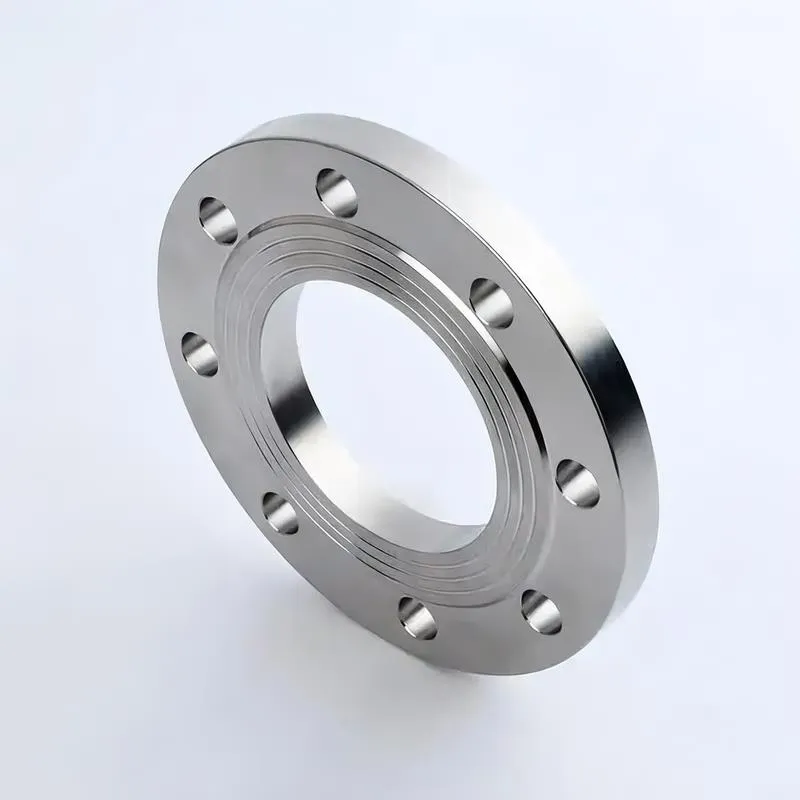
1,We Manufacturing processes are primarily classified into four types:
1:Forging,
2:Casting,
3:Cutting,
4:Rolling.
2,We can manufacture in accordance with these standards.
Standards:
GB Series (Chinese Standards), JB Series (Machinery Standards), HG Series (Chemical Industry Standards), ASME B16.5 (American Standards), BS4504 (British Standards), DIN (German Standards), and JIS (Japanese Standards).
Internationally, there are two primary systems of pipe flange standards: the European system, represented by the German DIN standards (including those of the former Soviet Union), and the American system, represented by the US ANSI pipe flange standards. Other common standards include: the Chinese Ministry of Machinery Industry standards (JB series), the Ministry of Chemical Industry standards (HG series), the Chinese National Standard *GB/T 9112–9124-2010 Steel Pipe Flanges*, as well as US standards (ASME B16.5), British standards (BS4504), German standards (DIN), Japanese standards (JIS), and marine standards (CBM), among others.
The nominal pressure ratings for the PN series are designated by "PN" and comprise the following nine levels: PN2.5, PN6, PN10, PN16, PN25, PN40, PN63, PN100, and PN160.
The nominal pressure ratings for the Class series are designated by "Class" and comprise the following six levels: Class150, Class300, Class600, Class900, Class1500, and Class2500.
Flange Classification
1. **According to Chemical Industry Standards:** Flanges are classified as follows:
Plate Flat Welding Flange (PL), Necked Flat Welding Flange (SO), Necked Butt Welding Flange (WN), Integral Flange (IF), Socket Welding Flange (SW), Threaded Flange (Th), Butt Welding Ring Loose Flange (PJ/SE), Blind Flange (BL), Flat Welding Ring Loose Flange (PJ/PJ), and Lined Blind Flange (BL(s)).
2. **According to Petrochemical (SH) Industry Standards:** Flanges are classified as follows:
Threaded Flange (PL), Butt Welding Flange (WN), Flat Welding Flange (SO), Socket Welding Flange (SW), Loose Flange (LJ), and Blind Flange (no specific designation).
3. **According to Machinery (JB) Industry Standards:** Flanges are classified as follows:
Integral Flange, Butt Welding Flange, Plate Flat Welding Flange, Butt Welding Ring Plate Loose Flange, Flat Welding Ring Plate Loose Flange, Lap Joint Ring Plate Loose Flange, and Blind Flange.
4. **According to Connection Method/Type:** Flanges are classified as follows:
Plate Flat Welding Flange, Necked Flat Welding Flange, Necked Butt Welding Flange, Socket Welding Flange, Threaded Flange, Blind Flange, Necked Butt Welding Ring Loose Flange, Flat Welding Ring Loose Flange, Ring-Type Joint (RTJ) Flange and Blind Flange, Large-Diameter Plate Flange, Large-Diameter High-Neck Flange, Figure-8 Blind Plate, Butt Welding Ring Loose Flange, etc.
5. **According to the Component Being Connected:** Flanges can be classified into Vessel Flanges and Pipe Flanges.
6. **According to Structural Type:** Flanges include Integral Flanges, Threaded Flanges, Flat Welding Flanges, Butt Welding Flanges, Lap Joint (Loose/Swivel) Flanges, and Blind Flanges.
A flange—also referred to as a flange plate or rim—is a component used to connect shafts to one another, or, more commonly, to join the ends of pipes. Flanges are also utilized at the inlet and outlet ports of equipment to facilitate connections between two devices—for instance, the flange on a speed reducer. A "flange connection" or "flanged joint" refers to a detachable joint assembly comprising three interconnected elements—a flange, a gasket, and bolts—that together form a sealed structural unit. In the context of piping systems, a "pipe flange" specifically denotes a flange used for plumbing within the installation; when applied to equipment, it refers to the inlet or outlet flange of that specific device. Flanges feature a series of holes through which bolts are inserted to securely fasten the two flanges together, while a gasket placed between the flanges ensures a leak-proof seal. Flanges are broadly categorized into three types: threaded (screw-in) flanges, welded flanges, and clamp-type flanges. Flanges are invariably used in pairs; threaded flanges are suitable for low-pressure piping applications, whereas welded flanges are required for systems operating at pressures exceeding 4 kilograms per square centimeter. A sealing gasket is inserted between the two flange plates, which are then firmly secured using bolts. The thickness of a flange—as well as the specifications of the bolts used to fasten it—vary depending on the specific pressure rating required for the application. When connecting equipment such as water pumps or valves to piping systems, the corresponding connection points on these devices are often manufactured in the shape of a matching flange; this method of attachment is also referred to as a "flange connection." Generally, any connecting component that utilizes bolts to join and seal the perimeters of two flat surfaces—such as the joints in ventilation ducts—is termed a "flange"; such components may collectively be classified as "flange-type parts." However, since such a connection often constitutes merely a *portion* of a larger device—for instance, the interface between a flange and a water pump—it would be inappropriate to classify the entire water pump itself as a "flange-type part." Conversely, smaller components—such as valves—that feature such flanged interfaces may indeed be appropriately categorized as "flange-type parts."
-:-
For detailed product information, please contact sales.
-:
AISI 4024 Steel Flange Product Information
-:-
For detailed product information, please contact sales.
-:
AISI 4024 Steel Flange Synonyms
-:-
For detailed product information, please contact sales.
-:
AISI 4024 Steel Product Information
-:-
For detailed product information, please contact sales.
-:
# **Product Introduction: AISI 4024 Steel**
## **Executive Summary**
**AISI 4024** is a low-carbon, sulfur-enhanced molybdenum alloy steel engineered for **improved machinability in case-hardening applications**. As a member of the AISI 40xx series, it shares a similar base composition with AISI 4023 (approximately 0.20-0.25% carbon, 0.20-0.30% molybdenum) but with a **controlled sulfur addition** (0.15-0.25%) to promote chip breaking and reduce tool wear during machining. This grade is specifically designed to offer the mechanical performance benefits of a molybdenum case-hardening steel while addressing the manufacturing efficiency needs of high-volume production where machining costs and cycle times are significant factors. AISI 4024 provides an optimal balance of machinability, heat treatability, and final component performance for automotive, fastener, and general industrial applications.
---
## **1. Chemical Composition**
### **Standard Composition Ranges**
| Element | Content Range (% by weight) - **AISI 4024** | Primary Function |
| :--- | :--- | :--- |
| **Carbon (C)** | 0.20 - 0.25 | Provides moderate core strength; optimized for machinability and effective case absorption during carburizing |
| **Molybdenum (Mo)** | 0.20 - 0.30 | Enhances hardenability, refines grain structure, improves temper resistance, reduces susceptibility to temper embrittlement |
| **Sulfur (S)** | **0.15 - 0.25** | **Key feature:** Forms manganese sulfide (MnS) inclusions that act as chip breakers, significantly improving machinability |
| **Manganese (Mn)** | 0.70 - 0.90 | Balances sulfur to form MnS inclusions; deoxidizer, improves hardenability |
| **Silicon (Si)** | 0.15 - 0.35 | Deoxidizer, strengthens ferrite matrix |
| **Phosphorus (P)** | 0.035 max | Impurity (controlled for ductility) |
| **Nickel (Ni)** | - | Not specified; trace amounts may be present |
| **Chromium (Cr)** | - | Not specified; trace amounts may be present |
| **Iron (Fe)** | Balance | Matrix element |
### **Key Metallurgical Features**
- **Machinability Enhancement:** Controlled sulfur forms **manganese sulfide (MnS) inclusions** that act as internal chip breakers, reducing cutting forces and improving surface finish
- **Anisotropy Consideration:** Sulfur inclusions can cause slight directional properties (lower transverse ductility and impact strength); components should be designed with this in mind
- **Core Properties:** Similar to 4023 with good ductility and moderate strength for a case-hardening steel
- **Hardenability:** Molybdenum provides enhanced hardenability compared to non-alloyed steels
- **Economic Manufacturing:** Designed to reduce total manufacturing cost through improved machining productivity
---
## **2. Physical & Mechanical Properties**
### **A. Fundamental Physical Properties**
| Property | Condition | Value/Range | Notes |
| :--- | :--- | :--- | :--- |
| **Density** | All conditions | 7.85 g/cm³ (0.284 lb/in³) | - |
| **Melting Point** | - | ~1510°C (2750°F) | Slightly lower due to sulfur content |
| **Elastic Modulus** | Annealed | 200-205 GPa (29,000-29,700 ksi) | - |
| **Shear Modulus** | - | 80-82 GPa (11,600-11,900 ksi) | - |
| **Poisson's Ratio** | - | 0.29 | - |
| **Thermal Conductivity** | 100°C | 44.5 W/m·K | - |
| **Specific Heat Capacity** | 20°C | 475 J/kg·K | - |
| **Thermal Expansion Coefficient** | 20-100°C | 11.9 × 10⁻⁶/°C | - |
| **Electrical Resistivity** | 20°C | 0.23 μΩ·m | Slightly higher due to inclusions |
| **Magnetic Properties** | Below Curie temp | Ferromagnetic | - |
### **B. Mechanical Properties (Core - Before Case Hardening)**
#### **1. Annealed/Normalized Condition (Primary Machining State)**
- **Hardness:** 149-179 HB (Brinell)
- **Tensile Strength:** 485-620 MPa (70-90 ksi)
- **Yield Strength (0.2% offset):** 345-485 MPa (50-70 ksi)
- **Elongation (Longitudinal):** 25-30% in 50mm
- **Elongation (Transverse):** **15-20% in 50mm** *(reduced due to sulfide inclusions)*
- **Reduction of Area (Longitudinal):** 60-70%
- **Reduction of Area (Transverse):** **40-50%** *(reduced due to sulfide inclusions)*
- **Charpy V-Notch Impact (Longitudinal):** 70-100 J (52-74 ft-lb) at room temperature
- **Charpy V-Notch Impact (Transverse):** **40-60 J (30-44 ft-lb)** *(reduced due to sulfide inclusions)*
- **Machinability Rating:** **75-85% of B1112** *(Excellent - key advantage)*
#### **2. Core Properties After Case Hardening & Tempering**
*Typical heat treatment: Carburize to 0.6-1.2 mm case, quench, temper at 150-200°C*
| Property | Typical Value Range | Notes |
| :--- | :--- | :--- |
| **Core Hardness** | 25-35 HRC | - |
| **Core Tensile Strength** | 690-860 MPa (100-125 ksi) | - |
| **Core Yield Strength** | 550-690 MPa (80-100 ksi) | - |
| **Core Elongation** | 12-18% | Slightly reduced compared to non-resulfurized grades |
| **Case Hardness** | 58-63 HRC | - |
| **Effective Case Depth** | 0.5-1.2 mm (0.020-0.047") | Standard range |
| **Surface Carbon Content** | 0.75-0.90% | Optimized for wear resistance |
| **Bending Fatigue Strength** | 380-480 MPa (55-70 ksi) | At 10⁷ cycles with carburized case |
#### **3. Through-Hardened Properties (Alternative Use)**
*When used for direct quenching and tempering without carburizing*
- **Hardness (as-quenched):** 40-45 HRC (oil quenched)
- **Tensile Strength (Q&T @ 540°C):** 860-1030 MPa (125-150 ksi)
- **Yield Strength:** 690-860 MPa (100-125 ksi)
### **C. Special Properties**
- **Machinability:** **Excellent** - primary advantage over non-resulfurized grades
- **Chip Formation:** Produces short, broken chips that are easily cleared
- **Tool Life:** Significantly extended compared to non-resulfurized grades (50-100% improvement)
- **Surface Finish:** Good to excellent in machining operations
- **Hardenability:** Good for a lean alloy steel; suitable for sections up to 40-50mm
- **Anisotropy:** Mechanical properties are **directionally dependent**; longitudinal properties are superior to transverse properties
---
## **3. International Standards & Specifications**
### **Primary Governing Standards**
| Standard/Organization | Designation | Title/Scope |
| :--- | :--- | :--- |
| **AISI/SAE** | 4024 | Standard grade designation |
| **UNS** | G40240 | Unified Numbering System |
| **ASTM** | A534 | Standard Specification for Carburizing Steels |
| **ASTM** | A29/A29M | Standard Specification for Steel Bars, Carbon and Alloy, Hot-Wrought |
| **SAE** | J404, J412 | Chemical compositions and hardenability |
| **AMS** | - | Not commonly specified for aerospace (due to sulfur content) |
### **International Equivalents & Cross-References**
| Country/Region | Equivalent Designation | Standard | Notes |
| :--- | :--- | :--- | :--- |
| **ISO** | **- (See Note)** | ISO 683-11 | No direct equivalent; similar to resulfurized case-hardening steels |
| **European** | **- (See Note)** | EN 10084 | No direct equivalent; concept similar to resulfurized grades |
| **Germany** | **- (See Note)** | DIN 17210 | No direct equivalent; similar to 20MoCr4 but with S |
| **Japan** | **- (See Note)** | JIS G4102 | No common direct equivalent |
| **China** | **Y20Mo** | GB/T 3077 | Similar resulfurized molybdenum steel concept |
| **India** | **20MoS40** | IS 5517 | Similar resulfurized molybdenum steel |
| **Hardenability Variant** | **4024H** | SAE J1268 | Potentially available |
**Note:** AISI 4024 is primarily a North American grade. The "4" suffix in AISI/SAE designations typically indicates resulfurized versions of standard grades. International procurement typically requires specification by chemical composition rather than grade name.
---
## **4. Product Applications & Industries**
### **Available Product Forms**
- **Bar Stock:** Hot-rolled rounds, squares, hexagons (most common)
- **Wire Rod:** For high-volume cold heading operations
- **Cold-Finished Bars:** For precision machining applications
- **Forgings:** For specific component geometries requiring machining
### **Primary Industry Applications**
#### **1. Automotive & Transportation (High-Volume Components)**
- **Fasteners:** High-volume bolts, screws, studs, and special fasteners
- **Transmission Components:** Synchronizer rings, shift forks, thrust washers
- **Engine Components:** Valve guides, tappets, cam followers, rocker arms
- **Steering & Suspension:** Tie rod ends, ball studs, linkage pins
- **Electrical Components:** Starter motor parts, alternator components
#### **2. Fastener Manufacturing**
- **Grade 5 Fasteners:** Bolts, screws, and studs requiring case hardening
- **Special Fasteners:** Automotive, appliance, and construction fasteners
- **Cold-Headed Parts:** Components produced by cold forming processes
#### **3. Industrial Equipment & Machinery**
- **Hydraulic Components:** Valve bodies, pump parts, cylinder components
- **Gear Manufacturing:** Medium-duty gears requiring extensive machining
- **Power Tool Components:** Gears, shafts, and housings
- **Appliance Parts:** Gears, levers, and moving components
- **Agricultural Equipment:** Implement parts requiring machining and case hardening
#### **4. General Manufacturing**
- **Shafts & Axles:** Light to medium-duty applications
- **Bushings & Bearings:** Case-hardened bearing surfaces
- **Tooling Components:** Jigs, fixtures, and wear plates
- **Consumer Products:** Durable hardware, lock components, recreational equipment parts
---
## **5. Heat Treatment Technology**
### **Case Hardening Processes**
#### **1. Carburizing (Standard Process)**
- **Temperature:** 900-930°C (1650-1705°F)
- **Atmosphere:** Endothermic gas with natural gas enrichment
- **Case Depth:** Typically 0.5-1.2 mm (0.020-0.047")
- **Surface Carbon:** 0.75-0.90%
- **Quenching:** Oil quench with moderate agitation
- **Tempering:** 150-200°C (300-390°F) for 1-2 hours
#### **2. Carbonitriding (Common for Fasteners)**
- **Temperature:** 815-870°C (1500-1600°F)
- **Atmosphere:** Endothermic gas with ammonia addition
- **Case Depth:** 0.1-0.5 mm (0.004-0.020")
- **Advantages:** Faster processing, better dimensional control, suitable for thin cases
### **Special Considerations for Resulfurized Steel**
- **Surface Integrity:** Sulfur can potentially affect surface finish during heat treatment; proper atmosphere control is essential
- **Quenching:** Standard oil quenching is typically used
- **Tempering:** Similar to non-resulfurized grades
- **Distortion:** Comparable to standard 4023; sulfide inclusions may slightly affect distortion patterns
### **Typical Processing Sequence**
1. **Hot Rolling/Forging:** To final or near-final shape
2. **Annealing/Normalizing:** For optimal machinability
3. **Machining:** Extensive machining operations leveraging excellent machinability
4. **Carburizing/Carbonitriding:** To develop hard case
5. **Quenching and Tempering:** To achieve final properties
6. **Finishing:** Grinding, plating, or other surface treatments as required
---
## **6. Manufacturing & Fabrication Characteristics**
### **Machinability Assessment**
- **Rating:** **75-85% of B1112** - **Excellent** for an alloy steel
- **Key Advantage:** Sulfide inclusions promote chip breaking, reducing cutting forces by 15-25%
- **Tool Life:** 50-100% longer than non-resulfurized 4023 under similar conditions
- **Power Consumption:** Reduced due to lower cutting forces
### **Recommended Machining Practices**
| Operation | Speed (m/min) | Feed (mm/rev) | Tool Material | Notes |
| :--- | :--- | :--- | :--- | :--- |
| **Turning** | 90-140 | 0.15-0.35 | Carbide | High speeds achievable with good chip control |
| **Drilling** | 30-45 | 0.10-0.25 | HSS/Carbide | Excellent chip clearance |
| **Milling** | 80-120 | 0.08-0.25 | Carbide | Good surface finish achievable |
| **Tapping** | 15-25 | - | HSS | Reduced tap breakage risk |
| **Broaching** | 5-15 | - | HSS | Excellent for high-volume production |
### **Weldability Characteristics**
**Rating: POOR (generally not recommended)**
#### **Welding Considerations**
1. **Hot Cracking:** High sulfur content significantly increases susceptibility to hot cracking
2. **Porosity:** Sulfur can cause porosity in welds
3. **Recommendation:** **Avoid welding if possible**
4. **If Welding is Unavoidable:**
- Use low-sulfur filler metals
- Employ buttering techniques
- Extensive preheat (200-300°C) and post-weld heat treatment
- Consider only for non-critical, non-fatigue applications
### **Formability & Hot Working**
- **Hot Working:** Good within normal hot working temperature ranges (1150-900°C)
- **Cold Formability:** Fair in annealed condition; reduced compared to non-resulfurized grades due to sulfide inclusions
- **Forging:** Performs well with proper temperature control
- **Directional Properties:** Forming operations should consider anisotropic behavior
---
## **7. Quality Assurance & Testing**
### **Standard Testing**
- **Chemical Analysis:** Particularly important for sulfur content control
- **Machinability Testing:** Often performed to verify chip characteristics
- **Hardness Testing:** Brinell or Rockwell of supplied material
- **Microstructural Examination:** To evaluate sulfide inclusion morphology and distribution
### **Inclusion Rating (Per ASTM E45 or Equivalent)**
- **Sulfide Inclusions:** Typically Type A (sulfides), possibly Type B (alumina) and Type D (globular oxides)
- **Rating:** Generally controlled to fine dispersion for optimal machinability without excessive property degradation
### **Directional Property Testing**
For critical applications, testing may be required in both:
- **Longitudinal Direction:** Along the rolling/forging direction
- **Transverse Direction:** Across the rolling/forging direction
---
## **8. Design & Engineering Guidelines**
### **Advantages of AISI 4024**
1. **Superior Machinability:** Significantly reduced machining costs and time
2. **Good Heat Treatment Response:** Effective case hardening with molybdenum benefits
3. **Cost-Effective Production:** Lower total manufacturing cost for high-volume parts
4. **Consistent Performance:** Reliable material behavior in production environments
### **Design Considerations**
1. **Directional Loading:** Design to load components primarily in the longitudinal direction when possible
2. **Impact Loading:** Avoid in transverse direction for highly stressed applications
3. **Case Depth:** Keep within recommended ranges (0.5-1.2mm typical)
4. **Alternative Materials:** For applications requiring welding or isotropic properties, consider non-resulfurized grades
### **Economic Considerations**
- **Material Cost:** Slightly higher than non-resulfurized grades due to processing controls
- **Machining Cost:** **Significantly lower** - primary economic advantage
- **Tooling Cost:** Reduced due to extended tool life
- **Total Cost:** Generally lower for high-volume machined components
---
## **9. Comparative Analysis: 4023 vs. 4024**
| Property | AISI 4023 | AISI 4024 | Advantage |
| :--- | :--- | :--- | :--- |
| **Sulfur Content** | 0.040 max | 0.15-0.25 | 4024 for machinability |
| **Machinability** | 65-70% of B1112 | **75-85% of B1112** | **4024 superior** |
| **Transverse Ductility** | Good | **Reduced** | 4023 superior |
| **Transverse Impact** | Good | **Reduced** | 4023 superior |
| **Weldability** | Good | **Poor** | 4023 superior |
| **Chip Control** | Fair | **Excellent** | **4024 superior** |
| **Tool Life** | Standard | **Extended** | **4024 superior** |
| **Production Rate** | Standard | **Higher** | **4024 superior** |
| **Cost per Part** | Standard | **Lower (high volume)** | **4024 superior** |
---
## **10. Technical Summary & Selection Guidelines**
### **Optimal Applications for AISI 4024**
1. **High-Volume Machined Components:** Where machining cost dominates total cost
2. **Automotive Fasteners:** Bolts, studs, and special fasteners requiring case hardening
3. **Complex Machined Parts:** Components requiring extensive milling, drilling, or tapping
4. **Production Environments:** Where reduced tool changes and increased machine utilization are valuable
5. **Non-Welded Assemblies:** Components joined by mechanical means rather than welding
### **Selection Criteria**
**Choose AISI 4024 when:**
- Component requires extensive machining operations
- Production volume is medium to high
- Machining costs are a significant portion of total cost
- Component will not be welded
- Primary loading is in the longitudinal direction
- Good chip control is important for automated machining
**Choose AISI 4023 (or similar non-resulfurized grade) when:**
- Welding is required
- Isotropic properties are critical
- Transverse ductility and impact resistance are important
- Production volume is low (machining savings don't offset material cost)
- Component experiences multi-directional loading
### **Processing Recommendations**
1. **Machining:** Leverage high speeds and feeds; monitor chip formation
2. **Heat Treatment:** Standard carburizing/carbonitriding processes apply
3. **Quality Focus:** Monitor inclusion distribution and directional properties
4. **Design Adaptation:** Orient critical features with rolling direction when possible
---
## **Market Position & Future Trends**
### **Current Market Position**
- **Primary Market:** North American automotive and fastener industries
- **Volume Usage:** High in specific fastener and automotive component applications
- **Competitive Position:** Niche material optimized for machining productivity
- **Supply Chain:** Available from specialty steel producers with sulfur control capabilities
### **Future Developments**
1. **Inclusion Engineering:** Advanced control of sulfide morphology for optimal balance of machinability and properties
2. **Clean Steel Versions:** Development of cleaner base steels with controlled sulfides only
3. **Digital Machining:** Integration with smart machining systems that adapt to chip formation characteristics
4. **Sustainability:** Improved recycling strategies for resulfurized steels
---
**AISI 4024** represents a specialized engineering solution that prioritizes manufacturing efficiency without completely sacrificing mechanical performance. Its controlled sulfur addition transforms it from a standard case-hardening steel into a high-productivity manufacturing material, particularly valuable in cost-sensitive, high-volume production environments. While it requires careful consideration of its anisotropic properties and welding limitations, AISI 4024 delivers tangible economic benefits through reduced machining costs, extended tool life, and improved production rates. For applications where extensive machining precedes case hardening and where directional loading can be managed, AISI 4024 offers a compelling balance of machinability, performance, and total cost of ownership that is difficult to achieve with standard non-resulfurized alloy steels.
-:-
For detailed product information, please contact sales.
-:
AISI 4024 Steel Specification
Dimensions
Size:
Diameter 20-1000 mm Length <4016 mm
Size:We can customized as required
Standard:
Per your request or drawing
We can customized as required
Properties(Theoretical)
Chemical Composition
-:-
For detailed product information, please contact sales.
-:
AISI 4024 Steel Properties
-:-
For detailed product information, please contact sales.
-:
Applications of AISI 4024 Steel Flange
-:-
For detailed product information, please contact sales.
-:
Chemical Identifiers AISI 4024 Steel Flange
-:-
For detailed product information, please contact sales.
-:
Packing of AISI 4024 Steel Flange
-:-
For detailed product information, please contact sales.
-:
Standard Packing:
-:-
For detailed product information, please contact sales.
-:
Typical bulk packaging includes palletized plastic 5 gallon/25 kg. pails, fiber and Steel Flange drums to 1 ton super sacks in full container (FCL) or truck load (T/L) quantities. Research and sample quantities and hygroscopic, oxidizing or other air sensitive materials may be packaged under argon or vacuum. Solutions are packaged in polypropylene, plastic or glass jars up to palletized 487 gallon liquid totes Special package is available on request. E FORUs’ is carefully handled to minimize damage during storage and transportation and to preserve the quality of our products in their original condition