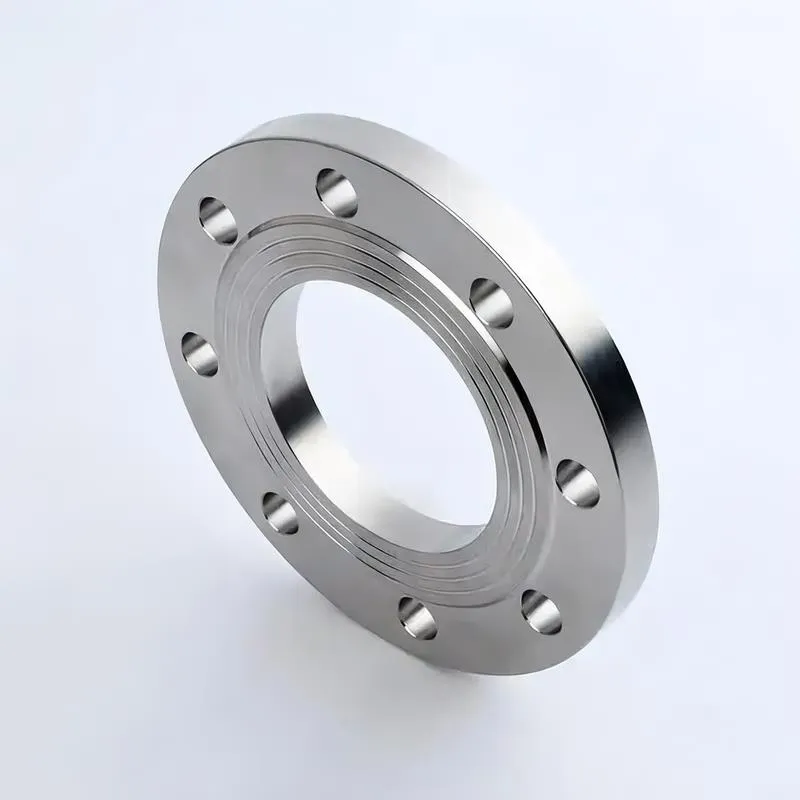
AISI 4142H Steel Flange
Product Code : FL-Steel-044-CU
We provide AISI 4142H Steel Flange Manufacturing types: Forging, Casting, Cutting, Rolling.We can manufacture in accordance with these standards.GB/T 9112–9124-2010 Steel Pipe Flanges , JB Series , HG Series, ASME B16.5, BS4504, DIN , JIS,CBM,etc
1,We Manufacturing processes are primarily classified into four types:
1:Forging,
2:Casting,
3:Cutting,
4:Rolling.
2,We can manufacture in accordance with these standards.
Standards:
GB Series (Chinese Standards), JB Series (Machinery Standards), HG Series (Chemical Industry Standards), ASME B16.5 (American Standards), BS4504 (British Standards), DIN (German Standards), and JIS (Japanese Standards).
Internationally, there are two primary systems of pipe flange standards: the European system, represented by the German DIN standards (including those of the former Soviet Union), and the American system, represented by the US ANSI pipe flange standards. Other common standards include: the Chinese Ministry of Machinery Industry standards (JB series), the Ministry of Chemical Industry standards (HG series), the Chinese National Standard *GB/T 9112–9124-2010 Steel Pipe Flanges*, as well as US standards (ASME B16.5), British standards (BS4504), German standards (DIN), Japanese standards (JIS), and marine standards (CBM), among others.
The nominal pressure ratings for the PN series are designated by "PN" and comprise the following nine levels: PN2.5, PN6, PN10, PN16, PN25, PN40, PN63, PN100, and PN160.
The nominal pressure ratings for the Class series are designated by "Class" and comprise the following six levels: Class150, Class300, Class600, Class900, Class1500, and Class2500.
Flange Classification
1. **According to Chemical Industry Standards:** Flanges are classified as follows:
Plate Flat Welding Flange (PL), Necked Flat Welding Flange (SO), Necked Butt Welding Flange (WN), Integral Flange (IF), Socket Welding Flange (SW), Threaded Flange (Th), Butt Welding Ring Loose Flange (PJ/SE), Blind Flange (BL), Flat Welding Ring Loose Flange (PJ/PJ), and Lined Blind Flange (BL(s)).
2. **According to Petrochemical (SH) Industry Standards:** Flanges are classified as follows:
Threaded Flange (PL), Butt Welding Flange (WN), Flat Welding Flange (SO), Socket Welding Flange (SW), Loose Flange (LJ), and Blind Flange (no specific designation).
3. **According to Machinery (JB) Industry Standards:** Flanges are classified as follows:
Integral Flange, Butt Welding Flange, Plate Flat Welding Flange, Butt Welding Ring Plate Loose Flange, Flat Welding Ring Plate Loose Flange, Lap Joint Ring Plate Loose Flange, and Blind Flange.
4. **According to Connection Method/Type:** Flanges are classified as follows:
Plate Flat Welding Flange, Necked Flat Welding Flange, Necked Butt Welding Flange, Socket Welding Flange, Threaded Flange, Blind Flange, Necked Butt Welding Ring Loose Flange, Flat Welding Ring Loose Flange, Ring-Type Joint (RTJ) Flange and Blind Flange, Large-Diameter Plate Flange, Large-Diameter High-Neck Flange, Figure-8 Blind Plate, Butt Welding Ring Loose Flange, etc.
5. **According to the Component Being Connected:** Flanges can be classified into Vessel Flanges and Pipe Flanges.
6. **According to Structural Type:** Flanges include Integral Flanges, Threaded Flanges, Flat Welding Flanges, Butt Welding Flanges, Lap Joint (Loose/Swivel) Flanges, and Blind Flanges.
A flange—also referred to as a flange plate or rim—is a component used to connect shafts to one another, or, more commonly, to join the ends of pipes. Flanges are also utilized at the inlet and outlet ports of equipment to facilitate connections between two devices—for instance, the flange on a speed reducer. A "flange connection" or "flanged joint" refers to a detachable joint assembly comprising three interconnected elements—a flange, a gasket, and bolts—that together form a sealed structural unit. In the context of piping systems, a "pipe flange" specifically denotes a flange used for plumbing within the installation; when applied to equipment, it refers to the inlet or outlet flange of that specific device. Flanges feature a series of holes through which bolts are inserted to securely fasten the two flanges together, while a gasket placed between the flanges ensures a leak-proof seal. Flanges are broadly categorized into three types: threaded (screw-in) flanges, welded flanges, and clamp-type flanges. Flanges are invariably used in pairs; threaded flanges are suitable for low-pressure piping applications, whereas welded flanges are required for systems operating at pressures exceeding 4 kilograms per square centimeter. A sealing gasket is inserted between the two flange plates, which are then firmly secured using bolts. The thickness of a flange—as well as the specifications of the bolts used to fasten it—vary depending on the specific pressure rating required for the application. When connecting equipment such as water pumps or valves to piping systems, the corresponding connection points on these devices are often manufactured in the shape of a matching flange; this method of attachment is also referred to as a "flange connection." Generally, any connecting component that utilizes bolts to join and seal the perimeters of two flat surfaces—such as the joints in ventilation ducts—is termed a "flange"; such components may collectively be classified as "flange-type parts." However, since such a connection often constitutes merely a *portion* of a larger device—for instance, the interface between a flange and a water pump—it would be inappropriate to classify the entire water pump itself as a "flange-type part." Conversely, smaller components—such as valves—that feature such flanged interfaces may indeed be appropriately categorized as "flange-type parts."
-:-
For detailed product information, please contact sales.
-:
AISI 4142H Steel Flange Product Information
-:-
For detailed product information, please contact sales.
-:
AISI 4142H Steel Flange Synonyms
-:-
For detailed product information, please contact sales.
-:
AISI 4142H Steel Product Information
-:-
For detailed product information, please contact sales.
-:
# **AISI 4142H Steel - Hardenability Controlled Alloy Steel Product Specification**
## **1. Product Definition & Core Concept**
**AISI 4142H** is a medium-carbon chromium-molybdenum alloy steel supplied under the **"H" designation**, indicating it conforms to specific hardenability band requirements as defined by ASTM standards. Unlike standard 4142 with fixed chemistry ranges, 4142H allows controlled variation in chemical composition to guarantee consistent hardenability characteristics, ensuring predictable heat treatment response regardless of production lot variations.
**Key Philosophy:** *Chemistry may vary within limits to achieve guaranteed hardenability bands, not fixed composition percentages.*
## **2. International Standards & Designations**
- **Primary Standard:** ASTM A304 (Standard Specification for Carbon and Alloy Steel Bars Subject to End-Quench Hardenability Requirements)
- **Material Designation:** AISI 4142H
- **"H" Designation Meaning:** Hardenability-controlled steel
- **UNS Designation:** H41420
- **European Equivalent:** 1.7227H (42CrMo4H) per EN 10083-3
- **Japanese Equivalent:** SCM440H per JIS G4052
- **Chinese Equivalent:** 42CrMoAH per GB/T 5216
- **ISO Equivalent:** 42CrMo4 H-band, ISO 683-18
- **Specific Standard:** ASTM A914/A914M for structural applications
## **3. Chemical Composition (Weight % - H-Steel Ranges)**
*Composition ranges are wider than standard 4142 to allow hardenability optimization while maintaining H-band guarantees*
| Element | Composition Range (%) | Standard 4142 Range (%) | Primary Function in 4142H |
|---------|----------------------|-------------------------|---------------------------|
| **Carbon (C)** | 0.37 - 0.44 | 0.40 - 0.45 | *Variable to maintain hardenability; typically aimed at 0.40-0.42%* |
| **Manganese (Mn)** | 0.70 - 1.00 | 0.75 - 1.00 | Enhances hardenability; wider range accommodates hardenability adjustment |
| **Phosphorus (P)** | ≤ 0.030 | ≤ 0.035 | Lower maximum for improved toughness in H-grade |
| **Sulfur (S)** | ≤ 0.030 | ≤ 0.040 | Controlled for consistent machinability and reduced anisotropy |
| **Silicon (Si)** | 0.15 - 0.35 | 0.15 - 0.35 | Standard range maintained |
| **Chromium (Cr)** | 0.75 - 1.10 | 0.80 - 1.10 | Slightly wider lower limit for hardenability tuning |
| **Molybdenum (Mo)** | 0.15 - 0.25 | 0.15 - 0.25 | Standard range maintained |
| **Boron (B)*** | 0.0005 - 0.003 | Not typically specified | *Optional addition to significantly enhance hardenability economically* |
**Critical H-Steel Concept:**
*The carbon content in 4142H may vary from 0.37% to 0.44% across different production heats, but all will demonstrate identical hardenability within the specified Jominy band. This is the fundamental advantage of H-steels.*
## **4. Hardenability Characteristics - The Defining Feature**
### **Jominy End-Quench Test Data (Typical Bands)**
*ASTM A304 specifies multiple hardenability bands. 4142H typically supplied to Bands 2-4.*
| Distance from Quenched End (1/16 inch) | Hardness Range, HRC (Band 3 Typical) | Hardness Range, HRC (Band 4 Typical) |
|----------------------------------------|--------------------------------------|--------------------------------------|
| **J₁ (Surface equivalent)** | 53 - 60 | 55 - 62 |
| **J₄** | 48 - 56 | 50 - 58 |
| **J₈** | 41 - 50 | 43 - 52 |
| **J₁₂** | 35 - 45 | 37 - 47 |
| **J₁₆** | 30 - 40 | 32 - 42 |
| **J₂₀** | 27 - 37 | 29 - 39 |
| **J₂₈** | 23 - 33 | 25 - 35 |
### **Hardenability Parameters**
- **Ideal Critical Diameter (Dᵢ):** 3.2 - 4.0 inches (81 - 102 mm) in still oil
- **95% Martensite Diameter (D₉₅):** ~2.5 - 3.2 inches (64 - 81 mm) in oil
- **Grossmann Hardenability Factor:** 5.0 - 6.0 (indicating excellent hardenability)
- **Maximum Section for Full Hardening:** 100 mm (4 inches) diameter in oil quench
## **5. Physical Properties (General)**
*Properties vary with heat treatment; values shown are typical ranges*
- **Density:** 7.85 g/cm³ (0.284 lb/in³)
- **Melting Range:** 1410 - 1520°C (2570 - 2770°F)
- **Modulus of Elasticity (E):** 205 GPa (29.7 × 10⁶ psi) at 20°C
- **Shear Modulus (G):** 80 GPa (11.6 × 10⁶ psi)
- **Poisson's Ratio (ν):** 0.29
- **Thermal Conductivity:** 41.0 - 42.5 W/m·K at 100°C
- **Specific Heat Capacity:** 460 - 480 J/kg·K at 20°C
- **Coefficient of Thermal Expansion:** 11.8 - 12.2 µm/m·°C (20-100°C)
- **Electrical Resistivity:** 0.23 - 0.25 µΩ·m at 20°C
## **6. Typical Mechanical Properties in Various Conditions**
### **As-Annealed/Normalized**
| Property | Value Range |
|----------|-------------|
| **Tensile Strength** | 655 - 795 MPa (95 - 115 ksi) |
| **Yield Strength** | 415 - 550 MPa (60 - 80 ksi) |
| **Elongation** | 22 - 28% |
| **Reduction of Area** | 45 - 55% |
| **Hardness** | 197 - 229 HB |
| **Machinability** | 60-65% of B1112 |
### **Quenched & Tempered to Various Hardness Levels**
| Target Hardness | Tensile Strength | Yield Strength | Charpy Impact (20°C) | Typical Tempering Temp |
|-----------------|------------------|----------------|----------------------|------------------------|
| **280 HB (28 HRC)** | 930 MPa (135 ksi) | 830 MPa (120 ksi) | 68+ J (50+ ft-lb) | 620°C (1150°F) |
| **330 HB (35 HRC)** | 1100 MPa (160 ksi) | 1000 MPa (145 ksi) | 54-68 J (40-50 ft-lb) | 540°C (1000°F) |
| **380 HB (40 HRC)** | 1240-1380 MPa (180-200 ksi) | 1100-1240 MPa (160-180 ksi) | 41-68 J (30-50 ft-lb) | 510°C (950°F) |
| **430 HB (45 HRC)** | 1380-1520 MPa (200-220 ksi) | 1240-1380 MPa (180-200 ksi) | 27-54 J (20-40 ft-lb) | 425°C (800°F) |
## **7. Heat Treatment Guidelines for 4142H**
### **Standard Heat Treatment Parameters**
```
PREHEAT: 650-700°C (1200-1290°F) - 30 min/inch thickness
AUSTENITIZE: 840-870°C (1545-1600°F) - 30 min/inch minimum
QUENCH: Oil, agitated, 40-60°C (100-140°F) oil temperature
TEMPER: Variable based on desired hardness (see table above)
COOLING: Air cool after tempering; water quench not recommended
```
### **Critical Heat Treatment Considerations for H-Steels**
1. **Consistent Response:** Different production lots will achieve identical hardness profiles when given identical heat treatment
2. **Reduced Distortion Risk:** Predictable transformation behavior minimizes warpage
3. **Simplified Process Control:** Heat treaters can use established parameters without constant adjustment
## **8. Product Applications - Where 4142H Excels**
### **Critical Automotive & Truck Components**
- **Heavy-duty axle shafts** (Class 8 trucks) - where consistent through-hardening is essential
- **Transmission gears and shafts** - requiring uniform case-core properties
- **King pins and steering components** - safety-critical applications
- **Crankshafts** for high-performance engines
- **Wheel hubs and spindles**
### **Oil & Gas - Demanding Downhole Applications**
- **Drill collars** (API Spec 7-1) - large diameters requiring uniform properties
- **Tool joints and connectors** - where consistent hardness is critical for thread integrity
- **Sucker rods** (API Spec 11B) - high-strength grades
- **Valve stems and components** for high-pressure service
- **Mandrels and drilling tools**
### **Heavy Equipment & Construction**
- **Track rollers and links** for mining equipment
- **Final drive gears** in excavators and bulldozers
- **Hydraulic cylinder rods** for heavy cylinders
- **Pivot pins and bushings** in earthmoving equipment
### **Aerospace & Defense**
- **Landing gear components** (secondary structures)
- **Missile body sections and components**
- **Armor vehicle components**
- **Helicopter drive train components**
### **Industrial Machinery**
- **Large gear blanks** (>150 mm diameter)
- **Extruder screws** for plastics processing
- **Press frames and slide components**
- **Rolling mill rolls** (backup rolls)
## **9. Manufacturing Characteristics**
### **Machinability**
- **As-Annealed:** 60-65% of B1112 (fair)
- **Pre-hardened (300 HB):** 50-55% of B1112 (difficult)
- **Tool Recommendations:** Carbide tools with TiCN or AlTiN coatings
- **Cutting Speeds:** 30-50 m/min (100-165 SFM) for turning in annealed condition
### **Weldability**
- **Rating:** Poor to fair (requires precautions)
- **Preheat Required:** 150-260°C (300-500°F)
- **Post-Weld Heat Treatment:** Mandatory to restore properties
- **Filler Metal:** Typically AWS E10018-D2 or similar
### **Forgability**
- **Temperature Range:** 1150-900°C (2100-1650°F)
- **Rating:** Good
- **Post-Forging:** Must be annealed or normalized
## **10. Advantages of 4142H vs. Standard 4142**
| Feature | AISI 4142H | Standard AISI 4142 |
|---------|------------|-------------------|
| **Hardenability Guarantee** | Yes - specified Jominy band | No - variable between heats |
| **Chemistry Control** | Wider ranges for H-band consistency | Fixed narrower ranges |
| **Heat Treatment Predictability** | Excellent - identical response across lots | Variable - may require parameter adjustment |
| **Large Section Performance** | Superior - guaranteed through-hardening | May vary with chemistry variations |
| **Cost** | Slightly higher (5-10%) | Lower initial cost |
| **Quality Documentation** | Jominy test report included | Standard chemistry/mechanical reports |
| **Best For** | Critical components, large sections, high-volume production | General purpose, smaller sections, non-critical |
## **11. Available Product Forms & Sizes**
- **Hot-Rolled Bars:** 10-300 mm (0.375-12 inch) diameter
- **Cold-Drawn Bars:** 10-100 mm (0.375-4 inch) diameter
- **Forged Bars & Shapes:** Custom sizes and shapes
- **Seamless Tubing:** Available per ASTM A519
- **Billets & Blooms:** For forging operations
- **Plate:** Up to 150 mm (6 inches) thick
## **12. Quality Assurance & Certification**
### **Mandatory Testing for 4142H**
1. **Jominy End-Quench Test:** For each heat (primary certification)
2. **Chemical Analysis:** Full spectrographic analysis
3. **Mechanical Testing:** Tensile and impact tests from representative bars
4. **Grain Size:** ASTM 5 or finer required
5. **Macroetch Test:** For soundness assessment
### **Optional Enhanced Testing**
- **Ultrasonic Testing:** For internal defect detection
- **Magnetic Particle Inspection:** For surface defects
- **Sulfur Print:** For segregation analysis
- **Hardenability Verification:** Additional Jominy tests from finished bars
### **Certification Documents**
- **ASTM A304 Compliance Certificate**
- **Jominy Hardenability Curve**
- **Chemical Analysis Report**
- **Mechanical Test Reports**
- **Heat Treat Response Data** (if pre-tested)
## **13. Design Considerations for 4142H**
### **Optimal Applications**
- Components with cross-sections >50 mm (2 inches)
- Parts requiring uniform properties throughout
- High-volume production where heat treatment consistency is critical
- Safety-critical components with stringent quality requirements
- Applications where heat treatment distortion must be minimized
### **Limitations**
- Not cost-effective for small, simple components
- Over-specified for non-critical applications
- May require premium pricing and longer lead times
## **14. Technical Comparison with Similar H-Steels**
| Grade | Carbon Range | Typical Dᵢ (inches) | Cost Relative | Best Application Size |
|-------|--------------|---------------------|---------------|----------------------|
| **4140H** | 0.37-0.44 | 2.8-3.5 | 95% | Medium sections (2-3") |
| **4142H** | 0.37-0.44 | 3.2-4.0 | 100% | Large sections (3-4") |
| **4145H** | 0.42-0.49 | 3.5-4.3 | 105% | Very large sections (4-5") |
| **4340H** | 0.37-0.44 | 4.5-5.5 | 140% | Extreme sections, highest toughness |
## **15. Economic & Supply Considerations**
- **Availability:** Widely available from specialty steel producers
- **Lead Time:** Typically 8-12 weeks for certified material
- **Minimum Order:** Varies by mill; typically 5,000-10,000 lbs for certified heats
- **Cost Factor:** 1.3-1.5 × A36 mild steel cost
- **Global Supply:** Produced in USA, EU, Japan, China, and Korea
---
## **Summary: When to Specify AISI 4142H**
**Specify 4142H when:**
1. Component diameter exceeds 50 mm (2 inches)
2. Uniform through-hardening is critical to performance
3. Production involves multiple heat treat batches that must be identical
4. Component is safety-critical or subject to rigorous certification
5. Minimizing heat treatment distortion is economically important
6. Manufacturing involves high volumes where consistency reduces scrap
**Consider standard 4142 when:**
1. Components are small (<25 mm diameter)
2. Applications are non-critical
3. Cost sensitivity outweighs consistency requirements
4. Single heat treatment batch for entire production run
5. Adequate testing can verify properties without hardenability guarantee
---
**Technical Note:** The "H" in 4142H represents a **philosophy of guaranteed performance** rather than just a material grade. It embodies the principle that consistent heat treatment response is more valuable than rigid chemical composition in many engineering applications.
**Disclaimer:** This specification is for technical reference. For critical applications, always consult current ASTM standards, material certifications, and engage qualified metallurgical engineering expertise. Properties and specifications are subject to change based on manufacturer capabilities and industry standards evolution.
-:-
For detailed product information, please contact sales.
-:
AISI 4142H Steel Specification
Dimensions
Size:
Diameter 20-1000 mm Length <4043 mm
Size:We can customized as required
Standard:
Per your request or drawing
We can customized as required
Properties(Theoretical)
Chemical Composition
-:-
For detailed product information, please contact sales.
-:
AISI 4142H Steel Properties
-:-
For detailed product information, please contact sales.
-:
Applications of AISI 4142H Steel Flange
-:-
For detailed product information, please contact sales.
-:
Chemical Identifiers AISI 4142H Steel Flange
-:-
For detailed product information, please contact sales.
-:
Packing of AISI 4142H Steel Flange
-:-
For detailed product information, please contact sales.
-:
Standard Packing:
-:-
For detailed product information, please contact sales.
-:
Typical bulk packaging includes palletized plastic 5 gallon/25 kg. pails, fiber and Steel Flange drums to 1 ton super sacks in full container (FCL) or truck load (T/L) quantities. Research and sample quantities and hygroscopic, oxidizing or other air sensitive materials may be packaged under argon or vacuum. Solutions are packaged in polypropylene, plastic or glass jars up to palletized 514 gallon liquid totes Special package is available on request. E FORUs’ is carefully handled to minimize damage during storage and transportation and to preserve the quality of our products in their original condition