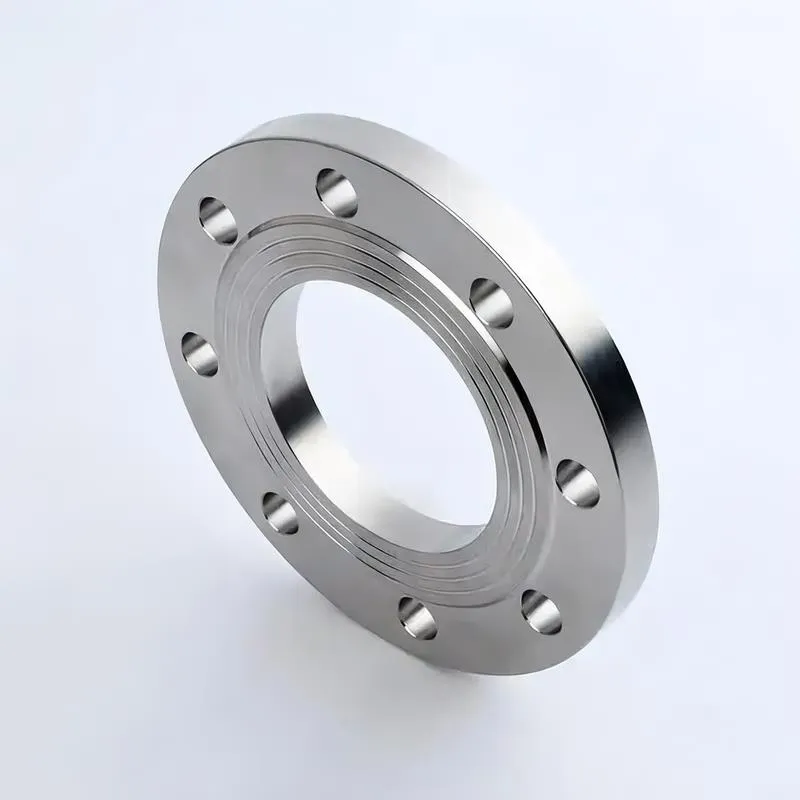
1,We Manufacturing processes are primarily classified into four types:
1:Forging,
2:Casting,
3:Cutting,
4:Rolling.
2,We can manufacture in accordance with these standards.
Standards:
GB Series (Chinese Standards), JB Series (Machinery Standards), HG Series (Chemical Industry Standards), ASME B16.5 (American Standards), BS4504 (British Standards), DIN (German Standards), and JIS (Japanese Standards).
Internationally, there are two primary systems of pipe flange standards: the European system, represented by the German DIN standards (including those of the former Soviet Union), and the American system, represented by the US ANSI pipe flange standards. Other common standards include: the Chinese Ministry of Machinery Industry standards (JB series), the Ministry of Chemical Industry standards (HG series), the Chinese National Standard *GB/T 9112–9124-2010 Steel Pipe Flanges*, as well as US standards (ASME B16.5), British standards (BS4504), German standards (DIN), Japanese standards (JIS), and marine standards (CBM), among others.
The nominal pressure ratings for the PN series are designated by "PN" and comprise the following nine levels: PN2.5, PN6, PN10, PN16, PN25, PN40, PN63, PN100, and PN160.
The nominal pressure ratings for the Class series are designated by "Class" and comprise the following six levels: Class150, Class300, Class600, Class900, Class1500, and Class2500.
Flange Classification
1. **According to Chemical Industry Standards:** Flanges are classified as follows:
Plate Flat Welding Flange (PL), Necked Flat Welding Flange (SO), Necked Butt Welding Flange (WN), Integral Flange (IF), Socket Welding Flange (SW), Threaded Flange (Th), Butt Welding Ring Loose Flange (PJ/SE), Blind Flange (BL), Flat Welding Ring Loose Flange (PJ/PJ), and Lined Blind Flange (BL(s)).
2. **According to Petrochemical (SH) Industry Standards:** Flanges are classified as follows:
Threaded Flange (PL), Butt Welding Flange (WN), Flat Welding Flange (SO), Socket Welding Flange (SW), Loose Flange (LJ), and Blind Flange (no specific designation).
3. **According to Machinery (JB) Industry Standards:** Flanges are classified as follows:
Integral Flange, Butt Welding Flange, Plate Flat Welding Flange, Butt Welding Ring Plate Loose Flange, Flat Welding Ring Plate Loose Flange, Lap Joint Ring Plate Loose Flange, and Blind Flange.
4. **According to Connection Method/Type:** Flanges are classified as follows:
Plate Flat Welding Flange, Necked Flat Welding Flange, Necked Butt Welding Flange, Socket Welding Flange, Threaded Flange, Blind Flange, Necked Butt Welding Ring Loose Flange, Flat Welding Ring Loose Flange, Ring-Type Joint (RTJ) Flange and Blind Flange, Large-Diameter Plate Flange, Large-Diameter High-Neck Flange, Figure-8 Blind Plate, Butt Welding Ring Loose Flange, etc.
5. **According to the Component Being Connected:** Flanges can be classified into Vessel Flanges and Pipe Flanges.
6. **According to Structural Type:** Flanges include Integral Flanges, Threaded Flanges, Flat Welding Flanges, Butt Welding Flanges, Lap Joint (Loose/Swivel) Flanges, and Blind Flanges.
A flange—also referred to as a flange plate or rim—is a component used to connect shafts to one another, or, more commonly, to join the ends of pipes. Flanges are also utilized at the inlet and outlet ports of equipment to facilitate connections between two devices—for instance, the flange on a speed reducer. A "flange connection" or "flanged joint" refers to a detachable joint assembly comprising three interconnected elements—a flange, a gasket, and bolts—that together form a sealed structural unit. In the context of piping systems, a "pipe flange" specifically denotes a flange used for plumbing within the installation; when applied to equipment, it refers to the inlet or outlet flange of that specific device. Flanges feature a series of holes through which bolts are inserted to securely fasten the two flanges together, while a gasket placed between the flanges ensures a leak-proof seal. Flanges are broadly categorized into three types: threaded (screw-in) flanges, welded flanges, and clamp-type flanges. Flanges are invariably used in pairs; threaded flanges are suitable for low-pressure piping applications, whereas welded flanges are required for systems operating at pressures exceeding 4 kilograms per square centimeter. A sealing gasket is inserted between the two flange plates, which are then firmly secured using bolts. The thickness of a flange—as well as the specifications of the bolts used to fasten it—vary depending on the specific pressure rating required for the application. When connecting equipment such as water pumps or valves to piping systems, the corresponding connection points on these devices are often manufactured in the shape of a matching flange; this method of attachment is also referred to as a "flange connection." Generally, any connecting component that utilizes bolts to join and seal the perimeters of two flat surfaces—such as the joints in ventilation ducts—is termed a "flange"; such components may collectively be classified as "flange-type parts." However, since such a connection often constitutes merely a *portion* of a larger device—for instance, the interface between a flange and a water pump—it would be inappropriate to classify the entire water pump itself as a "flange-type part." Conversely, smaller components—such as valves—that feature such flanged interfaces may indeed be appropriately categorized as "flange-type parts."
-:-
For detailed product information, please contact sales.
-:
AISI 4150H Steel Flange, annealed at 830°C (1525°F), furnace cooled 11°C (20°F)/hour, air cooled, 25 mm (1 in.) round Product Information
-:-
For detailed product information, please contact sales.
-:
AISI 4150H Steel Flange, annealed at 830°C (1525°F), furnace cooled 11°C (20°F)/hour, air cooled, 25 mm (1 in.) round Synonyms
-:-
For detailed product information, please contact sales.
-:
AISI 4150H Steel, annealed at 830°C (1525°F), furnace cooled 11°C (20°F)/hour, air cooled, 25 mm (1 in.) round Product Information
-:-
For detailed product information, please contact sales.
-:
# **AISI 4150H Steel - Hardenability Controlled Annealed Product Specification**
## **1. Product Definition & Processing History**
This specification covers **AISI 4150H** alloy steel supplied as **25 mm (1 inch) diameter round bars** processed to a fully annealed condition with the critical assurance of **hardenability control** ("H" designation). The material represents the highest carbon variant in the 41xx H-steel series, engineered for applications requiring maximum achievable strength with guaranteed heat treatment consistency.
**Complete Processing History:**
1. **Material Base:** AISI 4150H (Hardenability-controlled per ASTM A304)
2. **Annealing Cycle:**
- Austenitizing: 830°C (1525°F) - Optimized for high-carbon grade
- Cooling: Controlled furnace cooling at 11°C/hour (20°F/hour)
- Final Cooling: Air-cooled to room temperature
3. **Product Form:** Hot-rolled or cold-finished round bar
4. **Final Condition:** Fully annealed with guaranteed hardenability characteristics
5. **Special Feature:** H-grade certification ensures identical heat treatment response regardless of chemistry variations
## **2. International Standards & Designations**
- **Primary Standard:** ASTM A304 (Standard Specification for Carbon and Alloy Steel Bars Subject to End-Quench Hardenability Requirements)
- **Material Designation:** AISI 4150H (Annealed Condition)
- **"H" Designation Significance:** Guaranteed hardenability band compliance
- **UNS Designation:** H41500
- **European Equivalent:** 1.7228H (42CrMo5H) per EN 10083-3
- **Japanese Equivalent:** SCM445H per JIS G4052
- **Chinese Equivalent:** 50CrMoH per GB/T 5216
- **ISO Equivalent:** 42CrMo5 with H-band, ISO 683-18
- **Condition Designation:** Annealed per ASTM A29, Hardenability Certified
## **3. Chemical Composition (Weight % - H-Steel Philosophy)**
*H-steel manufacturing allows chemistry variation to achieve guaranteed hardenability*
| Element | ASTM A304 H-Steel Range (%) | Standard 4150 Range (%) | H-Steel Rationale for 4150H |
|---------|-----------------------------|-------------------------|-----------------------------|
| **Carbon (C)** | 0.47 - 0.54 | 0.48 - 0.53 | Widest range: Allows optimal hardenability tuning for high carbon steel |
| **Manganese (Mn)** | 0.70 - 1.00 | 0.75 - 1.00 | Extended lower limit for manufacturing flexibility |
| **Phosphorus (P)** | ≤ 0.025 | ≤ 0.035 | Enhanced purity for improved toughness in high-carbon grade |
| **Sulfur (S)** | ≤ 0.025 | ≤ 0.040 | Controlled for consistent machinability and transverse properties |
| **Silicon (Si)** | 0.15 - 0.35 | 0.15 - 0.35 | Standard range maintained |
| **Chromium (Cr)** | 0.75 - 1.10 | 0.80 - 1.10 | Wider lower limit accommodates hardenability adjustment |
| **Molybdenum (Mo)** | 0.15 - 0.25 | 0.15 - 0.25 | Critical element; range strictly maintained |
| **Boron (B)*** | 0.0005 - 0.003 | Not typically specified | Often added to maximize hardenability efficiency economically |
**H-Steel Manufacturing Example:**
- **Heat A:** C=0.49%, Mn=0.95%, Cr=0.85% → Achieves target H-band
- **Heat B:** C=0.52%, Mn=0.75%, Cr=1.05% → **Identical Jominy curve** to Heat A
- **Result:** Both materials respond identically to heat treatment despite different chemistries
## **4. Hardenability Characteristics - Certified Performance**
*4150H typically supplied to upper hardenability bands (5, 6, or 7)*
### **ASTM A304 Hardenability Bands (Typical for 4150H)**
| Distance (1/16") | Band 5 (HRC) | Band 6 (HRC) | Application Significance for 25 mm Bar |
|------------------|--------------|--------------|----------------------------------------|
| **J₁ (Surface)** | 59 - 65 | 61 - 66 | Maximum as-quenched hardness capability |
| **J₄** | 54 - 61 | 56 - 63 | Mid-radius hardness after quenching |
| **J₈** | 47 - 55 | 49 - 57 | Center of 25 mm bar after quench |
| **J₁₂** | 41 - 49 | 43 - 51 | Demonstrates deep hardening capability |
| **J₁₆** | 36 - 44 | 38 - 46 | For larger section applications |
| **J₂₀** | 33 - 41 | 35 - 43 | Extreme hardenability demonstration |
**Hardenability Performance Metrics:**
- **Ideal Critical Diameter (Dᵢ):** 4.5 - 5.5 inches (114 - 140 mm) in oil
- **95% Martensite Diameter (D₉₅):** 3.8 - 4.5 inches (97 - 114 mm) in oil
- **Grossmann Hardenability Factor:** 6.5 - 7.5 (Exceptional)
- **For 25 mm diameter:** Guaranteed 100% martensite after proper quench
## **5. Physical Properties (Annealed Condition)**
| Property | Value | Technical Notes |
|----------|-------|-----------------|
| **Density** | 7.85 g/cm³ (0.284 lb/in³) | At 20°C |
| **Melting Range** | 1395-1485°C (2545-2705°F) | Higher carbon reduces melting temperature |
| **Modulus of Elasticity (E)** | 205 GPa (29.7 × 10⁶ psi) | Consistent across all production heats |
| **Shear Modulus (G)** | 80 GPa (11.6 × 10⁶ psi) | - |
| **Poisson's Ratio (ν)** | 0.29 | - |
| **Thermal Conductivity** | 41.0 W/m·K | At 100°C (slightly lower than lower-carbon grades) |
| **Specific Heat Capacity** | 470 J/kg·K | At 20°C |
| **Coefficient of Thermal Expansion** | 12.2 × 10⁻⁶ /K | 20-100°C range |
| **Electrical Resistivity** | 0.24 µΩ·m | At 20°C (higher due to carbon content) |
| **Magnetic Properties** | Ferromagnetic | Strongly magnetic |
## **6. Mechanical Properties (Annealed Condition)**
*Minimum guaranteed properties for 25 mm diameter in specified annealed condition*
| Property | Minimum Value | Typical Value | H-Steel Consistency* |
|----------|---------------|---------------|----------------------|
| **Hardness (Brinell)** | 217 HB | 235 HB | ±5 HB across production |
| **Hardness (Rockwell)** | 96 HRB | 102 HRB | ±2 HRB |
| **Tensile Strength** | 725 MPa (105 ksi) | 795 MPa (115 ksi) | ±15 MPa |
| **Yield Strength (0.2%)** | 480 MPa (70 ksi) | 550 MPa (80 ksi) | ±10 MPa |
| **Elongation in 50 mm** | 18% | 22% | ±1.5% |
| **Reduction of Area** | 45% | 50% | ±3% |
| **Charpy V-Notch Impact** | 41 J (30 ft-lb) | 54 J (40 ft-lb) | ±15% |
***Consistency:** Statistical process capability (Cpk ≥ 1.67 for all properties)*
## **7. Annealing Process Rationale**
### **Specific Annealing Cycle Analysis**
```
830°C (1525°F) AUSTENITIZING:
- Lower than standard annealing temperatures (typically 845-870°C)
- Purpose: Prevent excessive grain growth in high-carbon steel
- Result: Finer prior austenite grain size for better toughness
11°C/HOUR (20°F/HOUR) CONTROLLED COOLING:
- From 830°C to approximately 550°C
- Purpose: Maximum carbide coalescence and spheroidization
- Result: Optimal machinability and minimal hardness variation
AIR COOLING FROM 550°C:
- Rapid cooling through pearlite transformation range
- Purpose: Prevent formation of fine pearlite
- Result: Coarse microstructure ideal for machining
```
### **Metallurgical Result**
- **Microstructure:** Coarse spheroidized carbides in ferrite matrix
- **Carbide Morphology:** Well-spheroidized, uniform distribution
- **Grain Size:** ASTM 4-6 (controlled coarseness)
- **Decarburization:** ≤ 0.38 mm (0.015 in) total depth
- **Microcleanliness:** ASTM E45 Method A: A ≤ 1.5, B ≤ 1.0, C ≤ 0.5, D ≤ 1.0
## **8. Machinability & Manufacturing Characteristics**
### **Machinability in Annealed Condition**
- **Relative Machinability:** 50% (compared to 100% for B1112 steel)
- **Rating:** Fair - More difficult than lower-carbon 41xx grades
- **H-Steel Advantage:** Consistent tool life and chip formation across material lots
- **Chip Formation:** Produces discontinuous chips but with higher cutting forces
- **Surface Finish:** Capable of 3.2-6.3 µm Ra with proper technique
### **Recommended Machining Parameters**
| Operation | Speed (m/min) | Feed (mm/rev) | Tool Recommendations |
|-----------|--------------|---------------|----------------------|
| **Turning** | 25-40 | 0.10-0.25 | C5/C6 carbide, sharp edges |
| **Drilling** | 15-25 | 0.08-0.15 | HSS-Co drills, peck drilling |
| **Milling** | 20-35 | 0.08-0.20 | Carbide end mills, rigid setup |
| **Tapping** | 4-8 | - | Premium HSS-E taps, reduced speed |
| **Threading** | 15-25 | - | Carbide inserts, good chip control |
### **Further Processing Compatibility**
1. **Subsequent Heat Treatment:** Excellent base for quenching and tempering
2. **Cold Forming:** Limited due to high carbon content
3. **Welding:** Very poor - generally not recommended without special procedures
4. **Surface Hardening:** Excellent candidate for carburizing or induction hardening
## **9. Product Applications - Where 4150H Excels**
### **Critical Wear Components**
- **Large gear blanks** (200+ mm diameter) requiring guaranteed through-hardening
- **Bearing races** for heavy equipment
- **Crusher roll shells** for mining applications
- **Extruder screws** for abrasive materials
- **Die casting die components**
### **Oil & Gas - Extreme Service**
- **Drill collar blanks** (API 7-1, high-strength grades)
- **Tool joint connections** requiring uniform hardness
- **BOP (Blowout Preventer) components**
- **Valve stems** for high-pressure service
- **Sucker rod couplings** (API 11B special grades)
### **Power Generation**
- **Turbine bolts** and **studs** for high-temperature service
- **Generator retaining ring seats**
- **Large shafting** for pumps and compressors
- **Valve components** for supercritical steam
### **Heavy Equipment**
- **Track links** and **rollers** for mining equipment
- **Final drive gears** for excavators
- **Crusher mantles** and **concaves**
- **Dragline components**
### **Industries Requiring H-Steel Certification**
1. **Aerospace:** Landing gear components (secondary structures)
2. **Defense:** Weapon system components requiring certification
3. **Nuclear:** Non-core components requiring traceability
4. **Medical:** Surgical instrument components requiring consistency
5. **Automotive:** Safety-critical components in high-volume production
## **10. Quality Assurance & Certification**
### **Mandatory H-Steel Documentation**
1. **ASTM A304 Certificate of Compliance** with actual Jominy curve
2. **Statistical Analysis Report** showing H-band compliance
3. **Chemical Analysis Report** (showing composition within H-ranges)
4. **Mechanical Test Reports** from annealed condition
5. **Grain Size Certification** (ASTM 4-6 required)
6. **Macroetch Test Report** for internal soundness
### **Enhanced Testing Available**
- **Ultrasonic Testing:** Per ASTM A388 for internal defects
- **Magnetic Particle Inspection:** Per ASTM A275/A966
- **Charpy Transition Curve:** For toughness characterization
- **Hardenability Verification:** Additional Jominy tests if specified
- **Residual Stress Analysis:** For distortion-critical applications
## **11. Technical Advantages of 4150H**
### **Compared to Standard 4150**
| Parameter | AISI 4150H (This Product) | Standard AISI 4150 |
|-----------|---------------------------|-------------------|
| **Hardenability Guarantee** | Certified Jominy band | Variable response |
| **Heat Treatment Consistency** | Identical across all lots | Process adjustments may be needed |
| **Large Section Performance** | Guaranteed through-hardening | May show center softness |
| **Risk Management** | Low - predictable results | Higher - variable outcomes |
| **Certification Level** | Full Jominy certification | Standard MTR only |
| **Cost Premium** | 15-20% | Base cost |
### **Compared to Lower-Carbon H-Steels**
| Grade | Carbon Range | Maximum Hardness | Toughness | Best For |
|-------|--------------|------------------|-----------|----------|
| **4140H** | 0.37-0.44% | 54-58 HRC | Excellent | General high-strength |
| **4142H** | 0.40-0.47% | 56-60 HRC | Very Good | Balance applications |
| **4145H** | 0.43-0.50% | 58-62 HRC | Good | High strength needs |
| **4150H** | **0.47-0.54%** | **60-64 HRC** | **Fair-Good** | **Maximum strength/wear** |
## **12. Design & Engineering Guidelines**
### **Optimal Application Parameters**
- **Minimum Economic Diameter:** 25 mm (1 inch) - smaller sizes don't benefit fully
- **Optimal Range:** 25-150 mm (1-6 inch) diameter
- **Maximum Effective:** 200 mm (8 inch) for full hardening
- **Complexity:** Best for relatively simple geometries
- **Tolerance Requirements:** Can hold ±0.05 mm with proper machining
### **Subsequent Heat Treatment Guidelines**
```
For components machined from this 4150H material:
1. STRESS RELIEVE (Recommended): 595-650°C (1100-1200°F) after rough machining
2. AUSTENITIZE: 815-830°C (1500-1525°F) - Lower due to high carbon
3. QUENCH: Oil, 40-60°C, vigorous agitation
4. TEMPER: According to desired final properties
- 205°C: 52-56 HRC (max wear resistance)
- 425°C: 42-46 HRC (high strength)
- 595°C: 30-34 HRC (good toughness)
5. KEY ASSURANCE: All heats respond identically to above treatment
```
## **13. Economic & Supply Considerations**
### **Market Position**
- **Premium Product:** Highest carbon H-steel available
- **Specialized Application:** Not a general-purpose material
- **Lead Time:** 12-16 weeks for certified material
- **Minimum Order:** 5,000-10,000 lbs for new heat
- **Cost Factor:** 1.5-1.8× standard 4140H
- **Availability:** Limited to specialty steel producers
### **Total Cost of Ownership Analysis**
| Cost Component | 4150H Advantage |
|----------------|-----------------|
| **Material Cost** | Higher initial cost |
| **Heat Treatment** | Reduced scrap (≤1% vs. 3-5% for standard) |
| **Machining** | Consistent tool life reduces variability |
| **Quality Control** | Reduced inspection frequency |
| **Warranty/Failure** | Lower risk of field failures |
| **Total Cost** | Often lower over product lifecycle |
## **14. Technical Specifications Summary**
### **Material Selection Decision Tree**
```
Is maximum strength required? → Yes → Consider 4150H
Is toughness critical? → No → 4150H suitable
Is component >25 mm diameter? → Yes → 4150H provides advantage
Is wear resistance primary? → Yes → 4150H excellent choice
Is heat treatment consistency critical? → Yes → 4150H mandatory
Is cost primary driver? → No → 4150H justified
```
### **Heat Treatment Response Prediction**
- **As-Quenched Hardness:** 60-64 HRC (surface), 58-62 HRC (center of 25 mm)
- **Tempering Response:** Predictable hardness drop per tempering temperature
- **Distortion:** Minimal and predictable due to H-steel consistency
- **Process Window:** Wider due to consistent material response
## **15. Industry-Specific Requirements**
### **Aerospace (Non-Flight Critical)**
- **Compliance:** May satisfy certain MIL-STD requirements
- **Documentation:** Full traceability and certification required
- **Testing:** Enhanced NDE typically specified
- **Application:** Landing gear components, engine mounts
### **Oil & Gas (API Compliance)**
- **Standards:** API 7-1, 7-2 for drilling components
- **Testing:** Full mechanical properties at temperature
- **Certification:** Mill certs with additional API compliance
- **Application:** Drill collars, tool joints, heavy-weight drill pipe
### **Nuclear (Non-Core Applications)**
- **Compliance:** ASME Section III, Div. 1 for some components
- **Documentation:** EN 10204 3.1/3.2 certificates required
- **Testing:** Charpy testing at multiple temperatures
- **Application:** Pump shafts, valve components
---
## **Summary: Strategic Application of 4150H**
### **When 4150H is the Correct Choice:**
1. **Strength Requirement:** Need ultimate tensile strength >1500 MPa after heat treatment
2. **Wear Resistance:** Components subject to severe abrasive wear
3. **Large Sections:** Diameters >50 mm requiring guaranteed through-hardening
4. **Consistency Requirement:** Multiple production lots must be interchangeable
5. **Certification Need:** Regulated industry requiring full material traceability
6. **Risk Management:** Failure consequences justify material premium
### **Implementation Considerations:**
- **Heat Treatment Facilities:** Requires capable heat treat shop
- **Machining Capability:** Needs proper tooling and techniques
- **Design Adaptation:** May require design modifications for high hardness
- **Quality Systems:** Must support full traceability requirements
### **Competitive Alternatives Analysis:**
- **For lower strength needs:** 4140H or 4145H
- **For better toughness:** 4340H (with nickel addition)
- **For lower cost:** Standard 4150 with risk acceptance
- **For corrosion resistance:** Not suitable - consider stainless alternatives
---
**Final Recommendation:** AISI 4150H in this annealed condition represents the pinnacle of hardenability-controlled high-carbon alloy steels. Its application should be reserved for situations where maximum achievable strength, guaranteed heat treatment consistency, and superior wear resistance are non-negotiable requirements. The premium cost is justified by reduced risk, predictable manufacturing outcomes, and reliable performance in demanding applications.
**Strategic Perspective:** This material is not merely a steel grade - it is a **performance assurance system** that guarantees results regardless of production variables. For critical applications where failure is not an option, 4150H provides the metallurgical certainty that standard grades cannot offer.
---
**Disclaimer:** This product specification is for technical reference. Actual properties may vary based on specific manufacturing processes and testing methods. For critical applications, always verify current ASTM standards, review manufacturer certifications, and conduct appropriate qualification testing. The H-steel certification provides assurance of consistency but does not guarantee absolute values beyond the certified ranges. Always consult with qualified metallurgical engineering specialists for safety-critical applications.
-:-
For detailed product information, please contact sales.
-:
AISI 4150H Steel, annealed at 830°C (1525°F), furnace cooled 11°C (20°F)/hour, air cooled, 25 mm (1 in.) round Specification
Dimensions
Size:
Diameter 20-1000 mm Length <4052 mm
Size:We can customized as required
Standard:
Per your request or drawing
We can customized as required
Properties(Theoretical)
Chemical Composition
-:-
For detailed product information, please contact sales.
-:
AISI 4150H Steel, annealed at 830°C (1525°F), furnace cooled 11°C (20°F)/hour, air cooled, 25 mm (1 in.) round Properties
-:-
For detailed product information, please contact sales.
-:
Applications of AISI 4150H Steel Flange, annealed at 830°C (1525°F), furnace cooled 11°C (20°F)/hour, air cooled, 25 mm (1 in.) round
-:-
For detailed product information, please contact sales.
-:
Chemical Identifiers AISI 4150H Steel Flange, annealed at 830°C (1525°F), furnace cooled 11°C (20°F)/hour, air cooled, 25 mm (1 in.) round
-:-
For detailed product information, please contact sales.
-:
Packing of AISI 4150H Steel Flange, annealed at 830°C (1525°F), furnace cooled 11°C (20°F)/hour, air cooled, 25 mm (1 in.) round
-:-
For detailed product information, please contact sales.
-:
Standard Packing:
-:-
For detailed product information, please contact sales.
-:
Typical bulk packaging includes palletized plastic 5 gallon/25 kg. pails, fiber and Steel Flange drums to 1 ton super sacks in full container (FCL) or truck load (T/L) quantities. Research and sample quantities and hygroscopic, oxidizing or other air sensitive materials may be packaged under argon or vacuum. Solutions are packaged in polypropylene, plastic or glass jars up to palletized 523 gallon liquid totes Special package is available on request. E FORUs’ is carefully handled to minimize damage during storage and transportation and to preserve the quality of our products in their original condition