1,We Manufacturing processes are primarily classified into four types:
1:Forging,
2:Casting,
3:Cutting,
4:Rolling.
2,We can manufacture in accordance with these standards.
Standards:
GB Series (Chinese Standards), JB Series (Machinery Standards), HG Series (Chemical Industry Standards), ASME B16.5 (American Standards), BS4504 (British Standards), DIN (German Standards), and JIS (Japanese Standards).
Internationally, there are two primary systems of pipe flange standards: the European system, represented by the German DIN standards (including those of the former Soviet Union), and the American system, represented by the US ANSI pipe flange standards. Other common standards include: the Chinese Ministry of Machinery Industry standards (JB series), the Ministry of Chemical Industry standards (HG series), the Chinese National Standard *GB/T 9112–9124-2010 Steel Pipe Flanges*, as well as US standards (ASME B16.5), British standards (BS4504), German standards (DIN), Japanese standards (JIS), and marine standards (CBM), among others.
The nominal pressure ratings for the PN series are designated by "PN" and comprise the following nine levels: PN2.5, PN6, PN10, PN16, PN25, PN40, PN63, PN100, and PN160.
The nominal pressure ratings for the Class series are designated by "Class" and comprise the following six levels: Class150, Class300, Class600, Class900, Class1500, and Class2500.
Flange Classification
1. **According to Chemical Industry Standards:** Flanges are classified as follows:
Plate Flat Welding Flange (PL), Necked Flat Welding Flange (SO), Necked Butt Welding Flange (WN), Integral Flange (IF), Socket Welding Flange (SW), Threaded Flange (Th), Butt Welding Ring Loose Flange (PJ/SE), Blind Flange (BL), Flat Welding Ring Loose Flange (PJ/PJ), and Lined Blind Flange (BL(s)).
2. **According to Petrochemical (SH) Industry Standards:** Flanges are classified as follows:
Threaded Flange (PL), Butt Welding Flange (WN), Flat Welding Flange (SO), Socket Welding Flange (SW), Loose Flange (LJ), and Blind Flange (no specific designation).
3. **According to Machinery (JB) Industry Standards:** Flanges are classified as follows:
Integral Flange, Butt Welding Flange, Plate Flat Welding Flange, Butt Welding Ring Plate Loose Flange, Flat Welding Ring Plate Loose Flange, Lap Joint Ring Plate Loose Flange, and Blind Flange.
4. **According to Connection Method/Type:** Flanges are classified as follows:
Plate Flat Welding Flange, Necked Flat Welding Flange, Necked Butt Welding Flange, Socket Welding Flange, Threaded Flange, Blind Flange, Necked Butt Welding Ring Loose Flange, Flat Welding Ring Loose Flange, Ring-Type Joint (RTJ) Flange and Blind Flange, Large-Diameter Plate Flange, Large-Diameter High-Neck Flange, Figure-8 Blind Plate, Butt Welding Ring Loose Flange, etc.
5. **According to the Component Being Connected:** Flanges can be classified into Vessel Flanges and Pipe Flanges.
6. **According to Structural Type:** Flanges include Integral Flanges, Threaded Flanges, Flat Welding Flanges, Butt Welding Flanges, Lap Joint (Loose/Swivel) Flanges, and Blind Flanges.
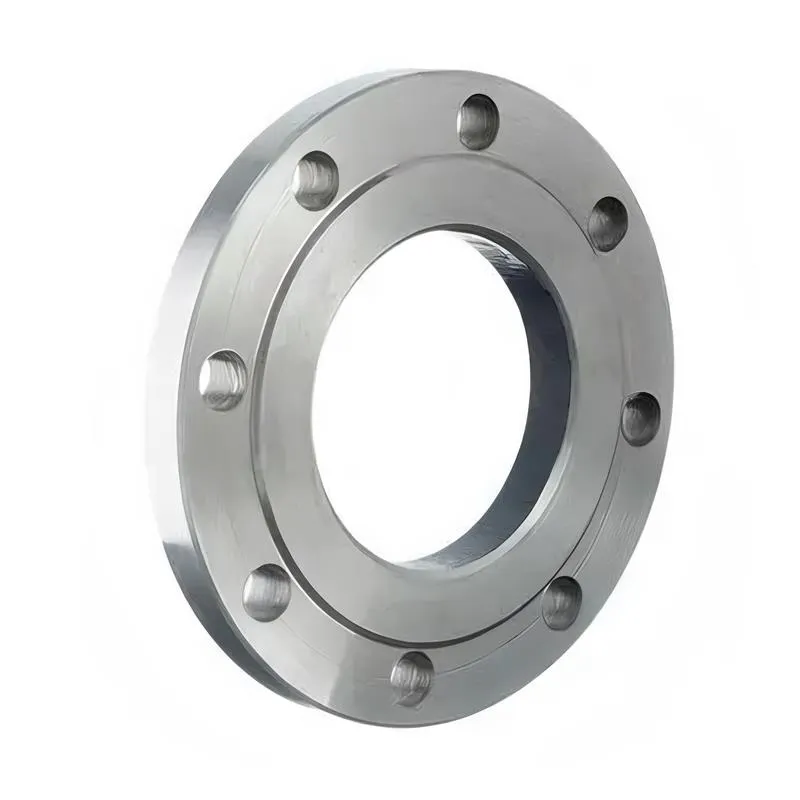
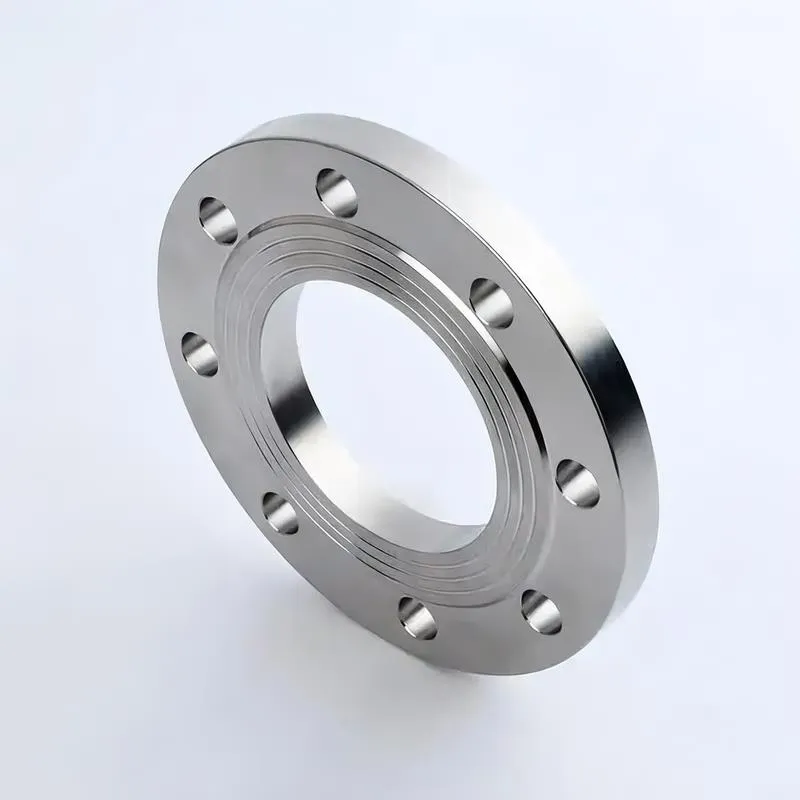
A flange—also referred to as a flange plate or rim—is a component used to connect shafts to one another, or, more commonly, to join the ends of pipes. Flanges are also utilized at the inlet and outlet ports of equipment to facilitate connections between two devices—for instance, the flange on a speed reducer. A "flange connection" or "flanged joint" refers to a detachable joint assembly comprising three interconnected elements—a flange, a gasket, and bolts—that together form a sealed structural unit. In the context of piping systems, a "pipe flange" specifically denotes a flange used for plumbing within the installation; when applied to equipment, it refers to the inlet or outlet flange of that specific device. Flanges feature a series of holes through which bolts are inserted to securely fasten the two flanges together, while a gasket placed between the flanges ensures a leak-proof seal. Flanges are broadly categorized into three types: threaded (screw-in) flanges, welded flanges, and clamp-type flanges. Flanges are invariably used in pairs; threaded flanges are suitable for low-pressure piping applications, whereas welded flanges are required for systems operating at pressures exceeding 4 kilograms per square centimeter. A sealing gasket is inserted between the two flange plates, which are then firmly secured using bolts. The thickness of a flange—as well as the specifications of the bolts used to fasten it—vary depending on the specific pressure rating required for the application. When connecting equipment such as water pumps or valves to piping systems, the corresponding connection points on these devices are often manufactured in the shape of a matching flange; this method of attachment is also referred to as a "flange connection." Generally, any connecting component that utilizes bolts to join and seal the perimeters of two flat surfaces—such as the joints in ventilation ducts—is termed a "flange"; such components may collectively be classified as "flange-type parts." However, since such a connection often constitutes merely a *portion* of a larger device—for instance, the interface between a flange and a water pump—it would be inappropriate to classify the entire water pump itself as a "flange-type part." Conversely, smaller components—such as valves—that feature such flanged interfaces may indeed be appropriately categorized as "flange-type parts."
-:-
For detailed product information, please contact sales.
-:
ASTM A514 Steel Flange, grade P, plate thickness ≤ 19 mm Product Information
-:-
For detailed product information, please contact sales.
-:
ASTM A514 Steel Flange, grade P, plate thickness ≤ 19 mm Synonyms
-:-
For detailed product information, please contact sales.
-:
ASTM A514 Steel, grade P, plate thickness ≤ 19 mm Product Information
-:-
For detailed product information, please contact sales.
-:
# **ASTM A514 Grade P Steel Plate (≤19mm thickness) - Technical Data Sheet**
## **1. Product Overview**
**ASTM A514 Grade P** is a **high-strength, quenched and tempered alloy steel plate** specifically designed for applications requiring exceptional strength-to-weight ratios in construction and heavy equipment manufacturing. When supplied in thicknesses ≤19mm (0.75 inches), this material achieves optimal mechanical properties through controlled heat treatment processes, making it ideal for structural components where weight reduction and durability are critical.
This grade represents one of the **highest strength structural steels** commercially available, with minimum yield strength of 690 MPa (100 ksi) combined with good weldability and toughness. The "P" designation indicates it meets supplementary requirements for notch toughness, making it suitable for fracture-critical applications in demanding environments.
---
## **2. Chemical Composition (ASTM A514/A514M)**
| Element | Composition Range (%) | Metallurgical Function |
|---------|----------------------|------------------------|
| **Carbon (C)** | 0.12 - 0.21 | Provides strength while maintaining weldability and toughness |
| **Manganese (Mn)** | 0.95 - 1.30 | Enhances hardenability and strength; improves hot workability |
| **Phosphorus (P)** | ≤ 0.035 | Impurity; strictly controlled for improved toughness |
| **Sulfur (S)** | ≤ 0.040 | Impurity; controlled for better through-thickness properties |
| **Silicon (Si)** | 0.40 - 0.80 | Deoxidizer; provides solid solution strengthening |
| **Chromium (Cr)** | 0.40 - 0.65 | Enhances hardenability and atmospheric corrosion resistance |
| **Molybdenum (Mo)** | 0.15 - 0.25 | Improves hardenability and high-temperature strength |
| **Vanadium (V)** | 0.03 - 0.08 | Grain refiner; provides precipitation strengthening |
| **Boron (B)** | 0.0005 - 0.005 | Significant hardenability enhancer at minimal addition |
| **Nickel (Ni)** | ≤ 0.25 (max) | Residual; may be present but not intentionally added |
| **Copper (Cu)** | ≤ 0.35 (max) | Residual; may be present but not intentionally added |
| **Iron (Fe)** | Balance | Base metal |
**Key Characteristics for ≤19mm Thickness:**
- Optimized chemistry for through-thickness properties in thinner sections
- Enhanced toughness due to faster cooling rates during quenching
- Reduced risk of segregation and anisotropy
- Improved weldability compared to thicker sections
---
## **3. Physical & Mechanical Properties (≤19mm thickness)**
### **Mandatory Mechanical Properties (ASTM A514):**
| Property | Minimum Requirement | Typical Range | Test Standard |
|----------|---------------------|---------------|---------------|
| **Yield Strength (0.2% offset)** | 690 MPa (100 ksi) | 700-850 MPa | ASTM A370 |
| **Tensile Strength** | 760-895 MPa (110-130 ksi) | 780-900 MPa | ASTM A370 |
| **Elongation (in 50mm/2")** | 18% minimum | 18-22% | ASTM A370 |
| **Reduction of Area** | 40% minimum | 45-55% | ASTM A370 |
### **Impact Toughness Requirements:**
| Test Temperature | Minimum Charpy V-Notch Impact Energy |
|-----------------|--------------------------------------|
| **-18°C (0°F)** | 27 J (20 ft-lbf) minimum |
| **-32°C (-25°F)** | 27 J (20 ft-lbf) minimum (when specified) |
| **-46°C (-50°F)** | 27 J (20 ft-lbf) minimum (when specified) |
### **Typical Properties for ≤19mm Plate:**
- **Hardness:** 235-293 HB (22-30 HRC)
- **Modulus of Elasticity:** 205 GPa (29,700 ksi)
- **Shear Modulus:** 80 GPa (11,600 ksi)
- **Poisson's Ratio:** 0.29
- **Fatigue Strength:** 330-380 MPa at 10⁷ cycles (polished, R=-1)
- **Fracture Toughness (K₁C):** 120-160 MPa√m at room temperature
### **Physical Properties:**
- **Density:** 7.85 g/cm³ (0.284 lb/in³)
- **Melting Point:** 1480-1520°C (2695-2770°F)
- **Thermal Conductivity:** 42.5 W/m·K at 100°C
- **Coefficient of Thermal Expansion:** 11.8 μm/m·°C (20-100°C)
- **Specific Heat:** 460 J/kg·K at 20°C
### **Advantages of ≤19mm Thickness:**
1. **Uniform properties** through entire thickness
2. **Excellent through-thickness ductility** (Z-direction properties)
3. **Reduced residual stresses** from quenching
4. **Better weldability** with lower preheat requirements
5. **Superior fatigue performance** due to lower stress concentration factors
---
## **4. Manufacturing & Heat Treatment**
### **Production Process for Thin Plate (≤19mm):**
1. **Steelmaking:** Electric arc furnace with ladle refining
2. **Continuous Casting:** Slab production with controlled cooling
3. **Hot Rolling:** Controlled temperature rolling to final thickness
4. **Quenching:** Accelerated water quenching from 870-925°C
5. **Tempering:** 540-680°C to achieve required strength/toughness balance
6. **Ultrasonic Testing:** 100% examination for internal quality
### **Heat Treatment Specifics for Thin Plate:**
- **Austenitizing Temperature:** 900-925°C (1650-1700°F)
- **Quenching Medium:** High-pressure water spray
- **Cooling Rate:** >50°C/second through transformation range
- **Tempering Range:** 600-650°C (1110-1200°F) typical
- **Resulting Microstructure:** Tempered martensite with fine carbides
### **Special Considerations for ≤19mm:**
- **Reduced distortion** during quenching compared to thicker plates
- **Faster quench rates** enable use of water instead of oil
- **Lower tempering temperatures** required for same hardness
- **Minimal property gradient** through thickness
---
## **5. Product Applications**
### **Construction & Infrastructure:**
- **High-rise building** core columns and transfer girders
- **Long-span bridges** and bridge components
- **Crane runways** and support structures
- **Transmission towers** and electrical substations
- **Offshore platform** modules and decks
### **Heavy Equipment & Mining:**
- **Excavator** booms, arms, and chassis components
- **Mining truck** frames and body structures
- **Crane** booms and outrigger pads
- **Shovel** dipper handles and crowd decks
- **Dragline** components and support structures
### **Transportation Equipment:**
- **Railcar** underframes and coupler yokes
- **Heavy trailer** frames and goosenecks
- **Mobile crane** carriers and outriggers
- **Military vehicle** armor support structures
### **Material Handling:**
- **Stacker/reclaimer** booms and portal frames
- **Conveyor** trusses and support structures
- **Ship loader** components
- **Heavy-duty storage racks**
### **Energy Sector:**
- **Wind turbine** towers and foundations
- **Hydroelectric** gate structures and penstocks
- **Nuclear plant** support structures
- **Transformer** support frames
### **Why ≤19mm Thickness is Selected:**
- **Weight-critical** structures where every kilogram matters
- **Complex fabrication** requiring formed or welded components
- **Fatigue-sensitive** applications with cyclic loading
- **Mobile equipment** where payload capacity is critical
- **Architectural applications** requiring slender members
---
## **6. Welding & Fabrication**
### **Welding Characteristics (≤19mm):**
- **Preheat Temperature:** 65-120°C (150-250°F) typically required
- **Interpass Temperature:** 65-200°C (150-400°F) maximum
- **Post-Weld Heat Treatment:** Generally not required for ≤19mm
- **Heat Input Control:** 1.0-2.0 kJ/mm recommended
### **Recommended Welding Processes:**
| Process | Electrode/Consumable | Notes |
|---------|----------------------|-------|
| **SMAW (Stick)** | E11018-M, E12018-M | For field welding, repair |
| **FCAW (Flux-Cored)** | E110T5-K3, E120T5-K4 | High deposition, all-position |
| **GMAW (MIG)** | ER110S-G, ER120S-G | For semi-automatic production |
| **SAW (Submerged Arc)** | F11A8-ECM2-B2H4 | For long, straight seams |
| **GTAW (TIG)** | ER110S-G, ER120S-G | For root passes, critical joints |
### **Fabrication Guidelines:**
- **Cold Forming:** Possible with radius ≥4× thickness
- **Hot Forming:** Recommended for tight radii; heat to 900-1100°C
- **Cutting:** Plasma, laser, or waterjet preferred; oxy-fuel with caution
- **Drilling/Tapping:** Use carbide tools with adequate cooling
- **Machining:** Reduced speeds/feeds compared to mild steel
---
## **7. International Standards & Equivalents**
### **Primary Standards:**
| Standard | Designation | Title |
|----------|-------------|-------|
| **ASTM** | **A514/A514M** | Standard Specification for High-Yield-Strength, Quenched and Tempered Alloy Steel Plate, Suitable for Welding |
| **ASTM** | **A6/A6M** | Standard Specification for General Requirements for Rolled Structural Steel Bars, Plates, Shapes, and Sheet Piling |
### **Global Equivalent Grades:**
| Country/Region | Standard | Equivalent Grade | Notes |
|----------------|----------|-----------------|-------|
| **International (ISO)** | ISO 4950-3 | **E690Q** | Grade 690, quality Q |
| **Europe (EN)** | EN 10025-6 | **S690Q** | Yield strength 690 MPa |
| **Germany** | DIN EN 10025-6 | **S690Q** | Direct equivalent |
| **Japan** | JIS G3128 | **SHY685** | Similar properties |
| **China** | GB/T 16270 | **Q690D/E** | Grades D/E for toughness |
| **Canada** | CSA G40.21 | **690W** | Category W (welding) |
### **Related Specifications:**
- **AWS D1.1/D1.8:** Structural Welding Code
- **AISC 360:** Specification for Structural Steel Buildings
- **API 2H:** Specification for Carbon Manganese Steel Plate
- **MIL-S-23786:** Military Specification for Steel Plate
---
## **8. Quality Control & Testing**
### **Mandatory Testing (per ASTM A514):**
1. **Chemical Analysis:** Per heat (ASTM A751)
2. **Tensile Testing:** One test per plate (ASTM A370)
3. **Impact Testing:** Three Charpy V-notch specimens (ASTM A673, Frequency H)
4. **Hardness Testing:** Optional but commonly performed (ASTM E18)
### **Additional Testing for ≤19mm Plate:**
- **Ultrasonic Testing:** Per ASTM A578/A435 for internal quality
- **Surface Inspection:** Visual and dimensional checks
- **Flatness Measurement:** Per ASTM A6 requirements
- **Through-Thickness Testing:** Optional for critical applications
### **Certification Requirements:**
- **Mill Test Certificate:** 2.1 or 3.1 per EN 10204
- **Traceability:** Heat number to specific plates
- **Test Reports:** Complete mechanical and chemical data
- **Compliance Statements:** To all specified requirements
---
## **9. Design Considerations**
### **Structural Design Values (≤19mm):**
| Loading Condition | Allowable Stress | Safety Factor | Code Reference |
|-------------------|-----------------|---------------|----------------|
| **Tension (on gross area)** | 415 MPa | 1.67 | AISC 360 |
| **Tension (on net area)** | 483 MPa | 1.67 | AISC 360 |
| **Shear** | 250 MPa | 1.67 | AISC 360 |
| **Bearing** | 1.2Fu = 1034 MPa | 2.00 | AISC 360 |
| **Fatigue (Category B)** | 165 MPa at 2×10⁶ cycles | Variable | AISC 360 |
### **Advantages for Structural Design:**
1. **Weight Reduction:** Up to 50% compared to A36 steel for same load
2. **Smaller Sections:** Reduced member sizes for architectural appeal
3. **Increased Spans:** Longer unsupported lengths possible
4. **Reduced Foundation Costs:** Lower dead loads on supports
### **Limitations & Considerations:**
- **Higher cost per kilogram** but often lower total project cost
- **Specialized fabrication** expertise required
- **Stricter welding procedures** must be followed
- **Brittle fracture** considerations in cold environments
- **Fatigue design** more critical due to higher stresses
---
## **10. Technical Performance**
### **Fatigue Characteristics:**
- **Endurance Limit:** Approximately 45% of tensile strength
- **Notch Sensitivity:** Moderate to high
- **Surface Finish Effect:** Significant; machined surfaces improve fatigue life
- **Weld Detail Categories:** Typically Category B or C depending on detail
### **Fracture Toughness:**
- **Transition Temperature:** Typically below -40°C
- **CTOD Values:** 0.15-0.25mm at design temperature
- **Crack Arrest Capability:** Good when properly specified
### **Corrosion Resistance:**
- **Atmospheric Corrosion:** Similar to carbon steel (requires protection)
- **Weathering Grades:** Available with improved atmospheric corrosion resistance
- **Coatings:** Excellent paint adhesion with proper surface preparation
---
## **11. Economic Considerations**
### **Cost Factors:**
| Factor | Impact | Typical Range |
|--------|--------|---------------|
| **Material Cost** | Higher than conventional steels | 2.0-2.5× A36 price |
| **Fabrication Cost** | Slightly higher due to special procedures | +10-20% |
| **Transportation Cost** | Lower due to reduced weight | -30-50% |
| **Foundation Cost** | Lower due to reduced loads | -20-40% |
| **Total Project Cost** | Often lower for optimized designs | -5-15% |
### **Life Cycle Benefits:**
- **Reduced maintenance** due to fewer components
- **Extended service life** through superior fatigue resistance
- **Adaptability** for future modifications
- **Sustainability** through material efficiency
---
## **12. Storage, Handling & Protection**
### **Storage Recommendations:**
- **Indoor Storage:** Preferred to prevent rust
- **Outdoor Storage:** Elevate from ground, cover with tarpaulins
- **Stacking:** Use timber dunnage between plates
- **Handling:** Use non-marring slings and equipment
### **Surface Protection:**
- **Temporary:** Rust preventive oils or coatings
- **Permanent:** Blast cleaning to Sa 2½ followed by painting
- **Galvanizing:** Possible with proper procedures (preheat/post-treat)
### **Quality Preservation:**
- **Shelf Life:** 6 months unprotected, indefinite with protection
- **Inspection:** Regular checks for rust or damage
- **Re-cleaning:** May be required before fabrication if stored long-term
---
**Technical Significance:** ASTM A514 Grade P plate in thicknesses ≤19mm represents an optimal balance between ultra-high strength and fabricability. The thinner gauge allows for full exploitation of the quenched and tempered microstructure while minimizing issues common in thicker high-strength plates, such as through-thickness anisotropy and welding complications. This makes it particularly valuable for weight-critical structures where both performance and constructability are paramount.
**Revision:** 1.1
**Date:** October 2023
**Disclaimer:** This technical data is for informational purposes. Actual properties may vary based on specific manufacturing processes, heat treatment parameters, and plate dimensions. Always consult with material suppliers and conduct application-specific testing for critical applications. Welding procedures must be qualified for the specific application and plate thickness. Design values should be verified against applicable building codes and standards.
-:-
For detailed product information, please contact sales.
-:
ASTM A514 Steel, grade P, plate thickness ≤ 19 mm Specification
Dimensions
Size:
Diameter 20-1000 mm Length <4122 mm
Size:We can customized as required
Standard:
Per your request or drawing
We can customized as required
Properties(Theoretical)
Chemical Composition
-:-
For detailed product information, please contact sales.
-:
ASTM A514 Steel, grade P, plate thickness ≤ 19 mm Properties
-:-
For detailed product information, please contact sales.
-:
Applications of ASTM A514 Steel Flange, grade P, plate thickness ≤ 19 mm
-:-
For detailed product information, please contact sales.
-:
Chemical Identifiers ASTM A514 Steel Flange, grade P, plate thickness ≤ 19 mm
-:-
For detailed product information, please contact sales.
-:
Packing of ASTM A514 Steel Flange, grade P, plate thickness ≤ 19 mm
-:-
For detailed product information, please contact sales.
-:
Standard Packing:
-:-
For detailed product information, please contact sales.
-:
Typical bulk packaging includes palletized plastic 5 gallon/25 kg. pails, fiber and Steel Flange drums to 1 ton super sacks in full container (FCL) or truck load (T/L) quantities. Research and sample quantities and hygroscopic, oxidizing or other air sensitive materials may be packaged under argon or vacuum. Solutions are packaged in polypropylene, plastic or glass jars up to palletized 593 gallon liquid totes Special package is available on request. E FORUs’ is carefully handled to minimize damage during storage and transportation and to preserve the quality of our products in their original condition