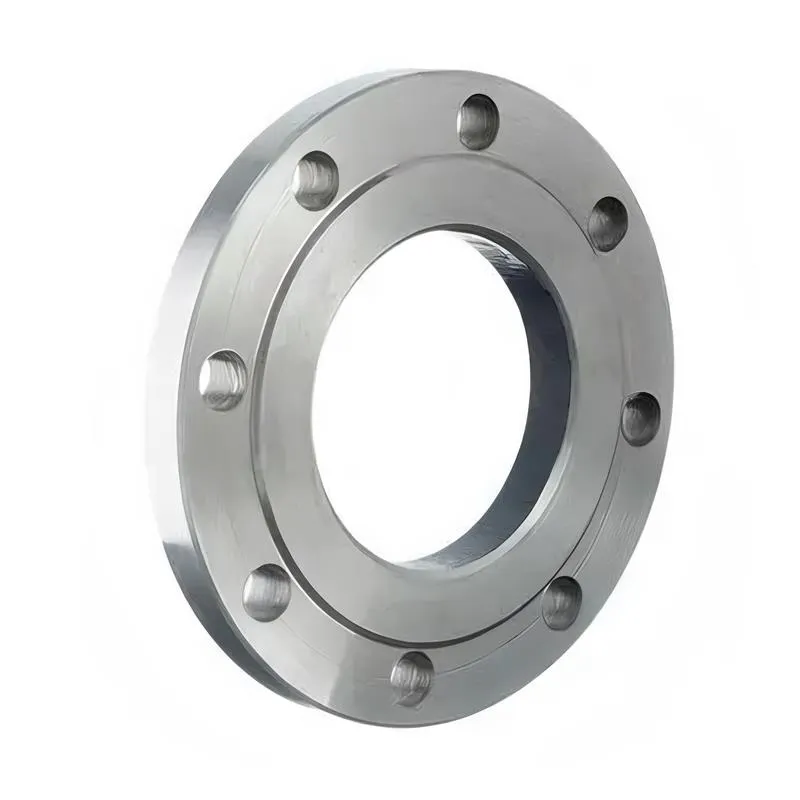
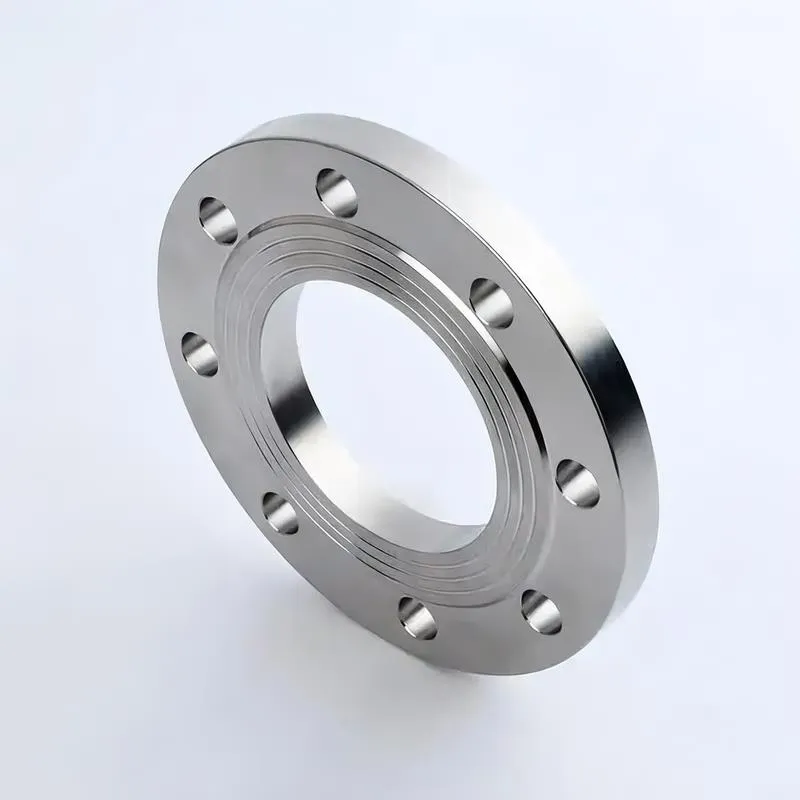
1,We Manufacturing processes are primarily classified into four types:
1:Forging,
2:Casting,
3:Cutting,
4:Rolling.
2,We can manufacture in accordance with these standards.
Standards:
GB Series (Chinese Standards), JB Series (Machinery Standards), HG Series (Chemical Industry Standards), ASME B16.5 (American Standards), BS4504 (British Standards), DIN (German Standards), and JIS (Japanese Standards).
Internationally, there are two primary systems of pipe flange standards: the European system, represented by the German DIN standards (including those of the former Soviet Union), and the American system, represented by the US ANSI pipe flange standards. Other common standards include: the Chinese Ministry of Machinery Industry standards (JB series), the Ministry of Chemical Industry standards (HG series), the Chinese National Standard *GB/T 9112–9124-2010 Steel Pipe Flanges*, as well as US standards (ASME B16.5), British standards (BS4504), German standards (DIN), Japanese standards (JIS), and marine standards (CBM), among others.
The nominal pressure ratings for the PN series are designated by "PN" and comprise the following nine levels: PN2.5, PN6, PN10, PN16, PN25, PN40, PN63, PN100, and PN160.
The nominal pressure ratings for the Class series are designated by "Class" and comprise the following six levels: Class150, Class300, Class600, Class900, Class1500, and Class2500.
Flange Classification
1. **According to Chemical Industry Standards:** Flanges are classified as follows:
Plate Flat Welding Flange (PL), Necked Flat Welding Flange (SO), Necked Butt Welding Flange (WN), Integral Flange (IF), Socket Welding Flange (SW), Threaded Flange (Th), Butt Welding Ring Loose Flange (PJ/SE), Blind Flange (BL), Flat Welding Ring Loose Flange (PJ/PJ), and Lined Blind Flange (BL(s)).
2. **According to Petrochemical (SH) Industry Standards:** Flanges are classified as follows:
Threaded Flange (PL), Butt Welding Flange (WN), Flat Welding Flange (SO), Socket Welding Flange (SW), Loose Flange (LJ), and Blind Flange (no specific designation).
3. **According to Machinery (JB) Industry Standards:** Flanges are classified as follows:
Integral Flange, Butt Welding Flange, Plate Flat Welding Flange, Butt Welding Ring Plate Loose Flange, Flat Welding Ring Plate Loose Flange, Lap Joint Ring Plate Loose Flange, and Blind Flange.
4. **According to Connection Method/Type:** Flanges are classified as follows:
Plate Flat Welding Flange, Necked Flat Welding Flange, Necked Butt Welding Flange, Socket Welding Flange, Threaded Flange, Blind Flange, Necked Butt Welding Ring Loose Flange, Flat Welding Ring Loose Flange, Ring-Type Joint (RTJ) Flange and Blind Flange, Large-Diameter Plate Flange, Large-Diameter High-Neck Flange, Figure-8 Blind Plate, Butt Welding Ring Loose Flange, etc.
5. **According to the Component Being Connected:** Flanges can be classified into Vessel Flanges and Pipe Flanges.
6. **According to Structural Type:** Flanges include Integral Flanges, Threaded Flanges, Flat Welding Flanges, Butt Welding Flanges, Lap Joint (Loose/Swivel) Flanges, and Blind Flanges.
A flange—also referred to as a flange plate or rim—is a component used to connect shafts to one another, or, more commonly, to join the ends of pipes. Flanges are also utilized at the inlet and outlet ports of equipment to facilitate connections between two devices—for instance, the flange on a speed reducer. A "flange connection" or "flanged joint" refers to a detachable joint assembly comprising three interconnected elements—a flange, a gasket, and bolts—that together form a sealed structural unit. In the context of piping systems, a "pipe flange" specifically denotes a flange used for plumbing within the installation; when applied to equipment, it refers to the inlet or outlet flange of that specific device. Flanges feature a series of holes through which bolts are inserted to securely fasten the two flanges together, while a gasket placed between the flanges ensures a leak-proof seal. Flanges are broadly categorized into three types: threaded (screw-in) flanges, welded flanges, and clamp-type flanges. Flanges are invariably used in pairs; threaded flanges are suitable for low-pressure piping applications, whereas welded flanges are required for systems operating at pressures exceeding 4 kilograms per square centimeter. A sealing gasket is inserted between the two flange plates, which are then firmly secured using bolts. The thickness of a flange—as well as the specifications of the bolts used to fasten it—vary depending on the specific pressure rating required for the application. When connecting equipment such as water pumps or valves to piping systems, the corresponding connection points on these devices are often manufactured in the shape of a matching flange; this method of attachment is also referred to as a "flange connection." Generally, any connecting component that utilizes bolts to join and seal the perimeters of two flat surfaces—such as the joints in ventilation ducts—is termed a "flange"; such components may collectively be classified as "flange-type parts." However, since such a connection often constitutes merely a *portion* of a larger device—for instance, the interface between a flange and a water pump—it would be inappropriate to classify the entire water pump itself as a "flange-type part." Conversely, smaller components—such as valves—that feature such flanged interfaces may indeed be appropriately categorized as "flange-type parts."
-:-
For detailed product information, please contact sales.
-:
AISI 5140H Steel Flange, annealed 830°C Product Information
-:-
For detailed product information, please contact sales.
-:
AISI 5140H Steel Flange, annealed 830°C Synonyms
-:-
For detailed product information, please contact sales.
-:
AISI 5140H Steel, annealed 830°C Product Information
-:-
For detailed product information, please contact sales.
-:
# **AISI 5140H Steel - Annealed at 830°C - Technical Data Sheet**
## **1. Product Overview**
**AISI 5140H steel annealed at 830°C** is a **hardenability-controlled, medium-carbon chromium alloy steel** supplied in a fully annealed condition specifically designed to optimize machinability while maintaining guaranteed response to subsequent heat treatment. The "H" designation indicates the steel is chemically controlled within strict SAE J1268 limits to ensure predictable hardenability, while the 830°C annealing treatment produces a **uniform, coarse pearlitic microstructure** ideal for complex machining operations.
This combination of **controlled chemistry and optimized annealing** provides manufacturers with exceptional consistency in both machining performance and final heat treatment results. The material is particularly valuable for high-volume production of critical components where predictable dimensional stability during machining and reliable hardening response are equally important.
---
## **2. Chemical Composition (SAE J404/J412 with H-Grade Controls)**
| Element | Composition Range (%) | H-Grade Significance & Annealing Impact |
|---------|----------------------|------------------------------------------|
| **Carbon (C)** | 0.37 - 0.42 | Tightly controlled for consistent hardenability; forms uniform carbides during annealing |
| **Manganese (Mn)** | 0.70 - 0.95 | Narrow range ensures predictable transformation behavior during annealing |
| **Phosphorus (P)** | ≤ 0.030 | Lower maximum than standard grade for improved toughness after annealing |
| **Sulfur (S)** | ≤ 0.035 | Controlled for optimum machinability without excessive inclusion formation |
| **Silicon (Si)** | 0.15 - 0.35 | Controlled to minimize hardenability variation during annealing |
| **Chromium (Cr)** | 0.80 - 1.05 | Key alloying element with optimized range for consistent carbide distribution |
| **Iron (Fe)** | Balance | Base matrix with controlled residuals for predictable annealing response |
**Material Specifications:**
- **SAE/AISI:** 5140H
- **Condition:** Full Annealed at 830°C with controlled cooling
- **Hardenability Standard:** SAE J1268 compliance
- **Microstructure Target:** Uniform coarse pearlite with controlled carbide morphology
---
## **3. Hardenability Characteristics (SAE J1268)**
### **Guaranteed Hardenability Bands (in hardened condition):**
*Note: These bands apply after proper hardening; annealing affects starting condition only*
| Distance from Quenched End (1/16") | Minimum HRC | Maximum HRC | Typical Range |
|------------------------------------|-------------|-------------|---------------|
| **J1 (1.5mm)** | 46 | 56 | 50-54 HRC |
| **J4 (6.4mm)** | 42 | 52 | 46-50 HRC |
| **J7 (11.1mm)** | 38 | 48 | 42-46 HRC |
| **J10 (15.9mm)** | 33 | 43 | 37-41 HRC |
| **J14 (22.2mm)** | 29 | 39 | 33-37 HRC |
### **Effect of 830°C Annealing on Hardenability:**
- **Uniform Austenite Formation:** Complete solutionizing at 830°C ensures consistent starting point for subsequent hardening
- **Carbide Distribution:** Controlled dissolution and reprecipitation during annealing provides uniform nucleation sites
- **Grain Size Control:** Predictable prior austenite grain size (ASTM 5-7) after annealing
- **Minimal Banding:** Reduced microstructural segregation due to extended time at temperature
---
## **4. Metallurgical Effects of 830°C Annealing on 5140H**
### **Annealing Cycle Parameters:**
- **Heating Rate:** 100-200°C/hour to 830°C
- **Soak Time:** 1.5-2 hours per inch of thickness at 830°C ±10°C
- **Cooling Rate:** Furnace cool at 20-30°C/hour to 600°C, then air cool
- **Atmosphere:** Protective (endothermic or nitrogen-based) to prevent decarburization
### **Resulting Microstructure:**
- **Primary Phase:** Coarse lamellar pearlite (70-85%)
- **Secondary Phase:** Proeutectoid ferrite at prior austenite grain boundaries
- **Carbide Characteristics:**
- Lamellar spacing: 0.6-1.2 μm
- Partial spheroidization possible depending on cooling rate
- Uniform distribution throughout matrix
- **Grain Structure:** Equiaxed ferrite grains (ASTM 6-8)
### **Microstructural Consistency Advantages:**
1. **Lot-to-lot uniformity** in carbide size and distribution
2. **Predictable machinability** due to consistent hardness and microstructure
3. **Reduced banding** compared to as-rolled material
4. **Minimal residual stresses** for dimensional stability during machining
---
## **5. Physical & Mechanical Properties (As-Annealed at 830°C)**
### **Typical As-Annealed Properties:**
- **Hardness:** 174-207 HB (85-94 HRB)
- **Tensile Strength:** 540-670 MPa (78-97 ksi)
- **Yield Strength (0.2% offset):** 335-470 MPa (49-68 ksi)
- **Elongation (in 2"):** 23-29%
- **Reduction of Area:** 48-58%
- **Modulus of Elasticity:** 205 GPa (29,700 ksi)
- **Shear Modulus:** 80 GPa (11,600 ksi)
### **Machinability Characteristics:**
- **Machinability Rating:** 60-65% (relative to 1212 steel = 100%)
- **Optimal Cutting Conditions:**
- Turning speed: 50-70 m/min (carbide)
- Feed rate: 0.15-0.35 mm/rev
- Tool life: 20-40% longer than normalized 5140
- **Chip Formation:** Short to medium breaking chips
- **Surface Finish:** 1.6-3.2 μm Ra achievable with proper tooling
### **Physical Properties:**
- **Density:** 7.85 g/cm³ (0.284 lb/in³)
- **Thermal Conductivity:** 44.5 W/m·K at 100°C
- **Coefficient of Thermal Expansion:** 11.9 μm/m·°C (20-100°C)
- **Specific Heat:** 460 J/kg·K at 20°C
- **Electrical Resistivity:** 0.23 μΩ·m at 20°C
### **Advantages of This Condition for Manufacturing:**
1. **Predictable tool wear** rates for production planning
2. **Consistent chip formation** for automated machining
3. **Reduced cutting forces** compared to normalized material
4. **Excellent dimensional stability** during heavy machining
5. **Superior surface finish** potential
---
## **6. Manufacturing & Processing in Annealed Condition**
### **Recommended Machining Parameters:**
| Operation | Speed (SFM/m/min) | Feed (ipr/mm per rev) | Depth of Cut | Tool Recommendation |
|-----------|-------------------|------------------------|--------------|---------------------|
| **Turning** | 150-200/45-60 | 0.008-0.015/0.20-0.38 | ≤0.150"/3.8mm | Carbide, C2-C4 grade |
| **Milling** | 120-180/35-55 | 0.004-0.010/0.10-0.25 | ≤0.100"/2.5mm | Carbide, 4-6 flute |
| **Drilling** | 80-120/25-35 | 0.008-0.015/0.20-0.38 | Full diameter | HSS, 118-135° point |
| **Tapping** | 15-30/5-9 | Determined by pitch | Full depth | HSS, spiral point |
| **Sawing** | 120-180/35-55 | Moderate | - | Bimetal, 4-6 TPI |
### **Forming & Fabrication Capabilities:**
- **Cold Bending:** Minimum radius = 1× thickness for 90° bends
- **Punching/Blanking:** Clean edges with 5-8% of thickness clearance
- **Thread Rolling:** Excellent results with 65-75% thread form
- **Cold Heading:** Suitable for 2-3 blow operations with proper annealing
- **Welding:** Fair with precautions; preheat 150-200°C recommended
### **Subsequent Heat Treatment Response:**
*After machining, typical hardening sequence:*
1. **Preheat:** 650-700°C to minimize distortion
2. **Austenitize:** 845-865°C (1550-1590°F)
3. **Quench:** Oil, medium to strong agitation
4. **Temper:** 425-600°C based on required hardness (typically 38-48 HRC)
5. **Predictable Results:** Hardness within ±1.5 HRC of target due to H-grade control
---
## **7. Product Applications**
### **High-Volume Automotive Components:**
- **Transmission gear blanks** requiring precise machining and predictable hardening
- **Differential pinions** and side gears for consistent performance
- **Steering system components** (rack gears, pinion shafts)
- **Engine components** requiring dimensional stability (crankshafts, camshafts)
- **Suspension parts** with complex geometries
### **Industrial Power Transmission:**
- **Gear blanks** for industrial gearboxes and reducers
- **Spline shafts** requiring precise tooth forms before hardening
- **Coupling hubs** with complex bore configurations
- **Machine tool components** (spindles, lead screws, feed shafts)
- **Pump and compressor shafts**
### **Heavy Equipment & Machinery:**
- **Final drive components** for construction equipment
- **Undercarriage parts** requiring extensive machining
- **Implement gearboxes** for agricultural equipment
- **Mining equipment** transmission components
### **Critical Applications Requiring Consistency:**
- **Aerospace components** with tight material certification requirements
- **Defense system parts** requiring reliable performance
- **Medical equipment components** needing predictable properties
- **Precision instrumentation** parts
### **Why Specify 5140H Annealed at 830°C:**
1. **High-volume production** where consistency reduces inspection costs
2. **Complex geometries** requiring extensive machining before heat treatment
3. **Critical components** where predictable hardening response is essential
4. **Applications** requiring certification of material properties
5. **Manufacturing environments** with statistical process control systems
---
## **8. International Standards & Equivalents**
### **Primary Standards:**
| Standard | Designation | Specification |
|----------|-------------|---------------|
| **SAE/AISI** | **5140H** | SAE J404, J412, J1268 |
| **ASTM** | **A304** | Standard Specification for H-Steel Bars |
| **AMS** | **AMS 2301** | Cleanliness requirements (special quality) |
### **Global H-Grade Equivalents (Annealed Condition):**
| Country/Region | Standard | H-Grade Equivalent | Annealing Designation |
|----------------|----------|-------------------|-----------------------|
| **International (ISO)** | ISO 683-11 | **41Cr4H** | Soft annealed |
| **Europe (EN)** | EN 10083-3 | **41Cr4H** | Designation 1.7035H |
| **Germany** | DIN 17211 | **41Cr4H** | Weichgeglüht |
| **Japan** | JIS G4052 | **SCr440H** | Annealed condition |
| **China** | GB/T 5216 | **40CrH** | 退火状态 |
| **France** | NF A35-556 | **42C4H** | Recuit |
### **Quality & Process Standards:**
- **Hardenability Testing:** SAE J1268 (certified with material)
- **Heat Treatment:** AMS 2759 (Pyrometry), CQI-9 (Automotive)
- **Material Cleanliness:** ASTM E45, AMS 2300/2301
- **Traceability:** EN 10204 3.1/3.2 certificates required
---
## **9. Quality Control & Inspection**
### **Mandatory Testing & Certification:**
1. **Hardenability Certificate:** Jominy curve showing compliance with SAE J1268 bands
2. **Chemical Analysis:** Full elemental analysis per heat with traceability
3. **Annealing Record:** Complete thermal cycle documentation
4. **Mechanical Properties:** Tensile and hardness data from representative samples
5. **Microstructural Evaluation:** Grain size and microstructure characterization
### **Acceptance Criteria for Annealed Material:**
| Parameter | Requirement | Test Method | Frequency |
|-----------|-------------|-------------|-----------|
| **Hardness** | 174-207 HB | ASTM E10 | Each lot |
| **Grain Size** | ASTM 6-8 | ASTM E112 | Per heat |
| **Decarburization** | ≤0.20mm total | ASTM E1077 | Each lot |
| **Surface Quality** | No defects >0.1mm | Visual/magnified | 100% |
| **Straightness** | ≤0.5mm per 100mm | Straight edge | Sample |
### **Statistical Quality Requirements:**
- **Hardness Uniformity:** ≤15 HB range within same bar
- **Lot-to-Lot Consistency:** ≤10 HB variation in annealed condition
- **Process Capability:** Cpk ≥ 1.33 for all critical characteristics
- **Traceability:** Complete from melt to annealed product
---
## **10. Technical & Economic Advantages**
### **Technical Advantages:**
✅ **Predictable machining performance** due to consistent microstructure
✅ **Guaranteed hardening response** for reliable final properties
✅ **Reduced distortion** during machining from stress-free condition
✅ **Excellent dimensional stability** for precision components
✅ **Superior tool life** compared to non-annealed conditions
✅ **Consistent chip formation** for automated operations
### **Economic Benefits:**
✅ **Reduced scrap rates** from predictable material behavior
✅ **Lower tooling costs** from extended tool life
✅ **Reduced inspection frequency** due to material consistency
✅ **Faster machining cycles** from optimized cutting parameters
✅ **Minimal rework** from dimensional stability
✅ **Reduced safety stock** requirements
### **Cost Comparison Analysis:**
| Cost Component | 5140H Annealed vs. Standard 5140 | Net Impact |
|----------------|----------------------------------|------------|
| **Material Cost** | +15-25% | Negative |
| **Machining Cost** | -25-40% | Positive |
| **Tooling Cost** | -20-35% | Positive |
| **Inspection Cost** | -30-50% | Positive |
| **Scrap/Rework** | -40-60% | Positive |
| **Heat Treatment Yield** | +5-10% | Positive |
| **Total Cost** | **Often 10-20% lower** | **Positive** |
---
## **11. Design & Engineering Considerations**
### **Optimal Application Parameters:**
- **Section Sizes:** 20-100mm diameter optimal for uniform annealing
- **Complexity:** Parts requiring >30% material removal by machining
- **Tolerances:** Applications needing ±0.025-0.050mm dimensional control
- **Production Volume:** >100 pieces annually to justify H-grade premium
- **Criticality:** Safety-critical or high-reliability applications
### **Design for Manufacturability Tips:**
1. **Avoid sharp corners** (minimum radius = 0.5× thickness)
2. **Design for uniform wall thickness** where possible
3. **Consider machining access** for complex internal features
4. **Specify generous tolerances** on non-critical dimensions
5. **Design for efficient chip evacuation** during machining
### **Subsequent Processing Considerations:**
- **Heat Treatment:** Minimal dimensional change predictable due to H-grade control
- **Grinding:** Allow 0.1-0.3mm stock per side for final grinding after hardening
- **Coating/Plating:** Excellent substrate with proper surface preparation
- **Assembly:** Predictable dimensions facilitate precise fits
---
## **12. Storage, Handling & Traceability**
### **Material Identification:**
- **Heat Number:** Permanently marked on each bar or bundle
- **Hardenability Code:** Identification of Jominy band position
- **Annealing Lot:** Identification of specific annealing cycle
- **Certification:** EN 10204 3.1/3.2 certificate with shipment
### **Storage & Preservation:**
- **Environment:** Dry, temperature-controlled (RH < 60%)
- **Protection:** VCI wrapping or rust preventive coating
- **Handling:** Non-marring equipment to protect surface finish
- **Shelf Life:** 12 months with proper protection; inspect quarterly
- **Revalidation:** Required if stored >12 months or exposed to adverse conditions
### **Traceability System Requirements:**
1. **Material Origin:** Melt practice, heat number, chemistry
2. **Processing History:** Hot working, annealing parameters
3. **Testing Records:** Mechanical, chemical, hardenability data
4. **Certification Chain:** Complete documentation for audit trail
5. **Final Disposition:** Ultimate use and performance data where available
---
**Technical Significance:** AISI 5140H annealed at 830°C represents the optimal combination of process control and material engineering for high-performance manufacturing. The H-grade chemistry ensures predictable hardenability for final properties, while the specific annealing treatment optimizes the material for machining operations. This dual control - chemical and thermal - provides manufacturers with unprecedented consistency in both processing and performance, making it particularly valuable for industries where reliability, quality, and cost-effectiveness must be balanced.
**Revision:** 1.1
**Date:** October 2023
**Disclaimer:** This technical data describes AISI 5140H material annealed under controlled conditions. Actual properties may vary based on specific annealing cycle parameters, section size, and cooling rates. The benefits of H-grade material are realized through proper heat treatment after machining; annealing alone does not provide the guaranteed hardenability. Always consult with material suppliers and conduct application-specific testing for critical components. The 830°C annealing temperature is optimal for most applications but may require adjustment for very large or complex sections.
-:-
For detailed product information, please contact sales.
-:
AISI 5140H Steel, annealed 830°C Specification
Dimensions
Size:
Diameter 20-1000 mm Length <4124 mm
Size:We can customized as required
Standard:
Per your request or drawing
We can customized as required
Properties(Theoretical)
Chemical Composition
-:-
For detailed product information, please contact sales.
-:
AISI 5140H Steel, annealed 830°C Properties
-:-
For detailed product information, please contact sales.
-:
Applications of AISI 5140H Steel Flange, annealed 830°C
-:-
For detailed product information, please contact sales.
-:
Chemical Identifiers AISI 5140H Steel Flange, annealed 830°C
-:-
For detailed product information, please contact sales.
-:
Packing of AISI 5140H Steel Flange, annealed 830°C
-:-
For detailed product information, please contact sales.
-:
Standard Packing:
-:-
For detailed product information, please contact sales.
-:
Typical bulk packaging includes palletized plastic 5 gallon/25 kg. pails, fiber and Steel Flange drums to 1 ton super sacks in full container (FCL) or truck load (T/L) quantities. Research and sample quantities and hygroscopic, oxidizing or other air sensitive materials may be packaged under argon or vacuum. Solutions are packaged in polypropylene, plastic or glass jars up to palletized 595 gallon liquid totes Special package is available on request. E FORUs’ is carefully handled to minimize damage during storage and transportation and to preserve the quality of our products in their original condition