1,We Manufacturing processes are primarily classified into four types:
1:Forging,
2:Casting,
3:Cutting,
4:Rolling.
2,We can manufacture in accordance with these standards.
Standards:
GB Series (Chinese Standards), JB Series (Machinery Standards), HG Series (Chemical Industry Standards), ASME B16.5 (American Standards), BS4504 (British Standards), DIN (German Standards), and JIS (Japanese Standards).
Internationally, there are two primary systems of pipe flange standards: the European system, represented by the German DIN standards (including those of the former Soviet Union), and the American system, represented by the US ANSI pipe flange standards. Other common standards include: the Chinese Ministry of Machinery Industry standards (JB series), the Ministry of Chemical Industry standards (HG series), the Chinese National Standard *GB/T 9112–9124-2010 Steel Pipe Flanges*, as well as US standards (ASME B16.5), British standards (BS4504), German standards (DIN), Japanese standards (JIS), and marine standards (CBM), among others.
The nominal pressure ratings for the PN series are designated by "PN" and comprise the following nine levels: PN2.5, PN6, PN10, PN16, PN25, PN40, PN63, PN100, and PN160.
The nominal pressure ratings for the Class series are designated by "Class" and comprise the following six levels: Class150, Class300, Class600, Class900, Class1500, and Class2500.
Flange Classification
1. **According to Chemical Industry Standards:** Flanges are classified as follows:
Plate Flat Welding Flange (PL), Necked Flat Welding Flange (SO), Necked Butt Welding Flange (WN), Integral Flange (IF), Socket Welding Flange (SW), Threaded Flange (Th), Butt Welding Ring Loose Flange (PJ/SE), Blind Flange (BL), Flat Welding Ring Loose Flange (PJ/PJ), and Lined Blind Flange (BL(s)).
2. **According to Petrochemical (SH) Industry Standards:** Flanges are classified as follows:
Threaded Flange (PL), Butt Welding Flange (WN), Flat Welding Flange (SO), Socket Welding Flange (SW), Loose Flange (LJ), and Blind Flange (no specific designation).
3. **According to Machinery (JB) Industry Standards:** Flanges are classified as follows:
Integral Flange, Butt Welding Flange, Plate Flat Welding Flange, Butt Welding Ring Plate Loose Flange, Flat Welding Ring Plate Loose Flange, Lap Joint Ring Plate Loose Flange, and Blind Flange.
4. **According to Connection Method/Type:** Flanges are classified as follows:
Plate Flat Welding Flange, Necked Flat Welding Flange, Necked Butt Welding Flange, Socket Welding Flange, Threaded Flange, Blind Flange, Necked Butt Welding Ring Loose Flange, Flat Welding Ring Loose Flange, Ring-Type Joint (RTJ) Flange and Blind Flange, Large-Diameter Plate Flange, Large-Diameter High-Neck Flange, Figure-8 Blind Plate, Butt Welding Ring Loose Flange, etc.
5. **According to the Component Being Connected:** Flanges can be classified into Vessel Flanges and Pipe Flanges.
6. **According to Structural Type:** Flanges include Integral Flanges, Threaded Flanges, Flat Welding Flanges, Butt Welding Flanges, Lap Joint (Loose/Swivel) Flanges, and Blind Flanges.
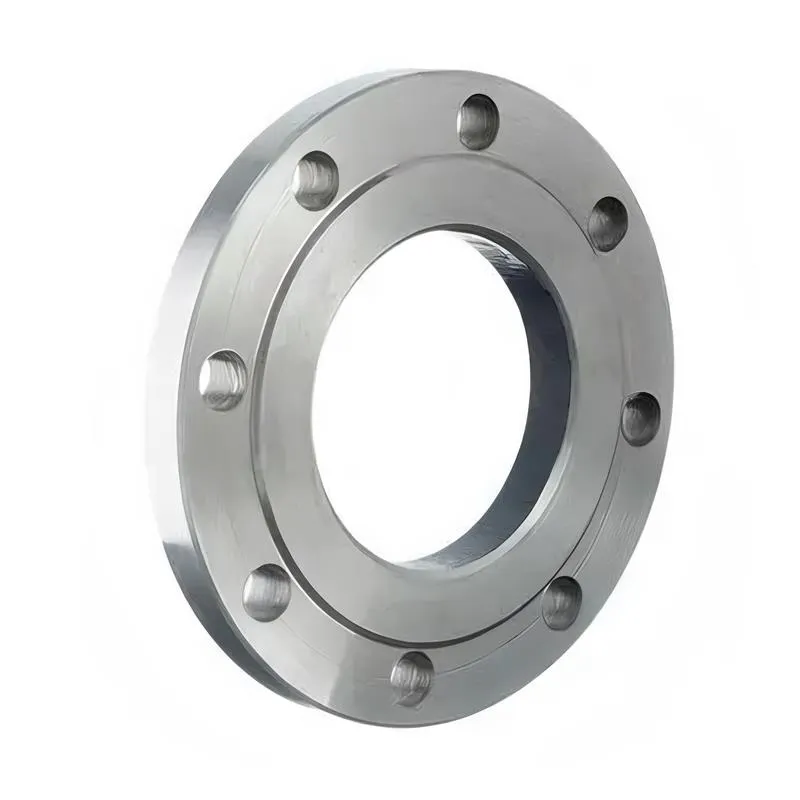
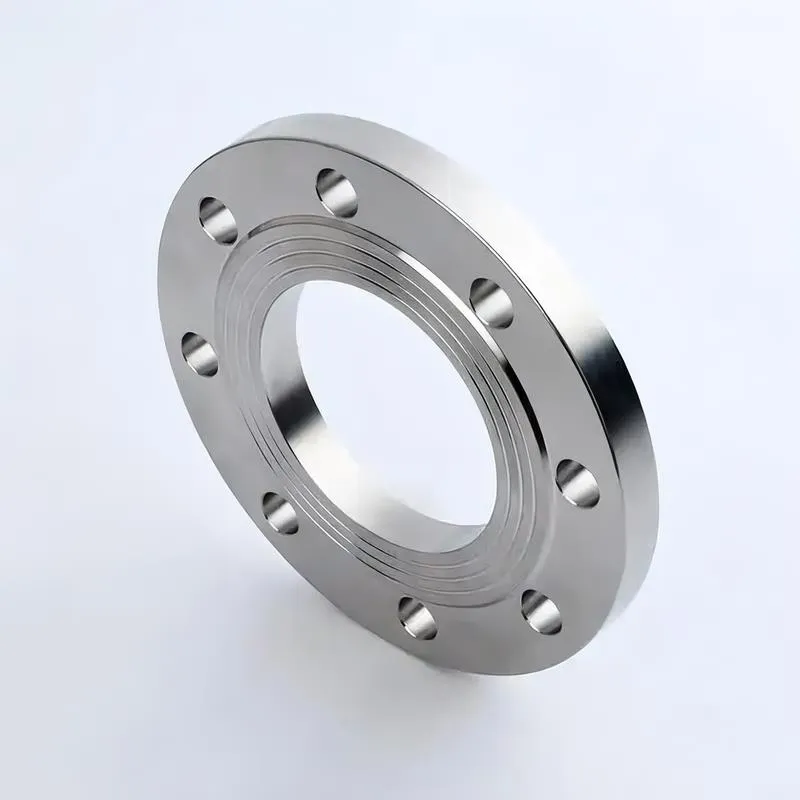
A flange—also referred to as a flange plate or rim—is a component used to connect shafts to one another, or, more commonly, to join the ends of pipes. Flanges are also utilized at the inlet and outlet ports of equipment to facilitate connections between two devices—for instance, the flange on a speed reducer. A "flange connection" or "flanged joint" refers to a detachable joint assembly comprising three interconnected elements—a flange, a gasket, and bolts—that together form a sealed structural unit. In the context of piping systems, a "pipe flange" specifically denotes a flange used for plumbing within the installation; when applied to equipment, it refers to the inlet or outlet flange of that specific device. Flanges feature a series of holes through which bolts are inserted to securely fasten the two flanges together, while a gasket placed between the flanges ensures a leak-proof seal. Flanges are broadly categorized into three types: threaded (screw-in) flanges, welded flanges, and clamp-type flanges. Flanges are invariably used in pairs; threaded flanges are suitable for low-pressure piping applications, whereas welded flanges are required for systems operating at pressures exceeding 4 kilograms per square centimeter. A sealing gasket is inserted between the two flange plates, which are then firmly secured using bolts. The thickness of a flange—as well as the specifications of the bolts used to fasten it—vary depending on the specific pressure rating required for the application. When connecting equipment such as water pumps or valves to piping systems, the corresponding connection points on these devices are often manufactured in the shape of a matching flange; this method of attachment is also referred to as a "flange connection." Generally, any connecting component that utilizes bolts to join and seal the perimeters of two flat surfaces—such as the joints in ventilation ducts—is termed a "flange"; such components may collectively be classified as "flange-type parts." However, since such a connection often constitutes merely a *portion* of a larger device—for instance, the interface between a flange and a water pump—it would be inappropriate to classify the entire water pump itself as a "flange-type part." Conversely, smaller components—such as valves—that feature such flanged interfaces may indeed be appropriately categorized as "flange-type parts."
-:-
For detailed product information, please contact sales.
-:
ASTM A710 Steel Flange, grade A, class 1, 8 - 19 mm inclusive Product Information
-:-
For detailed product information, please contact sales.
-:
ASTM A710 Steel Flange, grade A, class 1, 8 - 19 mm inclusive Synonyms
-:-
For detailed product information, please contact sales.
-:
ASTM A710 Steel, grade A, class 1, 8 - 19 mm inclusive Product Information
-:-
For detailed product information, please contact sales.
-:
## **Product Specification: ASTM A710 Low-Carbon Precipitation-Strengthened Steel**
### **Product Designation**
* **Standard:** ASTM A710 / A710M
* **Grade:** **A** (Standard Copper-Nickel-Chromium-Molybdenum alloy)
* **Class:** **1** (Single Normalize, single temper or double normalize and temper heat treatment)
* **Product Form:** Plates, bars, shapes
* **Thickness Range:** **8 mm to 19 mm inclusive** (0.31 in to 0.75 in)
### **Overview**
ASTM A710 Grade A, Class 1 is a premier **high-strength, low-alloy (HSLA) steel** that derives its exceptional mechanical properties not from high carbon content, but from a **low-carbon, copper-precipitation-hardening mechanism**. This fundamental difference grants it a unique combination of high yield strength, excellent toughness (even at low temperatures), superior weldability, and good corrosion resistance, particularly in atmospheric and marine environments. It is a material of choice for critical applications where weight savings, durability, and structural integrity are paramount.
---
### **1. Chemical Composition (Heat Analysis, % by Weight)**
The lean, low-carbon chemistry is the cornerstone of its performance, focusing on precipitation hardening and solid solution strengthening.
| Element | Grade A Composition (%) | Role & Effect |
| :--- | :--- | :--- |
| **Carbon (C)** | 0.07 max | **Extremely low.** This is the key to exceptional weldability and toughness. Strength comes from other elements. |
| **Manganese (Mn)** | 0.40 - 0.70 | Provides solid solution strengthening and aids hardenability without compromising weldability. |
| **Phosphorus (P)** | 0.025 max | Impurity; kept very low. |
| **Sulfur (S)** | 0.025 max | Impurity; kept very low for good through-thickness properties. |
| **Silicon (Si)** | 0.15 - 0.35 | Deoxidizer. |
| **Copper (Cu)** | 0.90 - 1.25 | **Core strengthening element.** Forms fine, coherent epsilon-copper precipitates during aging (part of the Class 1 heat treatment), providing significant strength increase. Also enhances atmospheric corrosion resistance. |
| **Nickel (Ni)** | 0.60 - 1.00 | Balances the potential hot-shortness effect of copper, improves low-temperature toughness, and enhances corrosion resistance. |
| **Chromium (Cr)** | 0.40 - 0.70 | Contributes to solid solution strengthening, improves hardenability, and enhances corrosion/oxidation resistance. |
| **Molybdenum (Mo)** | 0.15 - 0.30 | Enhances hardenability, increases strength at elevated temperatures, and improves corrosion resistance. |
| **Columbium (Cb/Nb)**| 0.02 - 0.10 | Powerful micro-alloying grain refiner. Inhibits grain growth during heat treatment, ensuring a fine-grained microstructure for toughness. |
| **Vanadium (V)** | 0.03 - 0.08 | Additional micro-alloying element for grain refinement and precipitation strengthening. |
---
### **2. Physical & Mechanical Properties (For Thickness 8-19 mm, Class 1)**
**A. Physical Properties (Typical)**
* **Density:** ~7.87 g/cm³
* **Elastic Modulus:** 200 GPa (29,000 ksi)
* **Poisson's Ratio:** 0.29
* **Coefficient of Thermal Expansion:** 11.5 x 10⁻⁶ /K (20-100°C)
**B. Mechanical Properties (Minimum Required per ASTM A710, Class 1)**
| Property | Requirement (8-19 mm) | Notes |
| :--- | :--- | :--- |
| **Yield Strength (min)** | 485 MPa (70 ksi) | **Very high yield strength for its low carbon content.** |
| **Tensile Strength (min)** | 585 MPa (85 ksi) | |
| **Elongation in 50 mm (min)** | 20% | Demonstrates good ductility. |
| **Charpy V-Notch Impact Energy** | **See Table** | **Exceptional toughness is a hallmark.** |
| **Test Temperature** | **-73°C (-100°F)** | Required test temp for longitudinal specimens. |
| **Minimum Energy (Longitudinal)** | **27 J (20 ft-lbf)** | Maintains high toughness at cryogenic temperatures. |
---
### **3. Product Applications**
This steel is engineered for demanding, high-value applications where its premium properties justify the cost.
* **Pressure Vessels & Boilers:** For high-pressure service where excellent weld integrity and low-temperature toughness are critical (e.g., industrial gas storage, power plant components).
* **Offshore & Marine Structures:** Ship hulls, offshore oil & gas platforms (modules, decks), and submarine components benefiting from high strength-to-weight ratio, seawater corrosion resistance, and weldability.
* **Cryogenic Applications:** Containment systems for liquefied natural gas (LNG), liquid nitrogen, or other cryogenic fluids due to its exceptional toughness at extremely low temperatures.
* **Military & Defense:** Naval shipbuilding, armored vehicle components, and other strategic applications requiring ballistic resistance, weldability, and durability.
* **High-Performance Construction:** Critical nodes in architectural structures, bridge components in severe environments, and heavy mining equipment.
---
### **4. International Standards & Designations**
ASTM A710 is a specialized, high-performance standard. Direct, comprehensive equivalents are rare, but similar concepts exist.
| Standard System | Potential Equivalent / Comparable Grade | Notes |
| :--- | :--- | :--- |
| **ASTM (USA)** | **A710/A710M Grade A, Class 1** | The defining specification. Class 3 (quenched & tempered) is also common. |
| **ASME (USA)** | **SA710** | Adopted for pressure vessel code use. |
| **EN (Europe)** | **No direct equivalent.** | The closest in concept might be a thermomechanically rolled, micro-alloyed fine-grain steel like **S460ML** or **S500MC** (EN 10025-4/6), but these achieve strength differently and lack the specific Cu-Ni-Cr-Mo system. |
| **JIS (Japan)** | **No direct equivalent.** | High-tensile steels like **SEV295** (JIS G3128) for pressure vessels share some application space but not the exact metallurgy. |
| **NACE MR0175/ISO 15156** | **Typically compliant** | The low carbon and alloying often make it suitable for sour service (H₂S environments), subject to hardness verification. |
---
### **Key Advantages & Processing Notes**
1. **Unmatched Weldability:** The ultra-low carbon equivalent (<0.40) virtually eliminates pre-heat requirements for most welding procedures, drastically reducing fabrication cost and risk of cold cracking.
2. **Heat Treatment (Class 1):** Involves normalizing (and possibly tempering) to achieve the required mechanical properties through the copper precipitation mechanism. This results in a uniform, fine-grained structure.
3. **Strength-to-Weight Ratio:** Its high yield strength allows for thinner, lighter sections compared to conventional HSLA steels, leading to weight savings in mobile structures.
4. **Property Consistency:** The precipitation-hardening mechanism provides uniform strength throughout the thickness of the 8-19 mm section.
### **Summary**
**ASTM A710 Grade A, Class 1 (8-19 mm)** is not a commodity steel but a **sophisticated engineering material**. Its unique precipitation-strengthened, low-carbon metallurgy delivers an almost unparalleled synergy of **high strength (70 ksi min yield), exceptional low-temperature toughness, and outstanding weldability**. This makes it the preferred choice for critical fabrications in offshore, cryogenic, military, and high-pressure applications, where lifecycle performance, safety, and fabrication reliability outweigh initial material cost. It represents a pinnacle of alloy design where strength is decoupled from carbon content to maximize overall performance.
-:-
For detailed product information, please contact sales.
-:
ASTM A710 Steel, grade A, class 1, 8 - 19 mm inclusive Specification
Dimensions
Size:
Diameter 20-1000 mm Length <4141 mm
Size:We can customized as required
Standard:
Per your request or drawing
We can customized as required
Properties(Theoretical)
Chemical Composition
-:-
For detailed product information, please contact sales.
-:
ASTM A710 Steel, grade A, class 1, 8 - 19 mm inclusive Properties
-:-
For detailed product information, please contact sales.
-:
Applications of ASTM A710 Steel Flange, grade A, class 1, 8 - 19 mm inclusive
-:-
For detailed product information, please contact sales.
-:
Chemical Identifiers ASTM A710 Steel Flange, grade A, class 1, 8 - 19 mm inclusive
-:-
For detailed product information, please contact sales.
-:
Packing of ASTM A710 Steel Flange, grade A, class 1, 8 - 19 mm inclusive
-:-
For detailed product information, please contact sales.
-:
Standard Packing:
-:-
For detailed product information, please contact sales.
-:
Typical bulk packaging includes palletized plastic 5 gallon/25 kg. pails, fiber and Steel Flange drums to 1 ton super sacks in full container (FCL) or truck load (T/L) quantities. Research and sample quantities and hygroscopic, oxidizing or other air sensitive materials may be packaged under argon or vacuum. Solutions are packaged in polypropylene, plastic or glass jars up to palletized 612 gallon liquid totes Special package is available on request. E FORUs’ is carefully handled to minimize damage during storage and transportation and to preserve the quality of our products in their original condition