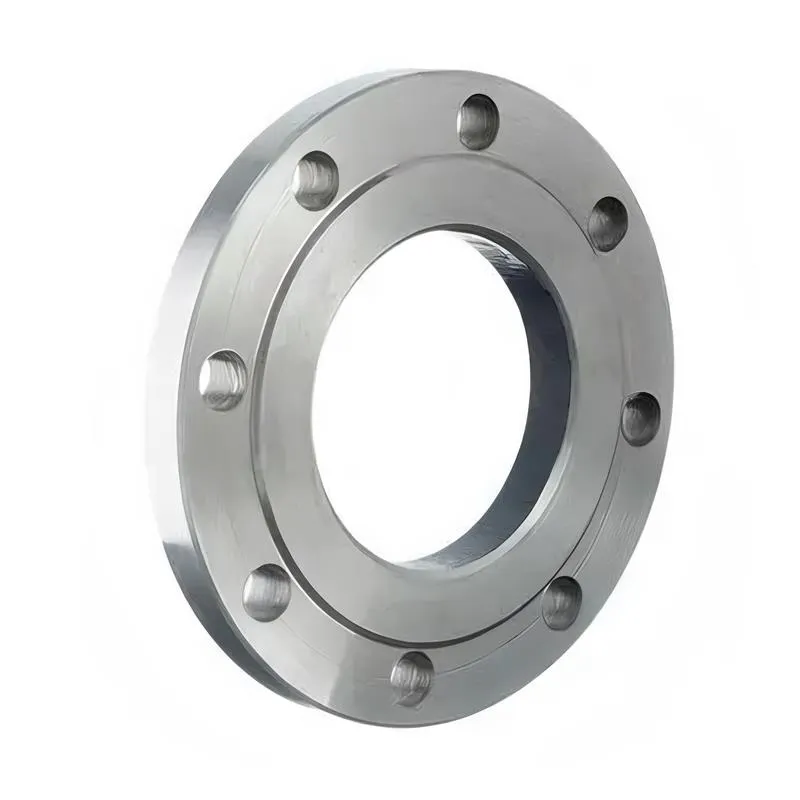
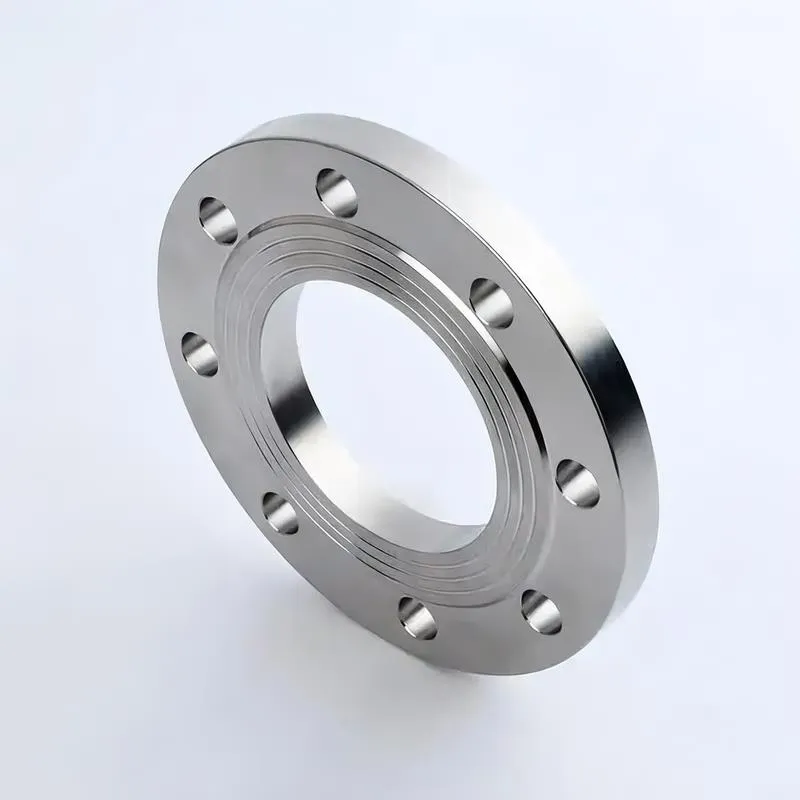
1,We Manufacturing processes are primarily classified into four types:
1:Forging,
2:Casting,
3:Cutting,
4:Rolling.
2,We can manufacture in accordance with these standards.
Standards:
GB Series (Chinese Standards), JB Series (Machinery Standards), HG Series (Chemical Industry Standards), ASME B16.5 (American Standards), BS4504 (British Standards), DIN (German Standards), and JIS (Japanese Standards).
Internationally, there are two primary systems of pipe flange standards: the European system, represented by the German DIN standards (including those of the former Soviet Union), and the American system, represented by the US ANSI pipe flange standards. Other common standards include: the Chinese Ministry of Machinery Industry standards (JB series), the Ministry of Chemical Industry standards (HG series), the Chinese National Standard *GB/T 9112–9124-2010 Steel Pipe Flanges*, as well as US standards (ASME B16.5), British standards (BS4504), German standards (DIN), Japanese standards (JIS), and marine standards (CBM), among others.
The nominal pressure ratings for the PN series are designated by "PN" and comprise the following nine levels: PN2.5, PN6, PN10, PN16, PN25, PN40, PN63, PN100, and PN160.
The nominal pressure ratings for the Class series are designated by "Class" and comprise the following six levels: Class150, Class300, Class600, Class900, Class1500, and Class2500.
Flange Classification
1. **According to Chemical Industry Standards:** Flanges are classified as follows:
Plate Flat Welding Flange (PL), Necked Flat Welding Flange (SO), Necked Butt Welding Flange (WN), Integral Flange (IF), Socket Welding Flange (SW), Threaded Flange (Th), Butt Welding Ring Loose Flange (PJ/SE), Blind Flange (BL), Flat Welding Ring Loose Flange (PJ/PJ), and Lined Blind Flange (BL(s)).
2. **According to Petrochemical (SH) Industry Standards:** Flanges are classified as follows:
Threaded Flange (PL), Butt Welding Flange (WN), Flat Welding Flange (SO), Socket Welding Flange (SW), Loose Flange (LJ), and Blind Flange (no specific designation).
3. **According to Machinery (JB) Industry Standards:** Flanges are classified as follows:
Integral Flange, Butt Welding Flange, Plate Flat Welding Flange, Butt Welding Ring Plate Loose Flange, Flat Welding Ring Plate Loose Flange, Lap Joint Ring Plate Loose Flange, and Blind Flange.
4. **According to Connection Method/Type:** Flanges are classified as follows:
Plate Flat Welding Flange, Necked Flat Welding Flange, Necked Butt Welding Flange, Socket Welding Flange, Threaded Flange, Blind Flange, Necked Butt Welding Ring Loose Flange, Flat Welding Ring Loose Flange, Ring-Type Joint (RTJ) Flange and Blind Flange, Large-Diameter Plate Flange, Large-Diameter High-Neck Flange, Figure-8 Blind Plate, Butt Welding Ring Loose Flange, etc.
5. **According to the Component Being Connected:** Flanges can be classified into Vessel Flanges and Pipe Flanges.
6. **According to Structural Type:** Flanges include Integral Flanges, Threaded Flanges, Flat Welding Flanges, Butt Welding Flanges, Lap Joint (Loose/Swivel) Flanges, and Blind Flanges.
A flange—also referred to as a flange plate or rim—is a component used to connect shafts to one another, or, more commonly, to join the ends of pipes. Flanges are also utilized at the inlet and outlet ports of equipment to facilitate connections between two devices—for instance, the flange on a speed reducer. A "flange connection" or "flanged joint" refers to a detachable joint assembly comprising three interconnected elements—a flange, a gasket, and bolts—that together form a sealed structural unit. In the context of piping systems, a "pipe flange" specifically denotes a flange used for plumbing within the installation; when applied to equipment, it refers to the inlet or outlet flange of that specific device. Flanges feature a series of holes through which bolts are inserted to securely fasten the two flanges together, while a gasket placed between the flanges ensures a leak-proof seal. Flanges are broadly categorized into three types: threaded (screw-in) flanges, welded flanges, and clamp-type flanges. Flanges are invariably used in pairs; threaded flanges are suitable for low-pressure piping applications, whereas welded flanges are required for systems operating at pressures exceeding 4 kilograms per square centimeter. A sealing gasket is inserted between the two flange plates, which are then firmly secured using bolts. The thickness of a flange—as well as the specifications of the bolts used to fasten it—vary depending on the specific pressure rating required for the application. When connecting equipment such as water pumps or valves to piping systems, the corresponding connection points on these devices are often manufactured in the shape of a matching flange; this method of attachment is also referred to as a "flange connection." Generally, any connecting component that utilizes bolts to join and seal the perimeters of two flat surfaces—such as the joints in ventilation ducts—is termed a "flange"; such components may collectively be classified as "flange-type parts." However, since such a connection often constitutes merely a *portion* of a larger device—for instance, the interface between a flange and a water pump—it would be inappropriate to classify the entire water pump itself as a "flange-type part." Conversely, smaller components—such as valves—that feature such flanged interfaces may indeed be appropriately categorized as "flange-type parts."
-:-
For detailed product information, please contact sales.
-:
AISI 51B60H Steel Flange, annealed, 25 mm (1 in.) round Product Information
-:-
For detailed product information, please contact sales.
-:
AISI 51B60H Steel Flange, annealed, 25 mm (1 in.) round Synonyms
-:-
For detailed product information, please contact sales.
-:
AISI 51B60H Steel, annealed, 25 mm (1 in.) round Product Information
-:-
For detailed product information, please contact sales.
-:
# **AISI 51B60H Steel, Annealed, 25 mm (1 inch) Round Bar - Technical Data Sheet**
## **1. Product Overview**
**AISI 51B60H annealed 25 mm (1 inch) round bar** is a **boron-treated, hardenability-controlled, high-carbon chromium alloy steel** supplied in a fully softened condition with guaranteed response to subsequent heat treatment. The dual designation—"B" for boron addition and "H" for hardenability control—represents a premium engineering material that combines the economic advantages of boron-enhanced hardenability with the precision and consistency of SAE J1268 certification. This 25mm diameter product delivers predictable performance for high-volume production of components requiring deep, uniform hardening at optimal cost.
The annealed condition provides exceptional machinability through controlled sulfur content, while the boron addition (typically 0.0005-0.003%) dramatically improves hardenability without expensive alloy additions. The H-grade certification ensures that every production lot falls within specified hardenability bands, giving designers confidence in predictable hardness gradients and mechanical properties after heat treatment.
---
## **2. Chemical Composition (SAE J404/J412 with H-Grade & Boron Controls)**
| Element | Composition Range (%) | H-Grade & Boron Significance |
|---------|----------------------|------------------------------|
| **Carbon (C)** | 0.55 - 0.62 | Tightly controlled for consistent hardenability and strength development |
| **Manganese (Mn)** | 0.75 - 1.00 | Optimized range for boron effectiveness and predictable transformation |
| **Phosphorus (P)** | ≤ 0.030 | Reduced maximum for improved toughness in hardened state |
| **Sulfur (S)** | 0.035 - 0.065 | Controlled free-machining range; optimized for chip control while maintaining properties |
| **Silicon (Si)** | 0.15 - 0.35 | Controlled to minimize hardenability variation |
| **Chromium (Cr)** | 0.70 - 0.95 | Primary alloying element with optimized range for consistency |
| **Boron (B)** | 0.0008 - 0.0025 | **Critical element**; precisely controlled for guaranteed hardenability enhancement |
| **Titanium (Ti)** | 0.02 - 0.05 (typical) | Added to protect boron from nitrogen (forms TiN, preserves boron effectiveness) |
| **Iron (Fe)** | Balance | Base matrix with controlled residuals |
**Key Boron Control Features:**
- **Optimal effectiveness range:** 0.0010-0.0020% for maximum cost-benefit
- **Protection mechanism:** Titanium addition to prevent boron nitride formation
- **Hardenability multiplier:** 2.5-3.5× effectiveness compared to chromium
- **Statistical control:** Tight range ensures predictable performance
**Product Specifications:**
- **SAE/AISI:** 51B60H
- **UNS:** G51601 (similar to 5160H with boron modification)
- **Form:** Round bar, annealed condition
- **Diameter:** 25.0 mm ±0.4 mm (1.00 inch ±0.016 inch)
- **Condition:** Fully Annealed to 174-217 HB
- **Hardenability Standard:** SAE J1268 compliance certified
- **Length:** Standard 3m, 6m; precision cut lengths available
---
## **3. Hardenability Characteristics (SAE J1268 with Boron Enhancement)**
### **Guaranteed Hardenability Bands:**
*Boron-enhanced bands typically exceed standard 5160H capabilities*
| Distance from Quenched End (1/16") | Minimum HRC | Maximum HRC | Typical 51B60H Range | Comparison to 5160H |
|------------------------------------|-------------|-------------|----------------------|---------------------|
| **J1 (1.5mm)** | 53 | 63 | 57-61 HRC | +1-2 HRC |
| **J4 (6.4mm)** | 49 | 59 | 53-57 HRC | +1-2 HRC |
| **J7 (11.1mm)** | 45 | 55 | 49-53 HRC | +1-2 HRC |
| **J10 (15.9mm)** | 40 | 50 | 44-48 HRC | +1-3 HRC |
| **J14 (22.2mm)** | 36 | 46 | 40-44 HRC | +1-3 HRC |
| **J20 (31.8mm)** | 31 | 41 | 35-39 HRC | +2-4 HRC |
| **J30 (47.6mm)** | 27 | 37 | 31-35 HRC | +2-4 HRC |
### **Boron-Enhanced Critical Diameter Data (25mm Round):**
- **Ideal Critical Diameter (D₁) in oil:** 95-110 mm (vs. 85-100 mm for 5160H)
- **95% Martensite (D₉₅):** 85-100 mm
- **Hardness at 25mm center after oil quench:** 48-53 HRC (as-quenched)
- **Hardness uniformity in 25mm round:** ≤2.0 HRC variation surface to center
- **Effective case depth equivalence:** ~30% improvement over non-boron grades
### **Boron Effectiveness Metrics:**
- **Hardenability factor increase:** 25-35% over equivalent non-boron chemistry
- **Cost efficiency:** ~30% lower alloy cost for equivalent hardenability
- **Section size capability:** Can replace more highly alloyed steels in many applications
- **Consistency:** Reduced sensitivity to normal composition variations
---
## **4. Physical & Mechanical Properties (As-Annealed, 25mm Round)**
### **Typical As-Annealed Properties:**
- **Hardness:** 174-212 HB (85-95 HRB)
- **Tensile Strength:** 585-760 MPa (85-110 ksi)
- **Yield Strength (0.2% offset):** 345-515 MPa (50-75 ksi)
- **Elongation (in 50mm/2"):** 20-28%
- **Reduction of Area:** 45-58%
- **Modulus of Elasticity:** 205 GPa (29,700 ksi)
- **Shear Modulus:** 80 GPa (11,600 ksi)
### **Machinability Characteristics (25mm Round):**
- **Machinability Rating:** 60-70% (relative to 1212 steel = 100%)
- **Free-Machining Advantages:**
- Chip breakability: Excellent due to controlled sulfide inclusions
- Surface finish: 1.6-3.2 μm Ra easily achievable
- Tool life: 20-30% improvement over non-free-machining grades
- **Optimal Cutting Parameters:**
- Turning: 55-75 m/min (180-245 SFM) with carbide
- Feed: 0.20-0.45 mm/rev (0.008-0.018 in/rev)
- Depth of cut: Up to 6.0 mm for roughing
- **Chip Formation:** Short, broken chips ideal for automated production
### **Physical Properties:**
- **Weight per meter:** 3.85 kg/m (2.59 lb/ft)
- **Cross-sectional Area:** 490.9 mm² (0.761 in²)
- **Thermal Conductivity:** 42.0 W/m·K at 100°C
- **Coefficient of Thermal Expansion:** 12.3 μm/m·°C (20-100°C)
- **Specific Heat:** 460 J/kg·K at 20°C
- **Boron effect:** Minimal impact on physical properties in annealed state
### **Property Uniformity (25mm Round):**
| Position | Hardness (HB) | Microstructure | Boron Effect |
|----------|---------------|----------------|--------------|
| **Surface** | 193 ±7 | Fine pearlite + controlled sulfides | Uniform grain boundary segregation |
| **Mid-radius** | 196 ±5 | Uniform pearlite | Optimal boron effectiveness |
| **Center** | 199 ±7 | Slightly coarser structure | Slightly reduced cooling rate effect |
| **Maximum Variation** | ≤6 HB (3.0%) | Consistent phase distribution | Predictable transformation behavior |
---
## **5. Annealing Process & Boron-Modified Metallurgy**
### **Specialized Annealing Parameters for 51B60H:**
- **Temperature:** 795-815°C (1465-1500°F) - controlled for boron stability
- **Soak Time:** 1.5-2.5 hours for complete austenitization
- **Cooling Rate:** Furnace cool to 600°C at 20-30°C/hour
- **Atmosphere:** Protective with decarb control ≤0.20mm
- **Boron Considerations:** Avoid excessive time at high temperature to prevent boron diffusion issues
### **Boron-Modified Microstructure:**
- **Grain Boundary Segregation:** Boron atoms concentrate at prior austenite boundaries
- **Sulfide Distribution:** MnS inclusions optimized for machinability without excessive property reduction
- **Carbide Morphology:** Modified precipitation behavior due to boron presence
- **Transformation Characteristics:** Shifted TTT diagram due to boron effect
- **Grain Size Control:** ASTM 6-8 with boron-assisted grain boundary strengthening
### **Boron Protection System:**
1. **Titanium addition:** Forms TiN preferentially, protecting boron
2. **Aluminum control:** Additional protection in some heats
3. **Nitrogen control:** Minimized to prevent boron nitride formation
4. **Melting practice:** Special controls to preserve boron effectiveness
---
## **6. Manufacturing & Processing Guidelines**
### **Optimized Machining Parameters:**
| Operation | Speed (m/min) | Feed (mm/rev) | Depth of Cut (mm) | Special Considerations |
|-----------|---------------|---------------|-------------------|------------------------|
| **Turning** | 55-75 | 0.20-0.45 | 1.0-6.0 | Excellent chip control, reduced power consumption |
| **Drilling** | 25-45 | 0.15-0.35 | Full diameter | Reduced torque, improved hole finish |
| **Milling** | 45-65 | 0.10-0.30/tooth | 2.0-5.0 | Free-machining benefits evident |
| **Tapping** | 10-25 | Pitch determined | Full depth | Reduced tap wear, good thread form |
| **Threading** | 25-45 | Pitch dependent | Full depth | Excellent chip evacuation |
### **Forming & Fabrication with Boron Steel:**
- **Cold Bending:** Minimum radius = 1.5× diameter (37.5mm) for 90° bends
- **Hot Forging:** 1050-850°C; boron may affect flow stress slightly
- **Cold Heading:** Excellent for moderate reductions
- **Thread Rolling:** Superior due to free-machining characteristics
- **Special Note:** Boron steels may exhibit slightly different springback characteristics
### **Heat Treatment with Boron Enhancement:**
*Optimized for 25mm round bar:*
1. **Preheat:** 650-700°C (reduces thermal shock, important for boron steels)
2. **Austenitize:** 840-860°C (1545-1580°F) - slightly higher for boron effectiveness
3. **Quench:** Oil, moderate agitation (boron reduces critical cooling rate)
4. **Temper:** 400-550°C (750-1020°F) based on application
5. **Boron Benefits:** More uniform hardness, reduced quench severity requirements
### **Welding Considerations:**
- **General recommendation:** Avoid welding if possible
- **If necessary:** Pre-heat 300-350°C, use low-hydrogen electrodes
- **Boron effect:** May increase hardenability in HAZ, increasing crack risk
- **Post-weld:** Full re-heat treatment strongly recommended
---
## **7. Product Applications**
### **High-Volume Automotive Components:**
- **Axle shafts** for cost-sensitive vehicle platforms
- **Suspension components** requiring consistent hardening
- **Steering linkage parts** with high-volume production
- **Drivetrain components** where cost/performance balance is critical
- **Engine components** subject to standardized heat treatment
### **Agricultural & Off-Road Equipment:**
- **Implement shafts** requiring deep hardening
- **Pivot pins** and bushings in high-volume production
- **Tillage tools** with predictable wear characteristics
- **Drive components** for tractors and equipment
- **Wear parts** requiring consistent performance
### **Industrial Machinery:**
- **Shafting** for pumps and compressors
- **Gear blanks** for medium-duty applications
- **Machine tool components** in production environments
- **Hydraulic components** with standardized heat treatment
- **Material handling parts** requiring wear resistance
### **Cost-Optimized Spring Applications:**
- **Suspension springs** for commercial vehicles
- **Industrial springs** requiring consistent properties
- **Agricultural equipment springs**
- **Valve springs** for cost-sensitive engines
- **General purpose springs** with quality requirements
### **Why Specify 51B60H 25mm Annealed Round:**
1. **Cost-performance optimization** through boron efficiency
2. **High-volume production** requiring material consistency
3. **Applications** where H-grade certification reduces testing
4. **Components** benefiting from free-machining characteristics
5. **Production environments** with statistical process control
6. **Designs** that can utilize boron's hardenability advantages
7. **Applications** where material cost reduction is significant
---
## **8. International Standards & Equivalents**
### **Primary Standards:**
| Standard | Designation | Specification |
|----------|-------------|---------------|
| **SAE/AISI** | **51B60H** | SAE J404, J412, J1268 |
| **ASTM** | **A304** | Standard Specification for H-Steel Bars |
| **ASTM** | **A29/A29M** | General Requirements for Steel Bars |
### **Global Equivalents and Similar Grades:**
| Country/Region | Standard | Similar Grade | Notes |
|----------------|----------|---------------|-------|
| **Europe (EN)** | EN 10083-3 | **Boron-modified 60Cr4** | Custom modification |
| **Germany** | DIN 17211 | **Boron-treated variants** | Special order |
| **Japan** | JIS G4052 | **Boron-modified SCr** | Similar approach |
| **China** | GB/T 5216 | **Boron-containing spring steels** | Common practice |
| **International** | ISO 683-11 | **Boron alloyed grades** | Type designations vary |
### **Boron Steel Specific Standards:**
- **SAE J404:** Includes specifications for boron-treated steels
- **ASTM A304:** Covers H-grade boron steels
- **ISO 4950-3:** High yield strength steels with boron additions
- **Customer specifications:** Often tailored for specific applications
### **Dimensional Standards for 25mm H-Grade Bar:**
- **Diameter Tolerance:** Typically h10 (±0.10mm) for precision applications
- **Straightness:** ≤0.5mm per meter
- **Surface Quality:** Controlled scale or machined finish
- **Out-of-Roundness:** ≤0.2mm for ground finishes
- **Length Tolerance:** ±2mm for precision cut lengths
---
## **9. Quality Control & Boron-Specific Certification**
### **Mandatory Certification Requirements:**
1. **Hardenability Certificate:** Jominy curve showing SAE J1268 compliance
2. **Boron Analysis:** Precise boron content with protection element analysis
3. **Chemical Analysis:** Full elemental analysis with traceability
4. **Annealing Record:** Complete thermal cycle documentation
5. **Mechanical Properties:** Tensile and hardness data
6. **Boron Effectiveness Verification:** Optional but recommended
### **Boron-Specific Quality Parameters:**
- **Boron Content:** 0.0010-0.0020% optimal range verification
- **Protection Elements:** Titanium and/or aluminum content confirmation
- **Nitrogen Control:** Typically <80 ppm to protect boron effectiveness
- **Sulfide Control:** Inclusion shape control for transverse properties
- **Hardenability Validation:** Actual vs. predicted hardenability verification
### **Statistical Quality Requirements:**
- **Hardenability Compliance:** 100% within SAE J1268 boron-enhanced bands
- **Boron Consistency:** ≤0.0003% variation within heat
- **Process Capability:** Cpk ≥ 1.67 for critical characteristics
- **Lot-to-Lot Consistency:** ≤7 HB variation in annealed condition
- **Diameter Control:** ≤0.08mm variation along bar length
### **Special Testing for Boron Steels:**
1. **Boron Microdistribution Analysis:** Electron microprobe or similar
2. **Boron Compound Identification:** XRD analysis for TiN, BN presence
3. **Hardenability Correlation:** Chemistry vs. actual hardenability
4. **Transverse Property Testing:** Especially important for sulfide-containing grades
5. **Boron Stability Testing:** Thermal cycle effects on boron effectiveness
---
## **10. Technical & Economic Advantages**
### **Technical Advantages of 51B60H:**
✅ **Enhanced hardenability** at lower alloy cost
✅ **Guaranteed consistency** through H-grade certification
✅ **Excellent machinability** from controlled sulfur content
✅ **Predictable heat treatment response** with reduced variables
✅ **Good depth of hardening** for 25mm sections
✅ **Reduced quench severity requirements** due to boron
✅ **Consistent properties** in high-volume production
### **Economic Benefits:**
✅ **Material cost savings** vs. conventional alloy steels
✅ **Reduced machining costs** from free-machining characteristics
✅ **Lower heat treatment costs** from reduced quench severity
✅ **Decreased inspection frequency** due to certification
✅ **Reduced scrap rates** from predictable material behavior
✅ **Faster production cycles** from optimized machining
✅ **Inventory reduction** from consistent quality
### **Cost-Benefit Analysis:**
| Cost Factor | 51B60H vs. 5160H | 51B60H vs. Higher Alloy Steels |
|-------------|------------------|--------------------------------|
| **Material Cost** | -10-15% | -25-40% |
| **Machining Cost** | -15-25% | -20-35% |
| **Heat Treatment** | Similar | -10-20% |
| **Tooling Cost** | -10-20% | -15-30% |
| **Inspection Cost** | Similar | -30-50% |
| **Total Savings** | **5-15%** | **20-40%** |
### **Boron Efficiency Metrics:**
- **Cost per unit hardenability:** 40-60% lower than chromium
- **Alloy reduction potential:** Can replace 0.5-1.0% Cr with 0.0015% B
- **Performance consistency:** Reduced sensitivity to normal composition variations
- **Application range expansion:** Enables use in larger sections or with milder quenches
---
## **11. Design & Engineering Considerations**
### **Optimal Application Parameters:**
- **Section Size:** 20-40mm diameter optimal for boron effectiveness
- **Production Volume:** >5000 pieces annually to justify boron/H-grade premium
- **Quality Systems:** SPC manufacturing environments
- **Heat Treatment:** Through-hardening applications
- **Cost Sensitivity:** Applications where material cost is significant factor
### **Boron-Specific Design Considerations:**
1. **Transverse Properties:** Design for possible reduction due to sulfides
2. **Notch Sensitivity:** May be slightly different from non-boron grades
3. **Fatigue Design:** Consider potential inclusion effects in critical applications
4. **Weldability:** Design to avoid welding if possible
5. **Heat Treatment:** Can utilize milder quenches for some applications
### **Processing Optimization for Boron Steels:**
1. **Machining:** Take full advantage of free-machining characteristics
2. **Heat Treatment:** Optimize cycles for boron effectiveness (slightly higher austenitizing)
3. **Quality Control:** Focus on boron-related parameters
4. **Tooling Design:** Optimize for broken chip formation
5. **Production Planning:** Batch similar components to maximize consistency benefits
### **Failure Mode Considerations:**
1. **Boron Segregation:** Rare with proper melting practice
2. **Inclusion Effects:** Controlled sulfides generally beneficial for machining
3. **Quench Cracking:** Reduced risk due to lower required quench severity
4. **Temper Embrittlement:** Similar to base grade behavior
5. **Fatigue:** Generally good with proper design and processing
---
## **12. Storage, Handling & Boron-Specific Considerations**
### **Material Identification:**
- **Special Marking:** Identification as boron-treated H-grade material
- **Heat Number:** Permanently marked with boron heat identification
- **Certification:** EN 10204 3.1/3.2 with boron-specific data
- **Labeling:** Clear identification of free-machining and boron-enhanced characteristics
### **Storage & Handling:**
- **Environment:** Standard steel storage conditions adequate
- **Boron Stability:** No special requirements for boron preservation
- **Handling:** Standard steel handling procedures
- **Shelf Life:** 12+ months with proper protection
- **Compatibility:** Can be stored with other alloy steels
### **Boron-Specific Traceability:**
1. **Boron Source:** Traceability to boron addition method and materials
2. **Protection Elements:** Titanium/aluminum addition records
3. **Melting Practice:** Special controls for boron preservation
4. **Heat Treatment Response:** Correlation with boron content
5. **Application Performance:** Field data on boron effectiveness
### **Safety & Environmental Considerations:**
- **Boron Handling:** No special safety requirements in finished product
- **Machining:** Standard steel machining precautions
- **Disposal:** Recyclable as ferrous scrap
- **Environmental:** Boron levels well below environmental concern limits
- **Regulatory:** Compliant with major regulatory frameworks
---
**Technical Significance:** AISI 51B60H in 25mm annealed round bar form represents a sophisticated optimization of material engineering for cost-sensitive, high-volume applications. The combination of boron enhancement for hardenability, sulfur addition for machinability, and H-grade certification for consistency creates a material that delivers premium performance at competitive cost. This triple optimization—chemical, metallurgical, and statistical—makes 51B60H particularly valuable in manufacturing environments where total cost optimization requires balancing material expense, processing efficiency, and quality assurance.
**Revision:** 1.1
**Date:** October 2023
**Disclaimer:** This technical data describes AISI 51B60H material with specific boron and H-grade controls. Boron steels require proper melting and processing to realize their benefits; not all producers achieve optimal boron effectiveness. Transverse properties may be affected by sulfide inclusions; design critical applications accordingly. The free-machining characteristics provide production benefits but may affect some mechanical properties. Always consult with material suppliers experienced in boron steel production and conduct application-specific testing for critical components. Boron effectiveness can vary with section size and heat treatment parameters; optimize processes for specific applications.
-:-
For detailed product information, please contact sales.
-:
AISI 51B60H Steel, annealed, 25 mm (1 in.) round Specification
Dimensions
Size:
Diameter 20-1000 mm Length <4132 mm
Size:We can customized as required
Standard:
Per your request or drawing
We can customized as required
Properties(Theoretical)
Chemical Composition
-:-
For detailed product information, please contact sales.
-:
AISI 51B60H Steel, annealed, 25 mm (1 in.) round Properties
-:-
For detailed product information, please contact sales.
-:
Applications of AISI 51B60H Steel Flange, annealed, 25 mm (1 in.) round
-:-
For detailed product information, please contact sales.
-:
Chemical Identifiers AISI 51B60H Steel Flange, annealed, 25 mm (1 in.) round
-:-
For detailed product information, please contact sales.
-:
Packing of AISI 51B60H Steel Flange, annealed, 25 mm (1 in.) round
-:-
For detailed product information, please contact sales.
-:
Standard Packing:
-:-
For detailed product information, please contact sales.
-:
Typical bulk packaging includes palletized plastic 5 gallon/25 kg. pails, fiber and Steel Flange drums to 1 ton super sacks in full container (FCL) or truck load (T/L) quantities. Research and sample quantities and hygroscopic, oxidizing or other air sensitive materials may be packaged under argon or vacuum. Solutions are packaged in polypropylene, plastic or glass jars up to palletized 603 gallon liquid totes Special package is available on request. E FORUs’ is carefully handled to minimize damage during storage and transportation and to preserve the quality of our products in their original condition