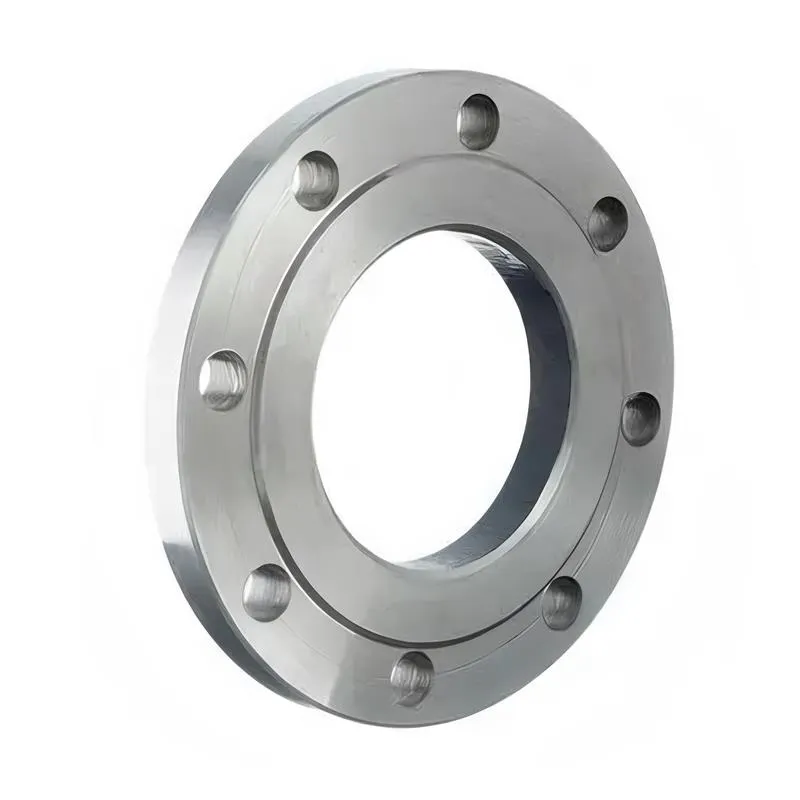
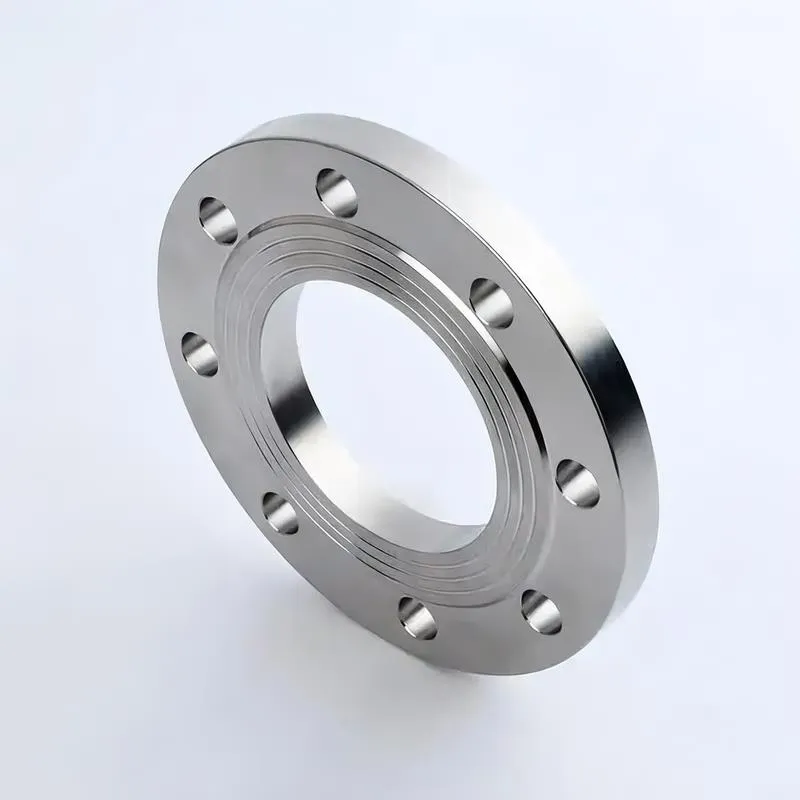
1,We Manufacturing processes are primarily classified into four types:
1:Forging,
2:Casting,
3:Cutting,
4:Rolling.
2,We can manufacture in accordance with these standards.
Standards:
GB Series (Chinese Standards), JB Series (Machinery Standards), HG Series (Chemical Industry Standards), ASME B16.5 (American Standards), BS4504 (British Standards), DIN (German Standards), and JIS (Japanese Standards).
Internationally, there are two primary systems of pipe flange standards: the European system, represented by the German DIN standards (including those of the former Soviet Union), and the American system, represented by the US ANSI pipe flange standards. Other common standards include: the Chinese Ministry of Machinery Industry standards (JB series), the Ministry of Chemical Industry standards (HG series), the Chinese National Standard *GB/T 9112–9124-2010 Steel Pipe Flanges*, as well as US standards (ASME B16.5), British standards (BS4504), German standards (DIN), Japanese standards (JIS), and marine standards (CBM), among others.
The nominal pressure ratings for the PN series are designated by "PN" and comprise the following nine levels: PN2.5, PN6, PN10, PN16, PN25, PN40, PN63, PN100, and PN160.
The nominal pressure ratings for the Class series are designated by "Class" and comprise the following six levels: Class150, Class300, Class600, Class900, Class1500, and Class2500.
Flange Classification
1. **According to Chemical Industry Standards:** Flanges are classified as follows:
Plate Flat Welding Flange (PL), Necked Flat Welding Flange (SO), Necked Butt Welding Flange (WN), Integral Flange (IF), Socket Welding Flange (SW), Threaded Flange (Th), Butt Welding Ring Loose Flange (PJ/SE), Blind Flange (BL), Flat Welding Ring Loose Flange (PJ/PJ), and Lined Blind Flange (BL(s)).
2. **According to Petrochemical (SH) Industry Standards:** Flanges are classified as follows:
Threaded Flange (PL), Butt Welding Flange (WN), Flat Welding Flange (SO), Socket Welding Flange (SW), Loose Flange (LJ), and Blind Flange (no specific designation).
3. **According to Machinery (JB) Industry Standards:** Flanges are classified as follows:
Integral Flange, Butt Welding Flange, Plate Flat Welding Flange, Butt Welding Ring Plate Loose Flange, Flat Welding Ring Plate Loose Flange, Lap Joint Ring Plate Loose Flange, and Blind Flange.
4. **According to Connection Method/Type:** Flanges are classified as follows:
Plate Flat Welding Flange, Necked Flat Welding Flange, Necked Butt Welding Flange, Socket Welding Flange, Threaded Flange, Blind Flange, Necked Butt Welding Ring Loose Flange, Flat Welding Ring Loose Flange, Ring-Type Joint (RTJ) Flange and Blind Flange, Large-Diameter Plate Flange, Large-Diameter High-Neck Flange, Figure-8 Blind Plate, Butt Welding Ring Loose Flange, etc.
5. **According to the Component Being Connected:** Flanges can be classified into Vessel Flanges and Pipe Flanges.
6. **According to Structural Type:** Flanges include Integral Flanges, Threaded Flanges, Flat Welding Flanges, Butt Welding Flanges, Lap Joint (Loose/Swivel) Flanges, and Blind Flanges.
A flange—also referred to as a flange plate or rim—is a component used to connect shafts to one another, or, more commonly, to join the ends of pipes. Flanges are also utilized at the inlet and outlet ports of equipment to facilitate connections between two devices—for instance, the flange on a speed reducer. A "flange connection" or "flanged joint" refers to a detachable joint assembly comprising three interconnected elements—a flange, a gasket, and bolts—that together form a sealed structural unit. In the context of piping systems, a "pipe flange" specifically denotes a flange used for plumbing within the installation; when applied to equipment, it refers to the inlet or outlet flange of that specific device. Flanges feature a series of holes through which bolts are inserted to securely fasten the two flanges together, while a gasket placed between the flanges ensures a leak-proof seal. Flanges are broadly categorized into three types: threaded (screw-in) flanges, welded flanges, and clamp-type flanges. Flanges are invariably used in pairs; threaded flanges are suitable for low-pressure piping applications, whereas welded flanges are required for systems operating at pressures exceeding 4 kilograms per square centimeter. A sealing gasket is inserted between the two flange plates, which are then firmly secured using bolts. The thickness of a flange—as well as the specifications of the bolts used to fasten it—vary depending on the specific pressure rating required for the application. When connecting equipment such as water pumps or valves to piping systems, the corresponding connection points on these devices are often manufactured in the shape of a matching flange; this method of attachment is also referred to as a "flange connection." Generally, any connecting component that utilizes bolts to join and seal the perimeters of two flat surfaces—such as the joints in ventilation ducts—is termed a "flange"; such components may collectively be classified as "flange-type parts." However, since such a connection often constitutes merely a *portion* of a larger device—for instance, the interface between a flange and a water pump—it would be inappropriate to classify the entire water pump itself as a "flange-type part." Conversely, smaller components—such as valves—that feature such flanged interfaces may indeed be appropriately categorized as "flange-type parts."
-:-
For detailed product information, please contact sales.
-:
SAE 4617 Low Alloy Steel Flange, Cold Drawn Bar Product Information
-:-
For detailed product information, please contact sales.
-:
SAE 4617 Low Alloy Steel Flange, Cold Drawn Bar Synonyms
-:-
For detailed product information, please contact sales.
-:
SAE 4617 Low Alloy Steel, Cold Drawn Bar Product Information
-:-
For detailed product information, please contact sales.
-:
# **SAE 4617 Low Alloy Steel - Cold Drawn Bar**
## **Nickel-Molybdenum Case-Hardening Steel with Enhanced Surface Finish and Dimensional Precision**
---
### **1. PRODUCT OVERVIEW**
**SAE 4617 Cold Drawn Steel Bar**
- **Material Classification:** Low-carbon nickel-molybdenum alloy steel, cold worked condition
- **Product Form:** Cold drawn round bars (also available in hexagons, squares, flats)
- **Manufacturing Process:** Hot rolled bar subsequently cold drawn through dies to final size
- **Key Advantages:** Improved surface finish, tighter dimensional tolerances, increased strength from cold working
- **Typical Supply Condition:** Cold drawn, stress relieved (annealed or as-drawn)
- **Primary Use:** Machined components requiring case hardening, where precision and surface quality are important
**Material Designation Breakdown:**
- **SAE 46xx Series:** Nickel-molybdenum alloy steels
- **"17":** Nominal carbon content of 0.17%
- **Cold Drawn:** Indicates final manufacturing process providing enhanced properties
---
### **2. CHEMICAL COMPOSITION**
| Element | SAE 4617 Standard Range (%) | Typical Production Range (%) | Metallurgical Function |
|---------|-----------------------------|------------------------------|------------------------|
| **Carbon (C)** | 0.15-0.20 | 0.16-0.18 | Base strength, carburizing response |
| **Manganese (Mn)** | 0.45-0.65 | 0.50-0.60 | Hardenability, deoxidization |
| **Phosphorus (P)** | ≤ 0.035 | ≤ 0.020 | Residual (controlled impurity) |
| **Sulfur (S)** | ≤ 0.040 | 0.025-0.035 | Machinability enhancer |
| **Silicon (Si)** | 0.15-0.30 | 0.20-0.25 | Deoxidizer, solid solution strengthener |
| **Nickel (Ni)** | 1.65-2.00 | 1.75-1.90 | **Primary alloy:** Provides core toughness |
| **Molybdenum (Mo)** | 0.20-0.30 | 0.22-0.27 | **Secondary alloy:** Grain refinement, hardenability |
| **Chromium (Cr)** | - | ≤ 0.20 | Trace residual |
| **Copper (Cu)** | - | ≤ 0.35 | Trace residual |
| **Iron (Fe)** | Balance | Balance | Matrix element |
**Cold Drawn Processing Effect on Chemistry:**
- No chemical changes during cold drawing
- Surface decarburization minimized compared to hot rolled
- Consistent chemistry maintained through cross-section
---
### **3. MATERIAL SPECIFICATIONS & STANDARDS**
| Standard System | Designation | Title / Description | Application Scope |
|----------------|-------------|---------------------|-------------------|
| **UNS** | G46170 | Unified Numbering System | Material identification |
| **SAE/AISI** | 4617 | Standard Material Designation | Automotive & general engineering |
| **ASTM** | A311/A311M | Stress-Relieved Cold-Drawn Steel Bars | Primary specification for cold drawn bars |
| **ASTM** | A29/A29M | Steel Bars, Carbon and Alloy, Hot-Wrought and Cold-Finished | General requirements |
| **AMS** | 6271 | Steel Bars, Cold Finished | Aerospace quality cold finished |
| **ISO** | 683-11 | Heat-treatable steels | International classification |
| **DIN** | 1.6562 | 17NiCrMo6-4 | German cold forming quality |
| **JIS** | G4106 | SNCM220 | Japanese alloy steel for machine structural use |
| **Customer Standards** | Various OEM specs | Automotive manufacturer specifications | Ford, GM, Chrysler, etc. |
**Dimensional Standards for Cold Drawn Bars:**
- **ASTM A29:** Table 8 (Cold Finished Carbon and Alloy Steel Bars)
- **Diameter Tolerances:** Typically ±0.075 mm for diameters ≤12.7mm, increasing with size
- **Straightness:** 0.5 mm per 300 mm typical
- **Surface Finish:** 1.6-3.2 μm Ra (63-125 μin Ra) typical
---
### **4. MANUFACTURING PROCESS: COLD DRAWING**
#### **Production Sequence:**
1. **Hot Rolling:** Initial bar production from billet
2. **Pickling:** Acid cleaning to remove scale
3. **Phosphating/Lubrication:** Surface treatment for drawing
4. **Cold Drawing:** Pulling through tungsten carbide dies
5. **Stress Relieving:** Heat treatment at 550-650°C (optional)
6. **Straightening & Cutting:** To final dimensions
7. **Inspection & Packaging:** Quality verification
#### **Cold Drawing Effects:**
| Property | Change from Hot Rolled | Typical Improvement |
|----------|------------------------|---------------------|
| **Surface Finish** | Significant improvement | Ra 1.6-3.2 μm vs 6.3-12.5 μm |
| **Dimensional Accuracy** | Tighter tolerances | ±0.075mm vs ±0.4mm for 25mm dia |
| **Yield Strength** | 15-30% increase | Due to strain hardening |
| **Machinability** | Slight improvement | Better chip breaking, less vibration |
| **Decarburization** | Reduced | Minimal surface carbon loss |
---
### **5. MECHANICAL PROPERTIES (AS-COLD DRAWN)**
#### **Typical Properties (Before Heat Treatment):**
| Property | Cold Drawn Condition | Stress-Relieved Condition | Testing Standard |
|----------|----------------------|---------------------------|------------------|
| **Hardness** | 187-229 HB | 170-207 HB | ASTM E10 |
| **Tensile Strength** | 620-750 MPa | 550-690 MPa | ASTM E8/E8M |
| **Yield Strength** | 515-620 MPa | 450-550 MPa | ASTM E8/E8M |
| **Elongation (in 50mm)** | 12-18% | 15-22% | ASTM E8/E8M |
| **Reduction of Area** | 40-55% | 45-60% | ASTM E8/E8M |
| **Machinability Rating** | 65-70% of B1112 | 70-75% of B1112 | Comparative |
#### **Cold Work Effect by Diameter Reduction:**
| Diameter Reduction (%) | Typical Tensile Increase (%) | Yield Strength Increase (%) | Notes |
|------------------------|------------------------------|-----------------------------|-------|
| 5-10% | 10-15% | 15-20% | Light drawing |
| 10-20% | 15-25% | 20-30% | Typical commercial |
| 20-30% | 25-35% | 30-40% | Heavy drawing |
| >30% | 35-50% | 40-60% | Special applications only |
#### **Anisotropy Considerations:**
- **Longitudinal Properties:** As shown in tables above
- **Transverse Properties:** 10-20% lower ductility and impact strength
- **Recommended:** Design loads primarily in longitudinal direction
---
### **6. PHYSICAL PROPERTIES**
| Property | Value | Conditions / Notes |
|----------|-------|-------------------|
| **Density** | 7.85 g/cm³ (0.284 lb/in³) | At 20°C, unchanged by cold working |
| **Melting Range** | 1480-1520°C | Approximate liquidus to solidus |
| **Thermal Conductivity** | 42.5 W/m·K | At 100°C, annealed condition |
| **Specific Heat Capacity** | 460 J/kg·K | At 20°C |
| **Coefficient of Thermal Expansion** | 12.3 × 10⁻⁶/K | 20-100°C range |
| **Electrical Resistivity** | 0.22 μΩ·m | At 20°C, increases slightly with cold work |
| **Modulus of Elasticity** | 205 GPa (29.7×10⁶ psi) | Unaffected by cold working |
| **Poisson's Ratio** | 0.29 | Typical for steel |
| **Magnetic Properties** | Ferromagnetic | Below Curie temperature (~770°C) |
---
### **7. HEAT TREATMENT RESPONSE**
#### **Case Hardening Performance:**
- **Process Compatibility:** Excellent for carburizing and carbonitriding
- **Recommended Carburizing Temp:** 900-925°C (1650-1700°F)
- **Case Depth Range:** 0.25-2.0 mm (0.010-0.080")
- **Surface Hardness:** 58-63 HRC after hardening
- **Core Hardness:** 30-40 HRC (depends on section size)
#### **Stress Relieving (if required before machining):**
- **Temperature:** 550-650°C (1020-1200°F)
- **Time:** 1 hour per inch of thickness minimum
- **Atmosphere:** Neutral or protective
- **Result:** Reduced residual stresses, improved dimensional stability
#### **Full Annealing (if extensive machining required):**
- **Temperature:** 830-850°C (1525-1560°F)
- **Cooling:** Slow furnace cool
- **Resulting Hardness:** 149-187 HB (optimal for machining)
---
### **8. TYPICAL APPLICATIONS**
#### **Automotive Components (Primary Market):**
- **Transmission Parts:** Gears, synchronizer hubs, shift forks
- **Steering Components:** Rack and pinion gears, steering shafts
- **Engine Components:** Camshafts, rocker arms, valve lifters
- **Fasteners:** High-strength bolts, studs, pins (after heat treatment)
- **Axle Components:** Differential gears, spider gears
#### **Industrial Machinery:**
- **Gearbox Components:** Precision gears, shafts
- **Power Transmission:** Sprockets, chain wheels, coupling parts
- **Hydraulic Components:** Pistons, rods, valve bodies
- **Textile Machinery:** High-wear moving parts
#### **Aerospace & Defense:**
- **Actuator Components:** Gears, levers, links
- **Control Systems:** Precision mechanism parts
- **Fastening Systems:** Special bolts and pins
#### **Consumer Products:**
- **Power Tool Components:** Gear sets, shafts
- **Appliance Parts:** Durable moving components
- **Sporting Goods:** High-strength mechanical parts
#### **Advantages of Cold Drawn 4617 for These Applications:**
1. **Dimensional Precision:** Reduced machining allowance
2. **Surface Quality:** Better finish reduces polishing/grinding
3. **Material Yield:** Less waste in machining
4. **Consistency:** Uniform properties along length
5. **Straightness:** Improved for automatic machining
---
### **9. PROCESSING CHARACTERISTICS**
#### **Machinability (Cold Drawn Condition):**
- **Relative Rating:** 65-70% of B1112 free-cutting steel
- **Cutting Speed:** 45-70 m/min for turning operations
- **Feed Rates:** 0.15-0.30 mm/rev for roughing, 0.05-0.15 mm/rev for finishing
- **Tool Materials:** Carbide recommended for production; HSS suitable for prototyping
- **Chip Formation:** Continuous chips with proper tool geometry
- **Coolant:** Recommended for optimal tool life and surface finish
#### **Forming and Bending:**
- **Cold Formability:** Limited due to cold worked condition
- **Bending Radius:** Minimum 2-3× thickness (depends on severity of cold work)
- **Annealing Recommended:** For severe forming operations
- **Springback:** Higher than annealed material
#### **Welding Characteristics:**
- **Weldability Rating:** Fair (with precautions)
- **Recommended Methods:** GTAW (TIG), SMAW with low-hydrogen electrodes
- **Preheat:** 150-200°C recommended
- **Post-Weld Heat Treatment:** Stress relief at 550-650°C recommended
- **Important:** Welding alters cold worked properties in HAZ
#### **Grinding and Finishing:**
- **Surface Grinding:** Excellent results due to good dimensional stability
- **Finishing:** Good response to polishing and superfinishing
- **Plating/Coating:** Good base material for various surface treatments
---
### **10. QUALITY ASSURANCE**
#### **Standard Testing Requirements:**
1. **Chemical Analysis:** Spectrographic verification per heat/lot
2. **Mechanical Testing:** Tensile tests per ASTM E8 (typically one per lot)
3. **Hardness Verification:** Multiple points along bar length
4. **Surface Inspection:** Visual for seams, laps, cracks
5. **Dimensional Verification:** Diameter, straightness, roundness
#### **Special Testing (as required):**
- **Microcleanliness:** ASTM E45 inclusion rating
- **Decarburization Check:** Per ASTM E1077
- **Grain Size:** ASTM E112
- **Non-Destructive Testing:** Magnetic particle or ultrasonic for critical applications
#### **Certification Levels:**
- **Commercial Quality:** Standard chemical and hardness certification
- **Special Quality:** Includes tensile testing, microcleanliness
- **Aerospace Quality:** Full traceability, additional NDT, tighter controls
---
### **11. DESIGN CONSIDERATIONS**
#### **Advantages of Cold Drawn 4617:**
1. **Improved Strength:** Higher yield strength in as-received condition
2. **Better Surface Finish:** Reduced post-machining finishing required
3. **Tighter Tolerances:** Less material removal in machining
4. **Good Straightness:** Better for automatic machining operations
5. **Consistent Properties:** Uniform along entire bar length
#### **Design Limitations:**
1. **Anisotropic Properties:** Reduced transverse ductility
2. **Residual Stresses:** Can cause distortion if not properly managed
3. **Limited Formability:** In cold worked condition
4. **Size Limitations:** Typically available up to 100mm diameter
#### **Recommended Design Practices:**
- **Stress Relieve** before heavy machining if dimensional stability is critical
- **Avoid** sharp corners and sudden section changes
- **Consider** anisotropy when designing for multiaxial loading
- **Specify** stress-relieved condition if extensive machining is required
---
### **12. COST & AVAILABILITY CONSIDERATIONS**
#### **Cost Factors:**
- **Material Cost:** 20-40% higher than hot rolled equivalent
- **Processing Cost:** Reduced machining time often offsets material cost
- **Availability:** Widely available through steel service centers
- **Lead Times:** Typically stock items for common sizes
#### **Economic Comparison:**
| Form | Relative Cost | Machining Cost | Total Part Cost |
|------|---------------|----------------|-----------------|
| **Hot Rolled 4617** | 1.0 (baseline) | Higher | Often higher |
| **Cold Drawn 4617** | 1.2-1.4 | Lower | Typically lower |
| **Turned & Polished** | 1.5-2.0 | Much lower | Depends on volume |
#### **Supply Chain Considerations:**
- **Standard Sizes:** 3mm to 100mm diameters typically available
- **Lengths:** Standard 3-6 meter lengths; cut to size available
- **Surface Protection:** Typically oiled or with rust preventative
- **Packaging:** Bundled, crated, or boxed depending on size/quantity
---
### **13. COMPARISON WITH SIMILAR MATERIALS**
| Material | Carbon (%) | Primary Alloys | Cold Drawn Strength (MPa) | Typical Applications |
|----------|------------|----------------|---------------------------|----------------------|
| **SAE 4617 CD** | 0.15-0.20 | 1.8Ni-0.25Mo | 620-750 | Precision gears, high-toughness parts |
| **SAE 8620 CD** | 0.18-0.23 | 0.5Ni-0.5Cr-0.2Mo | 600-720 | General purpose gears, shafts |
| **SAE 4140 CD** | 0.38-0.43 | 0.9Cr-0.2Mo | 850-1000 | High strength shafts, fasteners |
| **SAE 1215 CD** | 0.09 max | High S for machining | 540-690 | High volume machined parts |
| **SAE 1045 CD** | 0.43-0.50 | Carbon only | 700-850 | General engineering, axles |
**Why Choose Cold Drawn 4617 Over Alternatives:**
1. **Versus 8620:** Better core toughness (higher nickel content)
2. **Versus 4140:** Better case hardening capability (lower carbon)
3. **Versus 1215:** Much better mechanical properties after heat treatment
4. **Versus 1045:** Better hardenability and toughness
---
### **14. TECHNICAL GUIDELINES FOR USE**
#### **Optimal Applications:**
- Parts requiring case hardening with precision dimensions
- Components needing good surface finish before plating/coating
- Production machining where consistency is critical
- Applications benefiting from higher as-received strength
#### **Storage and Handling:**
- **Storage Conditions:** Dry environment, protected from corrosion
- **Handling:** Avoid surface damage from impact or abrasion
- **Rust Prevention:** Maintain protective oil coating if specified
- **Shelf Life:** Indefinite if properly stored and protected
#### **Safety Considerations:**
- **Machining:** Standard steel machining precautions
- **Sharp Edges:** Cold drawn bars may have sharper edges than hot rolled
- **Weight:** Standard steel density (7.85 g/cm³)
- **Disposal:** Fully recyclable as steel scrap
---
**APPLICATION SUMMARY:**
SAE 4617 cold drawn bar offers an optimal combination of precision, surface quality, and material properties for case-hardened components. The cold drawing process enhances dimensional accuracy and surface finish while increasing yield strength, making it particularly suitable for precision machined parts that will undergo subsequent case hardening. The nickel-molybdenum alloy composition provides excellent core toughness, making 4617 ideal for components subject to impact or fatigue loading.
**SPECIFICATION RECOMMENDATION:**
When ordering SAE 4617 cold drawn bars, specify:
1. Required diameter and tolerance
2. Length requirements
3. Condition (as-drawn or stress-relieved)
4. Surface finish requirements
5. Certification level needed
6. Any special testing requirements
---
**QUALITY ASSURANCE STATEMENT:**
This material is produced in accordance with ASTM A311/A311M for stress-relieved cold-drawn steel bars or equivalent specifications. All material is traceable to original heat number with appropriate certification provided.
**DISCLAIMER:** The information provided represents typical properties and characteristics. Actual values may vary within standard specification ranges. For critical applications, material testing and validation are recommended. Consult with materials engineering professionals for application-specific recommendations.
-:-
For detailed product information, please contact sales.
-:
SAE 4617 Low Alloy Steel, Cold Drawn Bar Specification
Dimensions
Size:
Diameter 20-1000 mm Length <4072 mm
Size:We can customized as required
Standard:
Per your request or drawing
We can customized as required
Properties(Theoretical)
Chemical Composition
-:-
For detailed product information, please contact sales.
-:
SAE 4617 Low Alloy Steel, Cold Drawn Bar Properties
-:-
For detailed product information, please contact sales.
-:
Applications of SAE 4617 Low Alloy Steel Flange, Cold Drawn Bar
-:-
For detailed product information, please contact sales.
-:
Chemical Identifiers SAE 4617 Low Alloy Steel Flange, Cold Drawn Bar
-:-
For detailed product information, please contact sales.
-:
Packing of SAE 4617 Low Alloy Steel Flange, Cold Drawn Bar
-:-
For detailed product information, please contact sales.
-:
Standard Packing:
-:-
For detailed product information, please contact sales.
-:
Typical bulk packaging includes palletized plastic 5 gallon/25 kg. pails, fiber and Steel Flange drums to 1 ton super sacks in full container (FCL) or truck load (T/L) quantities. Research and sample quantities and hygroscopic, oxidizing or other air sensitive materials may be packaged under argon or vacuum. Solutions are packaged in polypropylene, plastic or glass jars up to palletized 543 gallon liquid totes Special package is available on request. E FORUs’ is carefully handled to minimize damage during storage and transportation and to preserve the quality of our products in their original condition