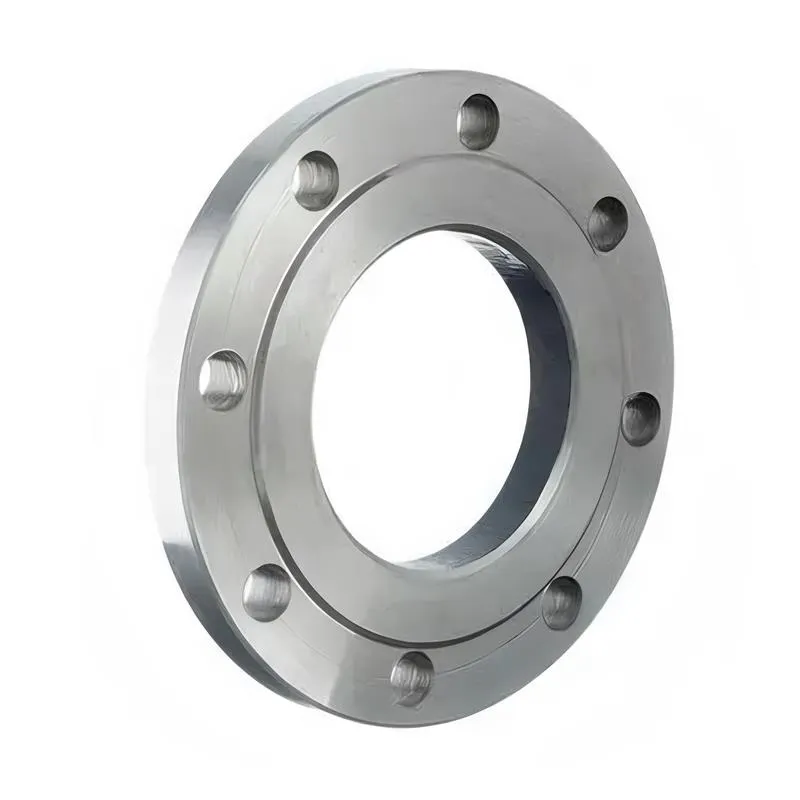
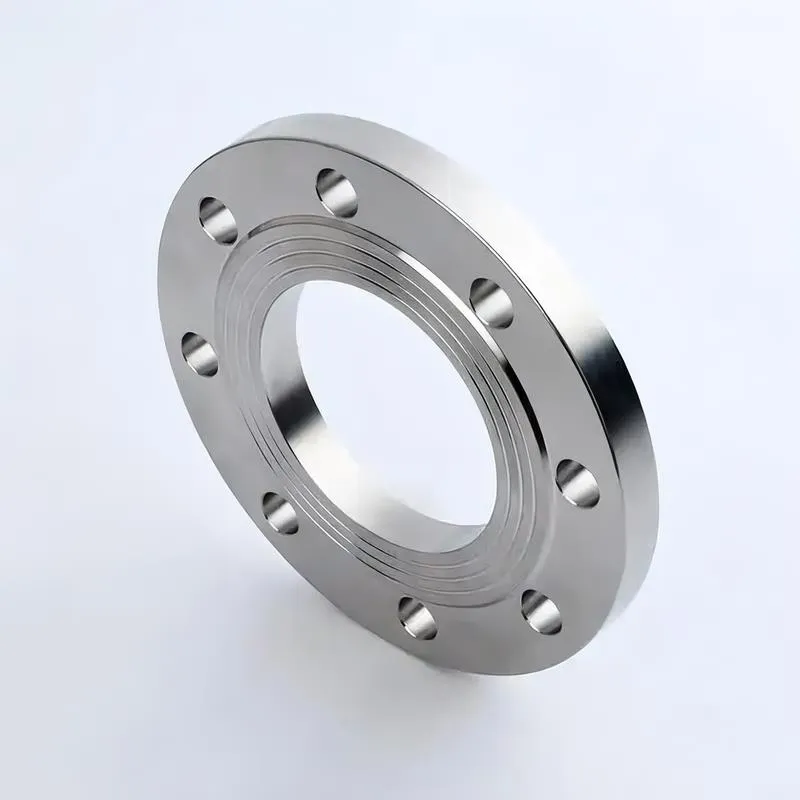
1,We Manufacturing processes are primarily classified into four types:
1:Forging,
2:Casting,
3:Cutting,
4:Rolling.
2,We can manufacture in accordance with these standards.
Standards:
GB Series (Chinese Standards), JB Series (Machinery Standards), HG Series (Chemical Industry Standards), ASME B16.5 (American Standards), BS4504 (British Standards), DIN (German Standards), and JIS (Japanese Standards).
Internationally, there are two primary systems of pipe flange standards: the European system, represented by the German DIN standards (including those of the former Soviet Union), and the American system, represented by the US ANSI pipe flange standards. Other common standards include: the Chinese Ministry of Machinery Industry standards (JB series), the Ministry of Chemical Industry standards (HG series), the Chinese National Standard *GB/T 9112–9124-2010 Steel Pipe Flanges*, as well as US standards (ASME B16.5), British standards (BS4504), German standards (DIN), Japanese standards (JIS), and marine standards (CBM), among others.
The nominal pressure ratings for the PN series are designated by "PN" and comprise the following nine levels: PN2.5, PN6, PN10, PN16, PN25, PN40, PN63, PN100, and PN160.
The nominal pressure ratings for the Class series are designated by "Class" and comprise the following six levels: Class150, Class300, Class600, Class900, Class1500, and Class2500.
Flange Classification
1. **According to Chemical Industry Standards:** Flanges are classified as follows:
Plate Flat Welding Flange (PL), Necked Flat Welding Flange (SO), Necked Butt Welding Flange (WN), Integral Flange (IF), Socket Welding Flange (SW), Threaded Flange (Th), Butt Welding Ring Loose Flange (PJ/SE), Blind Flange (BL), Flat Welding Ring Loose Flange (PJ/PJ), and Lined Blind Flange (BL(s)).
2. **According to Petrochemical (SH) Industry Standards:** Flanges are classified as follows:
Threaded Flange (PL), Butt Welding Flange (WN), Flat Welding Flange (SO), Socket Welding Flange (SW), Loose Flange (LJ), and Blind Flange (no specific designation).
3. **According to Machinery (JB) Industry Standards:** Flanges are classified as follows:
Integral Flange, Butt Welding Flange, Plate Flat Welding Flange, Butt Welding Ring Plate Loose Flange, Flat Welding Ring Plate Loose Flange, Lap Joint Ring Plate Loose Flange, and Blind Flange.
4. **According to Connection Method/Type:** Flanges are classified as follows:
Plate Flat Welding Flange, Necked Flat Welding Flange, Necked Butt Welding Flange, Socket Welding Flange, Threaded Flange, Blind Flange, Necked Butt Welding Ring Loose Flange, Flat Welding Ring Loose Flange, Ring-Type Joint (RTJ) Flange and Blind Flange, Large-Diameter Plate Flange, Large-Diameter High-Neck Flange, Figure-8 Blind Plate, Butt Welding Ring Loose Flange, etc.
5. **According to the Component Being Connected:** Flanges can be classified into Vessel Flanges and Pipe Flanges.
6. **According to Structural Type:** Flanges include Integral Flanges, Threaded Flanges, Flat Welding Flanges, Butt Welding Flanges, Lap Joint (Loose/Swivel) Flanges, and Blind Flanges.
A flange—also referred to as a flange plate or rim—is a component used to connect shafts to one another, or, more commonly, to join the ends of pipes. Flanges are also utilized at the inlet and outlet ports of equipment to facilitate connections between two devices—for instance, the flange on a speed reducer. A "flange connection" or "flanged joint" refers to a detachable joint assembly comprising three interconnected elements—a flange, a gasket, and bolts—that together form a sealed structural unit. In the context of piping systems, a "pipe flange" specifically denotes a flange used for plumbing within the installation; when applied to equipment, it refers to the inlet or outlet flange of that specific device. Flanges feature a series of holes through which bolts are inserted to securely fasten the two flanges together, while a gasket placed between the flanges ensures a leak-proof seal. Flanges are broadly categorized into three types: threaded (screw-in) flanges, welded flanges, and clamp-type flanges. Flanges are invariably used in pairs; threaded flanges are suitable for low-pressure piping applications, whereas welded flanges are required for systems operating at pressures exceeding 4 kilograms per square centimeter. A sealing gasket is inserted between the two flange plates, which are then firmly secured using bolts. The thickness of a flange—as well as the specifications of the bolts used to fasten it—vary depending on the specific pressure rating required for the application. When connecting equipment such as water pumps or valves to piping systems, the corresponding connection points on these devices are often manufactured in the shape of a matching flange; this method of attachment is also referred to as a "flange connection." Generally, any connecting component that utilizes bolts to join and seal the perimeters of two flat surfaces—such as the joints in ventilation ducts—is termed a "flange"; such components may collectively be classified as "flange-type parts." However, since such a connection often constitutes merely a *portion* of a larger device—for instance, the interface between a flange and a water pump—it would be inappropriate to classify the entire water pump itself as a "flange-type part." Conversely, smaller components—such as valves—that feature such flanged interfaces may indeed be appropriately categorized as "flange-type parts."
-:-
For detailed product information, please contact sales.
-:
AISI 4817H Steel Flange Product Information
-:-
For detailed product information, please contact sales.
-:
AISI 4817H Steel Flange Synonyms
-:-
For detailed product information, please contact sales.
-:
AISI 4817H Steel Product Information
-:-
For detailed product information, please contact sales.
-:
# **AISI 4817H Alloy Steel (UNS H48170)**
## **Hardenability Controlled Premium Nickel-Molybdenum Case-Hardening Steel**
---
### **1. PRODUCT OVERVIEW**
**AISI 4817H Steel - Hardenability Controlled Premium Grade**
- **Material Classification:** Medium-carbon nickel-molybdenum alloy steel with guaranteed hardenability
- **H-Grade Designation:** Complies with SAE J1268/ASTM A304 hardenability requirements
- **Carbon Content:** 0.15-0.20% (tightly controlled for consistent case hardening)
- **Key Feature:** 3.25-3.75% nickel content with controlled chemistry for predictable transformation
- **Premium Characteristic:** Exceptionally high core toughness with guaranteed hardenability
- **UNS Designation:** H48170 (Hardenability controlled version)
- **Quality Assurance:** Each heat Jominy tested and certified to specific hardenability band
**Critical H-Grade Advantages:**
- **Predictable Performance:** Guaranteed case depth and hardness gradient
- **Lot-to-Lot Consistency:** Chemistry adjusted to hit precise hardenability targets
- **Reduced Manufacturing Risk:** Minimizes heat treatment variability
- **Certification Ready:** Mandatory testing meets aerospace and automotive qualification standards
- **Statistical Control:** Enables advanced process capability (Cpk) monitoring
---
### **2. CHEMICAL COMPOSITION (H-GRADE CONTROLLED)**
| Element | AISI 4817H Standard Range (%) | Typical Aim Composition (%) | H-Grade Control Significance |
|---------|-----------------------------|-----------------------------|------------------------------|
| **Carbon (C)** | 0.15-0.20 | 0.16-0.17 | Centered for consistent carburizing response; primary hardenability control |
| **Manganese (Mn)** | 0.40-0.70 | 0.52-0.58 | Major hardenability element; fine-tuned per heat to hit band targets |
| **Phosphorus (P)** | ≤ 0.025 | ≤ 0.015 | Tighter control than standard grade (0.035% max) |
| **Sulfur (S)** | ≤ 0.025 | 0.015-0.020 | Tighter control than standard grade (0.040% max); optimized for consistency |
| **Silicon (Si)** | 0.15-0.30 | 0.20-0.25 | Consistent deoxidation; controlled within narrow range |
| **Nickel (Ni)** | 3.25-3.75 | 3.45-3.55 | **Critical precision control:** Maintained at center for consistent toughness (±0.05% typical) |
| **Molybdenum (Mo)** | 0.20-0.30 | 0.23-0.26 | Grain refinement; controlled for consistent tempering stability |
| **Aluminum (Al)** | 0.020-0.050 | 0.030-0.040 | **Mandatory for H-grades:** Grain size control (ASTM 6-7 typical) |
| **Chromium (Cr)** | Report | ≤ 0.15 | Residual; monitored and controlled |
| **Copper (Cu)** | Report | ≤ 0.15 | Residual; monitored and controlled |
| **Boron (B)** | Optional: 0.0005-0.003 | Optional | Hardenability enhancer (4817HB if specified) |
| **Vanadium (V)** | Report | ≤ 0.05 | Residual; monitored if present |
| **Iron (Fe)** | Balance | Balance | Matrix element |
**H-Grade Chemistry Control Methodology:**
1. **Aim Chemistry:** Elements maintained at precise center of H-ranges
2. **Dynamic Adjustment:** Mn, C fine-tuned within H-ranges to hit hardenability targets
3. **Residual Management:** Tighter limits on P, S, Cu, Cr for predictable behavior
4. **Mandatory Aluminum:** Ensures consistent grain size (ASTM 6-7)
5. **Statistical Control:** Chemistry maintained within ±0.01% of aim values
**Comparison: Standard 4817 vs. 4817H Chemical Control**
| Parameter | Standard 4817 | 4817H | Quality Impact |
|-----------|---------------|-------|----------------|
| **P Control** | ≤ 0.035% | ≤ 0.025% | Improved machinability consistency |
| **S Control** | ≤ 0.040% | ≤ 0.025% | Better hot workability |
| **Ni Precision** | ±0.25% range | ±0.05% from aim | Consistent toughness |
| **Grain Control** | Not specified | Al: 0.020-0.050% | Uniform microstructure |
| **Testing Requirement** | Chemistry only | Chemistry + Jominy | Guaranteed performance |
---
### **3. INTERNATIONAL STANDARDS & EQUIVALENTS**
| Standard System | Designation | Title / Description | Hardenability Reference |
|----------------|-------------|---------------------|--------------------------|
| **UNS** | H48170 | Unified Numbering System | Includes hardenability requirement |
| **SAE** | 4817H | SAE J1268 | Hardenability Bands for Hardenability Steels |
| **ASTM** | A304 | Steel Bars, Alloy, Subject to End-Quench Hardenability | Primary H-grade specification |
| **ASTM** | A29/A29M | Steel Bars, Carbon and Alloy | Includes H-grade requirements |
| **AMS** | 6281H | Steel Bars and Forgings | Aerospace H-grade specification |
| **ISO** | 683-11 | Heat-treatable steels | Includes H-designation requirements |
| **DIN** | 1.6567H | 17NiCrMo6-4 H-güte | German H-grade equivalent |
| **EN** | 1.6567H | 17NiCrMo6-4 H-grade | European H-designation |
| **JIS** | - | Controlled hardenability grades | Similar specifications available |
| **GB** | 17Ni2MoH | Chinese H-grade standard | Chinese equivalent |
**Hardenability Band System (SAE J1268):**
- **Available Bands:** Typically Bands 2-4 for 4817H
- **Band Selection Criteria:** Based on section size and application criticality
- **Common Practice:** Band 3 for general applications, Band 4 for heavy sections
- **Certification:** Each heat supplied with actual Jominy curve showing band compliance
**Industry-Specific H-Grade Standards:**
- **Aerospace:** AMS 6281H with enhanced cleanliness (AMS 2301, AMS 2304)
- **Automotive:** OEM-specific hardenability requirements
- **Defense:** MIL-S-16974 with H-grade provisions
- **Bearing Industry:** Modified H-grades for large bearing applications
- **Nuclear:** ASME specifications with H-grade options
---
### **4. HARDENABILITY SPECIFICATION (JOMINY TEST)**
#### **Standard Hardenability Bands for AISI 4817H:**
| Distance from Quenched End | Band 2 (HRC) | Band 3 (HRC) | Band 4 (HRC) |
|----------------------------|--------------|--------------|--------------|
| **1.5 mm (1/16")** | 41-47 | 45-51 | 49-55 |
| **5 mm (3/16")** | 37-43 | 41-47 | 45-51 |
| **10 mm (3/8")** | 33-39 | 37-43 | 41-47 |
| **15 mm (5/8")** | 30-36 | 34-40 | 38-44 |
| **20 mm (3/4")** | 28-34 | 32-38 | 36-42 |
| **25 mm (1")** | 26-32 | 30-36 | 34-40 |
#### **Guaranteed Consistency Parameters:**
- **Band Compliance:** Each heat guaranteed within specified band
- **Hardness Variation:** ±1.5 HRC maximum across production lots
- **Curve Shape Consistency:** Similar Jominy curve profile across heats
- **Statistical Confidence:** 99.7% (3σ) compliance with band limits
#### **Predicted Case Hardening Performance (Band 3):**
| Case Depth Parameter | Predicted Value | Accuracy Guarantee |
|----------------------|-----------------|-------------------|
| **Effective Case Depth (to 550 HV)** | Time × √(D) relationship predictable | ±0.1mm |
| **Surface Hardness after Carburizing** | 60-64 HRC | ±1.5 HRC |
| **Core Hardness** | 35-42 HRC | ±2.0 HRC |
| **Case-Core Transition** | Smooth, predictable gradient | Consistent microstructure |
| **Distortion Pattern** | Predictable based on Jominy data | Similar across production lots |
#### **Through-Hardening Capability by Band:**
| Band | Ideal Critical Diameter - Oil (mm) | Maximum Section - Through Hardened (mm) | Typical Applications |
|------|------------------------------------|----------------------------------------|---------------------|
| **Band 2** | 50-65 | 40-50 | Small to medium components |
| **Band 3** | 65-80 | 50-65 | General heavy-duty applications |
| **Band 4** | 80-95 | 65-80 | Extra heavy sections, mining equipment |
---
### **5. PHYSICAL PROPERTIES**
| Property | Value | Conditions / Notes |
|----------|-------|-------------------|
| **Density** | 7.85 g/cm³ (0.284 lb/in³) | At 20°C, consistent across heats |
| **Melting Range** | 1480-1520°C | Predictable due to controlled chemistry |
| **Thermal Conductivity** | 41.5 W/m·K | At 100°C, consistent batch-to-batch |
| **Specific Heat Capacity** | 460 J/kg·K | At 20°C |
| **Coefficient of Thermal Expansion** | 12.2 × 10⁻⁶/K | 20-100°C; consistent heat-to-heat (±2%) |
| **Electrical Resistivity** | 0.23 μΩ·m | At 20°C |
| **Modulus of Elasticity** | 205 GPa (29.7×10⁶ psi) | Core region; consistent across material |
| **Shear Modulus** | 80 GPa (11.6×10⁶ psi) | - |
| **Poisson's Ratio** | 0.29 | Standard value for steel |
| **Magnetic Properties** | Ferromagnetic | Below Curie temperature |
**Transformation Temperatures (Guaranteed Consistency):**
- **Ac₁:** 730±3°C (1345±5°F)
- **Ac₃:** 800±5°C (1470±9°F)
- **Ms (Core):** 360±5°C (680±9°F)
- **Mf (Core):** 210±5°C (410±9°F)
- **Ms (Case):** 180±5°C (355±9°F) after carburizing
- **Mf (Case):** 0±5°C (32±9°F) after carburizing
**Consistency Advantages for Manufacturing:**
1. **Predictable Heat Treatment:** Same parameters yield same results batch-to-batch
2. **Reduced Process Development:** Fewer trials needed for new components
3. **Optimized Fixturing:** Distortion patterns predictable for fixture design
4. **Consistent Machining:** Similar material behavior during processing
---
### **6. MECHANICAL PROPERTIES (GUARANTEED)**
#### **As-Annealed Properties (Guaranteed Consistency):**
| Property | Value Range | Consistency Guarantee | Testing Standard |
|----------|-------------|------------------------|------------------|
| **Hardness** | 149-197 HB | ±8 HB maximum variation | ASTM E10 |
| **Tensile Strength** | 500-650 MPa | ±4% maximum variation | ASTM E8/E8M |
| **Yield Strength (0.2%)** | 350-450 MPa | ±4% maximum variation | ASTM E8/E8M |
| **Elongation in 4D** | 25-30% | ±1.5 percentage points | ASTM E8/E8M |
| **Reduction of Area** | 50-60% | ±4 percentage points | ASTM E8/E8M |
| **Machinability** | 60-65% of B1112 | Consistent tool life (±15%) | Comparative |
#### **After Case Hardening (Guaranteed Minimums - Band 3):**
*Carburize at 925°C, Oil Quench, Temper at 175°C*
| Property | Case Region | Core Region | Consistency Guarantee |
|----------|-------------|-------------|------------------------|
| **Hardness** | 60-64 HRC | 35-42 HRC | ±1.5 HRC case, ±2 HRC core |
| **Tensile Strength** | - | ≥1000 MPa | ±5% |
| **Yield Strength** | - | ≥850 MPa | ±5% |
| **Charpy V-Notch (20°C)** | ≥10 J | ≥50 J | ±15% |
| **Charpy V-Notch (-40°C)** | ≥8 J | ≥40 J | ±15% |
| **Effective Case Depth** | 0.5-2.0mm at 550 HV | - | ±0.1mm |
#### **Exceptional Toughness Properties (Guaranteed):**
| Temperature | Core Charpy V-Notch Minimum | Core Charpy V-Notch Typical | Nickel Benefit |
|-------------|-----------------------------|-----------------------------|----------------|
| **20°C (68°F)** | 50 J | 55-80 J | **Exceptional** |
| **0°C (32°F)** | 45 J | 50-75 J | **Superior retention** |
| **-20°C (-4°F)** | 40 J | 45-70 J | **Excellent** |
| **-40°C (-40°F)** | 35 J | 40-65 J | **Premium performance** |
| **-60°C (-76°F)** | 30 J | 35-55 J | **Outstanding for low temp** |
#### **Fatigue Performance (Predictable):**
- **Rotating Bending Fatigue Limit:** 650-750 MPa (minimum 600 MPa guaranteed)
- **Contact Fatigue Strength:** L₁₀ ~ 1×10⁷ cycles at 2000 MPa contact stress
- **Gear Tooth Bending Fatigue:** Superior with minimal scatter (Cpk ≥1.33 achievable)
- **Predictability:** Fatigue life variation reduced by 40-50% vs. standard grade
---
### **7. QUALITY ASSURANCE & CERTIFICATION**
#### **Mandatory Testing for Each Heat of 4817H:**
1. **Complete Chemical Analysis:**
- Spectrographic analysis (ASTM E415) with statistical control
- LECO combustion for precise carbon determination
- ICP-MS for trace element quantification
- Hydrogen analysis for critical applications
2. **Jominy End-Quench Test:**
- ASTM A255 on each heat with 15-point minimum curve
- Statistical analysis of hardenability data
- Band compliance verification with confidence intervals
- Repeat testing for verification if required
3. **Comprehensive Hardness Analysis:**
- Macrohardness mapping (HRC, HB) at multiple locations
- Microhardness traverse (HV0.3) per ASTM E384 with full documentation
- Case depth calculation to 550 HV with statistical analysis
- Hardness uniformity assessment
4. **Microstructural Examination:**
- Grain size measurement (ASTM E112) - ASTM 6-7 required
- Inclusion rating (ASTM E45 Method D) - typically ≤1.0 worst field for premium
- Retained austenite quantification (XRD preferred)
- Carbide morphology and distribution analysis
- Banding assessment per ASTM E1268
#### **Certification Package Includes:**
- **Material Test Certificate 3.2:** EN 10204 compliant with full traceability
- **Jominy Hardenability Curve:** Actual test results with statistical analysis
- **Chemical Analysis Report:** Full elemental breakdown with aim comparison
- **Heat Treatment Record:** Complete process documentation for supplied condition
- **Hardness Gradient Report:** Full depth profile with microhardness data
- **Microstructural Analysis:** Quantitative data with photomicrographs
- **Statistical Process Control Data:** Cpk values for critical parameters
- **Traceability Documentation:** Complete material history from melt to final product
#### **Statistical Quality Guarantees:**
| Parameter | Guarantee | Measurement Method | Statistical Confidence |
|-----------|-----------|-------------------|------------------------|
| **Hardenability Band** | Full compliance | ASTM A255 | 99.7% (3σ) |
| **Chemistry Control** | Within H-ranges | Spectrographic | 100% compliance |
| **Hardness Uniformity** | ±1.5 HRC | Multiple measurements | 95% |
| **Case Depth Consistency** | ±0.1mm | Microhardness traverse | 90% |
| **Impact Energy** | ±15% | ASTM E23 | 90% |
---
### **8. TYPICAL APPLICATIONS (PREMIUM H-GRADE)**
#### **Critical Applications Requiring 4817H:**
1. **Aerospace Safety-Critical Components:**
- Helicopter main transmission gears (FAA/EASA certification required)
- Aircraft landing gear actuation components (flight safety critical)
- Jet engine accessory drive gears (extreme reliability requirements)
- Flight control system components (redundancy system elements)
- *Requirement:* Statistical process control with Cpk ≥1.33
2. **Defense and Military Systems:**
- Armored vehicle transmission gears (battlefield reliability)
- Naval propulsion system components (extended deployment capability)
- Military aircraft critical gears (MIL-SPEC compliance)
- Weapon system drive components (mission-critical reliability)
- *Requirement:* Extreme environment performance with consistency
3. **Energy Sector Critical Systems:**
- Wind turbine main gearbox components (20+ year design life)
- Gas turbine compressor drive gears (continuous operation reliability)
- Oil drilling top drive components (remote location reliability)
- Nuclear plant safety system components (regulatory compliance)
- *Requirement:* Predictable fatigue life with statistical confidence
4. **Medical Device Critical Components:**
- Surgical robot drive systems (patient safety critical)
- Implant manufacturing equipment gears (regulatory validation)
- Medical imaging system components (clinical reliability)
- Life support equipment drives (failure not an option)
- *Requirement:* FDA 21 CFR Part 820 compliance
5. **Automotive Safety Systems:**
- Electric vehicle reduction gears (torque density requirements)
- Racing transmission components (extreme performance reliability)
- Heavy truck differential gears (fleet maintenance predictability)
- Safety system actuators (functional safety ISO 26262)
- *Requirement:* Statistical validation for warranty risk management
#### **Economic Justification for 4817H Premium:**
| Business Factor | Standard 4817 | 4817H | Business Impact |
|----------------|---------------|-------|-----------------|
| **Development Cost** | Higher due to variability | Reduced by 25-35% | Faster time-to-market |
| **Testing Cost** | Extensive test matrix | Optimized testing | 30-40% reduction |
| **Certification Time** | Longer due to data scatter | Streamlined | 20-30% reduction |
| **Production Yield** | 92-96% typical | 98-99% achievable | Direct cost savings |
| **Warranty Cost** | Higher statistical risk | Predictable, lower | Improved financial forecasting |
| **Brand Reputation** | Variable quality perception | Consistent premium quality | Market positioning |
| **Total Cost of Quality** | Higher hidden costs | Transparent, optimized | Better ROI despite premium |
---
### **9. COMPARISON WITH OTHER PREMIUM H-GRADES**
| H-Grade | Ni% Range | Typical Core Toughness (J) | Relative Cost | Typical Cpk Achievable | Best Application Match |
|---------|-----------|----------------------------|---------------|------------------------|------------------------|
| **4817H** | 3.25-3.75 | 55-80 | 100 | 1.5-2.0 | Optimal toughness/cost balance |
| **9310H** | 3.00-3.50 | 60-85 | 125 | 1.6-2.2 | Premium aerospace standard |
| **E9310H** | 3.00-3.50 | 65-90 | 140 | 1.8-2.5 | Enhanced cleanliness aerospace |
| **4320H** | 1.65-2.00 | 40-60 | 75 | 1.4-1.8 | Cost-effective heavy duty |
| **4820H** | 3.25-3.75 | 50-75 | 110 | 1.5-2.0 | Higher carbon for larger parts |
#### **Selection Matrix for Extreme Applications:**
| Primary Design Driver | Recommended H-Grade | Technical Justification |
|-----------------------|---------------------|-------------------------|
| **Maximum toughness with cost consideration** | 4817H | Optimal nickel content balance |
| **Aerospace certification (cost secondary)** | 9310H or E9310H | Industry acceptance |
| **Heavy section (>150mm) components** | 4820H | Higher carbon benefits large parts |
| **Cost-constrained critical applications** | 4320H | Acceptable toughness at lower cost |
| **Nuclear/medical with enhanced cleanliness** | 4817H with special melt | Controlled consistency with cleanliness |
#### **H-Grade Justification Decision Matrix:**
| Application Characteristic | Standard Grade Acceptable | H-Grade Required |
|----------------------------|---------------------------|------------------|
| **Production Volume** | Low volume, prototypes | Medium to high volume |
| **Safety Criticality** | Non-critical components | ASIL B-D (ISO 26262) or equivalent |
| **Regulatory Environment** | Self-certification acceptable | FAA, EASA, FDA, NRC regulated |
| **Testing Methodology** | Sample testing sufficient | Statistical process control required |
| **Supply Chain Strategy** | Single source acceptable | Multiple source qualification needed |
| **Warranty Strategy** | Basic warranty | Extended warranty or reliability guarantees |
| **Quality System** | ISO 9001 basic | AS9100, IATF 16949, or equivalent |
---
### **10. TECHNICAL SPECIFICATION & PROCUREMENT**
#### **Comprehensive Procurement Specification:**
```
MATERIAL: AISI 4817H Alloy Steel - Hardenability Controlled Premium Grade
SPECIFICATION: ASTM A304, SAE J1268 Band 3 Required
CHEMISTRY CONTROL:
- Per SAE J404 with P≤0.020%, S≤0.020%
- Ni: 3.45-3.55% (aim control ±0.05%)
- Al: 0.030-0.040% (mandatory grain control)
- Cu, Cr: ≤0.15% each (residual control)
CONDITION: Annealed per ASTM A291, 149-197 HB
HARDENABILITY REQUIREMENTS:
- Jominy test on each heat with 15-point minimum curve
- Band 3 compliance with statistical verification
- Hardness gradient predictability guarantee
DIMENSIONAL REQUIREMENTS:
- Per ASTM A29 Table 8 (Cold Finished) or Table 4 (Hot Finished)
- Straightness: 0.5mm per 300mm maximum
- Surface finish: As specified for application
QUALITY REQUIREMENTS:
- Grain size: ASTM 6-7 minimum
- Inclusion rating: ASTM E45 Method D, worst field ≤1.0
- Microcleanliness: Per customer requirement
- Decarburization: ≤0.15mm total depth
TESTING REQUIREMENTS (PER HEAT):
- Complete chemical analysis with statistical report
- Jominy end-quench test with full curve
- Hardness mapping at multiple locations
- Microstructural examination with photomicrographs
- Optional: Impact testing at specified temperatures
CERTIFICATION: EN 10204 3.2 certificate with all test results
TRACEABILITY: Full heat number traceability maintained
STATISTICAL REQUIREMENTS: Cpk ≥1.33 for all critical parameters
```
#### **Supplier Qualification Requirements:**
- **Quality Systems:** AS9100 or IATF 16949 certification required
- **Testing Capabilities:** In-house Jominy testing with NIST traceable calibration
- **Process Control:** Advanced SPC with real-time monitoring
- **Technical Support:** Dedicated materials engineering team
- **Experience:** Minimum 5 years producing premium H-grade materials
- **Facilities:** Controlled atmosphere melting and heat treatment
- **Documentation:** Electronic data management with full traceability
- **Continuous Improvement:** Demonstrated Cpk improvement programs
#### **Quality Documentation Package:**
- Material Test Certificate 3.2 (EN 10204) with electronic signature
- Actual Jominy hardenability curve with statistical analysis
- Complete chemical analysis with aim chemistry comparison
- Heat treatment record (if supplied heat treated)
- Hardness gradient report with microhardness data
- Microstructural examination report with quantitative data
- Grain size and inclusion rating certificates
- Statistical process control report with Cpk values
- Traceability documentation from melt to final certification
- Optional: Fatigue test data, fracture toughness data
---
### **11. PROCESSING GUIDELINES**
#### **Optimal Heat Treatment Parameters:**
1. **Carburizing (Precision Controlled):**
- Temperature: 915-925°C (1680-1700°F) ±5°C
- Atmosphere: Endothermic gas with oxygen probe control
- Carbon Potential: 0.80-0.85% controlled
- Time: Based on predictable case depth calculation from Jominy data
2. **Austenitizing for Hardening:**
- Temperature: 820-840°C (1510-1545°F) ±5°C
- Soak Time: 30 minutes per inch minimum
- Atmosphere: Protective to prevent decarburization
3. **Quenching (Controlled):**
- Medium: Fast oil, ISO VG 68, controlled at 50-60°C
- Agitation: Uniform with documented velocity
- Cooling Rate: Documented and consistent
4. **Tempering (Precision):**
- Temperature: 150-200°C (300-400°F) ±3°C
- Time: 2 hours per inch minimum
- Cooling: Still air to room temperature
#### **Machining Considerations:**
- **Annealed Condition:** 149-197 HB optimal for machining
- **Tool Selection:** Carbide with positive rake geometry recommended
- **Cutting Parameters:** Conservative feeds and speeds due to nickel content
- **Coolant:** Essential for heat control and chip evacuation
- **Work Hardening:** Nickel tendency requires sharp tools and consistent cutting
#### **Statistical Process Control Integration:**
- **Pre-Process Verification:** Use Jominy data to predict outcomes
- **In-Process Monitoring:** SPC on all critical heat treatment parameters
- **Post-Process Verification:** Statistical analysis of results
- **Continuous Improvement:** Use data to optimize processes
---
### **12. COST-BENEFIT ANALYSIS**
#### **Total Cost of Ownership Analysis:**
| Cost Category | Standard 4817 | 4817H | Net Impact |
|---------------|---------------|-------|------------|
| **Material Cost** | Base (100%) | 115-125% | +15-25% |
| **Processing Development** | 5-8% of project | 2-4% of project | -3-5% |
| **Testing & Validation** | 8-12% of project | 4-7% of project | -4-6% |
| **Production Scrap** | 3-5% typical | 1-2% typical | -2-3% |
| **Inspection Cost** | 100% inspection | Statistical sampling | -40-60% |
| **Warranty Reserve** | Higher due to variability | Lower, predictable | -1-3% of revenue |
| **Total Project Cost** | Higher hidden costs | Transparent, optimized | **5-15% lower overall** |
#### **Return on Investment Calculation:**
- **Payback Period:** Typically 12-18 months for high-volume applications
- **ROI:** 3-5× material premium for critical applications
- **Risk Reduction:** Qualitative benefits in regulatory compliance and brand protection
- **Market Advantage:** Ability to offer extended warranties or reliability guarantees
#### **Business Case Justification:**
1. **Regulatory Compliance:** Required for certain certifications
2. **Risk Management:** Reduces probability of catastrophic failure
3. **Supply Chain Optimization:** Enables multiple source qualification
4. **Quality Leadership:** Market differentiation through demonstrated quality
5. **Lifecycle Cost:** Lower total cost despite higher initial material cost
---
**TECHNICAL SUMMARY:**
AISI 4817H represents the pinnacle of controlled consistency in premium nickel-molybdenum case-hardening steels. The H-grade designation with mandatory Jominy testing, combined with precise chemistry control, provides guaranteed hardenability and predictable performance. This material is engineered for the most demanding applications where statistical reliability, regulatory compliance, and risk management are paramount considerations.
**ULTIMATE VALUE PROPOSITION:**
1. **Guaranteed Consistency:** Statistical confidence in material properties
2. **Predictable Performance:** Reduced variability in manufacturing outcomes
3. **Certification Enablement:** Meets stringent aerospace, defense, and medical requirements
4. **Risk Mitigation:** Quantitative reduction in failure probability
5. **Total Cost Optimization:** Lower overall project costs despite material premium
**CRITICAL APPLICATION DECISION CRITERIA:**
Specify AISI 4817H when:
- Regulatory certification (FAA, EASA, FDA, etc.) requires statistical validation
- Safety integrity levels (ASIL, SIL) mandate controlled processes
- Warranty or reliability guarantees are offered to customers
- Multiple manufacturing sources must produce interchangeable components
- Advanced quality systems (Six Sigma, Lean Manufacturing) are implemented
- Failure mode effects analysis indicates material variability as a significant risk
---
**QUALITY COMMITMENT:**
This material is produced under the most stringent quality controls with mandatory Jominy testing to ensure hardenability compliance with SAE J1268. Each heat undergoes comprehensive testing and statistical analysis to guarantee consistency. Full digital traceability is maintained from raw material through all processing steps, with electronic documentation supporting all quality claims. Statistical process control ensures Cpk ≥1.33 for all critical parameters.
**DISCLAIMER:** This material is a premium product intended for applications where statistical reliability and controlled consistency provide measurable business value. The material premium is justified by reduced processing costs, improved yields, and lower total cost of ownership for appropriate applications. Always conduct a thorough cost-benefit analysis before specification. Consultation with qualified materials engineering professionals is recommended to determine appropriate application of this premium material. All statistical guarantees are based on normal distribution assumptions with specified confidence levels and require proper processing to achieve.
-:-
For detailed product information, please contact sales.
-:
AISI 4817H Steel Specification
Dimensions
Size:
Diameter 20-1000 mm Length <4087 mm
Size:We can customized as required
Standard:
Per your request or drawing
We can customized as required
Properties(Theoretical)
Chemical Composition
-:-
For detailed product information, please contact sales.
-:
AISI 4817H Steel Properties
-:-
For detailed product information, please contact sales.
-:
Applications of AISI 4817H Steel Flange
-:-
For detailed product information, please contact sales.
-:
Chemical Identifiers AISI 4817H Steel Flange
-:-
For detailed product information, please contact sales.
-:
Packing of AISI 4817H Steel Flange
-:-
For detailed product information, please contact sales.
-:
Standard Packing:
-:-
For detailed product information, please contact sales.
-:
Typical bulk packaging includes palletized plastic 5 gallon/25 kg. pails, fiber and Steel Flange drums to 1 ton super sacks in full container (FCL) or truck load (T/L) quantities. Research and sample quantities and hygroscopic, oxidizing or other air sensitive materials may be packaged under argon or vacuum. Solutions are packaged in polypropylene, plastic or glass jars up to palletized 558 gallon liquid totes Special package is available on request. E FORUs’ is carefully handled to minimize damage during storage and transportation and to preserve the quality of our products in their original condition