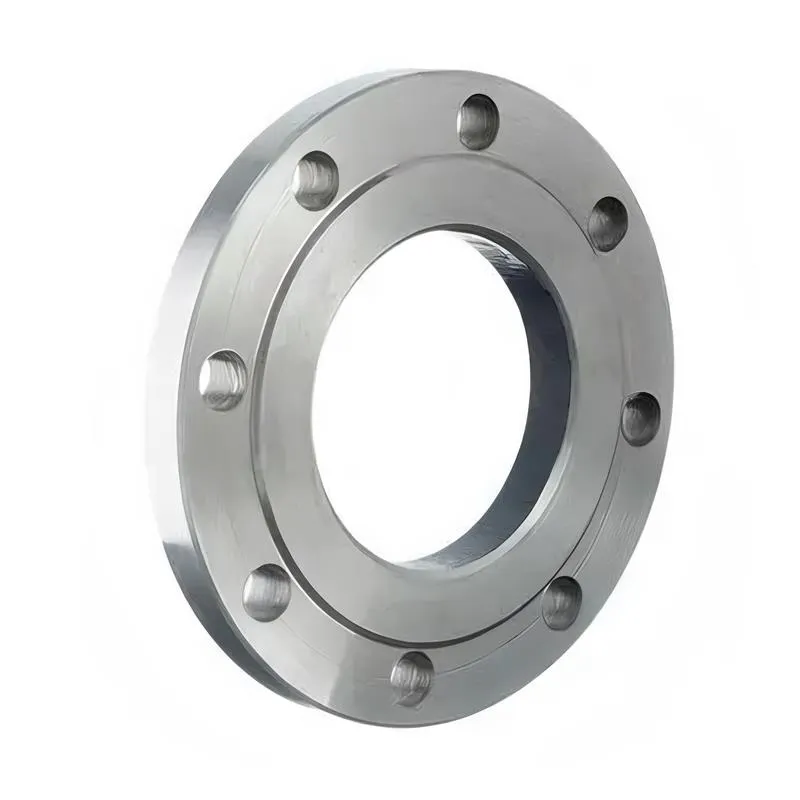
1,We Manufacturing processes are primarily classified into four types:
1:Forging,
2:Casting,
3:Cutting,
4:Rolling.
2,We can manufacture in accordance with these standards.
Standards:
GB Series (Chinese Standards), JB Series (Machinery Standards), HG Series (Chemical Industry Standards), ASME B16.5 (American Standards), BS4504 (British Standards), DIN (German Standards), and JIS (Japanese Standards).
Internationally, there are two primary systems of pipe flange standards: the European system, represented by the German DIN standards (including those of the former Soviet Union), and the American system, represented by the US ANSI pipe flange standards. Other common standards include: the Chinese Ministry of Machinery Industry standards (JB series), the Ministry of Chemical Industry standards (HG series), the Chinese National Standard *GB/T 9112–9124-2010 Steel Pipe Flanges*, as well as US standards (ASME B16.5), British standards (BS4504), German standards (DIN), Japanese standards (JIS), and marine standards (CBM), among others.
The nominal pressure ratings for the PN series are designated by "PN" and comprise the following nine levels: PN2.5, PN6, PN10, PN16, PN25, PN40, PN63, PN100, and PN160.
The nominal pressure ratings for the Class series are designated by "Class" and comprise the following six levels: Class150, Class300, Class600, Class900, Class1500, and Class2500.
Flange Classification
1. **According to Chemical Industry Standards:** Flanges are classified as follows:
Plate Flat Welding Flange (PL), Necked Flat Welding Flange (SO), Necked Butt Welding Flange (WN), Integral Flange (IF), Socket Welding Flange (SW), Threaded Flange (Th), Butt Welding Ring Loose Flange (PJ/SE), Blind Flange (BL), Flat Welding Ring Loose Flange (PJ/PJ), and Lined Blind Flange (BL(s)).
2. **According to Petrochemical (SH) Industry Standards:** Flanges are classified as follows:
Threaded Flange (PL), Butt Welding Flange (WN), Flat Welding Flange (SO), Socket Welding Flange (SW), Loose Flange (LJ), and Blind Flange (no specific designation).
3. **According to Machinery (JB) Industry Standards:** Flanges are classified as follows:
Integral Flange, Butt Welding Flange, Plate Flat Welding Flange, Butt Welding Ring Plate Loose Flange, Flat Welding Ring Plate Loose Flange, Lap Joint Ring Plate Loose Flange, and Blind Flange.
4. **According to Connection Method/Type:** Flanges are classified as follows:
Plate Flat Welding Flange, Necked Flat Welding Flange, Necked Butt Welding Flange, Socket Welding Flange, Threaded Flange, Blind Flange, Necked Butt Welding Ring Loose Flange, Flat Welding Ring Loose Flange, Ring-Type Joint (RTJ) Flange and Blind Flange, Large-Diameter Plate Flange, Large-Diameter High-Neck Flange, Figure-8 Blind Plate, Butt Welding Ring Loose Flange, etc.
5. **According to the Component Being Connected:** Flanges can be classified into Vessel Flanges and Pipe Flanges.
6. **According to Structural Type:** Flanges include Integral Flanges, Threaded Flanges, Flat Welding Flanges, Butt Welding Flanges, Lap Joint (Loose/Swivel) Flanges, and Blind Flanges.
A flange—also referred to as a flange plate or rim—is a component used to connect shafts to one another, or, more commonly, to join the ends of pipes. Flanges are also utilized at the inlet and outlet ports of equipment to facilitate connections between two devices—for instance, the flange on a speed reducer. A "flange connection" or "flanged joint" refers to a detachable joint assembly comprising three interconnected elements—a flange, a gasket, and bolts—that together form a sealed structural unit. In the context of piping systems, a "pipe flange" specifically denotes a flange used for plumbing within the installation; when applied to equipment, it refers to the inlet or outlet flange of that specific device. Flanges feature a series of holes through which bolts are inserted to securely fasten the two flanges together, while a gasket placed between the flanges ensures a leak-proof seal. Flanges are broadly categorized into three types: threaded (screw-in) flanges, welded flanges, and clamp-type flanges. Flanges are invariably used in pairs; threaded flanges are suitable for low-pressure piping applications, whereas welded flanges are required for systems operating at pressures exceeding 4 kilograms per square centimeter. A sealing gasket is inserted between the two flange plates, which are then firmly secured using bolts. The thickness of a flange—as well as the specifications of the bolts used to fasten it—vary depending on the specific pressure rating required for the application. When connecting equipment such as water pumps or valves to piping systems, the corresponding connection points on these devices are often manufactured in the shape of a matching flange; this method of attachment is also referred to as a "flange connection." Generally, any connecting component that utilizes bolts to join and seal the perimeters of two flat surfaces—such as the joints in ventilation ducts—is termed a "flange"; such components may collectively be classified as "flange-type parts." However, since such a connection often constitutes merely a *portion* of a larger device—for instance, the interface between a flange and a water pump—it would be inappropriate to classify the entire water pump itself as a "flange-type part." Conversely, smaller components—such as valves—that feature such flanged interfaces may indeed be appropriately categorized as "flange-type parts."
-:-
For detailed product information, please contact sales.
-:
AISI E51100 Steel Flange Product Information
-:-
For detailed product information, please contact sales.
-:
AISI E51100 Steel Flange Synonyms
-:-
For detailed product information, please contact sales.
-:
AISI E51100 Steel Product Information
-:-
For detailed product information, please contact sales.
-:
# **AISI E51100 Bearing Steel - Technical Data Sheet**
## **1. Product Overview**
**AISI E51100** (commonly designated as **51100** or **E51100**) is a high-carbon, chromium alloy steel specifically engineered for **bearing applications** and other components requiring exceptional wear resistance, high hardness, and excellent fatigue strength. The "E" prefix denotes electric furnace melting, ensuring superior cleanliness and uniform quality compared to standard grades.
This steel contains approximately 1.00% carbon and 0.90-1.15% chromium, providing excellent through-hardening capability with relatively good depth of hardening. When properly heat treated, it achieves high hardness (typically 60-65 HRC) while maintaining adequate toughness for demanding rolling contact applications. Its combination of properties makes it a premier choice for ball and roller bearings, as well as other precision components subjected to high contact stresses.
---
## **2. Chemical Composition (SAE J404/J412, ASTM A295)**
| Element | Composition Range (%) | Standard Specification | Metallurgical Function |
|---------|----------------------|------------------------|------------------------|
| **Carbon (C)** | 0.98 - 1.10 | SAE J404 | Primary carbide former; provides maximum hardness potential |
| **Manganese (Mn)** | 0.25 - 0.45 | SAE J404 | Enhances hardenability, reduces risk of quenching cracks |
| **Phosphorus (P)** | ≤ 0.025 | SAE J404 | Strictly controlled impurity; minimized for improved fatigue life |
| **Sulfur (S)** | ≤ 0.025 | SAE J404 | Strictly controlled impurity; kept low for bearing applications |
| **Silicon (Si)** | 0.15 - 0.35 | SAE J404 | Deoxidizer; strengthens ferrite matrix |
| **Chromium (Cr)** | 0.90 - 1.15 | SAE J404 | **Primary alloying element**; forms hard carbides, improves hardenability and wear resistance |
| **Nickel (Ni)** | ≤ 0.25 (max) | ASTM A295 | Residual; typically minimized |
| **Molybdenum (Mo)** | ≤ 0.08 (max) | ASTM A295 | Residual; typically minimized |
| **Copper (Cu)** | ≤ 0.35 (max) | ASTM A295 | Residual; typically minimized |
| **Iron (Fe)** | Balance | - | Base matrix |
**Material Designations:**
- **SAE/AISI:** E51100, 51100
- **UNS:** G51986
- **ASTM:** 51100 (ASTM A295)
- **Common Forms:** Bar, wire, tubing, forged rings
- **Special Quality:** Bearing Quality (BQ), Aircraft Quality (AQ)
---
## **3. Physical & Mechanical Properties**
### **As-Supplied Conditions:**
**Annealed (Spheroidized) Condition:**
- **Hardness:** 179-229 HB (87-97 HRB)
- **Microstructure:** Spheroidized carbide in ferrite matrix
- **Machinability:** Fair (40-50% relative to 1212 steel)
- **Purpose:** Optimized for machining and cold forming
**Cold Drawn Condition:**
- **Hardness:** 201-255 HB
- **Tensile Strength:** 690-860 MPa (100-125 ksi)
- **Improved Surface Finish:** 32-63 μin Ra (0.8-1.6 μm Ra)
### **Heat Treated Properties (Through-Hardened):**
**Standard Heat Treatment:**
- **Austenitizing:** 815-845°C (1500-1550°F)
- **Quenching:** Oil quench (rapid oil preferred)
- **Tempering:** 150-200°C (300-400°F) for 1-2 hours
**Resultant Properties:**
- **Hardness:** 60-65 HRC (typical: 62-63 HRC)
- **Compressive Strength:** 2500-3000 MPa
- **Tensile Strength:** 2100-2400 MPa
- **Modulus of Elasticity:** 200-210 GPa
- **Fatigue Strength (Rotating Beam):** 550-700 MPa
- **Contact Fatigue Resistance:** Excellent
**Effect of Section Size on Hardness:**
| Diameter (mm) | Oil Quenched Hardness (HRC) | Remarks |
|---------------|-----------------------------|---------|
| ≤ 25 | 62-65 | Full hardness achievable |
| 25-50 | 60-63 | Good through-hardening |
| 50-75 | 58-62 | Center slightly lower |
| 75-100 | 55-60 | Case hardening effect evident |
### **Physical Properties:**
- **Density:** 7.83 g/cm³ (0.283 lb/in³)
- **Melting Point:** 1480-1520°C (2695-2765°F)
- **Specific Heat:** 460 J/kg·K at 20°C
- **Thermal Conductivity:** 45.0 W/m·K at 100°C
- **Coefficient of Thermal Expansion:** 11.5 μm/m·°C (20-100°C)
- **Electrical Resistivity:** 0.22 μΩ·m at 20°C
---
## **4. Product Applications**
### **Primary Application: Anti-Friction Bearings**
- **Ball Bearings:** Races, balls
- **Roller Bearings:** Cylindrical, tapered, spherical rollers
- **Needle Bearings:** Raceways, rollers
- **Bearing Components:** Retainers (when heat treated), cages
### **Automotive Components:**
- **Transmission Parts:** Gears, shafts, synchronizer rings
- **Steering Components:** Ball joints, tie rod ends
- **Engine Components:** Fuel injection parts, valve train components
- **Drivetrain:** Universal joints, CV joints
### **Industrial Machinery:**
- **Machine Tool Components:** Spindles, ways, precision shafts
- **Hydraulic/Pneumatic:** Pump parts, valve components, pistons
- **Textile Machinery:** Spindles, guides, high-wear components
- **Agricultural Equipment:** Implement bearings, drive components
### **Specialized Applications:**
- **Aerospace:** Critical bearings, precision components
- **Medical Devices:** Surgical instrument parts
- **Precision Instruments:** Gauge parts, measuring equipment
- **Tooling:** Dies, punches, wear plates
### **Typical Hardness Requirements by Application:**
| Application | Required Hardness (HRC) | Typical Case Depth |
|-------------|--------------------------|-------------------|
| Ball Bearings | 61-65 | Through-hardened |
| Roller Bearings | 58-63 | Through-hardened |
| Gears | 58-62 | Through-hardened |
| Shafts | 55-60 | Through-hardened |
| Wear Plates | 56-60 | Through-hardened |
---
## **5. International Standards & Equivalent Grades**
### **Primary Standards:**
| Standard | Designation | Specification Document |
|----------|-------------|------------------------|
| **SAE/AISI** | **E51100** | SAE J404, J412 |
| **ASTM** | **51100** | ASTM A295 (Standard for High-Carbon Anti-Friction Bearing Steel) |
| **UNS** | **G51986** | Unified Numbering System |
| **AMS** | **AMS 6440** | Aircraft Quality Specification |
### **Global Equivalent Grades:**
| Country/Region | Standard | Equivalent Grade | Notes |
|----------------|----------|-----------------|-------|
| **International (ISO)** | ISO 683-17 | **100Cr6** | Direct equivalent (1.3505) |
| **Europe (EN)** | EN ISO 683-17 | **100Cr6** | Designation 1.3505 |
| **Germany** | DIN 17230 | **100Cr6** | Classic bearing steel |
| **Japan** | JIS G4805 | **SUJ2** | Very similar, widely used |
| **China** | GB/T 18254 | **GCr15** | Chinese bearing steel |
| **France** | NF A35-565 | **100C6** | French equivalent |
| **Sweden** | SS 14 2106 | **SKF3** | SKF specification |
### **Bearing Steel Quality Standards:**
- **ASTM A295:** Standard Specification for High-Carbon Anti-Friction Bearing Steel
- **ASTM A534:** Carburizing Steels for Anti-Friction Bearings
- **ISO 683-17:** Heat-treatable steels, alloy steels and free-cutting steels - Part 17: Ball and roller bearing steels
- **DIN 17230:** Case-hardening steels, heat-treatable steels, nitriding steels and bearing steels
---
## **6. Manufacturing & Processing Characteristics**
### **Heat Treatment Guidelines:**
**1. Pre-treatment (Before Machining):**
- **Spheroidize Annealing:** 760-790°C, slow cool to 650°C, then air cool
- **Purpose:** Produce soft, machinable structure with spheroidal carbides
**2. Hardening Process:**
- **Pre-heat:** 650-700°C to minimize thermal shock
- **Austenitize:** 815-845°C (1500-1550°F), soak 20-30 min/inch
- **Quenching:** Fast oil (ISO VG 32-68), good agitation
- **Tempering:** Immediately, 150-200°C for 1-2 hours minimum
- **Sub-zero Treatment:** Optional at -70°C to minimize retained austenite
**3. Special Processes:**
- **Martempering:** In salt or hot oil at 150-200°C to reduce distortion
- **Austempering:** For improved toughness at slightly lower hardness
### **Machinability:**
- **Annealed Condition:** Fair (40-50% of 1212 steel)
- **Recommended Tools:** Carbide or premium HSS
- **Cutting Speed:** 40-60 SFPM for turning
- **Coolant:** Essential for tool life and surface finish
- **Grinding:** Performed after heat treatment; requires proper wheels and conditions
### **Forming & Fabrication:**
- **Cold Forming:** Limited in annealed condition
- **Hot Working:** 1050-850°C (1920-1560°F)
- **Forging:** Good forgeability; finish at 850°C minimum
- **Welding:** Generally not recommended; if necessary, pre-heat 300-400°C and post-heat treat
---
## **7. Quality Requirements & Inspection**
### **Special Quality Features:**
- **Cleanliness:** Strict control of non-metallic inclusions
- **Microstructure:** Uniform distribution of carbides
- **Decarburization:** Minimal, typically <0.1 mm per side
- **Surface Quality:** Free from defects that could initiate fatigue cracks
### **Inclusion Rating (ASTM E45):**
- **Type A (Sulfides):** ≤ 2.0 thin series
- **Type B (Aluminates):** ≤ 1.5 thin series
- **Type C (Silicates):** ≤ 1.5 thin series
- **Type D (Oxides):** ≤ 1.0 thin series
### **Hardness & Microstructure Testing:**
- **Hardness Uniformity:** ±1 HRC within same part
- **Microstructure:** Tempered martensite with uniform carbide distribution
- **Retained Austenite:** Typically <5% after proper tempering
- **Grain Size:** ASTM 7-10 (fine grain)
### **Non-Destructive Testing:**
- **Magnetic Particle:** For surface defects
- **Ultrasonic:** For internal quality assessment
- **Eddy Current:** For surface and near-surface defects
---
## **8. Technical Performance Data**
### **Fatigue Properties:**
- **Rotating Bending Fatigue Limit:** 550-700 MPa
- **Contact Fatigue Life (L10):** >1 million cycles at 3 GPa contact pressure
- **Fatigue Crack Propagation:** Slow due to high hardness
### **Wear Characteristics:**
- **Abrasive Wear Resistance:** Excellent (60-65 HRC)
- **Adhesive Wear:** Good with proper lubrication
- **Fretting Resistance:** Good with proper surface finish
- **Break-in Characteristics:** Excellent with proper surface preparation
### **Dimensional Stability:**
- **Growth during Hardening:** 0.1-0.3% typical
- **Distortion:** Controllable with proper fixturing and heating rates
- **Stability after Tempering:** Excellent for precision applications
### **Corrosion Resistance:**
- **Atmospheric:** Poor without protection
- **Lubricated Conditions:** Adequate with proper maintenance
- **Recommended Coatings:** Phosphate, black oxide, electroplating (Cr, Ni)
---
## **9. Design Considerations**
### **Optimal Application Parameters:**
- **Section Size:** ≤ 75 mm diameter for uniform through-hardening
- **Stress Concentrations:** Generous fillets (R ≥ 0.5 × section change)
- **Surface Finish:** 0.4-1.6 μm Ra for bearing applications
- **Dimensional Tolerances:** Tight control required for precision applications
### **Advantages of E51100:**
✅ **Exceptional hardness** and wear resistance
✅ **Excellent fatigue strength** for rolling contact
✅ **Good through-hardening** capability
✅ **Predictable heat treatment response**
✅ **Superior cleanliness** (E-grade quality)
✅ **Widely available** in precision forms
### **Limitations:**
⚠️ **Limited toughness** at high hardness levels
⚠️ **Poor corrosion resistance** without protection
⚠️ **Weldability is poor**
⚠️ **Machining difficult** in hardened state
⚠️ **Sensitive to overheating** during heat treatment
⚠️ **Not suitable** for high impact applications
### **Comparison with Similar Bearing Steels:**
| Property | E51100 | 52100 | 440C | M50 |
|----------|--------|-------|------|-----|
| **Carbon Content** | 1.00% | 1.00% | 1.00% | 0.85% |
| **Chromium Content** | 1.00% | 1.45% | 17% | 4% |
| **Primary Use** | General bearings | General bearings | Corrosive environments | High temperature |
| **Max Operating Temp** | 150°C | 150°C | 300°C | 315°C |
| **Relative Cost** | 1.0 | 1.1 | 2.5 | 3.0 |
---
## **10. Special Processing Considerations**
### **Grinding Guidelines:**
- **Wheel Selection:** Aluminum oxide or CBN for hardened steel
- **Coolant:** Copious flow to prevent burning
- **In-feed:** Light cuts (0.005-0.025 mm/pass)
- **Spark-out:** Essential for dimensional accuracy
- **Grinding Burns:** Must be avoided; check with nital etch
### **Stress Relieving:**
- **After Rough Machining:** 600-650°C, slow cool
- **After Grinding:** 150-200°C to relieve grinding stresses
- **Vibratory Stress Relief:** Alternative for complex shapes
### **Surface Treatments:**
- **Shot Peening:** Improves fatigue life
- **Superfinishing:** For optimal surface finish (0.1-0.4 μm Ra)
- **Coating:** DLC, TiN for special applications
---
## **11. Environmental & Safety**
### **Material Safety:**
- **General Handling:** Standard steel safety procedures
- **Dust Control:** Required during machining and grinding
- **Heat Treatment:** Standard furnace and quench oil safety
### **Environmental Compliance:**
- **REACH/RoHS:** Compliant
- **Recyclability:** 100% as ferrous scrap
- **Processing Waste:** Standard steel industry controls
---
**Technical Note:** The "E" prefix in E51100 indicates electric furnace melting, which typically provides better control over chemistry, lower gas content, and superior cleanliness compared to basic oxygen or open hearth processes. This results in improved fatigue life and reliability for critical bearing applications.
**Revision:** 1.1
**Date:** October 2023
**Disclaimer:** This technical data is for informational purposes. Actual performance depends on specific processing, heat treatment, and application conditions. Bearing steels require precise control throughout manufacturing; always consult with material specialists for critical applications. Properties may vary between manufacturers and heat lots.
-:-
For detailed product information, please contact sales.
-:
AISI E51100 Steel Specification
Dimensions
Size:
Diameter 20-1000 mm Length <4109 mm
Size:We can customized as required
Standard:
Per your request or drawing
We can customized as required
Properties(Theoretical)
Chemical Composition
-:-
For detailed product information, please contact sales.
-:
AISI E51100 Steel Properties
-:-
For detailed product information, please contact sales.
-:
Applications of AISI E51100 Steel Flange
-:-
For detailed product information, please contact sales.
-:
Chemical Identifiers AISI E51100 Steel Flange
-:-
For detailed product information, please contact sales.
-:
Packing of AISI E51100 Steel Flange
-:-
For detailed product information, please contact sales.
-:
Standard Packing:
-:-
For detailed product information, please contact sales.
-:
Typical bulk packaging includes palletized plastic 5 gallon/25 kg. pails, fiber and Steel Flange drums to 1 ton super sacks in full container (FCL) or truck load (T/L) quantities. Research and sample quantities and hygroscopic, oxidizing or other air sensitive materials may be packaged under argon or vacuum. Solutions are packaged in polypropylene, plastic or glass jars up to palletized 580 gallon liquid totes Special package is available on request. E FORUs’ is carefully handled to minimize damage during storage and transportation and to preserve the quality of our products in their original condition