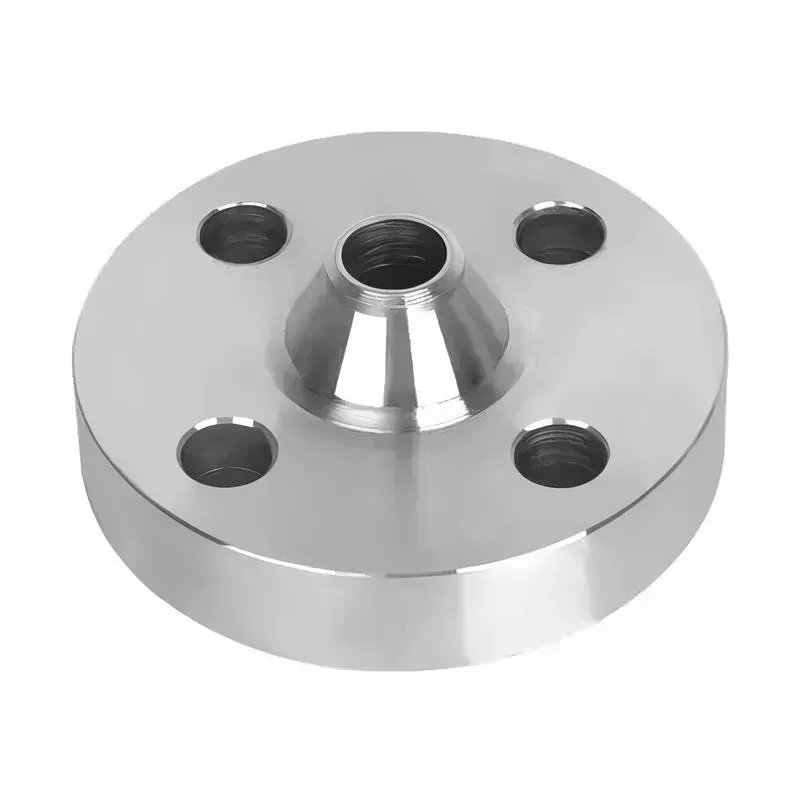
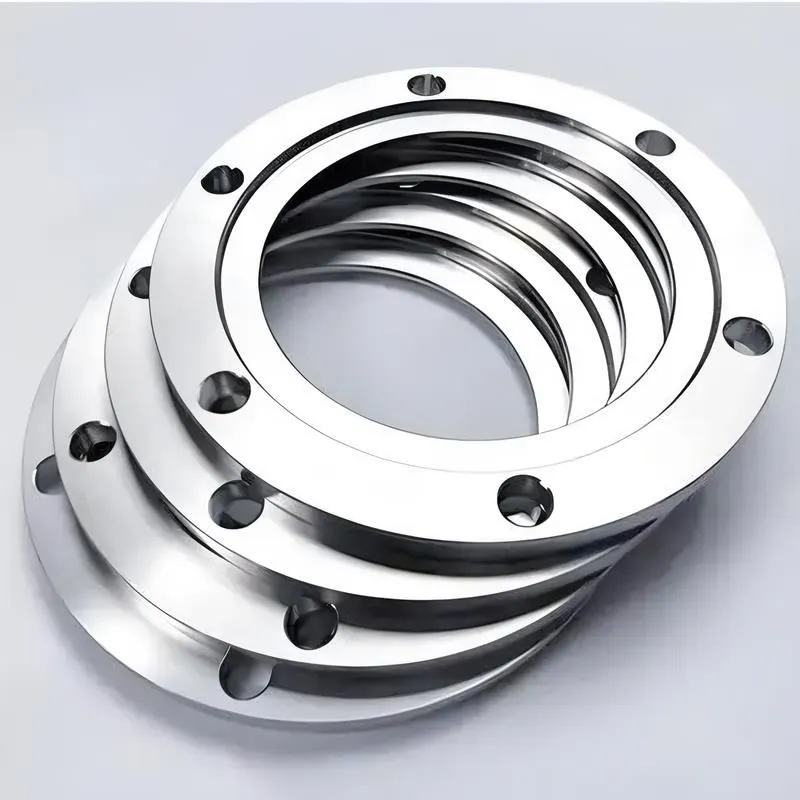
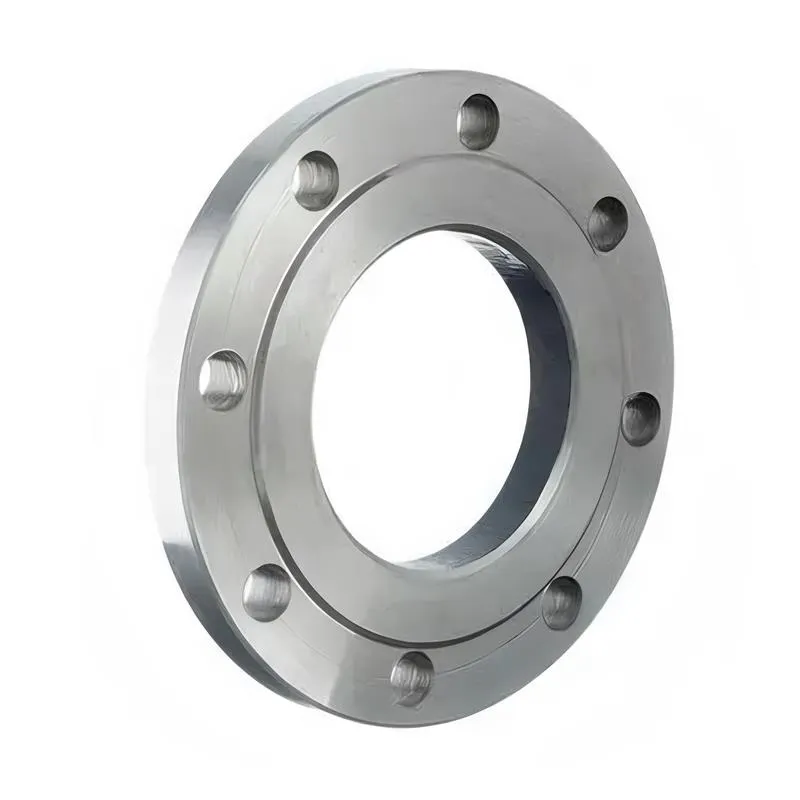
1,We Manufacturing processes are primarily classified into four types:
1:Forging,
2:Casting,
3:Cutting,
4:Rolling.
2,We can manufacture in accordance with these standards.
Standards:
GB Series (Chinese Standards), JB Series (Machinery Standards), HG Series (Chemical Industry Standards), ASME B16.5 (American Standards), BS4504 (British Standards), DIN (German Standards), and JIS (Japanese Standards).
Internationally, there are two primary systems of pipe flange standards: the European system, represented by the German DIN standards (including those of the former Soviet Union), and the American system, represented by the US ANSI pipe flange standards. Other common standards include: the Chinese Ministry of Machinery Industry standards (JB series), the Ministry of Chemical Industry standards (HG series), the Chinese National Standard *GB/T 9112–9124-2010 Steel Pipe Flanges*, as well as US standards (ASME B16.5), British standards (BS4504), German standards (DIN), Japanese standards (JIS), and marine standards (CBM), among others.
The nominal pressure ratings for the PN series are designated by "PN" and comprise the following nine levels: PN2.5, PN6, PN10, PN16, PN25, PN40, PN63, PN100, and PN160.
The nominal pressure ratings for the Class series are designated by "Class" and comprise the following six levels: Class150, Class300, Class600, Class900, Class1500, and Class2500.
Flange Classification
1. **According to Chemical Industry Standards:** Flanges are classified as follows:
Plate Flat Welding Flange (PL), Necked Flat Welding Flange (SO), Necked Butt Welding Flange (WN), Integral Flange (IF), Socket Welding Flange (SW), Threaded Flange (Th), Butt Welding Ring Loose Flange (PJ/SE), Blind Flange (BL), Flat Welding Ring Loose Flange (PJ/PJ), and Lined Blind Flange (BL(s)).
2. **According to Petrochemical (SH) Industry Standards:** Flanges are classified as follows:
Threaded Flange (PL), Butt Welding Flange (WN), Flat Welding Flange (SO), Socket Welding Flange (SW), Loose Flange (LJ), and Blind Flange (no specific designation).
3. **According to Machinery (JB) Industry Standards:** Flanges are classified as follows:
Integral Flange, Butt Welding Flange, Plate Flat Welding Flange, Butt Welding Ring Plate Loose Flange, Flat Welding Ring Plate Loose Flange, Lap Joint Ring Plate Loose Flange, and Blind Flange.
4. **According to Connection Method/Type:** Flanges are classified as follows:
Plate Flat Welding Flange, Necked Flat Welding Flange, Necked Butt Welding Flange, Socket Welding Flange, Threaded Flange, Blind Flange, Necked Butt Welding Ring Loose Flange, Flat Welding Ring Loose Flange, Ring-Type Joint (RTJ) Flange and Blind Flange, Large-Diameter Plate Flange, Large-Diameter High-Neck Flange, Figure-8 Blind Plate, Butt Welding Ring Loose Flange, etc.
5. **According to the Component Being Connected:** Flanges can be classified into Vessel Flanges and Pipe Flanges.
6. **According to Structural Type:** Flanges include Integral Flanges, Threaded Flanges, Flat Welding Flanges, Butt Welding Flanges, Lap Joint (Loose/Swivel) Flanges, and Blind Flanges.
A flange—also referred to as a flange plate or rim—is a component used to connect shafts to one another, or, more commonly, to join the ends of pipes. Flanges are also utilized at the inlet and outlet ports of equipment to facilitate connections between two devices—for instance, the flange on a speed reducer. A "flange connection" or "flanged joint" refers to a detachable joint assembly comprising three interconnected elements—a flange, a gasket, and bolts—that together form a sealed structural unit. In the context of piping systems, a "pipe flange" specifically denotes a flange used for plumbing within the installation; when applied to equipment, it refers to the inlet or outlet flange of that specific device. Flanges feature a series of holes through which bolts are inserted to securely fasten the two flanges together, while a gasket placed between the flanges ensures a leak-proof seal. Flanges are broadly categorized into three types: threaded (screw-in) flanges, welded flanges, and clamp-type flanges. Flanges are invariably used in pairs; threaded flanges are suitable for low-pressure piping applications, whereas welded flanges are required for systems operating at pressures exceeding 4 kilograms per square centimeter. A sealing gasket is inserted between the two flange plates, which are then firmly secured using bolts. The thickness of a flange—as well as the specifications of the bolts used to fasten it—vary depending on the specific pressure rating required for the application. When connecting equipment such as water pumps or valves to piping systems, the corresponding connection points on these devices are often manufactured in the shape of a matching flange; this method of attachment is also referred to as a "flange connection." Generally, any connecting component that utilizes bolts to join and seal the perimeters of two flat surfaces—such as the joints in ventilation ducts—is termed a "flange"; such components may collectively be classified as "flange-type parts." However, since such a connection often constitutes merely a *portion* of a larger device—for instance, the interface between a flange and a water pump—it would be inappropriate to classify the entire water pump itself as a "flange-type part." Conversely, smaller components—such as valves—that feature such flanged interfaces may indeed be appropriately categorized as "flange-type parts."
-:-
For detailed product information, please contact sales.
-:
Bethlehem Steel Flange ASTM A808, >2 to 2-1/2 in. thick, Steel Flange plate Product Information
-:-
For detailed product information, please contact sales.
-:
Bethlehem Steel Flange ASTM A808, >2 to 2-1/2 in. thick, Steel Flange plate Synonyms
-:-
For detailed product information, please contact sales.
-:
Bethlehem Steel ASTM A808, >2 to 2-1/2 in. thick, steel plate Product Information
-:-
For detailed product information, please contact sales.
-:
## **Product Datasheet: Bethlehem Steel ASTM A808 Ultra-Heavy Plate**
**Product Overview**
Bethlehem Steel ASTM A808 Ultra-Heavy Plate is a specialized, high-strength low-alloy (HSLA) **weathering steel** engineered for monumental and primary structural applications requiring extreme section thickness combined with superior atmospheric corrosion resistance. This product extends the capabilities of the phosphorus-enhanced ASTM A808 specification into the ultra-heavy plate range, delivering a guaranteed **50 ksi minimum yield strength** and a corrosion resistance approximately **four times greater than copper-bearing carbon steel**. Designed for use in the most massive exposed structural members, it eliminates the need for protective coatings while developing a stable, protective rust patina. This plate is available in thicknesses from **over 2 inches (50.8 mm) to 2-1/2 inches (63.5 mm)**.
**Key International Standards**
* **Primary Standard:** **ASTM A808 / A808M** - Standard Specification for High-Strength Low-Alloy Structural Steel Plate with Atmospheric Corrosion Resistance.
* **Governing Specification:** This ultra-heavy plate conforms to the mechanical and chemical requirements of ASTM A808 for its thickness, typically adhering to the **Copper-Nickel-Phosphorus Type**.
* **Corrosion Performance:** Certified to provide a minimum corrosion resistance of **2.0 times that of plain carbon steel (A36)** and **4.0 times that of carbon steel containing 0.20% minimum copper**. This is a critical performance metric for its intended century-long service life in exposed structures.
* **Mandatory Supplementary Requirements:** For ultra-heavy plate in critical applications, the following are essential:
* **ASTM A6 S1 (Charpy V-Notch Impact Testing):** Required, with tests conducted at the **quarter-thickness (T/4) location** to verify through-thickness toughness, often at a moderate low temperature (e.g., 40°F / 4°C or 0°F / -18°C).
* **ASTM A6 S4 (Ultrasonic Examination):** Performed to **ASTM A578 Acceptance Level B** or stricter to ensure internal soundness free of laminations or significant discontinuities.
* **ASTM A770 (Through-Thickness Tension Testing):** May be invoked via purchaser specification to guarantee Z-direction ductility and resistance to lamellar tearing in thick, highly restrained welds.
**Chemical Composition (Weight % - ASTM A808 Requirements & Typical Aim for Ultra-Heavy Plate)**
Chemistry is tightly controlled to ensure consistent weathering performance and mechanical properties through the entire thick cross-section, with careful management of phosphorus and residuals.
| Element | ASTM A808 Requirement (Max, unless noted) | Typical Bethlehem Steel Aim (Ultra-Heavy Plate) |
| :--- | :--- | :--- |
| **Carbon (C)** | 0.20% | 0.14 - 0.18% |
| **Manganese (Mn)** | 1.35% | 1.00 - 1.25% |
| **Phosphorus (P)** | 0.04 - 0.12% | 0.07 - 0.095% *(Critical for corrosion resistance)* |
| **Sulfur (S)** | 0.05% | ≤ 0.006% *(Ultra-low for superior Z-direction properties)* |
| **Silicon (Si)** | 0.30% | 0.15 - 0.25% |
| **Copper (Cu)** | 0.20 - 0.40% | 0.25 - 0.35% |
| **Nickel (Ni)** | 0.25 - 0.50% | 0.30 - 0.45% |
| **Chromium (Cr)** | 0.40 - 0.65% (optional type) | 0.50 - 0.60% (if specified for enhanced resistance) |
| **Vanadium (V)** | 0.06% max | 0.02 - 0.04% |
| **Carbon Equivalent (C.E. IIW)** | -- | Typically 0.42 - 0.48 |
**Physical & Mechanical Properties**
*Properties are governed by tests performed at the **quarter-thickness (T/4)** location.*
| Property | Requirement (ASTM A808) | Typical Performance (Ultra-Heavy Plate, at T/4) |
| :--- | :--- | :--- |
| **Yield Strength (Min, at T/4)** | 50 ksi (345 MPa) | 50 - 58 ksi (345 - 400 MPa) |
| **Tensile Strength (at T/4)** | 65 ksi (450 MPa) min | 67 - 75 ksi (462 - 517 MPa) |
| **Elongation in 2" (Min)** | 21% | 20-23% |
| **Through-Thickness Reduction of Area (Z-direction)** | If specified per A770 | Typically ≥ 20-25% minimum |
| **Modulus of Elasticity** | ~29,000 ksi (200 GPa) | ~29,000 ksi (200 GPa) |
| **Density** | 0.284 lb/in³ (7.85 g/cm³) | 0.284 lb/in³ (7.85 g/cm³) |
| **Atmospheric Corrosion Resistance** | **4x that of copper-bearing carbon steel.** | The protective patina forms over several years, creating a stable barrier that dramatically slows the corrosion rate, ideal for permanent, low-maintenance infrastructure. |
| **Key Feature** | **Monolithic Weathering Structure:** Provides the capability to fabricate massive, primary structural elements (e.g., bridge box girder flanges, monumental columns) from a single, thick plate of maintenance-free weathering steel, ensuring structural integrity and aesthetic consistency for generations. |
**Product Applications**
This ultra-heavy A808 plate is specified for the foundational elements of landmark exposed structures designed to last over a century with minimal intervention.
* **Long-Span & Signature Bridges:** Extremely thick flange and web plates for box girders in major river crossings, cable-stayed bridges, and architecturally exposed bridge elements.
* **Monumental Building & Stadium Construction:** Massive exposed steel columns, transfer girders, and diagrid members in iconic public buildings, museums, and sports arenas.
* **Heavy Industrial & Power Plant Structures:** Thick built-up sections for blast furnace supports, reactor containment exterior framing, and other critical outdoor infrastructure.
* **Large-Scale Sculptural & Architectural Art:** As the primary material for massive outdoor sculptures and integrated architectural forms.
* **Heavy Lock & Dam Gates:** Structural components for large movable gates and machinery supports.
**Advantages & Fabrication Notes**
* **Controlled Welding for Thick Sections:** Welding ultra-heavy weathering steel requires disciplined procedure qualification. Low-hydrogen processes (SAW, FCAW-G) with preheat (250-350°F / 121-177°C) and strict interpass temperature control are mandatory to prevent hydrogen cracking. **Buttering** techniques may be used on groove faces to improve HAZ properties.
* **Lifecycle & Sustainability Champion:** Eliminates decades of painting cycles, associated VOC emissions, and maintenance traffic disruptions, offering superior sustainability credentials and long-term economic benefits.
* **Fabrication and Detailing Criticalities:**
* **Thermal Cutting:** Plasma or laser cutting is preferred to minimize the affected zone. Flame cutting requires careful preheat.
* **Lamellar Tearing Risk:** The combination of thick plate and high restraint demands design details that minimize through-thickness stresses and may require Z-property certification (ASTM A770).
* **Detailing:** Must avoid crevices, ledges, and other moisture traps. Drainage is paramount.
* **Environmental Suitability:** Must be used in an environment conducive to patina formation (alternating wet/dry cycles). **Not suitable** for continuous immersion, saltwater splash zones, or atmospheres with high industrial pollutant concentrations.
* **Legacy Product Note:** Producing ultra-heavy plate of a consistent weathering grade like A808 demonstrated Bethlehem's integrated mill capability. Modern equivalents are available as **ASTM A808** from select heavy-plate mills. It is a direct competitor to **ASTM A588 Grade 50** in ultra-heavy gauges, with the phosphorus-based chemistry offering a slightly different corrosion protection mechanism.
**Disclaimer:**
This datasheet describes the historical **Bethlehem Steel** capability for producing **ASTM A808 Ultra-Heavy Plate**. Current procurement of such material is a major engineering undertaking. Specifications must be explicit: **ASTM A808, thickness, mechanical properties at T/4, Charpy impact requirements at T/4, ultrasonic testing level, and potential Z-direction property guarantees (A770).** The project team must include expertise in weathering steel behavior, thick-plate fabrication, and weld procedure qualification. The Mill Test Certificate must be comprehensive, including through-thickness tensile and impact data. Success depends on seamless collaboration between the specifying engineer, fabricator, erector, and steel producer from the design phase onward.
-:-
For detailed product information, please contact sales.
-:
Bethlehem Steel ASTM A808, >2 to 2-1/2 in. thick, steel plate Specification
Dimensions
Size:
Diameter 20-1000 mm Length <4686 mm
Size:We can customized as required
Standard:
Per your request or drawing
We can customized as required
Properties(Theoretical)
Chemical Composition
-:-
For detailed product information, please contact sales.
-:
Bethlehem Steel ASTM A808, >2 to 2-1/2 in. thick, steel plate Properties
-:-
For detailed product information, please contact sales.
-:
Applications of Bethlehem Steel Flange ASTM A808, >2 to 2-1/2 in. thick, Steel Flange plate
-:-
For detailed product information, please contact sales.
-:
Chemical Identifiers Bethlehem Steel Flange ASTM A808, >2 to 2-1/2 in. thick, Steel Flange plate
-:-
For detailed product information, please contact sales.
-:
Packing of Bethlehem Steel Flange ASTM A808, >2 to 2-1/2 in. thick, Steel Flange plate
-:-
For detailed product information, please contact sales.
-:
Standard Packing:
-:-
For detailed product information, please contact sales.
-:
Typical bulk packaging includes palletized plastic 5 gallon/25 kg. pails, fiber and Steel Flange drums to 1 ton super sacks in full container (FCL) or truck load (T/L) quantities. Research and sample quantities and hygroscopic, oxidizing or other air sensitive materials may be packaged under argon or vacuum. Solutions are packaged in polypropylene, plastic or glass jars up to palletized 1157 gallon liquid totes Special package is available on request. E FORUs’ is carefully handled to minimize damage during storage and transportation and to preserve the quality of our products in their original condition