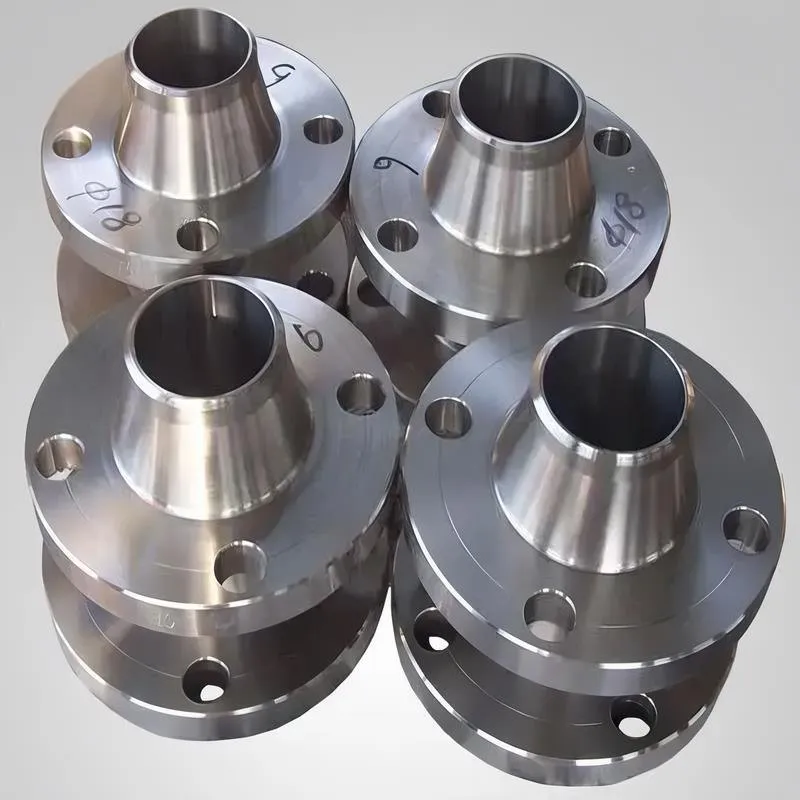
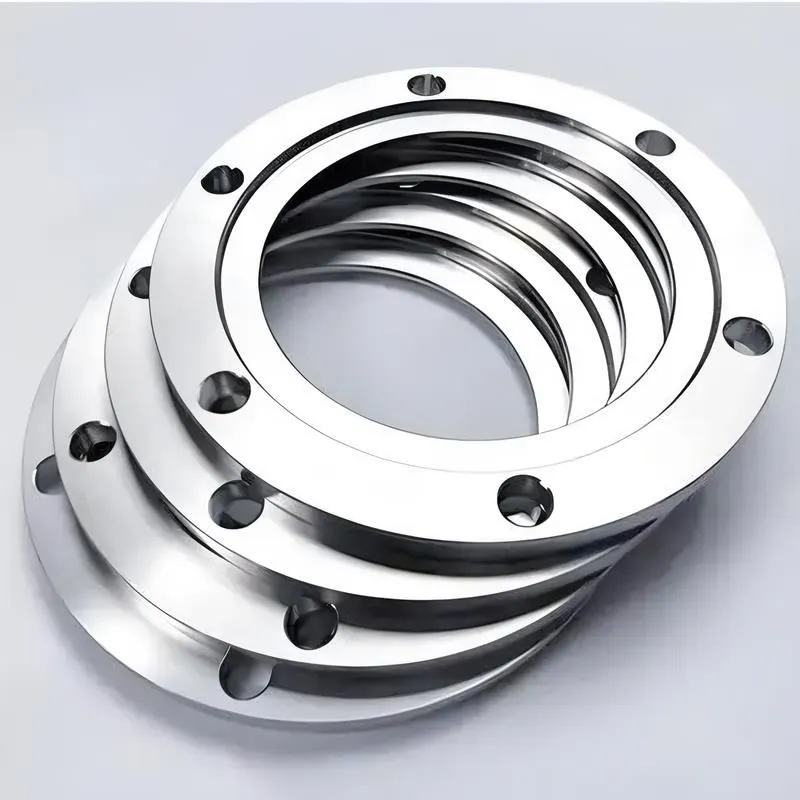
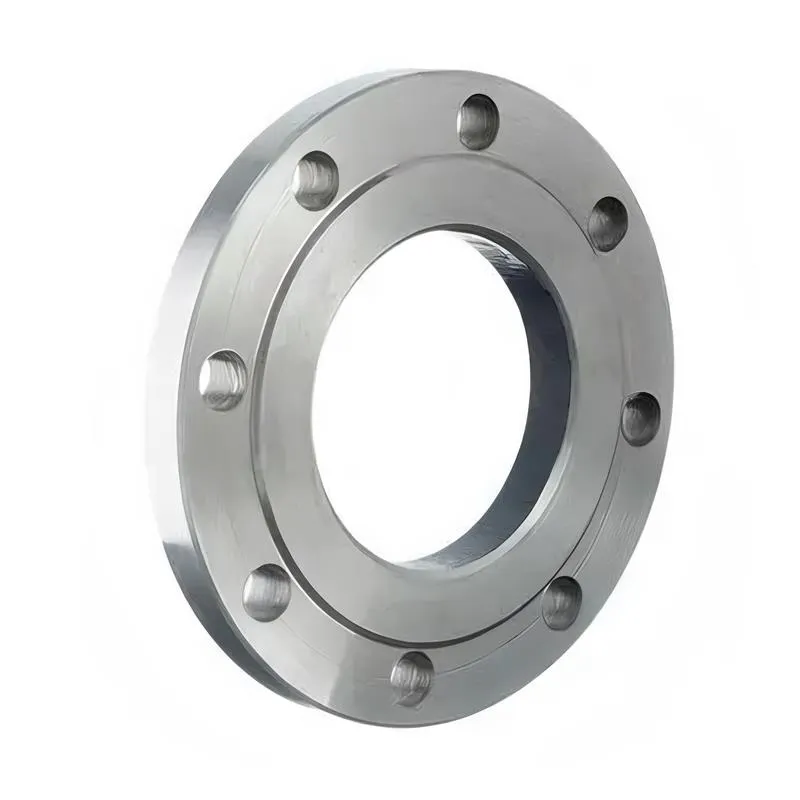
1,We Manufacturing processes are primarily classified into four types:
1:Forging,
2:Casting,
3:Cutting,
4:Rolling.
2,We can manufacture in accordance with these standards.
Standards:
GB Series (Chinese Standards), JB Series (Machinery Standards), HG Series (Chemical Industry Standards), ASME B16.5 (American Standards), BS4504 (British Standards), DIN (German Standards), and JIS (Japanese Standards).
Internationally, there are two primary systems of pipe flange standards: the European system, represented by the German DIN standards (including those of the former Soviet Union), and the American system, represented by the US ANSI pipe flange standards. Other common standards include: the Chinese Ministry of Machinery Industry standards (JB series), the Ministry of Chemical Industry standards (HG series), the Chinese National Standard *GB/T 9112–9124-2010 Steel Pipe Flanges*, as well as US standards (ASME B16.5), British standards (BS4504), German standards (DIN), Japanese standards (JIS), and marine standards (CBM), among others.
The nominal pressure ratings for the PN series are designated by "PN" and comprise the following nine levels: PN2.5, PN6, PN10, PN16, PN25, PN40, PN63, PN100, and PN160.
The nominal pressure ratings for the Class series are designated by "Class" and comprise the following six levels: Class150, Class300, Class600, Class900, Class1500, and Class2500.
Flange Classification
1. **According to Chemical Industry Standards:** Flanges are classified as follows:
Plate Flat Welding Flange (PL), Necked Flat Welding Flange (SO), Necked Butt Welding Flange (WN), Integral Flange (IF), Socket Welding Flange (SW), Threaded Flange (Th), Butt Welding Ring Loose Flange (PJ/SE), Blind Flange (BL), Flat Welding Ring Loose Flange (PJ/PJ), and Lined Blind Flange (BL(s)).
2. **According to Petrochemical (SH) Industry Standards:** Flanges are classified as follows:
Threaded Flange (PL), Butt Welding Flange (WN), Flat Welding Flange (SO), Socket Welding Flange (SW), Loose Flange (LJ), and Blind Flange (no specific designation).
3. **According to Machinery (JB) Industry Standards:** Flanges are classified as follows:
Integral Flange, Butt Welding Flange, Plate Flat Welding Flange, Butt Welding Ring Plate Loose Flange, Flat Welding Ring Plate Loose Flange, Lap Joint Ring Plate Loose Flange, and Blind Flange.
4. **According to Connection Method/Type:** Flanges are classified as follows:
Plate Flat Welding Flange, Necked Flat Welding Flange, Necked Butt Welding Flange, Socket Welding Flange, Threaded Flange, Blind Flange, Necked Butt Welding Ring Loose Flange, Flat Welding Ring Loose Flange, Ring-Type Joint (RTJ) Flange and Blind Flange, Large-Diameter Plate Flange, Large-Diameter High-Neck Flange, Figure-8 Blind Plate, Butt Welding Ring Loose Flange, etc.
5. **According to the Component Being Connected:** Flanges can be classified into Vessel Flanges and Pipe Flanges.
6. **According to Structural Type:** Flanges include Integral Flanges, Threaded Flanges, Flat Welding Flanges, Butt Welding Flanges, Lap Joint (Loose/Swivel) Flanges, and Blind Flanges.
A flange—also referred to as a flange plate or rim—is a component used to connect shafts to one another, or, more commonly, to join the ends of pipes. Flanges are also utilized at the inlet and outlet ports of equipment to facilitate connections between two devices—for instance, the flange on a speed reducer. A "flange connection" or "flanged joint" refers to a detachable joint assembly comprising three interconnected elements—a flange, a gasket, and bolts—that together form a sealed structural unit. In the context of piping systems, a "pipe flange" specifically denotes a flange used for plumbing within the installation; when applied to equipment, it refers to the inlet or outlet flange of that specific device. Flanges feature a series of holes through which bolts are inserted to securely fasten the two flanges together, while a gasket placed between the flanges ensures a leak-proof seal. Flanges are broadly categorized into three types: threaded (screw-in) flanges, welded flanges, and clamp-type flanges. Flanges are invariably used in pairs; threaded flanges are suitable for low-pressure piping applications, whereas welded flanges are required for systems operating at pressures exceeding 4 kilograms per square centimeter. A sealing gasket is inserted between the two flange plates, which are then firmly secured using bolts. The thickness of a flange—as well as the specifications of the bolts used to fasten it—vary depending on the specific pressure rating required for the application. When connecting equipment such as water pumps or valves to piping systems, the corresponding connection points on these devices are often manufactured in the shape of a matching flange; this method of attachment is also referred to as a "flange connection." Generally, any connecting component that utilizes bolts to join and seal the perimeters of two flat surfaces—such as the joints in ventilation ducts—is termed a "flange"; such components may collectively be classified as "flange-type parts." However, since such a connection often constitutes merely a *portion* of a larger device—for instance, the interface between a flange and a water pump—it would be inappropriate to classify the entire water pump itself as a "flange-type part." Conversely, smaller components—such as valves—that feature such flanged interfaces may indeed be appropriately categorized as "flange-type parts."
-:-
For detailed product information, please contact sales.
-:
AISI 1022 Steel Flange, cold drawn round Product Information
-:-
For detailed product information, please contact sales.
-:
AISI 1022 Steel Flange, cold drawn round Synonyms
-:-
For detailed product information, please contact sales.
-:
AISI 1022 Steel, cold drawn round Product Information
-:-
For detailed product information, please contact sales.
-:
# AISI 1022 Steel - Cold Drawn Round Bar Technical Datasheet
## 1. Overview
AISI 1022 steel is a low-carbon steel with enhanced manganese content, making it an excellent candidate for cold drawing processes. The **cold drawn round bar** form delivers superior surface finish, tight dimensional tolerances, and improved mechanical properties through work hardening. This grade offers better strength and hardenability than standard 1020/1021 steels while maintaining good weldability and machinability, making it ideal for precision components requiring consistent quality and performance.
## 2. Chemical Composition (Weight %)
| Element | AISI 1022 Specification Range (%) | Typical Cold Drawn Analysis (%) |
|---------|-----------------------------------|--------------------------------|
| Carbon (C) | 0.18 - 0.23 | 0.20 - 0.21 |
| Manganese (Mn) | 0.70 - 1.00 | 0.80 - 0.90 |
| Phosphorus (P) | ≤ 0.040 | 0.010 - 0.020 |
| Sulfur (S) | ≤ 0.050 | 0.020 - 0.035 |
| Silicon (Si) | - | 0.15 - 0.30 (residual) |
| Iron (Fe) | Balance | Balance |
**Key Composition Features:**
- Higher manganese range (0.70-1.00%) compared to 1020/1021 provides:
- Improved hardenability
- Enhanced strength-to-weight ratio
- Better response to cold working
- Solid solution strengthening
## 3. Physical Properties
| Property | Typical Value | Test Condition |
|----------|---------------|----------------|
| **Density** | 7.87 g/cm³ (0.284 lb/in³) | At 20°C |
| **Melting Point** | 1500 - 1520°C (2732 - 2768°F) | - |
| **Modulus of Elasticity** | 205 GPa (29.7 × 10⁶ psi) | - |
| **Shear Modulus** | 80 GPa (11.6 × 10⁶ psi) | - |
| **Poisson's Ratio** | 0.29 | - |
| **Thermal Conductivity** | 49.8 W/m·K | At 100°C |
| **Specific Heat Capacity** | 486 J/kg·K | At 20°C |
| **Coefficient of Thermal Expansion** | 11.5 × 10⁻⁶ /K | 20-100°C |
| **Electrical Resistivity** | 0.162 µΩ·m | At 20°C |
## 4. Mechanical Properties (Cold Drawn Condition)
### Typical "As-Drawn" Properties by Diameter Range:
| Property | Small Diameter (≤ 12mm / 0.5") | Medium Diameter (13-25mm / 0.5-1.0") | Large Diameter (26-50mm / 1.0-2.0") |
|----------|--------------------------------|--------------------------------------|-------------------------------------|
| **Tensile Strength** | 510-620 MPa (74-90 ksi) | 480-580 MPa (70-84 ksi) | 450-550 MPa (65-80 ksi) |
| **Yield Strength (0.2% offset)** | 430-520 MPa (62-75 ksi) | 400-480 MPa (58-70 ksi) | 370-450 MPa (54-65 ksi) |
| **Elongation (in 50mm)** | 12-18% | 14-20% | 16-22% |
| **Reduction of Area** | 35-50% | 40-55% | 45-60% |
| **Hardness** | 163-207 HB | 149-192 HB | 137-179 HB |
| **Machinability Rating** | 70-75% (vs 1212=100%) | 70-75% | 70-75% |
**Cold Drawing Process Benefits:**
1. **Surface Finish:** 30-60 µin RMS (significantly better than hot rolled)
2. **Dimensional Accuracy:** Standard tolerances per ASTM A108
3. **Strength Enhancement:** 30-60% increase in yield strength vs hot rolled
4. **Straightness:** ≤1.5mm per meter (0.06" per 3 feet)
5. **Scale-Free:** No mill scale, reducing pre-machining preparation
## 5. Manufacturing Process
**Cold Drawing Sequence:**
1. **Starting Material:** Hot rolled 1022 bar stock
2. **Preparation:** Pickling to remove scale
3. **Lubrication:** Application of phosphate coating and soap
4. **Drawing:** Pulling through tungsten carbide or diamond dies
5. **Straightening:** Rotary or gag press straightening
6. **Cutting:** Saw cutting to required lengths
7. **Inspection:** Dimensional and surface quality checks
## 6. Primary Applications
### A. Automotive Components
- **Fasteners:** High-strength bolts, studs, and specialized fasteners
- **Shafting:** Steering columns, shift linkages, accessory shafts
- **Suspension:** Pins, bushings, and linkage components
- **Engine:** Valve components, push rods, small camshafts
### B. Machinery & Equipment
- **Precision Shafts:** Motor shafts, pump shafts, gear shafts
- **Pins and Bushings:** Dowel pins, hinge pins, precision bushings
- **Hydraulic Components:** Piston rods, cylinder barrels (after plating)
- **Tooling:** Jig and fixture components, guide pins
### C. Consumer & Industrial Products
- **Sporting Goods:** Bicycle components, exercise equipment parts
- **Hardware:** High-quality bolts, specialty fasteners
- **Electrical:** Rotor shafts, armature components
- **Agricultural:** Implement pins, linkage parts requiring precision
### D. Further Processing Applications
- **Cold Heading:** Excellent for bolt and fastener manufacturing
- **Machining Stock:** Ideal for CNC turning and milling operations
- **Heat Treatment Feedstock:** Good response to carburizing and induction hardening
## 7. Fabrication Characteristics
| Process | Suitability (1-5, 5=Excellent) | Specific Recommendations |
|---------|--------------------------------|--------------------------|
| **Machining** | 4 | Produces uniform chips; use sharp tools, moderate speeds |
| **Welding** | 4 | Good weldability; preheat not usually required |
| **Cold Forming** | 3 | Moderate formability; annealing improves if needed |
| **Cold Heading** | 4 | Good for fastener manufacturing |
| **Grinding** | 5 | Excellent surface finish achievable |
| **Heat Treatment** | 4 | Responds well to case hardening and annealing |
**Welding Considerations:**
- **Carbon Equivalent (CE):** ~0.40 (CE = C + Mn/6 + (Cr+Mo+V)/5 + (Ni+Cu)/15)
- **Recommended Processes:** GMAW, GTAW, SMAW
- **Filler Metal:** Match strength (ER70S-6, E7018)
- **Preheat:** Generally not needed for sections <25mm (1")
## 8. Heat Treatment Response
### A. Annealing (for improved machinability/formability)
- **Temperature:** 870-900°C (1600-1650°F)
- **Cooling:** Furnace cool to 600°C, then air cool
- **Resulting Hardness:** 140-170 HB
### B. Carburizing (Case Hardening)
- **Temperature:** 900-925°C (1650-1700°F)
- **Case Depth:** 0.25-2.0 mm (0.010-0.080") controllable
- **Surface Hardness:** 55-62 HRC after quench and temper
- **Core Properties:** Maintains toughness at 25-35 HRC
### C. Stress Relieving
- **Temperature:** 550-650°C (1025-1200°F)
- **Purpose:** Reduce residual stresses from cold working
- **Application:** Recommended before heavy machining of complex parts
## 9. International Standards & Cross-References
| Standard System | Standard Number | Grade Designation | Condition | Notes |
|-----------------|----------------|-------------------|-----------|-------|
| **ASTM/SAE (USA)** | ASTM A108 | Grade 1022 | Cold drawn | Primary specification |
| **ASTM/SAE (USA)** | SAE J403 | 1022 | - | Chemical composition |
| **ASTM/SAE (USA)** | SAE J412 | 1022 | - | Material specification |
| **EN (Europe)** | EN 10083-2 | 1.1151 (C22E) | - | Similar, Mn range differs |
| **DIN (Germany)** | DIN 17200 | 1.1152 | - | Closest equivalent (C22R) |
| **JIS (Japan)** | JIS G4051 | S20C | - | Similar, lower Mn |
| **ISO** | ISO 683-18 | Type 1.1 | - | Similar carbon-manganese steel |
| **BS (UK)** | BS 970 | 080M20 | - | Similar grade |
| **GB (China)** | GB/T 699 | 20# | - | Similar grade |
**Procurement Specifications:**
When ordering cold drawn 1022 round bars, specify:
1. **Material:** ASTM A108 Grade 1022
2. **Condition:** Cold drawn, stress relieved (if required)
3. **Diameter and Tolerance Class:** e.g., 25mm ±0.1mm
4. **Surface Finish:** Bright or special finish requirements
5. **Straightness:** Standard or precision straightness
6. **Certification:** MTC to EN 10204 3.1 or 3.2
## 10. Quality & Inspection
**Standard Testing:**
- Chemical analysis (spectrometer verification)
- Tensile testing (per ASTM A370)
- Hardness testing (Brinell or Rockwell)
- Dimensional verification (micrometer, caliper)
- Surface inspection (visual, sometimes dye penetrant)
**Typical Certifications:**
- Mill Test Certificate (MTC) with 3.1 or 3.2 declaration
- RoHS/REACH compliance statements
- Country of origin certification
- Heat/lot traceability
**Common Quality Classes:**
1. **Commercial Quality (CQ):** Standard cold drawn bars
2. **Special Quality (SQ):** Enhanced internal soundness
3. **Cold Heading Quality (CHQ):** Optimized for cold forming
4. **Shaft Quality:** Enhanced straightness and surface finish
## 11. Storage & Handling
**Best Practices:**
1. **Storage:** Indoors, dry environment, elevated from floor
2. **Protection:** Coat with light oil or VCI paper if long-term storage
3. **Handling:** Use proper lifting equipment to prevent bending
4. **Identification:** Maintain heat numbers through processing
5. **First-In-First-Out:** Rotate stock to prevent corrosion
## 12. Comparative Advantages
**vs. Hot Rolled 1022:**
- 30-60% higher yield strength
- Superior surface finish (30-60 µin vs. 250-500 µin)
- Tighter dimensional tolerances
- Better straightness
- No scale removal required
**vs. 1020/1021 Cold Drawn:**
- 10-15% higher strength due to increased Mn
- Better hardenability for case hardening
- Improved cold working response
- Slightly better wear resistance
**vs. Alloy Steels (e.g., 4140):**
- Lower cost (typically 40-50% less)
- Better machinability
- Superior weldability
- Easier to cold form
## 13. Cost Considerations
**Price Factors:**
- Typically 20-30% premium over hot rolled 1022
- 20-40% less expensive than alloy steel cold drawn bars
- Diameter-dependent pricing (smaller diameters often higher $/kg)
- Quantity discounts available for production volumes
- Special tolerances or finishes increase cost
## 14. Limitations & Special Considerations
1. **Anisotropic Properties:** Cold working creates directional properties
2. **Residual Stress:** May cause distortion during heavy machining
3. **Size Limitations:** Practical cold drawing limit ~75mm (3") diameter
4. **Corrosion Resistance:** Comparable to other carbon steels (requires protection)
5. **Temperature Limitations:** Not recommended for sustained use above 350°C (660°F)
## 15. Technical Notes for Designers
1. **Fatigue Strength:** Approximately 50-60% of tensile strength in rotating bending
2. **Stress Concentrations:** Sensitive to notches and sharp corners
3. **Case Hardening:** Excellent candidate for carburized components
4. **Dimensional Stability:** Stress relieve before precision machining of complex parts
5. **Joining:** Good for welded assemblies; consider post-weld heat treatment for critical applications
---
*Technical Disclaimer: The information provided represents typical values and characteristics for cold drawn AISI 1022 round bars. Actual properties may vary depending on manufacturer, specific processing parameters, heat treatment, and testing methods. For critical applications, always consult the manufacturer's certified test reports and conduct appropriate validation testing. Compliance with all applicable safety standards and regulations is the responsibility of the end user.*
-:-
For detailed product information, please contact sales.
-:
AISI 1022 Steel, cold drawn round Specification
Dimensions
Size:
Diameter 20-1000 mm Length <4777 mm
Size:We can customized as required
Standard:
Per your request or drawing
We can customized as required
Properties(Theoretical)
Chemical Composition
-:-
For detailed product information, please contact sales.
-:
AISI 1022 Steel, cold drawn round Properties
-:-
For detailed product information, please contact sales.
-:
Applications of AISI 1022 Steel Flange, cold drawn round
-:-
For detailed product information, please contact sales.
-:
Chemical Identifiers AISI 1022 Steel Flange, cold drawn round
-:-
For detailed product information, please contact sales.
-:
Packing of AISI 1022 Steel Flange, cold drawn round
-:-
For detailed product information, please contact sales.
-:
Standard Packing:
-:-
For detailed product information, please contact sales.
-:
Typical bulk packaging includes palletized plastic 5 gallon/25 kg. pails, fiber and Steel Flange drums to 1 ton super sacks in full container (FCL) or truck load (T/L) quantities. Research and sample quantities and hygroscopic, oxidizing or other air sensitive materials may be packaged under argon or vacuum. Solutions are packaged in polypropylene, plastic or glass jars up to palletized 1248 gallon liquid totes Special package is available on request. E FORUs’ is carefully handled to minimize damage during storage and transportation and to preserve the quality of our products in their original condition