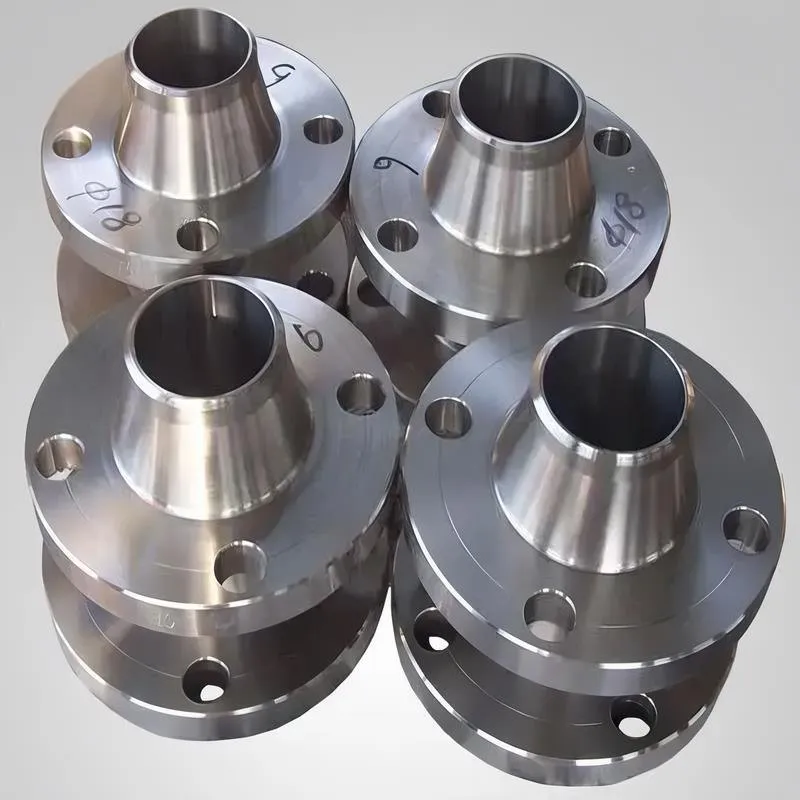
1,We Manufacturing processes are primarily classified into four types:
1:Forging,
2:Casting,
3:Cutting,
4:Rolling.
2,We can manufacture in accordance with these standards.
Standards:
GB Series (Chinese Standards), JB Series (Machinery Standards), HG Series (Chemical Industry Standards), ASME B16.5 (American Standards), BS4504 (British Standards), DIN (German Standards), and JIS (Japanese Standards).
Internationally, there are two primary systems of pipe flange standards: the European system, represented by the German DIN standards (including those of the former Soviet Union), and the American system, represented by the US ANSI pipe flange standards. Other common standards include: the Chinese Ministry of Machinery Industry standards (JB series), the Ministry of Chemical Industry standards (HG series), the Chinese National Standard *GB/T 9112–9124-2010 Steel Pipe Flanges*, as well as US standards (ASME B16.5), British standards (BS4504), German standards (DIN), Japanese standards (JIS), and marine standards (CBM), among others.
The nominal pressure ratings for the PN series are designated by "PN" and comprise the following nine levels: PN2.5, PN6, PN10, PN16, PN25, PN40, PN63, PN100, and PN160.
The nominal pressure ratings for the Class series are designated by "Class" and comprise the following six levels: Class150, Class300, Class600, Class900, Class1500, and Class2500.
Flange Classification
1. **According to Chemical Industry Standards:** Flanges are classified as follows:
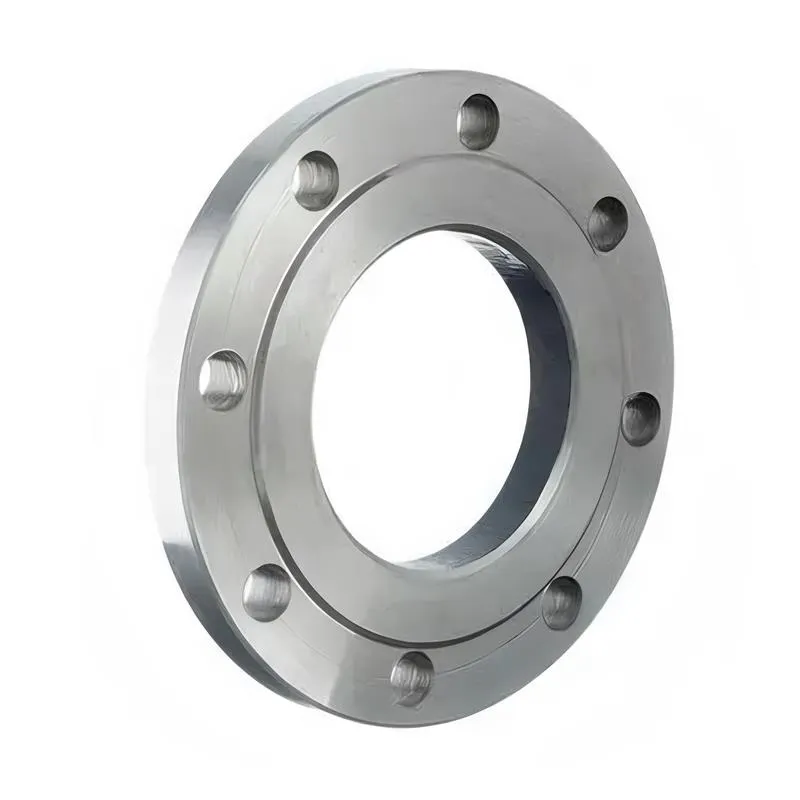
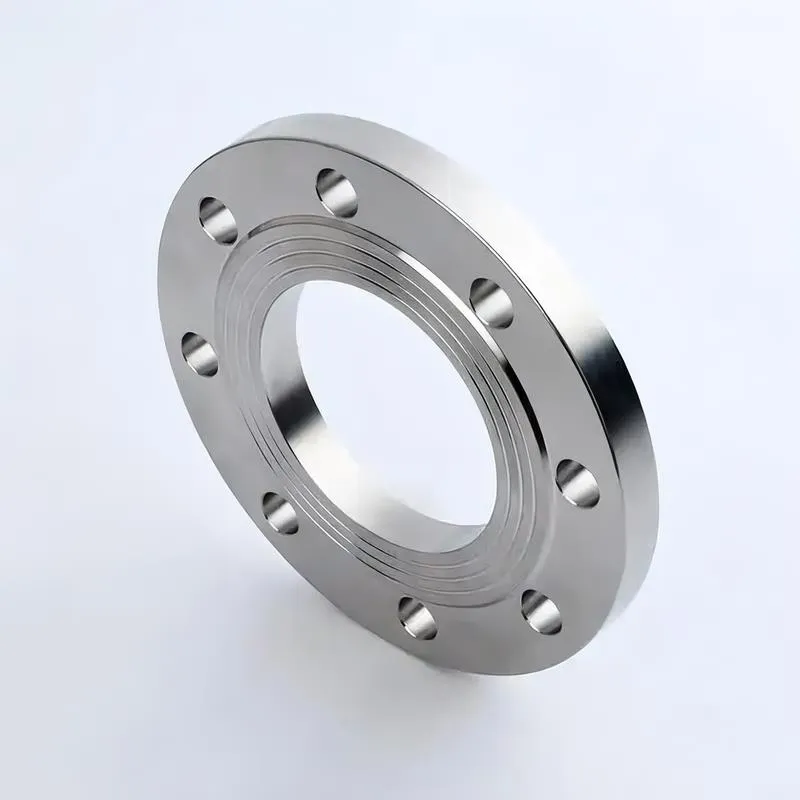
Plate Flat Welding Flange (PL), Necked Flat Welding Flange (SO), Necked Butt Welding Flange (WN), Integral Flange (IF), Socket Welding Flange (SW), Threaded Flange (Th), Butt Welding Ring Loose Flange (PJ/SE), Blind Flange (BL), Flat Welding Ring Loose Flange (PJ/PJ), and Lined Blind Flange (BL(s)).
2. **According to Petrochemical (SH) Industry Standards:** Flanges are classified as follows:
Threaded Flange (PL), Butt Welding Flange (WN), Flat Welding Flange (SO), Socket Welding Flange (SW), Loose Flange (LJ), and Blind Flange (no specific designation).
3. **According to Machinery (JB) Industry Standards:** Flanges are classified as follows:
Integral Flange, Butt Welding Flange, Plate Flat Welding Flange, Butt Welding Ring Plate Loose Flange, Flat Welding Ring Plate Loose Flange, Lap Joint Ring Plate Loose Flange, and Blind Flange.
4. **According to Connection Method/Type:** Flanges are classified as follows:
Plate Flat Welding Flange, Necked Flat Welding Flange, Necked Butt Welding Flange, Socket Welding Flange, Threaded Flange, Blind Flange, Necked Butt Welding Ring Loose Flange, Flat Welding Ring Loose Flange, Ring-Type Joint (RTJ) Flange and Blind Flange, Large-Diameter Plate Flange, Large-Diameter High-Neck Flange, Figure-8 Blind Plate, Butt Welding Ring Loose Flange, etc.
5. **According to the Component Being Connected:** Flanges can be classified into Vessel Flanges and Pipe Flanges.
6. **According to Structural Type:** Flanges include Integral Flanges, Threaded Flanges, Flat Welding Flanges, Butt Welding Flanges, Lap Joint (Loose/Swivel) Flanges, and Blind Flanges.
A flange—also referred to as a flange plate or rim—is a component used to connect shafts to one another, or, more commonly, to join the ends of pipes. Flanges are also utilized at the inlet and outlet ports of equipment to facilitate connections between two devices—for instance, the flange on a speed reducer. A "flange connection" or "flanged joint" refers to a detachable joint assembly comprising three interconnected elements—a flange, a gasket, and bolts—that together form a sealed structural unit. In the context of piping systems, a "pipe flange" specifically denotes a flange used for plumbing within the installation; when applied to equipment, it refers to the inlet or outlet flange of that specific device. Flanges feature a series of holes through which bolts are inserted to securely fasten the two flanges together, while a gasket placed between the flanges ensures a leak-proof seal. Flanges are broadly categorized into three types: threaded (screw-in) flanges, welded flanges, and clamp-type flanges. Flanges are invariably used in pairs; threaded flanges are suitable for low-pressure piping applications, whereas welded flanges are required for systems operating at pressures exceeding 4 kilograms per square centimeter. A sealing gasket is inserted between the two flange plates, which are then firmly secured using bolts. The thickness of a flange—as well as the specifications of the bolts used to fasten it—vary depending on the specific pressure rating required for the application. When connecting equipment such as water pumps or valves to piping systems, the corresponding connection points on these devices are often manufactured in the shape of a matching flange; this method of attachment is also referred to as a "flange connection." Generally, any connecting component that utilizes bolts to join and seal the perimeters of two flat surfaces—such as the joints in ventilation ducts—is termed a "flange"; such components may collectively be classified as "flange-type parts." However, since such a connection often constitutes merely a *portion* of a larger device—for instance, the interface between a flange and a water pump—it would be inappropriate to classify the entire water pump itself as a "flange-type part." Conversely, smaller components—such as valves—that feature such flanged interfaces may indeed be appropriately categorized as "flange-type parts."
-:-
For detailed product information, please contact sales.
-:
AISI 1212 Steel Flange, cold drawn, 19-38 mm round Product Information
-:-
For detailed product information, please contact sales.
-:
AISI 1212 Steel Flange, cold drawn, 19-38 mm round Synonyms
-:-
For detailed product information, please contact sales.
-:
AISI 1212 Steel, cold drawn, 19-38 mm round Product Information
-:-
For detailed product information, please contact sales.
-:
### **Product Introduction: AISI 1212 Steel, Cold Drawn Round Bar (19-38 mm)**
**Overview**
AISI 1212 is the universal industry standard for free-machining steel, supplied in its premium form as a **cold drawn round bar** in the diameter range of **19-38 mm**. This product combines the benchmark 100% machinability rating of AISI 1212 with the significant benefits of cold drawing: enhanced dimensional accuracy, superior surface finish, increased mechanical strength, and improved straightness. It represents the optimal choice for high-precision, high-volume manufacturing where consistent part quality, reduced cycle times, and minimal secondary processing are critical. The cold drawn condition transforms this already exceptional machining steel into a precision-engineered raw material ready for the most demanding production environments.
**Key Features & Advantages**
* **Benchmark Machinability (100% Rating):** Maintains the defining 100% machinability index of AISI 1212, ensuring the fastest possible cutting speeds, shortest chips, longest tool life, and lowest machining costs.
* **Precision Dimensional Control:** Cold drawing produces bars with tight, consistent tolerances (per ASTM A108), excellent straightness, and uniform cross-section, essential for stable performance in automated feeders and CNC programming.
* **Superior Surface Integrity:** Features a smooth, bright, scale-free surface with minimal decarburization. This improves part aesthetics, enhances fatigue performance for some applications, and often eliminates secondary finishing operations.
* **Enhanced Mechanical Properties:** The cold working process increases yield and tensile strength by approximately 20-30% compared to hot-rolled material, providing stronger machined components without heat treatment.
* **Manufacturing Efficiency:** Delivers predictable material behavior that reduces setup adjustments, minimizes scrap rates, and optimizes production throughput in high-volume machining operations.
---
### **1. Chemical Composition (Standard Conformance)**
The chemistry remains identical to hot-rolled AISI 1212, optimized for chip-breaking performance.
| Element | Standard Range (%) | Key Function |
| :--- | :--- | :--- |
| **Carbon (C)** | ≤ 0.13 (max) | Minimized to prevent work hardening during machining and maintain good ductility. |
| **Manganese (Mn)** | 0.70 – 1.00 | Essential partner to sulfur; forms manganese sulfide (MnS) inclusions that act as internal chip breakers. |
| **Phosphorus (P)** | 0.07 – 0.12 | **Elevated.** Increases strength slightly and critically promotes chip brittleness for clean breakage. |
| **Sulfur (S)** | 0.16 – 0.23 | **Elevated.** The defining free-machining element. The higher sulfur content ensures consistent, reliable chip formation. |
| **Iron (Fe)** | Balance | Base element. |
**Key International Standard Equivalents:**
* **UNS:** G12120
* **AISI/SAE:** 1212
* **ASTM:** **A108** (Standard Specification for Steel Bar, Carbon and Alloy, Cold-Finished)
* **DIN (Germany):** 9SMn28 / 1.0715 (+C condition for cold drawn)
* **EN (Europe):** 1.0715
* **JIS (Japan):** SUM22 (Similar free-machining grade)
---
### **2. Typical Physical & Mechanical Properties (Cold Drawn Condition, 19-38 mm)**
*Note: The primary property is machinability. Enhanced mechanical properties are a beneficial result of cold working.*
| Property | Typical Value / Description |
| :--- | :--- |
| **Density** | 7.87 g/cm³ |
| **Machinability Rating** | **100%** (The **industry standard**. All other machinability ratings are relative to cold drawn AISI 1212). |
| **Tensile Strength** | 460 – 550 MPa (67 – 80 ksi) |
| **Yield Strength (0.2% Offset)** | **415 – 485 MPa (60 – 70 ksi)** – *Significantly increased via cold work.* |
| **Elongation (in 50mm)** | 10% – 18% *(Reduced due to strain hardening; remains highly anisotropic)* |
| **Brinell Hardness (HB)** | 150 – 190 |
| **Surface Roughness (Ra)** | 1.6 – 3.2 μm (63 – 125 μin). Bright, smooth, commercial finish. |
| **Tolerances** | Meets ASTM A108 cold-drawn tolerances, ideal for precision machining. |
---
### **3. Product Applications**
AISI 1212 cold drawn rounds are specified for the highest-volume, most precision-critical machining applications across all industries.
* **High-Precision Screw Machine Components:** Complex fittings, connectors, hydraulic adapters, and surgical instrument parts produced on multi-spindle automatics and Swiss-type lathes.
* **Fasteners & Hardware:** Precision bolts, studs, set screws, and specialized fasteners where consistent thread rolling and machining are paramount.
* **Electrical & Electronic Components:** Connector pins, terminals, shielding parts, and lead frame components requiring excellent conductivity and dimensional stability.
* **Automotive Fuel & Brake Systems:** Injector bodies, sensor fittings, and brake line connectors where leak-free performance depends on precise machining.
* **Shafts & Pins:** Low-to-moderate stress shafts, dowel pins, and hinge pins that benefit from the smooth as-drawn surface finish.
* **General Precision Parts:** Any component where the economic advantages of ultra-high machinability, reduced finishing, and high throughput justify the material premium over hot-rolled stock.
---
### **4. Critical Considerations & Limitations**
* **Non-Weldable:** **COMPLETELY UNSUITABLE FOR FUSION WELDING.** The high sulfur and phosphorus content guarantees **hot cracking** and severe embrittlement in the weld zone. Assembly must rely on mechanical joining.
* **Pronounced Anisotropy:** Mechanical properties are highly directional. **Transverse ductility and impact strength are extremely poor** due to aligned MnS inclusions. Not for parts subject to cross-grain stresses or impact.
* **Residual Stress Management:** Cold drawing introduces residual surface stresses. For parts undergoing heavy, asymmetric machining (e.g., deep keyways, off-center bores), **stress relieving prior to final machining is strongly recommended** to prevent distortion.
* **Limited Application Strength:** Despite increased yield strength, it remains a low-carbon steel **unsuitable for structural, high-stress, dynamic load, or safety-critical components**.
* **Comparison to Hot-Rolled 1212:** Offers superior surface finish, tighter tolerances, better straightness, higher strength, and more consistent machining performance. It is the premium choice for precision work.
* **Optimal for Certain Operations:** The cold worked structure can sometimes make the material slightly more abrasive on tools during very heavy cuts compared to annealed stock, though overall machinability remains exceptional.
**Disclaimer:** AISI 1212 Cold Drawn is a specialized **manufacturing efficiency steel**. Its selection must be justified by production volume and precision requirements, with full acceptance of its severe limitations in weldability, transverse ductility, and load-bearing capacity. It is not an engineering steel for performance applications.
-:-
For detailed product information, please contact sales.
-:
AISI 1212 Steel, cold drawn, 19-38 mm round Specification
Dimensions
Size:
Diameter 20-1000 mm Length <5005 mm
Size:We can customized as required
Standard:
Per your request or drawing
We can customized as required
Properties(Theoretical)
Chemical Composition
-:-
For detailed product information, please contact sales.
-:
AISI 1212 Steel, cold drawn, 19-38 mm round Properties
-:-
For detailed product information, please contact sales.
-:
Applications of AISI 1212 Steel Flange, cold drawn, 19-38 mm round
-:-
For detailed product information, please contact sales.
-:
Chemical Identifiers AISI 1212 Steel Flange, cold drawn, 19-38 mm round
-:-
For detailed product information, please contact sales.
-:
Packing of AISI 1212 Steel Flange, cold drawn, 19-38 mm round
-:-
For detailed product information, please contact sales.
-:
Standard Packing:
-:-
For detailed product information, please contact sales.
-:
Typical bulk packaging includes palletized plastic 5 gallon/25 kg. pails, fiber and Steel Flange drums to 1 ton super sacks in full container (FCL) or truck load (T/L) quantities. Research and sample quantities and hygroscopic, oxidizing or other air sensitive materials may be packaged under argon or vacuum. Solutions are packaged in polypropylene, plastic or glass jars up to palletized 1476 gallon liquid totes Special package is available on request. E FORUs’ is carefully handled to minimize damage during storage and transportation and to preserve the quality of our products in their original condition