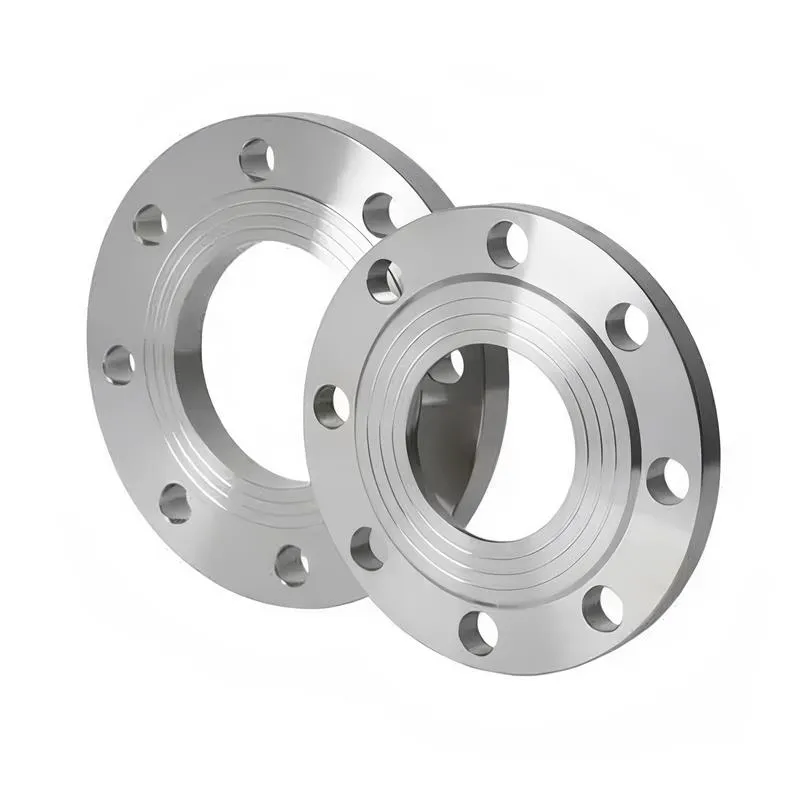
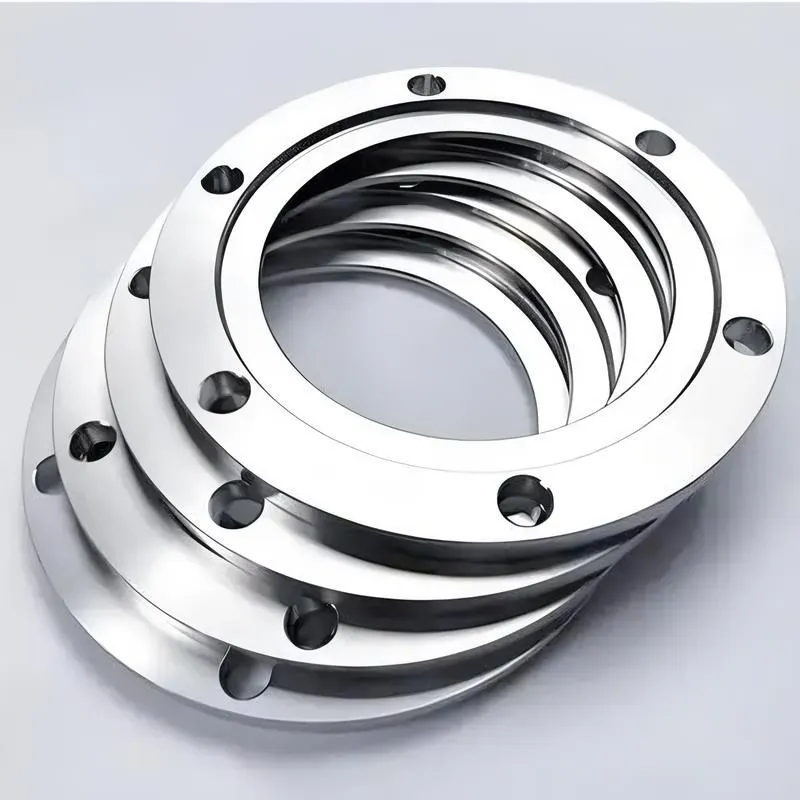
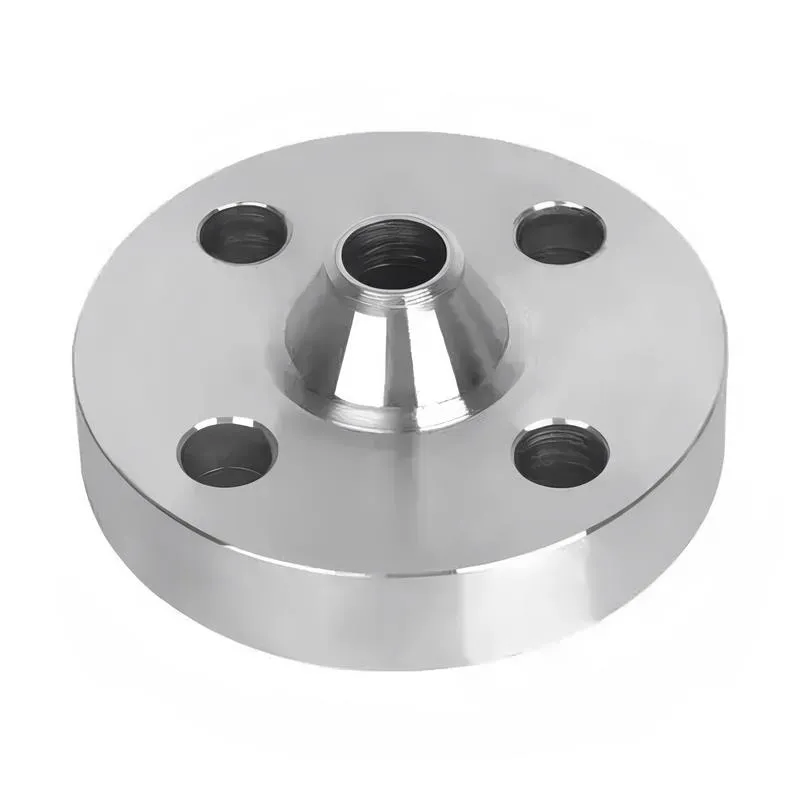
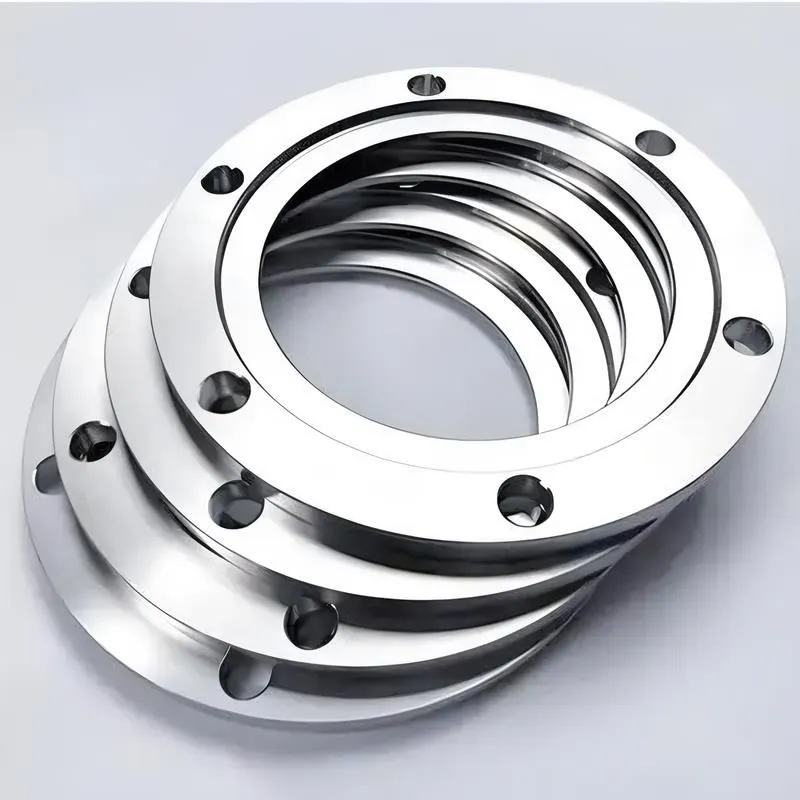
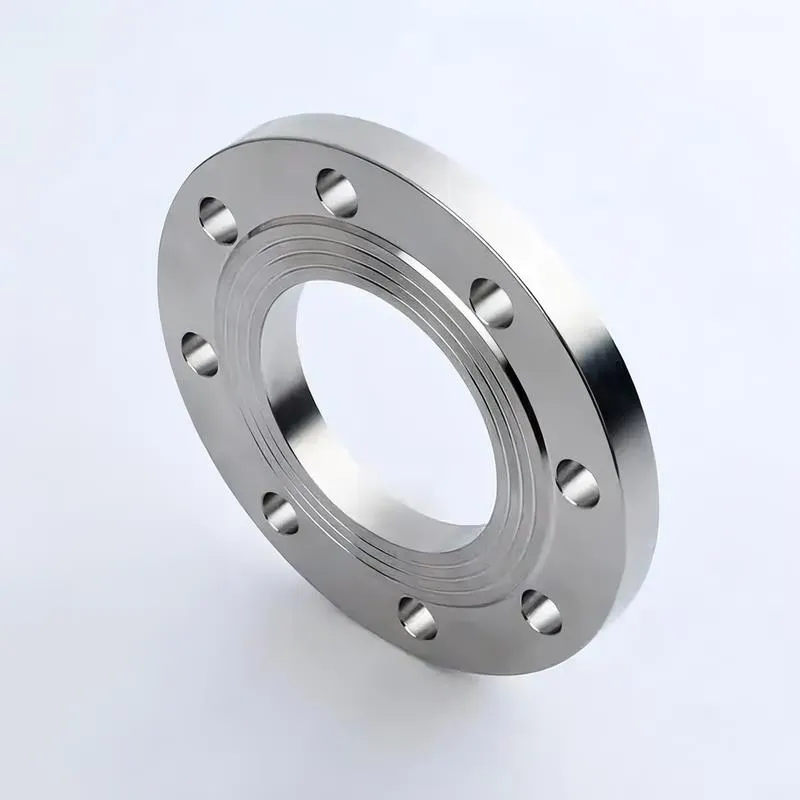
1,We Manufacturing processes are primarily classified into four types:
1:Forging,
2:Casting,
3:Cutting,
4:Rolling.
2,We can manufacture in accordance with these standards.
Standards:
GB Series (Chinese Standards), JB Series (Machinery Standards), HG Series (Chemical Industry Standards), ASME B16.5 (American Standards), BS4504 (British Standards), DIN (German Standards), and JIS (Japanese Standards).
Internationally, there are two primary systems of pipe flange standards: the European system, represented by the German DIN standards (including those of the former Soviet Union), and the American system, represented by the US ANSI pipe flange standards. Other common standards include: the Chinese Ministry of Machinery Industry standards (JB series), the Ministry of Chemical Industry standards (HG series), the Chinese National Standard *GB/T 9112–9124-2010 Steel Pipe Flanges*, as well as US standards (ASME B16.5), British standards (BS4504), German standards (DIN), Japanese standards (JIS), and marine standards (CBM), among others.
The nominal pressure ratings for the PN series are designated by "PN" and comprise the following nine levels: PN2.5, PN6, PN10, PN16, PN25, PN40, PN63, PN100, and PN160.
The nominal pressure ratings for the Class series are designated by "Class" and comprise the following six levels: Class150, Class300, Class600, Class900, Class1500, and Class2500.
Flange Classification
1. **According to Chemical Industry Standards:** Flanges are classified as follows:
Plate Flat Welding Flange (PL), Necked Flat Welding Flange (SO), Necked Butt Welding Flange (WN), Integral Flange (IF), Socket Welding Flange (SW), Threaded Flange (Th), Butt Welding Ring Loose Flange (PJ/SE), Blind Flange (BL), Flat Welding Ring Loose Flange (PJ/PJ), and Lined Blind Flange (BL(s)).
2. **According to Petrochemical (SH) Industry Standards:** Flanges are classified as follows:
Threaded Flange (PL), Butt Welding Flange (WN), Flat Welding Flange (SO), Socket Welding Flange (SW), Loose Flange (LJ), and Blind Flange (no specific designation).
3. **According to Machinery (JB) Industry Standards:** Flanges are classified as follows:
Integral Flange, Butt Welding Flange, Plate Flat Welding Flange, Butt Welding Ring Plate Loose Flange, Flat Welding Ring Plate Loose Flange, Lap Joint Ring Plate Loose Flange, and Blind Flange.
4. **According to Connection Method/Type:** Flanges are classified as follows:
Plate Flat Welding Flange, Necked Flat Welding Flange, Necked Butt Welding Flange, Socket Welding Flange, Threaded Flange, Blind Flange, Necked Butt Welding Ring Loose Flange, Flat Welding Ring Loose Flange, Ring-Type Joint (RTJ) Flange and Blind Flange, Large-Diameter Plate Flange, Large-Diameter High-Neck Flange, Figure-8 Blind Plate, Butt Welding Ring Loose Flange, etc.
5. **According to the Component Being Connected:** Flanges can be classified into Vessel Flanges and Pipe Flanges.
6. **According to Structural Type:** Flanges include Integral Flanges, Threaded Flanges, Flat Welding Flanges, Butt Welding Flanges, Lap Joint (Loose/Swivel) Flanges, and Blind Flanges.
A flange—also referred to as a flange plate or rim—is a component used to connect shafts to one another, or, more commonly, to join the ends of pipes. Flanges are also utilized at the inlet and outlet ports of equipment to facilitate connections between two devices—for instance, the flange on a speed reducer. A "flange connection" or "flanged joint" refers to a detachable joint assembly comprising three interconnected elements—a flange, a gasket, and bolts—that together form a sealed structural unit. In the context of piping systems, a "pipe flange" specifically denotes a flange used for plumbing within the installation; when applied to equipment, it refers to the inlet or outlet flange of that specific device. Flanges feature a series of holes through which bolts are inserted to securely fasten the two flanges together, while a gasket placed between the flanges ensures a leak-proof seal. Flanges are broadly categorized into three types: threaded (screw-in) flanges, welded flanges, and clamp-type flanges. Flanges are invariably used in pairs; threaded flanges are suitable for low-pressure piping applications, whereas welded flanges are required for systems operating at pressures exceeding 4 kilograms per square centimeter. A sealing gasket is inserted between the two flange plates, which are then firmly secured using bolts. The thickness of a flange—as well as the specifications of the bolts used to fasten it—vary depending on the specific pressure rating required for the application. When connecting equipment such as water pumps or valves to piping systems, the corresponding connection points on these devices are often manufactured in the shape of a matching flange; this method of attachment is also referred to as a "flange connection." Generally, any connecting component that utilizes bolts to join and seal the perimeters of two flat surfaces—such as the joints in ventilation ducts—is termed a "flange"; such components may collectively be classified as "flange-type parts." However, since such a connection often constitutes merely a *portion* of a larger device—for instance, the interface between a flange and a water pump—it would be inappropriate to classify the entire water pump itself as a "flange-type part." Conversely, smaller components—such as valves—that feature such flanged interfaces may indeed be appropriately categorized as "flange-type parts."
-:-
For detailed product information, please contact sales.
-:
Crucible Steel Flange CPM® 15V® Tool Steel Flange Product Information
-:-
For detailed product information, please contact sales.
-:
Crucible Steel Flange CPM® 15V® Tool Steel Flange Synonyms
-:-
For detailed product information, please contact sales.
-:
Crucible Steel CPM® 15V® Tool Steel Product Information
-:-
For detailed product information, please contact sales.
-:
# **Technical Datasheet: Crucible CPM® 15V® Tool Steel**
---
## **1. Product Overview**
**Crucible CPM® 15V®** is an ultra-premium, **powder metallurgy (PM), very high-carbon, ultra-high-vanadium cold work tool steel** that represents the extreme frontier of wear-resistant ferrous alloy development. Engineered to push the boundaries of abrasive wear resistance beyond conventional tool steels, it contains a **nominal 15% vanadium**, creating an unprecedented volume of ultra-hard vanadium carbides within its microstructure. This material is **specifically and exclusively designed for applications where severe, unrelenting abrasive wear is the singular and overwhelming failure mechanism**.
The CPM process is **absolutely critical** to the existence of this alloy, as conventional metallurgy could not produce a usable material from this composition. It delivers wear resistance that **directly competes with and often exceeds that of many cemented carbides**, while retaining enough fracture toughness to be used in more complex shapes and under moderate compressive loads where carbide would fail catastrophically. CPM 15V is a specialist's material for the most punishing wear environments.
---
## **2. Key International Standards & Designations**
| Country/System | Standard Designation | Equivalent/Notes |
| :--- | :--- | :--- |
| **USA (Crucible)** | **CPM® 15V®** | Proprietary PM Tool Steel |
| **USA (AISI/SAE)** | **No AISI equivalent** | Proprietary composition |
| **USA (ASTM)** | **ASTM A681 (Custom)** | Considered a "Super A11" type |
| **ISO** | **No direct equivalent** | Proprietary to Crucible |
| **Common Industry Names** | **"Ultra-Wear" Steel, Hyper-Vanadium PM Steel** | - |
| **Performance Comparable To** | **Cemented Carbide (C2-C4 Grades), Ceramics** | In specific abrasive wear scenarios |
**Note:** CPM 15V is a **proprietary, beyond-standard** material. It exists outside traditional tool steel classification systems, designed for a specific performance target rather than to meet a predefined specification.
---
## **3. Chemical Composition (Typical %)**
The composition is aggressively engineered to maximize the volume fraction of vanadium carbide, approaching the theoretical limit for a usable steel matrix composite.
| Element | Weight % (Typical) | Metallurgical Function & Implication |
| :--- | :--- | :--- |
| **Carbon (C)** | **3.40** | Extremely high carbon content is stoichiometrically required to form **vanadium carbide (VC)** with the 15% V. This leaves minimal carbon for the matrix, which is a key factor in its unique behavior. |
| **Vanadium (V)** | **14.50** | **The defining element at an extreme level.** Forms an **exceptionally high volume (~30% or more)** of ultra-hard **primary MC-type vanadium carbides**. The microstructure resembles a **metal-matrix composite** more than a traditional steel. |
| **Chromium (Cr)** | 5.25 | Provides necessary hardenability for the lean matrix and contributes to corrosion resistance. Its role is secondary to vanadium. |
| **Molybdenum (Mo)** | 1.30 | Enhances the hardenability of the relatively low-carbon matrix and contributes to tempering resistance. |
| **Silicon (Si)** | 0.90 | Deoxidizer and provides solid solution strengthening to the matrix. |
| **Manganese (Mn)** | 0.50 | Standard addition for hardenability and deoxidation. |
**Revolutionary Microstructure via CPM:**
- **Carbide-Dominant Structure:** The material's properties are dominated by the continuous network of hard vanadium carbides. The steel matrix acts as a binder.
- **Maximum Wear Resistance:** Achieves the highest wear resistance of any commercially available tool steel.
- **Machinability Challenge:** The extreme carbide volume makes it one of the most difficult steels to machine via conventional methods.
---
## **4. Physical & Mechanical Properties**
### **4.1 Standard Heat Treatment**
* **Annealing:** Heat to 870-900°C (1600-1650°F), slow furnace cool. Annealed hardness: **~300-350 HB** (very high for annealed state).
* **Preheating:** **Mandatory.** Double preheat at 650°C (1200°F) and 850°C (1560°F).
* **Austenitizing:** **1120-1150°C (2050-2100°F).** The high temperature is needed despite the high carbon due to the strong carbide-forming elements locking up carbon. Vacuum or salt bath furnace required.
* **Quenching:** **Air cool or high-pressure gas quench.**
* **Tempering:** **Triple tempering is mandatory.** Temper at **525-550°C (975-1025°F)** for 2+ hours each. **Deep cryogenic treatment** (-196°C/-320°F) is strongly recommended after quenching.
* **Expected Hardness:** **60-63 HRC.** The hardness is primarily from the carbides; the matrix hardness is secondary.
### **4.2 Mechanical Properties (Hardened & Tempered)**
| Property | Value / Rating | Engineering Significance |
| :--- | :--- | :--- |
| **Hardness** | **60 - 63 HRC** | High, but the wear resistance is disproportionately higher than the hardness number suggests. |
| **Abrasive Wear Resistance** | **Extreme / Unmatched (Tool Steels)** | **Significantly superior to CPM 10V.** In many tests, it performs comparably to **C2-C4 grade cemented carbides**. The benchmark for steel wear resistance. |
| **Impact Toughness** | **Very Low (5-15 J)** | **The critical limitation.** It is a **brittle material**. Suitable only for purely compressive or steady shear loads with **zero impact**. |
| **Transverse Rupture Strength (TRS)** | **1,700 - 2,400 MPa** | Low for a tool steel, reflecting its brittle nature. Design must avoid tensile stress. |
| **Compressive Strength** | **~ 3,200 - 3,600 MPa** | Excellent – its primary loading mode should be compressive. |
| **Dimensional Stability** | **Good** | Air quenching and the stable carbide structure minimize size change. |
| **Grindability** | **Very Poor** | **Only diamond or CBN grinding is practical.** The ultra-hard carbides rapidly degrade conventional abrasive wheels. |
### **4.3 Physical Properties (Approximate)**
* Density: ~7.4 g/cm³ (Lower than standard steel due to high vanadium content)
* Thermal Conductivity: ~20 W/m·K (Low)
* Coefficient of Thermal Expansion: ~10.0 x 10⁻⁶/K
* Modulus of Elasticity: 210-220 GPa
---
## **5. Typical Product Applications**
CPM 15V is used in **hyper-specialized, severe-abrasion applications** where all other steels have failed and carbide is being considered.
* **Extreme Abrasion Tooling:**
* **Dies for Abrasive Composites:** Molding and trimming dies for **carbon-carbon composites, ceramic matrix composites (CMCs), highly filled plastics with extreme abrasives (e.g., 60%+ mineral load).**
* **Powder Compaction Tools:** For abrasive ceramic powders (e.g., silicon carbide, alumina).
* **Nozzles and Liners:** For **sandblasting, shot peening, and abrasive waterjet cutting** where superior life over standard materials is required.
* **Wear Parts in Severe Environments:**
* **Slurry Pump Components** handling highly concentrated, coarse abrasives.
* **Wear Plates and Guides** in **mining, quarrying, and recycling equipment** processing hard minerals.
* **Knives and Blades** for cutting **fiberglass, graphite, and aramid fabrics** continuously.
* **Specialized Industrial Components:**
* **Rolls** for guiding abrasive wires or filaments.
* **Mandrels and cores** in abrasive tape or film manufacturing.
---
## **6. Processing & Manufacturing Guidelines**
* **Machinability (Annealed):** **Extremely Poor / Nearly Unmachinable with HSS/Carbide.** The annealed state is still very hard and abrasive. **EDM (Electrical Discharge Machining) is the primary and often only viable shaping method** for finished geometries.
* **Grindability:** **Very Poor.** **Diamond grinding wheels are essential.** Grinding requires very low infeeds, good coolant, and frequent dressing. It is a slow and expensive process.
* **EDM Machining:** **The standard manufacturing process.** Both sinker and wire EDM work effectively. A post-EDM temper at 150-180°C is recommended to relieve surface stresses from the recast layer.
* **Wire EDM:** Excellent for producing profiles. Multiple passes may be needed for best surface finish.
* **Polishing:** Difficult but possible with diamond compounds. The fine carbide structure can yield a good finish, but the process is labor-intensive.
---
## **7. Comparative Performance & Selection Notes**
| Criterion | **CPM 15V** | **CPM 10V (A11)** | **Cemented Carbide (C2/C4)** | **Ceramic (Al₂O₃)** |
| :--- | :--- | :--- | :--- | :--- |
| **Abrasive Wear Resistance** | **Best (Steel), ≈ Carbide** | Extreme | **Higher / Similar** | **Higher** |
| **Toughness/Impact Resistance** | **Very Low** | Low | **Very Low** | **Extremely Low** |
| **Compressive Strength** | High | High | **Very High** | High |
| **Fabrication Complexity** | Difficult (EDM) | Difficult | Very Difficult (Grind only) | Very Difficult |
| **Cost** | Very High | Very High | Moderate | High |
| **Primary Niche** | **Replace Carbide where Shapes are Complex or Some Steel-like Behavior is Needed** | Extreme Wear in Steel Form | **Pure, Steady-State Abrasion** | **High-Temp Abrasion** |
**The Decision Matrix for CPM 15V:**
1. **Is abrasive wear destroying tools made from CPM 10V, MAXEL® 4, or similar in days/weeks?**
2. **Is the application purely compressive or shear, with absolutely no shock or bending stress?**
3. **Is the component geometry too complex for brittle carbide or ceramic to be manufactured or survive in service?**
4. **Is the total cost of frequent replacement (downtime, labor, scrap) far exceeding the high material and fabrication cost of CPM 15V?**
If the answer to **all** these questions is **YES**, then CPM 15V is a viable candidate.
---
## **8. Conclusion**
**Crucible CPM® 15V® is not merely a tool steel; it is a purpose-engineered wear material that exists at the intersection of advanced metallurgy and extreme application demands.** It represents the ultimate expression of the powder metallurgy process in creating a **wear-resistant, steel-based composite**.
**Its role is singular: to solve the most severe abrasive wear problems where no other steel can survive, and where the brittleness of non-ferrous alternatives (carbide, ceramic) is prohibitive.** It is a **high-cost, high-performance solution** for a **low-incidence, high-value problem**.
Successful implementation requires:
- **Meticulous Design:** For pure compression, avoiding stress concentrations.
- **Specialized Manufacturing:** Primarily via EDM and diamond grinding.
- **Realistic Expectations:** Understanding its exceptional wear comes with profound brittleness.
For the specific, extreme use cases it was born to address, **CPM 15V has no equal in the world of steel, offering a unique and powerful tool for engineers battling the most aggressive wear on the planet.**
---
-:-
For detailed product information, please contact sales.
-:
Crucible Steel CPM® 15V® Tool Steel Specification
Dimensions
Size:
Diameter 20-1000 mm Length <5231 mm
Size:We can customized as required
Standard:
Per your request or drawing
We can customized as required
Properties(Theoretical)
Chemical Composition
-:-
For detailed product information, please contact sales.
-:
Crucible Steel CPM® 15V® Tool Steel Properties
-:-
For detailed product information, please contact sales.
-:
Applications of Crucible Steel Flange CPM® 15V® Tool Steel Flange
-:-
For detailed product information, please contact sales.
-:
Chemical Identifiers Crucible Steel Flange CPM® 15V® Tool Steel Flange
-:-
For detailed product information, please contact sales.
-:
Packing of Crucible Steel Flange CPM® 15V® Tool Steel Flange
-:-
For detailed product information, please contact sales.
-:
Standard Packing:
-:-
For detailed product information, please contact sales.
-:
Typical bulk packaging includes palletized plastic 5 gallon/25 kg. pails, fiber and Steel Flange drums to 1 ton super sacks in full container (FCL) or truck load (T/L) quantities. Research and sample quantities and hygroscopic, oxidizing or other air sensitive materials may be packaged under argon or vacuum. Solutions are packaged in polypropylene, plastic or glass jars up to palletized 1702 gallon liquid totes Special package is available on request. E FORUs’ is carefully handled to minimize damage during storage and transportation and to preserve the quality of our products in their original condition