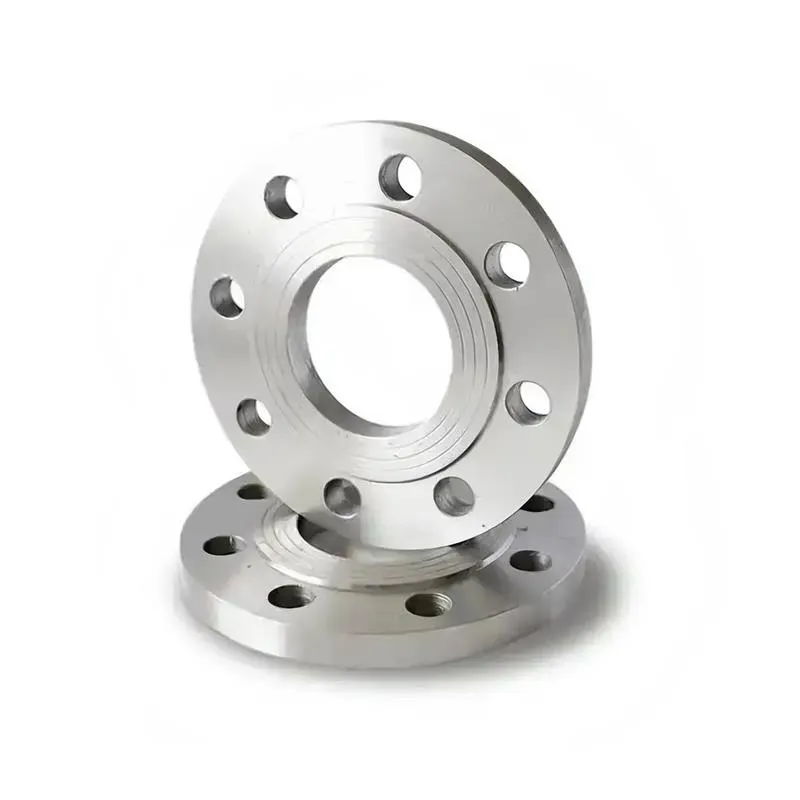
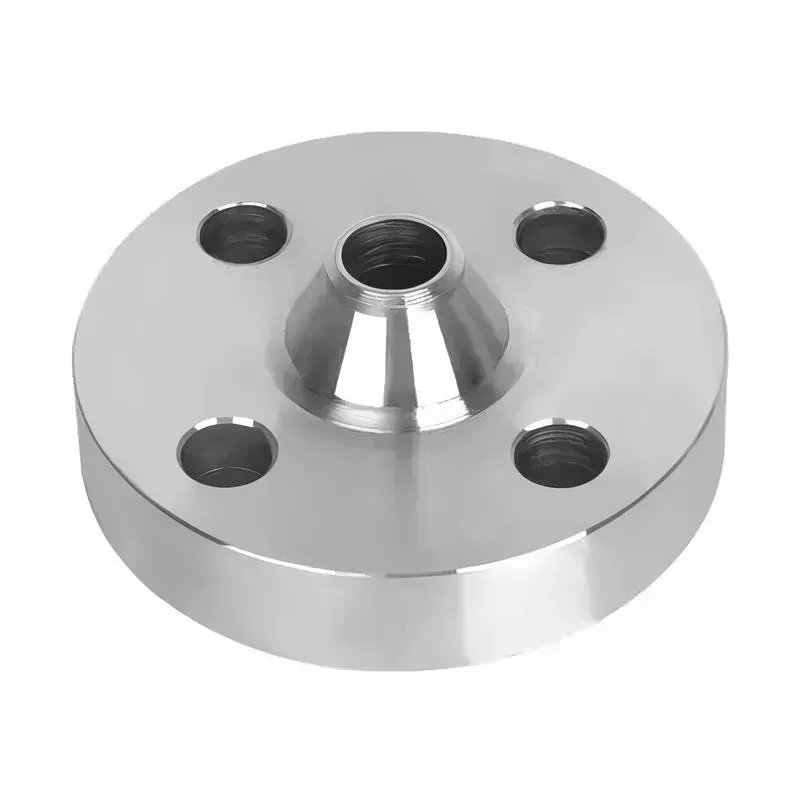
1,We Manufacturing processes are primarily classified into four types:
1:Forging,
2:Casting,
3:Cutting,
4:Rolling.
2,We can manufacture in accordance with these standards.
Standards:
GB Series (Chinese Standards), JB Series (Machinery Standards), HG Series (Chemical Industry Standards), ASME B16.5 (American Standards), BS4504 (British Standards), DIN (German Standards), and JIS (Japanese Standards).
Internationally, there are two primary systems of pipe flange standards: the European system, represented by the German DIN standards (including those of the former Soviet Union), and the American system, represented by the US ANSI pipe flange standards. Other common standards include: the Chinese Ministry of Machinery Industry standards (JB series), the Ministry of Chemical Industry standards (HG series), the Chinese National Standard *GB/T 9112–9124-2010 Steel Pipe Flanges*, as well as US standards (ASME B16.5), British standards (BS4504), German standards (DIN), Japanese standards (JIS), and marine standards (CBM), among others.
The nominal pressure ratings for the PN series are designated by "PN" and comprise the following nine levels: PN2.5, PN6, PN10, PN16, PN25, PN40, PN63, PN100, and PN160.
The nominal pressure ratings for the Class series are designated by "Class" and comprise the following six levels: Class150, Class300, Class600, Class900, Class1500, and Class2500.
Flange Classification
1. **According to Chemical Industry Standards:** Flanges are classified as follows:
Plate Flat Welding Flange (PL), Necked Flat Welding Flange (SO), Necked Butt Welding Flange (WN), Integral Flange (IF), Socket Welding Flange (SW), Threaded Flange (Th), Butt Welding Ring Loose Flange (PJ/SE), Blind Flange (BL), Flat Welding Ring Loose Flange (PJ/PJ), and Lined Blind Flange (BL(s)).
2. **According to Petrochemical (SH) Industry Standards:** Flanges are classified as follows:
Threaded Flange (PL), Butt Welding Flange (WN), Flat Welding Flange (SO), Socket Welding Flange (SW), Loose Flange (LJ), and Blind Flange (no specific designation).
3. **According to Machinery (JB) Industry Standards:** Flanges are classified as follows:
Integral Flange, Butt Welding Flange, Plate Flat Welding Flange, Butt Welding Ring Plate Loose Flange, Flat Welding Ring Plate Loose Flange, Lap Joint Ring Plate Loose Flange, and Blind Flange.
4. **According to Connection Method/Type:** Flanges are classified as follows:
Plate Flat Welding Flange, Necked Flat Welding Flange, Necked Butt Welding Flange, Socket Welding Flange, Threaded Flange, Blind Flange, Necked Butt Welding Ring Loose Flange, Flat Welding Ring Loose Flange, Ring-Type Joint (RTJ) Flange and Blind Flange, Large-Diameter Plate Flange, Large-Diameter High-Neck Flange, Figure-8 Blind Plate, Butt Welding Ring Loose Flange, etc.
5. **According to the Component Being Connected:** Flanges can be classified into Vessel Flanges and Pipe Flanges.
6. **According to Structural Type:** Flanges include Integral Flanges, Threaded Flanges, Flat Welding Flanges, Butt Welding Flanges, Lap Joint (Loose/Swivel) Flanges, and Blind Flanges.
A flange—also referred to as a flange plate or rim—is a component used to connect shafts to one another, or, more commonly, to join the ends of pipes. Flanges are also utilized at the inlet and outlet ports of equipment to facilitate connections between two devices—for instance, the flange on a speed reducer. A "flange connection" or "flanged joint" refers to a detachable joint assembly comprising three interconnected elements—a flange, a gasket, and bolts—that together form a sealed structural unit. In the context of piping systems, a "pipe flange" specifically denotes a flange used for plumbing within the installation; when applied to equipment, it refers to the inlet or outlet flange of that specific device. Flanges feature a series of holes through which bolts are inserted to securely fasten the two flanges together, while a gasket placed between the flanges ensures a leak-proof seal. Flanges are broadly categorized into three types: threaded (screw-in) flanges, welded flanges, and clamp-type flanges. Flanges are invariably used in pairs; threaded flanges are suitable for low-pressure piping applications, whereas welded flanges are required for systems operating at pressures exceeding 4 kilograms per square centimeter. A sealing gasket is inserted between the two flange plates, which are then firmly secured using bolts. The thickness of a flange—as well as the specifications of the bolts used to fasten it—vary depending on the specific pressure rating required for the application. When connecting equipment such as water pumps or valves to piping systems, the corresponding connection points on these devices are often manufactured in the shape of a matching flange; this method of attachment is also referred to as a "flange connection." Generally, any connecting component that utilizes bolts to join and seal the perimeters of two flat surfaces—such as the joints in ventilation ducts—is termed a "flange"; such components may collectively be classified as "flange-type parts." However, since such a connection often constitutes merely a *portion* of a larger device—for instance, the interface between a flange and a water pump—it would be inappropriate to classify the entire water pump itself as a "flange-type part." Conversely, smaller components—such as valves—that feature such flanged interfaces may indeed be appropriately categorized as "flange-type parts."
-:-
For detailed product information, please contact sales.
-:
AISI M1012 Merchant Quality Carbon Steel Flange, Composition Spec Product Information
-:-
For detailed product information, please contact sales.
-:
AISI M1012 Merchant Quality Carbon Steel Flange, Composition Spec Synonyms
-:-
For detailed product information, please contact sales.
-:
AISI M1012 Merchant Quality Carbon Steel, Composition Spec Product Information
-:-
For detailed product information, please contact sales.
-:
# Product Datasheet: AISI M1012 Merchant Quality Carbon Steel - Composition Specification
## 1. Product Overview
**AISI M1012 Merchant Quality (MQ) Carbon Steel** is a standardized, low-carbon steel formulation designated for general-purpose manufacturing and construction applications. The "M" prefix indicates **Merchant Quality**, signifying that the material is produced and supplied primarily to meet specific **chemical composition requirements** rather than guaranteed mechanical properties. This quality designation represents the most economical tier of standardized steel, optimized for applications where cost-effectiveness and consistent chemical composition are prioritized over certified mechanical performance.
M1012 MQ steel bridges the gap between generic "mild steel" and more expensive, property-guaranteed grades, offering fabricators a predictable material with known welding, forming, and machining characteristics based on its controlled chemistry.
## 2. Key Specifications & International Standards
* **AISI/SAE Designation:** **M1012** (The "M" prefix is critical, denoting Merchant Quality)
* **UNS Designation:** **G10120** (Note: Shares the same UNS number as standard AISI 1012; the "M" quality is a procurement specification)
* **Governing Standard:** **ASTM A283/A283M** - Standard Specification for Low and Intermediate Tensile Strength Carbon Steel Plates (Grades A, B, C, D). M1012 typically aligns with the chemical requirements for such general-purpose plates.
* **Relevant Complementary Standards:**
* **ASTM A36/A36M** - Structural Steel (M1012 may be supplied as a chemical equivalent for non-critical applications, but A36 has mandatory mechanical property requirements).
* **ASTM A570/A570M** - Steel, Sheet and Strip, Carbon, Hot-Rolled, Structural Quality (Gr 30, 33, 36, 40, 45).
* **CSA G40.21** - Canadian Standard for Structural Quality Steel.
**Quality Philosophy:** The core tenet of **Merchant Quality** is the guarantee of **chemical composition** within specified limits. Mechanical properties (tensile strength, yield strength, elongation) are **not guaranteed** by the material specification and are considered typical or indicative values that result from standard hot-rolling practices.
**Common Product Forms:** Hot-rolled bars, structural shapes (angles, channels), plates, and occasionally sheets.
## 3. Chemical Composition (%, Specification Requirements)
The chemical composition is the definitive and guaranteed characteristic of AISI M1012 Merchant Quality steel.
| Element | Composition Range (Weight %) | Role & Manufacturing Implication |
| :--- | :--- | :--- |
| **Carbon (C)** | **0.10% - 0.15%** | Primary strengthening element. This range provides a balance: sufficient strength for many applications while maintaining good weldability and formability. Higher within range increases strength but reduces ductility. |
| **Manganese (Mn)** | **0.30% - 0.60%** | Secondary strengthener and deoxidizer. Combines with sulfur to form manganese sulfides, improving hot workability. Enhances hardenability slightly. |
| **Phosphorus (P)** | **≤ 0.040% max** | Residual element. Generally considered an impurity that can increase strength and hardness but severely reduces ductility and impact toughness, especially in cold conditions. Tightly controlled. |
| **Sulfur (S)** | **≤ 0.050% max** | Residual element. Improves machinability when controlled but forms iron sulfides which can cause "hot shortness" (cracking during hot working). Level is balanced for general fabrication. |
| **Silicon (Si)** | **≤ 0.10% max (typical)** | Deoxidizer. Added during steelmaking to remove oxygen. A small amount increases strength without significantly harming ductility. Often lower in MQ grades than in fully killed steel grades. |
| **Copper (Cu)** | **≥ 0.20% min (when specified)** | *Optional.* When required per ASTM A283, a minimum copper content is specified to enhance atmospheric corrosion resistance (approximately 2x that of plain carbon steel). |
**Key Distinction from "Special Quality":** Merchant Quality steels typically have less restrictive controls on residual elements (like copper, nickel, chromium) compared to "Special Quality" (SQ) or "Structural Quality" grades, which may have maximum limits to ensure predictable weldability and toughness.
## 4. Typical Physical & Mechanical Properties (Indicative)
*Crucial Notice: The following properties are **typical** for hot-rolled M1012 MQ steel. They are provided for engineering reference and design estimation but are **NOT guaranteed** by the Merchant Quality specification. Actual properties can vary between heats, mills, and sections.*
| Property | Typical (Indicative) Range | Condition & Notes |
| :--- | :--- | :--- |
| **Tensile Strength** | 380 - 480 MPa (55 - 70 ksi) | Hot-rolled, as-supplied. Result of composition and rolling practice. |
| **Yield Strength (0.2% Offset)** | 250 - 310 MPa (36 - 45 ksi) | Hot-rolled, as-supplied. A key design property, but variability must be accounted for. |
| **Elongation in 50 mm (2 in)** | 25% - 32% | Hot-rolled. Indicates good ductility for forming. |
| **Hardness (Brinell)** | 110 - 135 HB | Hot-rolled. Suitable for many machining operations. |
| **Modulus of Elasticity (E)** | 200 GPa (29,000 ksi) | Standard for carbon steels, independent of strength grade. |
| **Density** | 7.85 - 7.87 g/cm³ | Standard for ferritic steel. |
| **Machinability** | ~60% (vs. 1212 as 100%) | Fair to Good. Better than lower-sulfur grades, but not a free-machining steel. |
| **Weldability** | **Excellent** | Due to low carbon equivalent (CE ≈ C + Mn/6 ≈ 0.15-0.23). No preheat required for most thicknesses. All common processes (SMAW, GMAW, GTAW) are suitable. |
| **Hardenability** | Very Low | Cannot be through-hardened by quenching. Can be **case hardened (carburized)** to create a wear-resistant surface over a tough, ductile core. |
## 5. Product Characteristics & Application Philosophy
**The "Merchant Quality" Rationale:**
This specification exists for applications where:
1. **Design Stresses are Well Below Material Capacity:** A large safety factor inherently accommodates material variability.
2. **Fabrication Response is Paramount:** Consistent weldability, bendability, and cutability are more critical than a specific yield strength.
3. **Function is Non-Critical:** The component's failure would not lead to safety hazards, major operational failure, or significant financial loss.
4. **Cost Optimization is Essential:** It provides a known-material baseline at the lowest possible price for a standardized grade.
**Fabricator's Responsibility:** When using MQ steel, the **end-user/fabricator assumes the responsibility** for qualifying the material's "as-received" properties for their specific application through in-house testing or by applying conservative design safety factors.
## 6. Typical Applications
M1012 MQ steel is specified for a vast range of general fabrication where its balanced properties and low cost are advantageous:
**Construction & Infrastructure:**
* Non-load-bearing structural brackets and supports
* Temporary structures, formwork, and shoring
* Walkway grating supports, stair stringers (light duty)
* Architectural features and decorative metalwork
* Building hardware, anchors, and base plates (for non-critical loads)
**Manufacturing & Industrial Equipment:**
* Machine bases, frames, and guards (for non-precision machinery)
* Workbenches, shelving, and storage rack components (light/medium duty)
* Conveyor frames and guards
* Housing and enclosures for electrical or mechanical equipment
* Agricultural equipment frames and components (non-stressed)
**Transportation & Automotive:**
* Trailer sub-frames and components (light-duty)
* Truck body supports and brackets
* Non-safety-related automotive brackets and mounts
* Wheel chocks, dock boards
**Consumer & General Products:**
* Furniture frames (commercial and residential)
* Signage frames and supports
* Hand tools (e.g., shovel handles, pry bar shafts)
* Exercise equipment frames
* General repair and maintenance stock in metal service centers
## 7. Comparison with Other 1012 Variants and Quality Designations
| Grade/Designation | Primary Focus | Guarantees | Cost | Best Used For |
| :--- | :--- | :--- | :--- | :--- |
| **AISI M1012 (Merchant Quality)** | **Chemical Composition** | **Chemistry Only** | **Lowest** | General fab, high safety factor designs, non-critical parts. |
| **AISI 1012 Commercial Quality (CQ)** | Dimensional Consistency & Surface | Chemistry, Dimensions, Surface | Low | Parts requiring good appearance and consistent gauge for light forming. |
| **AISI 1012 Structural Quality (SQ)** | **Minimum Mechanical Properties** | Chemistry **and** Mech. Properties (Yield, Tensile) | Higher | Load-bearing applications where design is based on guaranteed minimum strength. |
| **ASTM A36** | Structural Properties | Strict Mech. Prop. & Chemistry | Medium-High | General structural applications (bridges, buildings, frames). |
## 8. Procurement, Processing & Quality Assurance
**Procurement Specifications Must Clearly State:**
* "AISI M1012 Merchant Quality" or "ASTM A283 Grade X (with M1012 chemistry)"
* Desired product form (bar, plate, shape), size, and quantity.
* **Any supplementary requirements** (e.g., Cu for corrosion resistance, special testing).
**Processing Considerations:**
* **Welding:** No restrictions. Use common fillers (E70XX, ER70S-X).
* **Forming:** Excellent for hot-forming; good for cold bending and rolling.
* **Machining:** Use positive rake tools, moderate speeds/feeds.
* **Heat Treatment:** Not used for through-hardening. Annealing (if needed) at 870-925°C.
**Quality Assurance for the Fabricator:**
1. **Certificate of Analysis:** The mill/supplier should provide a chemical analysis report.
2. **Incoming Inspection:** Consider performing periodic hardness or tensile tests to establish a statistical baseline for your supply.
3. **Design Factor:** Apply a larger safety factor in design calculations to account for potential property variation.
4. **Supplier Qualification:** Source from reputable service centers that understand and document the MQ distinction.
## 9. Important Remarks & Limitations
**AISI M1012 Merchant Quality steel is an appropriate and economical choice when:**
* The application is **non-critical** and **non-code** governed.
* The designer/fabricator understands and accepts the **variability in mechanical properties**.
* The primary need is a **predictable, weldable, formable low-carbon steel** at the best price.
**DO NOT SPECIFY M1012 MQ FOR:**
* **Safety-critical or load-bearing structural applications** (use ASTM A36 or SQ grades).
* Applications governed by building codes or pressure vessel codes that require certified mechanical properties.
* Components subject to dynamic, cyclic, or impact loading without extensive validation testing.
* Any application where consistent, batch-to-batch mechanical performance is essential for function or safety.
**Final Note:** The "M" prefix is a critical piece of procurement language. It communicates a specific business and technical agreement between buyer and seller regarding the guarantees supplied with the material. Always confirm with your supplier that the material meets the intended application's requirements.
---
*This datasheet describes the standardized specification for AISI M1012 Merchant Quality Carbon Steel. Properties are typical and informational. For each application, the end-user is responsible for determining the suitability of the material. Consult with a professional engineer for critical applications.*
-:-
For detailed product information, please contact sales.
-:
AISI M1012 Merchant Quality Carbon Steel, Composition Spec Specification
Dimensions
Size:
Diameter 20-1000 mm Length <5411 mm
Size:We can customized as required
Standard:
Per your request or drawing
We can customized as required
Properties(Theoretical)
Chemical Composition
-:-
For detailed product information, please contact sales.
-:
AISI M1012 Merchant Quality Carbon Steel, Composition Spec Properties
-:-
For detailed product information, please contact sales.
-:
Applications of AISI M1012 Merchant Quality Carbon Steel Flange, Composition Spec
-:-
For detailed product information, please contact sales.
-:
Chemical Identifiers AISI M1012 Merchant Quality Carbon Steel Flange, Composition Spec
-:-
For detailed product information, please contact sales.
-:
Packing of AISI M1012 Merchant Quality Carbon Steel Flange, Composition Spec
-:-
For detailed product information, please contact sales.
-:
Standard Packing:
-:-
For detailed product information, please contact sales.
-:
Typical bulk packaging includes palletized plastic 5 gallon/25 kg. pails, fiber and Steel Flange drums to 1 ton super sacks in full container (FCL) or truck load (T/L) quantities. Research and sample quantities and hygroscopic, oxidizing or other air sensitive materials may be packaged under argon or vacuum. Solutions are packaged in polypropylene, plastic or glass jars up to palletized 1882 gallon liquid totes Special package is available on request. E FORUs’ is carefully handled to minimize damage during storage and transportation and to preserve the quality of our products in their original condition