1,We Manufacturing processes are primarily classified into four types:
1:Forging,
2:Casting,
3:Cutting,
4:Rolling.
2,We can manufacture in accordance with these standards.
Standards:
GB Series (Chinese Standards), JB Series (Machinery Standards), HG Series (Chemical Industry Standards), ASME B16.5 (American Standards), BS4504 (British Standards), DIN (German Standards), and JIS (Japanese Standards).
Internationally, there are two primary systems of pipe flange standards: the European system, represented by the German DIN standards (including those of the former Soviet Union), and the American system, represented by the US ANSI pipe flange standards. Other common standards include: the Chinese Ministry of Machinery Industry standards (JB series), the Ministry of Chemical Industry standards (HG series), the Chinese National Standard *GB/T 9112–9124-2010 Steel Pipe Flanges*, as well as US standards (ASME B16.5), British standards (BS4504), German standards (DIN), Japanese standards (JIS), and marine standards (CBM), among others.
The nominal pressure ratings for the PN series are designated by "PN" and comprise the following nine levels: PN2.5, PN6, PN10, PN16, PN25, PN40, PN63, PN100, and PN160.
The nominal pressure ratings for the Class series are designated by "Class" and comprise the following six levels: Class150, Class300, Class600, Class900, Class1500, and Class2500.
Flange Classification
1. **According to Chemical Industry Standards:** Flanges are classified as follows:
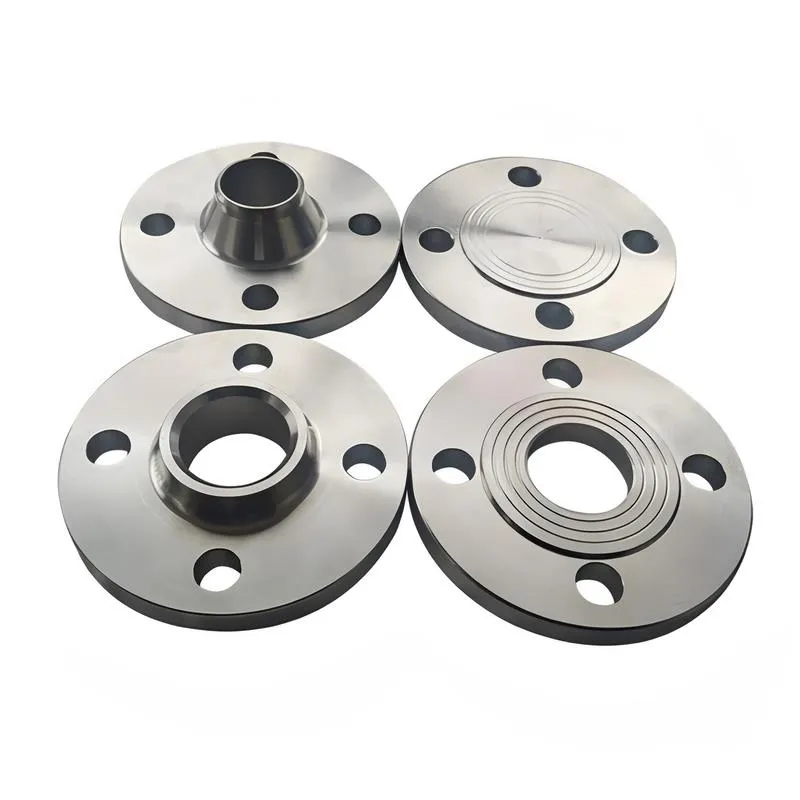
Plate Flat Welding Flange (PL), Necked Flat Welding Flange (SO), Necked Butt Welding Flange (WN), Integral Flange (IF), Socket Welding Flange (SW), Threaded Flange (Th), Butt Welding Ring Loose Flange (PJ/SE), Blind Flange (BL), Flat Welding Ring Loose Flange (PJ/PJ), and Lined Blind Flange (BL(s)).
2. **According to Petrochemical (SH) Industry Standards:** Flanges are classified as follows:
Threaded Flange (PL), Butt Welding Flange (WN), Flat Welding Flange (SO), Socket Welding Flange (SW), Loose Flange (LJ), and Blind Flange (no specific designation).
3. **According to Machinery (JB) Industry Standards:** Flanges are classified as follows:
Integral Flange, Butt Welding Flange, Plate Flat Welding Flange, Butt Welding Ring Plate Loose Flange, Flat Welding Ring Plate Loose Flange, Lap Joint Ring Plate Loose Flange, and Blind Flange.
4. **According to Connection Method/Type:** Flanges are classified as follows:
Plate Flat Welding Flange, Necked Flat Welding Flange, Necked Butt Welding Flange, Socket Welding Flange, Threaded Flange, Blind Flange, Necked Butt Welding Ring Loose Flange, Flat Welding Ring Loose Flange, Ring-Type Joint (RTJ) Flange and Blind Flange, Large-Diameter Plate Flange, Large-Diameter High-Neck Flange, Figure-8 Blind Plate, Butt Welding Ring Loose Flange, etc.
5. **According to the Component Being Connected:** Flanges can be classified into Vessel Flanges and Pipe Flanges.
6. **According to Structural Type:** Flanges include Integral Flanges, Threaded Flanges, Flat Welding Flanges, Butt Welding Flanges, Lap Joint (Loose/Swivel) Flanges, and Blind Flanges.
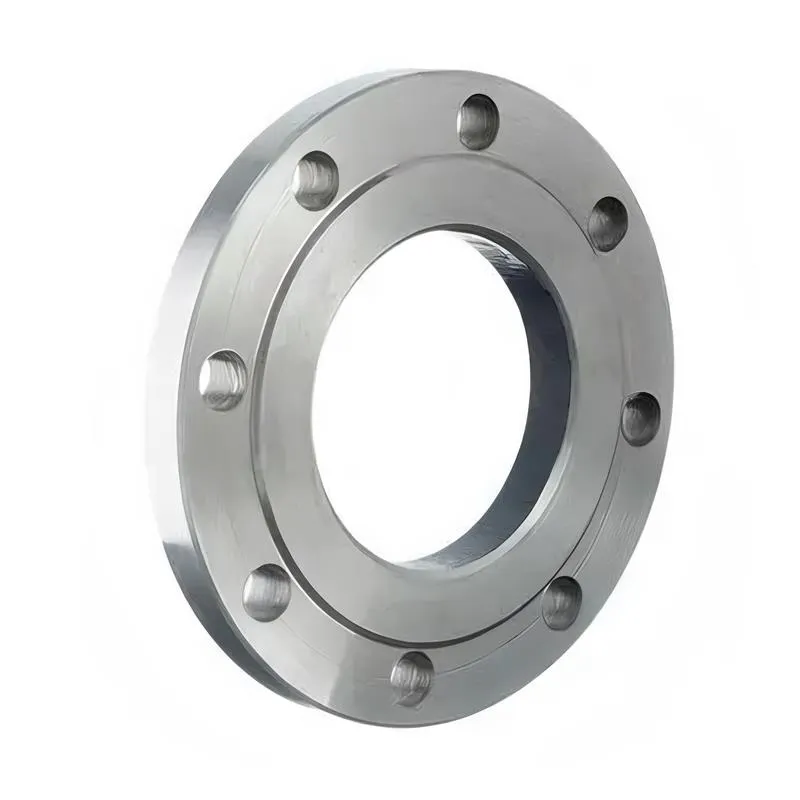
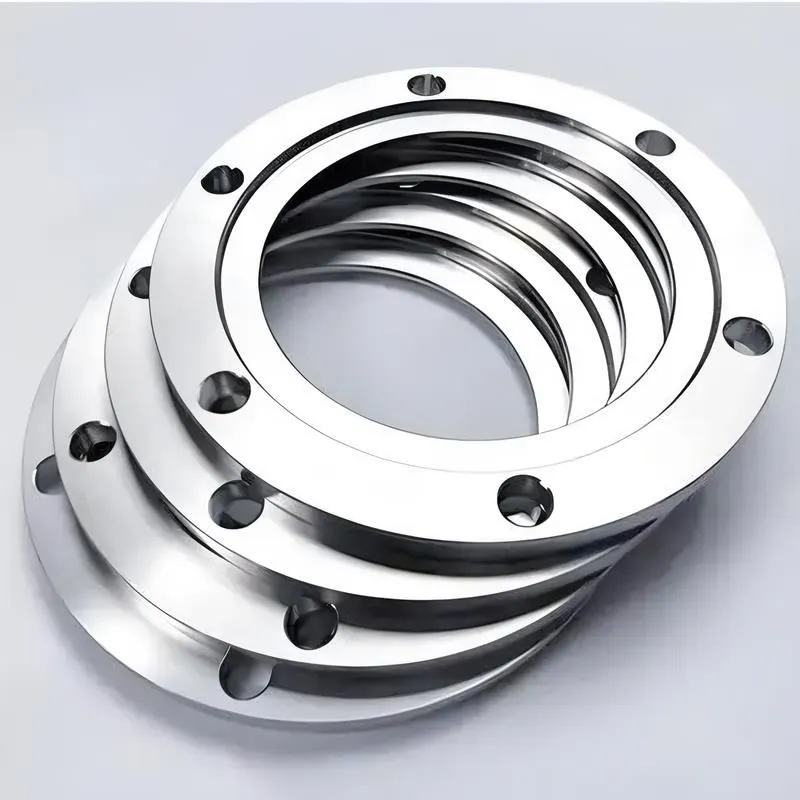
A flange—also referred to as a flange plate or rim—is a component used to connect shafts to one another, or, more commonly, to join the ends of pipes. Flanges are also utilized at the inlet and outlet ports of equipment to facilitate connections between two devices—for instance, the flange on a speed reducer. A "flange connection" or "flanged joint" refers to a detachable joint assembly comprising three interconnected elements—a flange, a gasket, and bolts—that together form a sealed structural unit. In the context of piping systems, a "pipe flange" specifically denotes a flange used for plumbing within the installation; when applied to equipment, it refers to the inlet or outlet flange of that specific device. Flanges feature a series of holes through which bolts are inserted to securely fasten the two flanges together, while a gasket placed between the flanges ensures a leak-proof seal. Flanges are broadly categorized into three types: threaded (screw-in) flanges, welded flanges, and clamp-type flanges. Flanges are invariably used in pairs; threaded flanges are suitable for low-pressure piping applications, whereas welded flanges are required for systems operating at pressures exceeding 4 kilograms per square centimeter. A sealing gasket is inserted between the two flange plates, which are then firmly secured using bolts. The thickness of a flange—as well as the specifications of the bolts used to fasten it—vary depending on the specific pressure rating required for the application. When connecting equipment such as water pumps or valves to piping systems, the corresponding connection points on these devices are often manufactured in the shape of a matching flange; this method of attachment is also referred to as a "flange connection." Generally, any connecting component that utilizes bolts to join and seal the perimeters of two flat surfaces—such as the joints in ventilation ducts—is termed a "flange"; such components may collectively be classified as "flange-type parts." However, since such a connection often constitutes merely a *portion* of a larger device—for instance, the interface between a flange and a water pump—it would be inappropriate to classify the entire water pump itself as a "flange-type part." Conversely, smaller components—such as valves—that feature such flanged interfaces may indeed be appropriately categorized as "flange-type parts."
-:-
For detailed product information, please contact sales.
-:
ASTM A36 Steel Flange, bar Product Information
-:-
For detailed product information, please contact sales.
-:
ASTM A36 Steel Flange, bar Synonyms
-:-
For detailed product information, please contact sales.
-:
ASTM A36 Steel, bar Product Information
-:-
For detailed product information, please contact sales.
-:
## **ASTM A36 Steel Bar - General Purpose Structural Carbon Steel**
### **1. Product Overview**
**ASTM A36** is a **versatile, general-purpose carbon structural steel** widely used across virtually all construction and manufacturing industries. As **bar products**, A36 steel represents one of the most commonly specified and readily available materials for structural applications, offering an excellent balance of **strength, ductility, weldability, and cost-effectiveness**. The "36" designation refers to its minimum yield strength of 36,000 psi (250 MPa), making it suitable for a vast range of applications from building frames and bridges to machinery components and general fabrication.
A36 steel bars are produced in a wide array of shapes and sizes, including rounds, squares, flats, angles, channels, beams, and other structural shapes. Their widespread availability, predictable performance, and ease of fabrication have established ASTM A36 as the **workhorse material** of the construction and manufacturing sectors worldwide.
### **2. Key International Standards & Specifications**
| Standard System | Equivalent Designation | Notes |
|-----------------|------------------------|-------|
| **ASTM/ASME** | **ASTM A36/A36M** | Primary specification for structural steel |
| **AISC** | **A36** | Recognized by American Institute of Steel Construction |
| **European (EN)** | **EN 10025-2: S235JR** | Most common equivalent (slightly different properties) |
| **Japanese (JIS)** | **JIS G3101 SS400** | Similar general structural steel |
| **Chinese** | **GB/T 700 Q235** | Closest Chinese equivalent |
| **Canadian** | **CSA G40.21 300W** | Canadian structural steel |
| **ISO** | **ISO 630-2: E235** | International structural steel standard |
| **AISI/SAE** | **Mild Steel (1010-1020 range)** | Similar composition but different specification focus |
**Note:** While these grades are functionally similar, they are not chemically or mechanically identical and should not be substituted without proper engineering evaluation.
### **3. Chemical Composition (% by Weight)**
ASTM A36 has relatively flexible chemical requirements that allow manufacturers to meet mechanical property specifications through various processing routes.
| Element | Composition Requirements | Role & Effect |
|---------|--------------------------|---------------|
| **Carbon (C)** | **0.26% maximum** (0.25% max for shapes over 426.7 mm) | Primary strengthening element; controlled for weldability |
| **Manganese (Mn)** | **0.80-1.20%** (may vary by product form) | Increases strength and hardenability; improves hot-working properties |
| **Phosphorus (P)** | **0.04% maximum** | Harmful impurity; kept low to prevent cold shortness (brittleness) |
| **Sulfur (S)** | **0.05% maximum** | Harmful impurity; controlled to minimize hot shortness during welding |
| **Silicon (Si)** | **0.15-0.40%** (0.40% max for shapes) | Deoxidizer during steelmaking; contributes to strength |
| **Copper (Cu)** | **0.20% minimum** (when specified for enhanced corrosion resistance) | Optional addition for atmospheric corrosion resistance |
| **Other Elements** | Residuals within typical limits | - |
**Key Metallurgical Notes:**
- **No specified minimum carbon content** - allows producers flexibility
- **Carbon Equivalent (CE):** Typically 0.35-0.45% (IIW formula: C + Mn/6)
- **Weldability:** Excellent due to low carbon content and CE
- **Hardenability:** Low; not intended for heat treatment applications
### **4. Mechanical & Physical Properties**
#### **4.1 Tensile Properties**
| Property | Minimum Requirement | Typical Range | Test Standard |
|----------|---------------------|---------------|---------------|
| **Yield Strength (0.2% offset)** | **36 ksi (250 MPa)** | 36-50 ksi (250-345 MPa) | ASTM A370 |
| **Tensile Strength** | **58-80 ksi (400-550 MPa)** | 60-75 ksi (415-515 MPa) | ASTM A370 |
| **Elongation (in 8" / 200mm gauge)** | **20%** (23% for bars < ¾") | 22-30% | ASTM A370 |
| **Reduction of Area** | Not specified | Typically 40-50% | ASTM A370 |
| **Yield-to-Tensile Ratio** | Not specified | 0.60-0.70 typical | - |
#### **4.2 Other Mechanical Properties**
| Property | Typical Value | Notes |
|----------|---------------|-------|
| **Brinell Hardness** | 120-180 HB | Varies with section size and processing |
| **Charpy Impact** | Not required by specification | May be specified for special applications |
| **Modulus of Elasticity** | 29,000 ksi (200 GPa) | Standard for carbon steels |
| **Shear Modulus** | 11,200 ksi (77 GPa) | - |
| **Poisson's Ratio** | 0.29 | - |
#### **4.3 Physical Properties**
| Property | Value | Conditions |
|----------|-------|------------|
| **Density** | 7.85 g/cm³ (0.284 lb/in³) | Room temperature |
| **Thermal Conductivity** | 50 W/m·K | 20°C (68°F) |
| **Specific Heat Capacity** | 480 J/kg·K | 20°C (68°F) |
| **Coefficient of Thermal Expansion** | 11.7 × 10⁻⁶/°C | 20-100°C (68-212°F) |
| **Electrical Resistivity** | 0.17 μΩ·m | 20°C (68°F) |
| **Melting Point** | 1425-1540°C (2600-2800°F) | - |
### **5. Product Forms & Sizes**
ASTM A36 is available in a comprehensive range of bar products:
#### **5.1 Common Bar Types**
- **Round Bars:** ¼" to 12" diameter (6-300 mm)
- **Square Bars:** ¼" to 4" (6-100 mm)
- **Flat Bars:** Various thicknesses and widths
- **Angle Bars:** Equal and unequal legs
- **Channel Bars:** Standard and miscellaneous channels
- **Beam Bars:** Wide flange (W), American standard (S), miscellaneous (M)
- **Tee Bars:** Structural tees
#### **5.2 Standard Lengths**
- **Mill Lengths:** 20-40 feet (6-12 meters)
- **Cut Lengths:** Custom lengths available
- **Random Lengths:** As produced by the mill
### **6. Manufacturing & Processing**
#### **6.1 Production Methods**
- **Hot Rolling:** Most common production method
- **Cold Finishing:** For improved surface finish and dimensional accuracy
- **As-Rolled Condition:** Standard delivery condition
- **Normalized:** Available when specified for more uniform properties
#### **6.2 Surface Conditions**
- **Hot Rolled:** Mill scale surface
- **Pickled & Oiled:** Scale removed, oiled for corrosion protection
- **Blasted:** Abrasive cleaned surface
- **Cold Drawn:** Smooth finish with tighter tolerances
### **7. Fabrication Characteristics**
#### **7.1 Weldability**
**Weldability Rating:** **Excellent**
| Parameter | Characteristics |
|-----------|----------------|
| **Carbon Equivalent (CE)** | 0.35-0.45% (very favorable) |
| **Preheat Requirements** | Generally not required except for very thick sections or low ambient temperatures |
| **Recommended Processes** | SMAW (E6013, E7018), GMAW, FCAW, SAW, GTAW |
| **Post-Weld Considerations** | Generally none required; stress relief available for complex structures |
| **Special Notes** | Most common structural welding steel; extensive procedure data available |
#### **7.2 Forming & Machining**
| Operation | Characteristics |
|-----------|----------------|
| **Cold Forming** | **Excellent** - can be bent, punched, sheared with standard equipment |
| **Hot Forming** | Performed at 1650-1900°F (900-1040°C) |
| **Machinability** | **Good** - 70% of free-cutting steel (1212) |
| **Cutting Methods** | All standard methods: sawing, shearing, torch cutting, plasma, laser |
### **8. Product Applications**
#### **8.1 Primary Industries & Applications**
| Industry | Specific Applications | Why A36 is Suitable |
|----------|----------------------|---------------------|
| **Construction** | - Building frames and columns
- Bridge components
- Base plates and anchor bolts
- Reinforcement for concrete | Cost-effective, readily available, excellent weldability |
| **Manufacturing** | - Machine frames and bases
- General fabrication
- Brackets and supports
- Tooling plates | Easy to work with, consistent properties |
| **Transportation** | - Truck and trailer frames
- Railway components
- Material handling equipment | Good strength-to-weight, fatigue resistance |
| **Infrastructure** | - Sign supports
- Guard rails
- Light poles
- Pipeline supports | Durable, maintenance-friendly |
| **Agriculture** | - Equipment frames
- Structural supports
- Storage structures | Corrosion manageable, economical |
#### **8.2 Common Specific Uses**
- **Structural Framing:** Beams, columns, and bracing
- **Shafting:** Low-speed, low-stress applications
- **Plates:** Base plates, gusset plates, wear plates
- **Fasteners:** Bolts, nuts (when properly specified)
- **General Fabrication:** Any application requiring weldable, formable steel
### **9. Corrosion Protection & Finishing**
#### **9.1 Corrosion Characteristics**
- **Atmospheric Corrosion:** Standard carbon steel corrosion rates apply
- **Protection Required:** All exposed applications require protection
- **Corrosion Rate:** 0.001-0.005 inches/year in typical atmospheres
#### **9.2 Common Protection Methods**
- **Painting:** Most common protection method
- **Galvanizing:** Hot-dip or electroplated zinc coating
- **Powder Coating:** For architectural applications
- **Primer Only:** For indoor or protected applications
### **10. Quality Assurance & Testing**
#### **10.1 Standard Testing**
1. **Chemical Analysis:** Heat analysis typically provided
2. **Tensile Testing:** One test per lot (typically 50 tons)
3. **Bend Test:** When specified for ductility verification
#### **10.2 Certifications & Documentation**
- **Mill Test Certificate:** Standard with shipment
- **Traceability:** Heat number tracking available
- **Third-Party Inspection:** Available when specified
### **11. Storage & Handling**
#### **11.1 Best Practices**
- **Storage:** Dry, level storage to prevent bending
- **Handling:** Use appropriate lifting equipment
- **Identification:** Maintain heat number identification when required
- **Segregation:** Keep separated by size and grade if mixed storage
### **12. Cost Considerations**
#### **12.1 Pricing Factors**
- **Quantity:** Significant discounts for large orders
- **Size:** Larger sections often have lower $/lb cost
- **Processing:** Additional costs for cutting, drilling, finishing
- **Market Conditions:** Subject to global steel market fluctuations
#### **12.2 Economic Advantages**
- **Lowest Cost** among structural steels
- **Widely Available** reducing lead times
- **Minimal Waste** due to standard sizes
- **Established Supply Chain** reducing procurement complexity
### **13. Limitations & Special Considerations**
#### **13.1 Application Limitations**
- **Not suitable** for high-stress or fatigue-critical applications without proper design
- **Limited corrosion resistance** requires protective coatings
- **Not heat-treatable** for higher strength applications
- **Lower strength** than high-strength low-alloy (HSLA) steels
#### **13.2 Design Considerations**
- **Deflection:** Often governs design rather than strength
- **Connection Design:** Bolted and welded connections well-established
- **Fatigue:** Consider for cyclic loading applications
- **Fire Resistance:** Loses strength at elevated temperatures
### **14. Comparative Analysis**
#### **14.1 vs. Other Structural Steels**
| Steel Grade | Min Yield Strength | Typical Cost Premium | Primary Advantages over A36 |
|-------------|-------------------|---------------------|----------------------------|
| **A36** | 36 ksi | Baseline | Cost, availability, weldability |
| **A572 Gr 50** | 50 ksi | 10-20% | Higher strength for weight savings |
| **A992** | 50 ksi | 15-25% | Better properties for structural shapes |
| **A500 Gr B** | 46 ksi | 5-15% | Structural tubing applications |
| **A709 Gr 50** | 50 ksi | 20-30% | Bridge-specific properties |
#### **14.2 Material Selection Guidelines**
- **Choose A36 when:** Cost is primary concern, loads are moderate, fabrication is extensive
- **Consider alternatives when:** Weight savings are critical, higher strength needed, special properties required
### **15. Sustainability & Recycling**
#### **15.1 Environmental Aspects**
- **Recyclability:** 100% recyclable without degradation
- **Recycled Content:** Typically contains significant recycled material
- **Energy Intensity:** Moderate compared to other structural materials
- **Lifecycle:** Long service life with proper maintenance
#### **15.2 Green Building Credits**
- **LEED:** Contributes to recycled content credits
- **Sustainable Design:** Enables adaptive reuse and deconstruction
- **Carbon Footprint:** Lower than concrete or aluminum for many applications
### **16. Industry Standards & Codes**
#### **16.1 Governing Codes**
- **AISC:** Steel Construction Manual
- **AISI:** North American Specification
- **AWS:** D1.1 Structural Welding Code
- **ASCE:** Minimum Design Loads
- **IBC:** International Building Code
#### **16.2 Design Specifications**
- Allowable Stress Design (ASD)
- Load and Resistance Factor Design (LRFD)
- Both methods widely supported
### **17. Future Trends & Developments**
#### **17.1 Market Trends**
- **Digitalization:** BIM integration and digital twins
- **Automation:** Robotic fabrication increasing
- **Sustainability:** Emphasis on recycled content and lifecycle analysis
- **Globalization:** Continued standardization across markets
#### **17.2 Technical Developments**
- **Improved Processing:** Better consistency and quality
- **Advanced Joining:** Friction stir welding and adhesive bonding
- **Coatings:** Longer-lasting corrosion protection
- **Testing:** Advanced NDT methods
### **18. Conclusion**
**ASTM A36 steel bar** represents the **foundation of structural steel construction and manufacturing**, offering an **unbeatable combination of availability, workability, and economy**. Its enduring popularity stems from several key factors:
**Core Strengths:**
1. **Economic Efficiency:** Lowest cost structural steel option
2. **Excellent Fabricability:** Easy to weld, form, and machine
3. **Universal Availability:** Stocked by suppliers worldwide
4. **Proven Performance:** Centuries of successful applications
5. **Code Recognition:** Accepted by all major building codes
**Optimal Application Areas:**
- General structural framing and supports
- Manufacturing and machinery components
- Construction and infrastructure projects
- Prototyping and general fabrication
- Educational and training applications
**Selection Considerations:**
- Evaluate strength requirements vs. cost savings
- Consider fabrication complexity and methods
- Assess corrosion environment and protection needs
- Review available alternatives for specific applications
While newer, higher-strength steels offer advantages for specific applications, **A36 remains the default choice** for the majority of structural applications where its balanced properties provide the best overall value. Its simplicity, predictability, and widespread familiarity make it the **preferred material** for engineers, fabricators, and contractors across countless industries.
For most structural applications where extreme performance is not required, **ASTM A36 provides a reliable, cost-effective solution** that has stood the test of time. Its continued dominance in the construction and manufacturing sectors is a testament to its **fundamental utility and economic advantage** in a world of constantly evolving materials technology.
-:-
For detailed product information, please contact sales.
-:
ASTM A36 Steel, bar Specification
Dimensions
Size:
Diameter 20-1000 mm Length <5988 mm
Size:We can customized as required
Standard:
Per your request or drawing
We can customized as required
Properties(Theoretical)
Chemical Composition
-:-
For detailed product information, please contact sales.
-:
ASTM A36 Steel, bar Properties
-:-
For detailed product information, please contact sales.
-:
Applications of ASTM A36 Steel Flange, bar
-:-
For detailed product information, please contact sales.
-:
Chemical Identifiers ASTM A36 Steel Flange, bar
-:-
For detailed product information, please contact sales.
-:
Packing of ASTM A36 Steel Flange, bar
-:-
For detailed product information, please contact sales.
-:
Standard Packing:
-:-
For detailed product information, please contact sales.
-:
Typical bulk packaging includes palletized plastic 5 gallon/25 kg. pails, fiber and Steel Flange drums to 1 ton super sacks in full container (FCL) or truck load (T/L) quantities. Research and sample quantities and hygroscopic, oxidizing or other air sensitive materials may be packaged under argon or vacuum. Solutions are packaged in polypropylene, plastic or glass jars up to palletized 2459 gallon liquid totes Special package is available on request. E FORUs’ is carefully handled to minimize damage during storage and transportation and to preserve the quality of our products in their original condition