1,We Manufacturing processes are primarily classified into four types:
1:Forging,
2:Casting,
3:Cutting,
4:Rolling.
2,We can manufacture in accordance with these standards.
Standards:
GB Series (Chinese Standards), JB Series (Machinery Standards), HG Series (Chemical Industry Standards), ASME B16.5 (American Standards), BS4504 (British Standards), DIN (German Standards), and JIS (Japanese Standards).
Internationally, there are two primary systems of pipe flange standards: the European system, represented by the German DIN standards (including those of the former Soviet Union), and the American system, represented by the US ANSI pipe flange standards. Other common standards include: the Chinese Ministry of Machinery Industry standards (JB series), the Ministry of Chemical Industry standards (HG series), the Chinese National Standard *GB/T 9112–9124-2010 Steel Pipe Flanges*, as well as US standards (ASME B16.5), British standards (BS4504), German standards (DIN), Japanese standards (JIS), and marine standards (CBM), among others.
The nominal pressure ratings for the PN series are designated by "PN" and comprise the following nine levels: PN2.5, PN6, PN10, PN16, PN25, PN40, PN63, PN100, and PN160.
The nominal pressure ratings for the Class series are designated by "Class" and comprise the following six levels: Class150, Class300, Class600, Class900, Class1500, and Class2500.
Flange Classification
1. **According to Chemical Industry Standards:** Flanges are classified as follows:
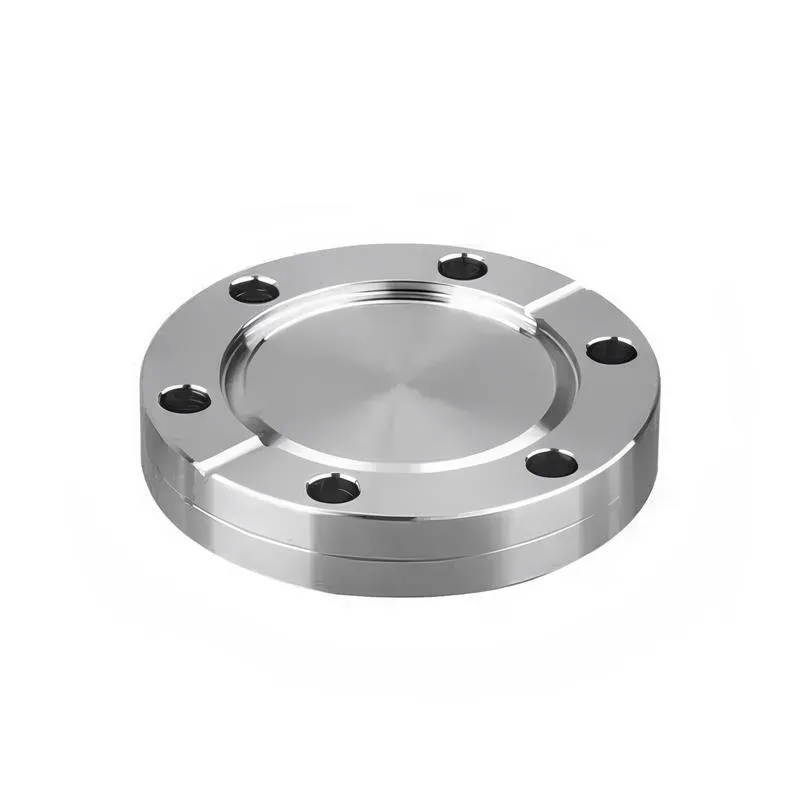
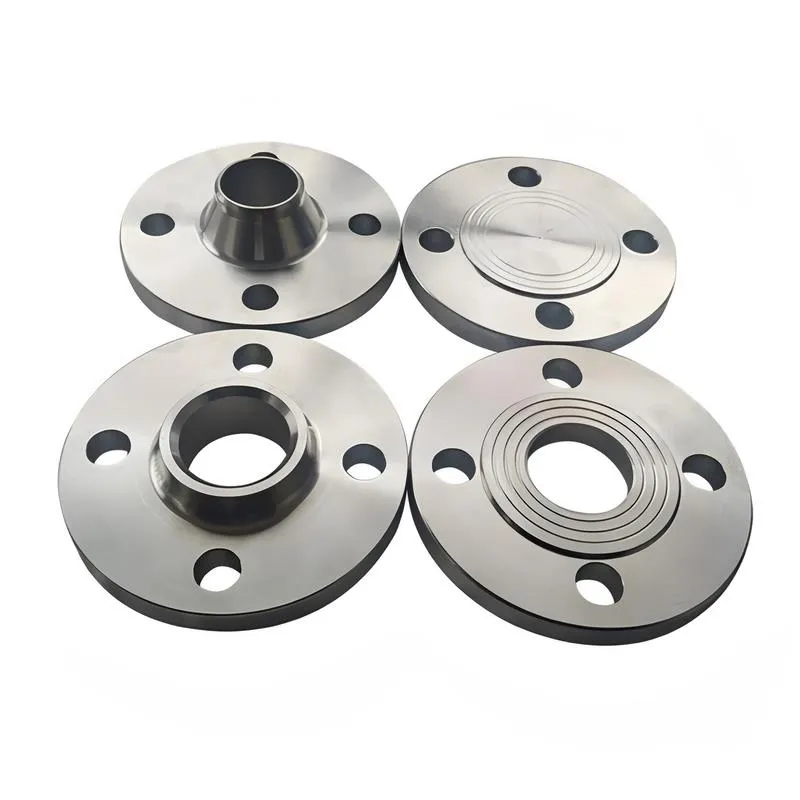
Plate Flat Welding Flange (PL), Necked Flat Welding Flange (SO), Necked Butt Welding Flange (WN), Integral Flange (IF), Socket Welding Flange (SW), Threaded Flange (Th), Butt Welding Ring Loose Flange (PJ/SE), Blind Flange (BL), Flat Welding Ring Loose Flange (PJ/PJ), and Lined Blind Flange (BL(s)).
2. **According to Petrochemical (SH) Industry Standards:** Flanges are classified as follows:
Threaded Flange (PL), Butt Welding Flange (WN), Flat Welding Flange (SO), Socket Welding Flange (SW), Loose Flange (LJ), and Blind Flange (no specific designation).
3. **According to Machinery (JB) Industry Standards:** Flanges are classified as follows:
Integral Flange, Butt Welding Flange, Plate Flat Welding Flange, Butt Welding Ring Plate Loose Flange, Flat Welding Ring Plate Loose Flange, Lap Joint Ring Plate Loose Flange, and Blind Flange.
4. **According to Connection Method/Type:** Flanges are classified as follows:
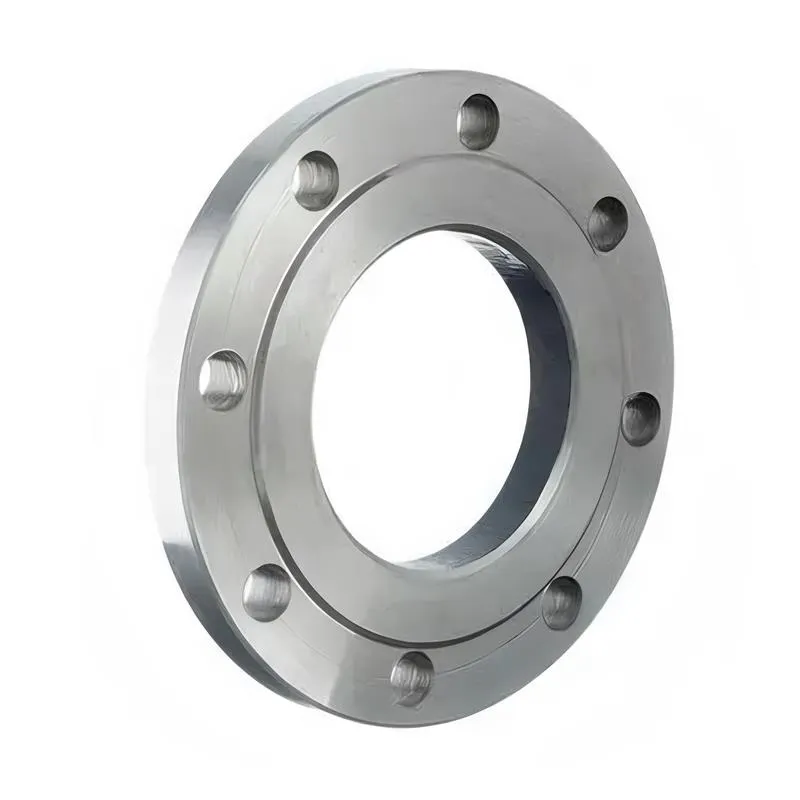
Plate Flat Welding Flange, Necked Flat Welding Flange, Necked Butt Welding Flange, Socket Welding Flange, Threaded Flange, Blind Flange, Necked Butt Welding Ring Loose Flange, Flat Welding Ring Loose Flange, Ring-Type Joint (RTJ) Flange and Blind Flange, Large-Diameter Plate Flange, Large-Diameter High-Neck Flange, Figure-8 Blind Plate, Butt Welding Ring Loose Flange, etc.
5. **According to the Component Being Connected:** Flanges can be classified into Vessel Flanges and Pipe Flanges.
6. **According to Structural Type:** Flanges include Integral Flanges, Threaded Flanges, Flat Welding Flanges, Butt Welding Flanges, Lap Joint (Loose/Swivel) Flanges, and Blind Flanges.
A flange—also referred to as a flange plate or rim—is a component used to connect shafts to one another, or, more commonly, to join the ends of pipes. Flanges are also utilized at the inlet and outlet ports of equipment to facilitate connections between two devices—for instance, the flange on a speed reducer. A "flange connection" or "flanged joint" refers to a detachable joint assembly comprising three interconnected elements—a flange, a gasket, and bolts—that together form a sealed structural unit. In the context of piping systems, a "pipe flange" specifically denotes a flange used for plumbing within the installation; when applied to equipment, it refers to the inlet or outlet flange of that specific device. Flanges feature a series of holes through which bolts are inserted to securely fasten the two flanges together, while a gasket placed between the flanges ensures a leak-proof seal. Flanges are broadly categorized into three types: threaded (screw-in) flanges, welded flanges, and clamp-type flanges. Flanges are invariably used in pairs; threaded flanges are suitable for low-pressure piping applications, whereas welded flanges are required for systems operating at pressures exceeding 4 kilograms per square centimeter. A sealing gasket is inserted between the two flange plates, which are then firmly secured using bolts. The thickness of a flange—as well as the specifications of the bolts used to fasten it—vary depending on the specific pressure rating required for the application. When connecting equipment such as water pumps or valves to piping systems, the corresponding connection points on these devices are often manufactured in the shape of a matching flange; this method of attachment is also referred to as a "flange connection." Generally, any connecting component that utilizes bolts to join and seal the perimeters of two flat surfaces—such as the joints in ventilation ducts—is termed a "flange"; such components may collectively be classified as "flange-type parts." However, since such a connection often constitutes merely a *portion* of a larger device—for instance, the interface between a flange and a water pump—it would be inappropriate to classify the entire water pump itself as a "flange-type part." Conversely, smaller components—such as valves—that feature such flanged interfaces may indeed be appropriately categorized as "flange-type parts."
-:-
For detailed product information, please contact sales.
-:
AISI E4340 Steel Flange, annealed 810°C (1490°F) Product Information
-:-
For detailed product information, please contact sales.
-:
AISI E4340 Steel Flange, annealed 810°C (1490°F) Synonyms
-:-
For detailed product information, please contact sales.
-:
AISI E4340 Steel, annealed 810°C (1490°F) Product Information
-:-
For detailed product information, please contact sales.
-:
## **Technical Specification: AISI 4340 (UNS G43400) Steel - Subcritical Annealed at 810°C (1490°F)**
### **1. Product Overview**
This specification defines **AISI 4340 alloy steel** supplied in a **subcritical annealed condition**, specifically processed by heating to **810°C (1490°F)** followed by controlled slow cooling. Unlike full annealing (performed above the A₃ critical temperature), this treatment is conducted **below the lower critical temperature (Ac₁ ~ 730°C)**. The process is designed to **soften previously hardened or cold-worked material, relieve internal stresses, and produce a uniform microstructure of spheroidized carbides in a ferritic matrix**. This condition provides **optimal machinability and dimensional stability**, serving as an ideal preparatory state for complex machining operations prior to final heat treatment.
**Key Characteristics:**
* **Superior Machinability:** The soft, spheroidized microstructure minimizes tool wear, allows high material removal rates, and produces excellent surface finishes.
* **Effective Stress Relief:** Eliminates residual stresses from prior forging or machining, significantly reducing the risk of distortion during subsequent heat treatment.
* **Microstructural Uniformity:** Produces a fine, uniform distribution of carbides, ensuring consistent response during final hardening.
* **Processing Flexibility:** Serves as a stable, soft starting condition for components that will later be quenched and tempered, nitrided, or carburized.
---
### **2. Standard Chemical Composition (Weight %)**
Composition conforms to standard AISI 4340 specifications. The subcritical anneal softens the material without altering its chemistry.
| Element | Content (%) | Role in Subcritical Annealing |
| :--- | :--- | :--- |
| **Iron (Fe)** | Balance | Base Element |
| **Carbon (C)** | 0.38 - 0.43 | Forms spheroidized carbides that determine final hardness and machinability. |
| **Manganese (Mn)**| 0.60 - 0.80 | Stabilizes carbides; influences spheroidization kinetics. |
| **Silicon (Si)** | 0.15 - 0.35 | Deoxidizer; provides solid solution strengthening. |
| **Nickel (Ni)** | 1.65 - 2.00 | Enhances toughness; does not form carbides but affects overall hardenability. |
| **Chromium (Cr)** | 0.70 - 0.90 | Forms stable carbides; promotes fine spheroidization. |
| **Molybdenum (Mo)**| 0.20 - 0.30 | Forms very stable carbides; prevents excessive grain growth. |
| **Sulfur (S)** | ≤ 0.040 | Residual element (can improve machinability if controlled). |
| **Phosphorus (P)** | ≤ 0.035 | Residual element. |
---
### **3. Typical Mechanical & Physical Properties**
*Properties are for material subcritically annealed at 810°C with appropriate soak time and controlled furnace cooling.*
| Property | Typical Value / Range | Test Standard / Notes |
| :--- | :--- | :--- |
| **Hardness** | **187 - 217 HB** (Brinell) / **85 - 95 HRB** | ASTM E10/E18 |
| **Tensile Strength** | **620 - 720 MPa** (90 - 105 ksi) | ASTM E8 |
| **Yield Strength (0.2% Offset)** | **380 - 480 MPa** (55 - 70 ksi) | ASTM E8 |
| **Elongation (in 50mm)** | **22% - 28%** | ASTM E8 |
| **Reduction of Area** | **50% - 60%** | ASTM E8 |
| **Machinability Rating** | **~60%** of 1212 steel | Excellent chip formation, low cutting forces. |
| **Microstructure** | **Ferrite matrix with Spheroidized Carbides** | Fine, globular carbides uniformly dispersed. |
| **Grain Size** | ASTM 5-7 | Refined, uniform structure. |
| **Density** | 7.85 g/cm³ (0.284 lb/in³) | - |
---
### **4. Heat Treatment Parameters**
The **810°C Subcritical Anneal** is a precisely controlled process:
* **Temperature:** **810°C ± 10°C (1490°F ± 20°F)**
* **Soak Time:** 2-4 hours per inch of thickness (depending on prior condition)
* **Cooling Rate:** Slow furnace cooling (typically 10-30°C/hour) to below 500°C, then air cool
* **Metallurgical Principle:** Heating below Ac₁ allows existing carbides to coalesce into spherical particles (spheroidization) while relieving internal stresses, without forming austenite.
**Subsequent Processing:** After machining in this soft condition, components typically undergo:
- **Through-hardening:** Re-austenitize at 845-870°C, quench, and temper
- **Case hardening:** Directly to carburizing or nitriding cycles
---
### **5. Target Applications**
This annealed condition is specified for precision components requiring extensive machining before final hardening.
* **Complex Aerospace Components:** Bulkheads, landing gear parts, engine mounts requiring intricate machining
* **Precision Gears and Shafts:** High-performance automotive and industrial gear blanks
* **Tooling and Dies:** Plastic injection molds, die casting cores, forging dies
* **Oil & Gas Equipment:** Complex valve bodies, downhole tool segments
* **General High-Strength Components:** Any part requiring significant metal removal before heat treatment
---
### **6. International Standards & Procurement**
| Standard | Designation | Status |
| :--- | :--- | :--- |
| **AISI/SAE** | **4340** (UNS G43400) | Primary reference |
| **ASTM** | A29, A331 | Can be ordered as "Annealed" |
| **AMS** | AMS 6414 | May specify annealing requirements |
| **ISO** | ISO 683-18 | Type **1.6562** |
| **EN** | EN 10083-3 | **34CrNiMo6** (1.6582) - "+A" condition |
| **JIS** | JIS G4103 | SNCM 439 |
| **GB** | GB/T 3077 | 40CrNiMoA |
**Procurement Specification:**
For guaranteed quality, specify:
1. **Material:** AISI 4340 per applicable standard
2. **Condition:** "Subcritically annealed at 810°C to maximum 217 HB"
3. **Microstructure:** "Spheroidized carbide structure required"
4. **Certification:** Mill test report with chemistry and hardness data
**Note:** This is often called a **"process anneal"** or **"spheroidize anneal"** and provides better machinability and subsequent hardening response than simple stress relief.
-:-
For detailed product information, please contact sales.
-:
AISI E4340 Steel, annealed 810°C (1490°F) Specification
Dimensions
Size:
Diameter 20-1000 mm Length <6267 mm
Size:We can customized as required
Standard:
Per your request or drawing
We can customized as required
Properties(Theoretical)
Chemical Composition
-:-
For detailed product information, please contact sales.
-:
AISI E4340 Steel, annealed 810°C (1490°F) Properties
-:-
For detailed product information, please contact sales.
-:
Applications of AISI E4340 Steel Flange, annealed 810°C (1490°F)
-:-
For detailed product information, please contact sales.
-:
Chemical Identifiers AISI E4340 Steel Flange, annealed 810°C (1490°F)
-:-
For detailed product information, please contact sales.
-:
Packing of AISI E4340 Steel Flange, annealed 810°C (1490°F)
-:-
For detailed product information, please contact sales.
-:
Standard Packing:
-:-
For detailed product information, please contact sales.
-:
Typical bulk packaging includes palletized plastic 5 gallon/25 kg. pails, fiber and Steel Flange drums to 1 ton super sacks in full container (FCL) or truck load (T/L) quantities. Research and sample quantities and hygroscopic, oxidizing or other air sensitive materials may be packaged under argon or vacuum. Solutions are packaged in polypropylene, plastic or glass jars up to palletized 2738 gallon liquid totes Special package is available on request. E FORUs’ is carefully handled to minimize damage during storage and transportation and to preserve the quality of our products in their original condition