1,We Manufacturing processes are primarily classified into four types:
1:Forging,
2:Casting,
3:Cutting,
4:Rolling.
2,We can manufacture in accordance with these standards.
Standards:
GB Series (Chinese Standards), JB Series (Machinery Standards), HG Series (Chemical Industry Standards), ASME B16.5 (American Standards), BS4504 (British Standards), DIN (German Standards), and JIS (Japanese Standards).
Internationally, there are two primary systems of pipe flange standards: the European system, represented by the German DIN standards (including those of the former Soviet Union), and the American system, represented by the US ANSI pipe flange standards. Other common standards include: the Chinese Ministry of Machinery Industry standards (JB series), the Ministry of Chemical Industry standards (HG series), the Chinese National Standard *GB/T 9112–9124-2010 Steel Pipe Flanges*, as well as US standards (ASME B16.5), British standards (BS4504), German standards (DIN), Japanese standards (JIS), and marine standards (CBM), among others.
The nominal pressure ratings for the PN series are designated by "PN" and comprise the following nine levels: PN2.5, PN6, PN10, PN16, PN25, PN40, PN63, PN100, and PN160.
The nominal pressure ratings for the Class series are designated by "Class" and comprise the following six levels: Class150, Class300, Class600, Class900, Class1500, and Class2500.
Flange Classification
1. **According to Chemical Industry Standards:** Flanges are classified as follows:
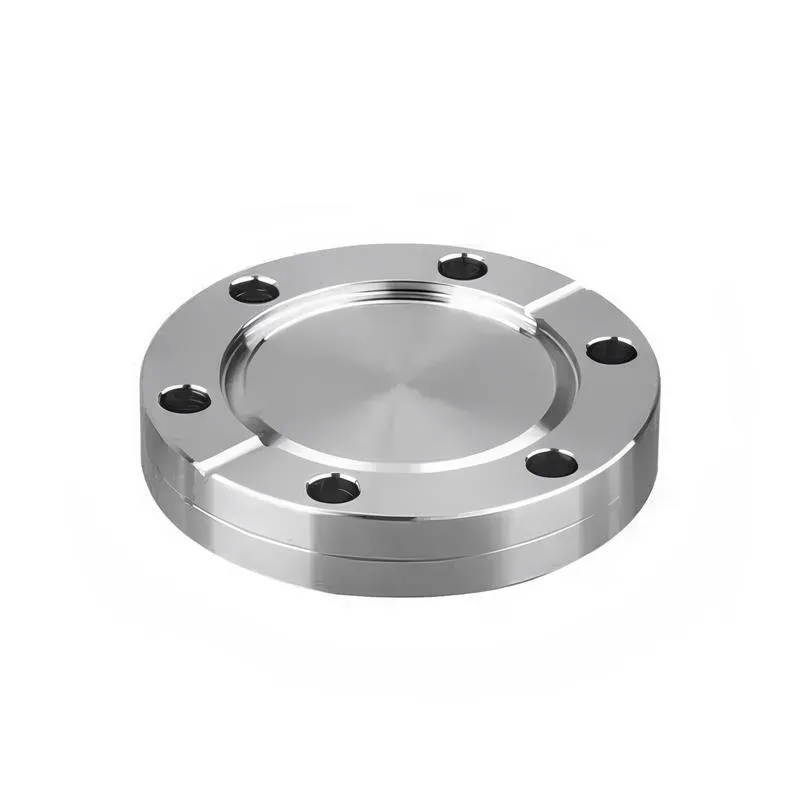
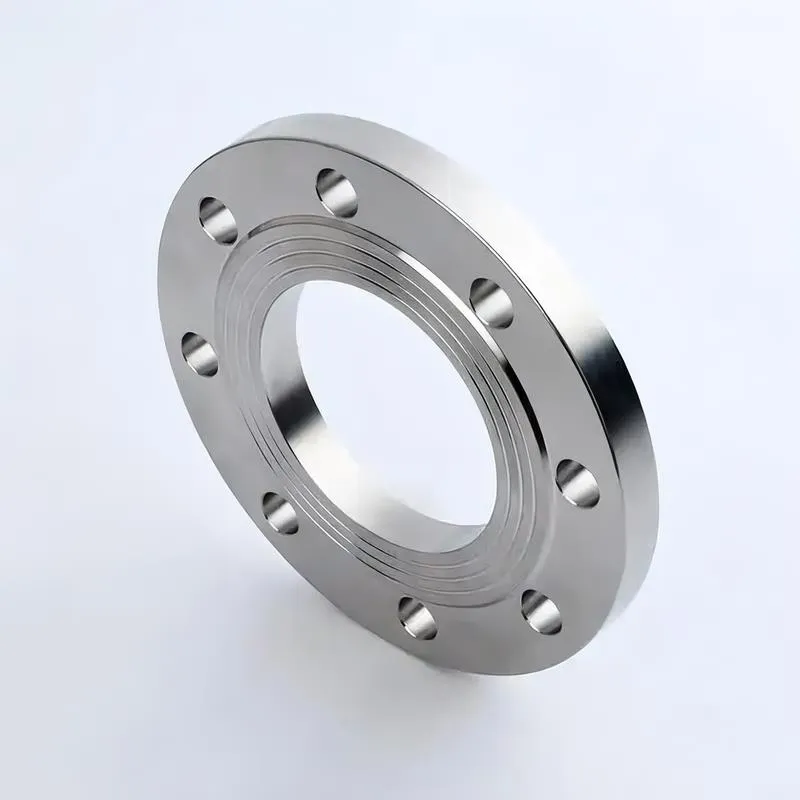
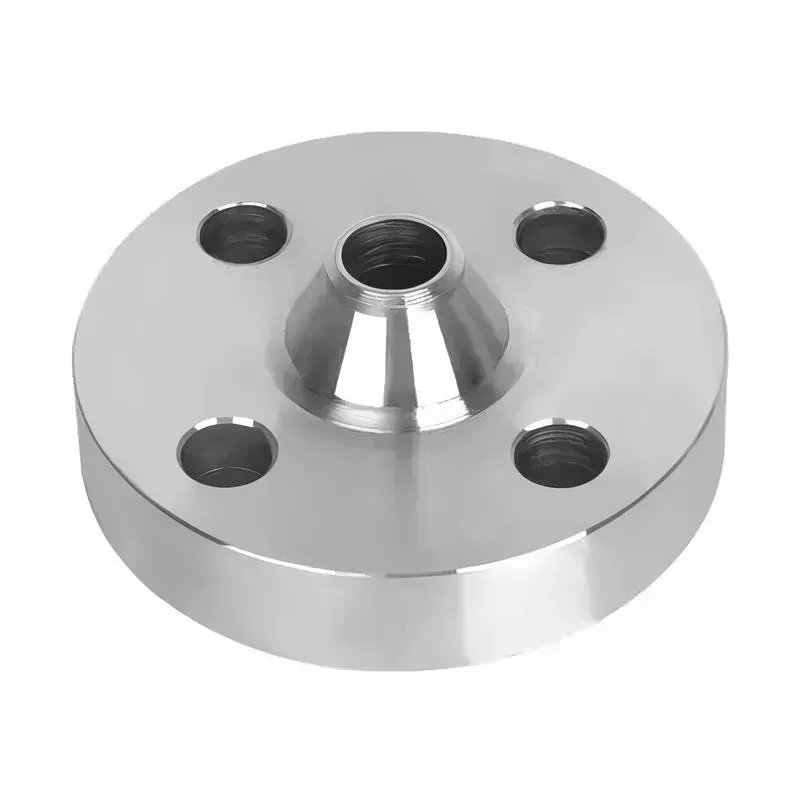
Plate Flat Welding Flange (PL), Necked Flat Welding Flange (SO), Necked Butt Welding Flange (WN), Integral Flange (IF), Socket Welding Flange (SW), Threaded Flange (Th), Butt Welding Ring Loose Flange (PJ/SE), Blind Flange (BL), Flat Welding Ring Loose Flange (PJ/PJ), and Lined Blind Flange (BL(s)).
2. **According to Petrochemical (SH) Industry Standards:** Flanges are classified as follows:
Threaded Flange (PL), Butt Welding Flange (WN), Flat Welding Flange (SO), Socket Welding Flange (SW), Loose Flange (LJ), and Blind Flange (no specific designation).
3. **According to Machinery (JB) Industry Standards:** Flanges are classified as follows:
Integral Flange, Butt Welding Flange, Plate Flat Welding Flange, Butt Welding Ring Plate Loose Flange, Flat Welding Ring Plate Loose Flange, Lap Joint Ring Plate Loose Flange, and Blind Flange.
4. **According to Connection Method/Type:** Flanges are classified as follows:
Plate Flat Welding Flange, Necked Flat Welding Flange, Necked Butt Welding Flange, Socket Welding Flange, Threaded Flange, Blind Flange, Necked Butt Welding Ring Loose Flange, Flat Welding Ring Loose Flange, Ring-Type Joint (RTJ) Flange and Blind Flange, Large-Diameter Plate Flange, Large-Diameter High-Neck Flange, Figure-8 Blind Plate, Butt Welding Ring Loose Flange, etc.
5. **According to the Component Being Connected:** Flanges can be classified into Vessel Flanges and Pipe Flanges.
6. **According to Structural Type:** Flanges include Integral Flanges, Threaded Flanges, Flat Welding Flanges, Butt Welding Flanges, Lap Joint (Loose/Swivel) Flanges, and Blind Flanges.
A flange—also referred to as a flange plate or rim—is a component used to connect shafts to one another, or, more commonly, to join the ends of pipes. Flanges are also utilized at the inlet and outlet ports of equipment to facilitate connections between two devices—for instance, the flange on a speed reducer. A "flange connection" or "flanged joint" refers to a detachable joint assembly comprising three interconnected elements—a flange, a gasket, and bolts—that together form a sealed structural unit. In the context of piping systems, a "pipe flange" specifically denotes a flange used for plumbing within the installation; when applied to equipment, it refers to the inlet or outlet flange of that specific device. Flanges feature a series of holes through which bolts are inserted to securely fasten the two flanges together, while a gasket placed between the flanges ensures a leak-proof seal. Flanges are broadly categorized into three types: threaded (screw-in) flanges, welded flanges, and clamp-type flanges. Flanges are invariably used in pairs; threaded flanges are suitable for low-pressure piping applications, whereas welded flanges are required for systems operating at pressures exceeding 4 kilograms per square centimeter. A sealing gasket is inserted between the two flange plates, which are then firmly secured using bolts. The thickness of a flange—as well as the specifications of the bolts used to fasten it—vary depending on the specific pressure rating required for the application. When connecting equipment such as water pumps or valves to piping systems, the corresponding connection points on these devices are often manufactured in the shape of a matching flange; this method of attachment is also referred to as a "flange connection." Generally, any connecting component that utilizes bolts to join and seal the perimeters of two flat surfaces—such as the joints in ventilation ducts—is termed a "flange"; such components may collectively be classified as "flange-type parts." However, since such a connection often constitutes merely a *portion* of a larger device—for instance, the interface between a flange and a water pump—it would be inappropriate to classify the entire water pump itself as a "flange-type part." Conversely, smaller components—such as valves—that feature such flanged interfaces may indeed be appropriately categorized as "flange-type parts."
-:-
For detailed product information, please contact sales.
-:
BS 970 080M40 Carbon Steel Flange Product Information
-:-
For detailed product information, please contact sales.
-:
BS 970 080M40 Carbon Steel Flange Synonyms
-:-
For detailed product information, please contact sales.
-:
BS 970 080M40 Carbon Steel Product Information
-:-
For detailed product information, please contact sales.
-:
# **Product Datasheet: BS 970 080M40 Medium Carbon Steel**
## **1. Product Overview**
**BS 970 080M40** is a standard **medium carbon manganese steel** widely used in general engineering applications. The designation follows the British Standard (BS) system: "080" indicates approximately 0.80% manganese, "M" signifies it is supplied to specified mechanical properties (as opposed to chemical composition alone), and "40" denotes a carbon content of approximately 0.40%. This steel offers a favorable balance of strength, toughness, wear resistance, and hardenability, making it one of the most versatile and commonly used medium-carbon engineering steels in industries following British standards. It is typically supplied in the hot-rolled, normalized, or annealed condition for subsequent machining and heat treatment.
## **2. International Standards & Designations**
| System/Country | Standard & Designation | Equivalent/Similar Grades |
| :--- | :--- | :--- |
| **United Kingdom** | **BS 970:1996 Part 3** (Wrought Steels) | **080M40** (Formerly En8) |
| **United Kingdom** | BS 970-1:1996 | En8 (Obsolete designation, still widely recognized) |
| **European Union** | **EN 10083-2:2006** | **C40E / 1.1186** (Quenched & tempered) / **C40R** (For bright drawn) |
| **Germany** | DIN 17200 / DIN EN 10083-2 | **C40 / CK40** (1.0511) / **C40E** (1.1186) |
| **United States** | ASTM / AISI / SAE | **1040** (Closest equivalent, with slightly different Mn range) |
| **Japan** | JIS G4051 | S40C |
| **International** | UNS Number | G10400 |
| **ISO** | ISO 683-18 | Type 1.1186 |
## **3. Chemical Composition (% by Weight)**
The composition is optimized for good hardenability and strength while maintaining reasonable ductility and weldability.
| Element | BS 970 080M40 Specification | EN 10083-2 C40E (1.1186) Typical |
| :--- | :--- | :--- |
| **Carbon (C)** | **0.36 - 0.44** | 0.37 - 0.44 |
| **Manganese (Mn)** | **0.60 - 0.80** | 0.50 - 0.80 |
| **Phosphorus (P)** | **≤ 0.050** | ≤ 0.035 |
| **Sulfur (S)** | **≤ 0.050** (Often ≤0.040 for better machinability) | ≤ 0.035 |
| **Silicon (Si)** | **0.10 - 0.40** | 0.10 - 0.40 |
| **Nickel (Ni)** | -- | ≤ 0.40 (residual) |
| **Chromium (Cr)** | -- | ≤ 0.40 (residual) |
| **Molybdenum (Mo)** | -- | ≤ 0.10 (residual) |
| **Iron (Fe)** | Balance | Balance |
**Note:** The 'M' in 080M40 means it is primarily purchased to meet mechanical property ranges, though the chemistry is specified. Leaded (Pb) variants (e.g., 080M40Le / En8Le) exist for improved machinability.
## **4. Mechanical & Physical Properties**
Properties vary significantly with condition (as-rolled, normalized, or heat-treated). The following are typical ranges.
| Property | Hot-Rolled / Normalized Condition (Typical) | Quenched & Tempered Condition (Typical) | Test Standard |
| :--- | :--- | :--- | :--- |
| **Typical Condition** | As-rolled or Normalized | **Q&T (e.g., 850°C Oil Quench + 550°C Temper)** | -- |
| **Hardness** | 170 - 220 HB | **200 - 300 HB** (Varies with temper) | BS EN ISO 6506 |
| **Tensile Strength (Rm)** | 580 - 700 MPa | **700 - 900 MPa** (Up to ~1000 MPa) | BS EN ISO 6892-1 |
| **Yield Strength (Rp0.2)** | 340 - 450 MPa | **550 - 750 MPa** | BS EN ISO 6892-1 |
| **Elongation (A)** | 16% - 22% | 12% - 18% | BS EN ISO 6892-1 |
| **Reduction of Area (Z)** | 40% - 55% | 35% - 50% | BS EN ISO 6892-1 |
| **Impact Toughness (Charpy V-notch)** | ~30 - 50 J (at 20°C) | ~25 - 40 J (at 20°C, depends on strength) | BS EN ISO 148-1 |
| **Modulus of Elasticity** | **210 GPa** | **210 GPa** | -- |
| **Density** | **7.85 g/cm³** | **7.85 g/cm³** | -- |
| **Machinability Index** | **~55%** (vs. free-cutting steel = 100%) | Lower than normalized state | -- |
## **5. Key Characteristics & Advantages**
* **Excellent All-Rounder:** Provides the best compromise between strength, ductility, and hardenability in the medium-carbon steel family.
* **Good Response to Heat Treatment:** Can be easily hardened by quenching in oil (or water for simple sections) and tempered to a wide range of strength/toughness combinations.
* **Good Wear Resistance:** When heat-treated to higher hardness, it performs well in sliding and abrasive wear applications.
* **Readily Available & Cost-Effective:** One of the most widely produced and stocked engineering steels.
* **Fair Machinability:** In the normalized or annealed condition, it can be machined satisfactorily with appropriate tools and speeds. Machinability improves with leaded variants.
* **Capable of Surface Hardening:** Suitable for processes like induction hardening and flame hardening to create a hard, wear-resistant case with a tough core.
## **6. Primary Applications**
080M40 (En8) is a ubiquitous material in general and heavy engineering.
* **General Shafting & Axles:** Medium-stressed shafts, spindles, axles, and studs.
* **Gears & Sprockets:** Moderate-duty gears, pinions, and chain sprockets, often surface-hardened.
* **Bolts & Fasteners:** High-tensile bolts, set screws, and dowel pins (after heat treatment).
* **Automotive Components:** Crankshafts (less stressed), steering components, connecting rods (some designs), and suspension parts.
* **Machinery Parts:** Machine tool parts (levers, handles, brackets), press frames, and hydraulic cylinder barrels.
* **Agricultural Equipment:** Tines, plough shares, and general implement parts.
* **Construction & Mining:** Track pins, bucket teeth adapters, and general wear parts.
## **7. Processing & Fabrication Guidelines**
* **Heat Treatment:**
* **Normalizing/Austenitizing:** ~850-880°C, air cool.
* **Annealing:** ~830-850°C, slow furnace cool.
* **Hardening:** **830-850°C**, quench in oil (or water for simple shapes, with risk of distortion/cracking).
* **Tempering:** Immediately after quenching. Typically **550-650°C** for toughness, **200-400°C** for higher hardness.
* **Machining:** Perform in the softened (normalized or annealed) state. Use positive rake tools, moderate speeds, and ample coolant. Leaded grade offers better chip breakage and surface finish.
* **Welding:** **Precautions required** due to medium carbon content.
* Pre-heat to 150-250°C.
* Use low-hydrogen electrodes (E7018 type).
* Post-weld heat treatment (stress relief) is highly recommended, especially for thicker sections.
* **Forging:** Forge at 1150-850°C. Do not forge below 850°C. Cool slowly after forging.
## **8. Limitations & Considerations**
* **Moderate Weldability:** Not as weldable as low-carbon steels. Requires strict procedures to avoid cracking.
* **Limited Corrosion Resistance:** Prone to rust; requires protective coatings for exposed applications.
* **Not for Low-Temperature Service:** Impact toughness decreases significantly below 0°C.
* **Distortion Risk:** Can distort during quenching due to its moderate hardenability, requiring careful process control.
## **9. Quality Assurance**
Material is typically supplied with an inspection certificate (e.g., EN 10204 3.1) stating compliance with BS 970 or EN 10083-2, including:
* Chemical analysis
* Mechanical properties (tensile, hardness) relevant to the supplied condition
* Dimensional verification
---
**Disclaimer:** This datasheet provides general information. The properties and performance of 080M40 can vary with manufacturer, product form, and processing history. For critical applications, always consult the relevant material standard and conduct tests on the actual material. Final design and material selection should be approved by a qualified engineer.
-:-
For detailed product information, please contact sales.
-:
BS 970 080M40 Carbon Steel Specification
Dimensions
Size:
Diameter 20-1000 mm Length <6405 mm
Size:We can customized as required
Standard:
Per your request or drawing
We can customized as required
Properties(Theoretical)
Chemical Composition
-:-
For detailed product information, please contact sales.
-:
BS 970 080M40 Carbon Steel Properties
-:-
For detailed product information, please contact sales.
-:
Applications of BS 970 080M40 Carbon Steel Flange
-:-
For detailed product information, please contact sales.
-:
Chemical Identifiers BS 970 080M40 Carbon Steel Flange
-:-
For detailed product information, please contact sales.
-:
Packing of BS 970 080M40 Carbon Steel Flange
-:-
For detailed product information, please contact sales.
-:
Standard Packing:
-:-
For detailed product information, please contact sales.
-:
Typical bulk packaging includes palletized plastic 5 gallon/25 kg. pails, fiber and Steel Flange drums to 1 ton super sacks in full container (FCL) or truck load (T/L) quantities. Research and sample quantities and hygroscopic, oxidizing or other air sensitive materials may be packaged under argon or vacuum. Solutions are packaged in polypropylene, plastic or glass jars up to palletized 2876 gallon liquid totes Special package is available on request. E FORUs’ is carefully handled to minimize damage during storage and transportation and to preserve the quality of our products in their original condition