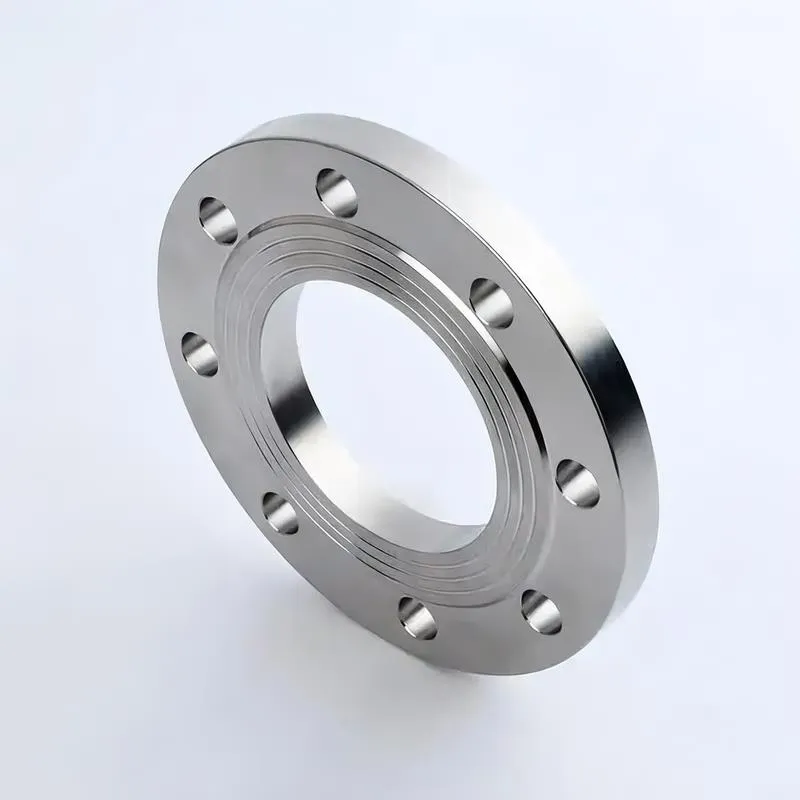
1,We Manufacturing processes are primarily classified into four types:
1:Forging,
2:Casting,
3:Cutting,
4:Rolling.
2,We can manufacture in accordance with these standards.
Standards:
GB Series (Chinese Standards), JB Series (Machinery Standards), HG Series (Chemical Industry Standards), ASME B16.5 (American Standards), BS4504 (British Standards), DIN (German Standards), and JIS (Japanese Standards).
Internationally, there are two primary systems of pipe flange standards: the European system, represented by the German DIN standards (including those of the former Soviet Union), and the American system, represented by the US ANSI pipe flange standards. Other common standards include: the Chinese Ministry of Machinery Industry standards (JB series), the Ministry of Chemical Industry standards (HG series), the Chinese National Standard *GB/T 9112–9124-2010 Steel Pipe Flanges*, as well as US standards (ASME B16.5), British standards (BS4504), German standards (DIN), Japanese standards (JIS), and marine standards (CBM), among others.
The nominal pressure ratings for the PN series are designated by "PN" and comprise the following nine levels: PN2.5, PN6, PN10, PN16, PN25, PN40, PN63, PN100, and PN160.
The nominal pressure ratings for the Class series are designated by "Class" and comprise the following six levels: Class150, Class300, Class600, Class900, Class1500, and Class2500.
Flange Classification
1. **According to Chemical Industry Standards:** Flanges are classified as follows:
Plate Flat Welding Flange (PL), Necked Flat Welding Flange (SO), Necked Butt Welding Flange (WN), Integral Flange (IF), Socket Welding Flange (SW), Threaded Flange (Th), Butt Welding Ring Loose Flange (PJ/SE), Blind Flange (BL), Flat Welding Ring Loose Flange (PJ/PJ), and Lined Blind Flange (BL(s)).
2. **According to Petrochemical (SH) Industry Standards:** Flanges are classified as follows:
Threaded Flange (PL), Butt Welding Flange (WN), Flat Welding Flange (SO), Socket Welding Flange (SW), Loose Flange (LJ), and Blind Flange (no specific designation).
3. **According to Machinery (JB) Industry Standards:** Flanges are classified as follows:
Integral Flange, Butt Welding Flange, Plate Flat Welding Flange, Butt Welding Ring Plate Loose Flange, Flat Welding Ring Plate Loose Flange, Lap Joint Ring Plate Loose Flange, and Blind Flange.
4. **According to Connection Method/Type:** Flanges are classified as follows:
Plate Flat Welding Flange, Necked Flat Welding Flange, Necked Butt Welding Flange, Socket Welding Flange, Threaded Flange, Blind Flange, Necked Butt Welding Ring Loose Flange, Flat Welding Ring Loose Flange, Ring-Type Joint (RTJ) Flange and Blind Flange, Large-Diameter Plate Flange, Large-Diameter High-Neck Flange, Figure-8 Blind Plate, Butt Welding Ring Loose Flange, etc.
5. **According to the Component Being Connected:** Flanges can be classified into Vessel Flanges and Pipe Flanges.
6. **According to Structural Type:** Flanges include Integral Flanges, Threaded Flanges, Flat Welding Flanges, Butt Welding Flanges, Lap Joint (Loose/Swivel) Flanges, and Blind Flanges.
A flange—also referred to as a flange plate or rim—is a component used to connect shafts to one another, or, more commonly, to join the ends of pipes. Flanges are also utilized at the inlet and outlet ports of equipment to facilitate connections between two devices—for instance, the flange on a speed reducer. A "flange connection" or "flanged joint" refers to a detachable joint assembly comprising three interconnected elements—a flange, a gasket, and bolts—that together form a sealed structural unit. In the context of piping systems, a "pipe flange" specifically denotes a flange used for plumbing within the installation; when applied to equipment, it refers to the inlet or outlet flange of that specific device. Flanges feature a series of holes through which bolts are inserted to securely fasten the two flanges together, while a gasket placed between the flanges ensures a leak-proof seal. Flanges are broadly categorized into three types: threaded (screw-in) flanges, welded flanges, and clamp-type flanges. Flanges are invariably used in pairs; threaded flanges are suitable for low-pressure piping applications, whereas welded flanges are required for systems operating at pressures exceeding 4 kilograms per square centimeter. A sealing gasket is inserted between the two flange plates, which are then firmly secured using bolts. The thickness of a flange—as well as the specifications of the bolts used to fasten it—vary depending on the specific pressure rating required for the application. When connecting equipment such as water pumps or valves to piping systems, the corresponding connection points on these devices are often manufactured in the shape of a matching flange; this method of attachment is also referred to as a "flange connection." Generally, any connecting component that utilizes bolts to join and seal the perimeters of two flat surfaces—such as the joints in ventilation ducts—is termed a "flange"; such components may collectively be classified as "flange-type parts." However, since such a connection often constitutes merely a *portion* of a larger device—for instance, the interface between a flange and a water pump—it would be inappropriate to classify the entire water pump itself as a "flange-type part." Conversely, smaller components—such as valves—that feature such flanged interfaces may indeed be appropriately categorized as "flange-type parts."
-:-
For detailed product information, please contact sales.
-:
AISI 4012 Steel Flange Product Information
-:-
For detailed product information, please contact sales.
-:
AISI 4012 Steel Flange Synonyms
-:-
For detailed product information, please contact sales.
-:
AISI 4012 Steel Product Information
-:-
For detailed product information, please contact sales.
-:
# **Product Introduction: AISI 4012 Steel**
## **Executive Summary**
**AISI 4012** is a versatile, low-carbon molybdenum alloy steel belonging to the AISI 40xx series. With a carbon content of approximately 0.10%, it is specifically engineered for **case-hardening applications** where a hard, wear-resistant surface is required over a relatively soft and ductile core. The addition of molybdenum (approximately 0.20-0.30%) provides enhanced hardenability compared to plain carbon steels like 1010 or 1020, allowing for more consistent case properties and better performance in moderately sized sections. AISI 4012 is valued for its good machinability in the annealed state, excellent response to carburizing or carbonitriding, and cost-effectiveness for general-purpose case-hardened components in automotive, machinery, and consumer goods industries.
---
## **1. Chemical Composition**
### **Standard Composition Ranges**
| Element | Content Range (% by weight) - **AISI 4012** | Primary Function |
| :--- | :--- | :--- |
| **Carbon (C)** | 0.09 - 0.14 | Provides minimal core strength; optimized for maximum core ductility and excellent case absorption during carburizing |
| **Molybdenum (Mo)** | 0.20 - 0.30 | Primary alloying element; significantly improves hardenability (especially in thin sections), enhances tempering resistance, and refines grain structure |
| **Manganese (Mn)** | 0.40 - 0.60 | Deoxidizer, improves hardenability, enhances surface response to carburizing |
| **Silicon (Si)** | 0.15 - 0.35 | Deoxidizer, strengthens ferrite matrix |
| **Phosphorus (P)** | 0.035 max | Impurity (kept low for ductility) |
| **Sulfur (S)** | 0.040 max | Impurity (affects hot workability; may be controlled for machinability) |
| **Nickel (Ni)** | - | Not specified; trace amounts may be present |
| **Chromium (Cr)** | - | Not specified; trace amounts may be present |
| **Iron (Fe)** | Balance | Matrix element |
### **Key Metallurgical Features**
- **Core Properties:** Very low carbon ensures high ductility and toughness in the core, making it resistant to shock and impact.
- **Hardenability:** Molybdenum provides a significant boost to hardenability relative to its low carbon content, allowing for better case depth control.
- **Grain Refinement:** Molybdenum helps inhibit grain growth during high-temperature carburizing cycles.
- **Cost-Performance Balance:** Offers improved performance over plain carbon case-hardening steels without the cost of nickel or chromium additions.
---
## **2. Physical & Mechanical Properties**
### **A. Fundamental Physical Properties**
| Property | Condition | Value/Range | Notes |
| :--- | :--- | :--- | :--- |
| **Density** | All conditions | 7.85 g/cm³ (0.284 lb/in³) | Typical for low-alloy steels |
| **Melting Point** | - | ~1520°C (2768°F) | - |
| **Elastic Modulus** | Annealed/Tempered | 200-205 GPa (29,000-29,700 ksi) | - |
| **Shear Modulus** | - | 80-82 GPa (11,600-11,900 ksi) | - |
| **Poisson's Ratio** | - | 0.29 | - |
| **Thermal Conductivity** | 100°C | ~46.0 W/m·K | - |
| **Specific Heat Capacity** | 20°C | ~470 J/kg·K | - |
| **Thermal Expansion Coefficient** | 20-100°C | ~12.0 × 10⁻⁶/°C | - |
| **Electrical Resistivity** | 20°C | ~0.20 μΩ·m | - |
| **Magnetic Properties** | Below Curie temp | Ferromagnetic | - |
### **B. Mechanical Properties (Core - Before Case Hardening)**
#### **1. Annealed/Normalized Condition (Typical Machining State)**
- **Hardness:** 121-149 HB (Brinell)
- **Tensile Strength:** 380-480 MPa (55-70 ksi)
- **Yield Strength (0.2% offset):** 275-380 MPa (40-55 ksi)
- **Elongation:** 28-35% in 50mm
- **Reduction of Area:** 65-75%
- **Charpy V-Notch Impact:** 100-150 J (74-111 ft-lb) at room temperature
- **Machinability Rating:** 70-75% of B1112 (Good)
#### **2. Core Properties After Case Hardening & Tempering**
*Typical heat treatment: Carburize to 0.6-1.0 mm case, quench, temper at 150-200°C*
| Property | Typical Value Range | Notes |
| :--- | :--- | :--- |
| **Core Hardness** | 20-28 HRC | Remains relatively soft and ductile |
| **Core Tensile Strength** | 550-690 MPa (80-100 ksi) | Increase due to quenching of lean alloy core |
| **Core Yield Strength** | 450-550 MPa (65-80 ksi) | - |
| **Core Elongation** | 18-25% | Maintains good ductility |
| **Case Hardness** | 58-63 HRC | After carburizing, quenching, and tempering |
| **Effective Case Depth** | 0.5-1.2 mm (0.020-0.047") | Standard range |
| **Surface Carbon Content** | 0.75-0.90% | Optimized for maximum wear resistance |
| **Charpy V-Notch Impact (Core)** | 60-100 J (44-74 ft-lb) | Excellent for case-hardened steel |
| **Bending Fatigue Strength** | 350-450 MPa (51-65 ksi) | At 10⁷ cycles with carburized case |
### **C. Special Properties**
- **Hardenability:** Moderate; suitable for sections up to ~25-40mm (1-1.5") for full case effectiveness.
- **Fatigue Resistance:** Good bending fatigue resistance due to compressive residual stresses in the case.
- **Low-Temperature Toughness:** Excellent core toughness at low temperatures due to low carbon content.
- **Wear Resistance:** Excellent surface wear resistance with a properly carburized/nitrided case.
- **Notch Sensitivity:** Very low in the core.
---
## **3. International Standards & Specifications**
### **Primary Governing Standards**
| Standard/Organization | Designation | Title/Scope |
| :--- | :--- | :--- |
| **AISI/SAE** | 4012 | Standard grade designation |
| **UNS** | G40120 | Unified Numbering System |
| **ASTM** | A534 | Standard Specification for Carburizing Steels |
| **ASTM** | A29/A29M | Standard Specification for Steel Bars, Carbon and Alloy, Hot-Wrought |
| **SAE** | J404, J412 | Chemical compositions and hardenability |
| **AMS** | Not common | Rarely specified for aerospace; more common in industrial specs |
### **International Equivalents & Cross-References**
| Country/Region | Equivalent Designation | Standard | Notes |
| :--- | :--- | :--- | :--- |
| **ISO** | **- (See Note)** | ISO 683-11 | No direct equivalent; similar to Mo case-hardening steels |
| **European** | **- (See Note)** | EN 10084 | No direct equivalent; 15Mo3 is a similar low-carbon Mo steel |
| **Germany** | **15Mo3** | DIN 17210 / EN 10084 | Similar low-carbon molybdenum steel, not exact match |
| **United Kingdom** | **- (See Note)** | BS 970 | No common direct equivalent |
| **Japan** | **- (See Note)** | JIS G4102 | No common direct equivalent |
| **China** | **15Mo** | GB/T 3077 | Approximate concept, not exact composition match |
| **Hardenability Variant** | **4012H** | SAE J1268 | Potentially available with guaranteed hardenability bands |
**Note:** AISI 4012 is a distinctly North American grade. International equivalents are not precise and are based on similar chemistry (low C + Mo). For procurement outside North America, the chemical composition should be specified.
---
## **4. Product Applications & Industries**
### **Available Product Forms**
- **Bar Stock:** Hot-rolled rounds, squares, hexagons (most common form)
- **Wire Rod & Wire:** For cold heading and forming of fasteners and small parts
- **Cold-Finished Bars:** For precision components
- **Forgings:** For specific component shapes
### **Primary Industry Applications**
#### **1. Automotive & Transportation (Light to Medium Duty)**
- **Fasteners:** Case-hardened bolts, screws, studs, and pins
- **Transmission Components:** Synchronizer rings, shift forks, thrust washers
- **Engine Components:** Valve guides, tappets, cam followers
- **Chassis Components:** Bushings, pivot pins, linkage arms
- **Consumer Vehicles:** Various small, case-hardened wear parts
#### **2. Industrial Machinery & General Manufacturing**
- **Gears:** Light-to-moderate duty gears, pinions, and sprockets
- **Shafts:** Light-duty shafts and axles requiring wear-resistant surfaces
- **Bushings & Bearings:** Plain bearings and bushings
- **Machine Tool Components:** Guide pins, clamp parts, fixtures
- **Textile & Packaging Machinery:** Wear parts, cams, and guides
#### **3. Consumer Goods & Hardware**
- **Hand Tools:** Components for wrenches, pliers, cutters
- **Hardware:** Hinges, locks, latches, and other durable hardware items
- **Appliance Parts:** Gears, levers, and moving parts in appliances
- **Power Tools:** Gears and drive components in light-duty power tools
#### **4. Agricultural Equipment (Light Duty)**
- **Implement Parts:** Linkage pins, bushings, lever arms
- **Drive Components:** Gears and shafts in light-duty transmissions
---
## **5. Heat Treatment Technology**
### **Primary Process: Case Hardening**
#### **1. Carburizing (Most Common)**
- **Temperature:** 900-930°C (1650-1705°F)
- **Atmosphere:** Endothermic gas ("Endo-gas") with natural gas enrichment
- **Case Depth:** Typically 0.25-1.0 mm (0.010-0.040")
- **Quenching:** Direct oil quench from carburizing temperature or reheat to 800-830°C (1470-1525°F)
- **Tempering:** 150-200°C (300-390°F) for 1-2 hours to relieve quenching stresses
#### **2. Carbonitriding (Popular Alternative)**
- **Temperature:** 815-870°C (1500-1600°F)
- **Atmosphere:** Endothermic gas with ammonia addition (3-8%)
- **Benefits:** Faster than carburizing, lower distortion, good for thinner cases (0.05-0.75 mm)
- **Result:** Hard case with some nitrogen, improving wear and mild corrosion resistance.
#### **3. Induction or Flame Hardening**
- **Applicability:** Suitable for selective hardening of specific areas on larger parts.
- **Process:** Heat surface rapidly to austenitizing temperature, then quench.
### **Typical Heat Treatment Cycle**
1. **Pre-Cleaning:** Remove machining oils and contaminants.
2. **Carburizing/Carbonitriding:** Achieve desired case depth and surface carbon.
3. **Quenching:** Oil quench to form hard martensitic case.
4. **Tempering:** 150-200°C to reduce brittleness and stresses.
5. **Finishing:** Light grinding or shot peening if required.
### **Key Considerations for AISI 4012**
- **Low Distortion:** Due to lean alloy core and molybdenum's grain-refining effect, distortion is generally lower than in more highly alloyed steels.
- **Core Hardness:** The core will not harden significantly during quenching, ensuring high toughness.
---
## **6. Manufacturing & Fabrication Characteristics**
### **Machinability Assessment**
- **Annealed Condition:** **70-75% of B1112** – Rated as **Good**.
- **Case Hardened Condition:** Not machinable by conventional methods; requires grinding.
- **Recommended Practices:**
- **Turning:** 90-120 m/min (300-400 SFM) with carbide inserts.
- **Drilling:** 25-35 m/min (80-115 SFM) with HSS drills.
- **Milling:** 80-110 m/min (260-360 SFM) with carbide cutters.
- **Threading/Tapping:** Performs well with standard practices.
- **Coolant:** Use for extended tool life and better finish.
### **Weldability Characteristics**
**Rating: EXCELLENT (for a steel)**
#### **Welding Recommendations**
1. **Preheat:** Generally not required for thin sections; 50-100°C (120-210°F) for thick sections >25mm.
2. **Post-Weld Heat Treatment:** Stress relief at 590-650°C (1100-1200°F) is beneficial but not always mandatory.
3. **Filler Metals:** Mild steel fillers (e.g., AWS ER70S-6) are typically sufficient.
4. **Processes:** All common processes (SMAW, GMAW, GTAW) are suitable.
5. **Note:** Welding after carburizing will destroy the case properties in the heat-affected zone (HAZ). Weld in the annealed state before case hardening.
### **Formability & Cold Working**
- **Cold Formability:** **Excellent** in the annealed condition due to low carbon content.
- **Common Processes:** Cold heading, forging, bending, stamping.
- **Strain Hardening:** Moderate; intermediate annealing may be needed for severe deformation.
### **Hot Working**
- **Hot Working Temperature:** 1150-900°C (2100-1650°F)
- **Forging:** Excellent forgeability.
- **Cooling After Hot Work:** Air cooling is generally acceptable; normalizing is recommended for critical parts.
---
## **7. Quality Assurance & Testing**
### **Standard Certification**
Material is typically supplied with a **Mill Test Certificate** including:
- Heat chemistry
- Hardness test results (Brinell or Rockwell)
- Dimensional compliance
### **Testing for Finished Case-Hardened Parts**
- **Case Depth:** Measured by microhardness traverse (e.g., depth to 550 HV) or metallographic examination.
- **Surface Hardness:** Rockwell C scale.
- **Core Hardness:** Rockwell B or C scale, depending on value.
- **Microstructure:** Examination of case (martensite + retained austenite) and core.
---
## **8. Design & Engineering Guidelines**
### **Advantages of AISI 4012**
1. **Excellent Core Toughness and Ductility:** Ideal for parts subject to shock or impact.
2. **Good Machinability:** Low cost of manufacturing before heat treatment.
3. **Good Response to Case Hardening:** Produces a hard, wear-resistant surface reliably.
4. **Good Weldability and Formability:** Allows for flexible manufacturing.
5. **Cost-Effective:** Lower cost than nickel or chromium-alloyed case-hardening steels.
### **Design Considerations**
- **Case Depth:** Typically 0.5-1.0mm for general parts. Should be less than ~15% of the section thickness.
- **Loading:** Best suited for components where surface wear is the primary concern, not heavy bending or torsional loads on the core.
- **Alternative Materials:** For heavier loads or larger sections where deeper hard cases are needed, consider higher-hardenability grades like **4118** or **4320**.
---
## **9. Comparative Analysis: Low-Alloy Case-Hardening Steels**
| Grade | C% | Alloying | Core Toughness | Hardenability | Relative Cost | Best For |
| :--- | :--- | :--- | :--- | :--- | :--- | :--- |
| **1010/1020** | ~0.10/0.20 | None | Excellent | Very Low | Lowest | Very small, simple parts |
| **4012** | 0.09-0.14 | **0.20-0.30 Mo** | **Excellent** | **Moderate** | **Low** | **General purpose, good balance** |
| **4118** | 0.18-0.23 | 0.40-0.60 Cr, 0.08-0.15 Mo | Good | Good | Medium | Heavier duty, deeper case |
| **8620** | 0.18-0.23 | 0.40-0.70 Ni, 0.40-0.60 Cr, 0.15-0.25 Mo | Very Good | Very Good | Medium-High | Critical automotive/gears |
| **4320** | 0.17-0.22 | 1.65-2.00 Ni, 0.40-0.60 Cr, 0.20-0.30 Mo | Excellent | Excellent | High | High-performance gears |
---
## **10. Technical Summary & Selection Guidelines**
**Select AISI 4012 when:**
1. A hard, wear-resistant case over a very tough, ductile core is required.
2. Component size is small to moderate (up to ~40mm section thickness).
3. Manufacturing cost is a significant factor.
4. Parts require good machinability, weldability, or cold formability prior to heat treatment.
5. Applications include general machinery, automotive fasteners, and hardware.
**Consider Higher-Alloy Alternatives (e.g., 4118, 8620) when:**
1. Deeper case depths (>1.0 mm) are required.
2. Larger section sizes need to be through-hardened in the case.
3. Higher core strength is needed to support the hard case under heavy loads.
4. The application is highly stressed or safety-critical.
---
**AISI 4012** is a practical and economical choice for a wide range of case-hardened components. Its simple molybdenum addition provides a meaningful upgrade in performance over plain carbon steels without a significant cost penalty. It excels in applications where a combination of a wear-resistant surface, a shock-absorbing core, and ease of manufacturing is valued. For engineers and designers, it represents a reliable "workhorse" grade for non-critical to moderately critical case-hardening applications across numerous industries.
-:-
For detailed product information, please contact sales.
-:
AISI 4012 Steel Specification
Dimensions
Size:
Diameter 20-1000 mm Length <4014 mm
Size:We can customized as required
Standard:
Per your request or drawing
We can customized as required
Properties(Theoretical)
Chemical Composition
-:-
For detailed product information, please contact sales.
-:
AISI 4012 Steel Properties
-:-
For detailed product information, please contact sales.
-:
Applications of AISI 4012 Steel Flange
-:-
For detailed product information, please contact sales.
-:
Chemical Identifiers AISI 4012 Steel Flange
-:-
For detailed product information, please contact sales.
-:
Packing of AISI 4012 Steel Flange
-:-
For detailed product information, please contact sales.
-:
Standard Packing:
-:-
For detailed product information, please contact sales.
-:
Typical bulk packaging includes palletized plastic 5 gallon/25 kg. pails, fiber and Steel Flange drums to 1 ton super sacks in full container (FCL) or truck load (T/L) quantities. Research and sample quantities and hygroscopic, oxidizing or other air sensitive materials may be packaged under argon or vacuum. Solutions are packaged in polypropylene, plastic or glass jars up to palletized 485 gallon liquid totes Special package is available on request. E FORUs’ is carefully handled to minimize damage during storage and transportation and to preserve the quality of our products in their original condition