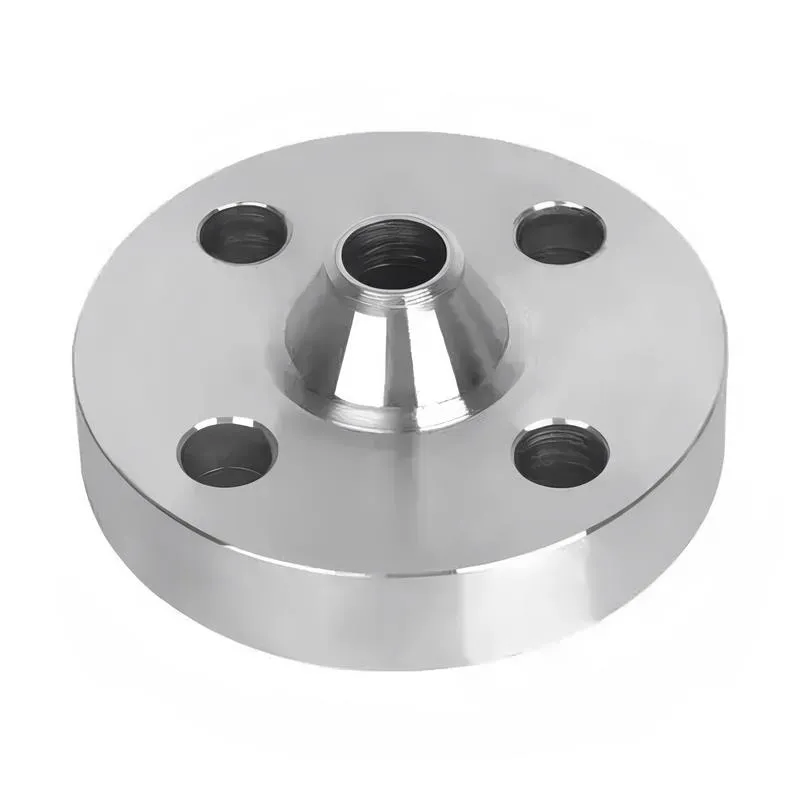
1,We Manufacturing processes are primarily classified into four types:
1:Forging,
2:Casting,
3:Cutting,
4:Rolling.
2,We can manufacture in accordance with these standards.
Standards:
GB Series (Chinese Standards), JB Series (Machinery Standards), HG Series (Chemical Industry Standards), ASME B16.5 (American Standards), BS4504 (British Standards), DIN (German Standards), and JIS (Japanese Standards).
Internationally, there are two primary systems of pipe flange standards: the European system, represented by the German DIN standards (including those of the former Soviet Union), and the American system, represented by the US ANSI pipe flange standards. Other common standards include: the Chinese Ministry of Machinery Industry standards (JB series), the Ministry of Chemical Industry standards (HG series), the Chinese National Standard *GB/T 9112–9124-2010 Steel Pipe Flanges*, as well as US standards (ASME B16.5), British standards (BS4504), German standards (DIN), Japanese standards (JIS), and marine standards (CBM), among others.
The nominal pressure ratings for the PN series are designated by "PN" and comprise the following nine levels: PN2.5, PN6, PN10, PN16, PN25, PN40, PN63, PN100, and PN160.
The nominal pressure ratings for the Class series are designated by "Class" and comprise the following six levels: Class150, Class300, Class600, Class900, Class1500, and Class2500.
Flange Classification
1. **According to Chemical Industry Standards:** Flanges are classified as follows:
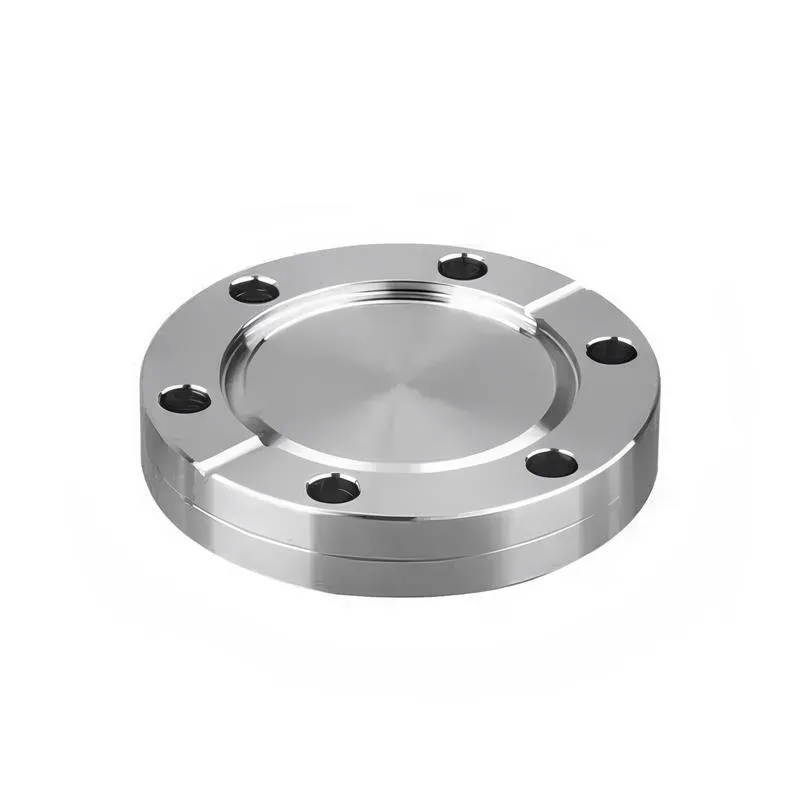
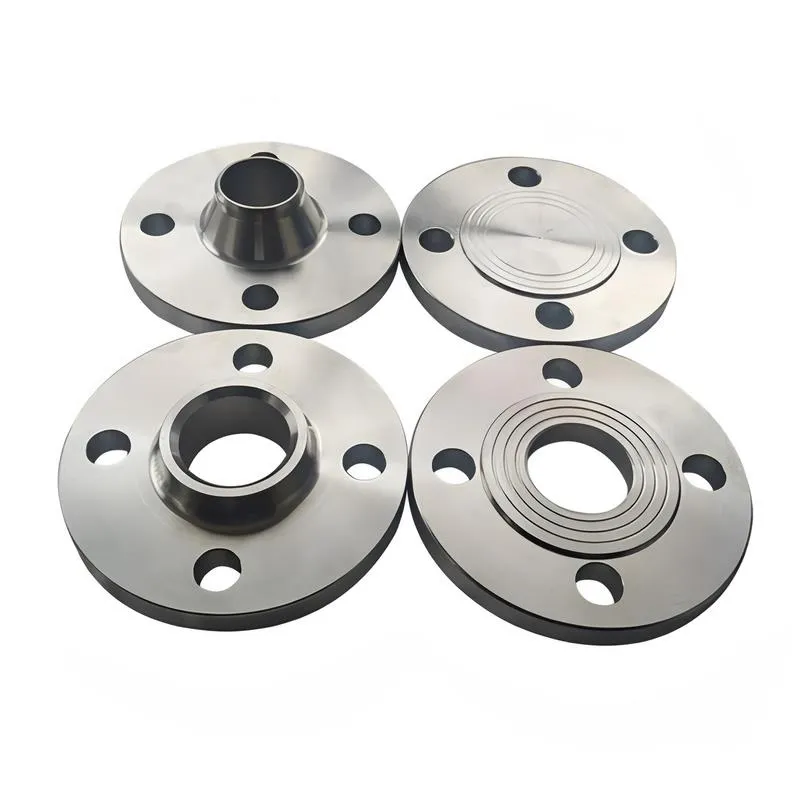
Plate Flat Welding Flange (PL), Necked Flat Welding Flange (SO), Necked Butt Welding Flange (WN), Integral Flange (IF), Socket Welding Flange (SW), Threaded Flange (Th), Butt Welding Ring Loose Flange (PJ/SE), Blind Flange (BL), Flat Welding Ring Loose Flange (PJ/PJ), and Lined Blind Flange (BL(s)).
2. **According to Petrochemical (SH) Industry Standards:** Flanges are classified as follows:
Threaded Flange (PL), Butt Welding Flange (WN), Flat Welding Flange (SO), Socket Welding Flange (SW), Loose Flange (LJ), and Blind Flange (no specific designation).
3. **According to Machinery (JB) Industry Standards:** Flanges are classified as follows:
Integral Flange, Butt Welding Flange, Plate Flat Welding Flange, Butt Welding Ring Plate Loose Flange, Flat Welding Ring Plate Loose Flange, Lap Joint Ring Plate Loose Flange, and Blind Flange.
4. **According to Connection Method/Type:** Flanges are classified as follows:
Plate Flat Welding Flange, Necked Flat Welding Flange, Necked Butt Welding Flange, Socket Welding Flange, Threaded Flange, Blind Flange, Necked Butt Welding Ring Loose Flange, Flat Welding Ring Loose Flange, Ring-Type Joint (RTJ) Flange and Blind Flange, Large-Diameter Plate Flange, Large-Diameter High-Neck Flange, Figure-8 Blind Plate, Butt Welding Ring Loose Flange, etc.
5. **According to the Component Being Connected:** Flanges can be classified into Vessel Flanges and Pipe Flanges.
6. **According to Structural Type:** Flanges include Integral Flanges, Threaded Flanges, Flat Welding Flanges, Butt Welding Flanges, Lap Joint (Loose/Swivel) Flanges, and Blind Flanges.
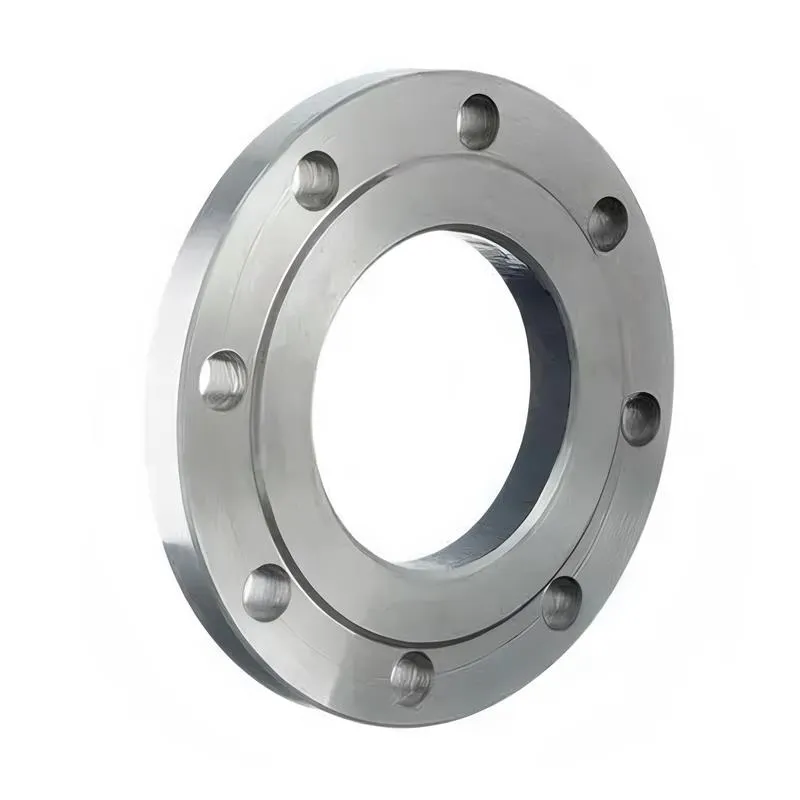
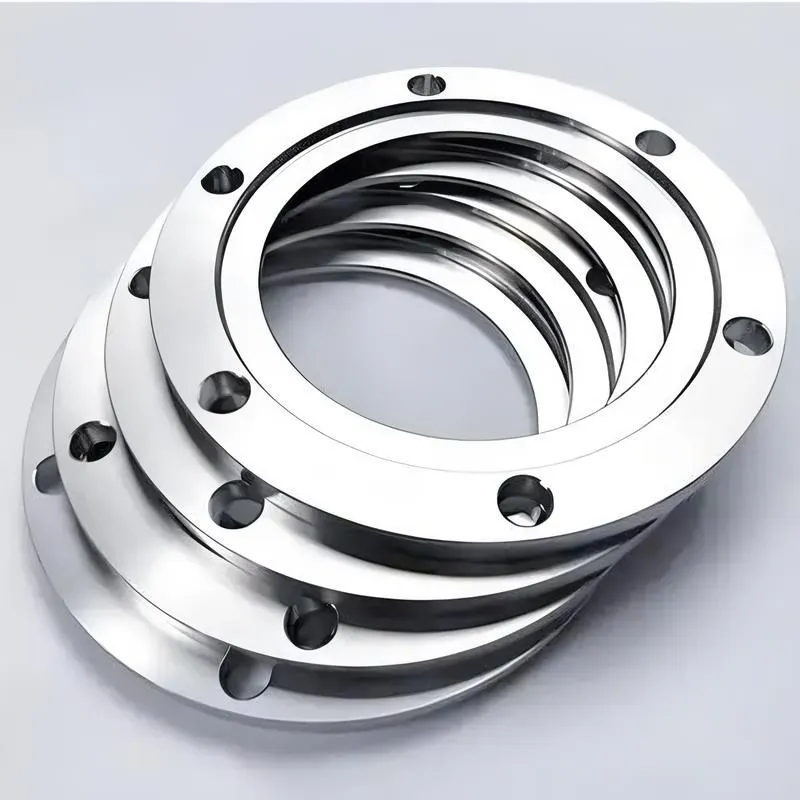
A flange—also referred to as a flange plate or rim—is a component used to connect shafts to one another, or, more commonly, to join the ends of pipes. Flanges are also utilized at the inlet and outlet ports of equipment to facilitate connections between two devices—for instance, the flange on a speed reducer. A "flange connection" or "flanged joint" refers to a detachable joint assembly comprising three interconnected elements—a flange, a gasket, and bolts—that together form a sealed structural unit. In the context of piping systems, a "pipe flange" specifically denotes a flange used for plumbing within the installation; when applied to equipment, it refers to the inlet or outlet flange of that specific device. Flanges feature a series of holes through which bolts are inserted to securely fasten the two flanges together, while a gasket placed between the flanges ensures a leak-proof seal. Flanges are broadly categorized into three types: threaded (screw-in) flanges, welded flanges, and clamp-type flanges. Flanges are invariably used in pairs; threaded flanges are suitable for low-pressure piping applications, whereas welded flanges are required for systems operating at pressures exceeding 4 kilograms per square centimeter. A sealing gasket is inserted between the two flange plates, which are then firmly secured using bolts. The thickness of a flange—as well as the specifications of the bolts used to fasten it—vary depending on the specific pressure rating required for the application. When connecting equipment such as water pumps or valves to piping systems, the corresponding connection points on these devices are often manufactured in the shape of a matching flange; this method of attachment is also referred to as a "flange connection." Generally, any connecting component that utilizes bolts to join and seal the perimeters of two flat surfaces—such as the joints in ventilation ducts—is termed a "flange"; such components may collectively be classified as "flange-type parts." However, since such a connection often constitutes merely a *portion* of a larger device—for instance, the interface between a flange and a water pump—it would be inappropriate to classify the entire water pump itself as a "flange-type part." Conversely, smaller components—such as valves—that feature such flanged interfaces may indeed be appropriately categorized as "flange-type parts."
-:-
For detailed product information, please contact sales.
-:
InduSteel Flange SUPRALSIM® 690 HLE Steel Flange for Welded and Weight-Saving Structures Product Information
-:-
For detailed product information, please contact sales.
-:
InduSteel Flange SUPRALSIM® 690 HLE Steel Flange for Welded and Weight-Saving Structures Synonyms
-:-
For detailed product information, please contact sales.
-:
Industeel SUPRALSIM® 690 HLE Steel for Welded and Weight-Saving Structures Product Information
-:-
For detailed product information, please contact sales.
-:
# **Product Datasheet: Industeel SUPRALSIM® 690 HLE Steel**
## **1. Product Overview**
**SUPRALSIM® 690 HLE** is a premium **high-strength, low-alloy (HSLA) steel plate** engineered by Industeel (ArcelorMittal) specifically for applications demanding an optimal balance between **structural efficiency, superior weldability, and extreme toughness**. The "690" denotes a minimum yield strength of 690 MPa, while "HLE" classification ensures **High Load-carrying capacity with Extreme toughness**. Positioned strategically between conventional high-strength steels and ultra-high-strength grades, SUPRALSIM 690 HLE delivers exceptional performance where maximum weight reduction must be achieved without compromising fabrication practicality or operational safety. This steel excels in applications requiring extensive welding, complex forming, and reliable performance under dynamic loading and low-temperature conditions.
## **2. International Standards & Designations**
| System/Authority | Designation | Specification Title / Relationship |
| :--- | :--- | :--- |
| **Manufacturer** | **Industeel SUPRALSIM® 690 HLE** | Proprietary brand name, trademark of ArcelorMittal |
| **European (EN)** | **EN 10025-6:2019** | Hot rolled products of structural steels - Part 6: High yield strength structural steel in the quenched and tempered condition |
| **Grade per EN** | **S690Q / S690QL** | Direct standard equivalent (Q for as-quenched, L for special low-temperature toughness) |
| **International (ISO)** | **ISO 630-6:2021** | Structural steels - Part 6: Technical delivery conditions for high yield strength structural steel plates |
| **ASTM (USA)** | **A514/A514M Gr. S** (Approx.) | High-Yield-Strength, Quenched and Tempered Alloy Steel Plate |
| **JIS (Japan)** | **SHY685** (Very Similar) | High yield strength steel plates for welded structures |
| **Common Names** | S690QL, 690 MPa Q&T Steel, High-Strength Structural Steel |
## **3. Chemical Composition (% by Weight)**
The chemistry is a lean, precision-engineered alloy system optimized for an outstanding combination of strength, toughness, and weldability, primarily through microalloying and advanced thermomechanical processing.
| Element | Typical SUPRALSIM® 690 HLE Range | Metallurgical Function & Design Rationale |
| :--- | :--- | :--- |
| **Carbon (C)** | **≤ 0.14** (Typically 0.06-0.10) | Kept very low to maximize weldability and Heat-Affected Zone (HAZ) toughness, minimizing preheat requirements and cold cracking risk. |
| **Manganese (Mn)** | **≤ 1.70** | Primary solid solution strengthener and austenite stabilizer; balanced to provide hardenability without promoting excessive banding or segregation. |
| **Phosphorus (P)** | **≤ 0.020** | Ultra-low control to prevent embrittlement phenomena. |
| **Sulfur (S)** | **≤ 0.005** | Ultra-low for superior ductility, impact toughness, and enhanced through-thickness properties (Z-direction). |
| **Silicon (Si)** | **≤ 0.50** | Deoxidizer and solid solution strengthener. |
| **Chromium (Cr)** | **≤ 0.80** | Contributes to hardenability and provides mild corrosion/oxidation resistance. |
| **Nickel (Ni)** | **≤ 2.00** | **Key toughness enhancer:** Significantly lowers the ductile-to-brittle transition temperature, crucial for the HLE designation. |
| **Molybdenum (Mo)** | **≤ 0.70** | Enhances hardenability and promotes the formation of fine, tough bainitic microstructures. |
| **Vanadium (V)** | **≤ 0.10** | Contributes to precipitation strengthening through fine V(C,N) particles. |
| **Niobium (Nb)** | **≤ 0.06** | **Critical grain refiner:** Forms Nb(C,N) precipitates during thermomechanical controlled processing (TMCP), pinning austenite grain boundaries to create an ultra-fine final microstructure. |
| **Boron (B)** | **≤ 0.004** (Trace) | Powerful hardenability enhancer at minute levels, allowing for reduced amounts of other alloying elements. |
| **Titanium (Ti)** | **≤ 0.025** | Often added to form stable TiN particles, protecting boron and providing additional grain refinement. |
| **Iron (Fe)** | Balance | Matrix. |
**Advanced Manufacturing Process:** Produced via **Electric Arc Furnace → Secondary Metallurgy (Ladle Furnace & Degassing) → Continuous Casting → Intensive Thermomechanical Controlled Processing (TMCP) with optional Direct Quenching → Tempering**. This results in a very fine, homogeneous **tempered bainitic or bainitic-martensitic microstructure** with optimal mechanical properties.
## **4. Mechanical & Physical Properties**
Properties are guaranteed for the as-supplied, quenched and tempered condition. Available in a wide range of plate thicknesses, typically from **5mm to 120mm**.
| Property | Minimum Requirement / Typical Value (EN 10025-6 S690QL) | Test Standard | Engineering Significance |
| :--- | :--- | :--- | :--- |
| **Yield Strength (Rp0.2)** | **≥ 690 MPa (≥ 100 ksi)** | EN ISO 6892-1 | Enables significant weight reduction (approx. 50-55%) versus S355 steel while maintaining high load capacity. |
| **Tensile Strength (Rm)** | **770 - 940 MPa (112 - 136 ksi)** | EN ISO 6892-1 | Provides a good margin between yield and tensile strength for structural safety. |
| **Yield-to-Tensile Ratio** | **0.88 - 0.92** | -- | Favorable balance indicating good capacity for plastic deformation before failure. |
| **Elongation (A₅)** | **≥ 14%** | EN ISO 6892-1 | Maintains excellent ductility for stress redistribution and energy absorption. |
| **Impact Toughness (Charpy V-notch)** | **≥ 40 J at -60°C (-76°F)** | EN ISO 148-1 | **"Extreme toughness" (HLE) guarantee.** Provides exceptional safety against brittle fracture in cold climates or under shock loads. Tested longitudinally and transversely. |
| **Bend Test** | Bend to 180° over mandrel **t ≤ 1.0 * t** (plate thickness) | EN ISO 7438 | Demonstrates very good formability, facilitating fabrication of complex components. |
| **Hardness** | Typically **240 - 300 HBW** | EN ISO 6506-1 | |
| **Modulus of Elasticity (E)** | **~210 GPa (30.5 x 10⁶ psi)** | -- | Consistent with structural steels for design calculations. |
| **Shear Modulus (G)** | **~81 GPa (11.7 x 10⁶ psi)** | -- | |
| **Density** | **7.85 g/cm³** | -- | |
| **Fatigue Strength** | **High** (Specific values depend on detail category) | EN 1993-1-9 | Fine, clean microstructure offers excellent resistance to fatigue crack initiation. |
| **Through-Thickness (Z) Property** | **Z35** standard (≥ 35% reduction of area) | EN 10164 | Ensures resistance to lamellar tearing in thick welded joints. |
## **5. Key Characteristics & Advantages**
* **Optimal Strength-Fabricability Balance:** Offers a superior compromise between high strength (for weight saving) and excellent weldability/formability (for ease of fabrication), reducing overall manufacturing cost and complexity.
* **Exceptional Low-Temperature Toughness:** The HLE classification with guaranteed high impact energy at -60°C makes it ideal for arctic operations, offshore structures, and safety-critical components.
* **Superior Weldability (Pcm ~0.20-0.25):** Extremely weldable for its strength class, often allowing welding **without preheat** in moderate thicknesses when using appropriate low-hydrogen consumables, drastically simplifying fabrication.
* **Excellent Fatigue Performance:** The fine-grained, homogeneous microstructure provides high resistance to the initiation and growth of fatigue cracks.
* **Good Cold Forming Capability:** Can be bent and formed to relatively tight radii (compared to higher-strength grades), enabling more versatile and efficient design geometries.
* **High Dimensional Stability:** Advanced quenching and tempering minimizes residual stresses, leading to less distortion during and after fabrication.
## **6. Primary Applications**
SUPRALSIM® 690 HLE is the preferred choice for demanding applications where high strength, toughness, and weldability are all critical.
* **Mobile Cranes & Heavy Lift Equipment:** **Boom sections, outrigger boxes, slew rings,** and **chassis components** for crawler and all-terrain cranes.
* **Commercial Vehicles:** **Chassis frames** for high-payload trucks, **tipper bodies, cement mixer drums,** and **special transport** trailers.
* **Construction & Mining Machinery:** **Excavator booms, arms (sticks),** and **frame components**; structural parts for **wheel loaders** and **dozers**.
* **Material Handling:** Main structures for **reach stackers, empty container handlers, port cranes,** and **heavy-duty forklifts**.
* **Agricultural Equipment:** Frames for **large harvesters, forage harvesters,** and **high-capacity sprayers** to reduce weight and soil compaction.
* **Bridge Construction:** Components for **movable bridges** and elements for strengthening or lightweight new designs.
* **Offshore & Maritime:** **Crane pedestals, deck structures,** and **lifting appliances** on vessels and platforms operating in cold environments.
## **7. Fabrication & Welding Guidelines**
* **Cutting:** **Plasma, laser, or waterjet cutting** are ideal. Oxy-fuel cutting is possible with proper procedure (potential preheat ~100°C for t > 30mm).
* **Cold Forming:** Exhibits good formability. Standard bending practices for high-strength steels apply; consult manufacturer's data for minimum bend radii.
* **Welding (Key Strength):**
* **Filler Metals:** Both **undermatching** (e.g., ~620-690 MPa yield) and **matching** (e.g., EN ISO 16834-A: G 69 4 M21 Mn3Ni1CrMo) consumables are commonly used. Undermatching can enhance joint toughness.
* **Preheat/Interpass Temperature:** For thicknesses **< 25-30mm**, preheat is often **not required** due to the very low carbon equivalent. For thicker sections, a mild preheat of **80-120°C** is typical.
* **Heat Input Control:** Recommended range **1.5 - 3.0 kJ/mm** to achieve optimal weld metal and HAZ properties.
* **Post-Weld Heat Treatment (PWHT):** Generally not required.
* **Machining:** Requires robust setups. **Carbide tooling** is recommended for best results. Use positive rake angles and adequate coolant.
## **8. Comparison with Other High-Strength Steels**
| Parameter | **SUPRALSIM® 690 HLE** | S500MC (Thermomechanical) | SUPERELSO® 960 HLE |
| :--- | :--- | :--- | :--- |
| **Min. Yield Strength** | **690 MPa** | 500 MPa | 960 MPa |
| **Primary Process** | **Q&T (Optimal Toughness)** | TMCP (As-rolled) | **Q&T (Max Strength)** |
| **Impact @ -60°C** | **≥ 40 J (HLE)** | Typically not specified | ≥ 40 J (HLE) |
| **Weldability (Pcm)** | **Excellent** | Very Good | Very Good (more restrictive) |
| **Typical Application** | **Complex, heavily welded structures** | Beams, lighter structures | **Ultra-light, critical sections** |
| **Fabrication Friendliness** | **Highest** | High | High (Specialized) |
---
**Disclaimer:** This datasheet provides technical reference for **Industeel SUPRALSIM® 690 HLE** steel. **SUPRALSIM® is a registered trademark of ArcelorMittal.** All design, fabrication, and welding must be based on the latest **manufacturer's technical documentation** and relevant standards (e.g., **EN 10025-6, EN 1993-1-12**). While offering excellent weldability, successful application requires appropriate procedures and qualified personnel. Consultation with **Industeel's technical support** and experienced welding engineers is **highly recommended** for critical projects. This material represents an optimal engineering solution where performance, safety, and manufacturability are equally valued.
-:-
For detailed product information, please contact sales.
-:
Industeel SUPRALSIM® 690 HLE Steel for Welded and Weight-Saving Structures Specification
Dimensions
Size:
Diameter 20-1000 mm Length <6427 mm
Size:We can customized as required
Standard:
Per your request or drawing
We can customized as required
Properties(Theoretical)
Chemical Composition
-:-
For detailed product information, please contact sales.
-:
Industeel SUPRALSIM® 690 HLE Steel for Welded and Weight-Saving Structures Properties
-:-
For detailed product information, please contact sales.
-:
Applications of InduSteel Flange SUPRALSIM® 690 HLE Steel Flange for Welded and Weight-Saving Structures
-:-
For detailed product information, please contact sales.
-:
Chemical Identifiers InduSteel Flange SUPRALSIM® 690 HLE Steel Flange for Welded and Weight-Saving Structures
-:-
For detailed product information, please contact sales.
-:
Packing of InduSteel Flange SUPRALSIM® 690 HLE Steel Flange for Welded and Weight-Saving Structures
-:-
For detailed product information, please contact sales.
-:
Standard Packing:
-:-
For detailed product information, please contact sales.
-:
Typical bulk packaging includes palletized plastic 5 gallon/25 kg. pails, fiber and Steel Flange drums to 1 ton super sacks in full container (FCL) or truck load (T/L) quantities. Research and sample quantities and hygroscopic, oxidizing or other air sensitive materials may be packaged under argon or vacuum. Solutions are packaged in polypropylene, plastic or glass jars up to palletized 2898 gallon liquid totes Special package is available on request. E FORUs’ is carefully handled to minimize damage during storage and transportation and to preserve the quality of our products in their original condition