1,We Manufacturing processes are primarily classified into four types:
1:Forging,
2:Casting,
3:Cutting,
4:Rolling.
2,We can manufacture in accordance with these standards.
Standards:
GB Series (Chinese Standards), JB Series (Machinery Standards), HG Series (Chemical Industry Standards), ASME B16.5 (American Standards), BS4504 (British Standards), DIN (German Standards), and JIS (Japanese Standards).
Internationally, there are two primary systems of pipe flange standards: the European system, represented by the German DIN standards (including those of the former Soviet Union), and the American system, represented by the US ANSI pipe flange standards. Other common standards include: the Chinese Ministry of Machinery Industry standards (JB series), the Ministry of Chemical Industry standards (HG series), the Chinese National Standard *GB/T 9112–9124-2010 Steel Pipe Flanges*, as well as US standards (ASME B16.5), British standards (BS4504), German standards (DIN), Japanese standards (JIS), and marine standards (CBM), among others.
The nominal pressure ratings for the PN series are designated by "PN" and comprise the following nine levels: PN2.5, PN6, PN10, PN16, PN25, PN40, PN63, PN100, and PN160.
The nominal pressure ratings for the Class series are designated by "Class" and comprise the following six levels: Class150, Class300, Class600, Class900, Class1500, and Class2500.
Flange Classification
1. **According to Chemical Industry Standards:** Flanges are classified as follows:
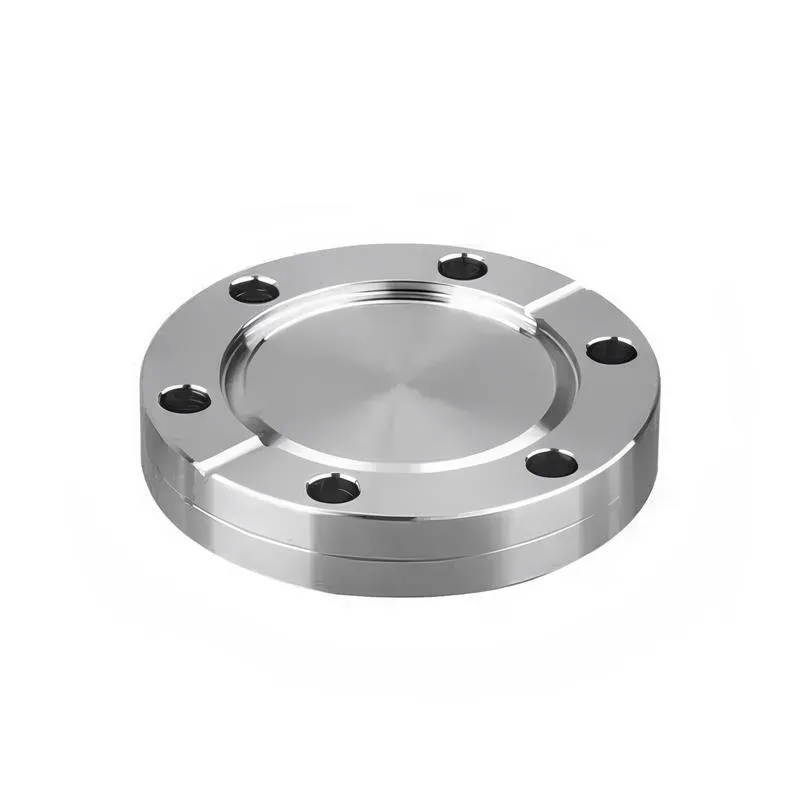
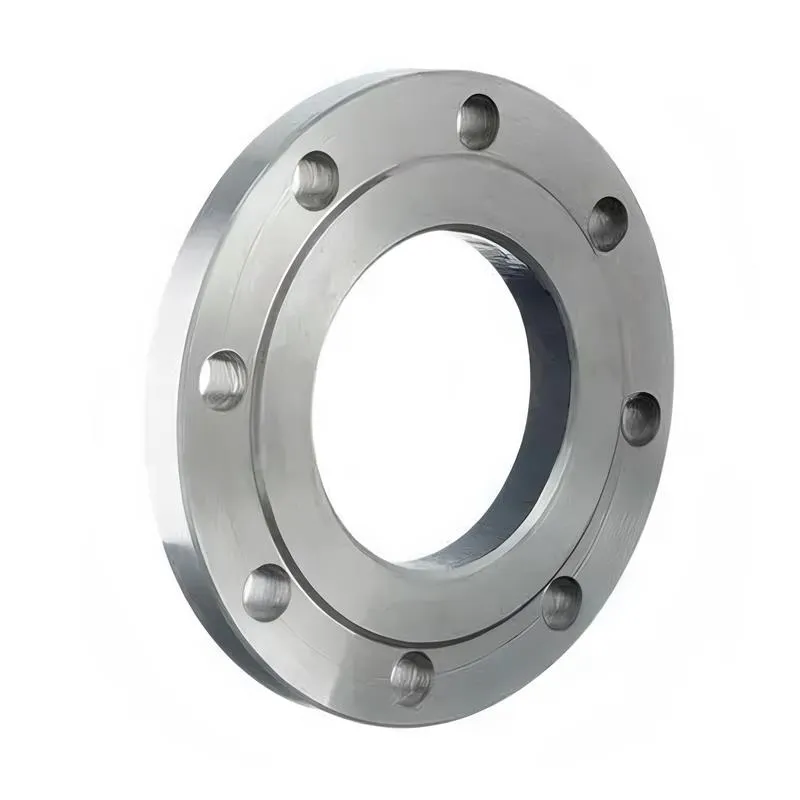
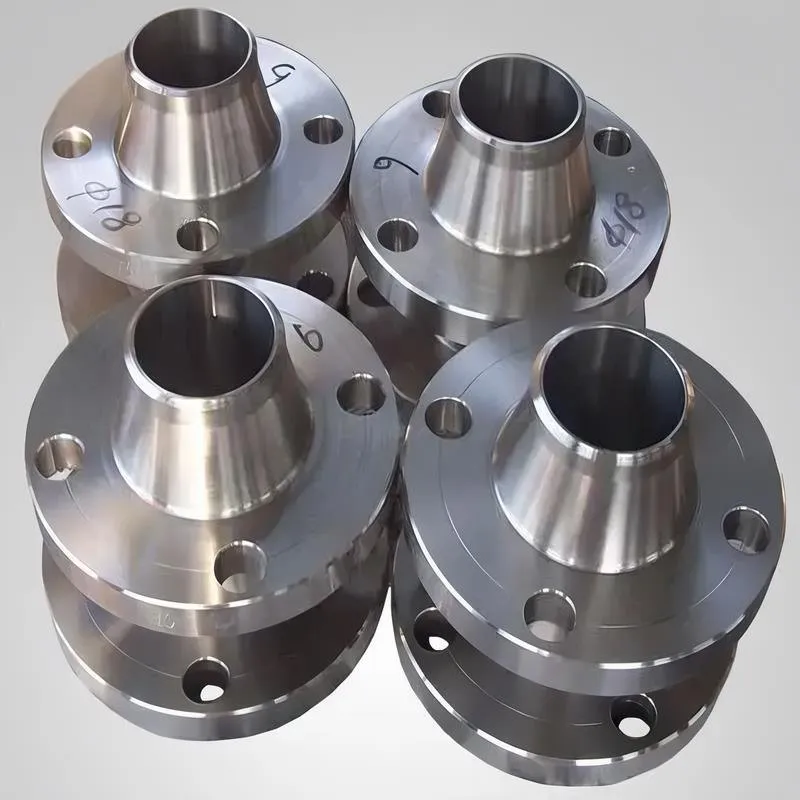
Plate Flat Welding Flange (PL), Necked Flat Welding Flange (SO), Necked Butt Welding Flange (WN), Integral Flange (IF), Socket Welding Flange (SW), Threaded Flange (Th), Butt Welding Ring Loose Flange (PJ/SE), Blind Flange (BL), Flat Welding Ring Loose Flange (PJ/PJ), and Lined Blind Flange (BL(s)).
2. **According to Petrochemical (SH) Industry Standards:** Flanges are classified as follows:
Threaded Flange (PL), Butt Welding Flange (WN), Flat Welding Flange (SO), Socket Welding Flange (SW), Loose Flange (LJ), and Blind Flange (no specific designation).
3. **According to Machinery (JB) Industry Standards:** Flanges are classified as follows:
Integral Flange, Butt Welding Flange, Plate Flat Welding Flange, Butt Welding Ring Plate Loose Flange, Flat Welding Ring Plate Loose Flange, Lap Joint Ring Plate Loose Flange, and Blind Flange.
4. **According to Connection Method/Type:** Flanges are classified as follows:
Plate Flat Welding Flange, Necked Flat Welding Flange, Necked Butt Welding Flange, Socket Welding Flange, Threaded Flange, Blind Flange, Necked Butt Welding Ring Loose Flange, Flat Welding Ring Loose Flange, Ring-Type Joint (RTJ) Flange and Blind Flange, Large-Diameter Plate Flange, Large-Diameter High-Neck Flange, Figure-8 Blind Plate, Butt Welding Ring Loose Flange, etc.
5. **According to the Component Being Connected:** Flanges can be classified into Vessel Flanges and Pipe Flanges.
6. **According to Structural Type:** Flanges include Integral Flanges, Threaded Flanges, Flat Welding Flanges, Butt Welding Flanges, Lap Joint (Loose/Swivel) Flanges, and Blind Flanges.
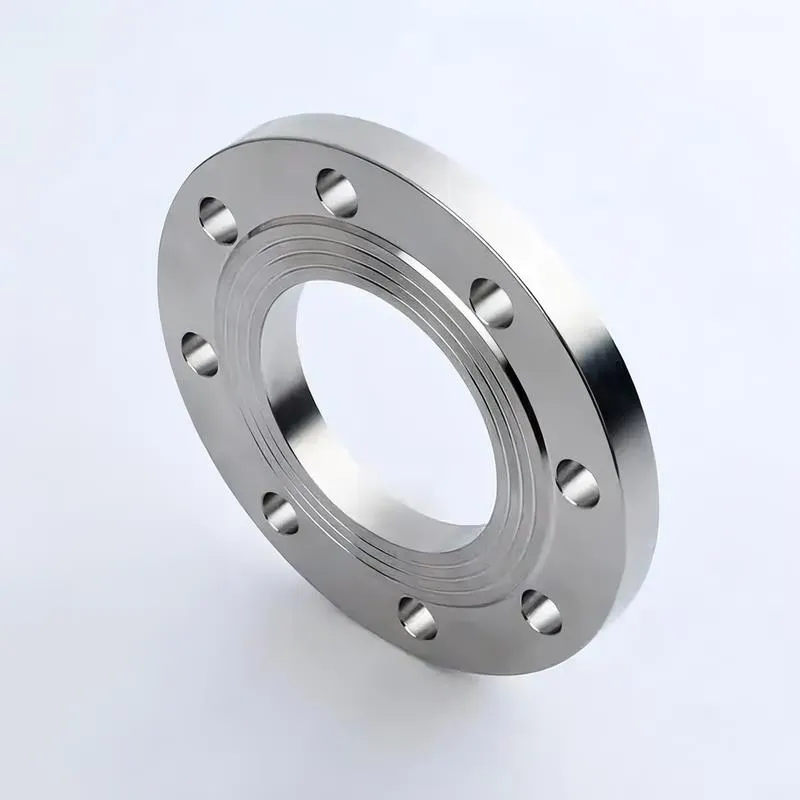
A flange—also referred to as a flange plate or rim—is a component used to connect shafts to one another, or, more commonly, to join the ends of pipes. Flanges are also utilized at the inlet and outlet ports of equipment to facilitate connections between two devices—for instance, the flange on a speed reducer. A "flange connection" or "flanged joint" refers to a detachable joint assembly comprising three interconnected elements—a flange, a gasket, and bolts—that together form a sealed structural unit. In the context of piping systems, a "pipe flange" specifically denotes a flange used for plumbing within the installation; when applied to equipment, it refers to the inlet or outlet flange of that specific device. Flanges feature a series of holes through which bolts are inserted to securely fasten the two flanges together, while a gasket placed between the flanges ensures a leak-proof seal. Flanges are broadly categorized into three types: threaded (screw-in) flanges, welded flanges, and clamp-type flanges. Flanges are invariably used in pairs; threaded flanges are suitable for low-pressure piping applications, whereas welded flanges are required for systems operating at pressures exceeding 4 kilograms per square centimeter. A sealing gasket is inserted between the two flange plates, which are then firmly secured using bolts. The thickness of a flange—as well as the specifications of the bolts used to fasten it—vary depending on the specific pressure rating required for the application. When connecting equipment such as water pumps or valves to piping systems, the corresponding connection points on these devices are often manufactured in the shape of a matching flange; this method of attachment is also referred to as a "flange connection." Generally, any connecting component that utilizes bolts to join and seal the perimeters of two flat surfaces—such as the joints in ventilation ducts—is termed a "flange"; such components may collectively be classified as "flange-type parts." However, since such a connection often constitutes merely a *portion* of a larger device—for instance, the interface between a flange and a water pump—it would be inappropriate to classify the entire water pump itself as a "flange-type part." Conversely, smaller components—such as valves—that feature such flanged interfaces may indeed be appropriately categorized as "flange-type parts."
-:-
For detailed product information, please contact sales.
-:
InduSteel Flange CREUSABRO® 8000 High Performance Wear Resistant Steel Flange Product Information
-:-
For detailed product information, please contact sales.
-:
InduSteel Flange CREUSABRO® 8000 High Performance Wear Resistant Steel Flange Synonyms
-:-
For detailed product information, please contact sales.
-:
Industeel CREUSABRO® 8000 High Performance Wear Resistant Steel Product Information
-:-
For detailed product information, please contact sales.
-:
# **Product Datasheet: Industeel CREUSABRO® 8000 High Performance Wear Resistant Steel**
## **1. Product Overview**
**CREUSABRO® 8000** is an ultra-premium **martensitic-bainitic wear steel** developed by Industeel (ArcelorMittal) for the most extreme industrial applications where **exceptional hardness and superior impact resistance must coexist**. As the highest nominal hardness grade in the CREUSABRO® family, this material delivers a minimum as-delivered hardness of 800 HBW (62 HRC), placing it at the forefront of commercially available wear plate technology. Engineered through advanced metallurgical design and precision thermomechanical processing, CREUSABRO® 8000 combines the extreme wear resistance of high-hardness materials with significantly improved toughness and weldability compared to traditional quenched steels or cast alloys, making it a revolutionary solution for applications where conventional high-hardness materials fail due to brittleness.
## **2. International Standards & Designations**
| System/Authority | Designation | Specification Title / Relationship |
| :--- | :--- | :--- |
| **Manufacturer** | **Industeel CREUSABRO® 8000** | Proprietary brand name, trademark of ArcelorMittal |
| **Hardness Class** | **800 HBW Nominal** | Minimum as-delivered hardness specification (62 HRC equivalent) |
| **Common Names** | CREUSABRO 8000, Super-Hard Wear Plate, Ultra-High Hardness Abrasion-Resistant Steel |
**Note:** As a proprietary, cutting-edge material, CREUSABRO® 8000 does not have direct equivalents in standard structural steel specifications (EN, ASTM). It is supplied against stringent manufacturer-specific technical conditions that guarantee its unique combination of ultra-high hardness, controlled toughness, and fabricability. Its performance category is comparable to, but often exceeds, that of specialized **tool steels (e.g., AISI D2 modified)** or **high-chromium cast irons** in wear applications.
## **3. Chemical Composition (% by Weight)**
The composition is a highly engineered alloy system designed to achieve an ultra-hard yet tough martensitic-bainitic matrix with optimal carbide distribution.
| Element | Typical CREUSABRO® 8000 Range | Metallurgical Function & Rationale |
| :--- | :--- | :--- |
| **Carbon (C)** | **0.30 - 0.45** | Primary hardening element; ensures full martensitic transformation and provides high carbide volume for extreme wear resistance. |
| **Manganese (Mn)** | **0.80 - 1.50** | Essential for hardenability, austenite stabilization, and solid solution strengthening. |
| **Phosphorus (P)** | **≤ 0.010** | Ultra-low to eliminate temper embrittlement risks. |
| **Sulfur (S)** | **≤ 0.002** | Extremely low to maximize toughness, ductility, and weld zone integrity. |
| **Silicon (Si)** | **≤ 0.80** | Deoxidizer, solid solution strengthener, and improves tempering resistance. |
| **Chromium (Cr)** | **4.00 - 6.00** | **Critical element:** Forms massive volumes of hard, wear-resistant (Cr,Fe)₇C₃ carbides. Provides deep hardenability and enhances corrosion/oxidation resistance. |
| **Molybdenum (Mo)** | **0.80 - 1.50** | Powerful hardenability agent; promotes secondary hardening and forms fine Mo₂C carbides for added strength and stability. |
| **Vanadium (V)** | **0.80 - 1.50** | **Key wear/toughness modifier:** Forms extremely hard, fine V₄C₃ carbides that resist pull-out and refine grain structure, dramatically improving abrasion resistance and fracture toughness. |
| **Nickel (Ni)** | **≤ 1.50** | **Crucial for toughness:** Lowers ductile-brittle transition temperature and improves impact resistance in the ultra-hard matrix. |
| **Boron (B)** | **≤ 0.004** (Trace) | Maximizes hardenability efficiency. |
| **Niobium (Nb)** | **≤ 0.10** (Optional) | For additional grain refinement via NbC precipitation. |
| **Titanium (Ti)** | **≤ 0.025** | Added for nitride formation (TiN) to control grain growth. |
| **Iron (Fe)** | Balance | Matrix. |
**Advanced Metallurgical Principle:** The steel undergoes a sophisticated **quenching and tempering (Q&T) process** to achieve a microstructure of **very fine martensite/lower bainite** with a **high, uniform dispersion of complex primary carbides (M₇C₃ type) and fine secondary carbides (VC, Mo₂C)**. The high Vanadium content is critical; its carbides are both extremely hard and act as crack arrestors, providing a unique combination of wear resistance and damage tolerance.
## **4. Mechanical & Physical Properties**
| Property | As-Delivered Condition (Typical) | Test Standard / Notes |
| :--- | :--- | :--- |
| **Nominal Hardness** | **800 - 850 HBW (62 - 65 HRC)** | EN ISO 6506-1 |
| **Yield Strength (Rp0.2)** | **≥ 1500 MPa (≥ 218 ksi)** | EN ISO 6892-1 (Estimated/Characteristic) |
| **Tensile Strength (Rm)** | **≥ 1700 MPa (≥ 247 ksi)** | EN ISO 6892-1 (Estimated/Characteristic) |
| **Elongation (A₅)** | **≥ 3%** | EN ISO 6892-1 (Remarkable for this hardness) |
| **Impact Toughness (Charpy V-notch)** | **≥ 10 J at 20°C**
**≥ 5 J at -20°C** | EN ISO 148-1; **Exceptionally high for 800+ HBW material** |
| **Modulus of Elasticity (E)** | **~210 GPa** | -- |
| **Density** | **~7.8 g/cm³** | Slightly lower due to high alloy content. |
| **Abrasion Resistance** (Relative Loss) | **Index: 3.0 - 4.0+** (vs. 400 HB Reference Steel) | ASTM G65 or similar. **Exceptional performance.** |
| **Fracture Toughness (KIC)** | **~25 - 40 MPa√m** (Estimated) | **Good for this hardness class;** prevents catastrophic failure. |
| **Maximum Service Temperature** | **~200°C** | Avoid prolonged exposure above this to prevent tempering. |
## **5. Key Characteristics & Advantages**
* **Ultimate Abrasion Resistance:** Represents one of the highest commercially available levels of wear resistance in a wrought steel plate form, dramatically outperforming conventional 400-500 HBW steels by a factor of 3-4x or more in abrasive wear tests.
* **Unprecedented Toughness for Hardness:** Delers impact toughness far superior to materials of equivalent hardness (e.g., high-chromium cast irons, which are essentially brittle), significantly reducing the risk of chipping, spalling, and catastrophic fracture under impact.
* **Superior Resistance to Deformation & Grooving:** Extremely high yield strength and hardness prevent material flow, indentation, and the formation of deep grooves under extreme pressure.
* **Controlled Fabricability:** While demanding, it **can be machined (with specialized techniques), cut, and welded**—capabilities that are non-existent for competing materials like cemented carbides or most cast irons at this hardness level.
* **High Fatigue and Impact-Abrasion Resistance:** Excels in environments combining sliding/rolling abrasion with repeated impacts.
* **Isotropic Properties:** As a wrought and heat-treated plate, it exhibits uniform properties in all directions, unlike cast materials which can have defects and property variations.
## **6. Primary Applications**
Designed for ultra-severe wear applications where component life and total cost of ownership are critical.
* **Mining - Extreme Wear Zones:** **Chute liners** in high-velocity transfer points, **hopper throat plates**, **screen decks** for highly abrasive ores (e.g., taconite, iron ore), **pump casings and impellers** for slurry handling.
* **Quarrying & Cement:** **Crusher wear parts** (cone crusher mantles/concaves in tertiary applications, VSI tips and anvils), **raw mill feed chutes**, **clinker crusher hammers**.
* **Earthmoving - Severe Conditions:** **Bucket teeth and adapters** for hard rock mining, **cutter heads** for tunnel boring in abrasive ground.
* **Steel Industry:** **Guide rolls, deflector plates, and wear liners** in continuous casting and hot rolling processes.
* **Pulp & Paper:** **Doctor blades, refiner plates, and wear plates** in stock preparation systems.
* **Recycling & Waste Processing:** **Shredder hammers, anvils, and feed chutes** for processing municipal solid waste, electronics, and metal scrap.
## **7. Fabrication Guidelines (Specialized Procedures Required)**
* **Cutting:** **Abrasive waterjet cutting is the preferred and often only recommended method.** Plasma cutting may be possible with specialized equipment but risks creating a hard, cracked heat-affected zone (HAZ). Oxy-fuel cutting is **NOT POSSIBLE**.
* **Drilling/Machining:** **Extremely difficult.** Requires **polycrystalline diamond (PCD) or cubic boron nitride (CBN)** tooling. Processes are slow and expensive; design should minimize machining.
* **Bending/Cold Forming:** **Not possible.** Components must be designed and fabricated to the as-supplied shape.
* **Welding (Highly Specialized):**
* **General Note:** Welding is **very challenging and risk-prone**. It should only be attempted for essential repairs or build-up by highly qualified personnel with specific procedures.
* **Preheat:** **Mandatory. 300-350°C minimum.**
* **Filler Metal:** Requires specially developed, high-toughness, austenitic (e.g., high-nickel) or martensitic filler metals designed for ultra-high hardness base materials to prevent cracking.
* **Post-Weld Heat Treatment (PWHT):** **Essential.** Immediate stress relieving at **250-300°C** followed by slow cooling.
* **Recommendation:** Whenever possible, **mechanically fasten** (bolt) CREUSABRO® 8000 wear plates to a softer, tougher backing structure (e.g., S355 steel).
## **8. Comparative Performance**
| Scenario | **CREUSABRO® 8000** | High-Chromium Cast Iron (27% Cr) | Cemented Carbide (WC-Co) |
| :--- | :--- | :--- | :--- |
| **Hardness (HV)** | 800-850 HBW (~1000 HV) | 600-800 HV | 1200-1800 HV |
| **Impact Toughness** | **Good** | **Very Poor (Brittle)** | **Poor** |
| **Weldability/Repairability** | **Possible (Specialized)** | **Not Weldable** | **Not Weldable** |
| **Fabrication (Cutting/Forming)** | **Limited (Waterjet)** | Cast-to-shape only | Sintered-to-shape only |
| **Cost Efficiency** | **High (Life vs. Cost)** | Medium | **Very High (Material Cost)** |
| **Optimal Service** | **Severe Abrasion + Moderate Impact** | **Pure Abrasion / No Impact** | **Extreme Abrasion / Low Impact** |
| **Failure Mode** | Gradual wear, possible cracking | **Catastrophic fracture** | Brittle fracture, delamination |
---
**Disclaimer:** This datasheet describes the ultra-premium product **Industeel CREUSABRO® 8000**. **CREUSABRO® is a registered trademark of ArcelorMittal.** This material represents a **specialist engineering solution** for the most extreme wear problems. Its successful application requires **expert design** (to avoid stress concentrations), **specialized fabrication techniques**, and **thorough economic justification** based on total lifecycle cost. **Consultation with Industeel's advanced technical service is absolutely mandatory** prior to any specification, design, or fabrication attempt. The material's properties push the boundaries of steel technology, and standard fabrication practices do not apply.
-:-
For detailed product information, please contact sales.
-:
Industeel CREUSABRO® 8000 High Performance Wear Resistant Steel Specification
Dimensions
Size:
Diameter 20-1000 mm Length <6430 mm
Size:We can customized as required
Standard:
Per your request or drawing
We can customized as required
Properties(Theoretical)
Chemical Composition
-:-
For detailed product information, please contact sales.
-:
Industeel CREUSABRO® 8000 High Performance Wear Resistant Steel Properties
-:-
For detailed product information, please contact sales.
-:
Applications of InduSteel Flange CREUSABRO® 8000 High Performance Wear Resistant Steel Flange
-:-
For detailed product information, please contact sales.
-:
Chemical Identifiers InduSteel Flange CREUSABRO® 8000 High Performance Wear Resistant Steel Flange
-:-
For detailed product information, please contact sales.
-:
Packing of InduSteel Flange CREUSABRO® 8000 High Performance Wear Resistant Steel Flange
-:-
For detailed product information, please contact sales.
-:
Standard Packing:
-:-
For detailed product information, please contact sales.
-:
Typical bulk packaging includes palletized plastic 5 gallon/25 kg. pails, fiber and Steel Flange drums to 1 ton super sacks in full container (FCL) or truck load (T/L) quantities. Research and sample quantities and hygroscopic, oxidizing or other air sensitive materials may be packaged under argon or vacuum. Solutions are packaged in polypropylene, plastic or glass jars up to palletized 2901 gallon liquid totes Special package is available on request. E FORUs’ is carefully handled to minimize damage during storage and transportation and to preserve the quality of our products in their original condition