1,We Manufacturing processes are primarily classified into four types:
1:Forging,
2:Casting,
3:Cutting,
4:Rolling.
2,We can manufacture in accordance with these standards.
Standards:
GB Series (Chinese Standards), JB Series (Machinery Standards), HG Series (Chemical Industry Standards), ASME B16.5 (American Standards), BS4504 (British Standards), DIN (German Standards), and JIS (Japanese Standards).
Internationally, there are two primary systems of pipe flange standards: the European system, represented by the German DIN standards (including those of the former Soviet Union), and the American system, represented by the US ANSI pipe flange standards. Other common standards include: the Chinese Ministry of Machinery Industry standards (JB series), the Ministry of Chemical Industry standards (HG series), the Chinese National Standard *GB/T 9112–9124-2010 Steel Pipe Flanges*, as well as US standards (ASME B16.5), British standards (BS4504), German standards (DIN), Japanese standards (JIS), and marine standards (CBM), among others.
The nominal pressure ratings for the PN series are designated by "PN" and comprise the following nine levels: PN2.5, PN6, PN10, PN16, PN25, PN40, PN63, PN100, and PN160.
The nominal pressure ratings for the Class series are designated by "Class" and comprise the following six levels: Class150, Class300, Class600, Class900, Class1500, and Class2500.
Flange Classification
1. **According to Chemical Industry Standards:** Flanges are classified as follows:
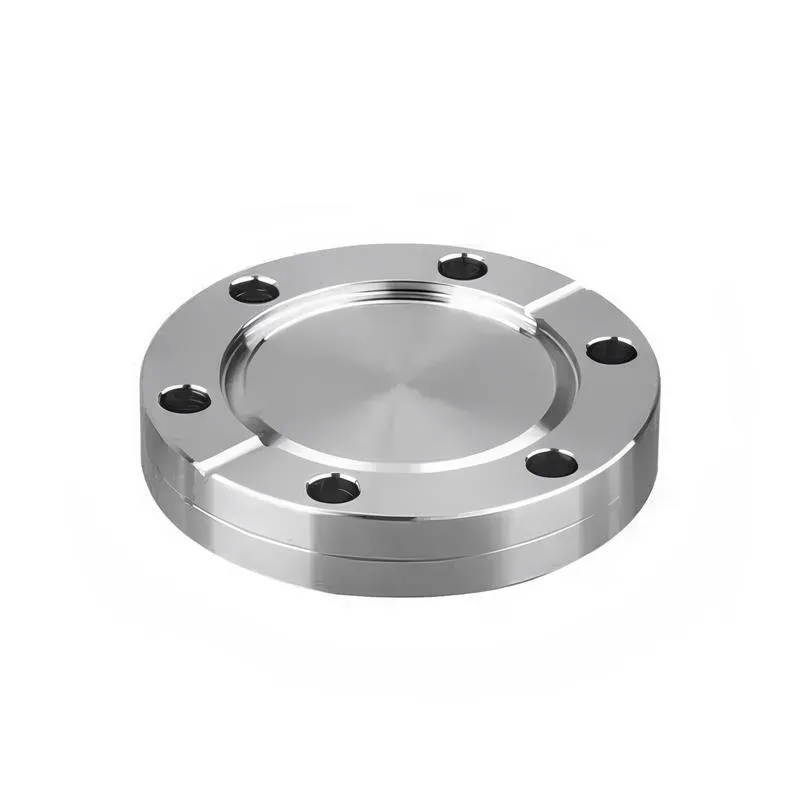
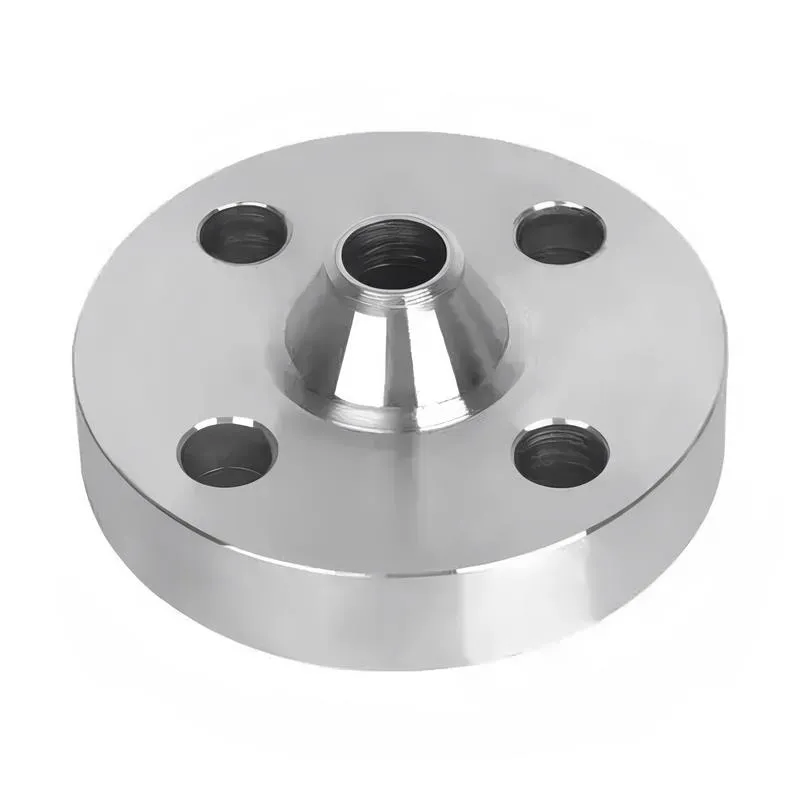
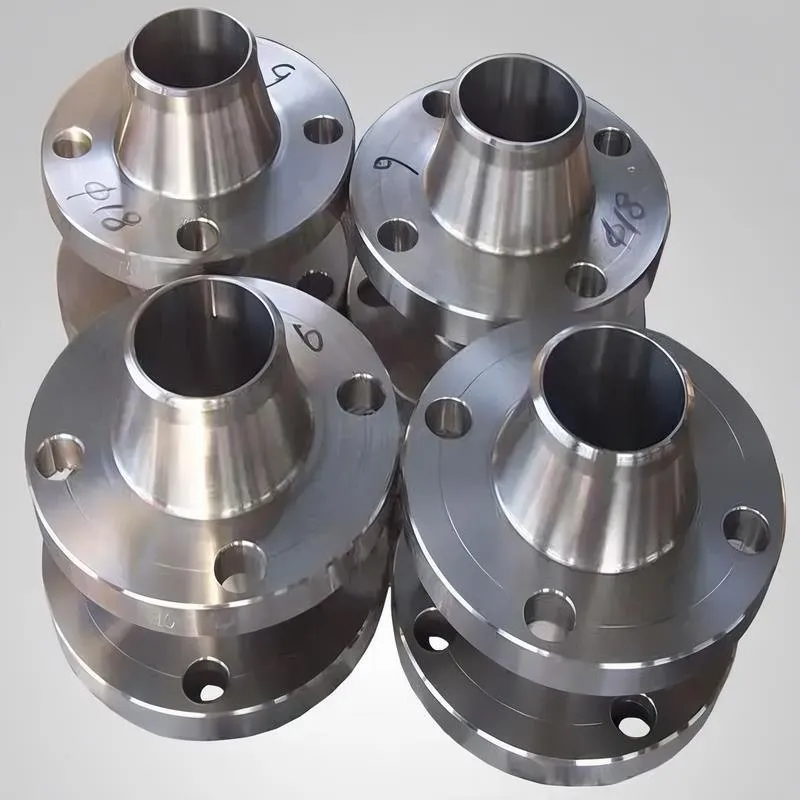
Plate Flat Welding Flange (PL), Necked Flat Welding Flange (SO), Necked Butt Welding Flange (WN), Integral Flange (IF), Socket Welding Flange (SW), Threaded Flange (Th), Butt Welding Ring Loose Flange (PJ/SE), Blind Flange (BL), Flat Welding Ring Loose Flange (PJ/PJ), and Lined Blind Flange (BL(s)).
2. **According to Petrochemical (SH) Industry Standards:** Flanges are classified as follows:
Threaded Flange (PL), Butt Welding Flange (WN), Flat Welding Flange (SO), Socket Welding Flange (SW), Loose Flange (LJ), and Blind Flange (no specific designation).
3. **According to Machinery (JB) Industry Standards:** Flanges are classified as follows:
Integral Flange, Butt Welding Flange, Plate Flat Welding Flange, Butt Welding Ring Plate Loose Flange, Flat Welding Ring Plate Loose Flange, Lap Joint Ring Plate Loose Flange, and Blind Flange.
4. **According to Connection Method/Type:** Flanges are classified as follows:
Plate Flat Welding Flange, Necked Flat Welding Flange, Necked Butt Welding Flange, Socket Welding Flange, Threaded Flange, Blind Flange, Necked Butt Welding Ring Loose Flange, Flat Welding Ring Loose Flange, Ring-Type Joint (RTJ) Flange and Blind Flange, Large-Diameter Plate Flange, Large-Diameter High-Neck Flange, Figure-8 Blind Plate, Butt Welding Ring Loose Flange, etc.
5. **According to the Component Being Connected:** Flanges can be classified into Vessel Flanges and Pipe Flanges.
6. **According to Structural Type:** Flanges include Integral Flanges, Threaded Flanges, Flat Welding Flanges, Butt Welding Flanges, Lap Joint (Loose/Swivel) Flanges, and Blind Flanges.
A flange—also referred to as a flange plate or rim—is a component used to connect shafts to one another, or, more commonly, to join the ends of pipes. Flanges are also utilized at the inlet and outlet ports of equipment to facilitate connections between two devices—for instance, the flange on a speed reducer. A "flange connection" or "flanged joint" refers to a detachable joint assembly comprising three interconnected elements—a flange, a gasket, and bolts—that together form a sealed structural unit. In the context of piping systems, a "pipe flange" specifically denotes a flange used for plumbing within the installation; when applied to equipment, it refers to the inlet or outlet flange of that specific device. Flanges feature a series of holes through which bolts are inserted to securely fasten the two flanges together, while a gasket placed between the flanges ensures a leak-proof seal. Flanges are broadly categorized into three types: threaded (screw-in) flanges, welded flanges, and clamp-type flanges. Flanges are invariably used in pairs; threaded flanges are suitable for low-pressure piping applications, whereas welded flanges are required for systems operating at pressures exceeding 4 kilograms per square centimeter. A sealing gasket is inserted between the two flange plates, which are then firmly secured using bolts. The thickness of a flange—as well as the specifications of the bolts used to fasten it—vary depending on the specific pressure rating required for the application. When connecting equipment such as water pumps or valves to piping systems, the corresponding connection points on these devices are often manufactured in the shape of a matching flange; this method of attachment is also referred to as a "flange connection." Generally, any connecting component that utilizes bolts to join and seal the perimeters of two flat surfaces—such as the joints in ventilation ducts—is termed a "flange"; such components may collectively be classified as "flange-type parts." However, since such a connection often constitutes merely a *portion* of a larger device—for instance, the interface between a flange and a water pump—it would be inappropriate to classify the entire water pump itself as a "flange-type part." Conversely, smaller components—such as valves—that feature such flanged interfaces may indeed be appropriately categorized as "flange-type parts."
-:-
For detailed product information, please contact sales.
-:
Latrobe LSS™ 4142 Alloy Steel Flange (AISI 4142) Product Information
-:-
For detailed product information, please contact sales.
-:
Latrobe LSS™ 4142 Alloy Steel Flange (AISI 4142) Synonyms
-:-
For detailed product information, please contact sales.
-:
Latrobe LSS™ 4142 Alloy Steel (AISI 4142) Product Information
-:-
For detailed product information, please contact sales.
-:
# **PRODUCT DATASHEET: LATROBE LSS™ 4142 ALLOY STEEL (AISI 4142)**
## **EXECUTIVE SUMMARY**
Latrobe LSS™ **4142 Alloy Steel** is a premium-grade **chromium-molybdenum medium-high carbon alloy steel** designed to deliver **enhanced strength and wear resistance** compared to standard 4140, while maintaining good toughness and hardenability. As a member of the versatile 41xx series, 4142 offers an optimal balance of **higher carbon content (0.40-0.45%) for increased hardness potential, combined with chromium-molybdenum alloying for deep hardenability and improved mechanical properties**. Latrobe's enhanced manufacturing processes ensure **superior cleanliness, consistent through-hardening characteristics, and predictable performance** in demanding applications requiring elevated strength-to-weight ratios.
This engineering steel is particularly valued for components requiring **higher surface hardness, improved wear resistance, and greater load-bearing capacity** than standard 4140 can provide, while avoiding the brittleness concerns of higher-carbon steels. With its **excellent response to heat treatment, good machinability in the annealed condition, and favorable fatigue properties**, 4142 serves as the material of choice for **heavy-duty gears, high-strength shafts, agricultural components, and industrial machinery parts** across multiple sectors.
---
## **METALLURGICAL DESIGN**
### **Material Philosophy**
4142 builds upon the successful 4140 formula with strategic modifications:
1. **Enhanced Strength Base:** Increased carbon content (0.40-0.45% vs. 0.38-0.43% in 4140) provides higher attainable hardness and tensile strength
2. **Optimized Toughness-Strength Balance:** Careful carbon control maintains adequate ductility and impact resistance despite higher strength potential
3. **Deep Hardenability:** Chromium (0.80-1.10%) and molybdenum (0.15-0.25%) work synergistically to ensure excellent through-hardening in substantial sections
4. **Temper Resistance:** Molybdenum addition provides good resistance to softening at elevated operating temperatures
### **Latrobe Manufacturing Advantages**
- **Precision Carbon Control:** Tight carbon range management for consistent hardenability response
- **Enhanced Steel Cleanliness:** Improved inclusion control for better fatigue performance
- **Controlled Grain Structure:** Optimized thermomechanical processing for ASTM 7-9 grain size
- **Uniform Alloy Distribution:** Ensures consistent properties throughout material cross-section
### **Microstructural Excellence**
- **Refined Pearlite-Ferrite Structure:** In normalized condition for optimal machinability
- **Controlled Carbide Distribution:** Favorable carbide morphology for wear resistance
- **Minimal Banding:** Reduced micro-segregation for improved transverse properties
- **Clean Steel Practice:** Low inclusion counts for enhanced fatigue life
---
## **CHEMICAL COMPOSITION**
### **Standard Composition Ranges (Weight %)**
| Element | Minimum | Maximum | Typical | Metallurgical Function |
|---------|---------|---------|---------|------------------------|
| **Carbon (C)** | 0.40 | 0.45 | 0.42 | Strength, hardness, hardenability base |
| **Manganese (Mn)** | 0.75 | 1.00 | 0.85 | Hardenability, strength, deoxidation |
| **Phosphorus (P)** | — | 0.035 | 0.015 | Residual (controlled for toughness) |
| **Sulfur (S)** | — | 0.040 | 0.020 | Machinability enhancement |
| **Silicon (Si)** | 0.15 | 0.35 | 0.25 | Deoxidation, strength, hardenability |
| **Chromium (Cr)** | 0.80 | 1.10 | 0.95 | Hardenability, wear resistance, corrosion resistance |
| **Molybdenum (Mo)** | 0.15 | 0.25 | 0.20 | Hardenability, temper resistance, toughness |
| **Nickel (Ni)** | — | 0.25 | 0.15 | Optional, enhances toughness |
### **Latrobe Premium Modifications**
- **Enhanced Purity:** Lower sulfur and phosphorus (S<0.015%, P<0.020%) for improved transverse properties
- **Lead-Free Option:** Standard version without lead for environmental compliance
- **Boron-Treated Variant:** Optional boron addition (0.0005-0.003%) for enhanced hardenability in large sections
- **Calcium Treatment:** Optional for improved sulfide shape control and machinability
### **Special Variants**
- **4142 Mod:** Modified chemistry for specific hardenability or toughness requirements
- **4142 QT:** Pre-quenched and tempered to various hardness levels
- **4142 ESR:** Electroslag remelted for superior cleanliness in critical applications
- **4142+V:** Vanadium microalloyed (0.05-0.15%) for grain refinement
### **Comparative Chemistry (vs. 4140)**
- **Higher Carbon:** 0.40-0.45% vs. 0.38-0.43% in 4140
- **Similar Alloying:** Comparable Cr, Mo, Mn, Si levels
- **Enhanced Strength Potential:** Approximately 10-15% higher attainable tensile strength
- **Slightly Reduced Toughness:** Impact values typically 10-15% lower than equivalent condition 4140
---
## **PHYSICAL PROPERTIES**
### **Basic Physical Constants**
| Property | Value | Units | Test Standard |
|----------|-------|--------|----------------|
| **Density** | 0.284 | lb/in³ (7.85 g/cm³) | ASTM B311 |
| **Melting Range** | 2600-2700 | °F (1425-1480°C) | |
| **Modulus of Elasticity** | 29.0 × 10⁶ | psi (200 GPa) | ASTM E111 |
| **Shear Modulus** | 11.2 × 10⁶ | psi (77 GPa) | ASTM E143 |
| **Poisson's Ratio** | 0.29 | | ASTM E132 |
| **Thermal Conductivity** | 21.3 | BTU·in/(hr·ft²·°F) @ 212°F | ASTM E1225 |
| **Specific Heat** | 0.11 | BTU/(lb·°F) @ 68-212°F | ASTM E1269 |
| **Coefficient of Thermal Expansion** | 6.3 × 10⁻⁶ | /°F (20-200°C) | ASTM E228 |
| **Electrical Resistivity** | 41 | μΩ·cm | ASTM B193 |
| **Magnetic Permeability** | Ferromagnetic | | |
### **Thermal Properties by Temperature**
| Temperature | Thermal Conductivity | Specific Heat | CTE |
|-------------|----------------------|---------------|-----|
| **68°F (20°C)** | 20.8 BTU·in/(hr·ft²·°F) | 0.11 BTU/(lb·°F) | 6.3 × 10⁻⁶ /°F |
| **212°F (100°C)** | 21.3 BTU·in/(hr·ft²·°F) | 0.12 BTU/(lb·°F) | 6.5 × 10⁻⁶ /°F |
| **392°F (200°C)** | 21.8 BTU·in/(hr·ft²·°F) | 0.13 BTU/(lb·°F) | 6.8 × 10⁻⁶ /°F |
| **572°F (300°C)** | 22.3 BTU·in/(hr·ft²·°F) | 0.14 BTU/(lb·°F) | 7.0 × 10⁻⁶ /°F |
---
## **MECHANICAL PROPERTIES**
### **Typical Properties in Various Conditions**
#### **Normalized and Tempered (1650-1700°F normalize, 1200°F temper)**
| Property | Value | Units |
|----------|-------|--------|
| **Tensile Strength** | 100-115 | ksi (690-795 MPa) |
| **Yield Strength (0.2%)** | 65-80 | ksi (450-550 MPa) |
| **Elongation (2")** | 16-20 | % |
| **Reduction of Area** | 40-50 | % |
| **Hardness** | 207-241 | HB (95-100 HRB) |
| **Charpy V-Notch Impact** | 35-55 | ft-lb @ 68°F |
#### **Annealed Condition (Full Anneal)**
| Property | Value | Units |
|----------|-------|--------|
| **Hardness** | 163-212 | HB (87-95 HRB) |
| **Tensile Strength** | 80-95 | ksi (550-655 MPa) |
| **Yield Strength** | 50-65 | ksi (345-450 MPa) |
| **Machinability Rating** | 60-65 | % of 1212 steel |
#### **As-Rolled or As-Forged**
| Property | Value | Units |
|----------|-------|--------|
| **Hardness** | 223-277 | HB (97-27 HRC) |
| **Tensile Strength** | 110-130 | ksi (760-895 MPa) |
### **Quenched and Tempered Properties**
#### **Oil Quenched from 1550°F (843°C)**
| Tempering Temperature | Hardness | Tensile Strength | Yield Strength | Impact Energy |
|----------------------|----------|------------------|----------------|---------------|
| **400°F (204°C)** | 52-56 HRC | 255-275 ksi | 215-235 ksi | 12-20 ft-lb |
| **600°F (316°C)** | 47-51 HRC | 225-245 ksi | 195-215 ksi | 18-28 ft-lb |
| **800°F (427°C)** | 40-44 HRC | 190-210 ksi | 170-190 ksi | 25-35 ft-lb |
| **1000°F (538°C)** | 32-36 HRC | 150-170 ksi | 135-155 ksi | 35-50 ft-lb |
| **1200°F (649°C)** | 27-30 HRC | 125-145 ksi | 110-130 ksi | 45-65 ft-lb |
### **Hardenability Data (Jominy End-Quench Test)**
| Distance from Quenched End | Hardness (HRC) |
|----------------------------|----------------|
| **1/16" (1.6 mm)** | 57-62 |
| **1/8" (3.2 mm)** | 56-61 |
| **1/4" (6.4 mm)** | 54-59 |
| **1/2" (12.7 mm)** | 50-55 |
| **1" (25.4 mm)** | 42-47 |
| **2" (50.8 mm)** | 34-39 |
**Note:** Through-hardenable to approximately 2.25 inches (57 mm) diameter in oil quench
### **Fatigue Properties**
| Condition | Endurance Limit (10⁷ cycles) | Fatigue Ratio |
|-----------|----------------------------|---------------|
| **Normalized** | 55-60 ksi | 0.50-0.55 |
| **Q&T @ 1200°F** | 70-75 ksi | 0.50-0.55 |
| **Q&T @ 1000°F** | 80-85 ksi | 0.50-0.55 |
| **Q&T @ 800°F** | 95-100 ksi | 0.50-0.55 |
| **Q&T @ 400°F** | 115-125 ksi | 0.45-0.50 |
### **Cryogenic and Elevated Temperature Properties**
#### **Low Temperature Impact Strength**
| Temperature | Charpy V-Notch Impact |
|-------------|-----------------------|
| **+68°F (+20°C)** | 35-55 ft-lb |
| **+32°F (0°C)** | 30-50 ft-lb |
| **-40°F (-40°C)** | 20-40 ft-lb |
| **-100°F (-73°C)** | 12-30 ft-lb |
#### **Elevated Temperature Strength**
| Temperature | Yield Strength Retention |
|-------------|--------------------------|
| **Room Temperature** | 100% |
| **400°F (204°C)** | 90-94% |
| **600°F (316°C)** | 78-83% |
| **800°F (427°C)** | 63-68% |
| **1000°F (538°C)** | 43-48% |
### **Comparison with 4140 (Typical Q&T @ 1000°F)**
| Property | 4142 | 4140 | Difference |
|----------|------|------|------------|
| **Hardness** | 32-36 HRC | 30-34 HRC | +2 HRC |
| **Tensile Strength** | 150-170 ksi | 140-160 ksi | +10 ksi |
| **Yield Strength** | 135-155 ksi | 125-145 ksi | +10 ksi |
| **Elongation** | 12-16% | 14-18% | -2% |
| **Impact Energy** | 35-50 ft-lb | 40-55 ft-lb | -5 ft-lb |
---
## **MACHINABILITY**
### **Machining Characteristics**
#### **Annealed Condition (~187 HB)**
- **Machinability Rating:** 60-65% of 1212 steel
- **Tool Life Expectancy:** Good with proper tooling and parameters
- **Chip Formation:** Produces manageable discontinuous chips
- **Surface Finish:** Very good with proper technique and tooling
#### **Recommended Cutting Parameters**
| Operation | Speed (SFM) | Feed | Depth of Cut | Tool Material |
|-----------|-------------|------|--------------|---------------|
| **Turning** | 190-230 | 0.010-0.018 IPR | 0.100-0.225" | C2/C3 Carbide |
| **Milling** | 140-180 | 0.004-0.007 IPT | 0.100-0.180" | HSS or Carbide |
| **Drilling** | 75-110 | 0.005-0.009 IPR | Full diameter | HSS Drills |
| **Tapping** | 35-55 | — | — | HSS Taps |
| **Sawing** | 90-140 FPM | Moderate | — | Bimetal Blades |
### **Grindability**
- **Relative Grindability:** Good (75% of W1 water-hardening steel)
- **Recommended Wheels:** Aluminum oxide (32A-46J-V)
- **Coolant:** Water-soluble grinding fluid essential
- **Burning Sensitivity:** Moderate - requires proper technique and coolant
### **Non-Traditional Machining**
- **EDM:** Excellent performance, slightly slower than 4140
- **Laser Cutting:** Good with optimized parameters
- **Waterjet:** Excellent, no heat-affected zone concerns
- **Plasma Cutting:** Good for sections up to 2 inches
---
## **HEAT TREATMENT**
### **Annealing**
- **Full Anneal:** 1525-1575°F (829-857°C), slow furnace cool (25°F/hour)
- **Process Anneal:** 1250-1300°F (677-704°C), air cool
- **Spheroidize Anneal:** 1325-1375°F (718-746°C), slow cool or cycling
- **Resultant Hardness:** 163-212 HB
### **Normalizing**
- **Temperature:** 1625-1675°F (885-913°C)
- **Time:** 1 hour per inch of thickness
- **Cooling:** Air cool
- **Purpose:** Grain refinement, homogenization, stress relief
### **Hardening**
1. **Preheat:** 1200-1250°F (649-677°C) - critical for crack prevention
2. **Austenitize:** 1525-1550°F (829-843°C) - precise temperature control essential
3. **Soak Time:** 20-30 minutes per inch at temperature
4. **Quench Medium:** Oil quench preferred (fast oil for maximum hardness)
5. **Quench Temperature:** Cool to 125-150°F (52-66°C)
6. **Immediate Tempering:** Mandatory - begin within 1 hour of quenching
### **Tempering**
- **Temperature Range:** 350-1250°F (177-677°C)
- **Time:** 1-2 hours per inch, minimum 1.5 hours
- **Double Tempering:** Strongly recommended for maximum toughness and stability
- **Cooling:** Air cool after tempering; water or oil cooling not recommended
### **Surface Hardening Methods**
#### **Induction Hardening**
- **Frequency:** 3-10 kHz for deeper cases, 50-200 kHz for shallow cases
- **Case Depth:** 0.030-0.250" (0.76-6.35 mm) achievable
- **Surface Hardness:** 55-60 HRC typical
- **Applications:** Gears, shafts, wear surfaces
#### **Flame Hardening**
- **Fuel:** Oxy-acetylene or oxy-propane
- **Case Depth:** 0.060-0.150" (1.5-3.8 mm)
- **Surface Hardness:** 53-58 HRC
- **Applications:** Large gears, rolls, sheave wheels
#### **Carburizing**
- **Temperature:** 1700-1750°F (927-954°C)
- **Case Depth:** 0.020-0.100" (0.5-2.5 mm)
- **Surface Hardness:** 58-63 HRC after hardening
- **Applications:** High-wear components requiring tough core
#### **Nitriding**
- **Temperature:** 975-1050°F (524-566°C)
- **Case Depth:** 0.008-0.020" (0.2-0.5 mm)
- **Surface Hardness:** 65-72 HRC
- **Advantages:** Minimal distortion, good wear and fatigue resistance
### **Heat Treatment Response Chart**
| Condition | Hardness | Tensile Strength | Key Applications |
|-----------|----------|------------------|------------------|
| **Annealed** | 163-212 HB | 80-95 ksi | Machining, forming |
| **Normalized** | 207-241 HB | 100-115 ksi | General purpose parts |
| **Q&T @ 1200°F** | 27-30 HRC | 125-145 ksi | High toughness components |
| **Q&T @ 1000°F** | 32-36 HRC | 150-170 ksi | General high-strength parts |
| **Q&T @ 800°F** | 40-44 HRC | 190-210 ksi | Gears, shafts, high-stress parts |
| **Q&T @ 400°F** | 52-56 HRC | 255-275 ksi | Maximum hardness applications |
---
## **INTERNATIONAL STANDARDS & SPECIFICATIONS**
### **Primary Material Standards**
| Standard | Designation | Equivalent/Synonymous Grades |
|----------|-------------|-----------------------------|
| **ASTM A29/A29M** | 4142 | Primary US Standard |
| **AISI/SAE** | 4142 | American Iron and Steel Institute |
| **UNS** | G41420 | Unified Numbering System |
| **AMS** | 6381 | Aerospace Material Specification |
| **ASME** | SA-29 | ASME Boiler and Pressure Vessel Code |
| **DIN** | 1.7227 | 42CrMo4+ (similar) |
| **EN** | 1.7227 | European Standard |
| **ISO** | 42CrMo4 | International Standard (similar) |
| **JIS** | SCM440 | Japanese Industrial Standard (similar) |
| **GB** | 42CrMo | Chinese Standard (similar) |
### **Industry-Specific Specifications**
- **Automotive:** SAE J404, J412
- **Aerospace:** AMS 6381 for bars and forgings
- **Agriculture:** OEM specifications for implement components
- **Oil & Gas:** API specifications for certain non-critical components
- **Military:** MIL-S-6049 for some applications
### **Heat Treatment Standards**
- **ASTM A255:** Standard Test Method for End-Quench Test
- **ASTM A304:** Standard Specification for Alloy Steel Bars
- **ISO 683-1:** Heat-treatable steels, alloy steels and free-cutting steels
### **Testing Standards**
- **ASTM A370:** Standard Test Methods for Mechanical Testing
- **ASTM E112:** Standard Test Methods for Determining Average Grain Size
- **ASTM E45:** Standard Test Methods for Determining Inclusion Content
- **ASTM E384:** Standard Test Method for Microindentation Hardness
---
## **APPLICATIONS**
### **Automotive Industry**
- **Transmission Components:** Gears, synchronizer hubs, shift forks
- **Driveline Parts:** Axle shafts, drive shafts, yokes
- **Engine Components:** Crankshafts (medium-duty), camshafts, rocker arms
- **Suspension:** Torsion bars, stabilizer bars, steering components
- **Fasteners:** High-strength bolts, wheel studs
### **Agricultural Equipment**
- **Implement Components:** Plow shares, cultivator shanks, tillage tools
- **Tractor Parts:** Gears, shafts, hydraulic cylinder rods
- **Harvesting Equipment:** Cutter bars, augers, drive components
- **PTO Components:** Power take-off shafts, yokes, couplings
### **Industrial Machinery**
- **Gear Manufacturing:** Industrial gears, pinions, sprockets
- **Shafting:** Line shafts, counter shafts, spindle shafts
- **Hydraulic Components:** Piston rods, cylinder barrels, pump parts
- **Machine Tools:** Lead screws, ways, tool holders
### **Oil & Gas Industry**
- **Drilling Equipment:** Tool joints, subs, stabilizers (non-critical)
- **Valve Components:** Valve stems, gates, seats (for moderate service)
- **Pump Parts:** Shafts, impellers, wear rings
- **Fittings:** High-pressure couplings, flanges
### **Construction & Mining**
- **Earthmoving Equipment:** Track links, rollers, idlers
- **Excavator Components:** Bucket teeth adapters, stick arms
- **Crane Components:** Shafts, gears, sheaves
- **Mining Tools:** Drill steel, cutter bits, conveyor components
### **Other Applications**
- **Forging Dies:** For non-ferrous and lower-temperature forging
- **Plastic Molds:** Core pins, ejector pins, mold bases for engineering plastics
- **Railroad Components:** Coupler parts, suspension components
- **Material Handling:** Conveyor rollers, drive components
### **Application-Specific Recommendations**
| Application | Recommended Condition | Hardness | Key Requirements |
|-------------|-----------------------|----------|------------------|
| **Medium-Duty Gears** | Q&T @ 800-900°F | 38-42 HRC | Wear resistance, bending strength |
| **Agricultural Tools** | Q&T @ 1000-1100°F | 30-35 HRC | Impact resistance, wear |
| **Hydraulic Rods** | Q&T @ 800-900°F | 38-42 HRC | Wear resistance, straightness |
| **Axle Shafts** | Q&T @ 1000-1100°F | 30-35 HRC | Torsional strength, fatigue |
| **High-Strength Bolts** | Q&T @ 800-900°F | 38-42 HRC | Tensile strength, thread integrity |
### **Selection Guidelines: 4142 vs. 4140**
- **Choose 4142 When:** Higher strength/wear resistance needed, moderate toughness sufficient
- **Choose 4140 When:** Maximum toughness required, slightly lower strength acceptable
- **Consider Higher Carbon (4150):** When even higher wear resistance needed with acceptable toughness reduction
- **Consider Lower Carbon (4130):** When maximum weldability/formability needed with moderate strength
---
## **WELDING & JOINING**
### **Weldability Characteristics**
- **Carbon Equivalent (IIW):** Approximately 0.75-0.85
- **Carbon Equivalent (CEN):** Approximately 0.45-0.55
- **Weldability Rating:** Fair - requires careful procedures
- **Preheat Requirement:** Required for thickness >0.25"
- **Post-Weld Heat Treatment:** Generally required for restored properties
### **Recommended Welding Processes**
1. **Shielded Metal Arc (SMAW):** With low-hydrogen electrodes
2. **Gas Metal Arc (GMAW):** Using 75% Argon/25% CO₂ mixture
3. **Gas Tungsten Arc (GTAW):** For precision and critical joints
4. **Flux-Cored Arc (FCAW):** With gas-shielded wires for better quality
5. **Submerged Arc (SAW):** For thick sections with proper flux
### **Filler Metal Selection**
- **Matching Strength:** E11018-M, ER110S-G, E10018-D2
- **High Toughness Options:** ENiCrFe-2, ENiCrMo-3 for critical applications
- **Austenitic Stainless:** 309L for dissimilar joints or corrosion overlay
- **Hardfacing Alloys:** For wear-resistant surfaces
### **Welding Procedures**
- **Preheat Temperature:** 400-600°F (204-316°C)
- **Interpass Temperature:** 400-600°F (204-316°C)
- **Post-Weld Heat Treatment:** Stress relieve at 1100-1200°F (593-649°C)
- **For Restored Properties:** Re-austenitize and temper
- **Peening:** Light peening between passes for stress relief
### **Special Considerations**
- **Hydrogen Control:** Essential - use baked electrodes, clean materials
- **Joint Design:** Avoid sharp notches, provide adequate throat thickness
- **Heat Input Control:** Moderate heat input (25-45 kJ/inch) recommended
- **Pre/Post-Weld Inspection:** NDT recommended for critical applications
---
## **CORROSION BEHAVIOR & PROTECTION**
### **Corrosion Resistance**
- **General Corrosion:** Similar to other low-alloy steels (poor without protection)
- **Atmospheric Corrosion:** Requires protective coatings for outdoor use
- **Galvanic Corrosion:** Can occur when coupled with more noble metals
- **Stress Corrosion Cracking:** Possible in certain environments (chlorides, caustics)
### **Protective Treatments**
- **Electroplating:** Zinc, cadmium, nickel, chromium
- **Hot Dip Galvanizing:** Excellent protection for outdoor applications
- **Phosphating:** For paint adhesion and mild corrosion resistance
- **Black Oxide:** For appearance and mild protection
- **Organic Coatings:** Paints, powder coatings for decorative and protective purposes
### **Environmental Considerations**
- **Rural Atmospheres:** Moderate protection usually sufficient
- **Industrial/Marine:** Heavy protection required (epoxy coatings, galvanizing)
- **Indoor/Dry Environments:** Minimal protection often adequate
- **Chemical Exposure:** Dependent on specific chemicals and concentrations
---
## **QUALITY ASSURANCE**
### **Standard Testing**
- **Chemical Analysis:** Spectroscopic verification of all elements
- **Hardness Testing:** Brinell, Rockwell, or Vickers as specified
- **Tensile Testing:** Per ASTM A370 at room temperature
- **Impact Testing:** Charpy V-notch at specified temperatures if required
- **Macroetch Testing:** For internal soundness assessment
### **Premium Quality Features**
- **Ultrasonic Testing:** For internal defect detection in critical applications
- **Magnetic Particle Inspection:** For surface and near-surface defects
- **Dye Penetrant Inspection:** For surface quality verification
- **Grain Size Verification:** ASTM E112 for microstructure control
- **Inclusion Rating:** ASTM E45 for steel cleanliness assessment
### **Certification Levels**
- **Mill Test Report (MTR):** Standard chemistry and hardness
- **Certified MTR:** Includes full mechanical test results
- **Third Party Certification:** Independent laboratory verification
- **Full Traceability:** Complete heat-to-product tracking with processing records
### **Latrobe Quality Enhancements**
- **Enhanced Cleanliness:** Lower inclusion counts than standard requirements
- **Improved Consistency:** Tighter property ranges for predictable performance
- **Superior Surface Quality:** Better surface finish in as-supplied condition
- **Technical Support:** Comprehensive metallurgical assistance available
---
## **AVAILABILITY & ORDERING**
### **Standard Forms & Sizes**
- **Round Bars:** 1/4" to 20" diameter
- **Square Bars:** 1/4" to 10" square
- **Flat Bars:** Up to 10" thick × 36" wide
- **Hexagonal Bars:** Standard sizes up to 4" across flats
- **Billets & Blooms:** For forging applications
- **Forgings:** Custom shapes to customer specifications
- **Plate:** Up to 6" thick × 96" wide
### **Standard Conditions**
- **Hot Rolled:** As-rolled, annealed, or normalized
- **Cold Finished:** Turned, ground, polished, or peeled
- **Heat Treated:** Quenched and tempered to specified hardness
- **Stress Relieved:** For dimensional stability in machining
### **Special Processing Options**
- **Rough Machining:** To customer prints and tolerances
- **Heat Treatment:** Custom cycles to specific requirements
- **Testing & Inspection:** Additional testing per customer specifications
- **Certification:** Various documentation levels available
- **Just-in-Time Delivery:** Scheduled delivery programs
### **Lead Time Guidelines**
- **Stock Items:** 1-2 weeks for standard sizes and conditions
- **Production Items:** 4-6 weeks for standard processing
- **Special Processing:** Additional 2-3 weeks for heat treatment, testing
- **Custom Forging:** 6-10 weeks depending on size and complexity
- **Export Orders:** Additional time for documentation and shipping
### **Packaging Options**
- **Standard:** Bundled with protective end caps
- **Premium:** Individual VCI paper wrap for corrosion protection
- **Export:** Crated with full weather protection
- **Custom:** To specific customer requirements
---
## **TECHNICAL SUPPORT**
Latrobe provides comprehensive technical support for 4142 applications:
### **Engineering Support Services**
- Material selection and substitution analysis
- Heat treatment recommendations and cycle development
- Machining parameter optimization
- Welding procedure development and qualification
- Application engineering for specific components
### **Problem Solving Capabilities**
- Failure analysis and investigation
- Processing trouble-shooting
- Quality issue resolution
- Application optimization studies
### **Training & Education**
- Material characteristics seminars
- Heat treatment best practices workshops
- Machining optimization training
- Welding procedure training
### **Laboratory Services**
- Mechanical testing
- Metallographic analysis
- Chemical analysis
- Non-destructive testing
### **Contact Information**
**Latrobe Specialty Metals Technical Services**
Phone: +1 (724) 537-7711
Email: technicalservices@latrobemetals.com
Emergency Technical Support: +1 (724) 539-7711 (24/7)
Website: www.latrobemetals.com
---
## **ENVIRONMENTAL & SAFETY**
### **Material Safety**
- **MSDS Available:** Material Safety Data Sheet upon request
- **Handling:** Standard steel handling procedures apply
- **Machining:** Use appropriate coolant, ventilation, and personal protective equipment
- **Heat Treatment:** Follow standard furnace safety procedures
- **Welding:** Adequate ventilation and protective equipment required
### **Environmental Impact**
- **Recyclability:** 100% recyclable as steel scrap
- **Disposal:** Scrap steel should be recycled through proper channels
- **Coolant Management:** Proper disposal of cutting and grinding fluids required
- **Energy Efficiency:** Optimized processing for minimal energy consumption
### **Regulatory Compliance**
- **RoHS Compliant:** Yes - contains no restricted substances
- **REACH Registered:** Yes - fully compliant with EU regulations
- **Conflict Minerals:** Compliant with all conflict mineral regulations
- **California Prop 65:** Contains no substances requiring warning under Prop 65
### **Sustainable Manufacturing**
- **Energy Efficient Production:** Modern melting and processing equipment
- **Recycling Emphasis:** High percentage of recycled content in charge materials
- **Waste Minimization:** Efficient yield and scrap recovery programs
- **Environmental Management:** ISO 14001 certified environmental management system
---
## **COMPARATIVE ADVANTAGES**
### **vs. Similar Medium-Carbon Alloy Steels**
| Property | 4142 | 4140 | 4150 | 4340 |
|----------|------|------|------|------|
| **Carbon Content** | 0.40-0.45% | 0.38-0.43% | 0.48-0.53% | 0.38-0.43% |
| **Primary Alloy** | Cr-Mo | Cr-Mo | Cr-Mo | Ni-Cr-Mo |
| **Typical Hardness (Q&T)** | 32-36 HRC | 30-34 HRC | 34-38 HRC | 32-36 HRC |
| **Tensile Strength** | 150-170 ksi | 140-160 ksi | 160-180 ksi | 150-170 ksi |
| **Impact Toughness** | Good | Very Good | Fair | Excellent |
| **Hardenability** | Very Good | Very Good | Excellent | Excellent |
| **Cost Factor** | Moderate | Moderate | Moderate | High |
| **Primary Advantage** | Strength/Wear Balance | Toughness/Strength Balance | Maximum Wear | Maximum Toughness |
### **Latrobe LSS™ 4142 Advantages**
- **Enhanced Consistency:** Tighter property control for predictable performance
- **Superior Cleanliness:** Improved steelmaking practices for better fatigue life
- **Technical Expertise:** Comprehensive application support from metallurgical experts
- **Reliable Supply:** Consistent availability from established manufacturer
- **Quality Assurance:** Enhanced testing and certification options
### **Selection Decision Guide**
- **For Maximum Toughness:** Choose 4140 or 4340
- **For Maximum Wear Resistance:** Choose 4150 or carburized 4142
- **For Best Cost/Performance Balance:** Choose 4142
- **For Weldability Priority:** Choose 4130 or 8620
- **For Maximum Hardenability in Large Sections:** Choose 4340 or boron-treated 4142
---
## **DISCLAIMER**
### **Important Notices**
1. **Technical Data:** The information provided represents typical values and characteristics. Actual properties may vary based on specific processing, heat treatment, section size, and testing methods.
2. **Application Suitability:** Users should evaluate material suitability for specific applications, including all service conditions and requirements.
3. **Heat Treatment Dependence:** Mechanical properties are highly dependent on proper heat treatment. Users should validate heat treatment cycles for their specific applications and equipment.
4. **Safety Responsibility:** Users are responsible for implementing appropriate safety procedures when handling, machining, heat treating, and welding this material.
5. **Intellectual Property:** This datasheet contains proprietary information of Latrobe Specialty Metals. Unauthorized reproduction or distribution is prohibited.
### **Warranty Information**
Latrobe Specialty Metals warrants that material supplied will meet the chemical and physical specifications agreed upon at the time of order. Final performance in specific applications depends on proper processing by the customer, including but not limited to heat treatment, machining, and fabrication. Consultation with Latrobe technical staff is recommended for critical applications.
### **Revision Information**
**Document Number:** LSS-4142-DS-2024-01
**Effective Date:** January 2024
**Supersedes:** All previous versions
**Next Review Date:** January 2025
**Revision History:** Available upon request
---
*© 2024 Latrobe Specialty Metals. All rights reserved.*
*LSS™ is a trademark of Latrobe Specialty Metals.*
*AISI 4142 is a standard designation of SAE International.*
*All other trademarks are property of their respective owners.*
**Latrobe Specialty Metals**
A TimkenSteel Company
2626 Ligonier Street
Latrobe, PA 15650 USA
Phone: +1 (724) 537-7711
www.latrobemetals.com
-:-
For detailed product information, please contact sales.
-:
Latrobe LSS™ 4142 Alloy Steel (AISI 4142) Specification
Dimensions
Size:
Diameter 20-1000 mm Length <6472 mm
Size:We can customized as required
Standard:
Per your request or drawing
We can customized as required
Properties(Theoretical)
Chemical Composition
-:-
For detailed product information, please contact sales.
-:
Latrobe LSS™ 4142 Alloy Steel (AISI 4142) Properties
-:-
For detailed product information, please contact sales.
-:
Applications of Latrobe LSS™ 4142 Alloy Steel Flange (AISI 4142)
-:-
For detailed product information, please contact sales.
-:
Chemical Identifiers Latrobe LSS™ 4142 Alloy Steel Flange (AISI 4142)
-:-
For detailed product information, please contact sales.
-:
Packing of Latrobe LSS™ 4142 Alloy Steel Flange (AISI 4142)
-:-
For detailed product information, please contact sales.
-:
Standard Packing:
-:-
For detailed product information, please contact sales.
-:
Typical bulk packaging includes palletized plastic 5 gallon/25 kg. pails, fiber and Steel Flange drums to 1 ton super sacks in full container (FCL) or truck load (T/L) quantities. Research and sample quantities and hygroscopic, oxidizing or other air sensitive materials may be packaged under argon or vacuum. Solutions are packaged in polypropylene, plastic or glass jars up to palletized 2943 gallon liquid totes Special package is available on request. E FORUs’ is carefully handled to minimize damage during storage and transportation and to preserve the quality of our products in their original condition