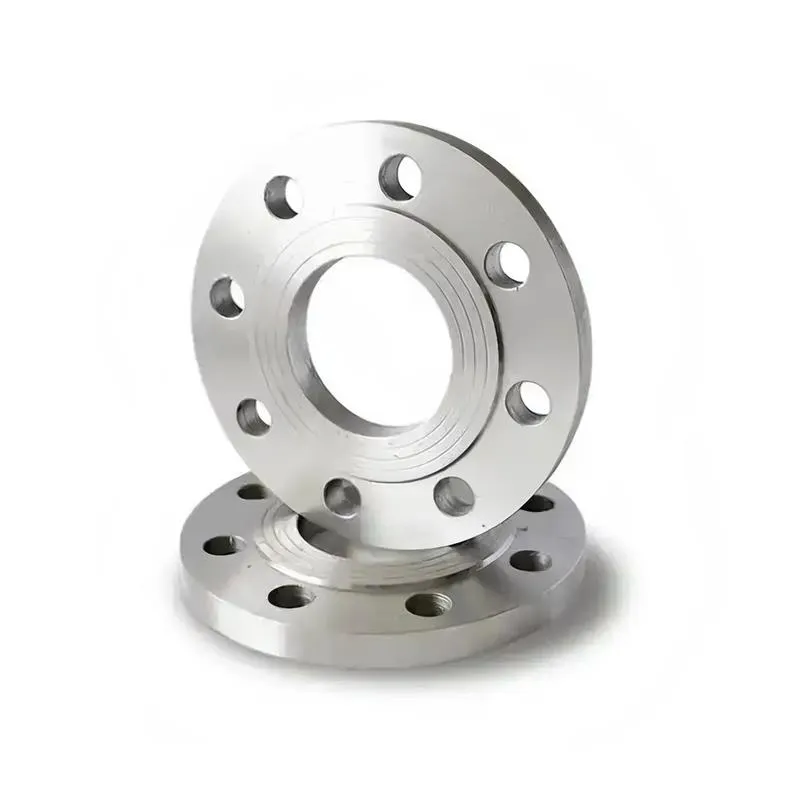
1,We Manufacturing processes are primarily classified into four types:
1:Forging,
2:Casting,
3:Cutting,
4:Rolling.
2,We can manufacture in accordance with these standards.
Standards:
GB Series (Chinese Standards), JB Series (Machinery Standards), HG Series (Chemical Industry Standards), ASME B16.5 (American Standards), BS4504 (British Standards), DIN (German Standards), and JIS (Japanese Standards).
Internationally, there are two primary systems of pipe flange standards: the European system, represented by the German DIN standards (including those of the former Soviet Union), and the American system, represented by the US ANSI pipe flange standards. Other common standards include: the Chinese Ministry of Machinery Industry standards (JB series), the Ministry of Chemical Industry standards (HG series), the Chinese National Standard *GB/T 9112–9124-2010 Steel Pipe Flanges*, as well as US standards (ASME B16.5), British standards (BS4504), German standards (DIN), Japanese standards (JIS), and marine standards (CBM), among others.
The nominal pressure ratings for the PN series are designated by "PN" and comprise the following nine levels: PN2.5, PN6, PN10, PN16, PN25, PN40, PN63, PN100, and PN160.
The nominal pressure ratings for the Class series are designated by "Class" and comprise the following six levels: Class150, Class300, Class600, Class900, Class1500, and Class2500.
Flange Classification
1. **According to Chemical Industry Standards:** Flanges are classified as follows:
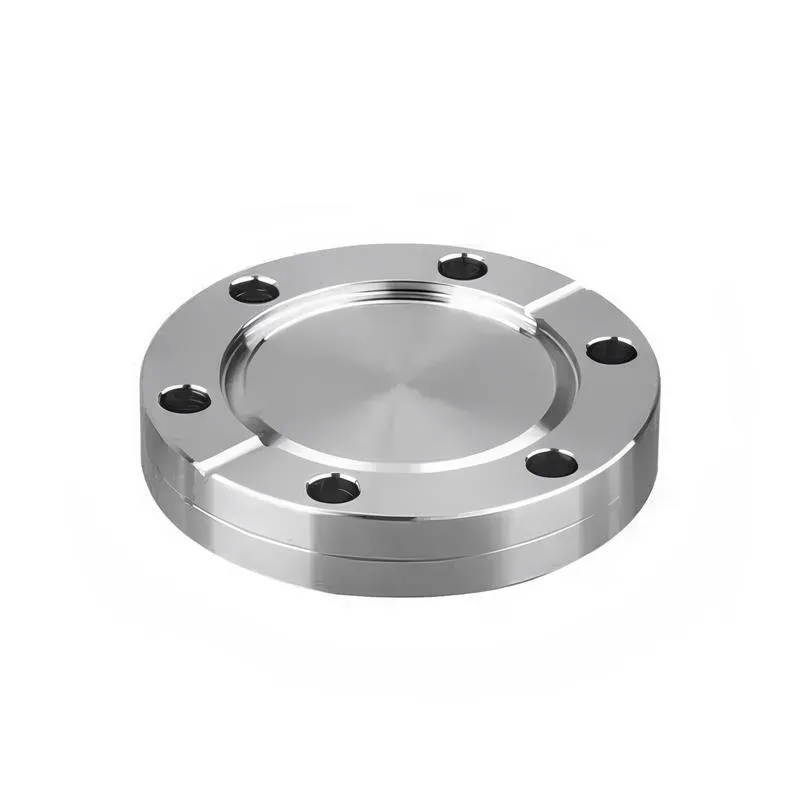
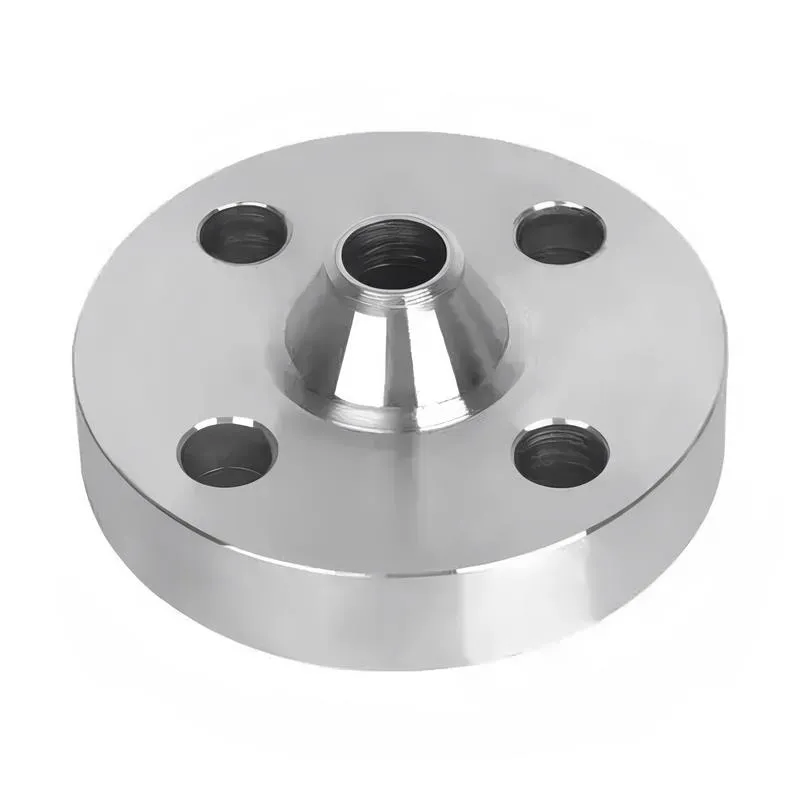
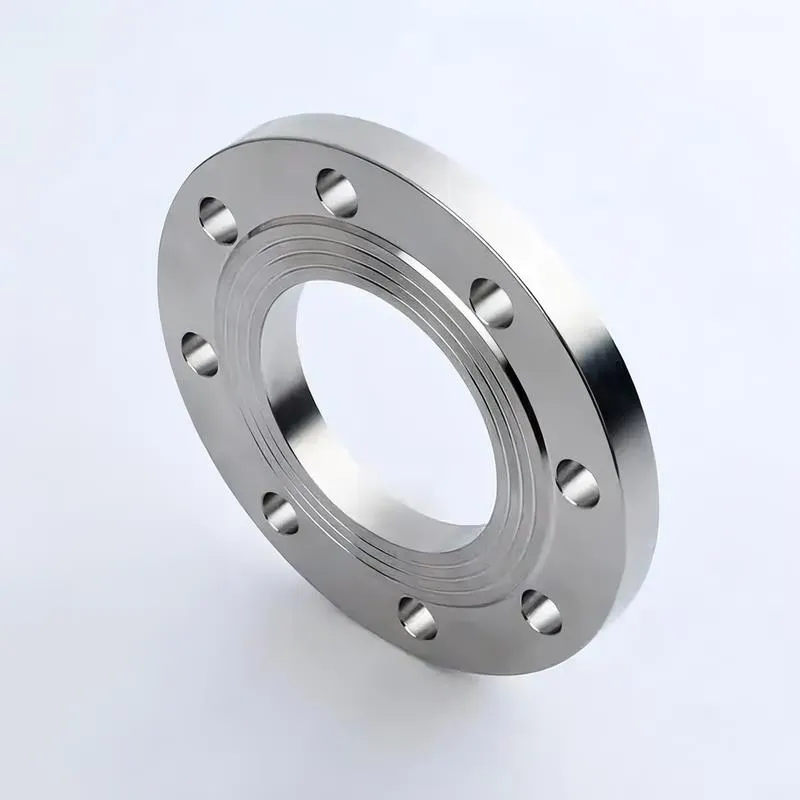
Plate Flat Welding Flange (PL), Necked Flat Welding Flange (SO), Necked Butt Welding Flange (WN), Integral Flange (IF), Socket Welding Flange (SW), Threaded Flange (Th), Butt Welding Ring Loose Flange (PJ/SE), Blind Flange (BL), Flat Welding Ring Loose Flange (PJ/PJ), and Lined Blind Flange (BL(s)).
2. **According to Petrochemical (SH) Industry Standards:** Flanges are classified as follows:
Threaded Flange (PL), Butt Welding Flange (WN), Flat Welding Flange (SO), Socket Welding Flange (SW), Loose Flange (LJ), and Blind Flange (no specific designation).
3. **According to Machinery (JB) Industry Standards:** Flanges are classified as follows:
Integral Flange, Butt Welding Flange, Plate Flat Welding Flange, Butt Welding Ring Plate Loose Flange, Flat Welding Ring Plate Loose Flange, Lap Joint Ring Plate Loose Flange, and Blind Flange.
4. **According to Connection Method/Type:** Flanges are classified as follows:
Plate Flat Welding Flange, Necked Flat Welding Flange, Necked Butt Welding Flange, Socket Welding Flange, Threaded Flange, Blind Flange, Necked Butt Welding Ring Loose Flange, Flat Welding Ring Loose Flange, Ring-Type Joint (RTJ) Flange and Blind Flange, Large-Diameter Plate Flange, Large-Diameter High-Neck Flange, Figure-8 Blind Plate, Butt Welding Ring Loose Flange, etc.
5. **According to the Component Being Connected:** Flanges can be classified into Vessel Flanges and Pipe Flanges.
6. **According to Structural Type:** Flanges include Integral Flanges, Threaded Flanges, Flat Welding Flanges, Butt Welding Flanges, Lap Joint (Loose/Swivel) Flanges, and Blind Flanges.
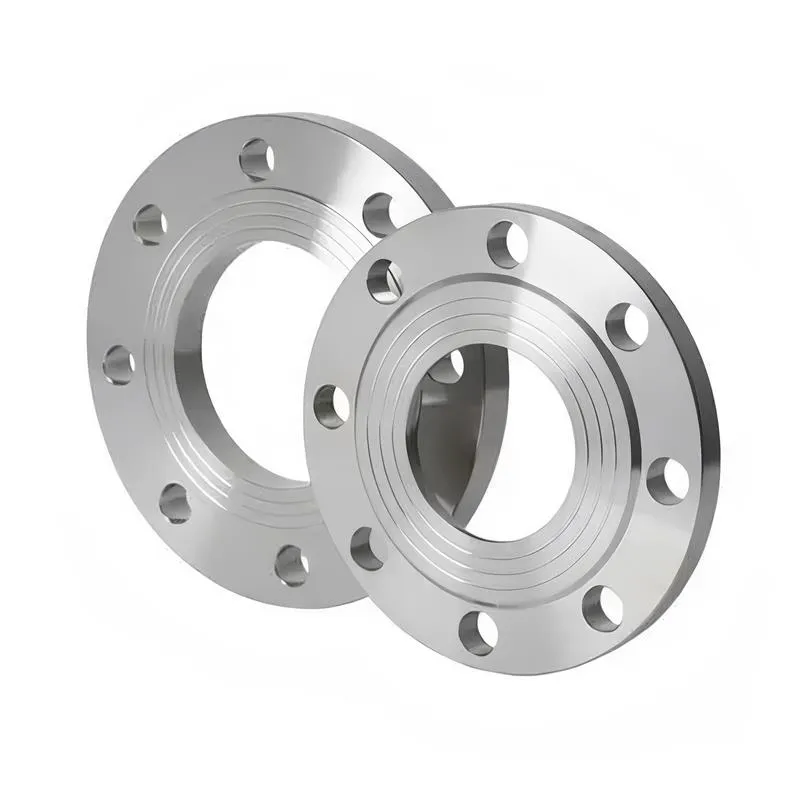
A flange—also referred to as a flange plate or rim—is a component used to connect shafts to one another, or, more commonly, to join the ends of pipes. Flanges are also utilized at the inlet and outlet ports of equipment to facilitate connections between two devices—for instance, the flange on a speed reducer. A "flange connection" or "flanged joint" refers to a detachable joint assembly comprising three interconnected elements—a flange, a gasket, and bolts—that together form a sealed structural unit. In the context of piping systems, a "pipe flange" specifically denotes a flange used for plumbing within the installation; when applied to equipment, it refers to the inlet or outlet flange of that specific device. Flanges feature a series of holes through which bolts are inserted to securely fasten the two flanges together, while a gasket placed between the flanges ensures a leak-proof seal. Flanges are broadly categorized into three types: threaded (screw-in) flanges, welded flanges, and clamp-type flanges. Flanges are invariably used in pairs; threaded flanges are suitable for low-pressure piping applications, whereas welded flanges are required for systems operating at pressures exceeding 4 kilograms per square centimeter. A sealing gasket is inserted between the two flange plates, which are then firmly secured using bolts. The thickness of a flange—as well as the specifications of the bolts used to fasten it—vary depending on the specific pressure rating required for the application. When connecting equipment such as water pumps or valves to piping systems, the corresponding connection points on these devices are often manufactured in the shape of a matching flange; this method of attachment is also referred to as a "flange connection." Generally, any connecting component that utilizes bolts to join and seal the perimeters of two flat surfaces—such as the joints in ventilation ducts—is termed a "flange"; such components may collectively be classified as "flange-type parts." However, since such a connection often constitutes merely a *portion* of a larger device—for instance, the interface between a flange and a water pump—it would be inappropriate to classify the entire water pump itself as a "flange-type part." Conversely, smaller components—such as valves—that feature such flanged interfaces may indeed be appropriately categorized as "flange-type parts."
-:-
For detailed product information, please contact sales.
-:
Latrobe DuraTech™ Xtreme Powder Metal Tool Steel Flange Product Information
-:-
For detailed product information, please contact sales.
-:
Latrobe DuraTech™ Xtreme Powder Metal Tool Steel Flange Synonyms
-:-
For detailed product information, please contact sales.
-:
Latrobe DuraTech™ Xtreme Powder Metal Tool Steel Product Information
-:-
For detailed product information, please contact sales.
-:
# **PRODUCT DATASHEET: LATROBE DURATECH™ XTREME POWDER METAL TOOL STEEL**
## **EXECUTIVE SUMMARY**
Latrobe DuraTech™ **Xtreme Powder Metal Tool Steel** represents the **pinnacle of advanced tool steel technology** manufactured through **gas atomization and hot isostatic pressing (HIP)** processes. This **premium powder metallurgy (PM) tool steel** delivers **exceptional carbide uniformity, superior toughness, and unprecedented wear resistance** by eliminating the macro-segregation and carbide banding inherent in conventional ingot-cast tool steels. Engineered for the most demanding tooling applications where performance limitations of traditional tool steels dictate premature failure, DuraTech™ Xtreme provides **extended tool life, improved dimensional stability, and enhanced performance consistency** in critical applications.
With its **ultra-fine, homogeneous microstructure** and **optimized alloy design**, this material achieves a perfect balance between **high hardness (up to 68 HRC), exceptional toughness, and excellent grindability** – properties that are mutually exclusive in conventional tool steels. Designed for **high-performance forming dies, precision punches, wear components, and cutting tools**, DuraTech™ Xtreme sets new standards for reliability and productivity in tooling applications where downtime is not an option.
---
## **REVOLUTIONARY MANUFACTURING TECHNOLOGY**
### **Powder Metallurgy Advantage**
#### **Gas Atomization Process**
- **High-Purity Melting:** Induction melting under protective atmosphere
- **Atomization:** High-pressure argon gas breaks molten steel into fine spherical particles (20-150 μm)
- **Rapid Solidification:** 10⁴-10⁶ °C/second cooling rates prevent segregation
- **Powder Screening:** Precise size classification for optimal packing density
#### **Consolidation Technology**
- **Canning & Degassing:** Powders sealed in steel containers under vacuum
- **Hot Isostatic Pressing (HIP):** 2000-2500°F (1093-1371°C) at 15-30 ksi (100-200 MPa)
- **Full Density Achievement:** 100% theoretical density with zero porosity
- **Isotropic Properties:** Identical properties in all directions
#### **Thermomechanical Processing**
- **Forging/rolling:** Further refinement of microstructure
- **Annealing:** Optimized for maximum machinability
- **Quality Verification:** Extensive testing at each processing stage
### **Microstructural Superiority vs. Conventional Tool Steels**
| Characteristic | DuraTech™ Xtreme (PM) | Conventional Ingot Steel | Benefit |
|----------------|------------------------|--------------------------|---------|
| **Carbide Size** | 1-3 μm average | 5-50 μm, often larger | Improved toughness, better grindability |
| **Carbide Distribution** | Uniform, random | Segregated, banded | Consistent wear, no weak planes |
| **Grain Structure** | Ultra-fine, equiaxed | Coarse, directional | Isotropic properties |
| **Inclusion Content** | Near zero | Variable, often high | Better fatigue resistance |
| **Chemical Homogeneity** | Excellent throughout | Micro-segregation | Predictable heat treatment response |
---
## **CHEMICAL COMPOSITION**
### **Proprietary Alloy Design (Typical Weight %)**
| Element | Range (%) | Target (%) | Metallurgical Function |
|---------|-----------|------------|------------------------|
| **Carbon (C)** | 1.40-1.60 | 1.50 | Primary hardening, carbide formation |
| **Chromium (Cr)** | 11.00-12.50 | 11.80 | Wear resistance, corrosion resistance |
| **Molybdenum (Mo)** | 0.70-1.20 | 0.95 | Secondary hardening, toughness |
| **Vanadium (V)** | 3.50-4.50 | 4.00 | Fine carbide formation, wear resistance |
| **Tungsten (W)** | 0.40-0.80 | 0.60 | Hot hardness, wear resistance |
| **Cobalt (Co)** | 0.30-0.70 | 0.50 | Matrix strengthening, hot hardness |
| **Silicon (Si)** | 0.30-0.60 | 0.45 | Deoxidation, temper resistance |
| **Manganese (Mn)** | 0.20-0.40 | 0.30 | Hardenability, strength |
| **Sulfur (S)** | ≤0.010 | 0.005 | Ultra-low for maximum toughness |
| **Phosphorus (P)** | ≤0.020 | 0.010 | Ultra-low for maximum toughness |
### **Advanced Micro-Alloying System**
- **Nitrogen:** 0.08-0.15% for enhanced nitride formation
- **Niobium:** 0.05-0.15% for grain refinement and secondary hardening
- **Boron:** 0.002-0.005% for enhanced hardenability in large sections
- **Rare Earths:** Controlled additions for inclusion shape control
### **Gas Content Control (ppm maximum)**
- **Oxygen:** <50 ppm (typical <30 ppm)
- **Hydrogen:** <2 ppm
- **Nitrogen:** As specified (1500 ppm typical)
### **Comparative Advantage**
- **Vanadium Carbides:** 4% V creates extremely fine MC-type carbides (2800-3000 HV)
- **Balanced Chromium:** 11.8% provides excellent corrosion resistance while maintaining toughness
- **Optimized Carbon:** High carbon with balanced alloying for maximum carbide volume without brittleness
- **Clean Steel:** Ultra-low impurities for maximum fatigue resistance
---
## **PHYSICAL PROPERTIES**
### **Basic Physical Constants**
| Property | Value | Units | Test Standard |
|----------|-------|--------|----------------|
| **Density** | 0.277 | lb/in³ (7.67 g/cm³) | ASTM B311 |
| **Melting Range** | 2400-2500 | °F (1316-1371°C) | |
| **Modulus of Elasticity** | 30.5 × 10⁶ | psi (210 GPa) | ASTM E111 |
| **Shear Modulus** | 11.8 × 10⁶ | psi (81 GPa) | ASTM E143 |
| **Poisson's Ratio** | 0.29 | | ASTM E132 |
| **Thermal Conductivity** | 18.5 | BTU·in/(hr·ft²·°F) @ 212°F | ASTM E1225 |
| **Specific Heat** | 0.11 | BTU/(lb·°F) @ 68-212°F | ASTM E1269 |
| **Coefficient of Thermal Expansion** | 6.0 × 10⁻⁶ | /°F (20-200°C) | ASTM E228 |
| **Electrical Resistivity** | 52 | μΩ·cm | ASTM B193 |
| **Magnetic Response** | Ferromagnetic | | Hardened condition |
### **Thermal Properties for Tooling Applications**
| Temperature | Thermal Conductivity | Specific Heat | CTE |
|-------------|----------------------|---------------|-----|
| **Room Temperature** | 18.5 BTU·in/(hr·ft²·°F) | 0.11 BTU/(lb·°F) | 6.0 × 10⁻⁶ /°F |
| **400°F (204°C)** | 19.2 BTU·in/(hr·ft²·°F) | 0.12 BTU/(lb·°F) | 6.2 × 10⁻⁶ /°F |
| **800°F (427°C)** | 20.0 BTU·in/(hr·ft²·°F) | 0.13 BTU/(lb·°F) | 6.5 × 10⁻⁶ /°F |
| **1000°F (538°C)** | 20.5 BTU·in/(hr·ft²·°F) | 0.14 BTU/(lb·°F) | 6.8 × 10⁻⁶ /°F |
### **Special Physical Characteristics**
- **Anisotropy Factor:** <1.05 (Near perfect isotropic behavior)
- **Thermal Fatigue Resistance:** Exceptional due to fine, homogeneous structure
- **Dimensional Stability:** Minimal growth during heat treatment (±0.0005 in/in)
- **Thermal Shock Resistance:** Superior to conventional high-alloy tool steels
---
## **MECHANICAL PROPERTIES**
### **Hardened and Tempered Condition**
#### **Optimal Working Hardness Range: 60-64 HRC**
| Property | 60-62 HRC | 62-64 HRC | 64-66 HRC | Units |
|----------|------------|------------|------------|--------|
| **Hardness** | 60-62 | 62-64 | 64-66 | HRC |
| **Tensile Strength** | 350-380 | 380-410 | 410-440 | ksi |
| **Yield Strength (0.2%)** | 300-330 | 330-360 | 360-390 | ksi |
| **Compressive Strength** | 420-450 | 450-480 | 480-510 | ksi |
| **Elastic Limit** | 290-320 | 320-350 | 350-380 | ksi |
| **Elongation** | 3-5 | 2-4 | 1-3 | % |
| **Reduction of Area** | 10-15 | 8-12 | 6-10 | % |
| **True Fracture Strength** | 400-430 | 430-460 | 460-490 | ksi |
### **Fracture Toughness (Exceptional for Hardness Level)**
| Hardness | KIc (MPa√m) | KIc (ksi√in) | Relative to Conventional |
|----------|------------------------|-------------------------|--------------------------|
| **60-62 HRC** | 18-22 | 16-20 | 30-40% higher |
| **62-64 HRC** | 15-19 | 14-17 | 40-50% higher |
| **64-66 HRC** | 12-16 | 11-15 | 50-60% higher |
### **Impact Toughness**
| Condition | Charpy V-Notch (ft-lb) | Relative Improvement |
|-----------|------------------------|----------------------|
| **Annealed** | 25-35 | Comparable |
| **60-62 HRC** | 12-18 | 50-70% higher |
| **62-64 HRC** | 8-14 | 60-80% higher |
| **64-66 HRC** | 5-10 | 70-100% higher |
### **Fatigue Properties**
| Test Condition | Endurance Limit (10⁷ cycles) | Fatigue Ratio | Improvement Factor |
|----------------|----------------------------|---------------|---------------------|
| **Rotating Bending** | 140-160 ksi | 0.35-0.40 | 30-40% |
| **Axial Loading (R=0.1)** | 120-140 ksi | 0.30-0.35 | 30-50% |
| **Contact Fatigue** | 380-420 ksi | - | 40-60% |
| **Thermal Fatigue** | Excellent | - | 100-200% |
### **Wear Resistance (Comparative Data)**
| Wear Mechanism | Relative Wear Resistance | Comparison to D2 | Comparison to M4 |
|----------------|--------------------------|------------------|------------------|
| **Abrasive Wear** | 1.8-2.2× | Superior | Comparable |
| **Adhesive Wear** | 2.0-2.5× | Superior | Superior |
| **Erosive Wear** | 1.5-1.8× | Superior | Slightly better |
| **Fretting Wear** | 2.5-3.0× | Superior | Superior |
### **Hot Hardness & Red Hardness**
| Temperature | Hardness Retention | Comparison to Conventional |
|-------------|-------------------|----------------------------|
| **Room Temp** | 100% | Baseline |
| **400°F (204°C)** | 96-98% | Similar |
| **600°F (316°C)** | 92-95% | Better |
| **800°F (427°C)** | 85-88% | Significantly better |
| **1000°F (538°C)** | 75-80% | Much better |
| **1100°F (593°C)** | 65-70% | Exceptional |
### **Dimensional Stability During Heat Treatment**
- **Quenching Distortion:** 30-50% less than conventional tool steels
- **Growth Factor:** 0.04-0.06% typical during hardening
- **Predictability:** ±0.0003 in/in for properly processed material
- **Repeatability:** Excellent lot-to-lot consistency
---
## **HEAT TREATMENT**
### **Annealing**
- **Temperature:** 1600-1650°F (871-899°C)
- **Cooling:** Slow furnace cool at 15-20°F/hour to 1000°F (538°C)
- **Resultant Hardness:** 220-250 HB
- **Microstructure:** Fine spheroidized carbides in ferritic matrix
- **Machinability:** Good (40-50% of 1212 steel)
### **Stress Relieving**
- **After Rough Machining:** 1100-1200°F (593-649°C) for 2 hours
- **After EDM:** 900-1000°F (482-538°C) for 2 hours
- **Purpose:** Minimize distortion during final hardening
### **Hardening Cycle**
#### **Standard Hardening Parameters**
1. **Preheat:** 1450-1500°F (788-816°C) - Critical for PM steels
2. **Austenitize:** 2050-2150°F (1121-1177°C) - Precise control essential
3. **Soak Time:** 20-30 minutes (shorter than conventional steels)
4. **Quenching:** Air cool or high-pressure gas quench preferred
5. **Quench Temperature:** Cool to 150-200°F (66-93°C)
6. **Immediate Tempering:** Begin within 1 hour of quenching
#### **Alternative Quenching Methods**
- **High-Pressure Gas Quench:** 5-20 bar nitrogen or argon
- **Vacuum Oil Quench:** For complex geometries
- **Salt Bath Quench:** For minimal distortion
- **Air Quench:** Adequate for most sections <6 inches
### **Tempering**
#### **Standard Tempering Practice**
- **Temperature Range:** 950-1100°F (510-593°C)
- **Time:** 2 hours minimum, 2-4 hours optimal
- **Cycles:** Double or triple tempering required
- **Cooling:** Air cool to room temperature between tempers
#### **Secondary Hardening Response**
- **Peak Hardness:** Occurs at 1025-1050°F (552-566°C)
- **Hardness Development:** Maximum hardness after second temper
- **Toughness Optimization:** Best toughness at 1050-1100°F (566-593°C)
### **Recommended Heat Treatment Schedule**
| Step | Temperature | Time | Atmosphere | Purpose |
|------|-------------|------|------------|---------|
| **Preheat 1** | 1200°F (649°C) | 30 min/inch | Vacuum | Reduce thermal shock |
| **Preheat 2** | 1500°F (816°C) | 30 min/inch | Vacuum | Equalize temperature |
| **Austenitize** | 2100°F (1149°C) | 20-30 min | Vacuum | Solution treatment |
| **Quench** | Gas/air to 200°F (93°C) | - | High-pressure gas | Martensite formation |
| **Temper 1** | 1050°F (566°C) | 2 hours | Air | Secondary hardening |
| **Temper 2** | 1050°F (566°C) | 2 hours | Air | Completion |
| **Temper 3** | 1000°F (538°C) | 2 hours | Air | Optional for stability |
### **Cryogenic Treatment (Optional)**
- **Temperature:** -120°F (-84°C)
- **Duration:** 2-4 hours
- **Timing:** Between quench and first temper
- **Benefit:** Converts retained austenite, increases dimensional stability
---
## **MACHINING & FABRICATION**
### **Machinability in Annealed Condition**
#### **General Characteristics**
- **Hardness:** 220-250 HB (96-24 HRC equivalent)
- **Machinability Rating:** 40-50% of 1212 steel
- **Chip Formation:** Short, broken chips - good chip control
- **Surface Finish:** Excellent with proper technique
- **Work Hardening:** Minimal due to homogeneous structure
#### **Recommended Cutting Parameters**
| Operation | Speed (SFM) | Feed | Depth of Cut | Tool Material |
|-----------|-------------|------|--------------|---------------|
| **Turning** | 120-180 | 0.006-0.012 IPR | 0.080-0.150" | C2/C3 Carbide |
| **Milling** | 100-140 | 0.003-0.006 IPT | 0.060-0.120" | Premium Carbide |
| **Drilling** | 50-80 | 0.004-0.007 IPR | Peck drilling | HSS-Co or Carbide |
| **Tapping** | 20-40 | - | - | HSS-E or Carbide taps |
| **Sawing** | 60-100 FPM | Light feed | - | Bimetal blades |
### **Grinding Characteristics (Exceptional for Hardness)**
#### **Key Advantages of PM Structure**
- **Consistent Grindability:** Uniform structure eliminates "hard spots"
- **Reduced Wheel Loading:** Fine carbides don't tear from matrix
- **Better Surface Finish:** Achievable finishes <4 Ra µin (0.1 μm)
- **Lower Grinding Stresses:** Reduced risk of cracking and burning
#### **Recommended Grinding Parameters**
- **Wheel Type:** CBN or diamond for hardened material
- **Wheel Specification:** 100-200 grit, medium-hard bond
- **Coolant:** Water-soluble grinding fluid, generous flow
- **Infeed:** 0.0002-0.0005" per pass for finish grinding
- **Dressing:** Frequent for free-cutting action
### **Electrical Discharge Machining (EDM)**
#### **Superior EDM Performance**
- **Material Removal Rate:** 20-30% faster than conventional tool steels
- **Surface Quality:** Excellent with proper parameters
- **Recast Layer:** Thinner and more consistent (0.0005-0.0015")
- **Wire EDM:** Exceptional performance with minimal wire wear
#### **EDM Parameters**
- **Roughing:** High amperage, moderate on-time
- **Finishing:** Low amperage, short on-time for best finish
- **Dielectric:** Deionized water or oil based on process
- **Post-EDM:** Temper at 50°F (28°C) below original temper
### **Polishing & Finishing**
- **Polishability:** Excellent - can achieve mirror finish (<1 Ra µin)
- **Recommended Sequence:** Silicon carbide → diamond compound
- **Time Requirement:** 30-50% less than conventional tool steels
- **Result:** Superior surface for plastic injection and die casting
---
## **INTERNATIONAL STANDARDS & SPECIFICATIONS**
### **Material Standards & Equivalents**
| Standard | Designation | Equivalent/Synonymous Grades |
|----------|-------------|-----------------------------|
| **Proprietary** | DuraTech™ Xtreme | Latrobe-specific PM grade |
| **AISI** | PM equivalent to M4/HSS | Modified composition |
| **ISO** | HS7-4-2-5 PM | Similar PM high-speed steel |
| **DIN** | 1.3247 PM | PM version of S7-4-2-5 |
| **JIS** | SKH59 PM | PM high-speed steel equivalent |
| **Common Reference** | "Super Clean" PM | Industry terminology |
### **Powder Metallurgy Standards**
- **MPIF Standard 35:** Material Standards for PM Structural Parts
- **ASTM B925:** Standard Practices for Production and Preparation of Powder Metallurgy (PM) Test Specimens
- **ISO 5755:** Sintered metal materials - Specifications
- **AMS 7896:** PM Tool Steel, Hot Isostatically Pressed
### **Quality & Testing Standards**
- **ASTM E2287:** Standard Guide for Specifying the Chemical Compositions and Selecting Sampling Practices and Quantitative Analysis Methods for Metals, Ores, and Related Materials
- **ASTM E1019:** Standard Test Methods for Determination of Carbon, Sulfur, Nitrogen, and Oxygen in Steel, Iron, Nickel, and Cobalt Alloys
- **ASTM E45:** Standard Test Methods for Determining the Inclusion Content of Steel
- **ASTM E112:** Standard Test Methods for Determining Average Grain Size
### **Industry-Specific Certifications**
- **ISO 9001:** Quality Management Systems
- **AS9100:** Aerospace Quality Management
- **NADCAP:** Accreditation for special processes
- **Customer-Specific:** OEM requirements from automotive, aerospace, and tooling industries
---
## **APPLICATIONS**
### **Metal Forming & Stamping**
#### **High-Volume Stamping**
- **Progressive Dies:** Punches, dies, strippers for automotive panels
- **Fine Blanking:** Punches and dies for precision blanking
- **High-Strength Steel Forming:** Tools for advanced high-strength steels (AHSS)
- **Wire Drawing:** Dies for fine wire production
#### **Performance Benefits in Stamping**
- **Tool Life:** 3-5× conventional tool steels in abrasive applications
- **Downtime Reduction:** Less frequent sharpening and maintenance
- **Quality Consistency:** Maintained edge quality throughout tool life
- **Cost-Per-Part:** Significant reduction despite higher initial cost
### **Plastic Injection Molding**
#### **Demanding Molding Applications**
- **Abrasive Materials:** Glass-filled, mineral-filled, and reinforced polymers
- **Optical Components:** Lenses, light guides requiring superior surface finish
- **Medical Devices:** High-precision components with strict quality requirements
- **Connectors:** Small, intricate features with high cavitation pressures
#### **Molding Advantages**
- **Wear Resistance:** Exceptional resistance to abrasive polymers
- **Corrosion Resistance:** Good for PVC and other corrosive materials
- **Polishability:** Mirror finishes achievable for optical applications
- **Thermal Fatigue:** Superior resistance to cracking from thermal cycling
### **Die Casting**
#### **Critical Die Casting Applications**
- **Aluminum Die Casting:** Cores, cavities, inserts for automotive components
- **Magnesium Die Casting:** Hot work tools for lightweight applications
- **Zinc Die Casting:** High-volume production tools
- **Copper-Based Alloys:** For challenging non-ferrous applications
#### **Die Casting Performance**
- **Heat Checking Resistance:** Superior to conventional hot work steels
- **Erosion Resistance:** Excellent against molten metal flow
- **Thermal Conductivity:** Good for heat extraction
- **Soldering Resistance:** Reduced tendency for metal adhesion
### **Cutting Tools & Machining**
#### **High-Performance Cutting**
- **End Mills:** For difficult-to-machine materials (titanium, Inconel, hardened steels)
- **Inserts:** Indexable inserts for turning and milling
- **Broaches:** For precision internal machining
- **Gear Cutting:** Hobs, shapers, and shaving tools
#### **Cutting Tool Advantages**
- **Hot Hardness:** Maintains cutting edge at high temperatures
- **Toughness:** Resists chipping and fracture
- **Wear Resistance:** Extended tool life in abrasive materials
- **Consistency:** Predictable performance across production runs
### **Specialized Applications**
#### **Aerospace & Defense**
- **Engine Components:** Forming tools for turbine blades and discs
- **Airframe Tools:** Jigs, fixtures, and forming dies
- **Weapon Systems:** Manufacturing tools for precision components
- **Repair & Maintenance:** Tools for field service and overhaul
#### **Medical Device Manufacturing**
- **Surgical Instruments:** Forming and cutting tools
- **Implant Manufacturing:** Precision tooling for joint replacements
- **Device Components:** Tools for intricate medical device parts
- **Packaging:** Tooling for sterile medical packaging
#### **Energy Sector**
- **Turbine Components:** Tooling for power generation equipment
- **Oil & Gas:** Tools for downhole component manufacturing
- **Nuclear:** Precision tooling for fuel and reactor components
- **Renewables:** Tooling for wind turbine and solar panel components
### **Application-Specific Recommendations**
| Application | Recommended Hardness | Key Properties | Expected Improvement |
|-------------|----------------------|----------------|----------------------|
| **Fine Blanking** | 62-64 HRC | Toughness, wear resistance | 3-4× conventional |
| **Plastic with Abrasives** | 60-62 HRC | Wear, corrosion resistance | 4-6× conventional |
| **Die Casting Cores** | 44-48 HRC | Thermal fatigue, erosion | 2-3× conventional |
| **High-Speed Cutting** | 64-66 HRC | Hot hardness, toughness | 2-3× conventional |
| **Forming AHSS** | 58-60 HRC | Toughness, wear resistance | 3-5× conventional |
---
## **PERFORMANCE COMPARISONS**
### **vs. Conventional Tool Steels**
| Property | DuraTech™ Xtreme | D2 | M2 | H13 | Advantage |
|----------|------------------|----|----|-----|-----------|
| **Wear Resistance** | 1.8-2.2× | Baseline | 1.2× | 0.8× | Superior |
| **Toughness @ 62 HRC** | 1.5-2.0× | Baseline | 0.8× | 1.2× | Exceptional |
| **Grindability** | 1.3-1.6× | Baseline | 0.7× | 1.5× | Excellent |
| **Polishing** | 1.5-2.0× | Baseline | 0.8× | 1.3× | Superior |
| **Thermal Fatigue** | 2.0-3.0× | Poor | Fair | Baseline | Outstanding |
| **Dimensional Stability** | 1.5-2.0× | Baseline | 0.9× | 1.2× | Excellent |
| **Anisotropy** | Near zero | High | Moderate | Moderate | Revolutionary |
### **vs. Other PM Tool Steels**
| Characteristic | DuraTech™ Xtreme | Competitive PM-A | Competitive PM-B | Advantage |
|----------------|------------------|------------------|------------------|-----------|
| **Carbide Uniformity** | Exceptional | Good | Very Good | Superior |
| **Toughness/Hardness Balance** | Best in class | Good | Very Good | Optimal |
| **Chemistry Optimization** | Proprietary | Standard | Modified | Enhanced |
| **Consistency Lot-to-Lot** | Excellent | Good | Very Good | Superior |
| **Technical Support** | Comprehensive | Limited | Moderate | Extensive |
### **Economic Justification**
| Factor | Conventional Tool Steel | DuraTech™ Xtreme | Benefit |
|--------|------------------------|-------------------|---------|
| **Initial Tool Cost** | 1.0× | 1.5-2.0× | Higher initial investment |
| **Tool Life** | 1.0× | 3-6× | Extended production runs |
| **Downtime** | 1.0× | 0.3-0.5× | Increased productivity |
| **Maintenance** | 1.0× | 0.2-0.4× | Reduced labor and machine time |
| **Scrap/Rework** | 1.0× | 0.5-0.7× | Improved quality consistency |
| **Total Cost of Ownership** | 1.0× | 0.4-0.7× | Significant reduction |
---
## **QUALITY ASSURANCE**
### **Comprehensive Testing Protocol**
#### **Material Certification**
- **Full Chemistry:** Every heat analyzed for all elements
- **Gas Content:** Oxygen, nitrogen, hydrogen quantified
- **Powder Characteristics:** Size distribution, shape factor, flow rate
- **Density Verification:** 100% theoretical density confirmed
#### **Microstructural Analysis**
- **Carbide Analysis:** Size, distribution, and type characterization
- **Grain Size:** ASTM 12-14 typical (ultra-fine)
- **Inclusion Rating:** ASTM E45, virtually inclusion-free
- **Porosity Check:** Zero porosity requirement
#### **Mechanical Testing**
- **Hardness:** Multiple locations, surface and core
- **Tensile Properties:** At room and elevated temperatures
- **Impact Testing:** Charpy V-notch at various temperatures
- **Fracture Toughness:** KIc testing for critical applications
### **Non-Destructive Testing**
- **Ultrasonic Testing:** 100% for internal soundness
- **Magnetic Particle:** Surface and near-surface defects
- **Dye Penetrant:** Surface quality verification
- **Dimensional Inspection:** To customer specifications
### **Traceability & Documentation**
- **Heat-to-Part Tracking:** Complete manufacturing history
- **Certified Test Reports:** Full mechanical and chemical data
- **Process Records:** All thermal and mechanical processing documented
- **Material Certificates:** Compliance with customer and industry standards
### **Latrobe Quality Commitment**
- **Statistical Process Control:** Real-time monitoring of all critical parameters
- **Continuous Improvement:** Ongoing optimization of manufacturing processes
- **Customer-Specific Testing:** Additional testing per customer requirements
- **Technical Support:** Metallurgical expertise available throughout tool life
---
## **HANDLING & PROCESSING GUIDELINES**
### **Storage & Handling**
- **Condition:** Store in dry, temperature-controlled environment
- **Protection:** Apply rust preventive for long-term storage
- **Handling:** Use appropriate equipment to prevent damage
- **Identification:** Maintain clear material identification throughout processing
### **Safety Considerations**
- **Machining:** Use appropriate PPE, especially during grinding
- **Heat Treatment:** Follow standard furnace safety procedures
- **Material Handling:** Standard steel handling precautions apply
- **Disposal:** Scrap material should be recycled through proper channels
### **Processing Recommendations**
- **Rough Machining:** Remove 0.020-0.030" per side before hardening
- **Stress Relieving:** Recommended after rough machining
- **Pre-Hardening Finish:** Achieve final dimensions ±0.001" before hardening
- **Post-Hardening:** Only grinding, EDM, or polishing after heat treatment
---
## **TECHNICAL SUPPORT SERVICES**
### **Comprehensive Application Support**
- **Material Selection:** Assistance with grade selection for specific applications
- **Design Optimization:** Recommendations for tool design to maximize performance
- **Heat Treatment Development:** Custom cycles for specific geometries and requirements
- **Troubleshooting:** Analysis of tool failures and performance issues
### **Laboratory Services**
- **Metallurgical Analysis:** Complete microstructural characterization
- **Failure Analysis:** Root cause determination for tool failures
- **Performance Testing:** Wear testing, fatigue testing, and other evaluations
- **Process Optimization:** Testing to optimize machining and heat treatment
### **Training & Education**
- **Material Characteristics:** Understanding PM tool steel properties
- **Processing Workshops:** Best practices for machining and heat treatment
- **Application Seminars:** Industry-specific training programs
- **Technical Papers:** White papers and case studies available
### **Field Support**
- **On-Site Assistance:** Technical support at customer facilities
- **Start-Up Support:** Assistance with new tool implementation
- **Performance Monitoring:** Ongoing support throughout tool life
- **Emergency Services:** Rapid response for critical issues
### **Contact Information**
**Latrobe Specialty Metals Technical Services**
DuraTech™ Product Specialists
Phone: +1 (724) 537-7800
Email: duratech.support@latrobemetals.com
Emergency Support: +1 (724) 539-7800 (24/7)
Website: www.latrobemetals.com/duratech
---
## **ENVIRONMENTAL & SUSTAINABILITY**
### **Environmental Benefits**
- **Material Efficiency:** Near-net-shape capability reduces waste
- **Energy Efficiency:** Optimized processing reduces energy consumption
- **Recyclability:** 100% recyclable at end of tool life
- **Longer Tool Life:** Reduced material consumption over time
### **Regulatory Compliance**
- **RoHS Compliant:** Contains no restricted substances
- **REACH Registered:** Fully compliant with EU regulations
- **Conflict Minerals:** Compliant with all regulations
- **International Standards:** Meets global environmental requirements
### **Sustainable Manufacturing**
- **Resource Efficiency:** High yield from raw materials to finished product
- **Waste Reduction:** Minimal scrap in manufacturing process
- **Energy Management:** ISO 50001 energy management principles
- **Continuous Improvement:** Ongoing environmental performance enhancement
---
## **ORDERING INFORMATION**
### **Standard Product Forms**
- **Round Bars:** 1/2" to 12" diameter
- **Square Bars:** 1/2" to 8" square
- **Flat Bars:** Up to 6" thick × 24" wide
- **Blocks:** Custom sizes up to 24" cube
- **Near-Net Shapes:** To customer specifications
- **Pre-machined Blanks:** Rough machined to customer prints
### **Available Conditions**
- **Annealed:** For machining (220-250 HB)
- **Stress Relieved:** After rough machining
- **Heat Treated:** To specified hardness
- **Finished:** Ground, polished, or coated
### **Special Services**
- **Heat Treatment:** Custom cycles to customer specifications
- **Machining:** Rough or finish machining services
- **Testing:** Additional testing and certification
- **Coating:** PVD, CVD, or other surface treatments
### **Lead Time Guidelines**
- **Standard Sizes:** 8-12 weeks
- **Custom Shapes:** 12-16 weeks
- **Heat Treatment:** Additional 2-3 weeks
- **Full Processing:** 14-20 weeks complete
### **Packaging & Shipping**
- **Standard:** Protected with VCI paper and caps
- **Premium:** Individual crates for critical materials
- **Export:** Full export documentation and packaging
- **Custom:** To customer specific requirements
---
## **DISCLAIMER**
### **Important Notices**
1. **Technical Data:** The information provided represents typical values and characteristics. Actual properties may vary based on specific processing, heat treatment, and testing methods.
2. **Application Specificity:** Performance depends on proper tool design, processing, and application conditions. Users should validate for specific applications.
3. **Heat Treatment Criticality:** Properties are highly dependent on precise heat treatment. Consultation with Latrobe technical services is recommended.
4. **Safety Responsibility:** Users are responsible for implementing appropriate safety procedures in all handling and processing operations.
5. **Intellectual Property:** DuraTech™ is a trademark of Latrobe Specialty Metals. All information is proprietary and confidential.
### **Warranty Information**
Latrobe Specialty Metals warrants that material supplied will meet the chemical and physical specifications agreed upon at time of order. Final tool performance depends on proper design, processing, and application by the customer. Performance data is based on laboratory testing and field experience but is not guaranteed for specific applications.
### **Revision Information**
**Document Number:** DT-XTREME-DS-2024-01
**Effective Date:** January 2024
**Supersedes:** All previous versions
**Next Review:** January 2025
---
*© 2024 Latrobe Specialty Metals. All rights reserved.*
*DuraTech™ is a trademark of Latrobe Specialty Metals.*
*All other trademarks are property of their respective owners.*
**Latrobe Specialty Metals**
A TimkenSteel Company
2626 Ligonier Street
Latrobe, PA 15650 USA
Phone: +1 (724) 537-7711
www.latrobemetals.com
-:-
For detailed product information, please contact sales.
-:
Latrobe DuraTech™ Xtreme Powder Metal Tool Steel Specification
Dimensions
Size:
Diameter 20-1000 mm Length <6474 mm
Size:We can customized as required
Standard:
Per your request or drawing
We can customized as required
Properties(Theoretical)
Chemical Composition
-:-
For detailed product information, please contact sales.
-:
Latrobe DuraTech™ Xtreme Powder Metal Tool Steel Properties
-:-
For detailed product information, please contact sales.
-:
Applications of Latrobe DuraTech™ Xtreme Powder Metal Tool Steel Flange
-:-
For detailed product information, please contact sales.
-:
Chemical Identifiers Latrobe DuraTech™ Xtreme Powder Metal Tool Steel Flange
-:-
For detailed product information, please contact sales.
-:
Packing of Latrobe DuraTech™ Xtreme Powder Metal Tool Steel Flange
-:-
For detailed product information, please contact sales.
-:
Standard Packing:
-:-
For detailed product information, please contact sales.
-:
Typical bulk packaging includes palletized plastic 5 gallon/25 kg. pails, fiber and Steel Flange drums to 1 ton super sacks in full container (FCL) or truck load (T/L) quantities. Research and sample quantities and hygroscopic, oxidizing or other air sensitive materials may be packaged under argon or vacuum. Solutions are packaged in polypropylene, plastic or glass jars up to palletized 2945 gallon liquid totes Special package is available on request. E FORUs’ is carefully handled to minimize damage during storage and transportation and to preserve the quality of our products in their original condition