1,We Manufacturing processes are primarily classified into four types:
1:Forging,
2:Casting,
3:Cutting,
4:Rolling.
2,We can manufacture in accordance with these standards.
Standards:
GB Series (Chinese Standards), JB Series (Machinery Standards), HG Series (Chemical Industry Standards), ASME B16.5 (American Standards), BS4504 (British Standards), DIN (German Standards), and JIS (Japanese Standards).
Internationally, there are two primary systems of pipe flange standards: the European system, represented by the German DIN standards (including those of the former Soviet Union), and the American system, represented by the US ANSI pipe flange standards. Other common standards include: the Chinese Ministry of Machinery Industry standards (JB series), the Ministry of Chemical Industry standards (HG series), the Chinese National Standard *GB/T 9112–9124-2010 Steel Pipe Flanges*, as well as US standards (ASME B16.5), British standards (BS4504), German standards (DIN), Japanese standards (JIS), and marine standards (CBM), among others.
The nominal pressure ratings for the PN series are designated by "PN" and comprise the following nine levels: PN2.5, PN6, PN10, PN16, PN25, PN40, PN63, PN100, and PN160.
The nominal pressure ratings for the Class series are designated by "Class" and comprise the following six levels: Class150, Class300, Class600, Class900, Class1500, and Class2500.
Flange Classification
1. **According to Chemical Industry Standards:** Flanges are classified as follows:
Plate Flat Welding Flange (PL), Necked Flat Welding Flange (SO), Necked Butt Welding Flange (WN), Integral Flange (IF), Socket Welding Flange (SW), Threaded Flange (Th), Butt Welding Ring Loose Flange (PJ/SE), Blind Flange (BL), Flat Welding Ring Loose Flange (PJ/PJ), and Lined Blind Flange (BL(s)).
2. **According to Petrochemical (SH) Industry Standards:** Flanges are classified as follows:
Threaded Flange (PL), Butt Welding Flange (WN), Flat Welding Flange (SO), Socket Welding Flange (SW), Loose Flange (LJ), and Blind Flange (no specific designation).
3. **According to Machinery (JB) Industry Standards:** Flanges are classified as follows:
Integral Flange, Butt Welding Flange, Plate Flat Welding Flange, Butt Welding Ring Plate Loose Flange, Flat Welding Ring Plate Loose Flange, Lap Joint Ring Plate Loose Flange, and Blind Flange.
4. **According to Connection Method/Type:** Flanges are classified as follows:
Plate Flat Welding Flange, Necked Flat Welding Flange, Necked Butt Welding Flange, Socket Welding Flange, Threaded Flange, Blind Flange, Necked Butt Welding Ring Loose Flange, Flat Welding Ring Loose Flange, Ring-Type Joint (RTJ) Flange and Blind Flange, Large-Diameter Plate Flange, Large-Diameter High-Neck Flange, Figure-8 Blind Plate, Butt Welding Ring Loose Flange, etc.
5. **According to the Component Being Connected:** Flanges can be classified into Vessel Flanges and Pipe Flanges.
6. **According to Structural Type:** Flanges include Integral Flanges, Threaded Flanges, Flat Welding Flanges, Butt Welding Flanges, Lap Joint (Loose/Swivel) Flanges, and Blind Flanges.
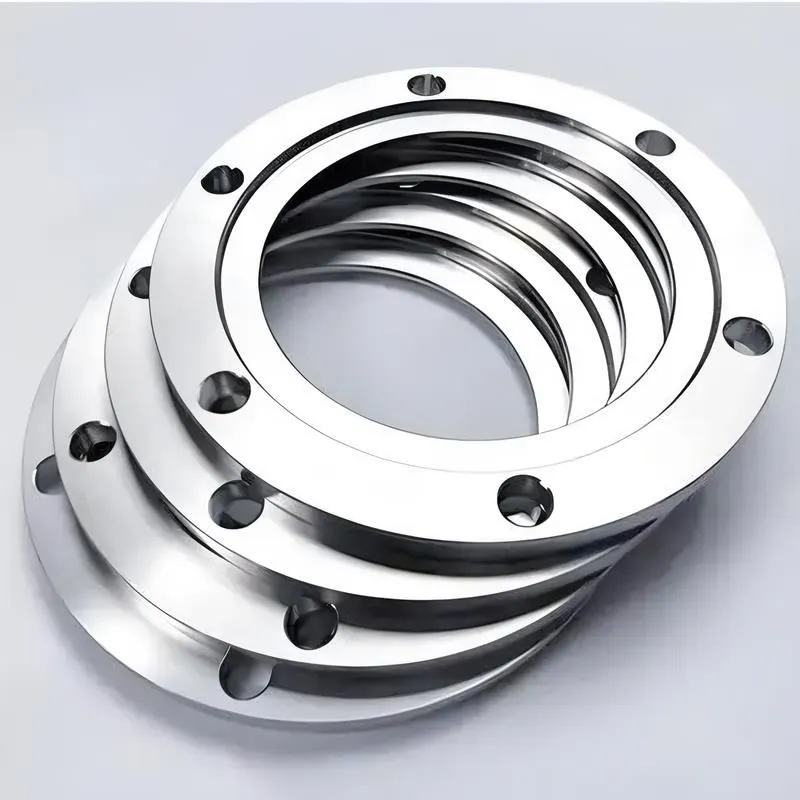
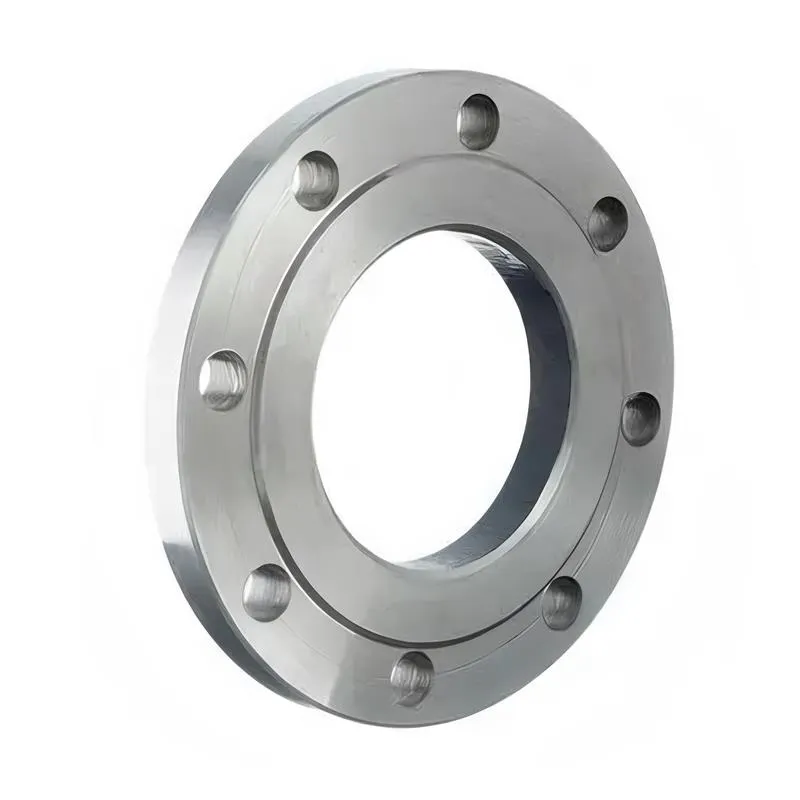
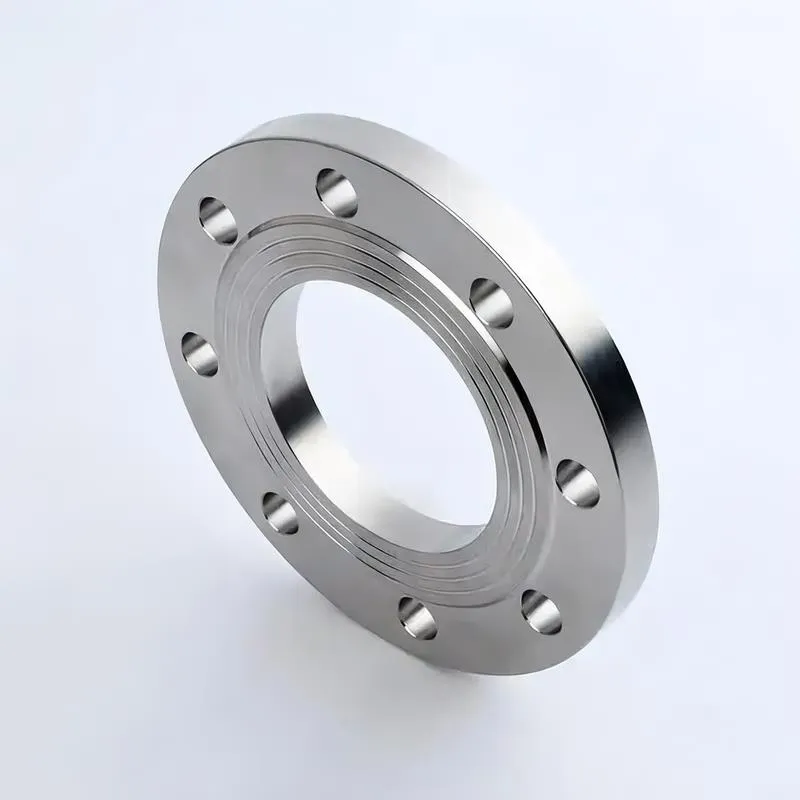
A flange—also referred to as a flange plate or rim—is a component used to connect shafts to one another, or, more commonly, to join the ends of pipes. Flanges are also utilized at the inlet and outlet ports of equipment to facilitate connections between two devices—for instance, the flange on a speed reducer. A "flange connection" or "flanged joint" refers to a detachable joint assembly comprising three interconnected elements—a flange, a gasket, and bolts—that together form a sealed structural unit. In the context of piping systems, a "pipe flange" specifically denotes a flange used for plumbing within the installation; when applied to equipment, it refers to the inlet or outlet flange of that specific device. Flanges feature a series of holes through which bolts are inserted to securely fasten the two flanges together, while a gasket placed between the flanges ensures a leak-proof seal. Flanges are broadly categorized into three types: threaded (screw-in) flanges, welded flanges, and clamp-type flanges. Flanges are invariably used in pairs; threaded flanges are suitable for low-pressure piping applications, whereas welded flanges are required for systems operating at pressures exceeding 4 kilograms per square centimeter. A sealing gasket is inserted between the two flange plates, which are then firmly secured using bolts. The thickness of a flange—as well as the specifications of the bolts used to fasten it—vary depending on the specific pressure rating required for the application. When connecting equipment such as water pumps or valves to piping systems, the corresponding connection points on these devices are often manufactured in the shape of a matching flange; this method of attachment is also referred to as a "flange connection." Generally, any connecting component that utilizes bolts to join and seal the perimeters of two flat surfaces—such as the joints in ventilation ducts—is termed a "flange"; such components may collectively be classified as "flange-type parts." However, since such a connection often constitutes merely a *portion* of a larger device—for instance, the interface between a flange and a water pump—it would be inappropriate to classify the entire water pump itself as a "flange-type part." Conversely, smaller components—such as valves—that feature such flanged interfaces may indeed be appropriately categorized as "flange-type parts."
-:-
For detailed product information, please contact sales.
-:
AISI Type M36 Molybdenum High Speed Tool Steel Flange (UNS T11336) Product Information
-:-
For detailed product information, please contact sales.
-:
AISI Type M36 Molybdenum High Speed Tool Steel Flange (UNS T11336) Synonyms
-:-
For detailed product information, please contact sales.
-:
AISI Type M36 Molybdenum High Speed Tool Steel (UNS T11336) Product Information
-:-
For detailed product information, please contact sales.
-:
# **Product Introduction: AISI Type M36 High-Cobalt Molybdenum High-Speed Tool Steel (UNS T11336)**
## **Overview**
AISI Type M36 is a **high-cobalt, tungsten-molybdenum balanced high-speed steel** representing one of the **highest performing conventional HSS grades** in the AISI M-series. With its **significant cobalt content (7.50-8.50%)** and optimized tungsten-molybdenum balance, M36 delivers **exceptional hot hardness, red hardness, and cutting performance at elevated temperatures**. This grade is specifically engineered for the most demanding machining applications where standard and medium-cobalt HSS grades reach their performance limits, particularly in high-temperature and high-speed cutting operations.
**Key Advantages:**
- **Exceptional Hot Hardness:** Maintains cutting edge at temperatures up to 650°C (1200°F)
- **Superior Red Hardness:** Outstanding high-temperature hardness retention
- **Excellent Thermal Conductivity:** Cobalt significantly improves heat dissipation
- **Good High-Temperature Strength:** Maintains structural integrity under thermal stress
- **Proven Performance:** Established track record in demanding applications
**Primary Considerations:**
- **Reduced Toughness:** Higher hardness and cobalt content decrease impact resistance
- **Challenging Grindability:** Requires specialized grinding techniques and abrasives
- **Higher Cost:** Premium pricing due to cobalt and alloy content
- **Processing Sensitivity:** Demanding heat treatment requirements
## **International Designations & Standards**
| Standard System | Designation | Note |
|----------------|-------------|------|
| **AISI/SAE (USA)** | M36 | Primary specification |
| **UNS (USA)** | T11336 | Unified numbering system |
| **ASTM (USA)** | A600 | High-Speed Tool Steel Standard |
| **ISO (International)** | ~**HS6-5-2-8** | Similar high-cobalt composition |
| **DIN (Germany)** | ~1.3260 | High-cobalt high-speed steel |
| **JIS (Japan)** | ~SKH58 | High-cobalt HSS |
| **BS (UK)** | ~**BM36** | High-cobalt HSS |
| **GB (China)** | ~**W6Mo5Cr4V2Co8** | Similar high-cobalt HSS |
| **AFNOR (France)** | ~Z85WDCV06-05-04-02-08 | French designation with 8% cobalt |
*Note: M36 represents a premium high-cobalt HSS grade positioned between M35 and ultra-high-cobalt grades like M42.*
---
## **1. Chemical Composition (Typical, Weight %)**
M36 features high cobalt content combined with a balanced tungsten-molybdenum base composition.
| Element | Content (%) | Role & Metallurgical Effect |
|---------|-------------|-----------------------------|
| **Carbon (C)** | 0.85 - 0.92 | Balanced to support carbide formation and matrix hardness while compensating for cobalt's effects. |
| **Cobalt (Co)** | 7.50 - 8.50 | **Primary performance element.** Dramatically increases red hardness, enhances thermal conductivity by 25-35%, promotes secondary hardening, reduces retained austenite. |
| **Tungsten (W)** | 5.50 - 6.50 | Provides hot hardness through tungsten carbide formation and solid solution strengthening. |
| **Molybdenum (Mo)** | 4.50 - 5.50 | Works synergistically with tungsten for hot hardness and hardenability. |
| **Chromium (Cr)** | 3.75 - 4.50 | Standard HSS level for hardenability and oxidation resistance. |
| **Vanadium (V)** | 1.75 - 2.20 | Forms hard vanadium carbides for wear resistance and grain refinement. |
| **Silicon (Si)** | 0.20 - 0.45 | Deoxidizer and matrix strengthener. |
| **Manganese (Mn)** | 0.15 - 0.40 | Enhances hardenability. |
| **Sulfur (S)** | ≤0.030 | Residual impurity. |
| **Phosphorus (P)** | ≤0.030 | Residual impurity. |
| **Iron (Fe)** | Balance | Matrix element. |
**Metallurgical Characteristics:**
- **Cobalt Distribution:** Primarily in solid solution, enhancing matrix strength at high temperatures
- **Carbide Types:** MC (V-rich), M₆C (W/Mo-rich), M₂₃C₆ (Cr-rich)
- **Carbide Volume:** ~12-15%
- **Austenitizing Temperature:** 1200-1240°C (2190-2265°F)
---
## **2. Physical & Mechanical Properties**
### **Physical Properties**
| Property | Typical Value | Conditions/Notes |
|----------|---------------|------------------|
| **Density** | 8.20 - 8.25 g/cm³ | At 20°C (68°F) |
| **Melting Range** | 1370 - 1420°C (2500 - 2590°F) | |
| **Thermal Conductivity** | 28 - 33 W/m·K | At 20°C (68°F) - 30-40% higher than M2 |
| **Specific Heat Capacity** | 410 - 450 J/kg·K | At 20°C (68°F) |
| **Coefficient of Thermal Expansion** | 10.7 - 11.4 × 10⁻⁶/K | 20-600°C (68-1110°F) range |
| **Electrical Resistivity** | 0.45 - 0.53 μΩ·m | At 20°C (68°F) |
| **Elastic Modulus** | 205 - 215 GPa (29.7 - 31.2 × 10⁶ psi) | At room temperature |
| **Thermal Diffusivity** | 7.5 - 8.5 mm²/s | At 20°C (68°F) - Excellent heat dissipation |
### **Mechanical Properties (Properly Heat-Treated)**
| Property | Value Range | Heat Treatment Condition |
|----------|-------------|--------------------------|
| **Hardness (Annealed)** | 235 - 277 HB | Annealed condition |
| **Hardness (Hardened)** | 66 - 68 HRC | Triple tempered condition |
| **Hot Hardness (600°C)** | 58 - 61 HRC | After 4 hours at temperature |
| **Transverse Rupture Strength** | 3200 - 3800 MPa (464 - 551 ksi) | At 67 HRC |
| **Compressive Strength** | 4000 - 4600 MPa (580 - 667 ksi) | At 67 HRC |
| **Impact Toughness (Charpy)** | 12 - 20 J (8.9 - 14.8 ft·lb) | At 67 HRC |
| **Young's Modulus** | 205 - 215 GPa (29.7 - 31.2 × 10⁶ psi) | At room temperature |
| **Fatigue Strength** | 850 - 1000 MPa (123 - 145 ksi) | Rotating bending, 10⁷ cycles |
### **High-Temperature Performance Comparison**
| Temperature | M36 Hardness (HRC) | M35 Hardness (HRC) | Performance Advantage |
|-------------|---------------------|---------------------|-----------------------|
| **20°C (68°F)** | 66.5-68 | 65-66.5 | +1.0-1.5 HRC |
| **300°C (570°F)** | 63-65 | 62-64 | +1.0-1.5 HRC |
| **450°C (840°F)** | 59-62 | 58-61 | +1.0-1.5 HRC |
| **550°C (1020°F)** | 55-58 | 54-57 | +1.0-1.5 HRC |
| **600°C (1110°F)** | 51-54 | 50-53 | +1.0-1.5 HRC |
| **650°C (1200°F)** | 46-49 | 45-48 | +1.0-1.5 HRC |
### **Performance Metrics**
- **Red Hardness Improvement:** 20-30% over M2 at 600°C
- **Thermal Conductivity Increase:** 30-40% over M2
- **Cutting Speed Potential:** 30-50% higher than M2 for equivalent tool life
- **Tool Life Expectancy:** 2-4x M2 in high-temperature applications
- **Maximum Service Temperature:** ~650°C (1200°F)
### **Grindability Characteristics**
- **Relative Grindability:** 60-70% (compared to M2 = 100%)
- **Wheel Selection:** Premium aluminum oxide or CBN recommended
- **Wheel Life:** 40-50% of M2 grinding
- **Power Requirement:** 25-35% higher than M2
- **Surface Finish:** Requires careful technique for optimal results
---
## **3. Product Applications**
### **Primary Application Areas**
**1. High-Temperature Cutting Applications:**
- Drills for nickel-based superalloys (Inconel, Waspaloy, Hastelloy)
- End mills for titanium and heat-resistant alloys
- Taps for high-temperature materials
- Reamers for precision holes in difficult materials
**2. Production Tools for Demanding Operations:**
- Gear hobs for aerospace and power generation components
- Broaches for high-strength materials
- Milling cutters for continuous high-temperature operations
- Form tools for elevated temperature applications
**3. Specialized High-Performance Applications:**
- Cutting tools for hardened steels (up to 55 HRC)
- Tools for abrasive high-temperature materials
- High-speed machining of heat-resistant alloys
- Production tools requiring maximum temperature resistance
### **Industry Application Focus**
| Industry | Typical M36 Components | Performance Rationale |
|----------|-------------------------|-----------------------|
| **Aerospace** | Drills, end mills for superalloys | Superior high-temperature capability |
| **Power Generation** | Turbine component machining tools | Excellent red hardness for hot materials |
| **Oil & Gas** | Valve and drilling component tools | Good wear resistance at high temperatures |
| **Automotive (Performance)** | Tools for high-strength components | Enhanced performance for tough materials |
| **Mold & Die** | Hard milling cutters for pre-hardened steels | Better edge retention in warm conditions |
### **Recommended Cutting Parameters**
| Work Material | Cutting Speed (m/min) | Feed (mm/tooth) | Depth of Cut | Cooling Strategy |
|---------------|----------------------|-----------------|--------------|------------------|
| **Nickel Superalloys** | 25-45 | 0.05-0.15 | 0.5-2.5 mm | High-pressure coolant |
| **Titanium Alloys** | 35-60 | 0.08-0.20 | 1.0-3.0 mm | Copious emulsion |
| **Stainless Steels** | 40-65 | 0.10-0.25 | 1.0-4.0 mm | Enhanced coolant |
| **Hardened Steels (45-55HRC)** | 45-70 | 0.08-0.20 | 0.5-2.5 mm | Oil-based coolant |
| **High-Temp Alloys** | 20-40 | 0.03-0.12 | 0.3-2.0 mm | High-pressure through-tool |
---
## **4. Heat Treatment Guidelines**
### **Annealing**
- **Temperature:** 850-880°C (1560-1615°F)
- **Soaking Time:** 3-4 hours
- **Cooling Rate:** ≤10°C/hr to 540°C, then air cool
- **Resulting Hardness:** 235-277 HB
- **Atmosphere:** Protective atmosphere essential
### **Stress Relieving**
- **After Rough Machining:** 650-700°C (1200-1290°F), 2-3 hours
- **After Rough Grinding:** 550-600°C (1020-1110°F), 1-2 hours
- **Cooling:** Slow furnace cool
### **Hardening Process**
1. **Preheating (Critical - Three-stage recommended):**
- **Stage 1:** 450-550°C (840-1020°F)
- **Stage 2:** 800-850°C (1470-1560°F)
- **Stage 3:** 1050-1100°C (1920-2010°F)
2. **Austenitizing:**
- **Temperature:** 1200-1240°C (2190-2265°F)
- **Soaking Time:** 3-6 minutes per 25mm thickness
- **Atmosphere:** **Vacuum or salt bath strongly recommended**
- **Protection:** Pack methods if atmosphere control unavailable
3. **Quenching:**
- **Oil Quench:** Fast oil, 40-60°C, vigorous agitation
- **Salt Bath Marquench:** 500-550°C, equalize, then air cool (best for complex shapes)
- **Press Quenching:** For flat tools to minimize distortion
### **Tempering (Multiple Tempers Essential)**
- **First Temper:** Begin at 60-80°C (140-175°F) after quenching
- **Temperature:** 540-580°C (1000-1075°F)
- **Cycles:** **Minimum 3 tempers, 4 recommended for critical tools**
- **Duration:** 2-3 hours per temper
- **Cooling:** Air cool completely between tempers
- **Final Hardness:** 66-68 HRC
- **Retained Austenite:** <3% after proper treatment
### **Sub-Zero Treatment (Highly Recommended)**
- **Temperature:** -80 to -120°C (-110 to -185°F)
- **Duration:** 3-6 hours
- **Timing:** After quenching, before first temper
- **Benefits:** Maximum dimensional stability, full hardness potential
---
## **5. Manufacturing & Processing**
### **Machinability (Annealed Condition)**
- **Relative Machinability:** 35-45% (1% carbon steel = 100%)
- **Tool Requirements:** Premium carbide grades essential
- **Cutting Parameters:**
- Turning: 15-30 m/min (50-100 SFM) with carbide
- Milling: 10-20 m/min (33-66 SFM) with carbide
- Drilling: 5-10 m/min (16-33 SFM) with carbide
- **Chip Control:** Aggressive chip breakers required
- **Coolant:** High-performance synthetic or heavy-duty soluble oil
### **Grinding Operations**
- **Abrasive Requirements:**
- **Primary:** CBN or diamond wheels recommended
- **Alternative:** Premium aluminum oxide A46-K8-V
- **Parameters:**
- Wheel Speed: 20-25 m/s (4000-5000 SFPM) for CBN/diamond
- Infeed: 0.002-0.010 mm/pass
- Crossfeed: 0.5-2.0 mm/pass
- Spark-out: Multiple passes with zero infeed
- **Coolant:** High-pressure, high-volume synthetic coolant
- **Dressing:** Frequent dressing with diamond tools
### **Surface Treatments & Coatings**
- **Recommended Coatings:** TiAlN, AlCrN, AlTiN
- **Coating Benefits:** 3-6x tool life improvement
- **Pre-coating Preparation:** Critical - surface finish <0.3 μm Ra
- **Edge Preparation:** Honing essential (0.03-0.08mm radius)
- **Coating Thickness:** 2-5 microns optimal
---
## **6. Comparative Analysis**
### **vs. Other High-Cobalt HSS Grades**
| Property | M36 | M35 | M42 | M48 |
|----------|-----|-----|-----|-----|
| **Cobalt Content** | 7.50-8.50% | 4.50-5.50% | 7.50-8.50% | 8.00-10.00% |
| **Carbon Content** | 0.85-0.92% | 0.82-0.92% | 1.05-1.15% | 1.40-1.55% |
| **Hot Hardness** | Excellent | Very Good | Excellent | Outstanding |
| **Room Temp Hardness** | 66-68 HRC | 65-67 HRC | 66-68 HRC | 67-69 HRC |
| **Toughness** | Fair | Good | Fair | Poor |
| **Wear Resistance** | Good | Good | Very Good | Excellent |
| **Grindability** | Poor | Good | Poor | Very Poor |
| **Cost Factor** | 1.8-2.2x | 1.4-1.6x | 2.0-2.2x | 2.5-3.0x |
### **Performance Positioning**
| Application | M36 Advantage | Alternative Considerations |
|-------------|---------------|---------------------------|
| **High-temp superalloys** | Excellent | M42 for slightly better performance |
| **Aerospace titanium** | Very Good | M35 for better toughness balance |
| **Hardened steels** | Very Good | Powder HSS for better consistency |
| **High-speed operations** | Good | M42 for higher carbon benefits |
| **Severe temperature** | Excellent | M15 for extreme conditions |
### **Economic Analysis**
- **Material Cost:** 80-120% premium over M35
- **Tool Life Improvement:** 25-50% over M35 in high-temperature applications
- **Grinding Cost:** 50-100% higher than M35
- **Total Cost of Ownership:** Favorable in specific high-temperature applications
- **ROI Period:** 6-18 months in production environments
---
## **7. Quality Standards & Specifications**
### **Material Quality Requirements**
- **Chemical Composition:** Strict adherence to AISI ranges
- **Decarburization Limit:** Maximum 0.08mm per side
- **Hardness Uniformity:** ±1.0 HRC across tool for premium grades
- **Microstructure:** Uniform fine carbide distribution
- **Surface Quality:** Free from defects per premium standards
### **Testing & Certification**
- **Full Chemical Analysis:** Spectrographic with traceability
- **Hardness Mapping:** Multiple points verification
- **Microstructural Examination:** Carbide size, distribution, grain size
- **Performance Testing:** Optional but recommended for critical applications
- **Certification:** Comprehensive mill test certificates
### **Industry Standards Compliance**
- **ASTM A600:** Primary governing standard
- **AMS 6392:** Aerospace material specification for cobalt HSS
- **ISO 4957:** International tool steel standard
- **Customer Specifications:** Often include additional requirements
---
## **8. Technical Recommendations**
### **Selection Guidelines**
**Choose M36 When:**
- Operating temperatures regularly exceed 500°C
- M35 performance is insufficient for temperature conditions
- Maximum conventional HSS performance is required
- High-temperature superalloys are being machined
- Production volumes justify premium material cost
**Consider Alternatives When:**
- Maximum possible performance needed (M42/M15)
- Powder metallurgy benefits required (PM HSS)
- Cost sensitivity is primary concern (M35 or M2)
- Extreme abrasion resistance needed (high-vanadium grades)
- Maximum toughness required (lower cobalt grades)
### **Application Engineering**
1. **Parameter Development:**
- Start conservatively, optimize incrementally
- Monitor tool temperature with infrared or other methods
- Implement condition monitoring for tool wear
2. **Tool Design Optimization:**
- Adequate core strength for reduced toughness
- Optimized flute design for chip evacuation
- Proper edge preparation and honing
3. **Process Integration:**
- Machine rigidity assessment and improvement
- Workholding optimization for vibration control
- Coolant system evaluation and enhancement
### **Economic Optimization**
- **Life Cycle Cost Analysis:** Include all cost factors
- **Performance Monitoring:** Track key performance indicators
- **Preventive Maintenance:** Scheduled tool inspection and regrinding
- **Supplier Collaboration:** Technical support for application optimization
### **Common Issues & Solutions**
| Problem | Root Causes | Preventive Actions |
|---------|-------------|-------------------|
| **Thermal Fatigue** | Excessive thermal cycling | Improve coolant delivery, reduce speed variations |
| **Edge Degradation** | Excessive temperature at cutting edge | Optimize cutting parameters, apply appropriate coating |
| **Catastrophic Failure** | Overload in reduced toughness condition | Improve rigidity, reduce cutting forces, regular inspection |
| **Grinding Burns** | Excessive heat during grinding | Use proper abrasives, adequate coolant, light passes |
| **Inconsistent Performance** | Heat treatment variations | Implement strict process control, batch testing |
---
## **Disclaimer**
This technical datasheet provides comprehensive information about AISI Type M36 high-speed tool steel based on industry standards, technical literature, and application experience. Actual properties and performance may vary depending on:
**Critical Performance Factors:**
1. **Material Quality:** Manufacturer's specific processes and quality systems
2. **Heat Treatment Precision:** Control of time, temperature, atmosphere
3. **Tool Design & Geometry:** Optimization for specific applications
4. **Application Conditions:** Complete machining environment
5. **Operating Parameters:** Appropriate optimization for conditions
**Important Implementation Guidelines:**
- M36 represents a premium solution for specific high-temperature challenges
- Proper application engineering is essential for success
- Performance should be validated under actual production conditions
- Regular maintenance and monitoring are critical for optimal results
**Reference Standards:**
- ASTM A600: Standard Specification for Tool Steel High Speed
- AMS 6392: Cobalt High Speed Steel Bars
- ISO 4957: Tool steels
- Manufacturer's technical data and processing guidelines
This information represents current industry knowledge and best practices. As technology evolves, users should:
- Verify current specifications with materials suppliers
- Conduct application-specific testing for critical applications
- Consult with technical specialists for unique requirements
- Stay informed about developments in tool materials and coatings
Always prioritize safety in all aspects of tool handling, operation, and maintenance, adhering to all applicable industry standards and regulations. For critical applications, engage qualified materials engineering support for optimal results.
-:-
For detailed product information, please contact sales.
-:
AISI Type M36 Molybdenum High Speed Tool Steel (UNS T11336) Specification
Dimensions
Size:
Diameter 20-1000 mm Length <6723 mm
Size:We can customized as required
Standard:
Per your request or drawing
We can customized as required
Properties(Theoretical)
Chemical Composition
-:-
For detailed product information, please contact sales.
-:
AISI Type M36 Molybdenum High Speed Tool Steel (UNS T11336) Properties
-:-
For detailed product information, please contact sales.
-:
Applications of AISI Type M36 Molybdenum High Speed Tool Steel Flange (UNS T11336)
-:-
For detailed product information, please contact sales.
-:
Chemical Identifiers AISI Type M36 Molybdenum High Speed Tool Steel Flange (UNS T11336)
-:-
For detailed product information, please contact sales.
-:
Packing of AISI Type M36 Molybdenum High Speed Tool Steel Flange (UNS T11336)
-:-
For detailed product information, please contact sales.
-:
Standard Packing:
-:-
For detailed product information, please contact sales.
-:
Typical bulk packaging includes palletized plastic 5 gallon/25 kg. pails, fiber and Steel Flange drums to 1 ton super sacks in full container (FCL) or truck load (T/L) quantities. Research and sample quantities and hygroscopic, oxidizing or other air sensitive materials may be packaged under argon or vacuum. Solutions are packaged in polypropylene, plastic or glass jars up to palletized 3194 gallon liquid totes Special package is available on request. E FORUs’ is carefully handled to minimize damage during storage and transportation and to preserve the quality of our products in their original condition