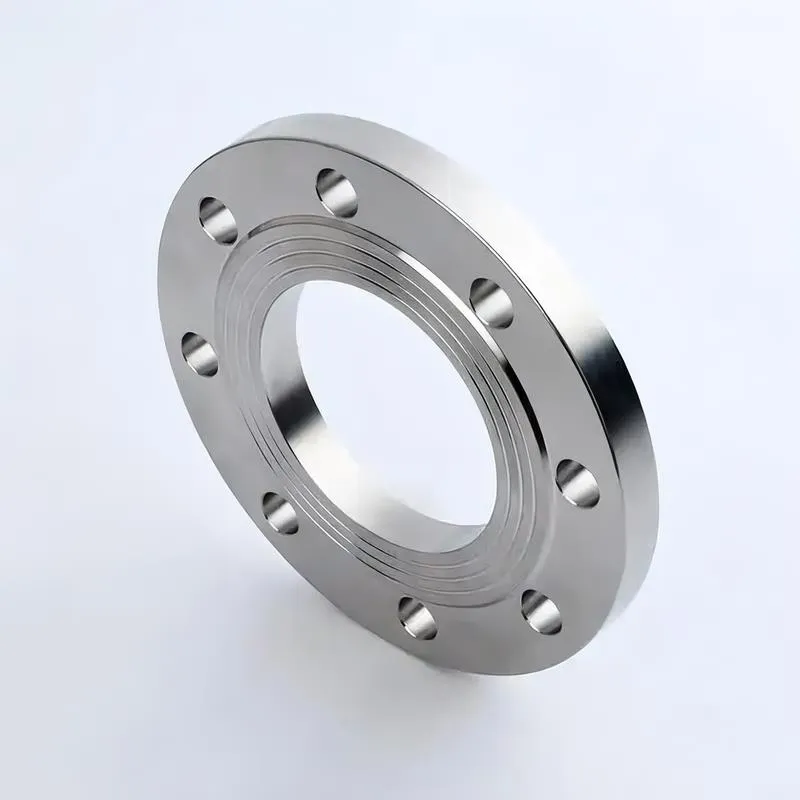
1,We Manufacturing processes are primarily classified into four types:
1:Forging,
2:Casting,
3:Cutting,
4:Rolling.
2,We can manufacture in accordance with these standards.
Standards:
GB Series (Chinese Standards), JB Series (Machinery Standards), HG Series (Chemical Industry Standards), ASME B16.5 (American Standards), BS4504 (British Standards), DIN (German Standards), and JIS (Japanese Standards).
Internationally, there are two primary systems of pipe flange standards: the European system, represented by the German DIN standards (including those of the former Soviet Union), and the American system, represented by the US ANSI pipe flange standards. Other common standards include: the Chinese Ministry of Machinery Industry standards (JB series), the Ministry of Chemical Industry standards (HG series), the Chinese National Standard *GB/T 9112–9124-2010 Steel Pipe Flanges*, as well as US standards (ASME B16.5), British standards (BS4504), German standards (DIN), Japanese standards (JIS), and marine standards (CBM), among others.
The nominal pressure ratings for the PN series are designated by "PN" and comprise the following nine levels: PN2.5, PN6, PN10, PN16, PN25, PN40, PN63, PN100, and PN160.
The nominal pressure ratings for the Class series are designated by "Class" and comprise the following six levels: Class150, Class300, Class600, Class900, Class1500, and Class2500.
Flange Classification
1. **According to Chemical Industry Standards:** Flanges are classified as follows:
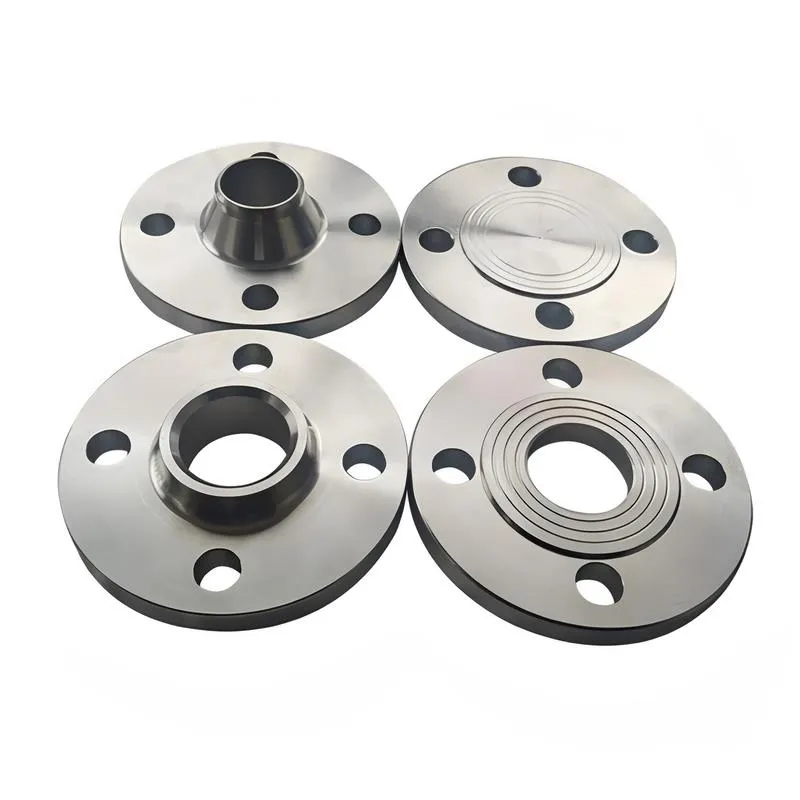
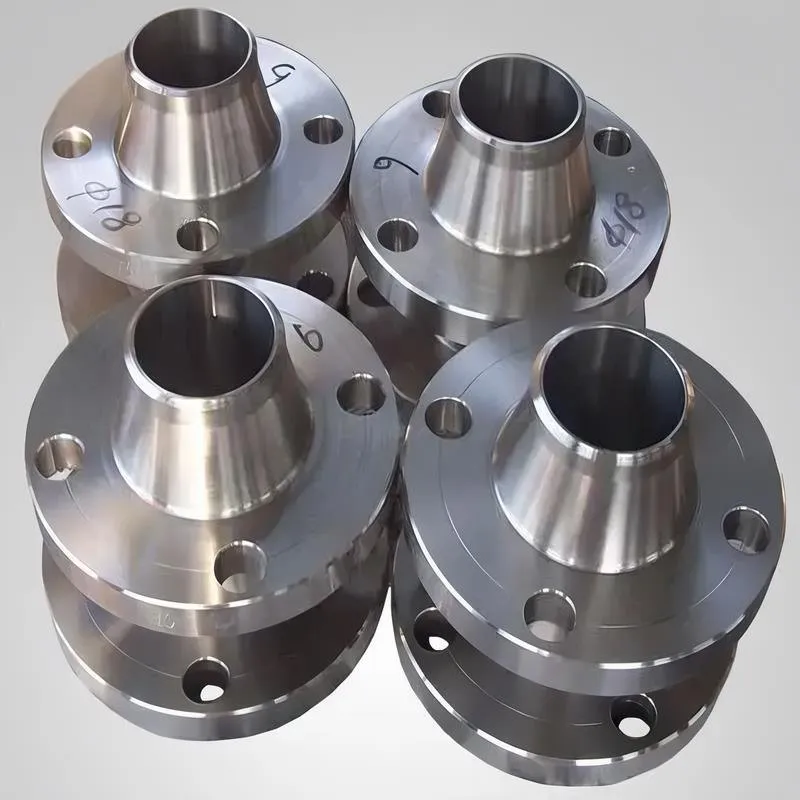
Plate Flat Welding Flange (PL), Necked Flat Welding Flange (SO), Necked Butt Welding Flange (WN), Integral Flange (IF), Socket Welding Flange (SW), Threaded Flange (Th), Butt Welding Ring Loose Flange (PJ/SE), Blind Flange (BL), Flat Welding Ring Loose Flange (PJ/PJ), and Lined Blind Flange (BL(s)).
2. **According to Petrochemical (SH) Industry Standards:** Flanges are classified as follows:
Threaded Flange (PL), Butt Welding Flange (WN), Flat Welding Flange (SO), Socket Welding Flange (SW), Loose Flange (LJ), and Blind Flange (no specific designation).
3. **According to Machinery (JB) Industry Standards:** Flanges are classified as follows:
Integral Flange, Butt Welding Flange, Plate Flat Welding Flange, Butt Welding Ring Plate Loose Flange, Flat Welding Ring Plate Loose Flange, Lap Joint Ring Plate Loose Flange, and Blind Flange.
4. **According to Connection Method/Type:** Flanges are classified as follows:
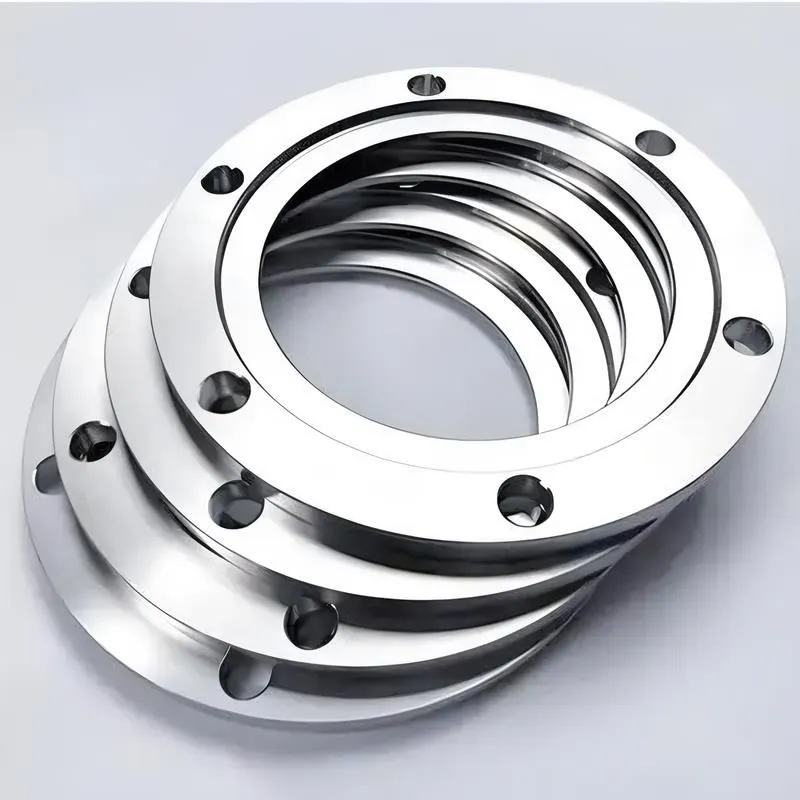
Plate Flat Welding Flange, Necked Flat Welding Flange, Necked Butt Welding Flange, Socket Welding Flange, Threaded Flange, Blind Flange, Necked Butt Welding Ring Loose Flange, Flat Welding Ring Loose Flange, Ring-Type Joint (RTJ) Flange and Blind Flange, Large-Diameter Plate Flange, Large-Diameter High-Neck Flange, Figure-8 Blind Plate, Butt Welding Ring Loose Flange, etc.
5. **According to the Component Being Connected:** Flanges can be classified into Vessel Flanges and Pipe Flanges.
6. **According to Structural Type:** Flanges include Integral Flanges, Threaded Flanges, Flat Welding Flanges, Butt Welding Flanges, Lap Joint (Loose/Swivel) Flanges, and Blind Flanges.
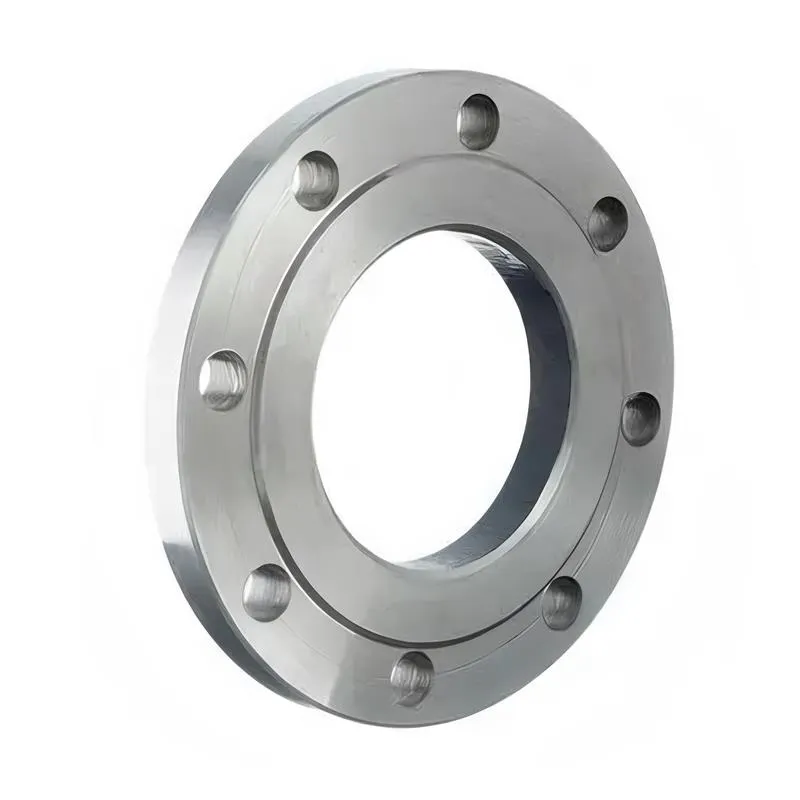
A flange—also referred to as a flange plate or rim—is a component used to connect shafts to one another, or, more commonly, to join the ends of pipes. Flanges are also utilized at the inlet and outlet ports of equipment to facilitate connections between two devices—for instance, the flange on a speed reducer. A "flange connection" or "flanged joint" refers to a detachable joint assembly comprising three interconnected elements—a flange, a gasket, and bolts—that together form a sealed structural unit. In the context of piping systems, a "pipe flange" specifically denotes a flange used for plumbing within the installation; when applied to equipment, it refers to the inlet or outlet flange of that specific device. Flanges feature a series of holes through which bolts are inserted to securely fasten the two flanges together, while a gasket placed between the flanges ensures a leak-proof seal. Flanges are broadly categorized into three types: threaded (screw-in) flanges, welded flanges, and clamp-type flanges. Flanges are invariably used in pairs; threaded flanges are suitable for low-pressure piping applications, whereas welded flanges are required for systems operating at pressures exceeding 4 kilograms per square centimeter. A sealing gasket is inserted between the two flange plates, which are then firmly secured using bolts. The thickness of a flange—as well as the specifications of the bolts used to fasten it—vary depending on the specific pressure rating required for the application. When connecting equipment such as water pumps or valves to piping systems, the corresponding connection points on these devices are often manufactured in the shape of a matching flange; this method of attachment is also referred to as a "flange connection." Generally, any connecting component that utilizes bolts to join and seal the perimeters of two flat surfaces—such as the joints in ventilation ducts—is termed a "flange"; such components may collectively be classified as "flange-type parts." However, since such a connection often constitutes merely a *portion* of a larger device—for instance, the interface between a flange and a water pump—it would be inappropriate to classify the entire water pump itself as a "flange-type part." Conversely, smaller components—such as valves—that feature such flanged interfaces may indeed be appropriately categorized as "flange-type parts."
-:-
For detailed product information, please contact sales.
-:
SAE 1525 Carbon Steel Flange, Composition Spec Product Information
-:-
For detailed product information, please contact sales.
-:
SAE 1525 Carbon Steel Flange, Composition Spec Synonyms
-:-
For detailed product information, please contact sales.
-:
SAE 1525 Carbon Steel, Composition Spec Product Information
-:-
For detailed product information, please contact sales.
-:
# **Product Datasheet: SAE 1525 Carbon Steel, Composition Spec**
## **Product Overview**
SAE 1525 is a **medium-carbon, manganese-carburizing grade steel** with excellent formability, weldability, and response to heat treatment. As a **composition specification (Composition Spec)** material, it is supplied with guaranteed chemical composition ranges but without mandatory mechanical property requirements, making it ideal for applications where the material will undergo subsequent forming, machining, or heat treatment to achieve final properties. This grade provides a balanced combination of strength, ductility, and cost-effectiveness for a wide range of industrial applications.
## **Key Features & Benefits**
- **Excellent Formability**: Suitable for cold forming, bending, and drawing operations
- **Good Weldability**: Can be welded using common methods with minimal precautions
- **Hardenability Enhancement**: Higher manganese content than 1020 series improves response to carburizing and through-hardening
- **Machinability**: Good machinability in the as-rolled or normalized condition
- **Cost-Effective**: Provides better mechanical properties than lower-carbon steels at moderate cost
- **Versatile Heat Treatment Response**: Responds well to carburizing, case hardening, and induction hardening
---
## **1. Chemical Composition**
### **Standard Composition Ranges (SAE J403)**
| Element | Composition Range (%) | Typical (%) | Function/Purpose |
|---------|----------------------|-------------|------------------|
| **Carbon (C)** | 0.23 - 0.28 | 0.25 | Primary strengthening element, determines hardenability and strength |
| **Manganese (Mn)** | 1.20 - 1.50 | 1.35 | Enhances hardenability, improves strength and toughness |
| **Phosphorus (P)** | ≤ 0.040 | 0.015 | Residual element (kept low for better ductility) |
| **Sulfur (S)** | ≤ 0.050 | 0.025 | Residual element (affects machinability when controlled) |
| **Silicon (Si)** | 0.15 - 0.35* | 0.25 | Deoxidizer, strengthens ferrite, improves cleanliness |
| **Iron (Fe)** | Balance | Balance | Base metal |
*Note: Silicon range may vary slightly by producer; some specifications list 0.15-0.30%*
### **Optional Controlled Additions**
Some producers offer enhanced versions with controlled additions for specific applications:
- **Calcium (Ca) treated**: Improved machinability (automotive parts)
- **Boron (B) modified**: Enhanced hardenability (0.0005-0.003% B)
- **Lead (Pb) added**: Free-machining version (0.15-0.35% Pb) - SAE 15L25 equivalent
### **Tramp Element Limits**
| Element | Maximum (%) |
|---------|-------------|
| Copper (Cu) | 0.20 |
| Nickel (Ni) | 0.25 |
| Chromium (Cr) | 0.20 |
| Molybdenum (Mo) | 0.06 |
| Aluminum (Al) | 0.06 |
---
## **2. Physical Properties**
### **Basic Physical Properties**
| Property | Value | Conditions |
|----------|-------|------------|
| **Density** | 7.87 g/cm³ | At 20°C |
| **Melting Point** | 1510-1530°C | 2750-2785°F |
| **Specific Heat** | 486 J/kg·K | At 20°C |
| **Thermal Conductivity** | 49.8 W/m·K | At 100°C |
| **Coefficient of Thermal Expansion** | 11.7 ×10⁻⁶/°C | 20-100°C |
| **Electrical Resistivity** | 0.20 μΩ·m | At 20°C |
| **Modulus of Elasticity** | 200-205 GPa | 29-29.7 ×10⁶ psi |
| **Modulus of Rigidity** | 80 GPa | 11.6 ×10⁶ psi |
| **Poisson's Ratio** | 0.29 | - |
### **Magnetic Properties**
- **Magnetic Permeability**: Highly magnetic (ferromagnetic)
- **Curie Temperature**: ~770°C (1418°F)
---
## **3. Mechanical Properties (Typical)**
### **As-Hot Rolled Condition**
| Property | Value Range | Metric Units | Imperial Units |
|----------|-------------|--------------|----------------|
| **Hardness** | 143 - 183 HB | 143 - 183 HB | 143 - 183 HB |
| **Tensile Strength** | 460 - 550 MPa | 460 - 550 MPa | 67 - 80 ksi |
| **Yield Strength** | 275 - 345 MPa | 275 - 345 MPa | 40 - 50 ksi |
| **Elongation (50mm)** | 25 - 35% | 25 - 35% | 25 - 35% |
| **Reduction of Area** | 50 - 60% | 50 - 60% | 50 - 60% |
### **Normalized Condition (900°C, air cooled)**
| Property | Value Range |
|----------|-------------|
| **Hardness** | 156 - 197 HB |
| **Tensile Strength** | 480 - 585 MPa |
| **Yield Strength** | 290 - 380 MPa |
| **Elongation** | 22 - 30% |
### **Annealed Condition (Furnace cooled)**
| Property | Value Range |
|----------|-------------|
| **Hardness** | 137 - 174 HB |
| **Tensile Strength** | 440 - 520 MPa |
| **Yield Strength** | 260 - 330 MPa |
| **Elongation** | 28 - 36% |
### **Cold Drawing Effect**
| Reduction (%) | Hardness Increase | Strength Increase |
|---------------|-------------------|-------------------|
| 10% | +10-15 HB | +15-20% |
| 20% | +20-30 HB | +25-35% |
| 30% | +30-45 HB | +35-50% |
---
## **4. Heat Treatment Characteristics**
### **Critical Temperatures**
| Transformation | Temperature |
|---------------|-------------|
| **Ac₁ (Lower Critical)** | 725°C (1337°F) |
| **Ac₃ (Upper Critical)** | 840°C (1544°F) |
| **Ar₃** | 800°C (1472°F) |
| **Ar₁** | 680°C (1256°F) |
### **Hardenability Data (Jominy - Normalized & Austentized at 900°C)**
| Distance from quenched end | Typical Hardness (HRC) |
|----------------------------|------------------------|
| 1.5 mm (1/16") | 38-42 |
| 3 mm (1/8") | 35-39 |
| 6 mm (1/4") | 28-33 |
| 10 mm (3/8") | 23-28 |
| 15 mm (5/8") | 20-24 |
### **Recommended Heat Treatments**
| Process | Parameters | Resulting Hardness |
|---------|------------|-------------------|
| **Full Annealing** | 870-900°C, furnace cool | 137-174 HB |
| **Normalizing** | 900-925°C, air cool | 156-197 HB |
| **Stress Relieving** | 550-650°C, air cool | - |
| **Carburizing** | 900-930°C, oil quench, 150-200°C temper | Case: 58-63 HRC, Core: 25-35 HRC |
| **Induction Hardening** | 900-950°C, water or polymer quench | 50-58 HRC (surface) |
---
## **5. Product Specifications & International Standards**
### **North American Standards**
| Standard | Specification | Scope |
|----------|---------------|-------|
| **SAE** | SAE J403 | Chemical composition requirements |
| **SAE** | SAE J404 | Chemical ranges for SAE steels |
| **ASTM** | ASTM A29/A29M | General requirements for steel bars |
| **ASTM** | ASTM A510 | General requirements for wire rods |
| **ASTM** | ASTM A576 | Specification for steel bars, hot-rolled |
| **AMS** | AMS 5045 | Bars, forgings, and tubing (aerospace) |
| **UNS** | G15250 | Unified numbering system designation |
### **International Equivalents**
| Region/Standard | Equivalent Designation | Note |
|-----------------|------------------------|------|
| **ISO** | ISO 683-18: 25Mn4 | Similar composition |
| **European (EN)** | EN 10083-2: 1.1165 | 25Mn4 (slightly different ranges) |
| **German (DIN)** | DIN 17210: 25Mn4 | - |
| **Japanese (JIS)** | JIS G4051: S25C | Lower Mn content |
| **Chinese (GB)** | GB/T 699: 25Mn | Similar |
| **Indian (IS)** | IS 5517: 25Mn6 | - |
### **Product Forms Available**
- **Hot Rolled Bars**: Rounds (6-300mm), flats, squares, hexagons
- **Cold Finished Bars**: Turned, ground, polished, cold drawn
- **Wire Rod**: Coiled wire for further processing
- **Forging Stock**: For hot forging applications
- **Billets & Blooms**: For further rolling or forging
### **Standard Conditions**
1. **Hot Rolled (HR)**: As-rolled with mill scale
2. **Hot Rolled & Pickled (HRP)**: Scale removed by acid pickling
3. **Cold Drawn (CD)**: Improved surface finish and dimensional accuracy
4. **Annealed (ANN)**: Soft condition for cold working
5. **Normalized (N)**: Improved uniformity of structure
6. **Stress Relieved (SR)**: Reduced residual stresses
---
## **6. Manufacturing & Processing Characteristics**
### **Machinability**
| Condition | Machinability Rating (% of B1112) | Recommended Cutting Parameters |
|-----------|-----------------------------------|--------------------------------|
| **Hot Rolled** | 55-60% | Speed: 30-40 m/min, Feed: 0.2-0.4 mm/rev |
| **Cold Drawn** | 60-65% | Speed: 35-45 m/min, Feed: 0.15-0.3 mm/rev |
| **Annealed** | 65-70% | Speed: 40-50 m/min, Feed: 0.2-0.5 mm/rev |
**Tool Material Recommendations**:
- **Roughing**: C2-C6 carbide grades
- **Finishing**: P10-P20 carbide or coated carbide
- **Drilling/Tapping**: High-speed steel or carbide-tipped tools
### **Formability**
| Process | Suitability | Notes |
|---------|-------------|-------|
| **Cold Bending** | Excellent | Minimum bend radius: 1.0t (with grain), 1.5t (across grain) |
| **Cold Heading** | Good | Annealed condition recommended for severe deformation |
| **Deep Drawing** | Good | Requires proper lubrication and die design |
| **Roll Forming** | Excellent | Commonly used for structural shapes |
| **Forging (Hot)** | Excellent | Forging temperature: 1150-900°C |
### **Weldability**
**Weldability Rating**: **Good** (Carbon Equivalent ≈ 0.40-0.45)
| Welding Process | Preheat Required | Post-Weld Treatment |
|-----------------|------------------|---------------------|
| **SMAW (Stick)** | Not required for <25mm | Optional stress relief for thick sections |
| **GMAW (MIG)** | Not required for <25mm | - |
| **GTAW (TIG)** | Not required | - |
| **Resistance Spot** | Not required | - |
| **Submerged Arc** | Optional for >25mm | Stress relief for critical applications |
**Recommended Filler Metals**:
- AWS E70S-6 (GMAW)
- AWS E7018 (SMAW)
- AWS ER70S-6 (GTAW)
---
## **7. Typical Applications**
### **Automotive Industry**
- **Engine Components**: Camshafts, crankshafts (forging grade), connecting rods
- **Transmission Parts**: Gears, shafts, synchronizer components
- **Suspension Components**: Axle beams, torsion bars, stabilizer bars
- **Fasteners**: Bolts, studs, nuts (Grade 5.8-8.8 equivalent)
- **Structural Members**: Frame components, brackets, mounts
### **Industrial Machinery**
- **Shafting**: Drive shafts, line shafts, counter shafts
- **Gearing**: Industrial gears, pinions, sprockets (often carburized)
- **Agricultural Equipment**: Tractor components, implement parts
- **Material Handling**: Conveyor parts, roller components
- **General Fabrication**: Brackets, frames, supports
### **Construction & Infrastructure**
- **Fasteners**: Structural bolts, anchor bolts
- **Reinforcement**: Special bar shapes for concrete forms
- **Scaffolding**: Couplers, fittings, components
### **Consumer Products**
- **Hand Tools**: Wrenches, pliers, hammer heads (forging applications)
- **Hardware**: Hinges, brackets, mounting plates
- **Bicycle Components**: Cranks, chainrings, bottom brackets
### **Special Applications**
- **Cold Heading**: For production of bolts, screws, and rivets
- **Cold Extrusion**: For complex shaped components
- **Powder Metallurgy**: As a base material for alloy steel powders
---
## **8. Quality Control & Testing**
### **Standard Tests**
1. **Chemical Analysis**: Optical Emission Spectroscopy (OES) or combustion analysis
2. **Tensile Testing**: Per ASTM A370 (if specified)
3. **Hardness Testing**: Brinell, Rockwell, or Vickers methods
4. **Macro/Micro Examination**: Grain size, inclusion rating (ASTM E45)
5. **Surface Quality**: Visual inspection for seams, cracks, or defects
### **Optional Tests**
- **Impact Testing**: Charpy V-notch at specified temperatures
- **Hardenability Test**: Jominy end-quench per ASTM A255
- **Non-Destructive Testing**: Ultrasonic, magnetic particle, or dye penetrant
- **Decarburization Check**: Per ASTM E1077
### **Certification**
- **Mill Test Certificate**: 2.2 per EN 10204 (Type 2.2)
- **Material Traceability**: Heat/lot number traceable throughout process
- **RoHS/REACH Compliance**: Typically compliant (no restricted substances)
---
## **9. Comparison with Similar Grades**
| Grade | C (%) | Mn (%) | Key Differences | Typical Applications |
|-------|-------|--------|-----------------|----------------------|
| **SAE 1020** | 0.18-0.23 | 0.30-0.60 | Lower C & Mn, less hardenable | Low-stress parts, welding |
| **SAE 1525** | 0.23-0.28 | 1.20-1.50 | Higher Mn, better hardenability | General engineering, fasteners |
| **SAE 1541** | 0.36-0.44 | 1.35-1.65 | Higher C, higher strength | Higher strength components |
| **SAE 1025** | 0.22-0.28 | 0.30-0.60 | Lower Mn than 1525 | Structural applications |
---
## **10. Technical Notes & Considerations**
### **Design Considerations**
1. **Section Size Effect**: Properties vary with section size due to cooling rate differences
2. **Directionality**: Hot-rolled material exhibits anisotropic properties (better longitudinal than transverse)
3. **Surface Condition**: Mill scale affects fatigue life; removal recommended for critical applications
4. **Stress Concentration**: Proper fillet radii essential due to moderate notch sensitivity
### **Storage & Handling**
- **Storage**: Keep dry to prevent rust formation
- **Handling**: Use appropriate lifting equipment to prevent damage
- **Cutting**: Can be cut with oxy-fuel, plasma, laser, or saw cutting methods
- **Surface Protection**: Oil coating or other rust preventives recommended for long-term storage
### **Environmental Considerations**
- **Recyclability**: 100% recyclable (ferrous scrap)
- **Energy Content**: ~20-25 GJ/tonne for primary production
- **Carbon Footprint**: ~1.8-2.2 tonnes CO₂/tonne steel (varies by production method)
---
## **11. Limitations & Special Considerations**
### **Temperature Limitations**
- **Maximum Service Temperature**: 425°C (800°F) for long-term exposure
- **Minimum Service Temperature**: -20°C (-4°F) without impact testing; lower with proper heat treatment
- **Creep Resistance**: Not suitable for high-temperature creep applications
### **Corrosion Resistance**
- **General**: Poor corrosion resistance (requires protection)
- **Protection Methods**: Painting, galvanizing, plating, or coating required
- **Atmospheric Corrosion Rate**: ~0.1-0.2 mm/year in industrial atmosphere
### **Special Processing Notes**
1. **Carburizing**: Excellent candidate for case hardening (case depth 0.5-2.0 mm typical)
2. **Induction Hardening**: Well-suited for selective surface hardening
3. **Nitriding**: Can be nitrided but not ideal due to aluminum-free composition
4. **Black Oxide Coating**: Commonly used for appearance and mild corrosion protection
---
**Disclaimer**: The information provided in this datasheet is for general reference only. Properties may vary depending on manufacturer, processing history, and section size. For critical applications, consult the material producer for specific recommendations and conduct appropriate testing. Always refer to the latest edition of applicable standards and specifications.
**Revision**: 1.0 | **Date**: October 2023 | **Classification**: Commercial Technical Data
-:-
For detailed product information, please contact sales.
-:
SAE 1525 Carbon Steel, Composition Spec Specification
Dimensions
Size:
Diameter 20-1000 mm Length <6171 mm
Size:We can customized as required
Standard:
Per your request or drawing
We can customized as required
Properties(Theoretical)
Chemical Composition
-:-
For detailed product information, please contact sales.
-:
SAE 1525 Carbon Steel, Composition Spec Properties
-:-
For detailed product information, please contact sales.
-:
Applications of SAE 1525 Carbon Steel Flange, Composition Spec
-:-
For detailed product information, please contact sales.
-:
Chemical Identifiers SAE 1525 Carbon Steel Flange, Composition Spec
-:-
For detailed product information, please contact sales.
-:
Packing of SAE 1525 Carbon Steel Flange, Composition Spec
-:-
For detailed product information, please contact sales.
-:
Standard Packing:
-:-
For detailed product information, please contact sales.
-:
Typical bulk packaging includes palletized plastic 5 gallon/25 kg. pails, fiber and Steel Flange drums to 1 ton super sacks in full container (FCL) or truck load (T/L) quantities. Research and sample quantities and hygroscopic, oxidizing or other air sensitive materials may be packaged under argon or vacuum. Solutions are packaged in polypropylene, plastic or glass jars up to palletized 2642 gallon liquid totes Special package is available on request. E FORUs’ is carefully handled to minimize damage during storage and transportation and to preserve the quality of our products in their original condition