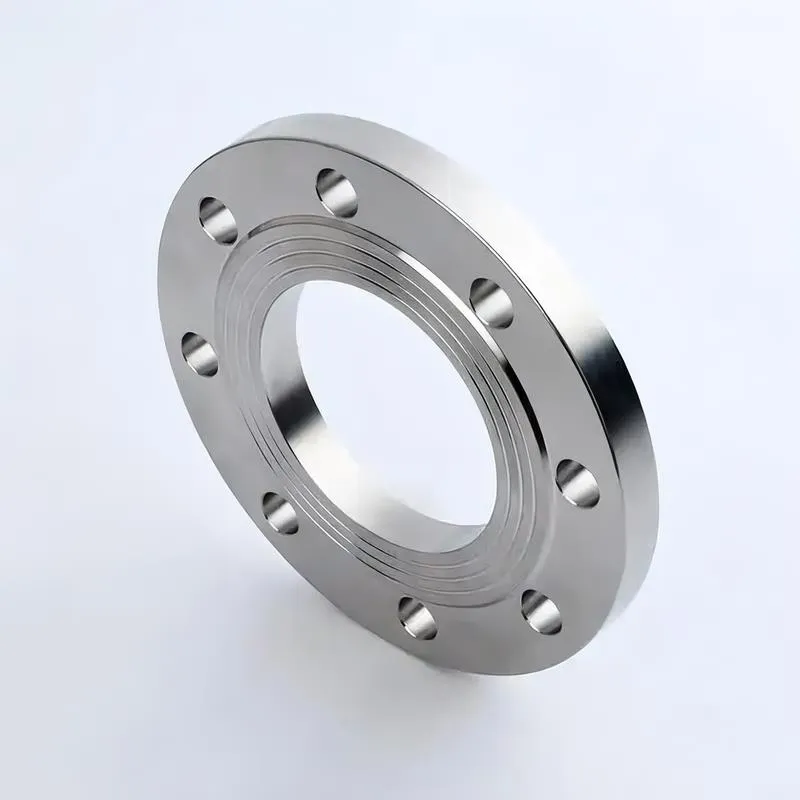
1,We Manufacturing processes are primarily classified into four types:
1:Forging,
2:Casting,
3:Cutting,
4:Rolling.
2,We can manufacture in accordance with these standards.
Standards:
GB Series (Chinese Standards), JB Series (Machinery Standards), HG Series (Chemical Industry Standards), ASME B16.5 (American Standards), BS4504 (British Standards), DIN (German Standards), and JIS (Japanese Standards).
Internationally, there are two primary systems of pipe flange standards: the European system, represented by the German DIN standards (including those of the former Soviet Union), and the American system, represented by the US ANSI pipe flange standards. Other common standards include: the Chinese Ministry of Machinery Industry standards (JB series), the Ministry of Chemical Industry standards (HG series), the Chinese National Standard *GB/T 9112–9124-2010 Steel Pipe Flanges*, as well as US standards (ASME B16.5), British standards (BS4504), German standards (DIN), Japanese standards (JIS), and marine standards (CBM), among others.
The nominal pressure ratings for the PN series are designated by "PN" and comprise the following nine levels: PN2.5, PN6, PN10, PN16, PN25, PN40, PN63, PN100, and PN160.
The nominal pressure ratings for the Class series are designated by "Class" and comprise the following six levels: Class150, Class300, Class600, Class900, Class1500, and Class2500.
Flange Classification
1. **According to Chemical Industry Standards:** Flanges are classified as follows:
Plate Flat Welding Flange (PL), Necked Flat Welding Flange (SO), Necked Butt Welding Flange (WN), Integral Flange (IF), Socket Welding Flange (SW), Threaded Flange (Th), Butt Welding Ring Loose Flange (PJ/SE), Blind Flange (BL), Flat Welding Ring Loose Flange (PJ/PJ), and Lined Blind Flange (BL(s)).
2. **According to Petrochemical (SH) Industry Standards:** Flanges are classified as follows:
Threaded Flange (PL), Butt Welding Flange (WN), Flat Welding Flange (SO), Socket Welding Flange (SW), Loose Flange (LJ), and Blind Flange (no specific designation).
3. **According to Machinery (JB) Industry Standards:** Flanges are classified as follows:
Integral Flange, Butt Welding Flange, Plate Flat Welding Flange, Butt Welding Ring Plate Loose Flange, Flat Welding Ring Plate Loose Flange, Lap Joint Ring Plate Loose Flange, and Blind Flange.
4. **According to Connection Method/Type:** Flanges are classified as follows:
Plate Flat Welding Flange, Necked Flat Welding Flange, Necked Butt Welding Flange, Socket Welding Flange, Threaded Flange, Blind Flange, Necked Butt Welding Ring Loose Flange, Flat Welding Ring Loose Flange, Ring-Type Joint (RTJ) Flange and Blind Flange, Large-Diameter Plate Flange, Large-Diameter High-Neck Flange, Figure-8 Blind Plate, Butt Welding Ring Loose Flange, etc.
5. **According to the Component Being Connected:** Flanges can be classified into Vessel Flanges and Pipe Flanges.
6. **According to Structural Type:** Flanges include Integral Flanges, Threaded Flanges, Flat Welding Flanges, Butt Welding Flanges, Lap Joint (Loose/Swivel) Flanges, and Blind Flanges.
A flange—also referred to as a flange plate or rim—is a component used to connect shafts to one another, or, more commonly, to join the ends of pipes. Flanges are also utilized at the inlet and outlet ports of equipment to facilitate connections between two devices—for instance, the flange on a speed reducer. A "flange connection" or "flanged joint" refers to a detachable joint assembly comprising three interconnected elements—a flange, a gasket, and bolts—that together form a sealed structural unit. In the context of piping systems, a "pipe flange" specifically denotes a flange used for plumbing within the installation; when applied to equipment, it refers to the inlet or outlet flange of that specific device. Flanges feature a series of holes through which bolts are inserted to securely fasten the two flanges together, while a gasket placed between the flanges ensures a leak-proof seal. Flanges are broadly categorized into three types: threaded (screw-in) flanges, welded flanges, and clamp-type flanges. Flanges are invariably used in pairs; threaded flanges are suitable for low-pressure piping applications, whereas welded flanges are required for systems operating at pressures exceeding 4 kilograms per square centimeter. A sealing gasket is inserted between the two flange plates, which are then firmly secured using bolts. The thickness of a flange—as well as the specifications of the bolts used to fasten it—vary depending on the specific pressure rating required for the application. When connecting equipment such as water pumps or valves to piping systems, the corresponding connection points on these devices are often manufactured in the shape of a matching flange; this method of attachment is also referred to as a "flange connection." Generally, any connecting component that utilizes bolts to join and seal the perimeters of two flat surfaces—such as the joints in ventilation ducts—is termed a "flange"; such components may collectively be classified as "flange-type parts." However, since such a connection often constitutes merely a *portion* of a larger device—for instance, the interface between a flange and a water pump—it would be inappropriate to classify the entire water pump itself as a "flange-type part." Conversely, smaller components—such as valves—that feature such flanged interfaces may indeed be appropriately categorized as "flange-type parts."
-:-
For detailed product information, please contact sales.
-:
AISI 4419 Steel Flange, annealed at 915°C (1675°F), 25 mm (1 in.) round Product Information
-:-
For detailed product information, please contact sales.
-:
AISI 4419 Steel Flange, annealed at 915°C (1675°F), 25 mm (1 in.) round Synonyms
-:-
For detailed product information, please contact sales.
-:
AISI 4419 Steel, annealed at 915°C (1675°F), 25 mm (1 in.) round Product Information
-:-
For detailed product information, please contact sales.
-:
# **AISI 4419 Steel - Annealed Condition Product Specification**
## **1. Product Definition & Classification**
**AISI 4419** is a **nickel-chromium-molybdenum alloy steel** representing a specialized member of the 43xx series with enhanced nickel content. This medium-carbon alloy steel combines the benefits of nickel (improved toughness and hardenability) with chromium and molybdenum (wear resistance and tempering stability) to create a material suitable for demanding applications requiring an optimal balance of strength, toughness, and fatigue resistance.
**Material Classification:**
- **Series:** 43xx Nickel-Chromium-Molybdenum alloy steel
- **Carbon Level:** Medium (0.17-0.23%)
- **Nickel Content:** Enhanced (1.65-2.00%)
- **Primary Features:** Excellent toughness, good hardenability, superior fatigue resistance
- **Condition:** Fully annealed to optimize machinability and dimensional stability
**Processing History:**
- **Annealing Temperature:** 915°C (1675°F)
- **Cooling Method:** Controlled furnace cooling
- **Product Form:** 25 mm (1 inch) diameter round bar
- **Final Condition:** Fully annealed, ready for machining or subsequent heat treatment
## **2. International Standards & Designations**
| Region/Standard | Designation | Equivalent Standard |
|-----------------|-------------|---------------------|
| **United States** | AISI 4419, SAE 4419 | ASTM A29/A29M, SAE J404, J412 |
| **UNS Designation** | G44190 | Standard UNS designation |
| **Europe** | 1.6562 (34CrNiMo6) modified | EN 10083-3 (similar composition) |
| **Japan** | SNCM220 | JIS G4103 |
| **China** | 20CrNiMo | GB/T 3077 |
| **ISO** | 34CrNiMo6 (similar) | ISO 683-18 |
| **Aerospace** | - | Similar to some AMS specifications |
**Note:** Exact equivalents vary; 4419 has slightly different composition than the more common 4320 or 4340.
## **3. Chemical Composition (Weight %)**
*Balanced composition for optimal carburizing or through-hardening response*
| Element | Composition Range (%) | Typical Aim (%) | Metallurgical Function |
|---------|----------------------|-----------------|------------------------|
| **Carbon (C)** | 0.17 - 0.23 | 0.20 | Provides core strength; ideal for carburizing applications |
| **Manganese (Mn)** | 0.45 - 0.65 | 0.55 | Enhances hardenability and strength |
| **Phosphorus (P)** | ≤ 0.035 | 0.020 | Controlled low level for toughness |
| **Sulfur (S)** | ≤ 0.040 | 0.025 | Improves machinability; controlled level |
| **Silicon (Si)** | 0.15 - 0.35 | 0.25 | Deoxidizer; solid solution strengthener |
| **Nickel (Ni)** | 1.65 - 2.00 | 1.80 | **Key feature:** Dramatically improves toughness and hardenability |
| **Chromium (Cr)** | 0.40 - 0.60 | 0.50 | Enhances hardenability, wear resistance |
| **Molybdenum (Mo)** | 0.20 - 0.30 | 0.25 | Improves hardenability; reduces temper embrittlement |
**Special Composition Notes:**
- **Nickel Advantage:** Higher Ni than 4320 (1.65-2.00% vs. 1.55-2.00%) for better toughness
- **Carbon Level:** Ideal for carburizing (case hardening) applications
- **Molybdenum Content:** Higher than many 43xx grades for better high-temperature properties
- **Balanced Design:** Optimized for both carburizing and through-hardening applications
## **4. Hardenability Characteristics**
*Excellent hardenability due to nickel-chromium-molybdenum synergy*
### **Estimated Jominy Data (Annealed Base Material)**
| Distance from Quenched End | As-Quenched Hardness (HRC) | After Proper Heat Treatment |
|----------------------------|----------------------------|-----------------------------|
| **J₁ (Surface)** | 40 - 45 | Can reach 58-63 HRC if carburized |
| **J₄** | 38 - 43 | Good through-hardening capability |
| **J₈** | 35 - 40 | Suitable for 25 mm sections |
| **Center of 25 mm bar** | 33 - 38 | Good core hardness potential |
**Hardenability Metrics:**
- **Ideal Critical Diameter (Dᵢ):** ~75 mm (3 inches) in oil
- **95% Martensite Diameter (D₉₅):** ~50 mm (2 inches) in oil
- **Grossmann Factor:** 4.0-4.5 (Very Good)
- **For Carburizing:** Excellent case depth uniformity
- **For Through-Hardening:** Good for up to 50 mm sections
## **5. Physical Properties (Annealed Condition)**
| Property | Value | Conditions/Notes |
|----------|-------|------------------|
| **Density** | 7.85 g/cm³ (0.284 lb/in³) | At 20°C |
| **Melting Range** | 1420-1510°C (2590-2750°F) | - |
| **Modulus of Elasticity (E)** | 205 GPa (29.7 × 10⁶ psi) | At 20°C |
| **Shear Modulus (G)** | 80 GPa (11.6 × 10⁶ psi) | At 20°C |
| **Poisson's Ratio (ν)** | 0.29 | At 20°C |
| **Thermal Conductivity** | 42.5 W/m·K | At 100°C |
| **Specific Heat Capacity** | 475 J/kg·K | At 20°C |
| **Coefficient of Thermal Expansion** | 11.7 × 10⁻⁶ /K | 20-100°C range |
| **Electrical Resistivity** | 0.22 µΩ·m | At 20°C |
| **Magnetic Properties** | Ferromagnetic | Below Curie point |
## **6. Mechanical Properties (Annealed at 915°C)**
*Minimum guaranteed properties for 25 mm diameter after annealing*
| Property | Minimum Value | Typical Value | Test Standard |
|----------|---------------|---------------|---------------|
| **Hardness (Brinell)** | 179 HB | 197 HB | ASTM E10 |
| **Hardness (Rockwell)** | 88 HRB | 95 HRB | ASTM E18 |
| **Tensile Strength** | 550 MPa (80 ksi) | 620 MPa (90 ksi) | ASTM A370 |
| **Yield Strength (0.2%)** | 345 MPa (50 ksi) | 415 MPa (60 ksi) | ASTM A370 |
| **Elongation in 50 mm** | 28% | 32% | ASTM A370 |
| **Reduction of Area** | 55% | 60% | ASTM A370 |
| **Charpy V-Notch Impact (20°C)** | 68 J (50 ft-lb) | 95 J (70 ft-lb) | ASTM A370 |
| **Machinability Rating** | 70% of B1112 | - | Industry standard |
**Annealing Process Benefits:**
- **Optimal Softness:** Maximum machinability achieved
- **Uniform Microstructure:** Consistent throughout 25 mm cross-section
- **Stress Relief:** Eliminates residual stresses from previous processing
- **Dimensional Stability:** Minimizes distortion during subsequent machining
## **7. Annealing Process Details**
### **915°C Annealing Rationale**
```
Why 915°C (1675°F)?
1. Complete Austenitization: Ensures full transformation for uniform annealing
2. Nickel Effect: Higher temperature accommodates nickel's effect on transformation
3. Grain Size Control: Produces optimal grain size for machinability
4. Carbide Solution: Ensures complete carbide dissolution for softest condition
Annealing Cycle:
- Heat to 915°C ±10°C (1675°F ±20°F)
- Soak: 30-45 minutes per inch of thickness (45-60 min for 25 mm)
- Cool: Controlled furnace cooling (typically 10-20°C/hour to 600°C)
- Final Cooling: Air cool to room temperature
- Result: Coarse pearlite + ferrite structure ideal for machining
```
### **Metallurgical Result**
- **Microstructure:** Coarse pearlite in ferrite matrix
- **Grain Size:** ASTM 4-6 (controlled coarseness)
- **Carbide Distribution:** Spheroidized and coalesced
- **Decarburization:** ≤0.38 mm (0.015 in) total depth
- **Uniformity:** Excellent throughout 25 mm section
## **8. Machinability & Manufacturing Characteristics**
### **Machinability in Annealed Condition**
- **Relative Machinability:** 70% (compared to 100% for B1112 steel)
- **Rating:** Good for an alloy steel
- **Nickel Benefit:** Produces better chip formation than some alloy steels
- **Surface Finish:** Capable of 1.6-3.2 µm Ra with proper technique
- **Tool Life:** Good with appropriate tool materials
### **Recommended Machining Parameters**
| Operation | Speed (m/min) | Feed (mm/rev) | Tool Recommendations |
|-----------|--------------|---------------|----------------------|
| **Turning** | 45-70 | 0.15-0.35 | C2/C6 carbide, positive rake |
| **Drilling** | 25-40 | 0.10-0.20 | HSS-Co drills |
| **Milling** | 40-60 | 0.10-0.25 | Carbide end mills |
| **Tapping** | 8-15 | - | Premium HSS-E taps |
| **Threading** | 25-45 | - | Carbide inserts |
### **Special Processing Advantages**
1. **Excellent Weldability:** Good for an alloy steel (with proper procedures)
2. **Cold Forming:** Good capability in annealed condition
3. **Forgability:** Excellent (nickel improves hot workability)
4. **Subsequent Heat Treatment:** Ideal starting condition for carburizing or through-hardening
## **9. Product Applications**
### **Carburizing (Case Hardening) Applications**
- **High-performance gears** for automotive and aerospace
- **Bearing races** and **rollers** requiring tough core
- **Camshafts** for high-performance engines
- **Aircraft landing gear components**
- **Transmission components** for heavy equipment
### **Through-Hardening Applications**
- **Shafts** requiring high strength and toughness
- **Connecting rods** for high-performance applications
- **Fasteners** for critical applications
- **Machine tool components**
- **Hydraulic cylinder rods**
### **Automotive & Transportation**
- **Differential gears** and **pinions**
- **Steering components** for heavy vehicles
- **Suspension components** requiring fatigue resistance
- **Engine components** subject to high stress
- **Drivetrain components** for off-road vehicles
### **Aerospace & Defense**
- **Aircraft engine components** (non-turbine)
- **Helicopter transmission components**
- **Missile guidance system components**
- **Armor vehicle components**
- **Satellite mechanism components**
### **Industrial Equipment**
- **Gearbox components** for wind turbines
- **Pump shafts** for high-pressure applications
- **Compressor components** for industrial gases
- **Mining equipment components**
- **Marine propulsion components**
## **10. Heat Treatment Potential**
### **Carburizing Capability**
```
Typical Carburizing Cycle for 4419:
1. Carburize: 925-950°C (1700-1740°F) for 4-12 hours
2. Diffusion: Optional step for gradient control
3. Quench: Direct from carburizing or reheat to 830-850°C
4. Temper: 150-200°C (300-400°F) for stress relief
5. Result: Case hardness 58-63 HRC, core 30-40 HRC
```
### **Through-Hardening Potential**
```
Through-Hardening Treatment:
1. Austenitize: 830-850°C (1525-1560°F)
2. Quench: Oil (for sections up to 50 mm)
3. Temper: 425-650°C (800-1200°F) depending on requirements
4. Result: Uniform hardness 25-45 HRC with excellent toughness
```
### **Nickel's Unique Contributions**
1. **Toughness Enhancement:** Lowers ductile-to-brittle transition temperature
2. **Hardenability Improvement:** Particularly effective in larger sections
3. **Fatigue Resistance:** Improves resistance to cyclic loading
4. **Low-Temperature Properties:** Maintains toughness at sub-zero temperatures
## **11. Comparison with Similar Grades**
### **vs. AISI 4320**
| Parameter | AISI 4419 | AISI 4320 | Advantage |
|-----------|-----------|-----------|-----------|
| **Nickel** | 1.65-2.00% | 1.55-2.00% | 4419: Slightly higher typical |
| **Molybdenum** | 0.20-0.30% | 0.20-0.30% | Similar |
| **Applications** | More demanding | General carburizing | 4419: Higher performance |
| **Cost** | Slightly higher | Baseline | 4320: More economical |
| **Availability** | Less common | Widely available | 4320: Better supply |
### **vs. AISI 4340**
| Aspect | AISI 4419 | AISI 4340 | Selection Guide |
|--------|-----------|-----------|----------------|
| **Carbon** | 0.17-0.23% | 0.38-0.43% | Different purposes |
| **Primary Use** | Carburizing | Through-hardening | Different applications |
| **Case Potential** | Excellent | Limited | 4419 for case hardening |
| **Core Toughness** | Excellent | Exceptional | Both excellent |
| **Best For** | Case-hardened parts | Through-hardened parts | Different requirements |
## **12. Quality Assurance & Testing**
### **Standard Testing Package**
1. **Chemical Analysis:** Full spectrographic analysis
2. **Hardness Testing:** Multiple locations on cross-section
3. **Tensile Testing:** Per ASTM A370
4. **Impact Testing:** Charpy V-notch at room temperature
5. **Microstructure Examination:** Verification of annealed structure
6. **Grain Size Measurement:** ASTM E112 method
### **Enhanced Testing for Critical Applications**
- **Ultrasonic Testing:** For internal soundness
- **Magnetic Particle Inspection:** For surface defects
- **Charpy Transition Curve:** For low-temperature applications
- **Hardenability Testing:** Jominy test if specified
- **Cleanliness Rating:** Inclusion analysis per ASTM E45
## **13. Design & Engineering Considerations**
### **Advantages of AISI 4419**
1. **Superior Toughness:** Nickel content provides excellent impact resistance
2. **Good Hardenability:** Suitable for moderately large sections
3. **Fatigue Resistance:** Excellent for cyclic loading applications
4. **Versatility:** Suitable for both carburizing and through-hardening
5. **Machinability:** Good in annealed condition
### **Design Recommendations**
- **For Carburizing:** Design for 0.5-1.5 mm case depth
- **Fillet Radii:** Minimum 2 mm (0.08 in) for stress reduction
- **Surface Finish:** Critical areas should be machined before heat treatment
- **Corrosion Protection:** Required (not a stainless steel)
- **Joining Methods:** Can be welded with proper procedures
## **14. Economic & Supply Considerations**
### **Market Availability**
- **Production Status:** Produced by specialty steel mills
- **Lead Time:** 6-10 weeks typically
- **Minimum Order:** 2,000-5,000 lbs for mill production
- **Cost Factor:** 1.8-2.2× AISI 1020 cost
- **Value Proposition:** Excellent performance for demanding applications
### **Cost Comparison with Alternatives**
| Material | Relative Cost | Performance Level | Best Application |
|----------|---------------|------------------|-----------------|
| **AISI 1020** | 1.0× | Basic | Simple components |
| **AISI 4320** | 1.5× | Good | General carburizing |
| **AISI 4419** | 1.8× | Very Good | Demanding applications |
| **AISI 4340** | 2.2× | Excellent | Through-hardening |
| **Aerospace Grades** | 3.0×+ | Premium | Critical applications |
## **15. Technical Specifications Summary**
### **Material Selection Guidelines**
```
Start: Need high toughness + good strength
│
├─→ If carburizing needed → 4419 excellent choice
│
├─→ If through-hardening only → Consider 4340
│
├─→ If cost is primary concern → Consider 4320
│
├─→ If maximum toughness needed → 4419 or 4340
│
└─→ If welding required → 4419 good (with precautions)
```
### **25 mm Diameter Specific Advantages**
1. **Ideal Size:** Optimal for many gear and shaft applications
2. **Uniform Properties:** Consistent throughout cross-section
3. **Heat Treatment:** Good response for both case and through-hardening
4. **Availability:** Common size with good availability
5. **Machining:** Good chip control and surface finish possible
---
## **Technical Appendix: Property Calculations**
### **Empirical Relationships for Annealed 4419**
1. **Tensile Strength (MPa) ≈ 3.2 × HB**
*Example: 197 HB → 3.2 × 197 = 630 MPa*
2. **Yield Strength ≈ 0.67 × Tensile Strength** (in annealed condition)
*Example: 630 MPa × 0.67 = 422 MPa*
3. **Machinability Factor:** Chip volume ratio ≈ 2.5-3.0 (good)
### **Heat Treatment Response Predictions**
- **After Carburizing:** Case 58-63 HRC, Core 30-40 HRC
- **After Through-Hardening:** 25-45 HRC depending on temper
- **Impact Toughness:** 40-80 J typical after heat treatment
- **Fatigue Limit:** 500-700 MPa depending on condition
---
## **Summary: Application Guidelines**
### **Select AISI 4419 Annealed When:**
1. **Component requires carburizing** with tough core properties
2. **Superior toughness** is needed compared to standard carburizing steels
3. **Good machinability** is required before heat treatment
4. **Fatigue resistance** is critical for the application
5. **Moderate cost premium** is justified by performance requirements
### **Consider Alternatives When:**
1. **Simple carburizing** suffices (consider 4320)
2. **Through-hardening only** needed (consider 4340)
3. **Maximum economy** is required (consider lower alloy steels)
4. **Corrosion resistance** is needed (consider stainless alternatives)
5. **Extreme hardness** is primary requirement (consider tool steels)
### **Value Proposition:**
AISI 4419 in annealed condition provides:
- **Excellent starting condition** for subsequent heat treatment
- **Superior toughness** potential due to nickel content
- **Good machinability** for complex component shapes
- **Versatile heat treatment** options (carburizing or through-hardening)
- **Proven performance** in demanding applications
---
**Final Recommendation:** AISI 4419 represents an excellent choice for demanding applications requiring the combination of a hard, wear-resistant surface (via carburizing) with a tough, strong core. The nickel content provides toughness advantages that make it suitable for critical components subject to impact or fatigue loading.
**Special Note:** The 915°C annealing temperature is specifically chosen to optimize this material's microstructure for both machinability and subsequent heat treatment response. This represents a slightly higher annealing temperature than some similar grades, taking advantage of nickel's effects on transformation behavior.
---
**Disclaimer:** This product specification is for technical reference. Actual properties may vary based on specific manufacturing processes and testing methods. For critical applications, verify material certifications, conduct incoming inspection, and perform appropriate qualification testing. Always consult with materials engineering specialists for safety-critical applications. The information presented represents typical values but should not be used as the sole basis for design decisions.
-:-
For detailed product information, please contact sales.
-:
AISI 4419 Steel, annealed at 915°C (1675°F), 25 mm (1 in.) round Specification
Dimensions
Size:
Diameter 20-1000 mm Length <4058 mm
Size:We can customized as required
Standard:
Per your request or drawing
We can customized as required
Properties(Theoretical)
Chemical Composition
-:-
For detailed product information, please contact sales.
-:
AISI 4419 Steel, annealed at 915°C (1675°F), 25 mm (1 in.) round Properties
-:-
For detailed product information, please contact sales.
-:
Applications of AISI 4419 Steel Flange, annealed at 915°C (1675°F), 25 mm (1 in.) round
-:-
For detailed product information, please contact sales.
-:
Chemical Identifiers AISI 4419 Steel Flange, annealed at 915°C (1675°F), 25 mm (1 in.) round
-:-
For detailed product information, please contact sales.
-:
Packing of AISI 4419 Steel Flange, annealed at 915°C (1675°F), 25 mm (1 in.) round
-:-
For detailed product information, please contact sales.
-:
Standard Packing:
-:-
For detailed product information, please contact sales.
-:
Typical bulk packaging includes palletized plastic 5 gallon/25 kg. pails, fiber and Steel Flange drums to 1 ton super sacks in full container (FCL) or truck load (T/L) quantities. Research and sample quantities and hygroscopic, oxidizing or other air sensitive materials may be packaged under argon or vacuum. Solutions are packaged in polypropylene, plastic or glass jars up to palletized 529 gallon liquid totes Special package is available on request. E FORUs’ is carefully handled to minimize damage during storage and transportation and to preserve the quality of our products in their original condition