1,We Manufacturing processes are primarily classified into four types:
1:Forging,
2:Casting,
3:Cutting,
4:Rolling.
2,We can manufacture in accordance with these standards.
Standards:
GB Series (Chinese Standards), JB Series (Machinery Standards), HG Series (Chemical Industry Standards), ASME B16.5 (American Standards), BS4504 (British Standards), DIN (German Standards), and JIS (Japanese Standards).
Internationally, there are two primary systems of pipe flange standards: the European system, represented by the German DIN standards (including those of the former Soviet Union), and the American system, represented by the US ANSI pipe flange standards. Other common standards include: the Chinese Ministry of Machinery Industry standards (JB series), the Ministry of Chemical Industry standards (HG series), the Chinese National Standard *GB/T 9112–9124-2010 Steel Pipe Flanges*, as well as US standards (ASME B16.5), British standards (BS4504), German standards (DIN), Japanese standards (JIS), and marine standards (CBM), among others.
The nominal pressure ratings for the PN series are designated by "PN" and comprise the following nine levels: PN2.5, PN6, PN10, PN16, PN25, PN40, PN63, PN100, and PN160.
The nominal pressure ratings for the Class series are designated by "Class" and comprise the following six levels: Class150, Class300, Class600, Class900, Class1500, and Class2500.
Flange Classification
1. **According to Chemical Industry Standards:** Flanges are classified as follows:
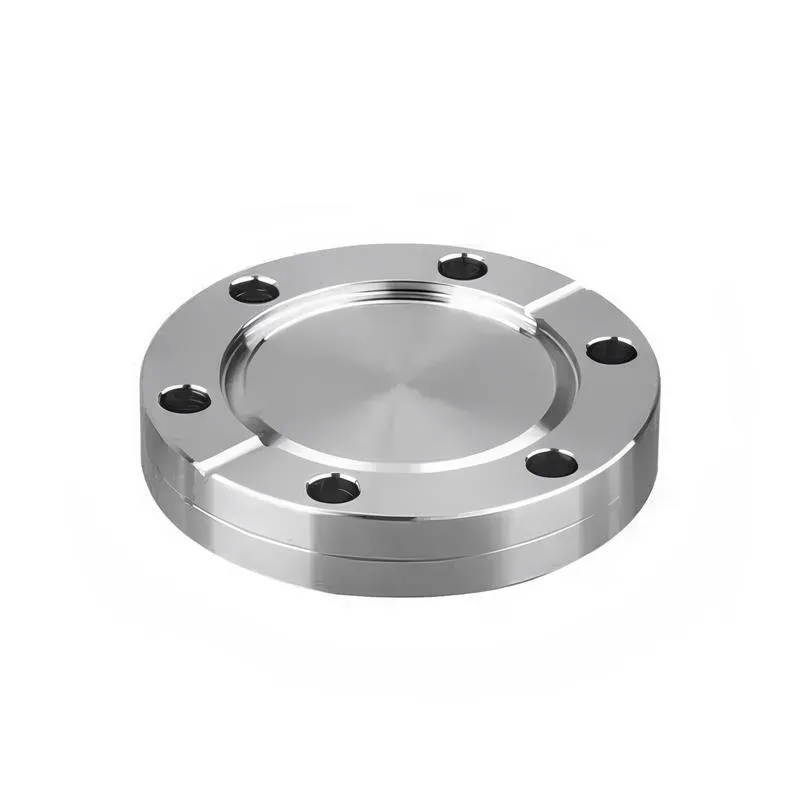
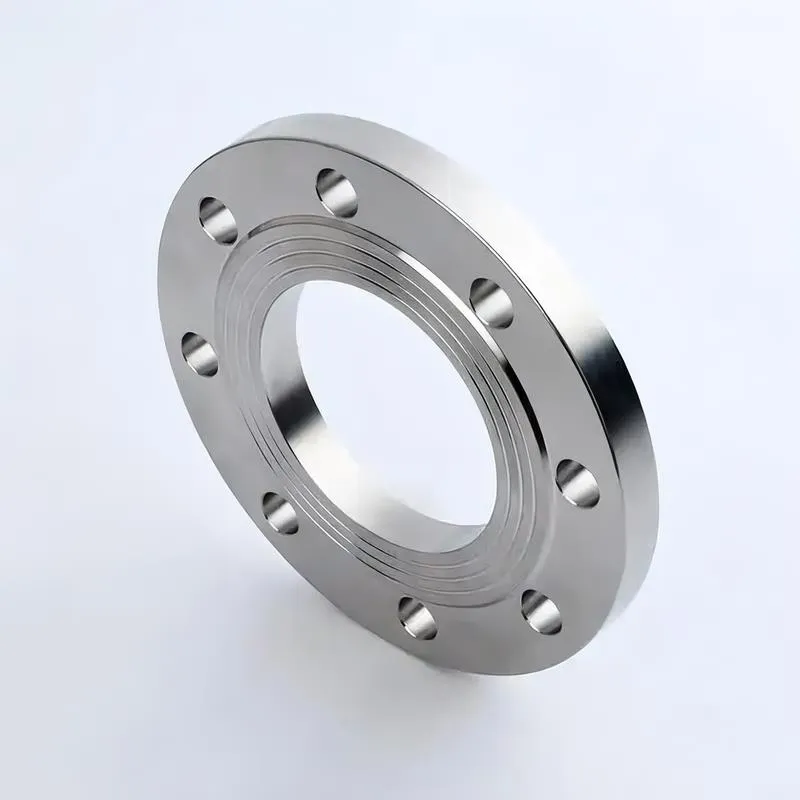
Plate Flat Welding Flange (PL), Necked Flat Welding Flange (SO), Necked Butt Welding Flange (WN), Integral Flange (IF), Socket Welding Flange (SW), Threaded Flange (Th), Butt Welding Ring Loose Flange (PJ/SE), Blind Flange (BL), Flat Welding Ring Loose Flange (PJ/PJ), and Lined Blind Flange (BL(s)).
2. **According to Petrochemical (SH) Industry Standards:** Flanges are classified as follows:
Threaded Flange (PL), Butt Welding Flange (WN), Flat Welding Flange (SO), Socket Welding Flange (SW), Loose Flange (LJ), and Blind Flange (no specific designation).
3. **According to Machinery (JB) Industry Standards:** Flanges are classified as follows:
Integral Flange, Butt Welding Flange, Plate Flat Welding Flange, Butt Welding Ring Plate Loose Flange, Flat Welding Ring Plate Loose Flange, Lap Joint Ring Plate Loose Flange, and Blind Flange.
4. **According to Connection Method/Type:** Flanges are classified as follows:
Plate Flat Welding Flange, Necked Flat Welding Flange, Necked Butt Welding Flange, Socket Welding Flange, Threaded Flange, Blind Flange, Necked Butt Welding Ring Loose Flange, Flat Welding Ring Loose Flange, Ring-Type Joint (RTJ) Flange and Blind Flange, Large-Diameter Plate Flange, Large-Diameter High-Neck Flange, Figure-8 Blind Plate, Butt Welding Ring Loose Flange, etc.
5. **According to the Component Being Connected:** Flanges can be classified into Vessel Flanges and Pipe Flanges.
6. **According to Structural Type:** Flanges include Integral Flanges, Threaded Flanges, Flat Welding Flanges, Butt Welding Flanges, Lap Joint (Loose/Swivel) Flanges, and Blind Flanges.
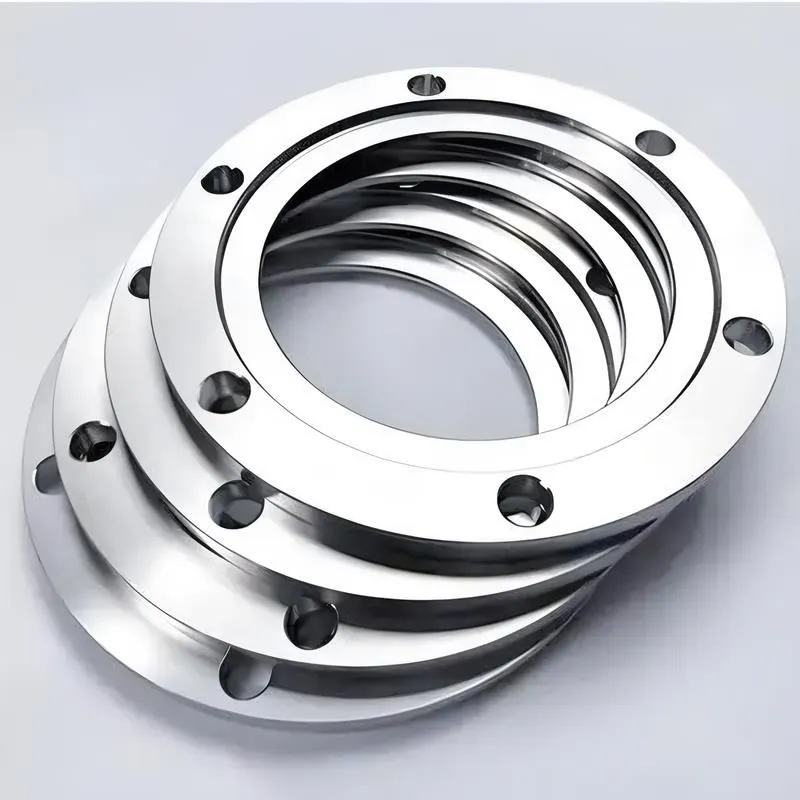
A flange—also referred to as a flange plate or rim—is a component used to connect shafts to one another, or, more commonly, to join the ends of pipes. Flanges are also utilized at the inlet and outlet ports of equipment to facilitate connections between two devices—for instance, the flange on a speed reducer. A "flange connection" or "flanged joint" refers to a detachable joint assembly comprising three interconnected elements—a flange, a gasket, and bolts—that together form a sealed structural unit. In the context of piping systems, a "pipe flange" specifically denotes a flange used for plumbing within the installation; when applied to equipment, it refers to the inlet or outlet flange of that specific device. Flanges feature a series of holes through which bolts are inserted to securely fasten the two flanges together, while a gasket placed between the flanges ensures a leak-proof seal. Flanges are broadly categorized into three types: threaded (screw-in) flanges, welded flanges, and clamp-type flanges. Flanges are invariably used in pairs; threaded flanges are suitable for low-pressure piping applications, whereas welded flanges are required for systems operating at pressures exceeding 4 kilograms per square centimeter. A sealing gasket is inserted between the two flange plates, which are then firmly secured using bolts. The thickness of a flange—as well as the specifications of the bolts used to fasten it—vary depending on the specific pressure rating required for the application. When connecting equipment such as water pumps or valves to piping systems, the corresponding connection points on these devices are often manufactured in the shape of a matching flange; this method of attachment is also referred to as a "flange connection." Generally, any connecting component that utilizes bolts to join and seal the perimeters of two flat surfaces—such as the joints in ventilation ducts—is termed a "flange"; such components may collectively be classified as "flange-type parts." However, since such a connection often constitutes merely a *portion* of a larger device—for instance, the interface between a flange and a water pump—it would be inappropriate to classify the entire water pump itself as a "flange-type part." Conversely, smaller components—such as valves—that feature such flanged interfaces may indeed be appropriately categorized as "flange-type parts."
-:-
For detailed product information, please contact sales.
-:
AISI Type T9 High Speed Tool Steel Flange Product Information
-:-
For detailed product information, please contact sales.
-:
AISI Type T9 High Speed Tool Steel Flange Synonyms
-:-
For detailed product information, please contact sales.
-:
AISI Type T9 High Speed Tool Steel Product Information
-:-
For detailed product information, please contact sales.
-:
# **Product Introduction: AISI Type T9 High-Speed Tool Steel**
## **Overview**
**AISI T9** is a **historical, very high vanadium and high carbon, tungsten-based high-speed steel (HSS)**. It represents an **extreme-wear variant** within the T-series, engineered to provide **maximum abrasion resistance** through exceptionally high vanadium and carbon contents. While its precise historical definition is less common than mainstream grades, T9 conceptually embodies a path of maximizing wear performance, akin to the philosophy behind **M4** or **T15**, but within the traditional tungsten-dominated alloy system. It is critical to note that **AISI T9 is not a standard grade in modern AISI/ASTM specifications (ASTM A600)** and is primarily of historical and metallurgical interest.
## **1. Historical Chemical Composition (Nominal %)**
Based on scattered historical references and the logical progression of the T-series numbering, T9 likely featured a composition focused on extreme carbide volume.
| Element | Inferred Historical Content (%) | Primary Function |
|---------|--------------------------------|------------------|
| **Carbon (C)** | **~1.20 - 1.40** | **Very high.** Provides the carbon necessary to form an extremely high volume of hard vanadium and tungsten carbides, directly targeting supreme wear resistance. |
| **Tungsten (W)** | ~15.00 - 18.00 | Provides the tungsten carbide network for red-hardness and base wear resistance. May be adjusted relative to other grades. |
| **Chromium (Cr)** | ~3.50 - 4.50 | Ensures hardenability and provides oxidation resistance. |
| **Vanadium (V)** | **~3.00 - 4.00** | **Extremely high.** The hallmark of T9. Forms a massive volume of extremely hard vanadium carbides (VC), aiming for the highest possible abrasion resistance among traditional T-series steels. |
| **Cobalt (Co)** | Possibly absent or low (0-2%) | If present, would be in low amounts; a high-cobalt version would conceptually be closer to T15. The focus of T9 appears to be wear, not necessarily extreme hot hardness. |
| **Molybdenum (Mo)** | ≤ 0.50 (Residual) | Not a primary alloying element. |
| **Iron (Fe)** | Balance | Base metal. |
**Key Chemistry Note:** T9 is conceptualized as the **"high wear" specialist** of the classic T-series. Its defining feature would be an **extraordinarily high vanadium content (likely >3%)**, paired with high carbon to support it. This creates a microstructure saturated with hard, wear-resistant vanadium carbides. In principle, it would be the **tungsten-based analogue to M4 (high-vanadium molybdenum HSS)** or a precursor to **T15 (which adds high cobalt to a high C/V base)**. Such a composition inherently results in **very poor toughness and extreme grinding difficulty**.
## **2. Inferred Physical & Mechanical Properties**
*Inferred properties if heat treated to a working hardness (~65-67 HRC).*
| Property | Estimated Typical Value / Condition |
|----------|-------------------------------------|
| **Hardness (Annealed)** | ~269-321 HB |
| **Hardened & Tempered Hardness** | **65-67 HRC** (Capable of very high surface hardness). |
| **Red Hardness** | **Good to Very Good.** Driven by tungsten, but not its primary design focus. Likely inferior to cobalt-bearing grades like T4/T5 at similar hardness. |
| **Abrasion Resistance** | **Theoretically Outstanding.** Designed to be among the highest of all conventional HSS grades, rivaling or exceeding M4 and approaching T15. |
| **Toughness** | **Very Low to Extremely Low.** The extremely high volume of hard, brittle carbides would make it exceptionally prone to chipping and fracture. Suitable only for the most stable, shock-free cutting conditions. |
| **Grindability** | **Exceptionally Poor.** Would be one of the most difficult steels to grind, comparable to T15 or worse, due to the high volume of ultra-hard vanadium carbides. |
| **Key Historical Focus** | Pushing the limits of **abrasion resistance in a tungsten HSS**, likely for machining highly abrasive materials like fiber-reinforced composites, hard cast irons, and superalloys in finishing operations. |
## **3. Historical & Conceptual Cross-References**
As a non-standard and likely rare historical grade, direct equivalents are not established.
| Standard / Era | Approximate Equivalent / Context | Notes |
|----------------|-----------------------------------|-------|
| **Historical AISI** | T9 | Obscure and obsolete designation. |
| **Modern AISI/ASTM** | **Not Listed** (ASTM A600). | |
| **Conceptual & Modern Successors** | **AISI M4, AISI T15, Powder Metallurgy (PM) HSS (e.g., S390)** | These grades achieve the goal of extreme wear resistance through more advanced and balanced metallurgy. M4 uses Mo for better toughness; T15 adds Co for hot hardness; PM HSS allows for even higher V with uniform carbides. |
| **Common Description** | **High-Vanadium, High-Carbon Tungsten HSS (Wear Grade)** | |
## **4. Historical & Potential Applications**
Given its inferred properties, T9 would have been reserved for niche applications where **abrasive wear was the sole and overwhelming failure mechanism**.
**Theoretical/Historical Applications:**
* **Machining Extremely Abrasive Non-Metallics:** Fiberglass, carbon-fiber composites, reinforced plastics.
* **Finishing Cuts on Highly Abrasive Alloys:** Certain nickel-based superalloys, hardened high-silicon aluminum, metal matrix composites.
* **Broaches and Form Tools** for long production runs on abrasive materials where tool regrinding was a major cost driver.
* **Specialty Wear Parts** in industrial equipment subject to pure abrasion.
## **5. Why It Is Obsolete: Metallurgical and Practical Limitations**
T9's conceptual formulation, while logical for wear resistance, embodies several critical flaws that explain its obscurity:
1. **Unacceptable Toughness:** The carbide volume would be so high that tools would be prohibitively brittle for most practical machining operations, which often involve some degree of interruption or variation in load.
2. **Near-Impossible Grindability:** Manufacturing and maintaining tools from such a steel would be economically unviable with conventional grinding technology of its time (and remains challenging today).
3. **Severe Carbide Segregation:** In conventionally cast ingots, such high alloy contents would lead to catastrophic carbide banding and pooling, resulting in inconsistent and unreliable tool performance.
4. **Superseded by Superior Technologies:**
* **M4 (Mo-based):** Achieves high vanadium (up to 4%) with better toughness and grindability due to molybdenum's grain-refining effect.
* **T15:** Incorporates high carbon, high vanadium, **and cobalt**, creating a more balanced super HSS with both extreme wear **and** extreme red-hardness.
* **Powder Metallurgy HSS:** This technology is the true successor to T9's goal. PM allows for vanadium contents of 5%, 8%, or even 10% with a perfectly uniform, fine carbide distribution, achieving unprecedented wear resistance **while maintaining usable toughness**. Grades like **S390, ASP 2060, or HAP 72** render a steel like T9 completely obsolete.
## **6. Modern Perspective & Legacy**
**AISI T9 is a fascinating theoretical endpoint** in the quest for wear resistance within the constraints of traditional tungsten HSS metallurgy. It highlights the **inherent trade-off between wear resistance and toughness** when pushing alloying to extremes via conventional melting.
Its legacy is to underscore why the industry moved in different directions:
* Towards **molybdenum-based systems** (M-series) for better manufacturability.
* Towards **cobalt additions** (T15, M42) for balanced high-performance.
* Towards **powder metallurgy** to break the traditional trade-offs entirely.
**Conclusion:** T9 likely existed as a short-lived or experimental grade that demonstrated the limits of conventional high-vanadium tungsten HSS. For any modern application requiring extreme abrasion resistance, engineers should select from **standardized high-performance grades like M4, T15, or advanced PM-HSS**. These materials deliver on the promise of T9's design goals without its fatal practical drawbacks.
---
**Disclaimer:** Information on AISI T9 is speculative and based on metallurgical inference from the T-series numbering pattern and historical context. **It is not a standardized or commercially available material.** This profile is for educational and historical analysis only. For practical tooling applications, only currently active and standardized grades should be specified. The challenges associated with a steel of this inferred composition would make its use highly impractical and economically unjustifiable today.
-:-
For detailed product information, please contact sales.
-:
AISI Type T9 High Speed Tool Steel Specification
Dimensions
Size:
Diameter 20-1000 mm Length <6774 mm
Size:We can customized as required
Standard:
Per your request or drawing
We can customized as required
Properties(Theoretical)
Chemical Composition
-:-
For detailed product information, please contact sales.
-:
AISI Type T9 High Speed Tool Steel Properties
-:-
For detailed product information, please contact sales.
-:
Applications of AISI Type T9 High Speed Tool Steel Flange
-:-
For detailed product information, please contact sales.
-:
Chemical Identifiers AISI Type T9 High Speed Tool Steel Flange
-:-
For detailed product information, please contact sales.
-:
Packing of AISI Type T9 High Speed Tool Steel Flange
-:-
For detailed product information, please contact sales.
-:
Standard Packing:
-:-
For detailed product information, please contact sales.
-:
Typical bulk packaging includes palletized plastic 5 gallon/25 kg. pails, fiber and Steel Flange drums to 1 ton super sacks in full container (FCL) or truck load (T/L) quantities. Research and sample quantities and hygroscopic, oxidizing or other air sensitive materials may be packaged under argon or vacuum. Solutions are packaged in polypropylene, plastic or glass jars up to palletized 3245 gallon liquid totes Special package is available on request. E FORUs’ is carefully handled to minimize damage during storage and transportation and to preserve the quality of our products in their original condition