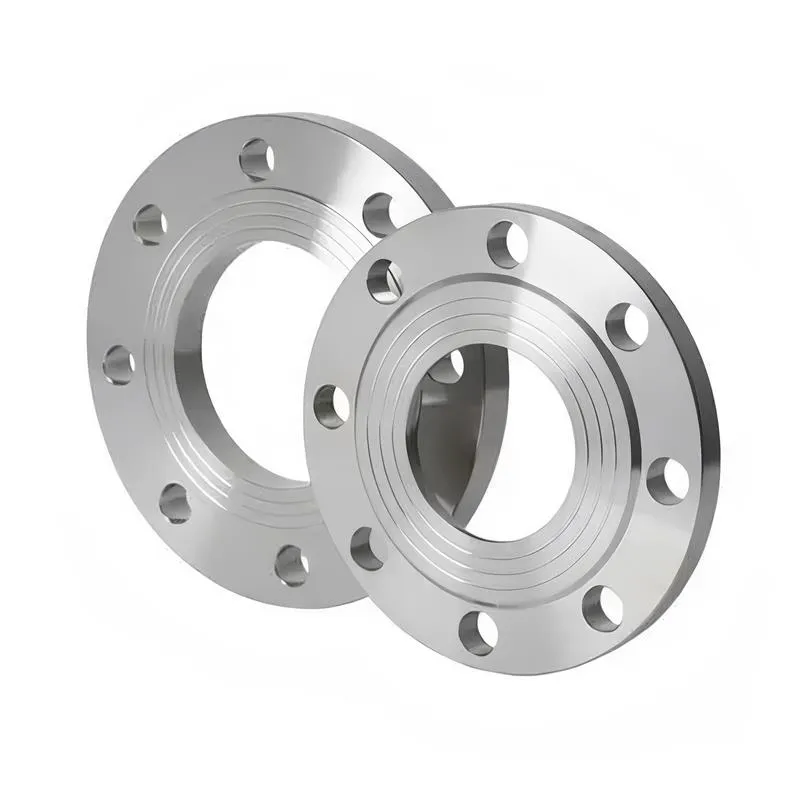
1,We Manufacturing processes are primarily classified into four types:
1:Forging,
2:Casting,
3:Cutting,
4:Rolling.
2,We can manufacture in accordance with these standards.
Standards:
GB Series (Chinese Standards), JB Series (Machinery Standards), HG Series (Chemical Industry Standards), ASME B16.5 (American Standards), BS4504 (British Standards), DIN (German Standards), and JIS (Japanese Standards).
Internationally, there are two primary systems of pipe flange standards: the European system, represented by the German DIN standards (including those of the former Soviet Union), and the American system, represented by the US ANSI pipe flange standards. Other common standards include: the Chinese Ministry of Machinery Industry standards (JB series), the Ministry of Chemical Industry standards (HG series), the Chinese National Standard *GB/T 9112–9124-2010 Steel Pipe Flanges*, as well as US standards (ASME B16.5), British standards (BS4504), German standards (DIN), Japanese standards (JIS), and marine standards (CBM), among others.
The nominal pressure ratings for the PN series are designated by "PN" and comprise the following nine levels: PN2.5, PN6, PN10, PN16, PN25, PN40, PN63, PN100, and PN160.
The nominal pressure ratings for the Class series are designated by "Class" and comprise the following six levels: Class150, Class300, Class600, Class900, Class1500, and Class2500.
Flange Classification
1. **According to Chemical Industry Standards:** Flanges are classified as follows:
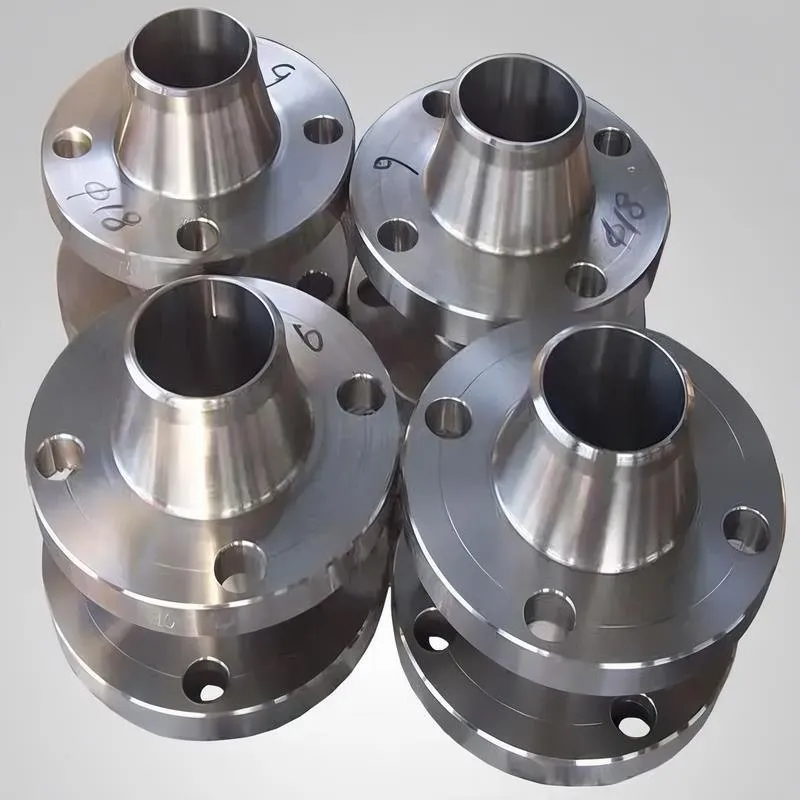
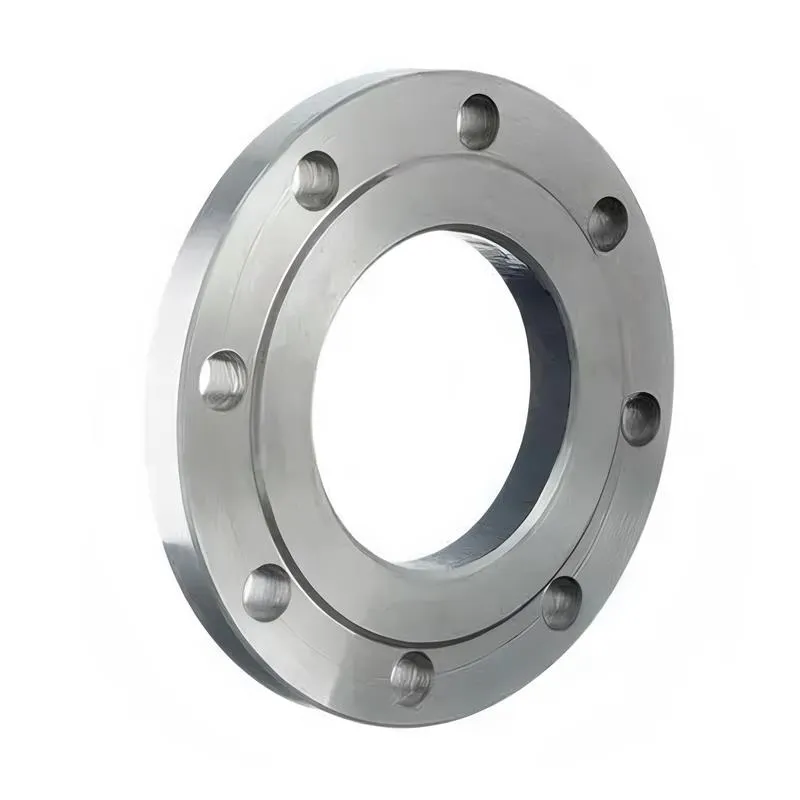
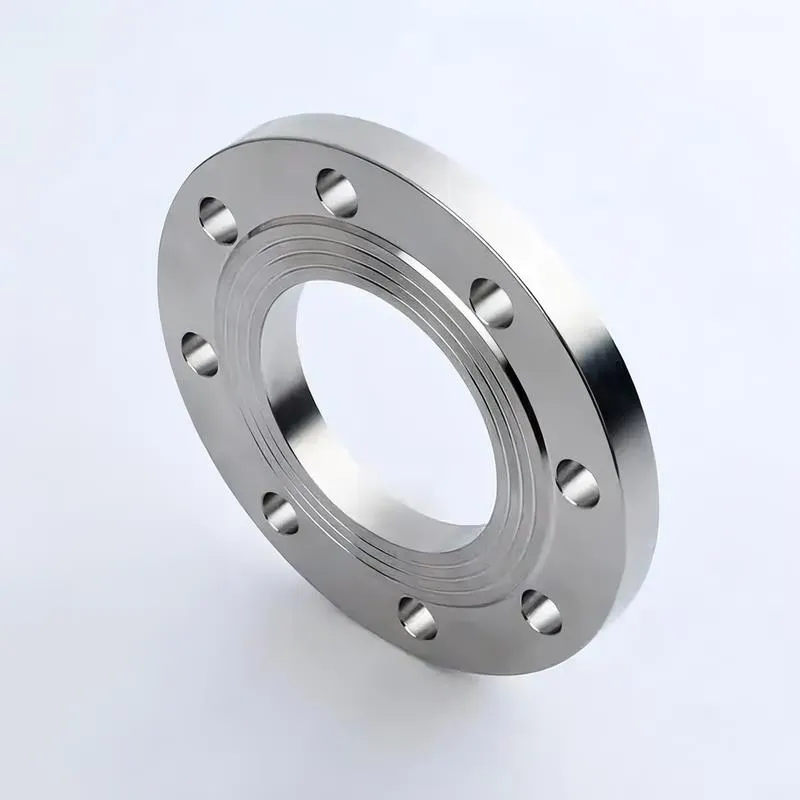
Plate Flat Welding Flange (PL), Necked Flat Welding Flange (SO), Necked Butt Welding Flange (WN), Integral Flange (IF), Socket Welding Flange (SW), Threaded Flange (Th), Butt Welding Ring Loose Flange (PJ/SE), Blind Flange (BL), Flat Welding Ring Loose Flange (PJ/PJ), and Lined Blind Flange (BL(s)).
2. **According to Petrochemical (SH) Industry Standards:** Flanges are classified as follows:
Threaded Flange (PL), Butt Welding Flange (WN), Flat Welding Flange (SO), Socket Welding Flange (SW), Loose Flange (LJ), and Blind Flange (no specific designation).
3. **According to Machinery (JB) Industry Standards:** Flanges are classified as follows:
Integral Flange, Butt Welding Flange, Plate Flat Welding Flange, Butt Welding Ring Plate Loose Flange, Flat Welding Ring Plate Loose Flange, Lap Joint Ring Plate Loose Flange, and Blind Flange.
4. **According to Connection Method/Type:** Flanges are classified as follows:
Plate Flat Welding Flange, Necked Flat Welding Flange, Necked Butt Welding Flange, Socket Welding Flange, Threaded Flange, Blind Flange, Necked Butt Welding Ring Loose Flange, Flat Welding Ring Loose Flange, Ring-Type Joint (RTJ) Flange and Blind Flange, Large-Diameter Plate Flange, Large-Diameter High-Neck Flange, Figure-8 Blind Plate, Butt Welding Ring Loose Flange, etc.
5. **According to the Component Being Connected:** Flanges can be classified into Vessel Flanges and Pipe Flanges.
6. **According to Structural Type:** Flanges include Integral Flanges, Threaded Flanges, Flat Welding Flanges, Butt Welding Flanges, Lap Joint (Loose/Swivel) Flanges, and Blind Flanges.
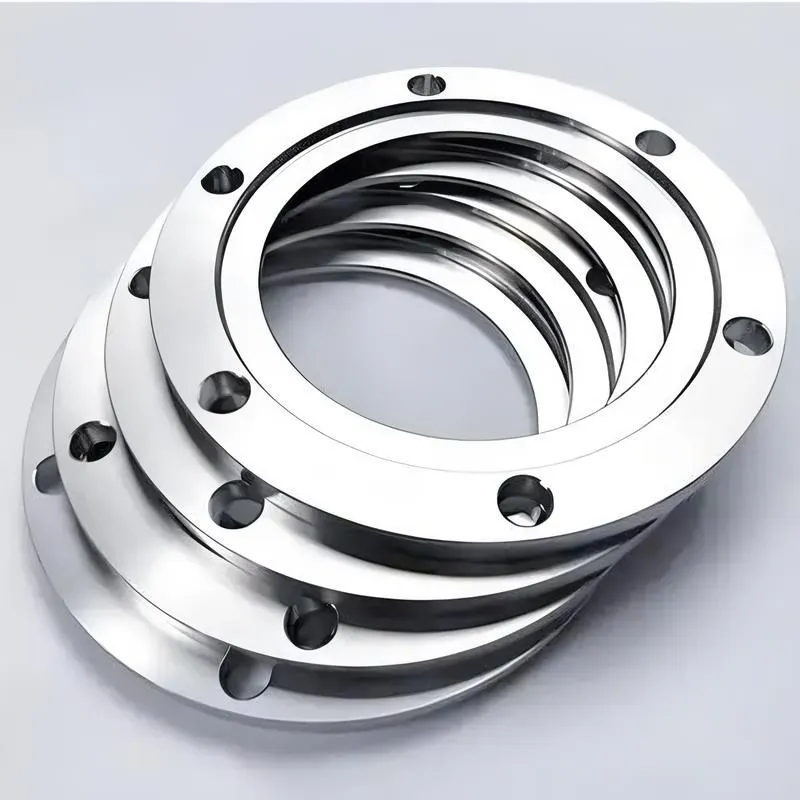
A flange—also referred to as a flange plate or rim—is a component used to connect shafts to one another, or, more commonly, to join the ends of pipes. Flanges are also utilized at the inlet and outlet ports of equipment to facilitate connections between two devices—for instance, the flange on a speed reducer. A "flange connection" or "flanged joint" refers to a detachable joint assembly comprising three interconnected elements—a flange, a gasket, and bolts—that together form a sealed structural unit. In the context of piping systems, a "pipe flange" specifically denotes a flange used for plumbing within the installation; when applied to equipment, it refers to the inlet or outlet flange of that specific device. Flanges feature a series of holes through which bolts are inserted to securely fasten the two flanges together, while a gasket placed between the flanges ensures a leak-proof seal. Flanges are broadly categorized into three types: threaded (screw-in) flanges, welded flanges, and clamp-type flanges. Flanges are invariably used in pairs; threaded flanges are suitable for low-pressure piping applications, whereas welded flanges are required for systems operating at pressures exceeding 4 kilograms per square centimeter. A sealing gasket is inserted between the two flange plates, which are then firmly secured using bolts. The thickness of a flange—as well as the specifications of the bolts used to fasten it—vary depending on the specific pressure rating required for the application. When connecting equipment such as water pumps or valves to piping systems, the corresponding connection points on these devices are often manufactured in the shape of a matching flange; this method of attachment is also referred to as a "flange connection." Generally, any connecting component that utilizes bolts to join and seal the perimeters of two flat surfaces—such as the joints in ventilation ducts—is termed a "flange"; such components may collectively be classified as "flange-type parts." However, since such a connection often constitutes merely a *portion* of a larger device—for instance, the interface between a flange and a water pump—it would be inappropriate to classify the entire water pump itself as a "flange-type part." Conversely, smaller components—such as valves—that feature such flanged interfaces may indeed be appropriately categorized as "flange-type parts."
-:-
For detailed product information, please contact sales.
-:
Carpenter Micro-Melt® 10 Hardened and Tempered Tool Steel Flange (AISI A11) Product Information
-:-
For detailed product information, please contact sales.
-:
Carpenter Micro-Melt® 10 Hardened and Tempered Tool Steel Flange (AISI A11) Synonyms
-:-
For detailed product information, please contact sales.
-:
Carpenter Micro-Melt® 10 Hardened and Tempered Tool Steel (AISI A11) Product Information
-:-
For detailed product information, please contact sales.
-:
## **Carpenter Micro-Melt® 10 Hardened and Tempered Tool Steel (AISI A11)**
### **Premium Powder Metallurgy Tool Steel in Ready-to-Use Condition**
---
### **Product Overview**
Carpenter Micro-Melt® 10 Hardened and Tempered (CPM 10V, AISI A11) represents the finished, production-ready state of this premier high-vanadium tool steel. Supplied fully heat-treated to specified hardness levels, this material delivers the industry-leading **wear resistance** of the A11 alloy class in a form that eliminates heat treatment variables and accelerates manufacturing lead times. Produced via Carpenter's proprietary powder metallurgy process, it offers unmatched consistency, isotropy, and performance reliability compared to conventionally manufactured A11 tool steels.
---
### **Key Advantages (Hardened & Tempered State)**
- **Guaranteed Performance**: Supplied at certified hardness levels (typically 64-66 HRC or customized 58-62 HRC for toughness), ensuring consistent mechanical properties
- **Maximum Wear Resistance**: Ready to deliver exceptional abrasion resistance immediately upon installation
- **Zero Heat Treatment Risk**: Eliminates distortion, cracking, and property variation risks associated with in-house heat treatment
- **Reduced Manufacturing Time**: Requires only final machining/grinding operations, significantly shortening lead times
- **Predictable Dimensional Stability**: The PM structure and controlled factory heat treatment ensure minimal dimensional changes
- **Technical Support Included**: Backed by Carpenter's metallurgical expertise and processing documentation
---
### **Chemical Composition (%)**
Identical to annealed CPM 10V, optimized for maximum carbide formation and wear resistance.
| Element | Carbon (C) | Chromium (Cr) | Vanadium (V) | Molybdenum (Mo) | Tungsten (W) | Cobalt (Co) |
|---------|------------|---------------|--------------|-----------------|--------------|-------------|
| **Content** | 2.30-2.50 | 4.75-5.25 | 9.00-10.00 | 1.15-1.35 | 5.00-5.50 | 9.50-10.50 |
*Trace Elements:* Mn ≤0.50%, Si ≤0.50%
---
### **Physical & Mechanical Properties (Hardened & Tempered)**
#### **Standard Hardness Options**
1. **High-Wear Condition**: **64-66 HRC** (Maximum abrasion resistance)
2. **High-Toughness Condition**: **58-62 HRC** (Optimized for impact resistance)
#### **Physical Properties**
- **Density**: 7.92 g/cm³ (0.286 lb/in³)
- **Modulus of Elasticity**: 210 GPa (30 × 10⁶ psi)
- **Thermal Conductivity**: 20.5 W/m·K at 20°C
- **Coefficient of Thermal Expansion**: 10.2 × 10⁻⁶/°C (20-200°C)
#### **Mechanical Properties at 64-66 HRC**
- **Compressive Strength**: 3,400-3,500 MPa (493-507 ksi)
- **Transverse Rupture Strength**: 2,700-2,800 MPa (392-406 ksi)
- **Abrasion Resistance**: 4-6× better than D2 at equivalent hardness
- **Fracture Toughness**: Good for its hardness class (superior to conventional A11)
#### **Mechanical Properties at 58-62 HRC**
- **Fracture Toughness**: Excellent - comparable to S7 tool steel at similar hardness
- **Compressive Strength**: 2,600-3,000 MPa (377-435 ksi)
- **Abrasion Resistance**: 2-4× better than D2 at equivalent hardness
---
### **Fabrication in Hardened & Tempered State**
#### **Permitted Operations**
- **Grinding**: Recommended with aluminum oxide or CBN wheels
- Use light passes (≤0.025mm / 0.001" per pass)
- Maintain adequate coolant flow
- Dressing wheels frequently
- **Electrical Discharge Machining (EDM)**: Acceptable with proper parameters
- Follow with stress relief at 150-200°C (300-400°F)
- Remove recast layer for critical applications
- **Abrasive Waterjet Cutting**: Suitable for profile cutting
- **Finishing**: Excellent response to polishing and superfinishing
#### **Restricted Operations**
- **Conventional Machining**: Not recommended (use annealed material for heavy machining)
- **Welding**: Generally not advised without specialized procedures
- **Hot Working**: Not applicable in hardened state
---
### **International Standards & Cross-References**
| Standard System | Designation | Notes |
|----------------|-------------|-------|
| **Carpenter** | Micro-Melt 10 Hardened & Tempered, CPM 10V | Primary designation |
| **AISI** | A11 | Type classification |
| **UNS** | T61010 | Unified numbering system |
| **ISO** | Not standardized | Industry recognized as premium PM grade |
| **Common Equivalents** | Vanadis 10 (Uddeholm), CPM 10V (Crucible) | Similar PM high-vanadium steels |
---
### **Typical Applications**
#### **1. Ready-to-Install Wear Components**
- **Powder Metal Compacting**: Punches, dies, core rods (64-66 HRC)
- **Extrusion Tooling**: Dies for abrasive plastics, ceramics (64-66 HRC)
- **Wear Strips & Guides**: In high-abrasion manufacturing lines (58-62 HRC)
- **Pump Components**: Seals, sleeves handling abrasive slurries (64-66 HRC)
#### **2. Cutting & Slitting Tools**
- **Industrial Knives**: For cutting fiberglass, composites, rubber (58-62 HRC for toughness, 64-66 HRC for pure abrasion)
- **Slitter Knives**: For abrasive metals or papers (64-66 HRC)
- **Size Reduction**: Cutters for recycling/processing (58-62 HRC for shock resistance)
#### **3. Plastic & Rubber Processing**
- **Injection Molds**: Cavities and cores for filled polymers (64-66 HRC)
- **Extrusion Components**: Screw tips, breaker plates (64-66 HRC)
- **Mold Inserts**: For high-wear areas in large molds (64-66 HRC)
#### **4. Specialized Tooling**
- **Thread Rolling Dies**: For hard or abrasive materials (58-62 HRC)
- **Cold Forming Tools**: Punches and dies with wear concerns (58-62 HRC)
- **Fine Blanking**: Punches requiring edge retention (64-66 HRC)
---
### **Technical Specifications & Quality Assurance**
#### **Supply Conditions**
- **Surface Condition**: Usually decarb-free ground or rough machined
- **Dimensional Tolerances**: Available in precision-ground stock
- **Certification**: Mill test certificates with chemical analysis and hardness reports
- **Traceability**: Full heat and lot traceability
#### **Recommended Handling**
1. **Storage**: Keep in dry environment to prevent corrosion
2. **Handling**: Use appropriate lifting equipment for heavy sections
3. **Stress Relief**: After EDM or heavy grinding, perform low-temperature temper
4. **Installation**: Ensure proper fit and alignment to avoid impact damage
---
### **Performance Comparison**
| Application | Expected Life vs. D2 | Optimal Hardness | Key Benefit |
|-------------|----------------------|------------------|-------------|
| Cutting fiberglass | 6-8× longer | 64-66 HRC | Wear resistance |
| Powder compacting | 10-15× longer | 64-66 HRC | Dimensional stability |
| Slitting abrasive stock | 4-5× longer | 58-62 HRC | Toughness + wear |
| Plastic extrusion | 8-10× longer | 64-66 HRC | Corrosion + wear |
---
### **Economic Justification**
While Micro-Melt® 10 Hardened & Tempered carries a higher initial cost than conventional tool steels, its economic benefits include:
- **Eliminated Heat Treatment Costs**: No furnace operation, energy, or labor
- **Reduced Scrap Risk**: No heat treatment failures or distortion
- **Longer Production Runs**: Extended tool life reduces changeover frequency
- **Higher Productivity**: Consistent performance with minimal adjustment
- **Lower Inventory**: One material state instead of multiple heat lots
**Typical ROI**: 3-6 months in high-volume production applications
---
### **Conclusion**
Carpenter Micro-Melt® 10 Hardened and Tempered Tool Steel represents the pinnacle of convenience and performance in ultra-wear-resistant tooling materials. By providing this premium A11-type steel in its optimally heat-treated state, Carpenter enables manufacturers to:
1. Bypass complex heat treatment processes
2. Achieve guaranteed, repeatable performance
3. Accelerate time-to-production
4. Reduce total manufacturing costs
Ideal for both high-volume production environments and critical applications where tool failure is unacceptable, this material delivers the full potential of powder metallurgy tool steel technology in its most accessible and reliable form. For applications where abrasive wear dictates tool life, downtime is expensive, and performance consistency is mandatory, Micro-Melt® 10 Hardened & Tempered provides a technically and economically superior solution.
---
*For specific application engineering support or custom hardness requirements, consult with Carpenter Technology's technical services team.*
-:-
For detailed product information, please contact sales.
-:
Carpenter Micro-Melt® 10 Hardened and Tempered Tool Steel (AISI A11) Specification
Dimensions
Size:
Diameter 20-1000 mm Length <6927 mm
Size:We can customized as required
Standard:
Per your request or drawing
We can customized as required
Properties(Theoretical)
Chemical Composition
-:-
For detailed product information, please contact sales.
-:
Carpenter Micro-Melt® 10 Hardened and Tempered Tool Steel (AISI A11) Properties
-:-
For detailed product information, please contact sales.
-:
Applications of Carpenter Micro-Melt® 10 Hardened and Tempered Tool Steel Flange (AISI A11)
-:-
For detailed product information, please contact sales.
-:
Chemical Identifiers Carpenter Micro-Melt® 10 Hardened and Tempered Tool Steel Flange (AISI A11)
-:-
For detailed product information, please contact sales.
-:
Packing of Carpenter Micro-Melt® 10 Hardened and Tempered Tool Steel Flange (AISI A11)
-:-
For detailed product information, please contact sales.
-:
Standard Packing:
-:-
For detailed product information, please contact sales.
-:
Typical bulk packaging includes palletized plastic 5 gallon/25 kg. pails, fiber and Steel Flange drums to 1 ton super sacks in full container (FCL) or truck load (T/L) quantities. Research and sample quantities and hygroscopic, oxidizing or other air sensitive materials may be packaged under argon or vacuum. Solutions are packaged in polypropylene, plastic or glass jars up to palletized 3398 gallon liquid totes Special package is available on request. E FORUs’ is carefully handled to minimize damage during storage and transportation and to preserve the quality of our products in their original condition