1,We Manufacturing processes are primarily classified into four types:
1:Forging,
2:Casting,
3:Cutting,
4:Rolling.
2,We can manufacture in accordance with these standards.
Standards:
GB Series (Chinese Standards), JB Series (Machinery Standards), HG Series (Chemical Industry Standards), ASME B16.5 (American Standards), BS4504 (British Standards), DIN (German Standards), and JIS (Japanese Standards).
Internationally, there are two primary systems of pipe flange standards: the European system, represented by the German DIN standards (including those of the former Soviet Union), and the American system, represented by the US ANSI pipe flange standards. Other common standards include: the Chinese Ministry of Machinery Industry standards (JB series), the Ministry of Chemical Industry standards (HG series), the Chinese National Standard *GB/T 9112–9124-2010 Steel Pipe Flanges*, as well as US standards (ASME B16.5), British standards (BS4504), German standards (DIN), Japanese standards (JIS), and marine standards (CBM), among others.
The nominal pressure ratings for the PN series are designated by "PN" and comprise the following nine levels: PN2.5, PN6, PN10, PN16, PN25, PN40, PN63, PN100, and PN160.
The nominal pressure ratings for the Class series are designated by "Class" and comprise the following six levels: Class150, Class300, Class600, Class900, Class1500, and Class2500.
Flange Classification
1. **According to Chemical Industry Standards:** Flanges are classified as follows:
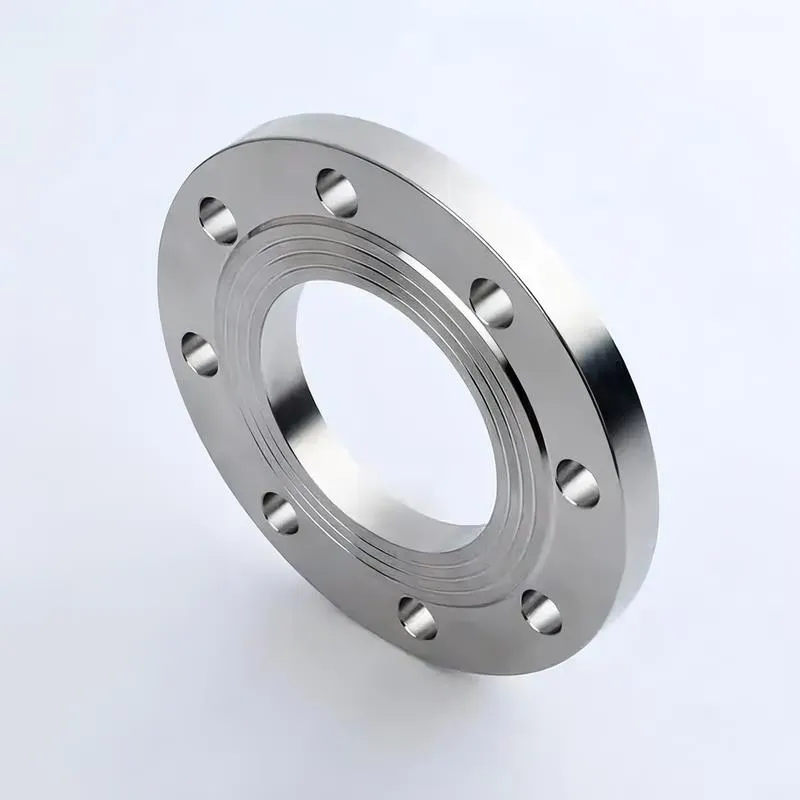
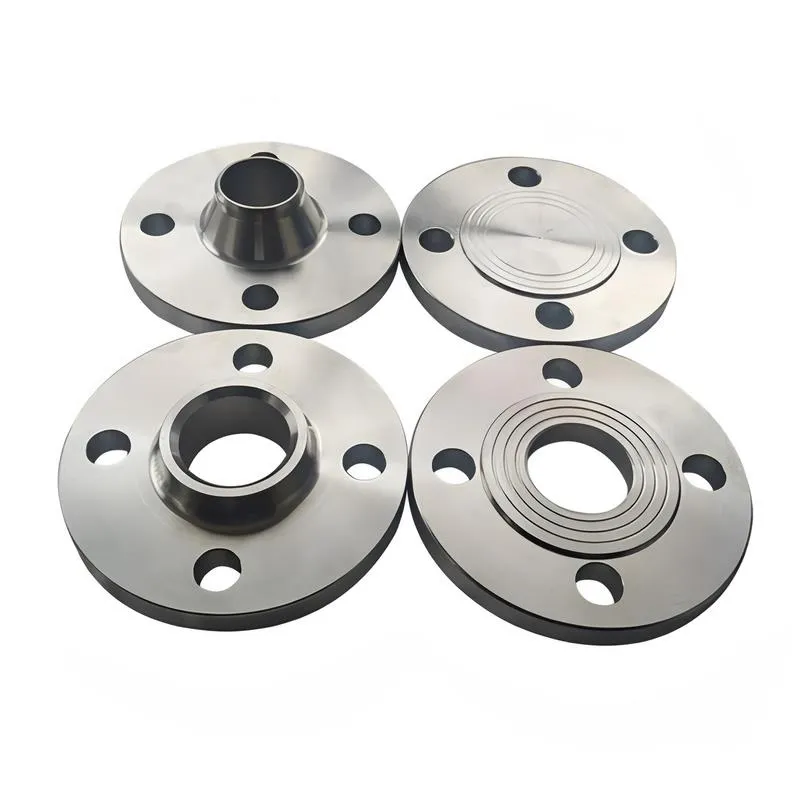
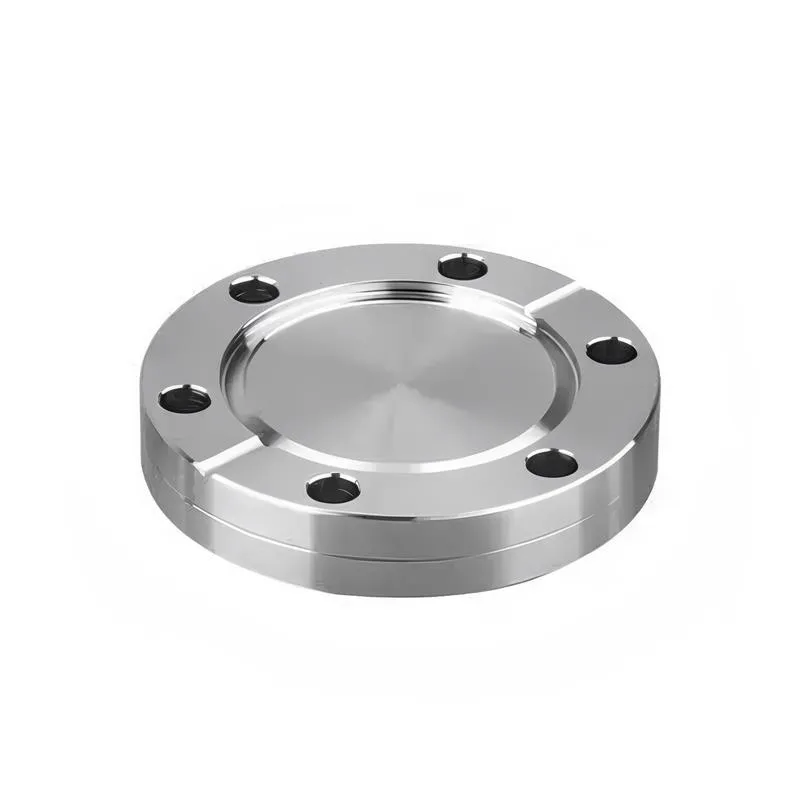
Plate Flat Welding Flange (PL), Necked Flat Welding Flange (SO), Necked Butt Welding Flange (WN), Integral Flange (IF), Socket Welding Flange (SW), Threaded Flange (Th), Butt Welding Ring Loose Flange (PJ/SE), Blind Flange (BL), Flat Welding Ring Loose Flange (PJ/PJ), and Lined Blind Flange (BL(s)).
2. **According to Petrochemical (SH) Industry Standards:** Flanges are classified as follows:
Threaded Flange (PL), Butt Welding Flange (WN), Flat Welding Flange (SO), Socket Welding Flange (SW), Loose Flange (LJ), and Blind Flange (no specific designation).
3. **According to Machinery (JB) Industry Standards:** Flanges are classified as follows:
Integral Flange, Butt Welding Flange, Plate Flat Welding Flange, Butt Welding Ring Plate Loose Flange, Flat Welding Ring Plate Loose Flange, Lap Joint Ring Plate Loose Flange, and Blind Flange.
4. **According to Connection Method/Type:** Flanges are classified as follows:
Plate Flat Welding Flange, Necked Flat Welding Flange, Necked Butt Welding Flange, Socket Welding Flange, Threaded Flange, Blind Flange, Necked Butt Welding Ring Loose Flange, Flat Welding Ring Loose Flange, Ring-Type Joint (RTJ) Flange and Blind Flange, Large-Diameter Plate Flange, Large-Diameter High-Neck Flange, Figure-8 Blind Plate, Butt Welding Ring Loose Flange, etc.
5. **According to the Component Being Connected:** Flanges can be classified into Vessel Flanges and Pipe Flanges.
6. **According to Structural Type:** Flanges include Integral Flanges, Threaded Flanges, Flat Welding Flanges, Butt Welding Flanges, Lap Joint (Loose/Swivel) Flanges, and Blind Flanges.
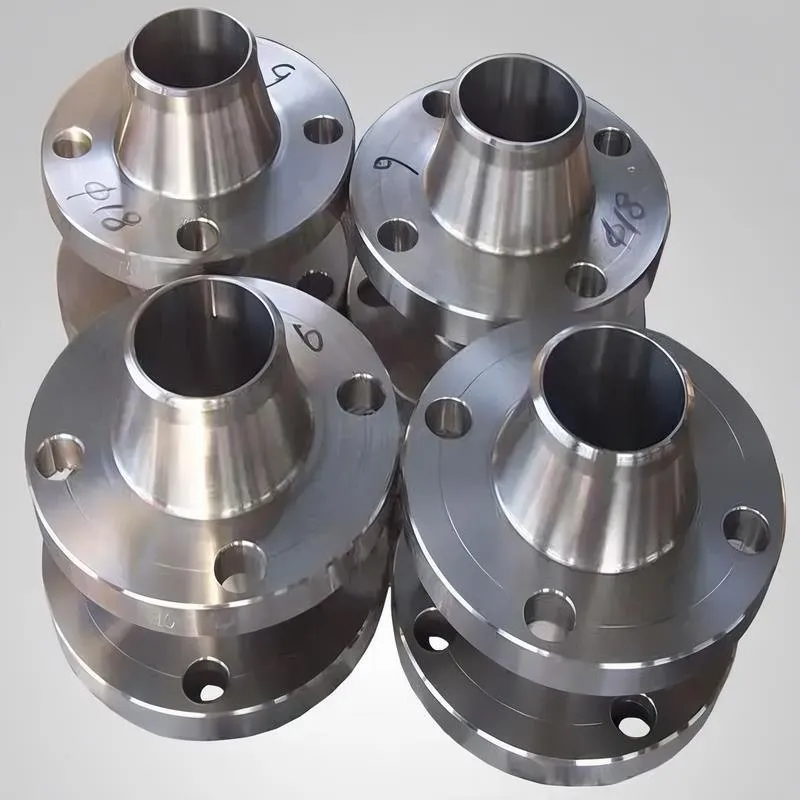
A flange—also referred to as a flange plate or rim—is a component used to connect shafts to one another, or, more commonly, to join the ends of pipes. Flanges are also utilized at the inlet and outlet ports of equipment to facilitate connections between two devices—for instance, the flange on a speed reducer. A "flange connection" or "flanged joint" refers to a detachable joint assembly comprising three interconnected elements—a flange, a gasket, and bolts—that together form a sealed structural unit. In the context of piping systems, a "pipe flange" specifically denotes a flange used for plumbing within the installation; when applied to equipment, it refers to the inlet or outlet flange of that specific device. Flanges feature a series of holes through which bolts are inserted to securely fasten the two flanges together, while a gasket placed between the flanges ensures a leak-proof seal. Flanges are broadly categorized into three types: threaded (screw-in) flanges, welded flanges, and clamp-type flanges. Flanges are invariably used in pairs; threaded flanges are suitable for low-pressure piping applications, whereas welded flanges are required for systems operating at pressures exceeding 4 kilograms per square centimeter. A sealing gasket is inserted between the two flange plates, which are then firmly secured using bolts. The thickness of a flange—as well as the specifications of the bolts used to fasten it—vary depending on the specific pressure rating required for the application. When connecting equipment such as water pumps or valves to piping systems, the corresponding connection points on these devices are often manufactured in the shape of a matching flange; this method of attachment is also referred to as a "flange connection." Generally, any connecting component that utilizes bolts to join and seal the perimeters of two flat surfaces—such as the joints in ventilation ducts—is termed a "flange"; such components may collectively be classified as "flange-type parts." However, since such a connection often constitutes merely a *portion* of a larger device—for instance, the interface between a flange and a water pump—it would be inappropriate to classify the entire water pump itself as a "flange-type part." Conversely, smaller components—such as valves—that feature such flanged interfaces may indeed be appropriately categorized as "flange-type parts."
-:-
For detailed product information, please contact sales.
-:
Carpenter Stentor® Alloy Tool Steel Flange (Oil-Hard) (AISI 02) Product Information
-:-
For detailed product information, please contact sales.
-:
Carpenter Stentor® Alloy Tool Steel Flange (Oil-Hard) (AISI 02) Synonyms
-:-
For detailed product information, please contact sales.
-:
Carpenter Stentor® Alloy Tool Steel (Oil-Hard) (AISI 02) Product Information
-:-
For detailed product information, please contact sales.
-:
# **Carpenter Stentor® Alloy Tool Steel (Oil-Hardening, AISI O2)**
## **Versatile Oil-Hardening Tool Steel for Precision Applications with Minimal Distortion**
---
### **Product Overview**
Carpenter Stentor® Alloy is a premium oil-hardening, cold work tool steel corresponding to the AISI O2 classification. This versatile, manganese-rich tool steel is renowned for its **excellent dimensional stability during heat treatment, good machinability in the annealed state, and consistent performance in a wide range of tooling applications**. Characterized by minimal distortion during quenching, Stentor Alloy offers a practical balance of wear resistance, toughness, and ease of fabrication, making it a reliable choice for intricate tools, gauges, and precision components requiring stable hardening characteristics.
---
### **Key Advantages**
- **Minimal Distortion on Hardening**: Excellent dimensional stability during oil quenching, ideal for complex tools and precision components
- **Superior Machinability**: Outstanding machinability in the annealed condition, comparable to many low-alloy steels
- **Good Toughness**: Balanced combination of hardness and impact resistance for demanding applications
- **Simple Heat Treatment**: Straightforward oil-hardening process with forgiving temperature ranges
- **Excellent Surface Finish**: Capable of achieving fine finishes for precision applications
- **Uniform Hardening**: Consistent through-hardening characteristics in sections up to 100mm (4 inches)
- **Cost-Effective**: Economical alternative to air-hardening grades for many applications
---
### **Chemical Composition (%)**
| Element | Carbon (C) | Manganese (Mn) | Chromium (Cr) | Tungsten (W) | Silicon (Si) |
|---------|------------|----------------|---------------|--------------|--------------|
| **Content** | 0.85-0.95 | 1.40-1.80 | 0.40-0.60 | 0.40-0.60 | 0.10-0.40 |
*Additional Elements:*
- Phosphorus (P): ≤0.030%
- Sulfur (S): ≤0.030%
- Nickel (Ni): ≤0.25%
- Copper (Cu): ≤0.20%
- Molybdenum (Mo): ≤0.15%
*Note: The composition is optimized for oil hardening with minimal distortion, featuring higher manganese than typical tool steels for improved hardenability.*
---
### **Physical & Mechanical Properties**
#### **Physical Properties**
- **Density**: 7.86 g/cm³ (0.284 lb/in³)
- **Melting Point**: 1425-1465°C (2600-2670°F)
- **Thermal Conductivity**: 42.0 W/m·K at 20°C
- **Coefficient of Thermal Expansion**: 11.5 × 10⁻⁶/°C (20-100°C)
- **Modulus of Elasticity**: 205 GPa (29.7 × 10⁶ psi)
- **Specific Heat**: 460 J/kg·K at 20°C
#### **Mechanical Properties**
**Annealed Condition (typical):**
- Hardness: 183-229 HB
- Ultimate Tensile Strength: 620-760 MPa (90-110 ksi)
- Yield Strength: 380-480 MPa (55-70 ksi)
- Elongation: 20-25%
- Reduction of Area: 40-50%
- Machinability Rating: 85% (relative to 1% carbon steel, 100%)
**Hardened and Tempered Condition:**
- **Typical Hardness Range**: 58-62 HRC
- Ultimate Tensile Strength: 1950-2200 MPa (283-319 ksi)
- Yield Strength: 1650-1900 MPa (239-276 ksi)
- Elongation: 5-8%
- Impact Toughness (Charpy V-notch): 15-25 J (11-18 ft-lb) at 58 HRC
- Compressive Strength: 2200-2600 MPa (319-377 ksi)
- Transverse Rupture Strength: 3000-3500 MPa (435-508 ksi)
**Hardenability Characteristics:**
- Fully hardenable in oil up to 100mm (4 inches) diameter
- Surface hardness of 64-66 HRC achievable on small sections
- Minimal size change on hardening: typically +0.04% to +0.10%
#### **Heat Treatment Parameters**
1. **Annealing:**
- Temperature: 760-790°C (1400-1450°F)
- Cooling: Slow furnace cool to 540°C (1000°F) at 15°C (25°F)/hour, then air cool
- Resulting hardness: 183-229 HB
2. **Stress Relieving (after rough machining):**
- Temperature: 650-675°C (1200-1250°F) for 1-2 hours
- Air cool
3. **Preheating:**
- Temperature: 650-700°C (1200-1290°F)
- Soak time: 20-30 minutes per inch of thickness
4. **Austenitizing:**
- Temperature: 790-820°C (1450-1510°F)
- Soak time: 15-30 minutes per inch of thickness
- Important: Avoid temperatures above 830°C (1525°F) to prevent grain growth
5. **Quenching:**
- Medium: Warm oil (40-60°C / 100-140°F)
- Agitation: Moderate to vigorous
- Cool to hand-warm (50-70°C / 120-160°F) before tempering
6. **Tempering:**
- **Immediate tempering required** (within 1 hour of quenching)
- Temperature: 150-400°C (300-750°F) depending on required hardness
- Typical tempering curve:
- 150°C (300°F): 64-66 HRC
- 200°C (390°F): 62-64 HRC
- 250°C (480°F): 60-62 HRC
- 300°C (570°F): 58-60 HRC
- 350°C (660°F): 56-58 HRC
- 400°C (750°F): 54-56 HRC
- Duration: 1-2 hours per inch of thickness
- Double tempering recommended for maximum dimensional stability
---
### **International Standards & Cross-References**
| Standard System | Designation | Notes |
|----------------|-------------|-------|
| **Carpenter** | Stentor Alloy | Proprietary name for premium O2 steel |
| **AISI** | O2 | Standard oil-hardening cold work steel |
| **UNS** | T31502 | Unified Numbering System |
| **ISO** | 1.2842 | Oil-hardening non-shrinkage steel |
| **European (EN)** | 90MnCrV8 | Equivalent designation |
| **German (DIN)** | 1.2842 | Standard designation |
| **British (BS)** | BO2 | British standard |
| **Japanese (JIS)** | SKS3 | Similar oil-hardening steel |
| **French (AFNOR)** | 90MV8 | French equivalent |
| **Swedish (SS)** | 2140 | Swedish standard |
---
### **Typical Applications**
#### **1. Cutting Tools and Blades**
- **Blankng and Piercing Dies**: For thin to medium gauge materials
- **Shear Blades**: Industrial scissors, slitters, and trim knives
- **Metal Cutting Saws**: Band saw and circular saw blades
- **Knives and Cutters**: Industrial cutting blades for paper, plastics, textiles
- **Thread Rolling Dies**: For softer materials
- **Form Tools**: Lathe form tools and shaper cutters
#### **2. Forming and Stamping Tools**
- **Bending and Forming Dies**: For light to medium forming operations
- **Stamping Dies**: For low to medium production runs
- **Drawing Dies**: For shallow to medium draws
- **Embossing and Coining Dies**: For decorative and functional patterns
- **Progressive Die Components**: Punches, dies, and strippers
#### **3. Precision Tools and Gauges**
- **Measuring Instruments**: Calipers, micrometers, height gauges
- **Inspection Fixtures**: Go/no-go gauges, master gauges
- **Jigs and Fixtures**: Precision locating and holding devices
- **Toolmakers' Items**: Surface plates, angle plates, V-blocks
- **Optical Instrument Parts**: Precision mechanical components
#### **4. Plastic Molding Tools**
- **Injection Mold Components**: Cavities, cores, and ejector pins for lower-volume production
- **Compression Molds**: For thermoset plastics
- **Blow Mold Components**: For lower production runs
- **Mold Bases and Plates**: Where dimensional stability is critical
#### **5. Specialized Applications**
- **Woodworking Tools**: Planer blades, chisels, carving tools
- **Textile Machinery Parts**: Guides, needles, and cutting elements
- **Food Processing Equipment**: Cutting blades and processing components
- **Printing Industry**: Cutting and trimming tools
---
### **Machining & Fabrication Guidelines**
#### **In Annealed Condition (183-229 HB)**
- **Machinability**: Excellent (85% of 1% carbon steel)
- **Recommended Cutting Tools**: High-speed steel or carbide
- **Turning Speeds**: 70-90 SFM with HSS, 200-300 SFM with carbide
- **Milling Speeds**: 60-80 SFM with HSS
- **Drilling Speeds**: 40-60 SFM with HSS drills
- **Coolant**: Generally not required but beneficial for heavy cuts
- **Chip Characteristics**: Produces short, broken chips
#### **Grinding and Finishing**
- **Hardened State Grinding**: Use aluminum oxide wheels, standard practices
- **Surface Finish**: Capable of achieving 0.2μm (8μin) Ra or better
- **Polishing**: Responds well to conventional polishing techniques
- **Electrical Discharge Machining (EDM)**: Suitable with standard parameters
---
### **Surface Treatment Compatibility**
#### **Recommended Treatments**
- **Nitriding**: Gas or plasma nitriding for increased surface hardness (up to 70 HRC)
- **Hard Chrome Plating**: For improved wear and corrosion resistance
- **Phosphate Coating**: For improved lubrication in forming applications
- **Black Oxide**: For corrosion resistance and appearance
#### **Benefits of Surface Treatments**
- **Extended Tool Life**: 50-200% improvement with appropriate treatments
- **Reduced Friction**: Improved material flow in forming applications
- **Corrosion Protection**: Enhanced resistance to rust and oxidation
- **Improved Lubricity**: Better performance in metal forming operations
---
### **Comparison with Similar Tool Steels**
| Property | Stentor (O2) | A2 (Air-Hard) | D2 (High-Carbon, High-Chrome) | W1 (Water-Hard) |
|----------|--------------|---------------|-------------------------------|-----------------|
| **Distortion on Hardening** | Excellent | Very Good | Good | Poor |
| **Machinability** | Excellent | Good | Fair | Excellent |
| **Wear Resistance** | Good | Very Good | Excellent | Good |
| **Toughness** | Very Good | Good | Fair | Good |
| **Maximum Hardness (HRC)** | 64-66 | 60-62 | 58-62 | 66-68 |
| **Cost Factor** | Low | Medium | Medium-High | Low |
| **Typical Applications** | Precision tools, gauges | General tooling, dies | High-wear tools, blanking | Simple shapes, cutting tools |
---
### **Design and Manufacturing Considerations**
#### **Optimal Design Practices**
- **Uniform Sections**: To ensure even hardening and minimize distortion
- **Generous Radii**: Minimum 0.8mm (1/32") on internal corners
- **Avoid Thin Sections**: Minimum 3mm (1/8") for through-hardening
- **Stress Relief Features**: Proper reliefs and transitions
- **Symmetrical Designs**: To balance stresses during heat treatment
#### **Heat Treatment Best Practices**
1. **Proper Preheating**: Essential to minimize thermal shock
2. **Controlled Austenitizing**: Avoid excessive temperatures and times
3. **Adequate Quenching**: Ensure sufficient oil flow and temperature control
4. **Immediate Tempering**: Never leave quenched parts at room temperature
5. **Double Tempering**: Recommended for maximum dimensional stability
#### **Common Pitfalls to Avoid**
- Overheating during austenitizing (causes grain growth)
- Inadequate preheating (causes cracking)
- Delayed tempering (increases cracking risk)
- Insufficient quenching agitation (causes soft spots)
- Inadequate stress relief after machining
---
### **Economic Justification**
#### **Cost-Benefit Analysis**
- **Lower Manufacturing Costs**: Excellent machinability reduces machining time
- **Reduced Scrap Rate**: Minimal distortion decreases rework and scrap
- **Simplified Heat Treatment**: Lower energy and equipment requirements than air-hardening grades
- **Tool Life**: Competitive with more expensive grades for many applications
- **Versatility**: One material for multiple tooling needs
**Typical ROI**: Immediate through reduced machining costs and heat treatment simplicity
#### **Total Cost Factors**
1. **Material Cost**: Economical compared to alloy-rich grades
2. **Manufacturing Cost**: Low due to excellent machinability
3. **Heat Treatment Cost**: Low (oil quenching vs. air or vacuum)
4. **Tool Performance**: Adequate for many applications
5. **Maintenance**: Easy to repair and rework
---
### **Industry-Specific Applications**
#### **Tool and Die Industry**
- **Master Tooling**: Patterns, models, and prototypes
- **Jigs and Fixtures**: Production tooling and workholders
- **Gauge Making**: Precision measurement standards
- **Die Repair Components**: Replacement pins, bushings, wear plates
#### **Manufacturing Sector**
- **Special Machine Components**: Custom guides, cams, and linkages
- **Assembly Fixtures**: Precision locating and clamping devices
- **Inspection Equipment**: Custom gauges and measuring devices
- **Maintenance Tools**: Specialized repair and maintenance tooling
#### **Educational and Prototyping**
- **Training Tools**: For technical education and apprenticeships
- **Prototype Tooling**: For product development and testing
- **Laboratory Equipment**: Precision components for test apparatus
---
### **Technical Specifications & Quality Assurance**
#### **Quality Standards**
- **Micro-Cleanliness**: Meets ASTM E45 requirements
- **Grain Size**: ASTM 6-8 (fine)
- **Decarburization**: Controlled to ≤0.25mm (0.010") per side
- **Hardness Uniformity**: Consistent throughout specified sections
- **Straightness and Flatness**: Available to precision tolerances
#### **Available Forms**
- **Round Bars**: 3mm to 300mm diameter
- **Flat Bars and Sheets**: Various thicknesses and widths
- **Square and Hexagonal Bars**: Standard sizes
- **Blocks and Plates**: Up to 300mm thickness
- **Pre-finished Blanks**: Ground, polished, or stress-relieved as required
- **Wire and Special Sections**: Available on request
#### **Certification**
- Mill test certificates with full chemical analysis
- Hardness and mechanical test reports
- Traceability to heat and melt numbers
- Compliance with international standards
---
### **Safety and Environmental Considerations**
#### **Material Safety**
- Standard steel handling precautions apply
- Grinding dust requires proper ventilation
- Quenching oil requires proper handling and disposal
#### **Regulatory Compliance**
- ROHS compliant
- REACH registered
- Conforms to international environmental standards
---
### **Conclusion**
Carpenter Stentor® Alloy (AISI O2) represents the ideal balance of performance, manufacturability, and economy for a wide range of tooling applications. Its unique combination of properties makes it particularly valuable where dimensional stability, machinability, and consistent performance are paramount.
**Key Advantages Summary:**
1. **Exceptional Dimensional Stability**: Minimal distortion during heat treatment for precision applications
2. **Superior Machinability**: Reduces manufacturing time and cost compared to alloy-rich tool steels
3. **Versatile Performance**: Suitable for cutting, forming, stamping, and precision applications
4. **Cost-Effective Solution**: Provides excellent value through low material and processing costs
5. **Proven Reliability**: Time-tested performance in demanding tooling environments
For toolmakers, machinists, and manufacturers requiring a reliable, predictable material for precision tools, gauges, and production tooling, Stentor Alloy offers a practical solution that balances performance with economic considerations. While not intended for extreme wear or high-temperature applications, it excels in the broad middle ground of industrial tooling where dimensional accuracy, ease of manufacture, and consistent results are more critical than ultimate wear resistance.
When the application calls for a versatile, stable, and economical tool steel that can be precision-machined and reliably hardened with minimal distortion, Carpenter Stentor Alloy provides the engineered solution backed by Carpenter's metallurgical expertise and quality assurance.
---
*For specific application recommendations, heat treatment guidelines, or technical assistance, consult with Carpenter Technology's technical services team. Always refer to the latest technical data sheets for current specifications and processing recommendations.*
-:-
For detailed product information, please contact sales.
-:
Carpenter Stentor® Alloy Tool Steel (Oil-Hard) (AISI 02) Specification
Dimensions
Size:
Diameter 20-1000 mm Length <6935 mm
Size:We can customized as required
Standard:
Per your request or drawing
We can customized as required
Properties(Theoretical)
Chemical Composition
-:-
For detailed product information, please contact sales.
-:
Carpenter Stentor® Alloy Tool Steel (Oil-Hard) (AISI 02) Properties
-:-
For detailed product information, please contact sales.
-:
Applications of Carpenter Stentor® Alloy Tool Steel Flange (Oil-Hard) (AISI 02)
-:-
For detailed product information, please contact sales.
-:
Chemical Identifiers Carpenter Stentor® Alloy Tool Steel Flange (Oil-Hard) (AISI 02)
-:-
For detailed product information, please contact sales.
-:
Packing of Carpenter Stentor® Alloy Tool Steel Flange (Oil-Hard) (AISI 02)
-:-
For detailed product information, please contact sales.
-:
Standard Packing:
-:-
For detailed product information, please contact sales.
-:
Typical bulk packaging includes palletized plastic 5 gallon/25 kg. pails, fiber and Steel Flange drums to 1 ton super sacks in full container (FCL) or truck load (T/L) quantities. Research and sample quantities and hygroscopic, oxidizing or other air sensitive materials may be packaged under argon or vacuum. Solutions are packaged in polypropylene, plastic or glass jars up to palletized 3406 gallon liquid totes Special package is available on request. E FORUs’ is carefully handled to minimize damage during storage and transportation and to preserve the quality of our products in their original condition