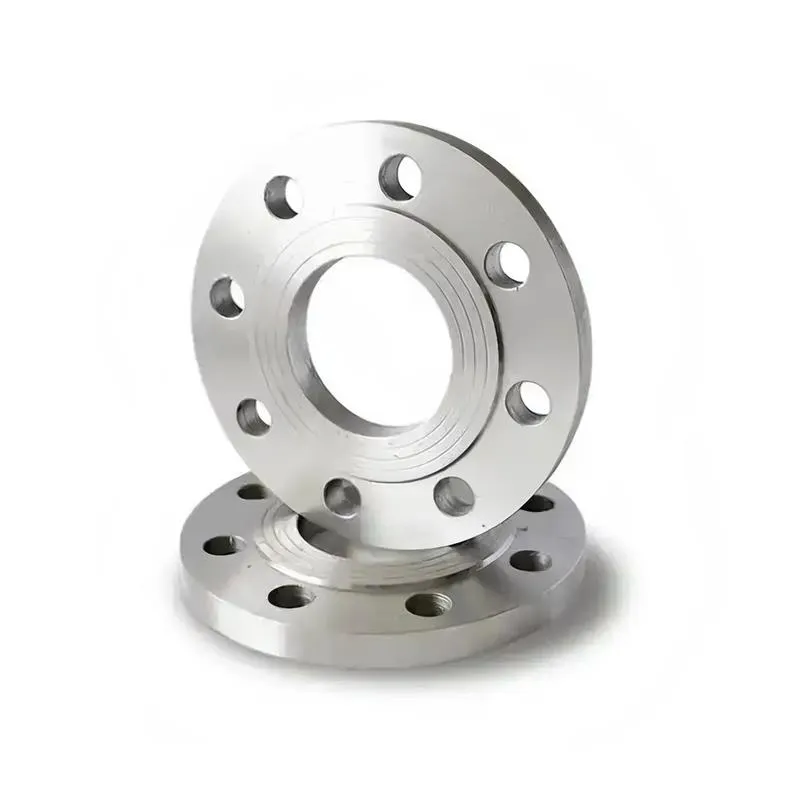
1,We Manufacturing processes are primarily classified into four types:
1:Forging,
2:Casting,
3:Cutting,
4:Rolling.
2,We can manufacture in accordance with these standards.
Standards:
GB Series (Chinese Standards), JB Series (Machinery Standards), HG Series (Chemical Industry Standards), ASME B16.5 (American Standards), BS4504 (British Standards), DIN (German Standards), and JIS (Japanese Standards).
Internationally, there are two primary systems of pipe flange standards: the European system, represented by the German DIN standards (including those of the former Soviet Union), and the American system, represented by the US ANSI pipe flange standards. Other common standards include: the Chinese Ministry of Machinery Industry standards (JB series), the Ministry of Chemical Industry standards (HG series), the Chinese National Standard *GB/T 9112–9124-2010 Steel Pipe Flanges*, as well as US standards (ASME B16.5), British standards (BS4504), German standards (DIN), Japanese standards (JIS), and marine standards (CBM), among others.
The nominal pressure ratings for the PN series are designated by "PN" and comprise the following nine levels: PN2.5, PN6, PN10, PN16, PN25, PN40, PN63, PN100, and PN160.
The nominal pressure ratings for the Class series are designated by "Class" and comprise the following six levels: Class150, Class300, Class600, Class900, Class1500, and Class2500.
Flange Classification
1. **According to Chemical Industry Standards:** Flanges are classified as follows:
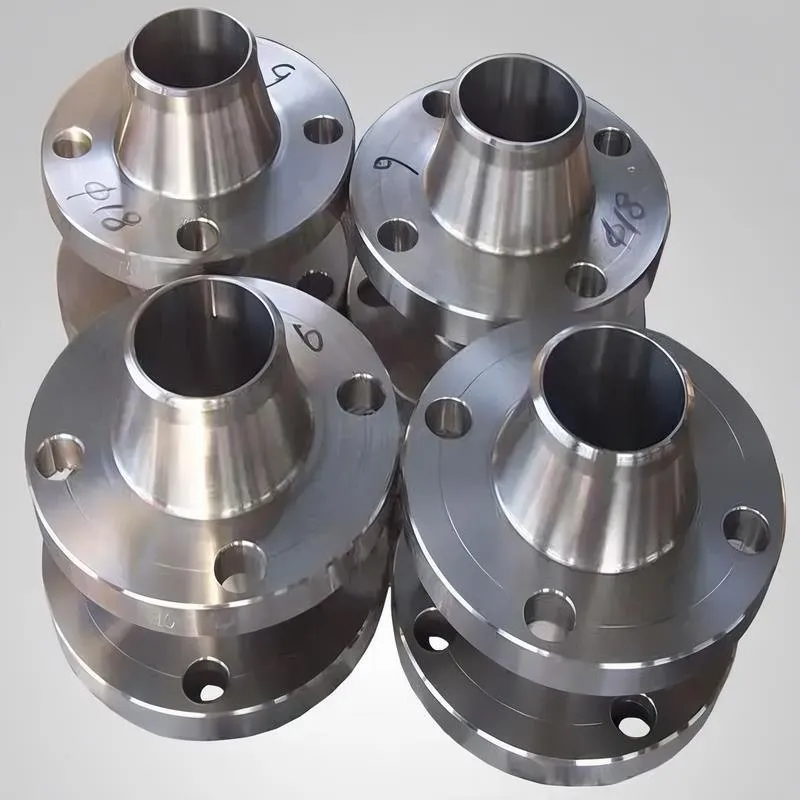
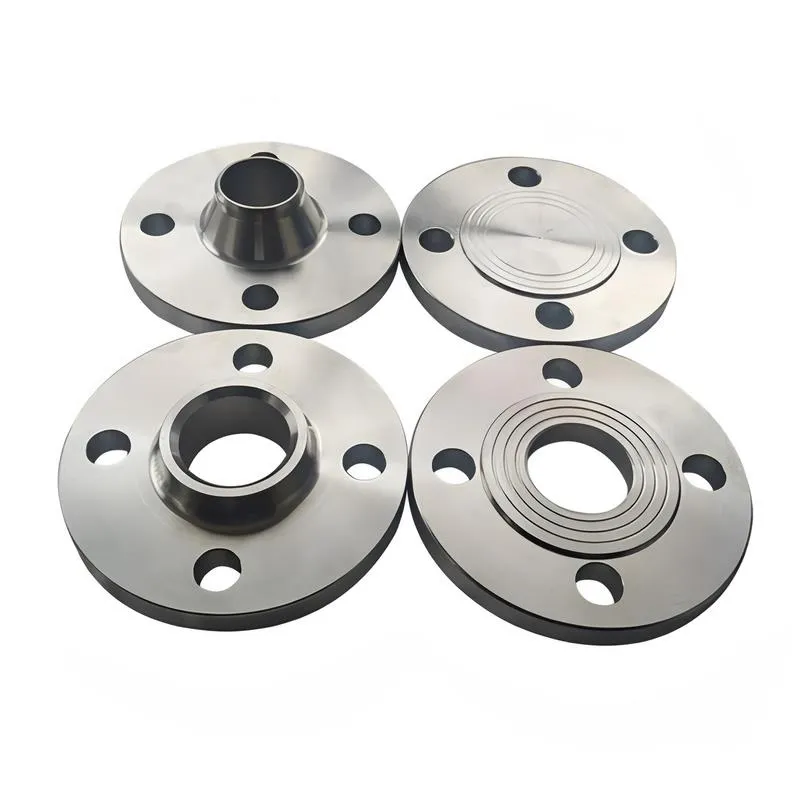
Plate Flat Welding Flange (PL), Necked Flat Welding Flange (SO), Necked Butt Welding Flange (WN), Integral Flange (IF), Socket Welding Flange (SW), Threaded Flange (Th), Butt Welding Ring Loose Flange (PJ/SE), Blind Flange (BL), Flat Welding Ring Loose Flange (PJ/PJ), and Lined Blind Flange (BL(s)).
2. **According to Petrochemical (SH) Industry Standards:** Flanges are classified as follows:
Threaded Flange (PL), Butt Welding Flange (WN), Flat Welding Flange (SO), Socket Welding Flange (SW), Loose Flange (LJ), and Blind Flange (no specific designation).
3. **According to Machinery (JB) Industry Standards:** Flanges are classified as follows:
Integral Flange, Butt Welding Flange, Plate Flat Welding Flange, Butt Welding Ring Plate Loose Flange, Flat Welding Ring Plate Loose Flange, Lap Joint Ring Plate Loose Flange, and Blind Flange.
4. **According to Connection Method/Type:** Flanges are classified as follows:
Plate Flat Welding Flange, Necked Flat Welding Flange, Necked Butt Welding Flange, Socket Welding Flange, Threaded Flange, Blind Flange, Necked Butt Welding Ring Loose Flange, Flat Welding Ring Loose Flange, Ring-Type Joint (RTJ) Flange and Blind Flange, Large-Diameter Plate Flange, Large-Diameter High-Neck Flange, Figure-8 Blind Plate, Butt Welding Ring Loose Flange, etc.
5. **According to the Component Being Connected:** Flanges can be classified into Vessel Flanges and Pipe Flanges.
6. **According to Structural Type:** Flanges include Integral Flanges, Threaded Flanges, Flat Welding Flanges, Butt Welding Flanges, Lap Joint (Loose/Swivel) Flanges, and Blind Flanges.
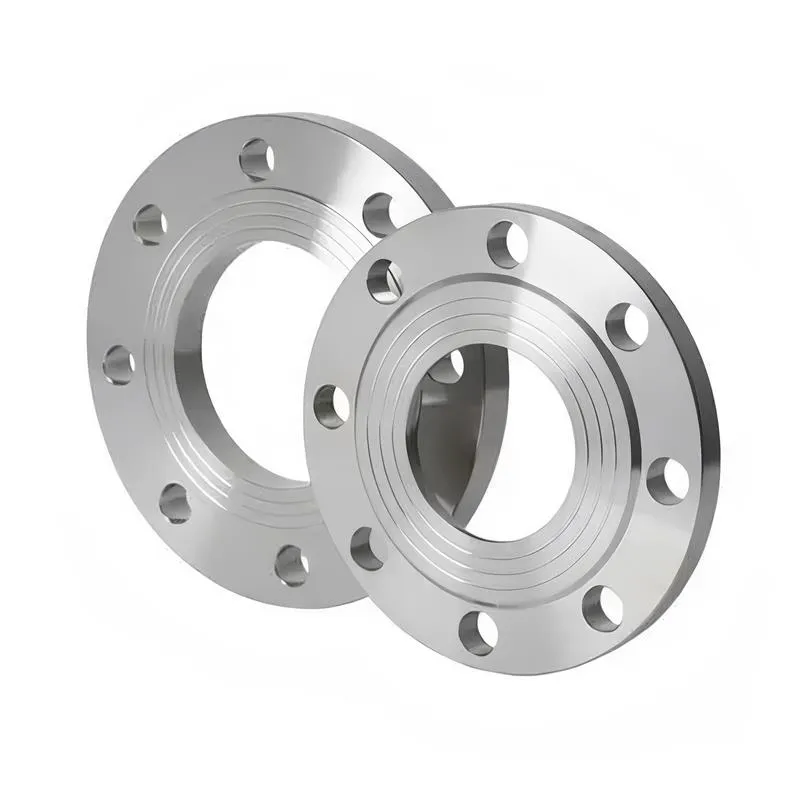
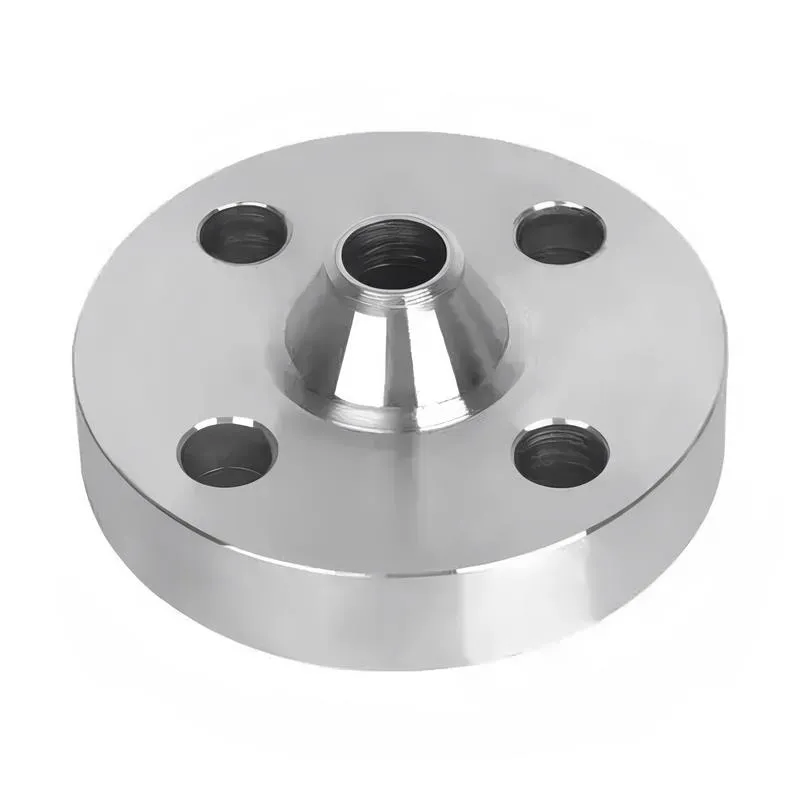
A flange—also referred to as a flange plate or rim—is a component used to connect shafts to one another, or, more commonly, to join the ends of pipes. Flanges are also utilized at the inlet and outlet ports of equipment to facilitate connections between two devices—for instance, the flange on a speed reducer. A "flange connection" or "flanged joint" refers to a detachable joint assembly comprising three interconnected elements—a flange, a gasket, and bolts—that together form a sealed structural unit. In the context of piping systems, a "pipe flange" specifically denotes a flange used for plumbing within the installation; when applied to equipment, it refers to the inlet or outlet flange of that specific device. Flanges feature a series of holes through which bolts are inserted to securely fasten the two flanges together, while a gasket placed between the flanges ensures a leak-proof seal. Flanges are broadly categorized into three types: threaded (screw-in) flanges, welded flanges, and clamp-type flanges. Flanges are invariably used in pairs; threaded flanges are suitable for low-pressure piping applications, whereas welded flanges are required for systems operating at pressures exceeding 4 kilograms per square centimeter. A sealing gasket is inserted between the two flange plates, which are then firmly secured using bolts. The thickness of a flange—as well as the specifications of the bolts used to fasten it—vary depending on the specific pressure rating required for the application. When connecting equipment such as water pumps or valves to piping systems, the corresponding connection points on these devices are often manufactured in the shape of a matching flange; this method of attachment is also referred to as a "flange connection." Generally, any connecting component that utilizes bolts to join and seal the perimeters of two flat surfaces—such as the joints in ventilation ducts—is termed a "flange"; such components may collectively be classified as "flange-type parts." However, since such a connection often constitutes merely a *portion* of a larger device—for instance, the interface between a flange and a water pump—it would be inappropriate to classify the entire water pump itself as a "flange-type part." Conversely, smaller components—such as valves—that feature such flanged interfaces may indeed be appropriately categorized as "flange-type parts."
-:-
For detailed product information, please contact sales.
-:
Crucible Steel Flange CPM® 3V® Tool Steel Flange Product Information
-:-
For detailed product information, please contact sales.
-:
Crucible Steel Flange CPM® 3V® Tool Steel Flange Synonyms
-:-
For detailed product information, please contact sales.
-:
Crucible Steel CPM® 3V® Tool Steel Product Information
-:-
For detailed product information, please contact sales.
-:
# **Crucible Steel CPM® 3V® Tool Steel**
## **Ultra-High Toughness, High Wear Powder Metallurgy Tool Steel for Extreme Service Conditions**
---
### **Product Overview**
Crucible CPM® 3V® is a proprietary, premium-grade powder metallurgy (PM) tool steel engineered to deliver an **unprecedented combination of ultra-high toughness and excellent wear resistance**. Representing a significant advancement in tool steel technology, CPM 3V achieves what was previously considered impossible: maintaining impact toughness comparable to or exceeding traditional shock steels (like S7) while providing wear resistance approaching that of D2 tool steel. Manufactured via Crucible's patented CPM (Crucible Particle Metallurgy) process, this alloy features an ultra-clean, homogeneous microstructure with fine, uniformly dispersed vanadium carbides. It is specifically designed for applications where conventional tool steels fail due to chipping, cracking, or catastrophic fracture under severe loading conditions.
---
### **Key Advantages**
- **Exceptional Toughness-Wear Balance**: Breakthrough combination of S7-like toughness with D2-like wear resistance
- **Superior Impact Strength**: Among the highest impact resistance of any commercially available tool steel at 58-60 HRC
- **Excellent Wear Resistance**: High vanadium content provides substantial abrasion resistance through fine, hard MC-type carbides
- **Minimal Distortion**: Air-hardening characteristics ensure excellent dimensional stability during heat treatment
- **Outstanding Grindability**: PM microstructure allows for easier grinding than conventional steels of similar hardness
- **Isotropic Properties**: Identical mechanical characteristics in all directions due to homogeneous carbide distribution
- **High Purity**: Extremely low sulfur and phosphorus contents maximize toughness and fatigue life
- **Deep Hardenability**: Through-hardens in air up to 125mm (5") sections
---
### **Chemical Composition (%)**
| Element | Carbon (C) | Chromium (Cr) | Molybdenum (Mo) | Vanadium (V) | Silicon (Si) | Manganese (Mn) |
|---------|------------|---------------|-----------------|--------------|--------------|----------------|
| **Content** | 0.80-0.90 | 7.50-8.00 | 1.30-1.80 | 2.40-2.60 | 0.90-1.10 | 0.40-0.60 |
*Additional Elements:*
- Nickel (Ni): ≤0.25%
- Copper (Cu): ≤0.25%
- Phosphorus (P): ≤0.020% (typically ≤0.015%)
- Sulfur (S): ≤0.010% (typically ≤0.005% in CPM process)
- **Critical Feature**: Optimized vanadium content (2.40-2.60%) provides substantial wear resistance without compromising toughness
*Note: The chemistry is precisely balanced to maximize the volume of fine vanadium carbides (MC-type) while maintaining a tough martensitic matrix. The 8% chromium provides excellent hardenability and corrosion resistance, while silicon enhances tempering resistance.*
---
### **Physical & Mechanical Properties**
#### **Physical Properties**
- **Density**: 7.80 g/cm³ (0.282 lb/in³)
- **Melting Point**: ~1410°C (~2570°F)
- **Thermal Conductivity**: ~23.0 W/m·K at 20°C
- **Coefficient of Thermal Expansion**: ~11.5 × 10⁻⁶/°C (20-100°C)
- **Modulus of Elasticity**: ~205 GPa (29.7 × 10⁶ psi)
- **Specific Heat**: ~460 J/kg·K
- **Electrical Resistivity**: ~0.40 μΩ·m
#### **Mechanical Properties (Hardened & Tempered)**
**Annealed Condition:**
- Hardness: 210-240 HB
- Condition: Supplied spheroidized annealed
**Hardened & Tempered Condition:**
- **Optimal Hardness Range**: **58-60 HRC** (delivers best toughness-wear balance)
- **Ultimate Tensile Strength**: ~2100-2300 MPa (305-334 ksi) at 59 HRC
- **Yield Strength (0.2% offset)**: ~1850-2050 MPa (268-297 ksi)
- **Elongation**: 6-10%
- **Reduction of Area**: 20-30%
- **Impact Toughness (Charpy V-notch)**: **50-70 J (37-52 ft-lb)** at 59 HRC (exceptional)
- **Compressive Strength**: ~2400-2700 MPa (348-392 ksi)
- **Transverse Rupture Strength**: ~4000-4500 MPa (580-652 ksi)
- **Abrasion Resistance**: Approximately 70-80% of D2 steel, 2-3× better than S7 steel
- **Fracture Toughness (K₁C)**: Very high, typically 60-80 MPa·√m
**Comparison of Key Properties at 59 HRC:**
| Property | CPM 3V | D2 | S7 | A2 |
|----------|--------|----|----|----|
| **Impact Toughness (J)** | 50-70 | 10-15 | 40-55 | 18-25 |
| **Relative Wear Resistance** | 100% | 130% | 40% | 80% |
| **Compressive Strength (MPa)** | 2400-2700 | 2500-3000 | 2000-2300 | 2300-2600 |
#### **Heat Treatment Parameters**
1. **Annealing:**
- Temperature: 870-900°C (1600-1650°F)
- Cycle: Heat to temperature, hold, slow cool at 15°C/hr (25°F/hr) to 595°C (1100°F), then air cool
- Annealed Hardness: 210-240 HB
2. **Stress Relieving:**
- Temperature: 650-675°C (1200-1250°F)
- Time: 2 hours, air cool
3. **Preheating (Critical):**
- First Stage: 550-650°C (1025-1200°F)
- Second Stage: 815-870°C (1500-1600°F)
- Soak Time: 30-45 min/inch of thickness
4. **Austenitizing:**
- Temperature Range: **995-1025°C (1825-1875°F)**
- Recommended: 1010°C (1850°F) for optimal properties
- Soak Time: 30-45 minutes at temperature
- Atmosphere: Neutral or protective to prevent decarburization
5. **Quenching:**
- Method: Air cool (still or forced air)
- Alternative: High-pressure gas quench for complex shapes or minimal distortion
- Cool to below 65°C (150°F) before tempering
6. **Tempering:**
- **Double tempering required**
- Temperature Range: **525-565°C (975-1050°F)**
- Recommended: 540°C (1000°F) for 59-60 HRC
- Time: 2 hours minimum per temper, cool to room temperature between cycles
- Hardness vs. Tempering Temperature (2x2 hour tempers):
- 525°C (975°F): ~60-61 HRC
- 540°C (1000°F): ~59-60 HRC
- 565°C (1050°F): ~57-58 HRC
- **Note**: Triple tempering recommended for maximum dimensional stability in precision applications
---
### **International Standards & Cross-References**
| Standard System | Designation | Notes |
|----------------|-------------|-------|
| **Crucible** | CPM 3V | Proprietary designation |
| **AISI/SAE** | No direct equivalent | Unique chemistry not covered by standard designations |
| **UNS** | No UNS designation | Proprietary alloy |
| **ISO** | No direct equivalent | |
| **European (EN)** | No direct equivalent | |
| **Common Industry References** | Often called "Super Tough D2" or "Wear-Resistant S7" | Describes its performance positioning |
| **Powder Metallurgy Equivalents** | Similar performance category: Böhler K890, Uddeholm Sleipner | Different chemistries but similar PM approach to toughness/wear balance |
*Note: CPM 3V is a proprietary Crucible alloy with no direct standardized equivalents. It occupies a unique performance space between traditional shock-resisting and high-wear tool steels.*
---
### **Typical Applications**
CPM 3V is specified for the most demanding applications where **both high impact resistance and substantial wear resistance are required simultaneously**.
#### **1. Extreme-Duty Punching and Shearing Tools**
- **Heavy Blanking Dies**: For high-strength steels (AHSS, UHSS), stainless steels, and exotic alloys
- **Punches for Hard Materials**: For hardened spring steel, silicon steel, and abrasive composites
- **Industrial Shear Blades**: For plate steel, structural shapes, and tough alloys
- **Slitter Knives**: For abrasive or difficult-to-cut coiled materials
- **Fine Blanking Tools**: Where edge integrity is critical in tough materials
#### **2. Forming, Forging, and Extrusion Tools**
- **Cold Forging Dies**: For high-strength fasteners, automotive components
- **Extrusion Punches and Dies**: For non-ferrous and harder metals
- **Thread Rolling Dies**: For hard or abrasive materials
- **Knurling Tools**: Subject to high contact stresses
- **Mandrels and Forming Punches**: Under bending and impact loads
#### **3. Plastic and Composite Processing Tools**
- **Injection Mold Inserts**: For highly abrasive filled plastics (long-fiber reinforced, high mineral content)
- **Compression Molds**: For abrasive rubber and composite materials
- **Extrusion Dies and Screws**: For filled polymers and composites
- **Mold Cores**: Prone to bending or breakage in long, thin sections
#### **4. Cutting Tools for Extremely Demanding Materials**
- **Industrial Knives**: For cutting carbon fiber composites, aramid fibers, fiberglass
- **Woodworking Tools**: For extremely abrasive materials (OSB, cement board, MDF)
- **Paper and Pulp Industry**: Cutting tools for abrasive papers and filled materials
- **Tire and Rubber Cutting**: For steel-belted radial tires and reinforced rubber
#### **5. Specialized Industrial and Wear Components**
- **Wear Plates and Liners**: In mining, mineral processing, and aggregate industries
- **Guide Rolls and Bushings**: Subject to both abrasion and impact
- **Machine Tool Components**: In high-stress, abrasive environments
- **Firearm Components**: Bolt lugs, barrels, and high-stress parts
- **Oil and Gas Tools**: Downhole tools subject to abrasion and impact
---
### **Machining & Fabrication Guidelines**
#### **In Annealed Condition (210-240 HB)**
- **Machinability Rating**: Fair to Good (approximately 50-55% of 1% carbon steel)
- **Recommended Tools**: Carbide tools preferred, premium HSS acceptable
- **Turning Speeds**: 35-55 SFM with carbide, 15-25 SFM with HSS
- **Milling Speeds**: 30-45 SFM with carbide
- **Drilling Speeds**: 12-20 SFM with HSS drills
- **Coolant**: Essential for all operations
- **Chip Characteristics**: Produces segmented chips; positive rake angles recommended
#### **Grinding (in hardened condition)**
- **Primary Advantage**: 30-50% faster grinding than conventional D2 steel at equivalent hardness
- **Wheel Recommendation**: Aluminum oxide (32A-46I-V) or CBN
- **Parameters**: Light to medium passes with ample coolant
- **Surface Finish**: Superior achievable finish due to fine carbide structure
#### **Electrical Discharge Machining (EDM)**
- **Excellent Compatibility**: The fine microstructure produces excellent surface integrity
- **Post-EDM Treatment**: Stress relieve at 150-200°C (300-400°F) for critical applications
- **Wire EDM**: Particularly well-suited due to material homogeneity
---
### **Surface Treatment Compatibility**
CPM 3V serves as an excellent substrate for advanced surface treatments, which can further enhance its already impressive properties:
- **Nitriding (Gas, Plasma, or Salt Bath)**: Highly recommended. Achieves surface hardness of 65-72 HRC with case depth of 0.1-0.3mm (0.004-0.012"). Particularly beneficial for wear and fatigue resistance.
- **Physical Vapor Deposition (PVD) Coatings**: TiN, TiCN, TiAlN, AlCrN, CrN. Excellent adhesion due to clean, stable substrate.
- **Chemical Vapor Deposition (CVD) Coatings**: TiC, TiCN, Al₂O₃. Requires careful process control to avoid hydrogen embrittlement.
- **Tufftriding/Melonite**: Provides good wear and corrosion resistance with minimal dimensional change.
- **Black Oxide/Phosphate**: For corrosion resistance and improved lubrication.
**Performance Enhancement**: Proper surface treatments can increase tool life by 200-400% in specific applications by combining CPM 3V's substrate toughness with extreme surface hardness.
---
### **Comparison with Competitive Materials**
| Property | CPM 3V | D2 | S7 | CPM 1V | H13 |
|----------|--------|----|----|--------|-----|
| **Impact Toughness** | **Excellent (50-70 J)** | Poor (10-15 J) | Very Good (40-55 J) | Very Good (40-60 J) | Good (30-45 J) |
| **Wear Resistance** | Very Good (80% of D2) | Excellent (100%) | Fair (40% of D2) | Good (60% of D2) | Good (50% of D2) |
| **Compressive Strength** | Excellent | Excellent | Good | Very Good | Good |
| **Dimensional Stability** | Excellent | Very Good | Good | Excellent | Excellent |
| **Typical Hardness (HRC)** | 58-60 | 58-60 | 56-58 | 56-59 | 48-52 |
| **Primary Strength** | Toughness-Wear Balance | Wear Resistance | Impact Resistance | High Toughness | Thermal Fatigue |
| **Relative Cost** | High | Medium | Medium-High | High | Medium |
---
### **Design and Application Considerations**
#### **Optimal Application Guidelines**
- **Ideal For**: Applications where both chipping/breakage AND wear are failure concerns
- **Consider When**: D2 wears well but chips, OR S7 survives impact but wears too quickly
- **Optimal Hardness**: 58-59 HRC provides the best overall performance balance
- **Not Recommended For**: Applications requiring maximum possible wear resistance (use CPM 9V, 10V, or 15V) or extreme hot hardness
#### **Failure Mode Analysis for Material Selection:**
| Failure Mode in Current Tool | Recommended Action | Consider CPM 3V? |
|------------------------------|-------------------|------------------|
| **Chipping/Breakage** | Increase toughness | **Yes - Primary application** |
| **Excessive Wear** | Increase wear resistance | Yes - if some toughness needed |
| **Both Chipping AND Wear** | Need balanced solution | **Yes - Ideal application** |
| **Thermal Fatigue/Cracking** | Improve thermal properties | Consider H13 or hot work grades |
| **Corrosion** | Improve corrosion resistance | Consider stainless or coated |
#### **Economic Justification**
- **Premium Material Cost**: 2-3× conventional tool steels like D2 or A2
- **Dramatically Reduced Failures**: Significantly fewer catastrophic failures vs. conventional steels
- **Extended Tool Life**: Typically 3-5× longer life in appropriate applications
- **Reduced Production Downtime**: Fewer tool changes and less unscheduled maintenance
- **Improved Part Quality**: More consistent performance and fewer defective parts
**Typical ROI**: 2-6 months in high-volume production or critical applications
---
### **Technical Specifications & Quality Assurance**
#### **Material Quality Characteristics**
- **Microcleanliness**: Superior to ASTM E45 requirements (typically <0.5 for all inclusion types)
- **Carbide Size**: Extremely fine, typically 1-3 microns
- **Carbide Distribution**: Perfectly uniform, no banding or segregation
- **Decarburization**: Minimized through controlled atmosphere processing
- **Grain Size**: ASTM 8-10 (very fine)
#### **Available Product Forms**
- **Round Bars**: 10mm to 300mm+ diameter
- **Flat Bars and Plates**: Various thicknesses up to 150mm
- **Forgings**: Custom shapes for specific tooling applications
- **Pre-finished Blanks**: Precision ground, stress relieved, or rough machined
- **Blocks and Sheets**: For mold, die, and wear plate applications
#### **Quality Certifications**
- **Full Chemical Analysis**: For each heat/lot
- **Hardness Surveys**: Longitudinal and transverse consistency verification
- **Microstructural Analysis**: Carbide size and distribution documentation
- **Ultrasonic Testing**: For critical applications requiring internal soundness verification
- **Full Traceability**: From raw materials through final processing
---
### **Industry Case Studies & Performance Data**
#### **Documented Performance Improvements:**
1. **Blanking Die for High-Strength Steel**: Conventional D2 failed by chipping after 15,000 cycles. CPM 3V achieved 85,000 cycles before requiring sharpening.
2. **Punch for Stainless Steel**: A2 punches required replacement every 8,000 parts. CPM 3V punches lasted 35,000+ parts.
3. **Industrial Shear Blades**: S7 blades required sharpening every 2 weeks. CPM 3V blades lasted 8-10 weeks between sharpenings.
4. **Injection Mold for Glass-Filled Nylon**: H13 cores broke repeatedly. CPM 3V cores completed the 500,000-part production run without failure.
#### **Industry Adoption:**
- **Aerospace**: Composite cutting tools, titanium forming dies
- **Automotive**: High-strength steel blanking, progressive dies
- **Firearms**: High-stress components requiring both strength and wear resistance
- **Medical**: Surgical instrument components subject to repeated impact
- **Energy**: Downhole tools, wear components in harsh environments
---
### **Conclusion**
Crucible CPM 3V represents a paradigm shift in tool steel performance, breaking the traditional trade-off between toughness and wear resistance that has constrained tool designers for decades. By leveraging advanced powder metallurgy technology, CPM 3V delivers what was previously unattainable: the impact resistance of premium shock steels combined with the wear resistance of high-carbon, high-chromium tool steels.
**Key Value Propositions:**
1. **Breakthrough Performance**: Redefines the possible balance between toughness and wear resistance
2. **Reliability in Extreme Conditions**: Withstands severe service where other materials fail
3. **Manufacturing Efficiency**: Better grindability and predictable heat treatment reduce processing costs
4. **Total Cost Reduction**: Extended tool life and reduced downtime offset premium material cost
5. **Application Versatility**: Suitable for a wider range of demanding applications than conventional grades
For engineers and tool designers facing the "impossible choice" between toughness and wear resistance, CPM 3V provides an engineered solution that eliminates this compromise. While commanding a significant price premium over conventional tool steels, its performance advantages often deliver a rapid return on investment through dramatically extended tool life, reduced production interruptions, and improved part quality.
When conventional tool steels reach their performance limits in demanding applications, CPM 3V offers the advanced material technology needed to achieve new levels of reliability, productivity, and cost-effectiveness in manufacturing.
---
*Note: All technical data are based on typical values. For specific application requirements or critical applications, consult directly with Crucible Industries' technical service department. Always refer to the latest official CPM 3V technical data sheet for current specifications, heat treatment guidelines, and application recommendations.*
-:-
For detailed product information, please contact sales.
-:
Crucible Steel CPM® 3V® Tool Steel Specification
Dimensions
Size:
Diameter 20-1000 mm Length <6947 mm
Size:We can customized as required
Standard:
Per your request or drawing
We can customized as required
Properties(Theoretical)
Chemical Composition
-:-
For detailed product information, please contact sales.
-:
Crucible Steel CPM® 3V® Tool Steel Properties
-:-
For detailed product information, please contact sales.
-:
Applications of Crucible Steel Flange CPM® 3V® Tool Steel Flange
-:-
For detailed product information, please contact sales.
-:
Chemical Identifiers Crucible Steel Flange CPM® 3V® Tool Steel Flange
-:-
For detailed product information, please contact sales.
-:
Packing of Crucible Steel Flange CPM® 3V® Tool Steel Flange
-:-
For detailed product information, please contact sales.
-:
Standard Packing:
-:-
For detailed product information, please contact sales.
-:
Typical bulk packaging includes palletized plastic 5 gallon/25 kg. pails, fiber and Steel Flange drums to 1 ton super sacks in full container (FCL) or truck load (T/L) quantities. Research and sample quantities and hygroscopic, oxidizing or other air sensitive materials may be packaged under argon or vacuum. Solutions are packaged in polypropylene, plastic or glass jars up to palletized 3418 gallon liquid totes Special package is available on request. E FORUs’ is carefully handled to minimize damage during storage and transportation and to preserve the quality of our products in their original condition