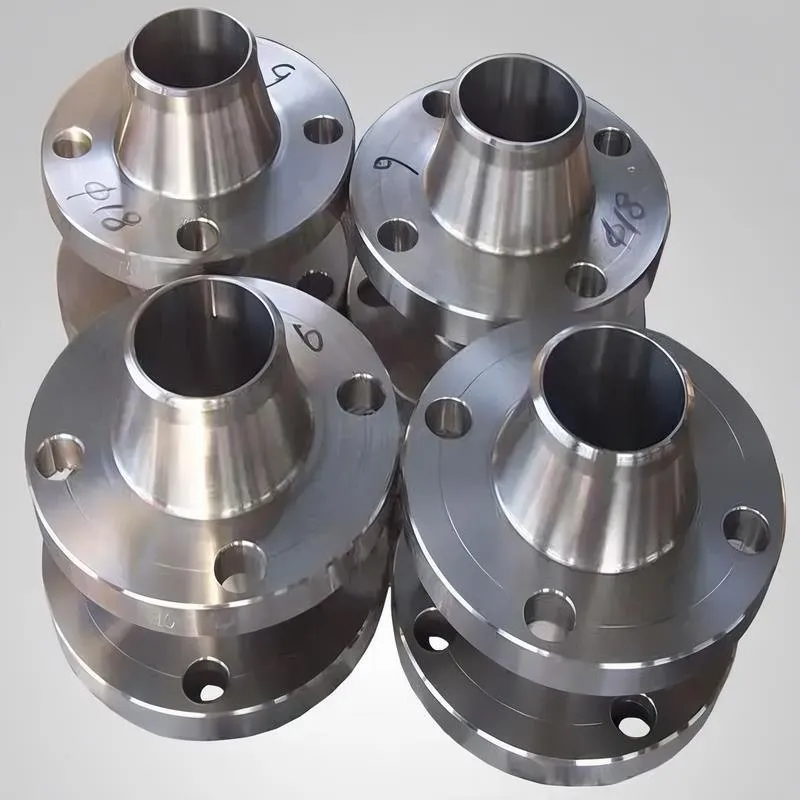
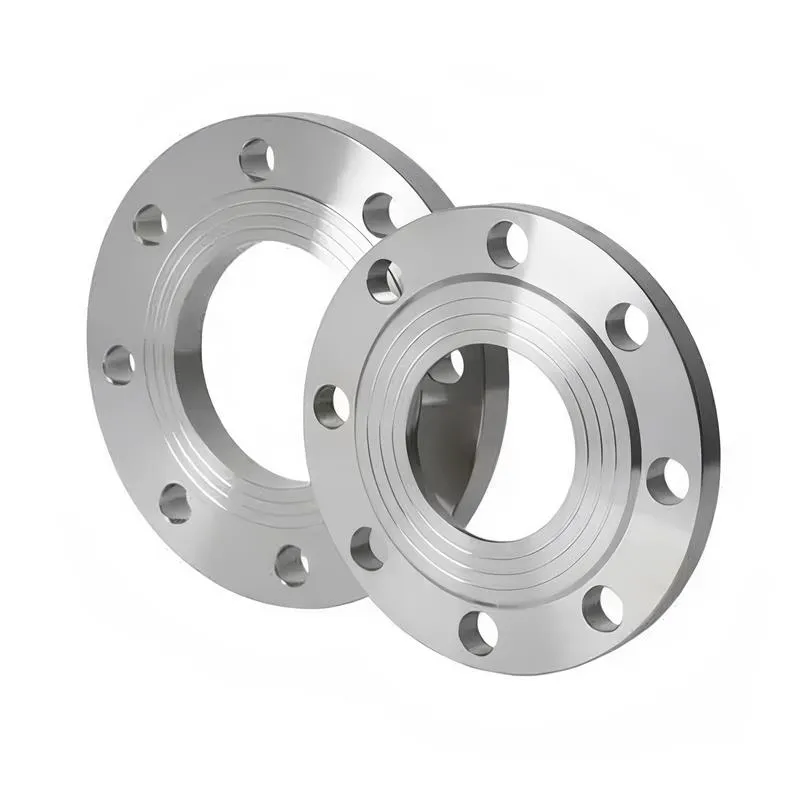
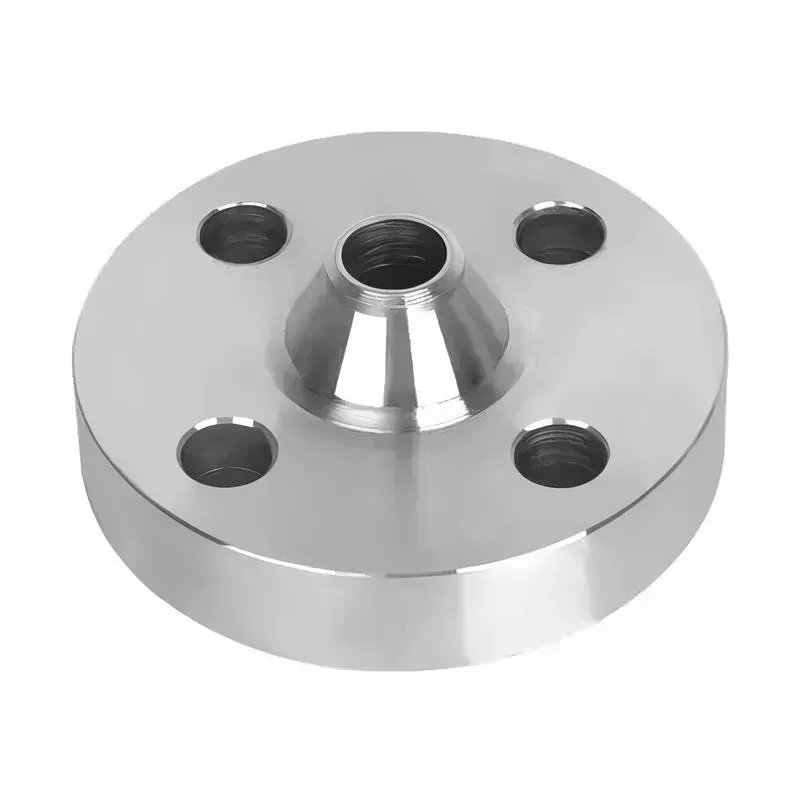
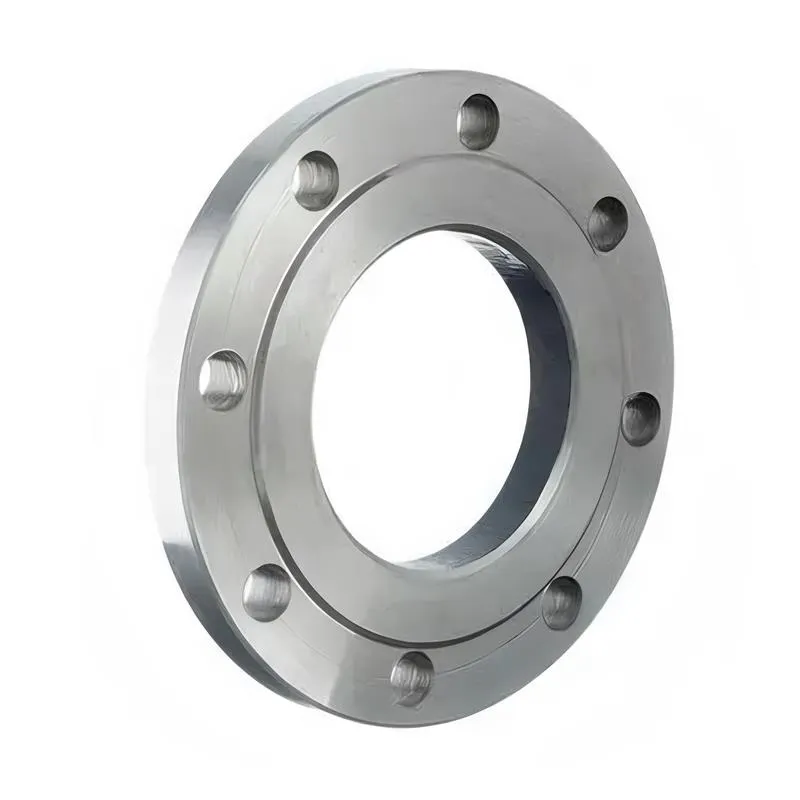
1,We Manufacturing processes are primarily classified into four types:
1:Forging,
2:Casting,
3:Cutting,
4:Rolling.
2,We can manufacture in accordance with these standards.
Standards:
GB Series (Chinese Standards), JB Series (Machinery Standards), HG Series (Chemical Industry Standards), ASME B16.5 (American Standards), BS4504 (British Standards), DIN (German Standards), and JIS (Japanese Standards).
Internationally, there are two primary systems of pipe flange standards: the European system, represented by the German DIN standards (including those of the former Soviet Union), and the American system, represented by the US ANSI pipe flange standards. Other common standards include: the Chinese Ministry of Machinery Industry standards (JB series), the Ministry of Chemical Industry standards (HG series), the Chinese National Standard *GB/T 9112–9124-2010 Steel Pipe Flanges*, as well as US standards (ASME B16.5), British standards (BS4504), German standards (DIN), Japanese standards (JIS), and marine standards (CBM), among others.
The nominal pressure ratings for the PN series are designated by "PN" and comprise the following nine levels: PN2.5, PN6, PN10, PN16, PN25, PN40, PN63, PN100, and PN160.
The nominal pressure ratings for the Class series are designated by "Class" and comprise the following six levels: Class150, Class300, Class600, Class900, Class1500, and Class2500.
Flange Classification
1. **According to Chemical Industry Standards:** Flanges are classified as follows:
Plate Flat Welding Flange (PL), Necked Flat Welding Flange (SO), Necked Butt Welding Flange (WN), Integral Flange (IF), Socket Welding Flange (SW), Threaded Flange (Th), Butt Welding Ring Loose Flange (PJ/SE), Blind Flange (BL), Flat Welding Ring Loose Flange (PJ/PJ), and Lined Blind Flange (BL(s)).
2. **According to Petrochemical (SH) Industry Standards:** Flanges are classified as follows:
Threaded Flange (PL), Butt Welding Flange (WN), Flat Welding Flange (SO), Socket Welding Flange (SW), Loose Flange (LJ), and Blind Flange (no specific designation).
3. **According to Machinery (JB) Industry Standards:** Flanges are classified as follows:
Integral Flange, Butt Welding Flange, Plate Flat Welding Flange, Butt Welding Ring Plate Loose Flange, Flat Welding Ring Plate Loose Flange, Lap Joint Ring Plate Loose Flange, and Blind Flange.
4. **According to Connection Method/Type:** Flanges are classified as follows:
Plate Flat Welding Flange, Necked Flat Welding Flange, Necked Butt Welding Flange, Socket Welding Flange, Threaded Flange, Blind Flange, Necked Butt Welding Ring Loose Flange, Flat Welding Ring Loose Flange, Ring-Type Joint (RTJ) Flange and Blind Flange, Large-Diameter Plate Flange, Large-Diameter High-Neck Flange, Figure-8 Blind Plate, Butt Welding Ring Loose Flange, etc.
5. **According to the Component Being Connected:** Flanges can be classified into Vessel Flanges and Pipe Flanges.
6. **According to Structural Type:** Flanges include Integral Flanges, Threaded Flanges, Flat Welding Flanges, Butt Welding Flanges, Lap Joint (Loose/Swivel) Flanges, and Blind Flanges.
A flange—also referred to as a flange plate or rim—is a component used to connect shafts to one another, or, more commonly, to join the ends of pipes. Flanges are also utilized at the inlet and outlet ports of equipment to facilitate connections between two devices—for instance, the flange on a speed reducer. A "flange connection" or "flanged joint" refers to a detachable joint assembly comprising three interconnected elements—a flange, a gasket, and bolts—that together form a sealed structural unit. In the context of piping systems, a "pipe flange" specifically denotes a flange used for plumbing within the installation; when applied to equipment, it refers to the inlet or outlet flange of that specific device. Flanges feature a series of holes through which bolts are inserted to securely fasten the two flanges together, while a gasket placed between the flanges ensures a leak-proof seal. Flanges are broadly categorized into three types: threaded (screw-in) flanges, welded flanges, and clamp-type flanges. Flanges are invariably used in pairs; threaded flanges are suitable for low-pressure piping applications, whereas welded flanges are required for systems operating at pressures exceeding 4 kilograms per square centimeter. A sealing gasket is inserted between the two flange plates, which are then firmly secured using bolts. The thickness of a flange—as well as the specifications of the bolts used to fasten it—vary depending on the specific pressure rating required for the application. When connecting equipment such as water pumps or valves to piping systems, the corresponding connection points on these devices are often manufactured in the shape of a matching flange; this method of attachment is also referred to as a "flange connection." Generally, any connecting component that utilizes bolts to join and seal the perimeters of two flat surfaces—such as the joints in ventilation ducts—is termed a "flange"; such components may collectively be classified as "flange-type parts." However, since such a connection often constitutes merely a *portion* of a larger device—for instance, the interface between a flange and a water pump—it would be inappropriate to classify the entire water pump itself as a "flange-type part." Conversely, smaller components—such as valves—that feature such flanged interfaces may indeed be appropriately categorized as "flange-type parts."
-:-
For detailed product information, please contact sales.
-:
Crucible Steel Flange S7 XL (Premium AISI S7) Tool Steel Flange Product Information
-:-
For detailed product information, please contact sales.
-:
Crucible Steel Flange S7 XL (Premium AISI S7) Tool Steel Flange Synonyms
-:-
For detailed product information, please contact sales.
-:
Crucible Steel S7 XL (Premium AISI S7) Tool Steel Product Information
-:-
For detailed product information, please contact sales.
-:
# **Product Introduction: Crucible Steel S7 XL (Premium AISI S7) Tool Steel**
Crucible Steel S7 XL represents the premium evolution of the classic AISI S7 shock-resistant tool steel. The "XL" designation signifies **eXtra Life** and **eXtra performance**, achieved through advanced steelmaking practices that deliver superior metallurgical purity and consistency. While maintaining the exact chemical specification of standard S7, the S7 XL variant undergoes enhanced refining processes—such as vacuum degassing and controlled solidification—to dramatically reduce non-metallic inclusions and gas content. This results in a material that retains the legendary **exceptional impact toughness** of S7 while providing **enhanced fatigue strength, improved isotropy, greater consistency, and extended service life** in the most demanding shock and fatigue applications.
S7 XL is engineered for critical applications where the margin for failure is zero. The cleaner, more homogeneous microstructure directly translates to better resistance to crack initiation and propagation under cyclic loading, making it superior for tools subjected not only to single heavy impacts but also to millions of lower-intensity stress cycles. It embodies the pinnacle of reliability in the shock-resisting steel category.
---
## **1. Chemical Composition (Weight %)**
The composition adheres precisely to the AISI S7 specification but is produced with tighter impurity controls.
| **Element** | **Carbon (C)** | **Chromium (Cr)** | **Molybdenum (Mo)** | **Silicon (Si)** | **Manganese (Mn)** |
| :--- | :--- | :--- | :--- | :--- | :--- |
| **Content** | 0.45 - 0.55 | 3.00 - 3.50 | 1.30 - 1.70 | 0.20 - 0.35 | 0.20 - 0.60 |
| **Role** | Provides the foundation for hardness and strength. The moderate level is key to preserving the core toughness that defines S7. | Imparts deep air hardenability and contributes to wear resistance through secondary carbide formation. | Crucial for hardenability, grain refinement, and most importantly, for enhancing the toughness and tempering resistance of the matrix. | Deoxidizer and solid solution strengthener. | Aids in deoxidation and promotes hardenability. |
*Note: Iron (Fe) constitutes the remainder. The critical differentiator from standard S7 is the **extremely low levels of sulfur (S), phosphorus (P), and oxide/sulfide inclusions**, which are the primary initiators of fatigue cracks and brittle fracture.*
---
## **2. Physical & Mechanical Properties**
*Optimized for service at the standard S7 working hardness of 56-58 HRC, but with enhanced internal quality.*
* **Density:** ~7.75 g/cm³ (0.280 lb/in³)
* **Modulus of Elasticity:** ~200 GPa (29.0 x 10⁶ psi)
* **Thermal Conductivity:** Moderate, consistent with S7.
* **Hardenability:** **Excellent.** Maintains the deep, uniform air-hardening characteristics of S7.
* **Hardness (Typical Working Range):** **54 - 60 HRC.** The premium quality does not change the attainable hardness range but ensures more consistent results. The optimal balance remains **56-58 HRC**.
* **Impact Toughness (Charpy):** **Exceptional, with Higher Consistency.** While standard S7 has high toughness, S7 XL provides even higher and, more importantly, more reliable Charpy impact values due to the absence of large, stress-concentrating inclusions. This results in a narrower performance scatter band.
* **Fatigue Strength & Endurance Limit:** **Superior.** This is a key enhancement. The clean microstructure significantly increases resistance to failure under high-cycle fatigue loading, which is critical for tools like punches and dies undergoing millions of cycles.
* **Isotropy:** **Excellent.** Mechanical properties, especially toughness and fatigue strength, are highly uniform in all directions (longitudinal and transverse), ensuring predictable performance regardless of machining orientation.
* **Dimensional Stability:** **Excellent.** Air hardening provides minimal distortion. The consistent microstructure of S7 XL further reduces the risk of unpredictable dimensional changes during heat treatment.
---
## **3. Heat Treatment**
Heat treatment guidelines are identical to standard S7 but benefit from greater predictability.
* **Annealing:** Heat to 815-845°C (1500-1550°F), slow cool. Annealed hardness: 200-225 HB.
* **Stress Relieving:** 650-675°C (1200-1250°F), hold, then slow cool.
* **Preheating:** **Recommended** at 730-790°C (1350-1450°F).
* **Austenitizing:** **925-980°C (1700-1795°F).** For optimal toughness, **955-970°C (1750-1780°F)** is typical.
* **Quenching:** **Air quench** in still or forced air.
* **Tempering:** **Mandatory, with multiple tempers recommended.** Temper immediately after quenching.
* **Typical Tempering Range:** **425-540°C (800-1000°F)** to achieve 56-58 HRC with maximum toughness.
* **Two to three tempers**, each for 2+ hours, are recommended to ensure complete stress relief and stability.
---
## **4. Key Applications**
S7 XL is specified for the most demanding, high-value, and safety-critical shock and fatigue applications.
* **Ultra-High-Cycle Punching & Perforating Tools:** Progressive die punches, fine-blanking punches, and perforator pins in high-speed stamping presses where standard tools fail from fatigue.
* **Critical Aerospace & Automotive Forming Dies:** Dies for cold forming high-strength alloys where unexpected die fracture would cause catastrophic production downtime.
* **Heavy-Duty Shear Blades for High-Strength Material:** Blades for shearing advanced high-strength steel (AHSS) plate, where impact and fatigue loads are extreme.
* **Safety-Critical Shock Tools:** Jackhammer bits, rock drilling tools, and demolition chisels where tool failure poses a safety risk.
* **Precision Gripping & Clamping Jaws:** For robotic automation and high-pressure vises in critical machining operations, where jaw fracture cannot be tolerated.
* **Molds for High-Pressure Structural Foam Molding:** Cavities and cores subjected to intense cyclic clamping pressures.
---
## **5. International Standards & Cross-References**
S7 XL is a premium-quality version of AISI S7, often meeting special quality specifications.
* **AISI/SAE:** **S7 (Premium Quality / Vacuum Degassed)**
* **UNS:** T41907
* **Common Quality Designations:** Often referred to as **S7 VAR** (Vacuum Arc Remelted) or **S7 ESR** (Electroslag Remelted) by other manufacturers, indicating the enhanced melting process.
* **Industry Specifications:** May be supplied to meet internal OEM specifications requiring superior cleanliness (e.g., low inclusion counts per ASTM E45 or similar).
---
## **6. Advantages & Limitations**
**Advantages (vs. Standard S7):**
* **Extended Tool Life & Reliability:** The primary benefit, especially in fatigue-driven failures. Tools last longer and fail more predictably.
* **Higher & More Consistent Toughness:** Reduced risk of "outlier" failures due to material defects.
* **Superior Fatigue Performance:** Directly addresses a key failure mode in high-cycle tooling.
* **Excellent Isotropy:** Allows more flexible machining from the stock without sacrificing properties.
* **Improved Machined Surface Finish:** Cleaner steel yields better finishes, which can reduce stress concentration points.
**Limitations:**
* **Higher Cost:** The advanced processing results in a premium price, justified by performance and reliability in critical applications.
* **Same Functional Limits as S7:** Maximum hardness, wear resistance, and hot hardness characteristics are unchanged.
* **Potential Lead Time:** May not be as readily available as standard S7.
---
## **7. Summary**
**Crucible Steel S7 XL is the definitive choice for engineers and tool designers who cannot afford compromise in shock and fatigue applications.** It takes the proven, exceptional toughness of AISI S7 and elevates it to a new level of reliability and performance consistency through superior metallurgical quality. For mission-critical tooling in automotive, aerospace, and heavy manufacturing—where unplanned tool failure leads to massive production losses or safety concerns—the investment in S7 XL provides a tangible return through unparalleled durability, predictable service life, and operational peace of mind. It is not just a better grade of steel; it is a risk-mitigation strategy for high-stakes production environments.
-:-
For detailed product information, please contact sales.
-:
Crucible Steel S7 XL (Premium AISI S7) Tool Steel Specification
Dimensions
Size:
Diameter 20-1000 mm Length <6967 mm
Size:We can customized as required
Standard:
Per your request or drawing
We can customized as required
Properties(Theoretical)
Chemical Composition
-:-
For detailed product information, please contact sales.
-:
Crucible Steel S7 XL (Premium AISI S7) Tool Steel Properties
-:-
For detailed product information, please contact sales.
-:
Applications of Crucible Steel Flange S7 XL (Premium AISI S7) Tool Steel Flange
-:-
For detailed product information, please contact sales.
-:
Chemical Identifiers Crucible Steel Flange S7 XL (Premium AISI S7) Tool Steel Flange
-:-
For detailed product information, please contact sales.
-:
Packing of Crucible Steel Flange S7 XL (Premium AISI S7) Tool Steel Flange
-:-
For detailed product information, please contact sales.
-:
Standard Packing:
-:-
For detailed product information, please contact sales.
-:
Typical bulk packaging includes palletized plastic 5 gallon/25 kg. pails, fiber and Steel Flange drums to 1 ton super sacks in full container (FCL) or truck load (T/L) quantities. Research and sample quantities and hygroscopic, oxidizing or other air sensitive materials may be packaged under argon or vacuum. Solutions are packaged in polypropylene, plastic or glass jars up to palletized 3438 gallon liquid totes Special package is available on request. E FORUs’ is carefully handled to minimize damage during storage and transportation and to preserve the quality of our products in their original condition