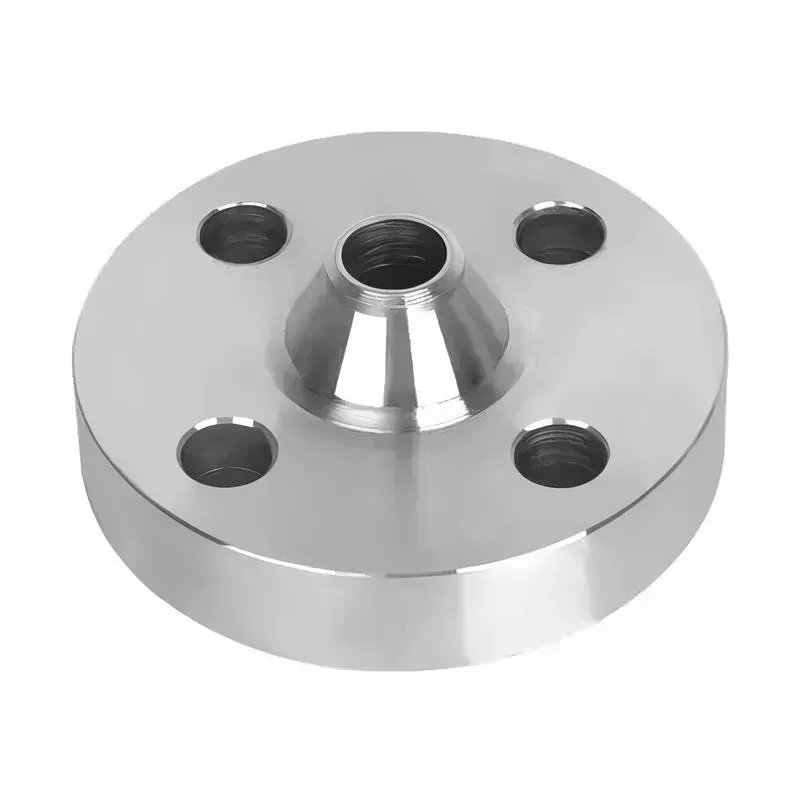
1,We Manufacturing processes are primarily classified into four types:
1:Forging,
2:Casting,
3:Cutting,
4:Rolling.
2,We can manufacture in accordance with these standards.
Standards:
GB Series (Chinese Standards), JB Series (Machinery Standards), HG Series (Chemical Industry Standards), ASME B16.5 (American Standards), BS4504 (British Standards), DIN (German Standards), and JIS (Japanese Standards).
Internationally, there are two primary systems of pipe flange standards: the European system, represented by the German DIN standards (including those of the former Soviet Union), and the American system, represented by the US ANSI pipe flange standards. Other common standards include: the Chinese Ministry of Machinery Industry standards (JB series), the Ministry of Chemical Industry standards (HG series), the Chinese National Standard *GB/T 9112–9124-2010 Steel Pipe Flanges*, as well as US standards (ASME B16.5), British standards (BS4504), German standards (DIN), Japanese standards (JIS), and marine standards (CBM), among others.
The nominal pressure ratings for the PN series are designated by "PN" and comprise the following nine levels: PN2.5, PN6, PN10, PN16, PN25, PN40, PN63, PN100, and PN160.
The nominal pressure ratings for the Class series are designated by "Class" and comprise the following six levels: Class150, Class300, Class600, Class900, Class1500, and Class2500.
Flange Classification
1. **According to Chemical Industry Standards:** Flanges are classified as follows:
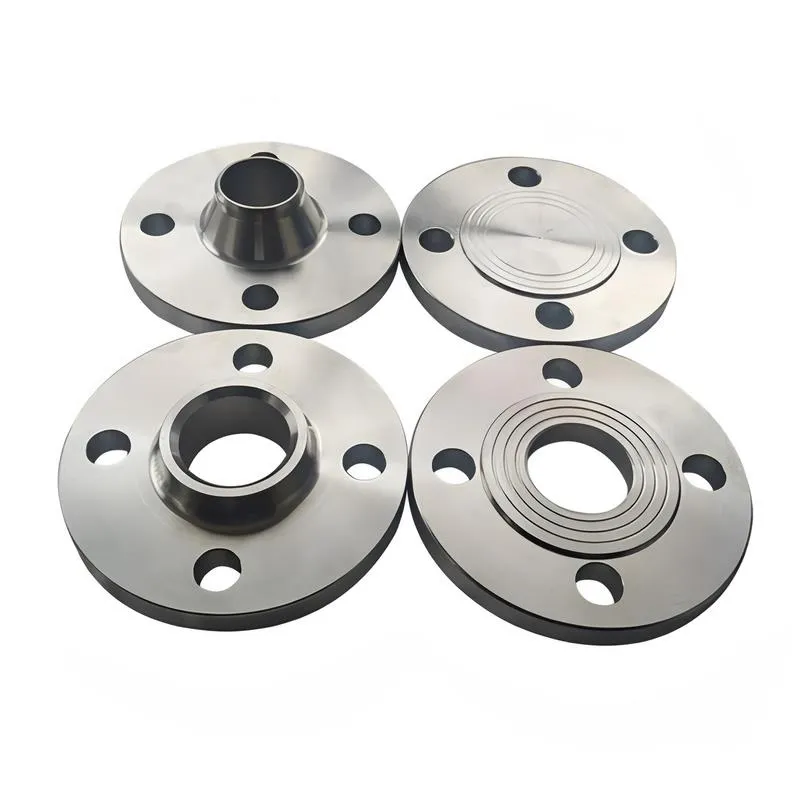
Plate Flat Welding Flange (PL), Necked Flat Welding Flange (SO), Necked Butt Welding Flange (WN), Integral Flange (IF), Socket Welding Flange (SW), Threaded Flange (Th), Butt Welding Ring Loose Flange (PJ/SE), Blind Flange (BL), Flat Welding Ring Loose Flange (PJ/PJ), and Lined Blind Flange (BL(s)).
2. **According to Petrochemical (SH) Industry Standards:** Flanges are classified as follows:
Threaded Flange (PL), Butt Welding Flange (WN), Flat Welding Flange (SO), Socket Welding Flange (SW), Loose Flange (LJ), and Blind Flange (no specific designation).
3. **According to Machinery (JB) Industry Standards:** Flanges are classified as follows:
Integral Flange, Butt Welding Flange, Plate Flat Welding Flange, Butt Welding Ring Plate Loose Flange, Flat Welding Ring Plate Loose Flange, Lap Joint Ring Plate Loose Flange, and Blind Flange.
4. **According to Connection Method/Type:** Flanges are classified as follows:
Plate Flat Welding Flange, Necked Flat Welding Flange, Necked Butt Welding Flange, Socket Welding Flange, Threaded Flange, Blind Flange, Necked Butt Welding Ring Loose Flange, Flat Welding Ring Loose Flange, Ring-Type Joint (RTJ) Flange and Blind Flange, Large-Diameter Plate Flange, Large-Diameter High-Neck Flange, Figure-8 Blind Plate, Butt Welding Ring Loose Flange, etc.
5. **According to the Component Being Connected:** Flanges can be classified into Vessel Flanges and Pipe Flanges.
6. **According to Structural Type:** Flanges include Integral Flanges, Threaded Flanges, Flat Welding Flanges, Butt Welding Flanges, Lap Joint (Loose/Swivel) Flanges, and Blind Flanges.
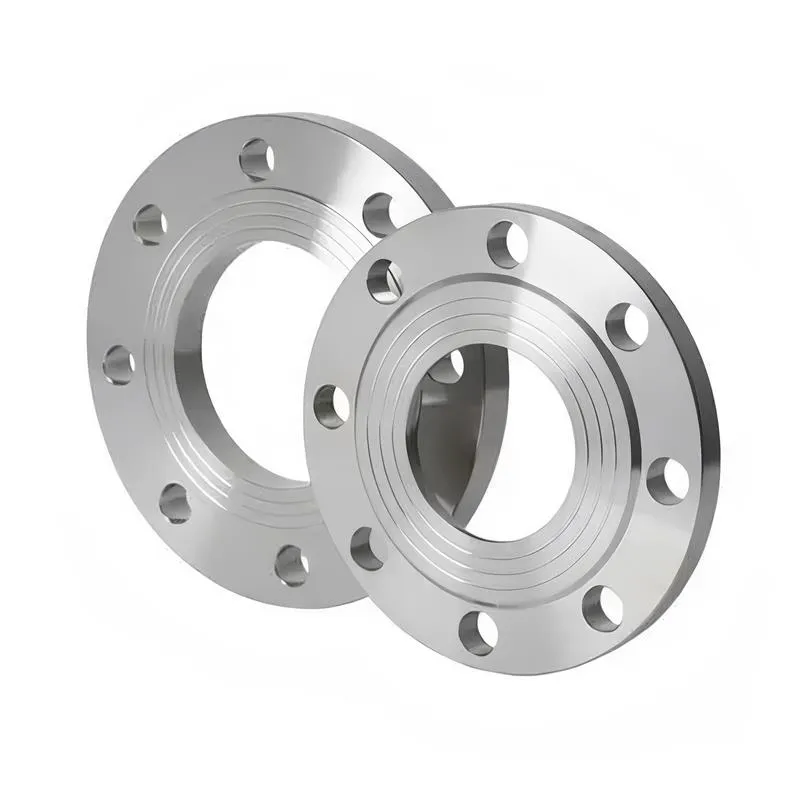
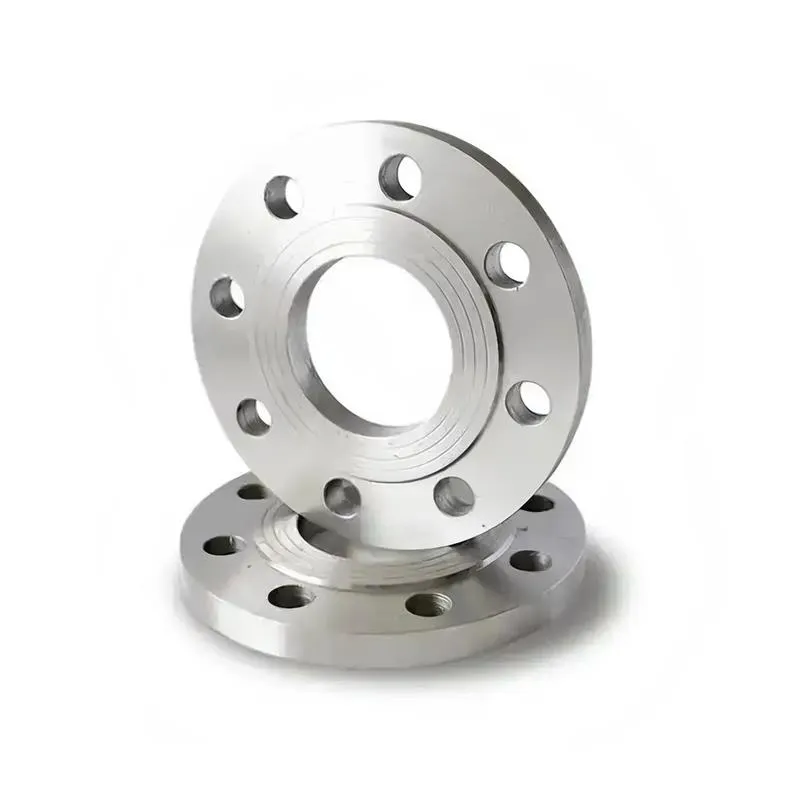
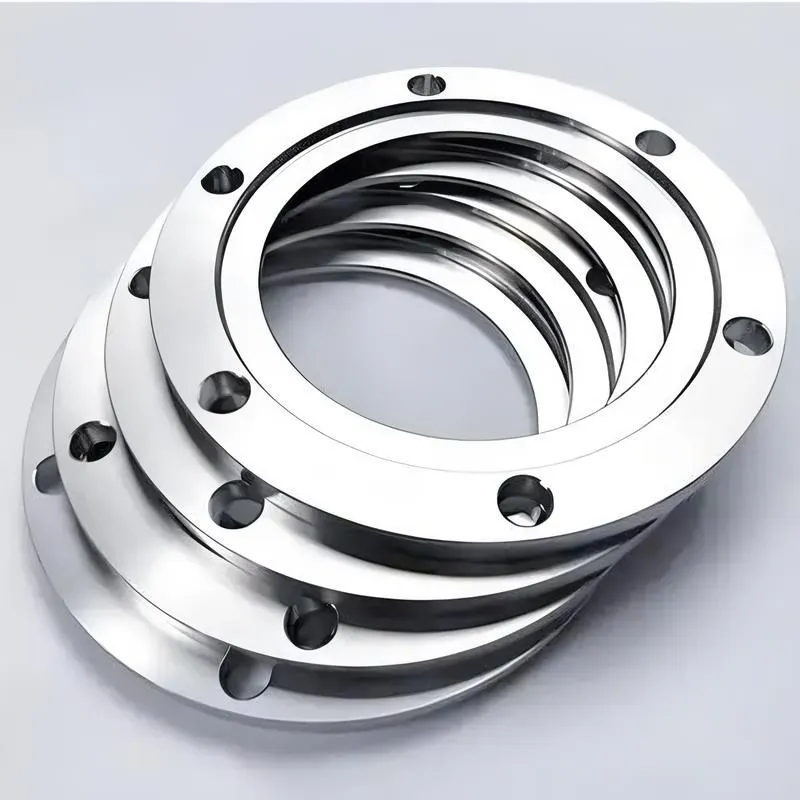
A flange—also referred to as a flange plate or rim—is a component used to connect shafts to one another, or, more commonly, to join the ends of pipes. Flanges are also utilized at the inlet and outlet ports of equipment to facilitate connections between two devices—for instance, the flange on a speed reducer. A "flange connection" or "flanged joint" refers to a detachable joint assembly comprising three interconnected elements—a flange, a gasket, and bolts—that together form a sealed structural unit. In the context of piping systems, a "pipe flange" specifically denotes a flange used for plumbing within the installation; when applied to equipment, it refers to the inlet or outlet flange of that specific device. Flanges feature a series of holes through which bolts are inserted to securely fasten the two flanges together, while a gasket placed between the flanges ensures a leak-proof seal. Flanges are broadly categorized into three types: threaded (screw-in) flanges, welded flanges, and clamp-type flanges. Flanges are invariably used in pairs; threaded flanges are suitable for low-pressure piping applications, whereas welded flanges are required for systems operating at pressures exceeding 4 kilograms per square centimeter. A sealing gasket is inserted between the two flange plates, which are then firmly secured using bolts. The thickness of a flange—as well as the specifications of the bolts used to fasten it—vary depending on the specific pressure rating required for the application. When connecting equipment such as water pumps or valves to piping systems, the corresponding connection points on these devices are often manufactured in the shape of a matching flange; this method of attachment is also referred to as a "flange connection." Generally, any connecting component that utilizes bolts to join and seal the perimeters of two flat surfaces—such as the joints in ventilation ducts—is termed a "flange"; such components may collectively be classified as "flange-type parts." However, since such a connection often constitutes merely a *portion* of a larger device—for instance, the interface between a flange and a water pump—it would be inappropriate to classify the entire water pump itself as a "flange-type part." Conversely, smaller components—such as valves—that feature such flanged interfaces may indeed be appropriately categorized as "flange-type parts."
-:-
For detailed product information, please contact sales.
-:
Schmolz + Bickenbach Formadur® 2312 (Ultra Holder) Plastic Mold Steel Flange Product Information
-:-
For detailed product information, please contact sales.
-:
Schmolz + Bickenbach Formadur® 2312 (Ultra Holder) Plastic Mold Steel Flange Synonyms
-:-
For detailed product information, please contact sales.
-:
Schmolz + Bickenbach Formadur® 2312 (Ultra Holder) Plastic Mold Steel Product Information
-:-
For detailed product information, please contact sales.
-:
# **SCHMOLZ + BICKENBACH Formadur® 2312 (Ultra Holder) | Premium Free-Machining Plastic Mold Steel**
## **Overview**
SCHMOLZ + BICKENBACH Formadur® 2312, marketed as **"Ultra Holder"**, is a specialized, pre-hardened plastic mold steel specifically engineered for applications requiring **exceptional machinability in large, thick mold bases and holder blocks**. Based on the 1.2312 standard, it incorporates a controlled sulfur addition to create manganese sulfide (MnS) inclusions that act as internal chip breakers, dramatically improving machinability while maintaining the essential core properties of a P20-type mold steel. This grade is the optimal choice for machining large volumes of material where productivity, tool life, and machining speed are paramount, such as in mold bases, backing plates, and support components.
## **Key Features:**
* **Superior Machinability:** The defining characteristic. Sulfur inclusions allow for higher cutting speeds (up to 30-50% faster than standard 1.2311), lower cutting forces, improved chip formation, and extended tool life.
* **High Productivity:** Reduced machining time for large mold components leads to significant cost savings in manufacturing.
* **Pre-Hardened Delivery:** Supplied at ~30-33 HRC, ready for machining, eliminating heat treatment delays and risks.
* **Good Stability:** Maintains adequate strength and stability for mold base applications.
* **Good Polishability & Texturing:** While not equal to ultra-low sulfur grades like 1.2311, it can achieve very good finishes suitable for non-optical surfaces.
* **Cost-Effective for Bulk Removal:** The ideal economic solution where large amounts of steel need to be removed to create pockets, guiding systems, and cooling channels.
* **Isotropic Machining Behavior:** Machines consistently in all directions due to the uniform distribution of MnS inclusions.
---
## **Material Specifications: Formadur® 2312 (Ultra Holder)**
### **1. Chemical Composition (wt%)**
| Element | Content Range (wt%) | Function & Benefit |
| :--- | :--- | :--- |
| **Carbon (C)** | 0.33 - 0.40 | Provides base hardness and strength. |
| **Silicon (Si)** | ≤ 0.40 | Deoxidizer. |
| **Manganese (Mn)** | 1.40 - 1.60 | Ensures sulfur is bound as MnS, preventing hot shortness; aids hardenability. |
| **Chromium (Cr)** | 1.80 - 2.00 | Provides hardenability and mild corrosion resistance. |
| **Molybdenum (Mo)** | 0.15 - 0.25 | Improves hardenability and strength. |
| **Sulfur (S)** | **0.040 - 0.060** | **Key Element.** Forms soft MnS inclusions that lubricate the cutting tool and break chips. |
| **Phosphorus (P)** | ≤ 0.030 | Controlled for ductility. |
**Critical Distinction from Formadur® 2311:**
The primary and deliberate difference is the **significantly higher sulfur content** (0.04-0.06% vs. ≤0.005% in 2311). This is what grants the "Ultra Holder" its free-machining properties.
### **2. Physical & Mechanical Properties (As-Delivered, Pre-Hardened)**
| Property | Typical Value | Condition / Notes |
| :--- | :--- | :--- |
| **Delivery Hardness** | 290 - 330 HB / 29 - 33 HRC | Brinell (HBW 10/3000). Uniform through large sections. |
| **Tensile Strength** | 950 - 1050 MPa | ~ |
| **0.2% Yield Strength** | ~800 - 900 MPa | ~ |
| **Modulus of Elasticity** | ~210,000 MPa | ~ |
| **Machinability Index** | **~110% (vs. 1.2311=100%)** | Allows for significantly higher cutting speeds and feeds. |
| **Thermal Conductivity** | ~36 W/m·K | Similar to other low-alloy steels. |
**Note on Toughness & Transverse Properties:**
The MnS inclusions, while beneficial for machining, create a degree of anisotropy. **Impact toughness and ductility in the transverse direction (perpendicular to the forging direction) are reduced compared to non-free-cutting grades like 1.2311.** This is a critical design consideration. Formadur® 2312 is not recommended for highly stressed, shock-loaded components but is perfectly suited for compressive-loaded mold bases and holders.
### **3. Machining & Finishing Properties**
| Operation | Performance & Recommendations |
| :--- | :--- |
| **Machinability** | **Outstanding (Primary Feature).** Optimize for productivity: use higher speeds and feeds. Positive rake carbide inserts are ideal. Expect excellent chip control. |
| **Polishing** | **Good to Very Good.** Can achieve SPI #2 (B1/B2) or better finishes. Not recommended for SPI A1 mirror finishes required for optical parts. The MnS inclusions can become visible during high-grade polishing. |
| **Texturing/Etching** | **Good.** Suitable for most standard texture applications (e.g., leather, orange peel). For very fine, precise textures, a lower-sulfur grade may be preferred. |
| **Electrical Discharge Machining (EDM)** | **Good.** Performs similarly to other P20-type steels in EDM operations. |
| **Grinding** | **Good.** No significant issues. Standard grinding practices apply. |
| **Welding** | **Possible but requires caution.** The sulfur content increases hot cracking susceptibility. Not generally recommended for weld repair of cavities. If necessary, use low-hydrogen electrodes, high preheat (300-400°C), and controlled post-weld cooling. |
---
## **Applicable International Standards & Cross-References**
| Standard | Designation | Note |
| :--- | :--- | :--- |
| **SCHMOLZ + BICKENBACH** | **Formadur® 2312 (Ultra Holder)** | Proprietary brand name emphasizing free-machining. |
| **DIN / EN / W-Nr.** | **1.2312** | Standard designation for free-machining plastic mold steel. |
| **ISO 4957** | **~** | Not a direct ISO equivalent; falls under alloy steel category. |
| **AISI / ASTM** | **P20+S, P20 Modified (Free-Machining)** | Common commercial designation. |
| **Uddeholm** | **IMPAX® Hi-Hard** | Similar free-machining, pre-hardened holder steel. |
| **Böhler / voestalpine** | **M238** | Similar grade (M200 Eco / Super). |
| **ThyssenKrupp** | **GS-312** | Similar grade. |
| **Japanese (JIS)** | **PX5** (can be supplied with S) | |
| **Chinese (GB)** | **3Cr2MoS** | The "S" suffix denotes the sulfur addition. |
---
## **Product Applications**
Formadur® 2312 is **specifically designed for non-cavity, structural components of plastic injection molds** where machinability is the primary concern.
**Primary Application Areas (Holder/Base Components):**
* **Mold Bases (Sets):** Standard and custom mold bases in large sizes.
* **Backing Plates / Support Plates:** For supporting cavity and core inserts.
* **Clamping Plates:** Top and bottom clamping plates.
* **Ejector Housing Plates:** Large plates requiring extensive pocket milling for ejector systems.
* **Guide Pillar & Bushing Plates:** Plates requiring precise boring and milling.
* **SPI/American Standard Mold Base Components.**
**Typical Components:**
* "A" and "B" plates
* Support pillars and plates
* Cavity retainer plates (for mounting pre-finished inserts)
* Large slider housings
**Not Recommended For:**
* **Cavity or Core Inserts** (especially for high-gloss or textured surfaces).
* **High-precision, fine-featured mold components.**
* **Components subject to high tensile or impact stresses.**
* **Molds for optical-grade parts** (use 1.2311 or similar).
* **Hot runner system components** subject to thermal cycling.
---
## **Processing Guidelines (Summary)**
1. **Material Selection:** Choose Formadur® 2312 specifically for mold bases, holders, and plates where heavy machining is required.
2. **Machining Strategy:** **Exploit its free-machining nature.** Use aggressive, productive machining parameters to reduce cycle times.
3. **Stress Relieving:** For very large or complex plates after heavy roughing, a stress relief anneal at **550-600°C** can be beneficial to ensure stability before finishing.
4. **Finishing:** Final machining and finishing to required tolerances.
5. **Assembly:** Fit with guide systems, inserts, and other components.
**Design Consideration:** Due to anisotropic properties, orient the component design so that the primary forging direction aligns with the main load path (typically compressive).
---
**Disclaimer:**
The information provided is based on typical data for SCHMOLZ + BICKENBACH Formadur® 2312. Properties can vary within specification ranges. This document is for informational purposes only and does not constitute a guarantee of properties or performance. The user is responsible for selecting the correct material for the intended application. Always consult the official manufacturer's documentation for the most current and detailed specifications.
-:-
For detailed product information, please contact sales.
-:
Schmolz + Bickenbach Formadur® 2312 (Ultra Holder) Plastic Mold Steel Specification
Dimensions
Size:
Diameter 20-1000 mm Length <7120 mm
Size:We can customized as required
Standard:
Per your request or drawing
We can customized as required
Properties(Theoretical)
Chemical Composition
-:-
For detailed product information, please contact sales.
-:
Schmolz + Bickenbach Formadur® 2312 (Ultra Holder) Plastic Mold Steel Properties
-:-
For detailed product information, please contact sales.
-:
Applications of Schmolz + Bickenbach Formadur® 2312 (Ultra Holder) Plastic Mold Steel Flange
-:-
For detailed product information, please contact sales.
-:
Chemical Identifiers Schmolz + Bickenbach Formadur® 2312 (Ultra Holder) Plastic Mold Steel Flange
-:-
For detailed product information, please contact sales.
-:
Packing of Schmolz + Bickenbach Formadur® 2312 (Ultra Holder) Plastic Mold Steel Flange
-:-
For detailed product information, please contact sales.
-:
Standard Packing:
-:-
For detailed product information, please contact sales.
-:
Typical bulk packaging includes palletized plastic 5 gallon/25 kg. pails, fiber and Steel Flange drums to 1 ton super sacks in full container (FCL) or truck load (T/L) quantities. Research and sample quantities and hygroscopic, oxidizing or other air sensitive materials may be packaged under argon or vacuum. Solutions are packaged in polypropylene, plastic or glass jars up to palletized 3591 gallon liquid totes Special package is available on request. E FORUs’ is carefully handled to minimize damage during storage and transportation and to preserve the quality of our products in their original condition