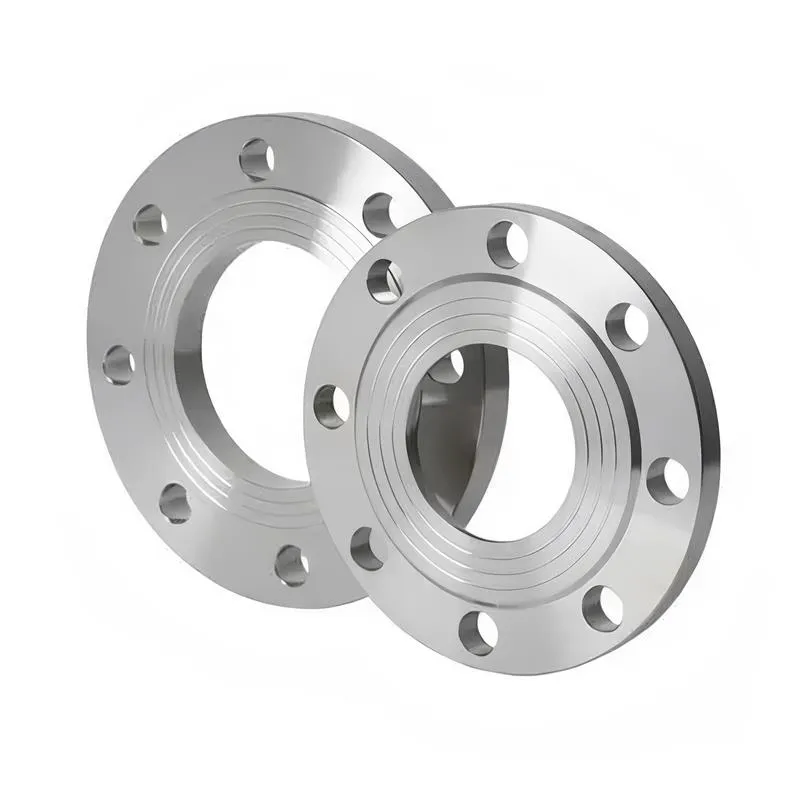
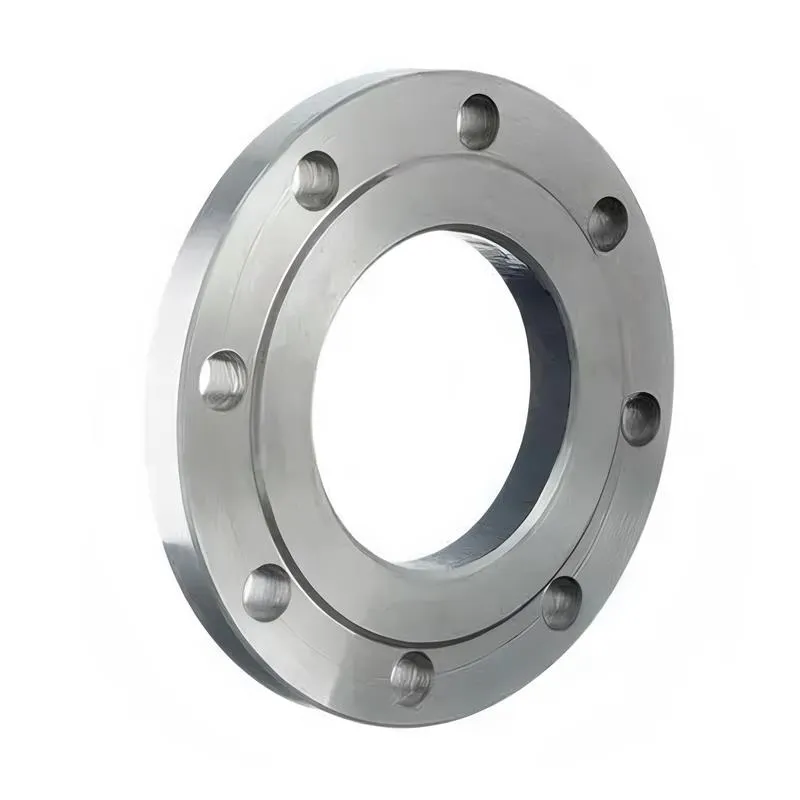
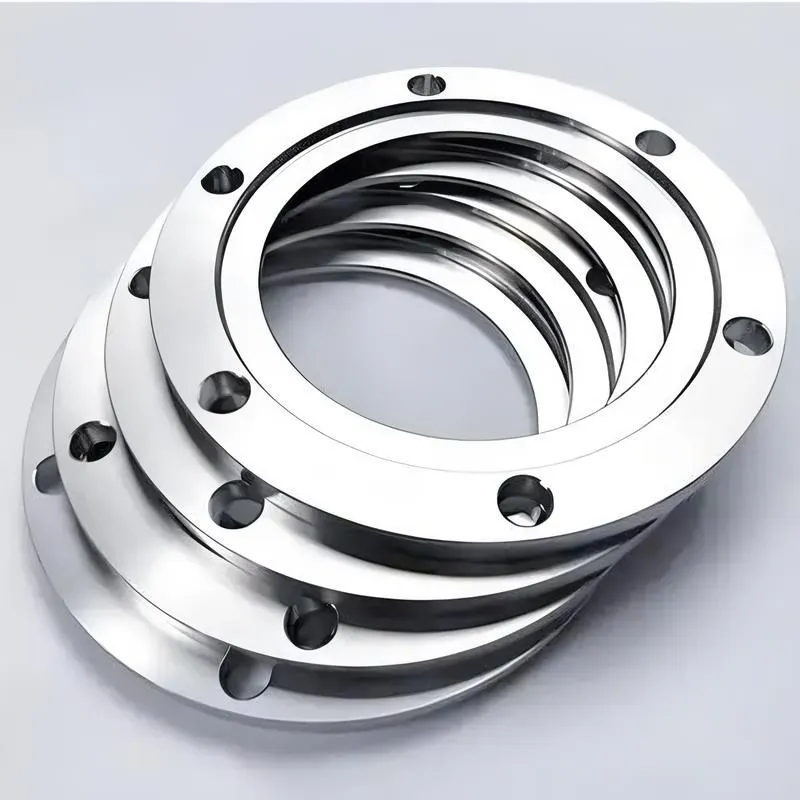
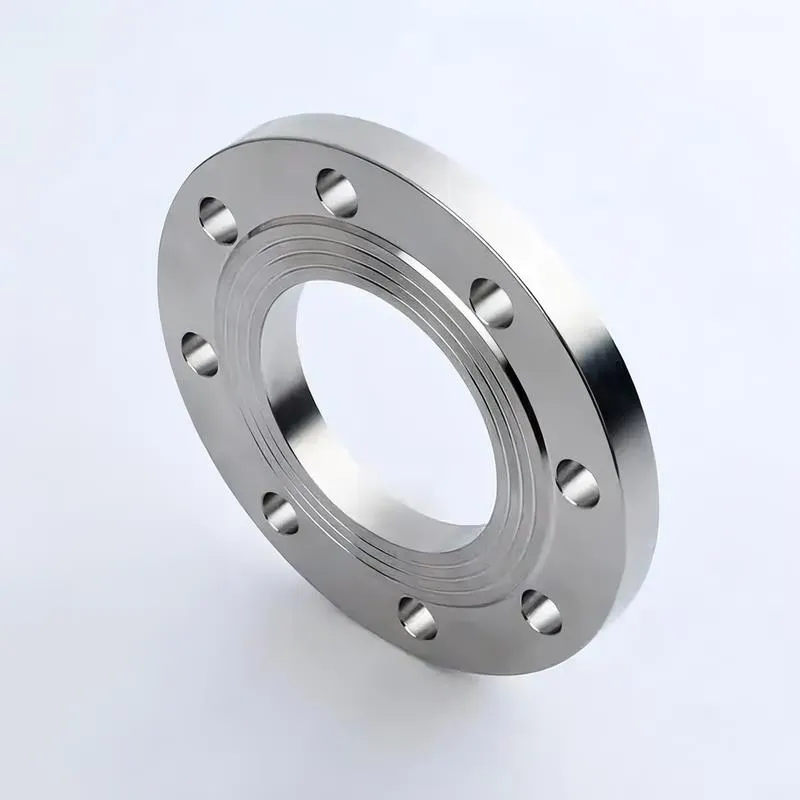
1,We Manufacturing processes are primarily classified into four types:
1:Forging,
2:Casting,
3:Cutting,
4:Rolling.
2,We can manufacture in accordance with these standards.
Standards:
GB Series (Chinese Standards), JB Series (Machinery Standards), HG Series (Chemical Industry Standards), ASME B16.5 (American Standards), BS4504 (British Standards), DIN (German Standards), and JIS (Japanese Standards).
Internationally, there are two primary systems of pipe flange standards: the European system, represented by the German DIN standards (including those of the former Soviet Union), and the American system, represented by the US ANSI pipe flange standards. Other common standards include: the Chinese Ministry of Machinery Industry standards (JB series), the Ministry of Chemical Industry standards (HG series), the Chinese National Standard *GB/T 9112–9124-2010 Steel Pipe Flanges*, as well as US standards (ASME B16.5), British standards (BS4504), German standards (DIN), Japanese standards (JIS), and marine standards (CBM), among others.
The nominal pressure ratings for the PN series are designated by "PN" and comprise the following nine levels: PN2.5, PN6, PN10, PN16, PN25, PN40, PN63, PN100, and PN160.
The nominal pressure ratings for the Class series are designated by "Class" and comprise the following six levels: Class150, Class300, Class600, Class900, Class1500, and Class2500.
Flange Classification
1. **According to Chemical Industry Standards:** Flanges are classified as follows:
Plate Flat Welding Flange (PL), Necked Flat Welding Flange (SO), Necked Butt Welding Flange (WN), Integral Flange (IF), Socket Welding Flange (SW), Threaded Flange (Th), Butt Welding Ring Loose Flange (PJ/SE), Blind Flange (BL), Flat Welding Ring Loose Flange (PJ/PJ), and Lined Blind Flange (BL(s)).
2. **According to Petrochemical (SH) Industry Standards:** Flanges are classified as follows:
Threaded Flange (PL), Butt Welding Flange (WN), Flat Welding Flange (SO), Socket Welding Flange (SW), Loose Flange (LJ), and Blind Flange (no specific designation).
3. **According to Machinery (JB) Industry Standards:** Flanges are classified as follows:
Integral Flange, Butt Welding Flange, Plate Flat Welding Flange, Butt Welding Ring Plate Loose Flange, Flat Welding Ring Plate Loose Flange, Lap Joint Ring Plate Loose Flange, and Blind Flange.
4. **According to Connection Method/Type:** Flanges are classified as follows:
Plate Flat Welding Flange, Necked Flat Welding Flange, Necked Butt Welding Flange, Socket Welding Flange, Threaded Flange, Blind Flange, Necked Butt Welding Ring Loose Flange, Flat Welding Ring Loose Flange, Ring-Type Joint (RTJ) Flange and Blind Flange, Large-Diameter Plate Flange, Large-Diameter High-Neck Flange, Figure-8 Blind Plate, Butt Welding Ring Loose Flange, etc.
5. **According to the Component Being Connected:** Flanges can be classified into Vessel Flanges and Pipe Flanges.
6. **According to Structural Type:** Flanges include Integral Flanges, Threaded Flanges, Flat Welding Flanges, Butt Welding Flanges, Lap Joint (Loose/Swivel) Flanges, and Blind Flanges.
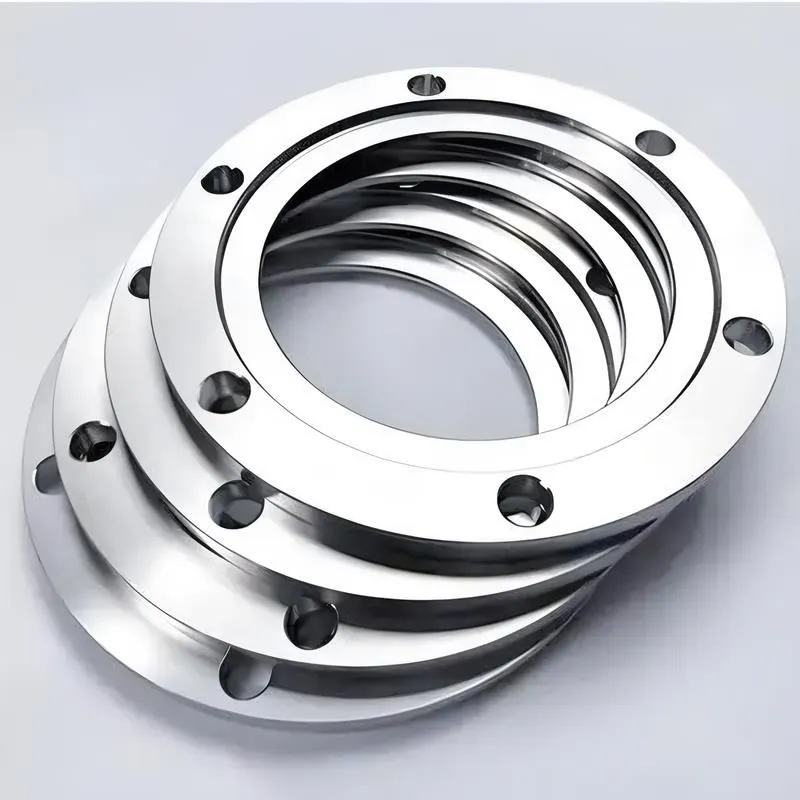
A flange—also referred to as a flange plate or rim—is a component used to connect shafts to one another, or, more commonly, to join the ends of pipes. Flanges are also utilized at the inlet and outlet ports of equipment to facilitate connections between two devices—for instance, the flange on a speed reducer. A "flange connection" or "flanged joint" refers to a detachable joint assembly comprising three interconnected elements—a flange, a gasket, and bolts—that together form a sealed structural unit. In the context of piping systems, a "pipe flange" specifically denotes a flange used for plumbing within the installation; when applied to equipment, it refers to the inlet or outlet flange of that specific device. Flanges feature a series of holes through which bolts are inserted to securely fasten the two flanges together, while a gasket placed between the flanges ensures a leak-proof seal. Flanges are broadly categorized into three types: threaded (screw-in) flanges, welded flanges, and clamp-type flanges. Flanges are invariably used in pairs; threaded flanges are suitable for low-pressure piping applications, whereas welded flanges are required for systems operating at pressures exceeding 4 kilograms per square centimeter. A sealing gasket is inserted between the two flange plates, which are then firmly secured using bolts. The thickness of a flange—as well as the specifications of the bolts used to fasten it—vary depending on the specific pressure rating required for the application. When connecting equipment such as water pumps or valves to piping systems, the corresponding connection points on these devices are often manufactured in the shape of a matching flange; this method of attachment is also referred to as a "flange connection." Generally, any connecting component that utilizes bolts to join and seal the perimeters of two flat surfaces—such as the joints in ventilation ducts—is termed a "flange"; such components may collectively be classified as "flange-type parts." However, since such a connection often constitutes merely a *portion* of a larger device—for instance, the interface between a flange and a water pump—it would be inappropriate to classify the entire water pump itself as a "flange-type part." Conversely, smaller components—such as valves—that feature such flanged interfaces may indeed be appropriately categorized as "flange-type parts."
-:-
For detailed product information, please contact sales.
-:
Schmolz + Bickenbach Formadur® PH X Superclean Plastic Mold Steel Flange Product Information
-:-
For detailed product information, please contact sales.
-:
Schmolz + Bickenbach Formadur® PH X Superclean Plastic Mold Steel Flange Synonyms
-:-
For detailed product information, please contact sales.
-:
Schmolz + Bickenbach Formadur® PH X Superclean Plastic Mold Steel Product Information
-:-
For detailed product information, please contact sales.
-:
# **SCHMOLZ + BICKENBACH Formadur® PH X Superclean | Premium Precipitation-Hardening Stainless Mold Steel**
## **Overview**
SCHMOLZ + BICKENBACH **Formadur® PH X Superclean** represents a technologically advanced class of mold steel, combining **martensitic stainless steel corrosion resistance with the unique advantages of precipitation hardening (PH)**. This proprietary, "Superclean" grade is produced via advanced secondary refining processes (typically Vacuum Induction Melting - VIM, or similar) to achieve extreme purity and homogeneity. Unlike conventional quench-and-temper steels, PH X attains its high strength and hardness through a low-temperature aging treatment after solution annealing, resulting in **minimal distortion, exceptional dimensional stability, and simplified heat treatment**. It is engineered for the most demanding precision plastic molds where dimensional accuracy, corrosion resistance, and superior polishability are critical.
## **Key Features:**
* **Precipitation Hardening Mechanism:** Hardens via aging at 480-560°C, not through martensitic quenching. This results in **negligible dimensional change (<0.05%)** and extremely low stress, ideal for complex, close-tolerance molds.
* **Superclean Microstructure:** Advanced refining ensures extreme purity (very low S, P, O, N), enabling **flawless optical polishability (SPI A1)** and excellent isotropic properties.
* **Excellent Corrosion Resistance:** Martensitic stainless matrix with ~13% Cr provides very good resistance to moisture, many acids, and mildly corrosive plastics (superior to P20 types, suitable for many applications requiring 1.2083/1.2316).
* **High Strength & Hardness:** Achieves high hardness (40-46 HRC typical) directly from the aging process, offering good wear resistance.
* **Simplified Heat Treatment:** Process involves only **Solution Annealing** (soft state for machining) followed by a single, low-temperature **Aging** treatment. Eliminates risks of quenching distortion, cracking, and the need for cryogenic treatment.
* **Excellent Machinability in Annealed State:** Softer and more uniform than pre-hardened steels, allowing for high-productivity machining.
* **Good Welding Characteristics:** Can be welded in the solution-annealed condition and re-aged with minimal loss of properties.
---
## **Material Specifications: Formadur® PH X Superclean**
### **1. Chemical Composition (wt%)**
| Element | Content Range (wt%) | Function & Benefit |
| :--- | :--- | :--- |
| **Carbon (C)** | ≤ 0.07 | **Very Low.** Minimizes carbide formation, ensuring toughness, weldability, and a uniform matrix for precipitation hardening. |
| **Chromium (Cr)** | 12.00 - 14.00 | Provides martensitic stainless corrosion resistance. |
| **Nickel (Ni)** | 4.00 - 6.00 | **Key PH element.** Promotes the formation of the martensitic matrix upon cooling from solution temperature and participates in age-hardening. |
| **Copper (Cu)** | 2.00 - 4.00 | **Primary hardening element.** Forms fine, coherent copper-rich precipitates during aging, responsible for the significant strength increase. |
| **Molybdenum (Mo)** | 0.50 - 1.50 | Enhances corrosion resistance (especially pitting), solid solution strengthening, and contributes to hardenability. |
| **Niobium (Nb)** / **Titanium (Ti)** | 0.10 - 0.40 (combined) | Forms stable carbides/nitrides, pinning grain boundaries for refinement and contributing to precipitation hardening. |
| **Manganese (Mn)** | ≤ 0.50 | Residual, kept low. |
| **Silicon (Si)** | ≤ 0.50 | Residual, kept low. |
| **Sulfur (S)** | **≤ 0.001** (Superclean) | **Ultra-low.** Critical for supreme polishability. |
| **Phosphorus (P)** | **≤ 0.015** (Superclean) | **Ultra-low.** Prevents embrittlement. |
**Metallurgy of Precipitation Hardening:**
1. **Solution Anneal (~1020-1050°C):** All alloying elements (Cu, Nb, etc.) are dissolved into a homogeneous austenitic solid solution.
2. **Cooling:** Transforms to a soft, low-carbon martensite or martensite-austenite matrix.
3. **Aging (480-560°C):** Fine, nanometer-scale precipitates (primarily rich in Cu) form uniformly throughout the matrix, creating internal strain fields that dramatically increase strength and hardness with minimal distortion.
### **2. Physical & Mechanical Properties**
#### **Condition A: Solution Annealed (Machining State)**
* **Hardness:** 28 - 34 HRC
* **Tensile Strength (Rm):** 900 - 1050 MPa
* **0.2% Yield Strength (Rp0.2):** 750 - 900 MPa
* **Elongation (A₅):** ≥ 15%
* **Machinability:** **Excellent** – Softer and more consistent than pre-hardened tool steels.
#### **Condition H: Aged (Final Service Condition)**
| Aging Temperature | Hardness (HRC) | Tensile Strength (MPa) | 0.2% Yield Strength (MPa) | Elongation (A₅) | Impact (J) |
| :--- | :--- | :--- | :--- | :--- | :--- |
| **480-500°C** | 44 - 46 | 1400 - 1550 | 1350 - 1500 | 8 - 12 | 25 - 35 |
| **510-530°C** | 42 - 44 | 1300 - 1450 | 1250 - 1400 | 10 - 14 | 30 - 40 |
| **540-560°C** | 40 - 42 | 1200 - 1350 | 1150 - 1300 | 12 - 16 | 35 - 50 |
**Typical Service Condition:** Aged to **44-46 HRC** for optimal strength/wear resistance balance.
#### **General Physical Properties (Aged Condition):**
* **Density:** ~7.8 g/cm³
* **Thermal Conductivity:** ~25 W/m·K (20°C)
* **Coefficient of Thermal Expansion:** ~10.8 x 10⁻⁶ /K (20-100°C)
* **Modulus of Elasticity:** ~190 GPa
* **Dimensional Change on Aging:** **< 0.05% (Linear)** – The defining advantage.
### **3. Special Properties & Comparison**
| Property | Formadur® PH X (Aged) | Conventional P20 (Pre-hard) | 1.2316 (Hardened) | Benefit of PH X |
| :--- | :--- | :--- | :--- | :--- |
| **Dimensional Stability** | **Exceptional** | Good | Good | **Enables ultra-precise, complex molds.** |
| **Distortion Risk** | **Very Low** | Low | Medium-High (during quench) | **Eliminates quenching risk.** |
| **Achievable Polish** | **SPI A1 (Optical)** | SPI B1 | SPI A2 | **Superclean purity enables flawless surfaces.** |
| **Corrosion Resistance** | **Very Good** | Poor | Excellent | Suitable for many corrosive environments. |
| **Heat Treatment Complexity** | **Simple (Age only)** | None (pre-hard) | Complex (Harden & Temper) | **Simplifies processing, reduces cost/risk.** |
### **4. Machining & Finishing Properties**
| Operation | Performance & Recommendations |
| :--- | :--- |
| **Machining (Solution Annealed)** | **Excellent.** Softer and more uniform than pre-hardened steels. Allows high metal removal rates, excellent surface finishes off the tool, and long tool life. Use carbide tools. |
| **Electrical Discharge Machining (EDM)** | **Excellent.** The clean, homogeneous structure allows for superb surface quality with minimal white layer. |
| **Grinding** | **Very Good.** Grinds easily. The consistent hardness and cleanliness prevent loading and ensure a fine finish. |
| **Polishing** | **Outstanding (Primary Feature).** The **Superclean** quality is designed for this. Achieves **SPI A1 mirror finishes** efficiently with minimal risk of pitting or inclusion pull-out. |
| **Texturing (All Methods)** | **Excellent.** The isotropic, homogeneous structure provides perfectly uniform results for chemical etching, laser texturing, and EDM texturing. |
| **Welding** | **Very Good (for a hardened steel).** Weld in the solution-annealed condition using matching or over-alloyed filler (e.g., 17-4PH type). Post-weld aging restores properties in the HAZ. |
---
## **International Standards & Cross-References**
| Category | Designation / Relation | Note |
| :--- | :--- | :--- |
| **SCHMOLZ + BICKENBACH** | **Formadur® PH X Superclean** | Proprietary, branded grade. |
| **Material Type** | **Precipitation-Hardening Stainless Steel** | General classification. |
| **Similar Generic Grades** | **17-4PH (AISI 630)** / **15-5PH** | Closest analogs in concept (Cr-Ni-Cu system), but PH X has optimized mold-specific chemistry and Superclean quality. |
| **DIN / EN** | **~1.4542 (X5CrNiCuNb16-4)** | Similar precipitation-hardening stainless steel standard. |
| **Competitor Analogs** | Uddeholm **CORRAX®** (similar PH concept), Böhler **M300 AM** (similar) | These are the main market alternatives for PH stainless mold steels. |
---
## **Heat Treatment Guidelines**
**The primary advantage of PH steel is its simple, two-step thermal cycle:**
1. **Solution Annealing (Mill Done or Post-Forging):**
* **Temperature:** 1020 - 1050°C.
* **Atmosphere:** Controlled or vacuum.
* **Cooling:** Rapid cool (air or forced air) to room temperature. This produces **Condition A** (soft, machinable).
* **Material is supplied in this Condition A.**
2. **Aging / Hardening (Done after final machining):**
* **Temperature:** 480 - 560°C (selected based on desired final hardness/toughness balance).
* **Time:** 4 - 6 hours (for mold-sized components).
* **Cooling:** Air cool.
* **Result:** Transforms to final **Condition H** (hardened, 40-46 HRC). **No quenching, no cryogenic treatment needed.**
**Important:** After heavy machining or EDM, a **stabilization treatment** (sometimes called "Condition S") at 550-580°C for 2-4 hours may be recommended to relieve machining stresses before final aging, ensuring maximum dimensional stability.
---
## **Product Applications**
Formadur® PH X Superclean is designed for **high-precision, high-surface-quality plastic injection molds** where dimensional control is as critical as material performance.
**Ideal Application Areas:**
* **Optical & Lens Molds:** For camera lenses, LED optics, light guides, where **sub-micron form accuracy and SPI A1 finishes** are mandatory.
* **Precision Engineering Components:** Connectors, micro-gears, medical device parts requiring tight tolerances.
* **Large, Complex Cavity Inserts:** Where the minimal distortion of PH X prevents mismatches, flashing, and dimensional drift in multi-cavity molds.
* **Molds with Critical Stack-Up Tolerances:** Molds with multiple sliding actions, lifters, and core pulls that must align perfectly after heat treatment.
* **Prototype & Bridge Tooling:** Where the excellent machinability reduces lead time, and the simple aging allows for rapid hardening without a full heat treat facility.
* **Molds for Mildly Corrosive Plastics:** Where corrosion resistance better than P20 is needed but full 1.2316 grade resistance is not required (e.g., some flame-retardant materials, in high-humidity environments).
**Typical Mold Components:**
* Master cavity and core blocks
* Complex, thin-walled inserts
* Mold components with deep ribs or intricate features prone to quenching distortion
* High-precision ejector sleeves and guide components
**Less Suitable For:**
* **Extreme abrasive wear applications** (e.g., >40% glass fiber) – maximum hardness is ~46 HRC.
* **Highly corrosive plastics** like PVC – a higher-Cr Mo-alloyed grade like 1.2316 is better.
* **Hot runner manifold plates** exposed to continuous high temperature – thermal stability of PH alloys may be less than tempered martensitic steels at very high temperatures.
---
## **Economic & Technical Justification**
**Why choose the premium PH X Superclean?**
1. **Risk Mitigation:** Eliminates the single biggest risk in mold making – **heat treatment distortion.** This saves costs on rework, salvage operations, and scrapped components.
2. **Lead Time Reduction:** Faster machining in the soft Condition A and a simple aging cycle shorten total manufacturing time.
3. **Performance Guarantee:** The **Superclean** quality guarantees successful polishing and texturing, avoiding costly surface defects.
4. **Lifecycle Cost:** For high-value, long-running production molds, the initial material premium is offset by reliability, longevity, and reduced maintenance.
**Selection Logic:** Choose PH X when **dimensional predictability and surface perfection are worth a premium over conventional hardening steels.** For the most corrosive or abrasive environments, other specialized grades may still be required.
---
**Disclaimer:**
The information provided is based on typical data for SCHMOLZ + BICKENBACH Formadur® PH X Superclean. This is a specialized, proprietary alloy. Properties can vary within specification ranges. This document is for informational purposes only and does not constitute a guarantee. For critical applications, **direct consultation with SCHMOLZ + BICKENBACH technical specialists is essential** to confirm suitability and obtain precise processing parameters. The "Superclean" quality is integral to achieving the stated polishability.
-:-
For detailed product information, please contact sales.
-:
Schmolz + Bickenbach Formadur® PH X Superclean Plastic Mold Steel Specification
Dimensions
Size:
Diameter 20-1000 mm Length <7127 mm
Size:We can customized as required
Standard:
Per your request or drawing
We can customized as required
Properties(Theoretical)
Chemical Composition
-:-
For detailed product information, please contact sales.
-:
Schmolz + Bickenbach Formadur® PH X Superclean Plastic Mold Steel Properties
-:-
For detailed product information, please contact sales.
-:
Applications of Schmolz + Bickenbach Formadur® PH X Superclean Plastic Mold Steel Flange
-:-
For detailed product information, please contact sales.
-:
Chemical Identifiers Schmolz + Bickenbach Formadur® PH X Superclean Plastic Mold Steel Flange
-:-
For detailed product information, please contact sales.
-:
Packing of Schmolz + Bickenbach Formadur® PH X Superclean Plastic Mold Steel Flange
-:-
For detailed product information, please contact sales.
-:
Standard Packing:
-:-
For detailed product information, please contact sales.
-:
Typical bulk packaging includes palletized plastic 5 gallon/25 kg. pails, fiber and Steel Flange drums to 1 ton super sacks in full container (FCL) or truck load (T/L) quantities. Research and sample quantities and hygroscopic, oxidizing or other air sensitive materials may be packaged under argon or vacuum. Solutions are packaged in polypropylene, plastic or glass jars up to palletized 3598 gallon liquid totes Special package is available on request. E FORUs’ is carefully handled to minimize damage during storage and transportation and to preserve the quality of our products in their original condition