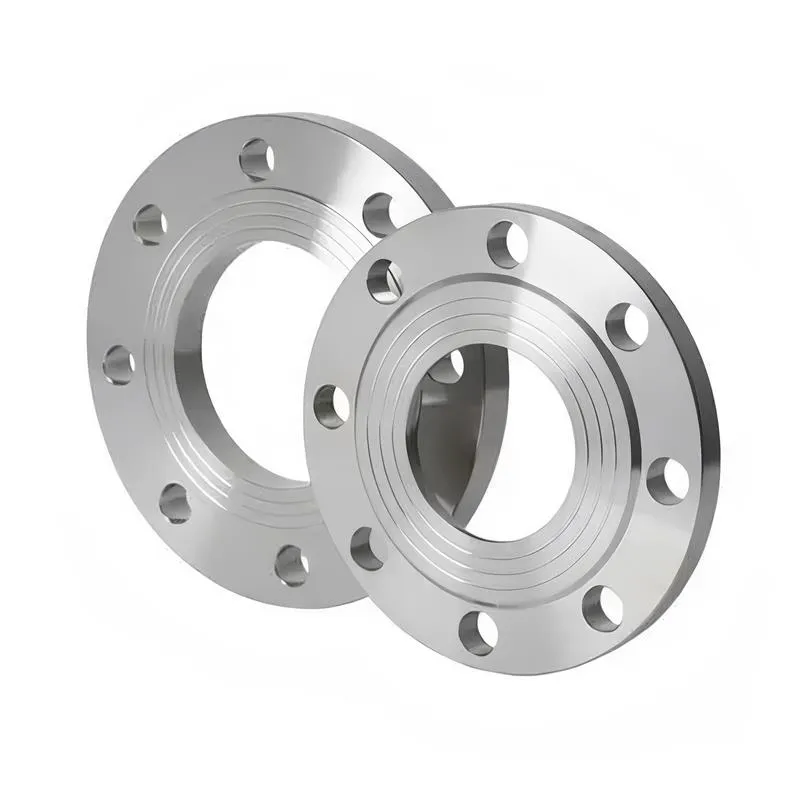
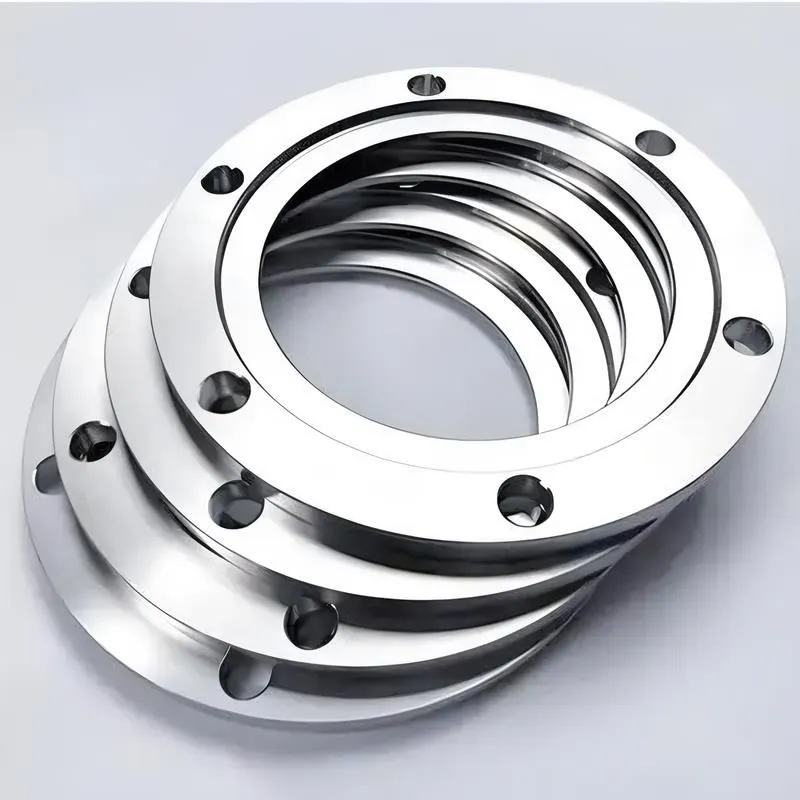
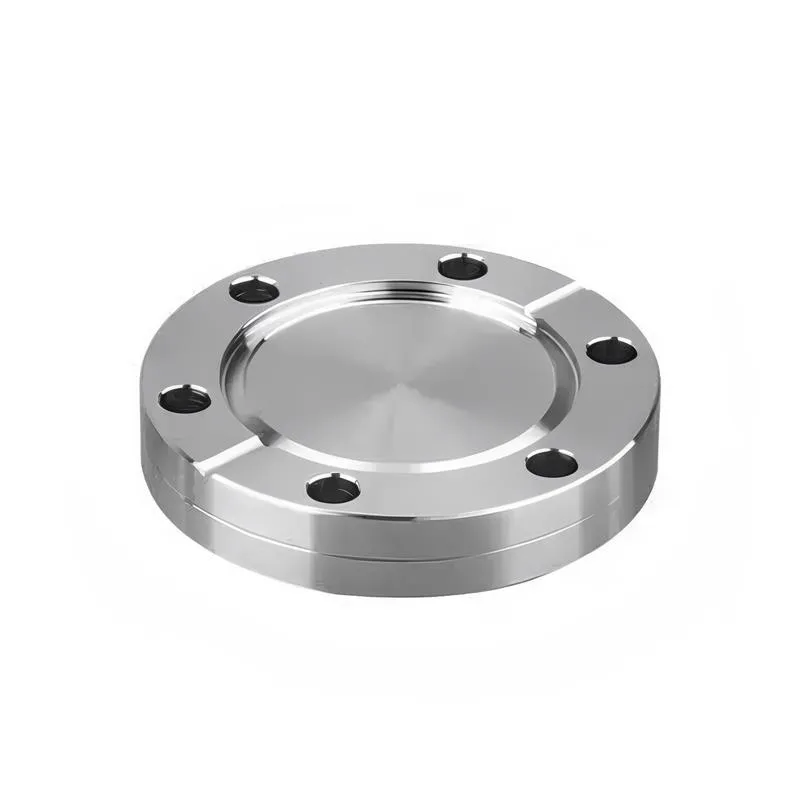
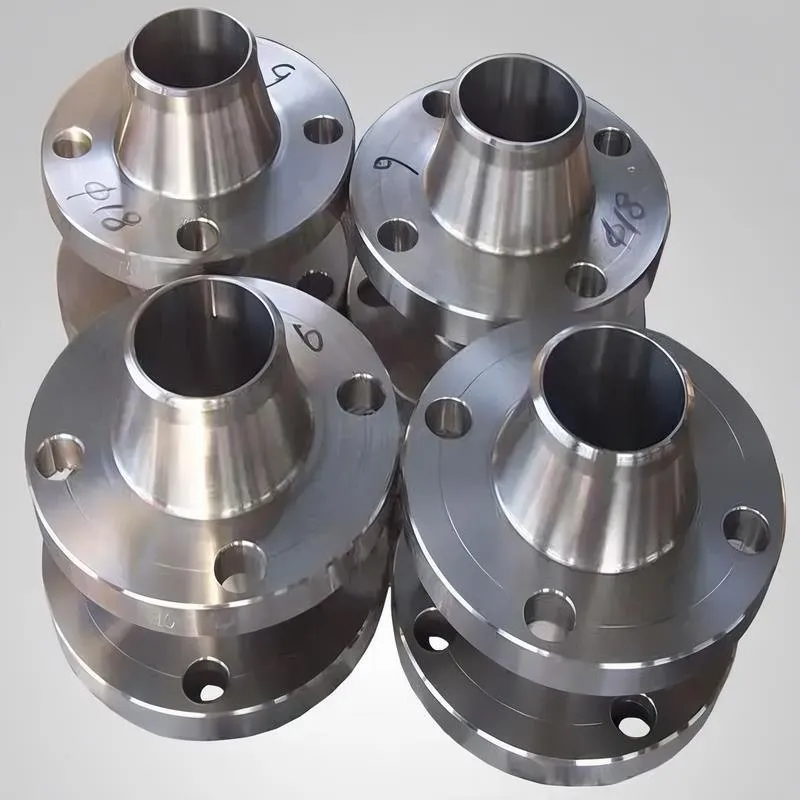
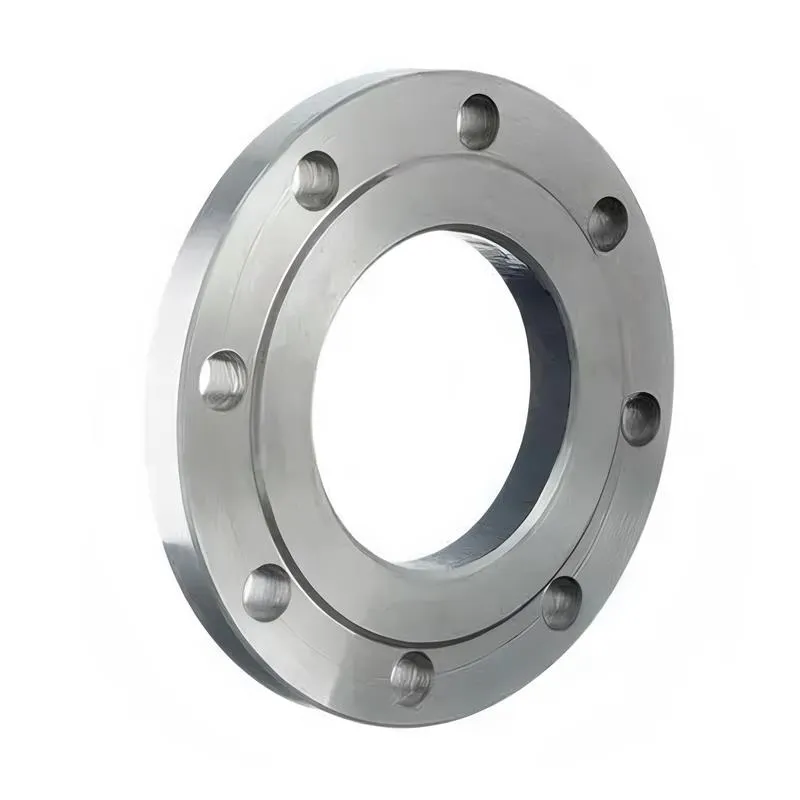
1,We Manufacturing processes are primarily classified into four types:
1:Forging,
2:Casting,
3:Cutting,
4:Rolling.
2,We can manufacture in accordance with these standards.
Standards:
GB Series (Chinese Standards), JB Series (Machinery Standards), HG Series (Chemical Industry Standards), ASME B16.5 (American Standards), BS4504 (British Standards), DIN (German Standards), and JIS (Japanese Standards).
Internationally, there are two primary systems of pipe flange standards: the European system, represented by the German DIN standards (including those of the former Soviet Union), and the American system, represented by the US ANSI pipe flange standards. Other common standards include: the Chinese Ministry of Machinery Industry standards (JB series), the Ministry of Chemical Industry standards (HG series), the Chinese National Standard *GB/T 9112–9124-2010 Steel Pipe Flanges*, as well as US standards (ASME B16.5), British standards (BS4504), German standards (DIN), Japanese standards (JIS), and marine standards (CBM), among others.
The nominal pressure ratings for the PN series are designated by "PN" and comprise the following nine levels: PN2.5, PN6, PN10, PN16, PN25, PN40, PN63, PN100, and PN160.
The nominal pressure ratings for the Class series are designated by "Class" and comprise the following six levels: Class150, Class300, Class600, Class900, Class1500, and Class2500.
Flange Classification
1. **According to Chemical Industry Standards:** Flanges are classified as follows:
Plate Flat Welding Flange (PL), Necked Flat Welding Flange (SO), Necked Butt Welding Flange (WN), Integral Flange (IF), Socket Welding Flange (SW), Threaded Flange (Th), Butt Welding Ring Loose Flange (PJ/SE), Blind Flange (BL), Flat Welding Ring Loose Flange (PJ/PJ), and Lined Blind Flange (BL(s)).
2. **According to Petrochemical (SH) Industry Standards:** Flanges are classified as follows:
Threaded Flange (PL), Butt Welding Flange (WN), Flat Welding Flange (SO), Socket Welding Flange (SW), Loose Flange (LJ), and Blind Flange (no specific designation).
3. **According to Machinery (JB) Industry Standards:** Flanges are classified as follows:
Integral Flange, Butt Welding Flange, Plate Flat Welding Flange, Butt Welding Ring Plate Loose Flange, Flat Welding Ring Plate Loose Flange, Lap Joint Ring Plate Loose Flange, and Blind Flange.
4. **According to Connection Method/Type:** Flanges are classified as follows:
Plate Flat Welding Flange, Necked Flat Welding Flange, Necked Butt Welding Flange, Socket Welding Flange, Threaded Flange, Blind Flange, Necked Butt Welding Ring Loose Flange, Flat Welding Ring Loose Flange, Ring-Type Joint (RTJ) Flange and Blind Flange, Large-Diameter Plate Flange, Large-Diameter High-Neck Flange, Figure-8 Blind Plate, Butt Welding Ring Loose Flange, etc.
5. **According to the Component Being Connected:** Flanges can be classified into Vessel Flanges and Pipe Flanges.
6. **According to Structural Type:** Flanges include Integral Flanges, Threaded Flanges, Flat Welding Flanges, Butt Welding Flanges, Lap Joint (Loose/Swivel) Flanges, and Blind Flanges.
A flange—also referred to as a flange plate or rim—is a component used to connect shafts to one another, or, more commonly, to join the ends of pipes. Flanges are also utilized at the inlet and outlet ports of equipment to facilitate connections between two devices—for instance, the flange on a speed reducer. A "flange connection" or "flanged joint" refers to a detachable joint assembly comprising three interconnected elements—a flange, a gasket, and bolts—that together form a sealed structural unit. In the context of piping systems, a "pipe flange" specifically denotes a flange used for plumbing within the installation; when applied to equipment, it refers to the inlet or outlet flange of that specific device. Flanges feature a series of holes through which bolts are inserted to securely fasten the two flanges together, while a gasket placed between the flanges ensures a leak-proof seal. Flanges are broadly categorized into three types: threaded (screw-in) flanges, welded flanges, and clamp-type flanges. Flanges are invariably used in pairs; threaded flanges are suitable for low-pressure piping applications, whereas welded flanges are required for systems operating at pressures exceeding 4 kilograms per square centimeter. A sealing gasket is inserted between the two flange plates, which are then firmly secured using bolts. The thickness of a flange—as well as the specifications of the bolts used to fasten it—vary depending on the specific pressure rating required for the application. When connecting equipment such as water pumps or valves to piping systems, the corresponding connection points on these devices are often manufactured in the shape of a matching flange; this method of attachment is also referred to as a "flange connection." Generally, any connecting component that utilizes bolts to join and seal the perimeters of two flat surfaces—such as the joints in ventilation ducts—is termed a "flange"; such components may collectively be classified as "flange-type parts." However, since such a connection often constitutes merely a *portion* of a larger device—for instance, the interface between a flange and a water pump—it would be inappropriate to classify the entire water pump itself as a "flange-type part." Conversely, smaller components—such as valves—that feature such flanged interfaces may indeed be appropriately categorized as "flange-type parts."
-:-
For detailed product information, please contact sales.
-:
Schmolz + Bickenbach CorroPlast® Plastic Mold Steel Flange Product Information
-:-
For detailed product information, please contact sales.
-:
Schmolz + Bickenbach CorroPlast® Plastic Mold Steel Flange Synonyms
-:-
For detailed product information, please contact sales.
-:
Schmolz + Bickenbach CorroPlast® Plastic Mold Steel Product Information
-:-
For detailed product information, please contact sales.
-:
# **SCHMOLZ + BICKENBACH CorroPlast® Series | Specialized Corrosion-Resistant Plastic Mold Steels**
## **Overview**
SCHMOLZ + BICKENBACH **CorroPlast®** represents a dedicated family of plastic mold steels engineered with **corrosion resistance as the primary design criterion**. This series encompasses a range of martensitic and precipitation-hardening stainless steels specifically optimized to withstand aggressive chemical environments encountered in the processing of corrosive plastics, exposure to acidic cooling water, humid workshop conditions, and stringent cleaning protocols. Unlike general-purpose mold steels with secondary corrosion resistance, CorroPlast® grades are formulated from the outset to provide long-term durability and surface integrity in chemically challenging molding applications, particularly in the medical, packaging, automotive, and electronics industries.
## **CorroPlast® Product Line Overview**
| Grade Designation | Metallurgical Class | Key Characteristic | Primary Corrosion Resistance Against |
|-------------------|---------------------|-------------------|--------------------------------------|
| **CorroPlast® 4162** | Martensitic Stainless | Standard Corrosion Resistance | Moisture, weak acids, general purpose |
| **CorroPlast® 4316** | Martensitic Stainless | Enhanced Pitting Resistance (Mo-alloyed) | PVC, flame-retardants, chloride-containing coolants |
| **CorroPlast® PH 4** | Precipitation Hardening (PH) | High Dimensional Stability | General corrosive environments with precision needs |
| **CorroPlast® UltraClean** | Martensitic/PH (ESR/VAR) | Ultimate Polishability & Cleanliness | Medical, optical, semiconductor-grade surfaces |
---
## **Detailed Material Specifications**
### **1. Chemical Composition (wt%) - Core Grades**
| Element | CorroPlast® 4162 | CorroPlast® 4316 | CorroPlast® PH 4 | Function in Corrosion Context |
|---------|------------------|------------------|------------------|------------------------------|
| **Carbon (C)** | 0.38-0.45 | 0.33-0.40 | ≤0.07 | Low C in PH/Cr-Mo grades enhances corrosion resistance |
| **Chromium (Cr)** | 12.5-13.5 | 15.0-17.0 | 12.0-14.0 | Forms passive Cr₂O₃ oxide layer |
| **Molybdenum (Mo)** | 0.15-0.25 | 1.0-1.3 | 0.5-1.5 | **Critical for pitting resistance** in chloride environments |
| **Nickel (Ni)** | - | - | 4.0-6.0 | Stabilizes austenite, enhances PH response |
| **Copper (Cu)** | - | - | 2.0-3.5 | Primary precipitation hardening element |
| **Vanadium (V)** | 0.10-0.20 | - | - | Grain refinement |
| **Sulfur (S)** | ≤0.005 | ≤0.005 | ≤0.001 | Minimized for polishability |
| **PREN* Value** | ~13-14 | **~19-21** | ~18-20 | **Pitting Resistance Equivalent Number** |
*PREN = %Cr + 3.3×%Mo + 16×%N (higher = better pitting resistance)
### **2. Mechanical Properties by Condition**
#### **Through-Hardened Martensitic Grades (4162, 4316):**
| Condition | Hardness (HRC) | Tensile Strength (MPa) | Yield Strength (MPa) | Impact (J) |
|-----------|----------------|------------------------|----------------------|------------|
| **Annealed** | ≤230 HB | 700-850 | 550-700 | 40-60 |
| **Hardened (Quenched)** | 50-54 | 1850-2100 | 1650-1900 | 12-20 |
| **Tempered @ 250°C** | 52-54 | 1950-2200 | 1750-2000 | 10-18 |
| **Tempered @ 400°C** | 48-50 | 1650-1850 | 1450-1650 | 18-28 |
#### **Precipitation-Hardening Grade (PH 4):**
| Treatment Stage | Hardness (HRC) | Tensile (MPa) | 0.2% Yield (MPa) | Elongation (%) |
|-----------------|----------------|---------------|-------------------|----------------|
| **Solution Annealed** | 28-34 | 900-1100 | 750-950 | ≥15 |
| **Aged @ 480°C** | 44-46 | 1400-1600 | 1350-1550 | 8-12 |
| **Aged @ 540°C** | 40-42 | 1200-1400 | 1150-1350 | 12-16 |
#### **Special Properties:**
| Property | CorroPlast® 4162 | CorroPlast® 4316 | CorroPlast® PH 4 |
|----------|------------------|------------------|------------------|
| **Max Polish (SPI)** | A2-B1 | A1-A2 | A1 (UltraClean: A1 Mirror) |
| **Distortion on HT** | Moderate | Moderate | **<0.05%** |
| **Thermal Conductivity** | 25 W/m·K | 24 W/m·K | 26 W/m·K |
| **Coefficient of Expansion** | 10.5×10⁻⁶/K | 10.5×10⁻⁶/K | 10.8×10⁻⁶/K |
### **3. Corrosion Performance Data**
#### **Laboratory Test Results (ASTM Standards):**
| Test Method | CorroPlast® 4162 | CorroPlast® 4316 | 1.2311 (P20) Reference |
|-------------|------------------|------------------|------------------------|
| **Salt Spray (ASTM B117)** | 96-120 h to red rust | 240-360 h to red rust | 24-48 h to red rust |
| **Potentiodynamic Polarization** | Eₚᵢₜ = +250 mV | Eₚᵢₜ = **+450 mV** | Eₚᵢₜ = -150 mV |
| **Weight Loss in 5% HCl** | 0.8-1.2 g/m²·h | 0.2-0.5 g/m²·h | 8-12 g/m²·h |
#### **Plastic-Specific Chemical Resistance:**
| Plastic Type | Corrosive Agent | 4162 Performance | 4316 Performance |
|--------------|-----------------|------------------|------------------|
| **PVC** | HCl gas/moisture | Good | **Excellent** |
| **Flame-Retardant ABS/PC** | Brominated compounds | Fair-Good | **Excellent** |
| **POM** | Formic acid | Good | Very Good |
| **Reinforced PA** | Hydrolysis acids | Good | Very Good |
| **All plastics** | Acidic condensation | Good | **Excellent** |
### **4. Machining & Processing Characteristics**
#### **Machinability Index (vs. 1.2311=100%):**
| Operation | 4162 (Annealed) | 4316 (Annealed) | PH 4 (Solution Ann.) |
|-----------|-----------------|-----------------|----------------------|
| **Turning** | 85% | 80% | 110% |
| **Milling** | 80% | 75% | 105% |
| **Drilling** | 75% | 70% | 100% |
| **EDM Performance** | Very Good | Excellent | Excellent |
| **Grinding** | Good | Good | Very Good |
#### **Polishing & Texturing:**
- **Standard Grades:** Capable of SPI A2-B1 finishes with proper technique
- **UltraClean Variants:** Designed for SPI A1 optical finishes with 80% reduction in polishing time vs. standard grades
- **Texturing:** Uniform results with chemical, laser, and EDM methods; UltraClean provides superior pattern fidelity
---
## **International Standards & Equivalents**
### **Standard Cross-References:**
| CorroPlast® Grade | DIN/W-Nr. | AISI/UNS | ISO Standard | Common Equivalents |
|-------------------|-----------|----------|--------------|-------------------|
| **4162** | 1.2085 Mod | 420 Mod | X40Cr14 | Thyssen GS-383 |
| **4316** | 1.2316 | Custom | X36CrMo17 | Uddeholm STAVAX® |
| **PH 4** | 1.4542 Mod | 17-4PH Mod | - | Böhler M300 AM |
| **UltraClean** | ESR/VAR variants | - | - | Specialty grades |
### **Industry Certifications:**
- **Medical:** ISO 13485 compliant material traceability
- **Food Contact:** EU 10/2011, FDA CFR 21 compliance documentation available
- **Aerospace:** NADCAP accreditation for specific processing
- **Quality:** EN 10204 3.1/3.2 certification standard
---
## **Application Guidelines**
### **Industry-Specific Applications:**
#### **Medical & Pharmaceutical:**
- **Injection Molds:** For disposables, device housings, labware
- **Requirements:** Cleanability, sterilization resistance (autoclave, chemical), non-contaminating surfaces
- **Recommended Grades:** 4316 UltraClean, PH 4 UltraClean
#### **Packaging:**
- **Thin-Wall Containers:** PET preforms, food packaging
- **Challenges:** Acidic food residues, cleaning chemicals, high humidity
- **Recommended Grades:** 4316, 4162 for less aggressive environments
#### **Automotive:**
- **Interior/Exterior:** Lens housings, connectors under-hood components
- **Challenges:** Condensation, road salts, chemical exposure
- **Recommended Grades:** 4316 for critical components, 4162 for general use
#### **Electronics & Consumer:**
- **High-Gloss Housings:** Mobile devices, wearables, appliances
- **Requirements:** Surface perfection, corrosion-free operation
- **Recommended Grades:** 4316 UltraClean, PH 4 UltraClean
### **Component-Specific Recommendations:**
| Mold Component | Critical Requirement | Primary Choice | Alternative |
|----------------|---------------------|----------------|-------------|
| **Cavity/Core Inserts** | Corrosion + Polish | 4316 UltraClean | PH 4 UltraClean |
| **Hot Runner Manifolds** | Steam/Water corrosion | 4316 | PH 4 |
| **Ejector System** | Friction + Corrosion | 4316 | 4162 (coated) |
| **Mold Base/Plates** | General protection | 4162 | Coated P20 |
| **Slide/Lifter Components** | Wear + Corrosion | 4316 (nitrided) | - |
### **Failure Mode Prevention:**
| Failure Mode | Cause | CorroPlast® Solution |
|-------------|-------|----------------------|
| **Pitting Corrosion** | Chloride ions in water | Mo-alloyed 4316 (high PREN) |
| **Uniform Attack** | Acidic plastic breakdown | All grades (Cr passive layer) |
| **Crevice Corrosion** | Stagnant water in gaps | 4316 (Mo improves resistance) |
| **Stress Corrosion** | Tensile stress + corrodent | PH 4 (lower residual stress) |
| **Erosion-Corrosion** | Abrasive filled plastics | Hardened grades (50+ HRC) |
---
## **Processing & Maintenance Guidelines**
### **Heat Treatment Specifications:**
#### **For Martensitic Grades (4162, 4316):**
- **Annealing:** 780-820°C, slow furnace cool
- **Hardening:** 1000-1020°C (4316), 980-1000°C (4162), air/oil quench
- **Tempering:** 180-500°C based on hardness requirements
- **Stress Relief:** 600-650°C after rough machining
#### **For PH Grade (PH 4):**
- **Solution Annealing:** 1020-1050°C, air cool (condition A)
- **Aging:** 480-560°C for 4-6 hours (condition H)
- **Stabilization:** 550-580°C optional for stress relief
### **Surface Enhancement Options:**
| Treatment | Suitable Grades | Surface Hardness | Corrosion Benefit |
|-----------|----------------|------------------|-------------------|
| **Nitriding** | 4162, 4316 | 800-1100 HV | Slight improvement |
| **PVD Coating** | All grades | 2000-3000 HV | Significant barrier |
| **Passivation** | All grades | - | Enhances Cr oxide layer |
| **Electropolishing** | UltraClean grades | - | Removes embedded particles |
### **Maintenance Protocols:**
- **Cleaning:** Neutral pH cleaners recommended
- **Storage:** Climate-controlled with desiccants
- **Inspection:** Regular borescope examination of water lines
- **Reconditioning:** Light repolishing possible on UltraClean grades
---
## **Economic & Technical Justification**
### **Total Cost of Ownership Analysis:**
| Cost Factor | CorroPlast® vs. Standard P20 | Payback Period |
|-------------|-------------------------------|----------------|
| **Material Premium** | +40-80% | - |
| **Extended Mold Life** | 2-3× longer | 6-12 months |
| **Reduced Downtime** | 50-70% less corrosion-related | Immediate |
| **Maintenance Savings** | 60-80% lower | 3-6 months |
| **Quality Improvement** | Reduced part contamination | Ongoing |
### **Selection Decision Matrix:**
| Application Characteristic | Priority Level | Recommended Approach |
|----------------------------|---------------|----------------------|
| **Highly corrosive plastic** | Critical | 4316 or PH 4 |
| **Medical/optical surfaces** | Critical | UltraClean variant |
| **High precision required** | High | PH 4 (minimal distortion) |
| **Moderate corrosion risk** | Medium | 4162 or coated P20 |
| **Budget constrained** | High | Standard 4162 |
### **Validation Testing Protocol:**
1. **Material Certification:** Verify PREN value ≥ required threshold
2. **Process Validation:** Trial heat treatment on test coupons
3. **Corrosion Testing:** 240-hour salt spray test per ASTM B117
4. **Application Testing:** Mold trial with corrosive plastic
5. **Long-term Monitoring:** 6-month performance review
---
## **Technical Support & Services**
SCHMOLZ + BICKENBACH provides:
- **Material Selection Consulting:** Application-specific grade recommendations
- **Heat Treatment Protocols:** Customized for component geometry
- **Failure Analysis:** Corrosion investigation and remediation
- **Process Validation:** Support for medical/food certification
- **Training:** Corrosion prevention workshops
---
**Disclaimer:** The information presented herein is based on typical properties of SCHMOLZ + BICKENBACH CorroPlast® grades. Actual performance depends on specific chemical environments, processing conditions, maintenance practices, and operational parameters. This document is for technical reference only and does not constitute a warranty or specification. For critical applications, especially in regulated industries, conduct comprehensive testing under actual use conditions. Material selection should be made in consultation with corrosion engineering specialists. CorroPlast® is a registered trademark of SCHMOLZ + BICKENBACH Group. All specifications subject to change without notice.
-:-
For detailed product information, please contact sales.
-:
Schmolz + Bickenbach CorroPlast® Plastic Mold Steel Specification
Dimensions
Size:
Diameter 20-1000 mm Length <7128 mm
Size:We can customized as required
Standard:
Per your request or drawing
We can customized as required
Properties(Theoretical)
Chemical Composition
-:-
For detailed product information, please contact sales.
-:
Schmolz + Bickenbach CorroPlast® Plastic Mold Steel Properties
-:-
For detailed product information, please contact sales.
-:
Applications of Schmolz + Bickenbach CorroPlast® Plastic Mold Steel Flange
-:-
For detailed product information, please contact sales.
-:
Chemical Identifiers Schmolz + Bickenbach CorroPlast® Plastic Mold Steel Flange
-:-
For detailed product information, please contact sales.
-:
Packing of Schmolz + Bickenbach CorroPlast® Plastic Mold Steel Flange
-:-
For detailed product information, please contact sales.
-:
Standard Packing:
-:-
For detailed product information, please contact sales.
-:
Typical bulk packaging includes palletized plastic 5 gallon/25 kg. pails, fiber and Steel Flange drums to 1 ton super sacks in full container (FCL) or truck load (T/L) quantities. Research and sample quantities and hygroscopic, oxidizing or other air sensitive materials may be packaged under argon or vacuum. Solutions are packaged in polypropylene, plastic or glass jars up to palletized 3599 gallon liquid totes Special package is available on request. E FORUs’ is carefully handled to minimize damage during storage and transportation and to preserve the quality of our products in their original condition