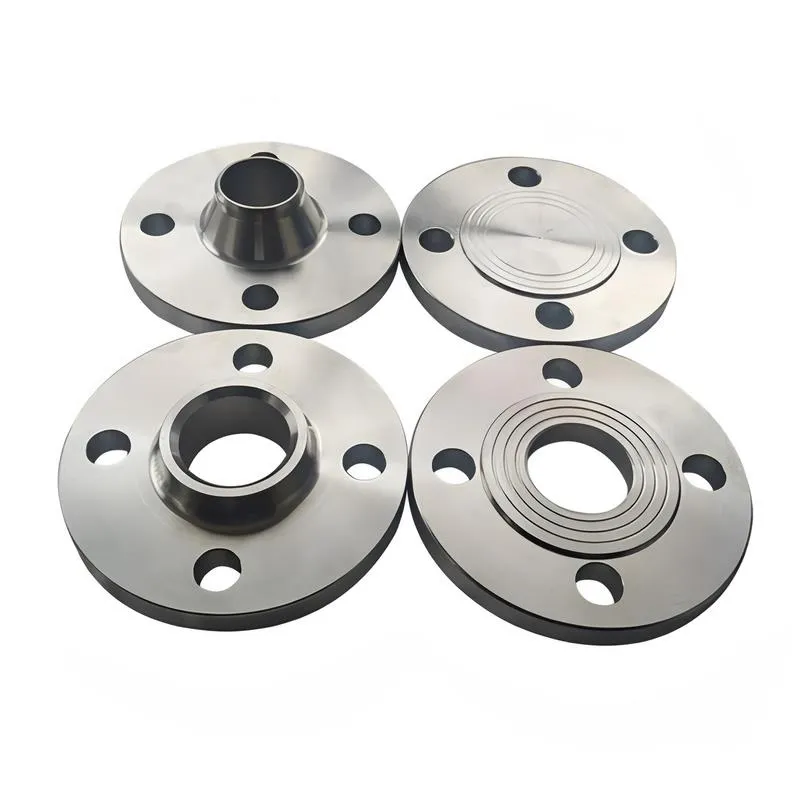
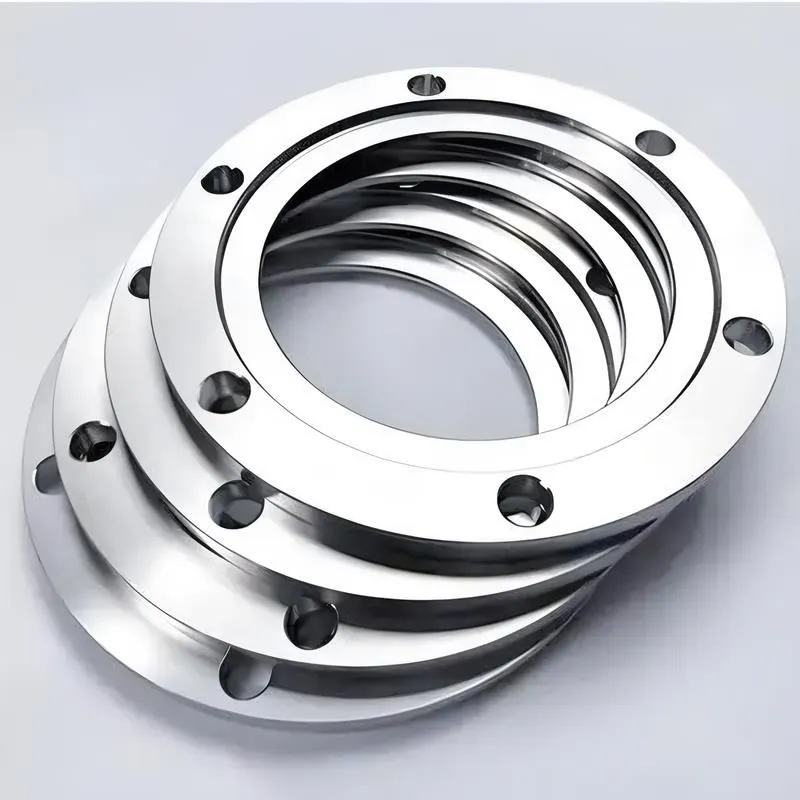
1,We Manufacturing processes are primarily classified into four types:
1:Forging,
2:Casting,
3:Cutting,
4:Rolling.
2,We can manufacture in accordance with these standards.
Standards:
GB Series (Chinese Standards), JB Series (Machinery Standards), HG Series (Chemical Industry Standards), ASME B16.5 (American Standards), BS4504 (British Standards), DIN (German Standards), and JIS (Japanese Standards).
Internationally, there are two primary systems of pipe flange standards: the European system, represented by the German DIN standards (including those of the former Soviet Union), and the American system, represented by the US ANSI pipe flange standards. Other common standards include: the Chinese Ministry of Machinery Industry standards (JB series), the Ministry of Chemical Industry standards (HG series), the Chinese National Standard *GB/T 9112–9124-2010 Steel Pipe Flanges*, as well as US standards (ASME B16.5), British standards (BS4504), German standards (DIN), Japanese standards (JIS), and marine standards (CBM), among others.
The nominal pressure ratings for the PN series are designated by "PN" and comprise the following nine levels: PN2.5, PN6, PN10, PN16, PN25, PN40, PN63, PN100, and PN160.
The nominal pressure ratings for the Class series are designated by "Class" and comprise the following six levels: Class150, Class300, Class600, Class900, Class1500, and Class2500.
Flange Classification
1. **According to Chemical Industry Standards:** Flanges are classified as follows:
Plate Flat Welding Flange (PL), Necked Flat Welding Flange (SO), Necked Butt Welding Flange (WN), Integral Flange (IF), Socket Welding Flange (SW), Threaded Flange (Th), Butt Welding Ring Loose Flange (PJ/SE), Blind Flange (BL), Flat Welding Ring Loose Flange (PJ/PJ), and Lined Blind Flange (BL(s)).
2. **According to Petrochemical (SH) Industry Standards:** Flanges are classified as follows:
Threaded Flange (PL), Butt Welding Flange (WN), Flat Welding Flange (SO), Socket Welding Flange (SW), Loose Flange (LJ), and Blind Flange (no specific designation).
3. **According to Machinery (JB) Industry Standards:** Flanges are classified as follows:
Integral Flange, Butt Welding Flange, Plate Flat Welding Flange, Butt Welding Ring Plate Loose Flange, Flat Welding Ring Plate Loose Flange, Lap Joint Ring Plate Loose Flange, and Blind Flange.
4. **According to Connection Method/Type:** Flanges are classified as follows:
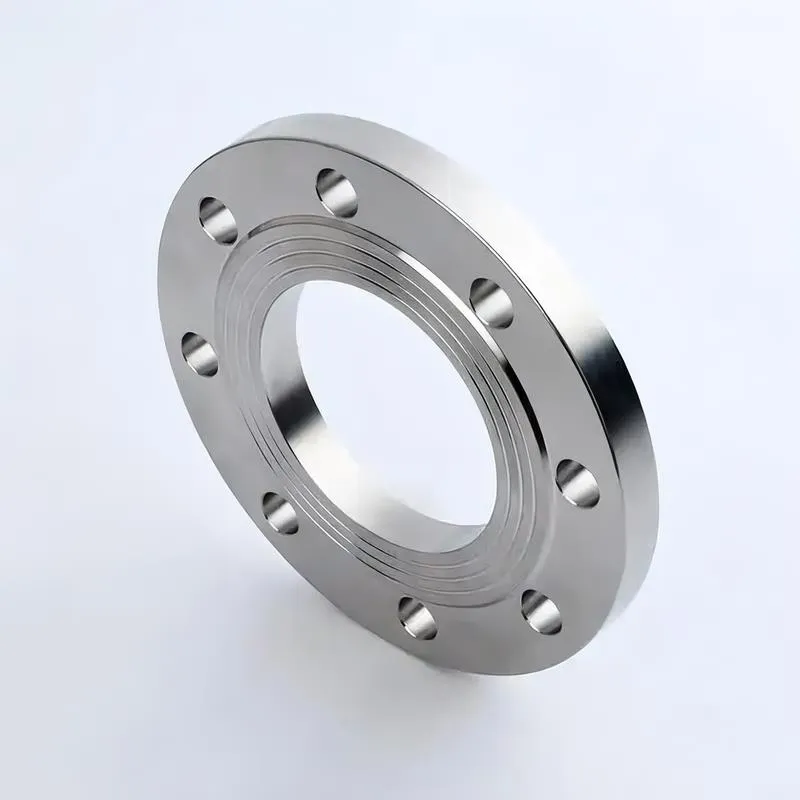
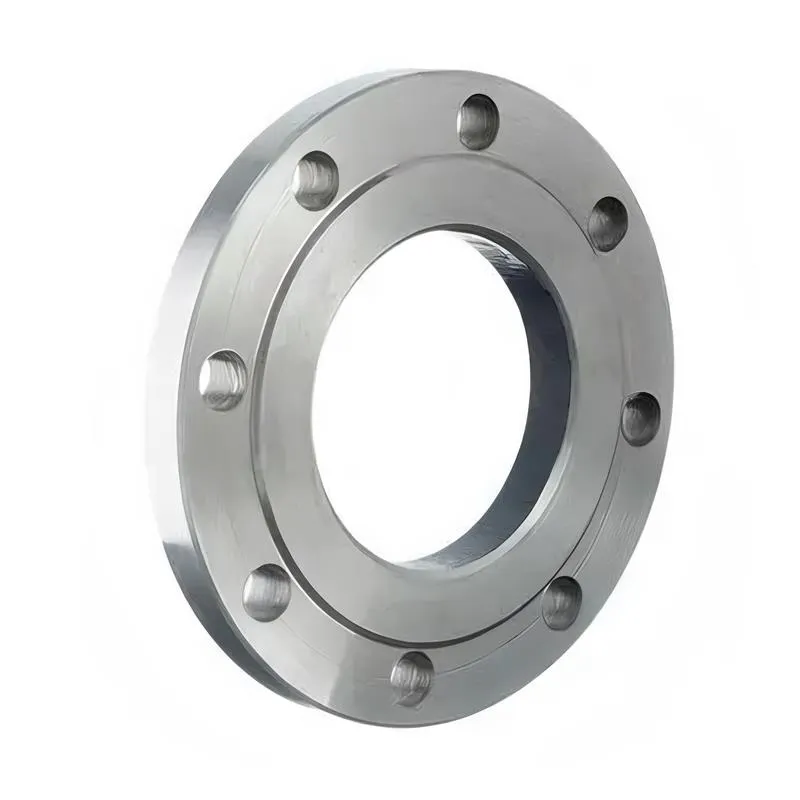
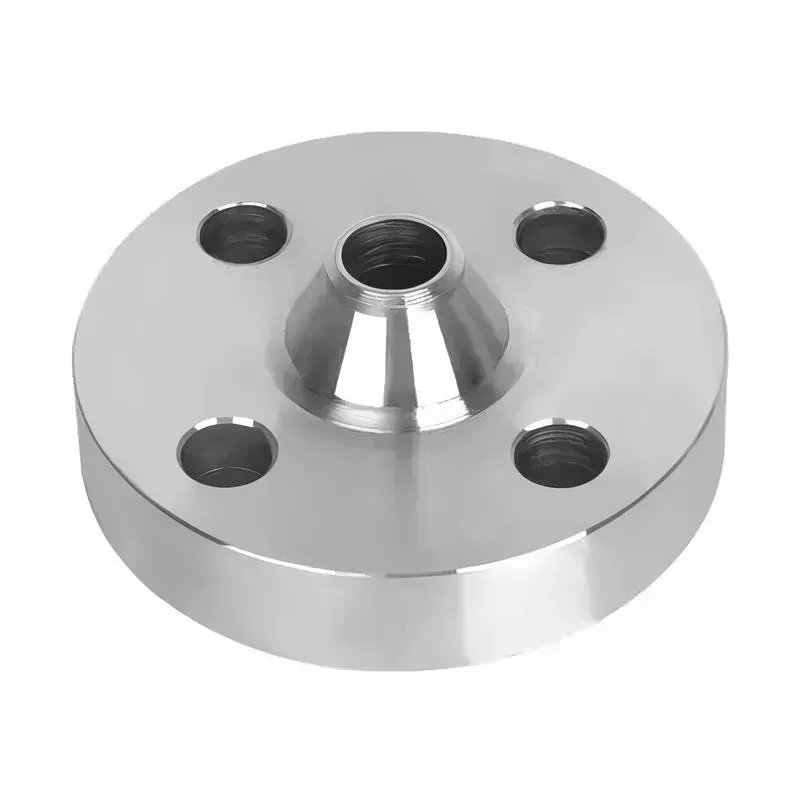
Plate Flat Welding Flange, Necked Flat Welding Flange, Necked Butt Welding Flange, Socket Welding Flange, Threaded Flange, Blind Flange, Necked Butt Welding Ring Loose Flange, Flat Welding Ring Loose Flange, Ring-Type Joint (RTJ) Flange and Blind Flange, Large-Diameter Plate Flange, Large-Diameter High-Neck Flange, Figure-8 Blind Plate, Butt Welding Ring Loose Flange, etc.
5. **According to the Component Being Connected:** Flanges can be classified into Vessel Flanges and Pipe Flanges.
6. **According to Structural Type:** Flanges include Integral Flanges, Threaded Flanges, Flat Welding Flanges, Butt Welding Flanges, Lap Joint (Loose/Swivel) Flanges, and Blind Flanges.
A flange—also referred to as a flange plate or rim—is a component used to connect shafts to one another, or, more commonly, to join the ends of pipes. Flanges are also utilized at the inlet and outlet ports of equipment to facilitate connections between two devices—for instance, the flange on a speed reducer. A "flange connection" or "flanged joint" refers to a detachable joint assembly comprising three interconnected elements—a flange, a gasket, and bolts—that together form a sealed structural unit. In the context of piping systems, a "pipe flange" specifically denotes a flange used for plumbing within the installation; when applied to equipment, it refers to the inlet or outlet flange of that specific device. Flanges feature a series of holes through which bolts are inserted to securely fasten the two flanges together, while a gasket placed between the flanges ensures a leak-proof seal. Flanges are broadly categorized into three types: threaded (screw-in) flanges, welded flanges, and clamp-type flanges. Flanges are invariably used in pairs; threaded flanges are suitable for low-pressure piping applications, whereas welded flanges are required for systems operating at pressures exceeding 4 kilograms per square centimeter. A sealing gasket is inserted between the two flange plates, which are then firmly secured using bolts. The thickness of a flange—as well as the specifications of the bolts used to fasten it—vary depending on the specific pressure rating required for the application. When connecting equipment such as water pumps or valves to piping systems, the corresponding connection points on these devices are often manufactured in the shape of a matching flange; this method of attachment is also referred to as a "flange connection." Generally, any connecting component that utilizes bolts to join and seal the perimeters of two flat surfaces—such as the joints in ventilation ducts—is termed a "flange"; such components may collectively be classified as "flange-type parts." However, since such a connection often constitutes merely a *portion* of a larger device—for instance, the interface between a flange and a water pump—it would be inappropriate to classify the entire water pump itself as a "flange-type part." Conversely, smaller components—such as valves—that feature such flanged interfaces may indeed be appropriately categorized as "flange-type parts."
-:-
For detailed product information, please contact sales.
-:
2800 Maraging Steel Flange Product Information
-:-
For detailed product information, please contact sales.
-:
2800 Maraging Steel Flange Synonyms
-:-
For detailed product information, please contact sales.
-:
2800 Maraging Steel Product Information
-:-
For detailed product information, please contact sales.
-:
# 2800 Maraging Steel (18Ni-2800 MPa Grade)
## **Overview**
**2800 Maraging Steel** (commonly designated as **18Ni-2800** or **Grade 2800**) is a specialized, **ultra-high-cobalt** maraging steel developed to achieve **extreme strength levels beyond the standard 18Ni family**. Engineered to deliver a nominal yield strength of **approximately 2800 MPa (406 ksi)**, this grade represents the **upper practical limit of strength** in commercially available maraging-type steels. It is characterized by a **significantly modified chemistry**, most notably a **very high cobalt content (~20%)**, which drives exceptional precipitation hardening but results in **substantially reduced fracture toughness**. This material is reserved for the most demanding applications where **absolute strength is the paramount design driver**, and other properties are secondary.
---
## **Chemical Composition (Weight %) - Modified Ultra-High-Strength Alloy**
*Note: This composition differs fundamentally from standard 18Ni grades.*
| Element | Min (%) | Max (%) | Typical (%) | Metallurgical Function & Impact |
|---------|---------|---------|-------------|--------------------------------|
| **Nickel (Ni)** | 17.0 | 19.0 | 18.0 | Maintains the martensitic matrix. Slightly adjusted to accommodate high Co. |
| **Cobalt (Co)** | **18.0** | **20.0** | **19.0** | **Primary Differentiator.** Extremely high Co maximizes the supersaturation of Mo and Ti in martensite, providing an immense driving force for precipitation, enabling 2800 MPa strength. **Dramatically increases cost.** |
| **Molybdenum (Mo)** | 4.0 | 5.0 | 4.5 | Primary precipitation hardener (Ni₃Mo). Level optimized with high Co. |
| **Titanium (Ti)** | 1.2 | 1.8 | 1.5 | Secondary but critical hardener (Ni₃Ti). Elevated to contribute to extreme strength. |
| **Aluminum (Al)** | 0.05 | 0.15 | 0.10 | Deoxidizer. |
| **Carbon (C)** | — | 0.03 | ≤0.01 | Ultra-low; critical to prevent embrittlement at this strength level. |
| **Manganese (Mn)** | — | 0.10 | 0.05 | Tightly controlled impurity. |
| **Silicon (Si)** | — | 0.10 | 0.05 | Tightly controlled impurity. |
| **Boron (B)** | 0.003 | 0.006 | 0.004 | Enhances hardenability and grain boundary strength. |
| **Zirconium (Zr)** | — | 0.02 | 0.01 | Grain refiner; vital for any semblance of toughness. |
| **Sulfur (S)** | — | 0.005 | ≤0.002 | **Extra-Low Sulfur.** Mandatory to minimize inclusion-related failure. |
| **Phosphorus (P)** | — | 0.005 | ≤0.002 | **Extra-Low Phosphorus.** Mandatory to prevent embrittlement. |
| **Iron (Fe)** | Balance | — | — | Base element. |
**Core Distinction:** The **~19% Cobalt** content is the defining feature, nearly double that of Grade 350. This makes 2800 grade **extremely expensive** and subject to critical raw material supply chains.
---
## **Heat Treatment**
1. **Solution Annealing:** ~815°C (1500°F), 1 hour, air cool.
2. **Aging (Peak Hardening):** **Specific temperature and time are highly proprietary** and optimized for the exact chemistry. Typically involves aging in the range of **480-510°C (900-950°F)** for **extended periods (6-12+ hours)** to fully develop strength.
---
## **Mechanical Properties (Peak-Aged Condition)**
*Properties are highly sensitive to processing. Typical values represent the extreme end of the spectrum.*
| Property | Typical Value Range | Notes / Implications |
|----------|-------------------|----------------------|
| **0.2% Yield Strength (YS)** | 2700 - 2900 MPa **(392 - 420 ksi)** | **Primary design property.** Represents the practical limit for steel components. |
| **Ultimate Tensile Strength (UTS)** | 2800 - 3000 MPa **(406 - 435 ksi)** | |
| **Elongation (in 50 mm)** | **2 - 5%** | **Extremely low ductility.** Material behaves in a brittle manner. |
| **Reduction of Area (RA)** | **10 - 20%** | Very limited plastic deformation before fracture. |
| **Hardness** | **58 - 62 HRC** | Equivalent to very hard tool steels. |
| **Fracture Toughness (KIC)** | **20 - 35 MPa√m** | **Critically Low.** This is the **dominant design constraint.** Failure is brittle and sudden. Linear Elastic Fracture Mechanics (LEFM) **must** be used. |
| **Modulus of Elasticity** | 190 - 200 GPa | Slightly elevated due to high alloy content. |
| **Fatigue Strength** | Difficult to generalize; **highly notch-sensitive.** Fatigue cracks initiate easily. |
---
## **Physical Properties (Aged Condition)**
| Property | Value (Approx.) |
|----------|------------------|
| **Density** | ~8.10 g/cm³ (Slightly higher due to high Co) |
| **Thermal Conductivity** | ~17 W/m·K (Lower than standard grades) |
| **Coefficient of Thermal Expansion** | ~10.5 x 10⁻⁶ /°C |
| **Electrical Resistivity** | ~0.8 μΩ·m (Higher due to high alloying) |
| **Magnetic Properties** | Ferromagnetic |
---
## **Key Characteristics & Challenges**
* **Unmatched Strength:** The highest yield strength achievable in a commercial maraging-type steel.
* **Extreme Brittleness:** Very low fracture toughness and ductility. **Notch sensitivity is extreme.**
* **Very High Cost:** Driven by the high Cobalt content (a strategic and costly metal).
* **Complex Processing:** Heat treatment windows are narrow; requires exceptional control.
* **Difficult Machining:** Can only be effectively machined in the annealed state. Machining after aging is near-impossible without diamond/CBN tools.
* **Poor Weldability:** Welding is generally avoided. If absolutely necessary, it requires extreme care and full re-heat treatment.
* **Limited Standards:** Due to its specialized nature, it is often covered by proprietary specifications rather than broad industry standards.
---
## **International Standards & Designations**
This is a niche, proprietary material with limited standardization.
| Standard/System | Likely Designation / Status |
|----------------|-----------------------------|
| **Proprietary/Trade Names** | **VascoMax XXXX**, **Custom 2800**, **18Ni(2800)**. Specific names are closely held by developers (e.g., Ladish Co., Aubert & Duval). |
| **Aerospace (AMS)** | **No common AMS standard exists.** Supplied under a **Source Control Drawing (SCD)** or **Proprietary Material Specification**. |
| **Military** | May be specified under **MIL** standards for specific programs (e.g., advanced penetrators), but not a standard stock item. |
| **ISO/ASTM** | No generic standard. |
---
## **Typical Applications**
Application is limited to **niche, performance-at-any-cost components** where its deficiencies can be managed by design.
1. **Defense - Penetration Systems (Primary Use):**
* **Kinetic Energy Penetrator Rods and Long-Rod Penetrators (LRPs)** for advanced armor-piercing munitions, where extreme hardness and density are critical for performance.
* **Specialized Warhead Casings and Components.**
2. **Aerospace - Extreme Performance:**
* **Critical, Highly-Stressed Components** in experimental or limited-production aerospace vehicles where every gram counts.
* **Components for Re-entry Vehicles or Hypersonic Systems** subject to extreme transient loads.
3. **Tooling - Specialized:**
* **Mandrels and Dies** for cold working or forming of extremely high-strength materials.
* **Wear Parts** in highly abrasive, low-impact environments.
4. **Research & Development:**
* **Material science research** into the limits of metallic strength.
* **Calibration specimens** for ultra-high load testing.
---
## **Fabrication & Design Warnings**
* **Design Philosophy:** **"Safe-Life" design is mandatory.** "Fail-Safe" or "Damage-Tolerant" design is **not applicable**. Components must be designed so that the **maximum stress intensity remains well below KIC** with a large safety factor.
* **Manufacturing:** All machining must be done in the **solution-annealed condition**. Final shapes must be achieved before aging. **Grinding and EDM** are the only suitable finishing methods after aging.
* **Quality Assurance:** Requires **100% non-destructive testing (NDT)** – typically Ultrasonic Testing (UT) and Magnetic Particle Inspection (MPI) – to detect any flaw larger than a few microns.
* **Handling:** Finished components are fragile and susceptible to damage from drops or impacts.
---
## **Summary**
**2800 Maraging Steel** is **not a general-purpose engineering material**. It is a **highly specialized, exotic alloy** that exists at the **absolute frontier of metallic strength**. Its use is justified only in applications where its **unmatched strength provides a decisive and irreplaceable performance advantage**, and where its **high cost, manufacturing complexity, and inherent brittleness can be accepted and meticulously managed**.
It serves a vital role in pushing the boundaries of what is possible in penetration mechanics and extreme aerospace design, but its application is a testament to the principle of **diminishing returns**: the quest for the last increment of strength comes with severe penalties in toughness, cost, and manufacturability. For the vast majority of applications requiring ultra-high strength, grades like **2000 (300) or 2500 Maraging Steel offer a far superior and more reliable balance of properties.**
-:-
For detailed product information, please contact sales.
-:
2800 Maraging Steel Specification
Dimensions
Size:
Diameter 20-1000 mm Length <7359 mm
Size:We can customized as required
Standard:
Per your request or drawing
We can customized as required
Properties(Theoretical)
Chemical Composition
-:-
For detailed product information, please contact sales.
-:
2800 Maraging Steel Properties
-:-
For detailed product information, please contact sales.
-:
Applications of 2800 Maraging Steel Flange
-:-
For detailed product information, please contact sales.
-:
Chemical Identifiers 2800 Maraging Steel Flange
-:-
For detailed product information, please contact sales.
-:
Packing of 2800 Maraging Steel Flange
-:-
For detailed product information, please contact sales.
-:
Standard Packing:
-:-
For detailed product information, please contact sales.
-:
Typical bulk packaging includes palletized plastic 5 gallon/25 kg. pails, fiber and Steel Flange drums to 1 ton super sacks in full container (FCL) or truck load (T/L) quantities. Research and sample quantities and hygroscopic, oxidizing or other air sensitive materials may be packaged under argon or vacuum. Solutions are packaged in polypropylene, plastic or glass jars up to palletized 3830 gallon liquid totes Special package is available on request. E FORUs’ is carefully handled to minimize damage during storage and transportation and to preserve the quality of our products in their original condition