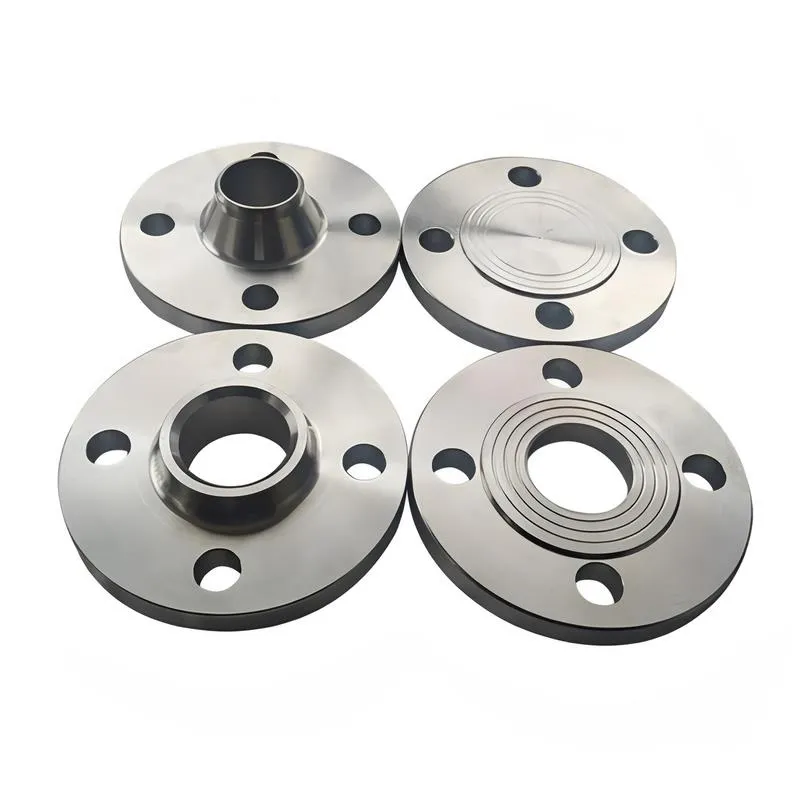
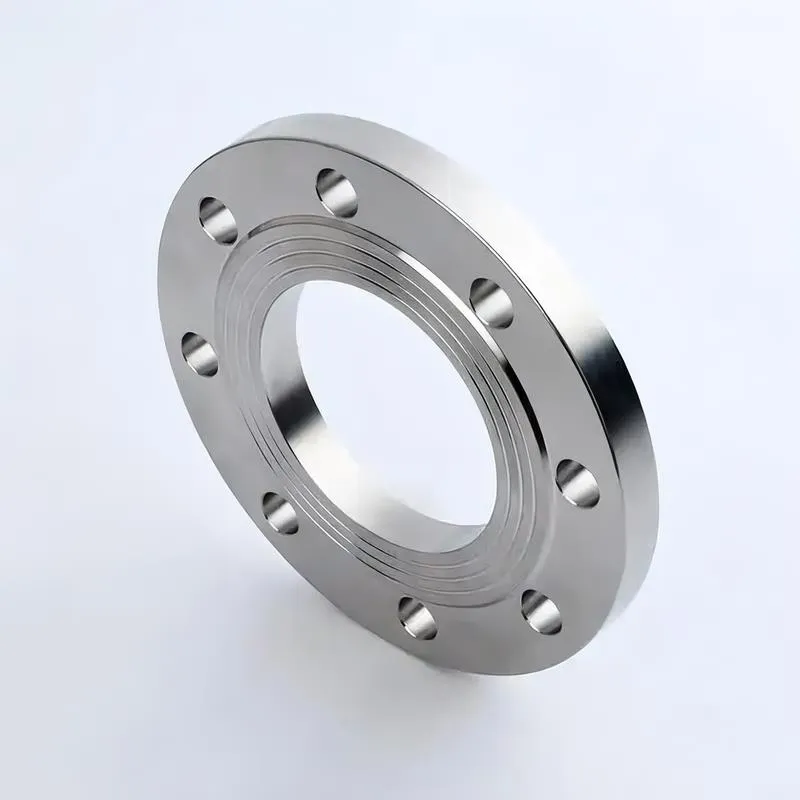
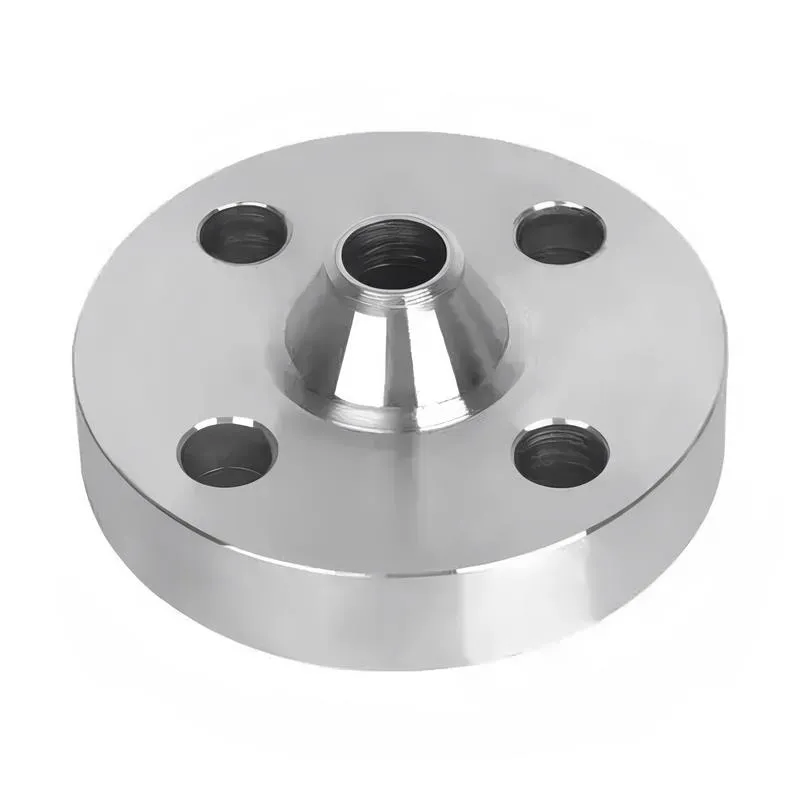
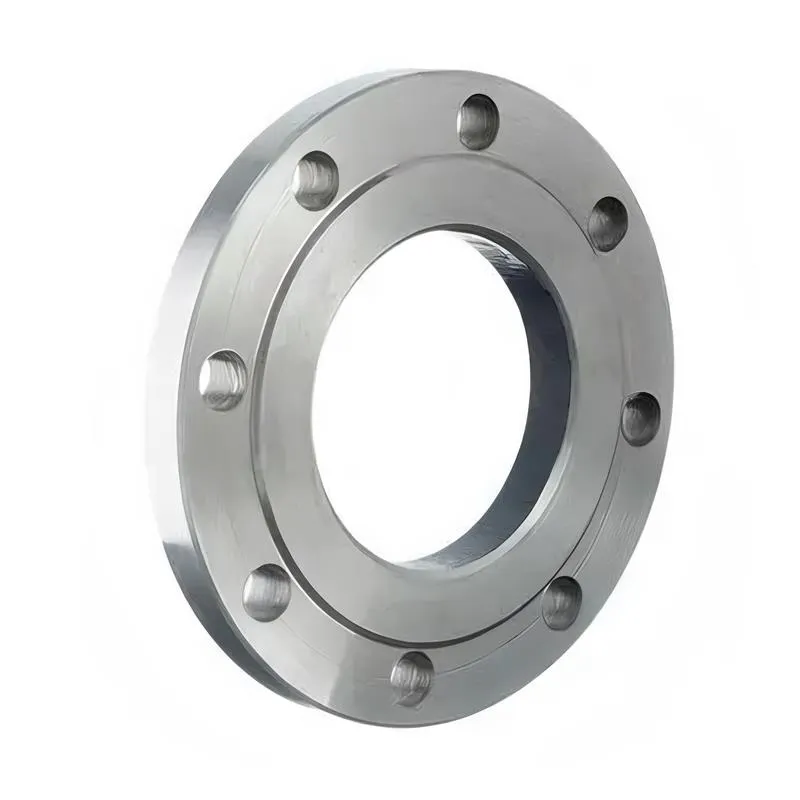
EOS,ToolSteel Flange 1.2709 DMSL on EOS,M 290
Product Code : FL-Steel-1969-CU
We provide EOS,ToolSteel Flange 1.2709 DMSL on EOS,M 290 Manufacturing types: Forging, Casting, Cutting, Rolling.We can manufacture in accordance with these standards.GB/T 9112–9124-2010 Steel Pipe Flanges , JB Series , HG Series, ASME B16.5, BS4504, DIN , JIS,CBM,etc
1,We Manufacturing processes are primarily classified into four types:
1:Forging,
2:Casting,
3:Cutting,
4:Rolling.
2,We can manufacture in accordance with these standards.
Standards:
GB Series (Chinese Standards), JB Series (Machinery Standards), HG Series (Chemical Industry Standards), ASME B16.5 (American Standards), BS4504 (British Standards), DIN (German Standards), and JIS (Japanese Standards).
Internationally, there are two primary systems of pipe flange standards: the European system, represented by the German DIN standards (including those of the former Soviet Union), and the American system, represented by the US ANSI pipe flange standards. Other common standards include: the Chinese Ministry of Machinery Industry standards (JB series), the Ministry of Chemical Industry standards (HG series), the Chinese National Standard *GB/T 9112–9124-2010 Steel Pipe Flanges*, as well as US standards (ASME B16.5), British standards (BS4504), German standards (DIN), Japanese standards (JIS), and marine standards (CBM), among others.
The nominal pressure ratings for the PN series are designated by "PN" and comprise the following nine levels: PN2.5, PN6, PN10, PN16, PN25, PN40, PN63, PN100, and PN160.
The nominal pressure ratings for the Class series are designated by "Class" and comprise the following six levels: Class150, Class300, Class600, Class900, Class1500, and Class2500.
Flange Classification
1. **According to Chemical Industry Standards:** Flanges are classified as follows:
Plate Flat Welding Flange (PL), Necked Flat Welding Flange (SO), Necked Butt Welding Flange (WN), Integral Flange (IF), Socket Welding Flange (SW), Threaded Flange (Th), Butt Welding Ring Loose Flange (PJ/SE), Blind Flange (BL), Flat Welding Ring Loose Flange (PJ/PJ), and Lined Blind Flange (BL(s)).
2. **According to Petrochemical (SH) Industry Standards:** Flanges are classified as follows:
Threaded Flange (PL), Butt Welding Flange (WN), Flat Welding Flange (SO), Socket Welding Flange (SW), Loose Flange (LJ), and Blind Flange (no specific designation).
3. **According to Machinery (JB) Industry Standards:** Flanges are classified as follows:
Integral Flange, Butt Welding Flange, Plate Flat Welding Flange, Butt Welding Ring Plate Loose Flange, Flat Welding Ring Plate Loose Flange, Lap Joint Ring Plate Loose Flange, and Blind Flange.
4. **According to Connection Method/Type:** Flanges are classified as follows:
Plate Flat Welding Flange, Necked Flat Welding Flange, Necked Butt Welding Flange, Socket Welding Flange, Threaded Flange, Blind Flange, Necked Butt Welding Ring Loose Flange, Flat Welding Ring Loose Flange, Ring-Type Joint (RTJ) Flange and Blind Flange, Large-Diameter Plate Flange, Large-Diameter High-Neck Flange, Figure-8 Blind Plate, Butt Welding Ring Loose Flange, etc.
5. **According to the Component Being Connected:** Flanges can be classified into Vessel Flanges and Pipe Flanges.
6. **According to Structural Type:** Flanges include Integral Flanges, Threaded Flanges, Flat Welding Flanges, Butt Welding Flanges, Lap Joint (Loose/Swivel) Flanges, and Blind Flanges.
A flange—also referred to as a flange plate or rim—is a component used to connect shafts to one another, or, more commonly, to join the ends of pipes. Flanges are also utilized at the inlet and outlet ports of equipment to facilitate connections between two devices—for instance, the flange on a speed reducer. A "flange connection" or "flanged joint" refers to a detachable joint assembly comprising three interconnected elements—a flange, a gasket, and bolts—that together form a sealed structural unit. In the context of piping systems, a "pipe flange" specifically denotes a flange used for plumbing within the installation; when applied to equipment, it refers to the inlet or outlet flange of that specific device. Flanges feature a series of holes through which bolts are inserted to securely fasten the two flanges together, while a gasket placed between the flanges ensures a leak-proof seal. Flanges are broadly categorized into three types: threaded (screw-in) flanges, welded flanges, and clamp-type flanges. Flanges are invariably used in pairs; threaded flanges are suitable for low-pressure piping applications, whereas welded flanges are required for systems operating at pressures exceeding 4 kilograms per square centimeter. A sealing gasket is inserted between the two flange plates, which are then firmly secured using bolts. The thickness of a flange—as well as the specifications of the bolts used to fasten it—vary depending on the specific pressure rating required for the application. When connecting equipment such as water pumps or valves to piping systems, the corresponding connection points on these devices are often manufactured in the shape of a matching flange; this method of attachment is also referred to as a "flange connection." Generally, any connecting component that utilizes bolts to join and seal the perimeters of two flat surfaces—such as the joints in ventilation ducts—is termed a "flange"; such components may collectively be classified as "flange-type parts." However, since such a connection often constitutes merely a *portion* of a larger device—for instance, the interface between a flange and a water pump—it would be inappropriate to classify the entire water pump itself as a "flange-type part." Conversely, smaller components—such as valves—that feature such flanged interfaces may indeed be appropriately categorized as "flange-type parts."
-:-
For detailed product information, please contact sales.
-:
EOS ToolSteel Flange 1.2709 DMSL on EOS M 290 Product Information
-:-
For detailed product information, please contact sales.
-:
EOS ToolSteel Flange 1.2709 DMSL on EOS M 290 Synonyms
-:-
For detailed product information, please contact sales.
-:
EOS ToolSteel 1.2709 DMSL on EOS M 290 Product Information
-:-
For detailed product information, please contact sales.
-:
# EOS ToolSteel 1.2709
## DMSL on EOS M 290 System
---
### **Product Overview**
**EOS ToolSteel 1.2709** is a gas-atomized powder of **18Ni-300 maraging steel**, specifically optimized for the **Direct Metal Selective Laser Melting (DMSL)** process on the **EOS M 290** industrial additive manufacturing system. This material-system combination is the **industry-standard solution** for producing high-density, high-strength tooling inserts and end-use components via Laser Powder Bed Fusion (LPBF). After a post-build precipitation hardening heat treatment, it achieves mechanical properties comparable to wrought 1.2709 / X3NiCoMoTi 18-9-5, with typical hardness of 50-54 HRC and ultimate tensile strength exceeding 2000 MPa. Its excellent as-built machinability and predictable aging response make it the premier choice for **conformal-cooled injection molds, die-casting inserts, and high-performance tooling**.
---
### **Chemical Composition (Weight %)**
*Conforms to DIN/ISO 1.2709 and is optimized for LPBF processing.*
| Element | EOS 1.2709 Specification | Equivalent Wrought (X3NiCoMoTi 18-9-5) | Role in AM Process |
|---------|--------------------------|----------------------------------------|-------------------|
| **Nickel (Ni)** | 17.0 - 19.0 | 17.0 - 19.0 | Primary matrix former; ensures martensitic transformation. |
| **Cobalt (Co)** | 8.5 - 9.5 | 8.5 - 9.5 | Drives precipitation hardening response. |
| **Molybdenum (Mo)** | 4.5 - 5.2 | 4.5 - 5.2 | Key precipitation hardener (Ni₃Mo). |
| **Titanium (Ti)** | 0.6 - 0.8 | 0.6 - 0.8 | Secondary hardener (Ni₃Ti). |
| **Aluminum (Al)** | ≤ 0.10 | ≤ 0.10 | Deoxidizer. |
| **Carbon (C)** | **≤ 0.03** | ≤ 0.03 | Ultra-low for weldability and toughness. |
| **Silicon (Si)** | ≤ 0.10 | ≤ 0.10 | Residual. |
| **Manganese (Mn)** | ≤ 0.10 | ≤ 0.10 | Residual. |
| **Oxygen (O)** | **≤ 0.08% (800 ppm)** | Not Specified | **Critical AM parameter.** Impacts density and ductility. |
| **Iron (Fe)** | Balance | Balance | Base element. |
**Powder Characteristics for EOS M 290:**
* **Particle Size Distribution:** 15 - 45 µm (optimized for 40 µm layers)
* **Morphology:** Spherical, gas-atomized
* **Flowability:** Excellent (Hall Flow < 30 s/50g)
* **Apparent Density:** ~4.0 - 4.2 g/cm³
---
### **EOS M 290 Build Process & Parameters**
**System Configuration:**
* **Laser:** Yb-fibre laser, 400W
* **Build Volume:** 250 x 250 x 325 mm
* **Atmosphere:** High-purity Argon (O₂ < 0.1%)
* **Layer Thickness:** **40 µm** (Standard), 20 µm (High Detail)
* **Scan Strategy:** Stripes or Chessboard with 67° rotation between layers
**Standard EOS Parameters:**
* Uses **EOS ParameterSet for ToolSteel 1.2709**
* **Laser Power:** ~285 - 320 W
* **Scan Speed:** ~800 - 1200 mm/s
* **Hatch Spacing:** ~0.10 - 0.14 mm
* **Volumetric Energy Density:** ~60 - 90 J/mm³
**As-Built State:**
* **Microstructure:** Fine cellular/dendritic martensite
* **Hardness:** 34 - 38 HRC (ideal for machining)
* **Density:** **> 99.7%** (with optimized parameters)
* **Surface Roughness:** Ra 10 - 20 µm (as-built)
---
### **Post-Processing Heat Treatment**
1. **Stress Relief (Optional):** 650°C for 2 hours, furnace cool
2. **Solution Annealing:** 820°C ± 10°C for 1-2 hours, Argon/Vacuum, furnace cool
3. **Aging:** **490°C for 6 hours**, air cool *(EOS recommended for AM parts)*
---
### **Mechanical Properties (After Full Heat Treatment)**
| Property | XY Plane (Typical) | Z-Direction (Typical) | Test Standard | Notes |
|----------|-------------------|-----------------------|---------------|-------|
| **Ultimate Tensile Strength** | 2000 - 2100 MPa | 1900 - 2000 MPa | ASTM E8 | |
| **0.2% Yield Strength** | 1950 - 2050 MPa | 1850 - 1950 MPa | ASTM E8 | |
| **Elongation** | 8 - 12% | 6 - 10% | ASTM E8 | |
| **Hardness** | 50 - 54 HRC | 50 - 54 HRC | ASTM E18 | |
| **Fatigue Strength (10⁷, R=-1)** | 550 - 650 MPa | 500 - 600 MPa | ASTM E466 | Machined surface |
| **Impact Energy (Charpy V)** | 20 - 30 J | 15 - 25 J | ASTM E23 | |
| **Thermal Conductivity** | ~20 W/(m·K) | ~20 W/(m·K) | - | Aged condition |
---
### **Key Characteristics & Advantages**
* **Excellent As-Built Machinability:** ~35 HRC allows for easy milling, drilling, and tapping before final hardening
* **High Strength & Hardness After Aging:** Comparable to wrought 1.2709 tool steel
* **Minimal Distortion During Aging:** < 0.05% dimensional change
* **Good Polishing & Texturing Capability:** Suitable for high-gloss mold surfaces
* **Thermal Conductivity:** Similar to conventional tool steels
* **Weldability:** Can be repaired using similar filler materials
---
### **International Standards & Certifications**
* **Material Standard:** DIN/ISO 1.2709 (X3NiCoMoTi 18-9-5)
* **AM Process:** EOS ParameterSet certification
* **Industry Standards:**
* **VDI 3405 Blatt 3:** Additive manufacturing processes - Quality assurance
* **ISO/ASTM 52921:** Standard terminology for additive manufacturing
* **Customer-specific qualifications** for automotive and aerospace tooling
---
### **Primary Applications**
1. **Injection Molding (80% of applications):**
* **Conformal-cooled inserts** for plastic injection molds
* **Cores and cavities** with complex cooling channels
* **Hot runner components**
2. **Die Casting:**
* **Cores and inserts** for aluminum and magnesium die casting
* **Shot sleeves and nozzles**
3. **Other Tooling Applications:**
* **Stamping and forming dies**
* **Blow molds**
* **Composite molding tools**
4. **End-Use Components:**
* **Aerospace brackets and fixtures**
* **Medical device components** (after appropriate finishing)
* **High-performance automotive parts**
---
### **Design Guidelines for EOS M 290**
**Critical Design Rules:**
* **Minimum Wall Thickness:** 0.8 mm
* **Minimum Hole Diameter:** 1.0 mm (through), 2.0 mm (blind)
* **Self-supporting Angle:** 45° (recommended)
* **Channel Diameter for Conformal Cooling:** ≥ 6 mm (circular), ≥ 8 mm (cross-section)
* **Escape Holes for Powder Removal:** ≥ 8 mm diameter
**Build Orientation Considerations:**
* **For Best Surface Finish:** Orient critical surfaces vertically or at angle > 45°
* **For Maximum Strength:** Align primary load direction in XY plane
* **To Minimize Supports:** Orient to maximize self-supporting features
---
### **Quality Assurance**
* **In-process Monitoring:** EOSTATE monitoring suite
* **Post-process Testing:**
* Density measurement (Archimedes method)
* Hardness testing
* Tensile testing from witness samples
* CT scanning for internal defects (critical applications)
* **Certification:** Material certificates per EN 10204 3.1
---
### **Economic Advantages**
* **Reduced Lead Time:** Complex tools in days instead of weeks
* **Improved Tool Performance:** Conformal cooling reduces cycle time by 20-40%
* **Part Consolidation:** Multiple components integrated into single build
* **Material Efficiency:** Near-net shape production minimizes waste
---
### **Limitations & Considerations**
* **Anisotropy:** Mechanical properties vary by build direction
* **Surface Finish Requirement:** As-built surfaces need machining for functional applications
* **Size Limitation:** Maximum part size limited to 250 x 250 x 325 mm
* **Post-processing Required:** Heat treatment and machining are mandatory
---
### **Comparison with Conventional Manufacturing**
| Aspect | EOS 1.2709 on M 290 | Conventional 1.2709 |
|--------|---------------------|---------------------|
| **Cooling Channel Design** | Complex conformal channels | Limited to straight drilled holes |
| **Lead Time** | Days to weeks | Weeks to months |
| **Material Waste** | < 5% (near-net shape) | 40-80% (machined from block) |
| **Design Complexity** | Virtually unlimited | Limited by machining access |
| **Surface Finish** | Requires machining | Directly machinable |
| **Tool Performance** | Superior cooling efficiency | Standard cooling |
---
### **Summary**
**EOS ToolSteel 1.2709** processed on the **EOS M 290 DMSL system** represents a **mature, production-proven solution** for manufacturing high-performance tooling and components. It combines the **design freedom of additive manufacturing** with the **exceptional mechanical properties of maraging steel**, enabling the production of tools with superior cooling capabilities and reduced cycle times. While requiring careful post-processing, this material-system combination delivers **significant performance improvements and economic benefits** for injection molding, die casting, and other tooling applications. It has become the **industry standard** for conformal-cooled tool inserts and continues to drive innovation in tool design and manufacturing.
-:-
For detailed product information, please contact sales.
-:
EOS ToolSteel 1.2709 DMSL on EOS M 290 Specification
Dimensions
Size:
Diameter 20-1000 mm Length <7370 mm
Size:We can customized as required
Standard:
Per your request or drawing
We can customized as required
Properties(Theoretical)
Chemical Composition
-:-
For detailed product information, please contact sales.
-:
EOS ToolSteel 1.2709 DMSL on EOS M 290 Properties
-:-
For detailed product information, please contact sales.
-:
Applications of EOS ToolSteel Flange 1.2709 DMSL on EOS M 290
-:-
For detailed product information, please contact sales.
-:
Chemical Identifiers EOS ToolSteel Flange 1.2709 DMSL on EOS M 290
-:-
For detailed product information, please contact sales.
-:
Packing of EOS ToolSteel Flange 1.2709 DMSL on EOS M 290
-:-
For detailed product information, please contact sales.
-:
Standard Packing:
-:-
For detailed product information, please contact sales.
-:
Typical bulk packaging includes palletized plastic 5 gallon/25 kg. pails, fiber and Steel Flange drums to 1 ton super sacks in full container (FCL) or truck load (T/L) quantities. Research and sample quantities and hygroscopic, oxidizing or other air sensitive materials may be packaged under argon or vacuum. Solutions are packaged in polypropylene, plastic or glass jars up to palletized 3841 gallon liquid totes Special package is available on request. E FORUs’ is carefully handled to minimize damage during storage and transportation and to preserve the quality of our products in their original condition