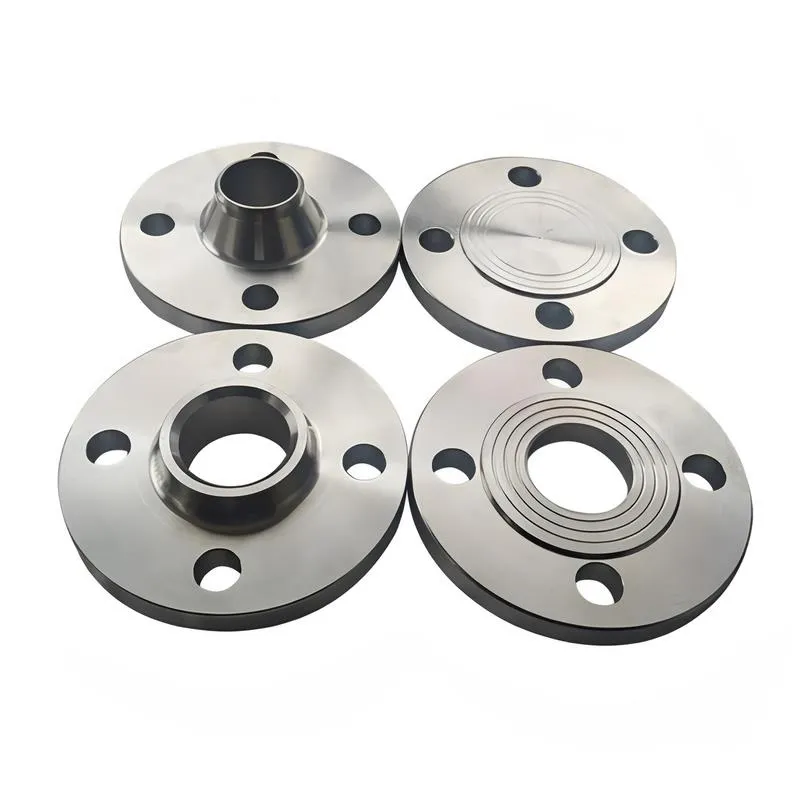
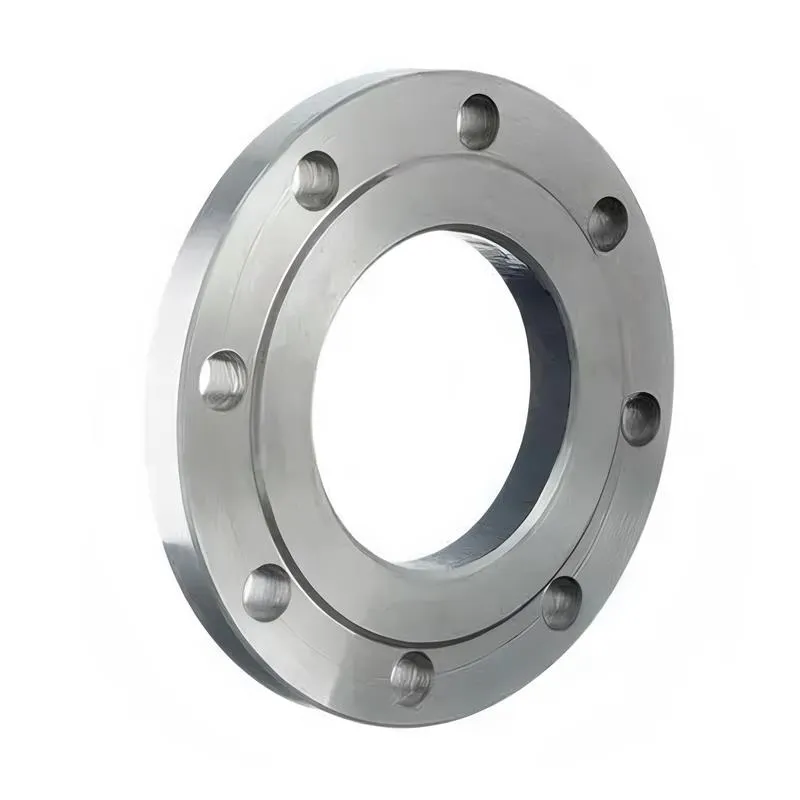
1,We Manufacturing processes are primarily classified into four types:
1:Forging,
2:Casting,
3:Cutting,
4:Rolling.
2,We can manufacture in accordance with these standards.
Standards:
GB Series (Chinese Standards), JB Series (Machinery Standards), HG Series (Chemical Industry Standards), ASME B16.5 (American Standards), BS4504 (British Standards), DIN (German Standards), and JIS (Japanese Standards).
Internationally, there are two primary systems of pipe flange standards: the European system, represented by the German DIN standards (including those of the former Soviet Union), and the American system, represented by the US ANSI pipe flange standards. Other common standards include: the Chinese Ministry of Machinery Industry standards (JB series), the Ministry of Chemical Industry standards (HG series), the Chinese National Standard *GB/T 9112–9124-2010 Steel Pipe Flanges*, as well as US standards (ASME B16.5), British standards (BS4504), German standards (DIN), Japanese standards (JIS), and marine standards (CBM), among others.
The nominal pressure ratings for the PN series are designated by "PN" and comprise the following nine levels: PN2.5, PN6, PN10, PN16, PN25, PN40, PN63, PN100, and PN160.
The nominal pressure ratings for the Class series are designated by "Class" and comprise the following six levels: Class150, Class300, Class600, Class900, Class1500, and Class2500.
Flange Classification
1. **According to Chemical Industry Standards:** Flanges are classified as follows:
Plate Flat Welding Flange (PL), Necked Flat Welding Flange (SO), Necked Butt Welding Flange (WN), Integral Flange (IF), Socket Welding Flange (SW), Threaded Flange (Th), Butt Welding Ring Loose Flange (PJ/SE), Blind Flange (BL), Flat Welding Ring Loose Flange (PJ/PJ), and Lined Blind Flange (BL(s)).
2. **According to Petrochemical (SH) Industry Standards:** Flanges are classified as follows:
Threaded Flange (PL), Butt Welding Flange (WN), Flat Welding Flange (SO), Socket Welding Flange (SW), Loose Flange (LJ), and Blind Flange (no specific designation).
3. **According to Machinery (JB) Industry Standards:** Flanges are classified as follows:
Integral Flange, Butt Welding Flange, Plate Flat Welding Flange, Butt Welding Ring Plate Loose Flange, Flat Welding Ring Plate Loose Flange, Lap Joint Ring Plate Loose Flange, and Blind Flange.
4. **According to Connection Method/Type:** Flanges are classified as follows:
Plate Flat Welding Flange, Necked Flat Welding Flange, Necked Butt Welding Flange, Socket Welding Flange, Threaded Flange, Blind Flange, Necked Butt Welding Ring Loose Flange, Flat Welding Ring Loose Flange, Ring-Type Joint (RTJ) Flange and Blind Flange, Large-Diameter Plate Flange, Large-Diameter High-Neck Flange, Figure-8 Blind Plate, Butt Welding Ring Loose Flange, etc.
5. **According to the Component Being Connected:** Flanges can be classified into Vessel Flanges and Pipe Flanges.
6. **According to Structural Type:** Flanges include Integral Flanges, Threaded Flanges, Flat Welding Flanges, Butt Welding Flanges, Lap Joint (Loose/Swivel) Flanges, and Blind Flanges.
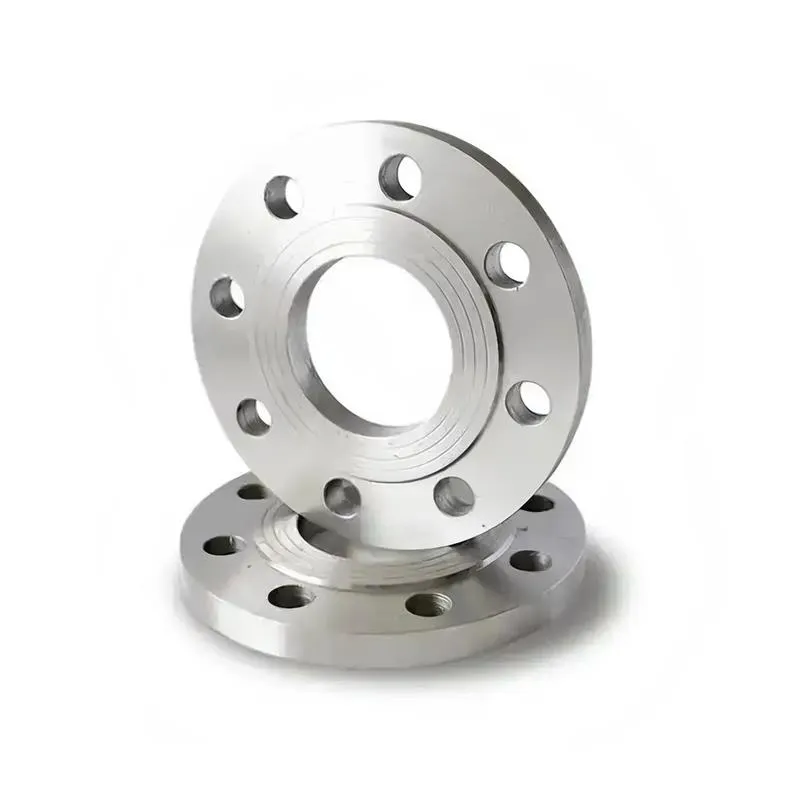
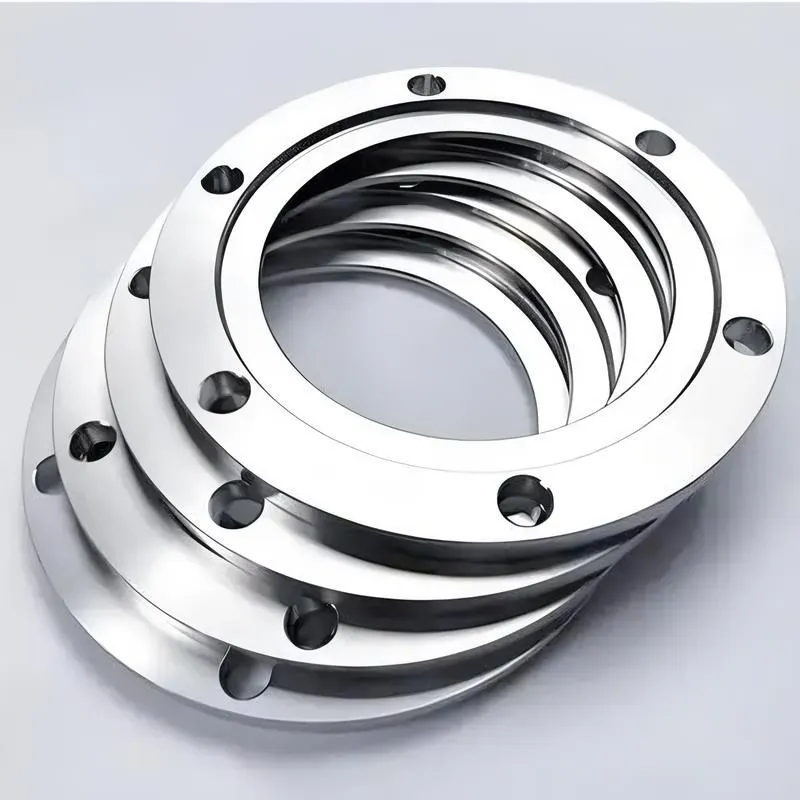
A flange—also referred to as a flange plate or rim—is a component used to connect shafts to one another, or, more commonly, to join the ends of pipes. Flanges are also utilized at the inlet and outlet ports of equipment to facilitate connections between two devices—for instance, the flange on a speed reducer. A "flange connection" or "flanged joint" refers to a detachable joint assembly comprising three interconnected elements—a flange, a gasket, and bolts—that together form a sealed structural unit. In the context of piping systems, a "pipe flange" specifically denotes a flange used for plumbing within the installation; when applied to equipment, it refers to the inlet or outlet flange of that specific device. Flanges feature a series of holes through which bolts are inserted to securely fasten the two flanges together, while a gasket placed between the flanges ensures a leak-proof seal. Flanges are broadly categorized into three types: threaded (screw-in) flanges, welded flanges, and clamp-type flanges. Flanges are invariably used in pairs; threaded flanges are suitable for low-pressure piping applications, whereas welded flanges are required for systems operating at pressures exceeding 4 kilograms per square centimeter. A sealing gasket is inserted between the two flange plates, which are then firmly secured using bolts. The thickness of a flange—as well as the specifications of the bolts used to fasten it—vary depending on the specific pressure rating required for the application. When connecting equipment such as water pumps or valves to piping systems, the corresponding connection points on these devices are often manufactured in the shape of a matching flange; this method of attachment is also referred to as a "flange connection." Generally, any connecting component that utilizes bolts to join and seal the perimeters of two flat surfaces—such as the joints in ventilation ducts—is termed a "flange"; such components may collectively be classified as "flange-type parts." However, since such a connection often constitutes merely a *portion* of a larger device—for instance, the interface between a flange and a water pump—it would be inappropriate to classify the entire water pump itself as a "flange-type part." Conversely, smaller components—such as valves—that feature such flanged interfaces may indeed be appropriately categorized as "flange-type parts."
-:-
For detailed product information, please contact sales.
-:
Ductile Iron Flange MIL-I-24137 Class B Product Information
-:-
For detailed product information, please contact sales.
-:
Ductile Iron Flange MIL-I-24137 Class B Synonyms
-:-
For detailed product information, please contact sales.
-:
Ductile Iron MIL-I-24137 Class B Product Information
-:-
For detailed product information, please contact sales.
-:
### **Product Technical Data Sheet: Ductile Iron – MIL-I-24137 Class B (High-Strength, Ferritic-Pearlitic Grade)**
---
#### **1. Product Overview**
**MIL-I-24137 Class B** is a **high-strength, ferritic-pearlitic ductile iron** specification established by the United States Military for defense and aerospace applications requiring a superior balance of strength and toughness. Like Class A, this specification has been **superseded and is marked as inactive** for new design but remains critically important for the **sustainment, maintenance, repair, and overhaul (MRO)** of legacy military systems. Class B provides **significantly higher tensile and yield strength than Class A**, while retaining appreciable ductility and impact resistance. It is typically supplied in the **as-cast or normalized condition** and is analogous to commercial grades such as ASTM A536 65-45-12 or 80-55-06, depending on the exact heat treatment and chemistry.
---
#### **2. Governing Standards & Specifications**
This material is defined by a rigorous military performance specification, with historical linkages to evolving commercial standards.
* **Primary Standard: MIL-I-24137 (INACTIVE/SUPERSEDED)** - *Iron Castings, Ductile*. The active successor specification is **MIL-DTL-24137**. Users must contract under the latest applicable revision.
* **Cross-Equivalencies & References:**
* **ASTM A536:** **Grade 65-45-12** (primary equivalent) or **Grade 80-55-06** (with higher strength treatment). The exact match depends on the achieved hardness and tensile properties.
* **SAE J434c:** **Grade D4512** or **D5506**.
* **AMS 5313C:** Aerospace Material Specification for "Ductile Iron Castings, Pearlitic-Ferritic".
* **Key Testing Standards (as invoked by the MIL spec):**
* **Tensile Test:** ASTM E8
* **Hardness:** ASTM E10 (Brinell)
* **Impact Test:** ASTM E23 (Charpy) – **A key differentiator from commercial specs.**
* **Microstructure:** ASTM A247
* **Quality Assurance:** Mandatory compliance with **MIL-STD-453** for inspection and rigorous **first-article and lot acceptance testing**.
---
#### **3. Chemical Composition Requirements**
Chemistry for Class B allows for moderate alloying to achieve higher strength while maintaining control over impurities.
| Element | MIL-I-24137 Class B Requirement (%) | Functional Rationale |
| :--- | :--- | :--- |
| **Carbon (C)** | 3.40 - 3.80 | Ensures castability and graphite formation. |
| **Silicon (Si)** | 2.00 - 2.60 | Balanced to allow for pearlite formation while retaining some ferrite for toughness. |
| **Manganese (Mn)** | **0.40 - 0.80** | **Higher than Class A.** Intentionally added as a primary pearlite stabilizer to increase strength and hardness. |
| **Phosphorus (P)** | **≤ 0.05** | Kept low to prevent embrittlement. |
| **Sulfur (S)** | **≤ 0.02** | Kept very low. |
| **Magnesium (Mg)** | Residual | Sufficient for nodulization (typically 0.03-0.05%). |
| **Copper (Cu)** | **≤ 0.50** (or as agreed) | May be intentionally added (up to ~0.5%) as a secondary pearlite promoter for more uniform strength. |
| **Chromium (Cr)** | **≤ 0.10** | Strictly limited. |
| **Nickel (Ni)** | Report / May be added | May be used to enhance strength and toughness without forming carbides. |
| **Molybdenum (Mo)** | As agreed | May be specified for enhanced hardenability in heavy sections. |
---
#### **4. Physical & Mechanical Properties**
Class B is defined by its enhanced strength profile with guaranteed toughness.
| Property | MIL-I-24137 Class B Requirement | Notes & Significance |
| :--- | :--- | :--- |
| **Tensile Strength, min.** | **552 MPa (80,000 psi)** | **Primary upgrade from Class A.** Provides higher load-bearing capacity. |
| **Yield Strength (0.2% offset), min.** | **379 MPa (55,000 psi)** | Significantly increased resistance to permanent deformation. |
| **Elongation, min.** | **5%** (in 2 inches) | Reduced from Class A but maintains critical ductility for stress relief and shock absorption. |
| **Hardness (Brinell)** | **197 - 255 HBW** | Higher hardness range reflects the stronger pearlitic-ferritic matrix, providing better wear resistance. |
| **Impact Resistance (Charpy V-Notch)** | **≥ 14 J (10 ft-lbf) @ 21°C (70°F)** | **Mandatory minimum toughness.** Even at higher strength, impact resistance is guaranteed, a crucial military requirement not always explicit in commercial specs. |
| **Modulus of Elasticity** | ~165 - 172 GPa | Consistent with ductile iron. |
| **Microstructure** | **Spheroidal Graphite** in a **mixed matrix of pearlite and ferrite**. Pearlite content is typically 40-80% to meet strength/hardness targets. | The microstructure is controlled to balance the hard, strong pearlite with the tough, ductile ferrite. |
---
#### **5. Product Applications**
Class B was specified for military components subjected to higher operational stresses than those using Class A, but where shock resistance remained paramount.
* **Armored Vehicle Powertrains:** **Transmission cases, final drive housings, differential carriers, and geared hub components** requiring strength to handle torque and toughness for off-road impacts.
* **Naval Propulsion & Systems:** **Pump casings, valve bodies, and compressor housings** for high-pressure shipboard systems.
* **Aircraft & Ground Support Equipment:** **Landing gear components for heavy cargo aircraft, engine mounts, hydraulic manifold blocks, and arresting gear components.**
* **Ordnance Systems:** **Turret traverse mechanisms, gun mount components, and recoil system housings.**
* **Legacy Commercial & MRO:** Used in **heavy industrial machinery, large pump bodies, and high-pressure valve castings** where the MIL-spec pedigree for guaranteed toughness was valued.
---
#### **6. Fabrication & Quality Assurance Notes**
* **Heat Treatment Condition:** Typically **Normalized** or supplied in controlled **As-Cast** condition to achieve the specified mixed matrix and mechanical properties. Annealing is not used as it would lower strength.
* **Machinability:** **Good to Fair.** More demanding than Class A due to the harder pearlitic constituent, but still offers good machinability for its strength level with appropriate tooling.
* **Weldability:** **Poor.** Requires stringent procedures: high pre-heat (400-550°C), nickel-iron electrodes (ENiFe-CI), and post-weld stress relief. Use is generally restricted to repair.
* **Military Quality Requirements:**
* **Certification:** **Certificate of Conformance (C of C)** and **Material Test Reports (MTRs)** from separately cast test bars for each melt are mandatory.
* **Testing:** **Tensile, hardness, and Charpy impact tests are required on each lot.** Microstructure evaluation is standard.
* **Inspection:** Subject to **Government Source Inspection (GSI)**. **Non-Destructive Testing (NDT)** such as radiographic (X-ray) or magnetic particle inspection is commonly invoked by the drawing or purchase order.
---
#### **7. Ordering & Procurement Information**
**Specify:** **"Ductile Iron Castings, MIL-I-24137 Class B, Normalized [or As-Cast] Condition."**
**Critical Information to Include:**
* **Reference the exact, applicable revision** of the specification (e.g., the invoked inactive MIL-I or active MIL-DTL version).
* **Part Drawing & Application.**
* **Required Certifications:** C of C and complete test reports (chemistry, tensile, hardness, impact).
* **Inspection & NDT Requirements:** Clearly state requirements for source inspection and any additional NDT (e.g., radiographic examination per MIL-STD-453).
* **Marking:** Requirement for casting marking with material class, foundry ID, and heat number.
**Disclaimer:** **MIL-I-24137 Class B is an inactive specification.** For new designs, engineers should utilize active, performance-equivalent commercial (ASTM A536) or aerospace (AMS) specifications. Its use today is primarily for the **exact replacement of parts in legacy defense systems** to maintain form, fit, function, and the original certified material pedigree.
-:-
For detailed product information, please contact sales.
-:
Ductile Iron MIL-I-24137 Class B Specification
Dimensions
Size:
Diameter 20-1000 mm Length <6529 mm
Size:We can customized as required
Standard:
Per your request or drawing
We can customized as required
Properties(Theoretical)
Chemical Composition
-:-
For detailed product information, please contact sales.
-:
Ductile Iron MIL-I-24137 Class B Properties
-:-
For detailed product information, please contact sales.
-:
Applications of Ductile Iron Flange MIL-I-24137 Class B
-:-
For detailed product information, please contact sales.
-:
Chemical Identifiers Ductile Iron Flange MIL-I-24137 Class B
-:-
For detailed product information, please contact sales.
-:
Packing of Ductile Iron Flange MIL-I-24137 Class B
-:-
For detailed product information, please contact sales.
-:
Standard Packing:
-:-
For detailed product information, please contact sales.
-:
Typical bulk packaging includes palletized plastic 5 gallon/25 kg. pails, fiber and Steel Flange drums to 1 ton super sacks in full container (FCL) or truck load (T/L) quantities. Research and sample quantities and hygroscopic, oxidizing or other air sensitive materials may be packaged under argon or vacuum. Solutions are packaged in polypropylene, plastic or glass jars up to palletized 3000 gallon liquid totes Special package is available on request. E FORUs’ is carefully handled to minimize damage during storage and transportation and to preserve the quality of our products in their original condition