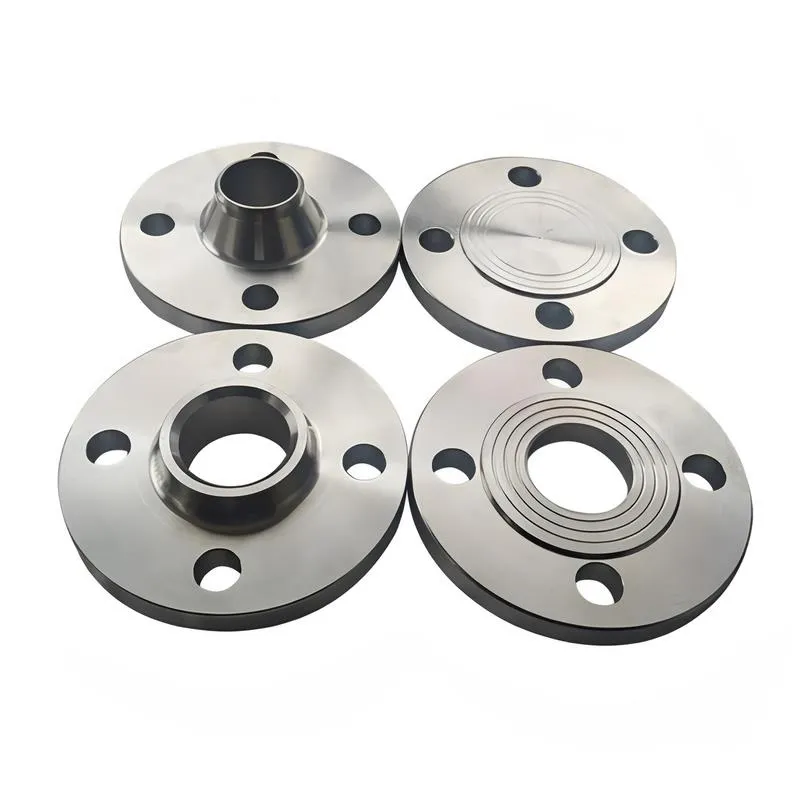
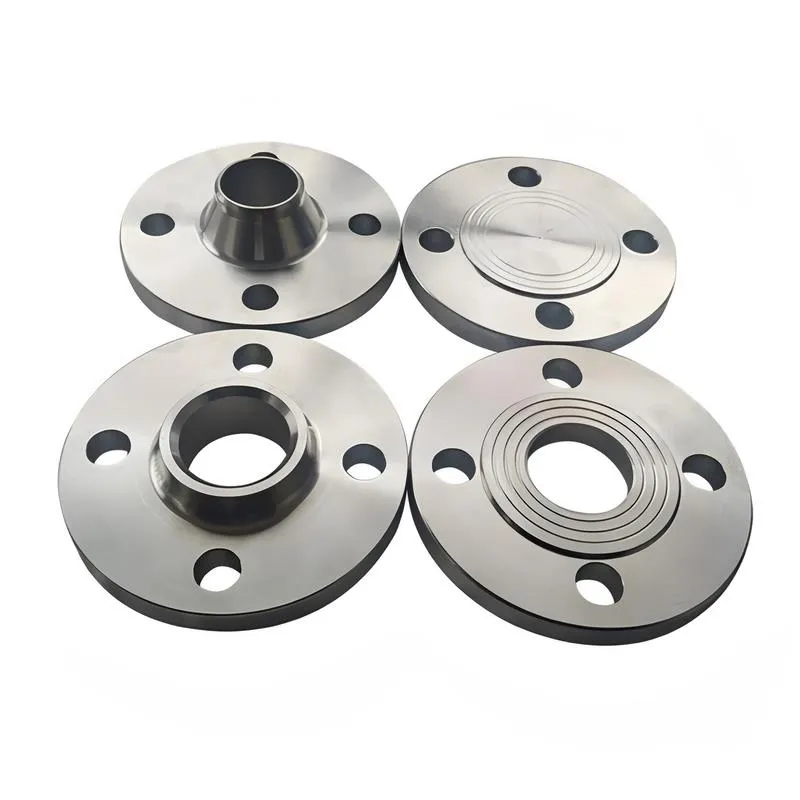
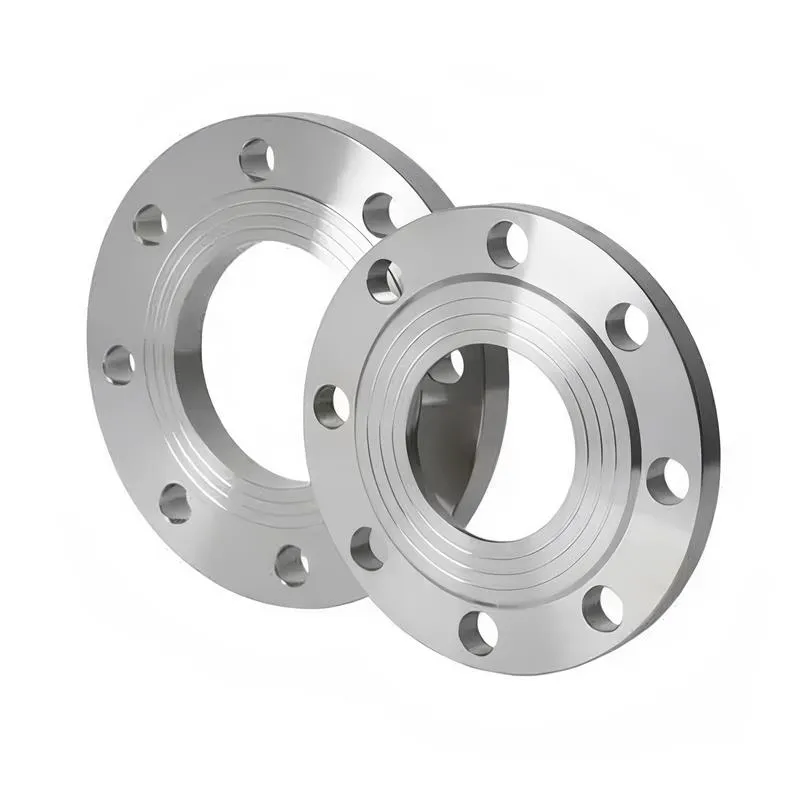
1,We Manufacturing processes are primarily classified into four types:
1:Forging,
2:Casting,
3:Cutting,
4:Rolling.
2,We can manufacture in accordance with these standards.
Standards:
GB Series (Chinese Standards), JB Series (Machinery Standards), HG Series (Chemical Industry Standards), ASME B16.5 (American Standards), BS4504 (British Standards), DIN (German Standards), and JIS (Japanese Standards).
Internationally, there are two primary systems of pipe flange standards: the European system, represented by the German DIN standards (including those of the former Soviet Union), and the American system, represented by the US ANSI pipe flange standards. Other common standards include: the Chinese Ministry of Machinery Industry standards (JB series), the Ministry of Chemical Industry standards (HG series), the Chinese National Standard *GB/T 9112–9124-2010 Steel Pipe Flanges*, as well as US standards (ASME B16.5), British standards (BS4504), German standards (DIN), Japanese standards (JIS), and marine standards (CBM), among others.
The nominal pressure ratings for the PN series are designated by "PN" and comprise the following nine levels: PN2.5, PN6, PN10, PN16, PN25, PN40, PN63, PN100, and PN160.
The nominal pressure ratings for the Class series are designated by "Class" and comprise the following six levels: Class150, Class300, Class600, Class900, Class1500, and Class2500.
Flange Classification
1. **According to Chemical Industry Standards:** Flanges are classified as follows:
Plate Flat Welding Flange (PL), Necked Flat Welding Flange (SO), Necked Butt Welding Flange (WN), Integral Flange (IF), Socket Welding Flange (SW), Threaded Flange (Th), Butt Welding Ring Loose Flange (PJ/SE), Blind Flange (BL), Flat Welding Ring Loose Flange (PJ/PJ), and Lined Blind Flange (BL(s)).
2. **According to Petrochemical (SH) Industry Standards:** Flanges are classified as follows:
Threaded Flange (PL), Butt Welding Flange (WN), Flat Welding Flange (SO), Socket Welding Flange (SW), Loose Flange (LJ), and Blind Flange (no specific designation).
3. **According to Machinery (JB) Industry Standards:** Flanges are classified as follows:
Integral Flange, Butt Welding Flange, Plate Flat Welding Flange, Butt Welding Ring Plate Loose Flange, Flat Welding Ring Plate Loose Flange, Lap Joint Ring Plate Loose Flange, and Blind Flange.
4. **According to Connection Method/Type:** Flanges are classified as follows:
Plate Flat Welding Flange, Necked Flat Welding Flange, Necked Butt Welding Flange, Socket Welding Flange, Threaded Flange, Blind Flange, Necked Butt Welding Ring Loose Flange, Flat Welding Ring Loose Flange, Ring-Type Joint (RTJ) Flange and Blind Flange, Large-Diameter Plate Flange, Large-Diameter High-Neck Flange, Figure-8 Blind Plate, Butt Welding Ring Loose Flange, etc.
5. **According to the Component Being Connected:** Flanges can be classified into Vessel Flanges and Pipe Flanges.
6. **According to Structural Type:** Flanges include Integral Flanges, Threaded Flanges, Flat Welding Flanges, Butt Welding Flanges, Lap Joint (Loose/Swivel) Flanges, and Blind Flanges.
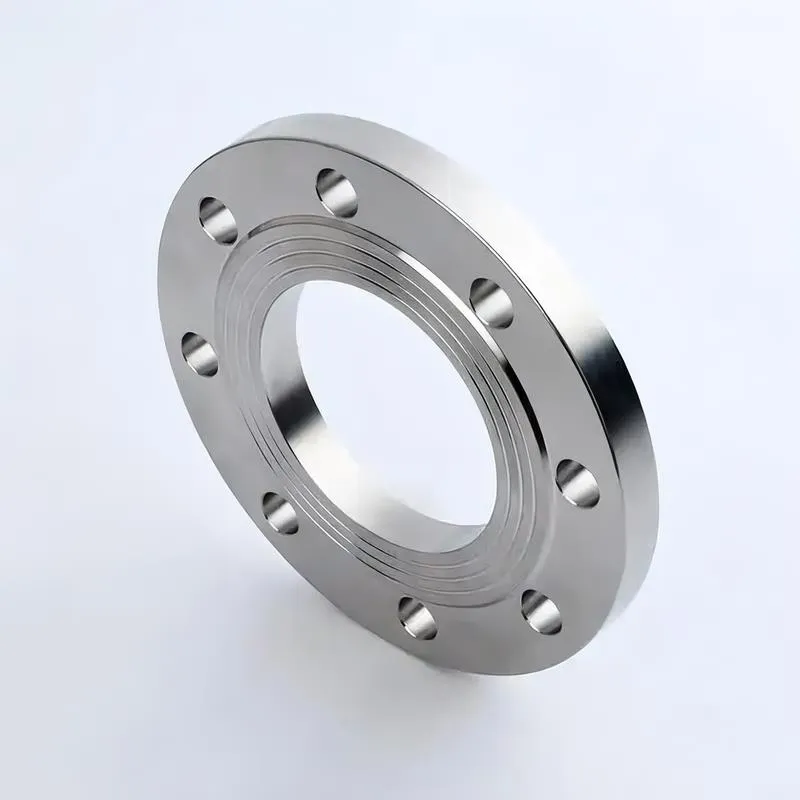
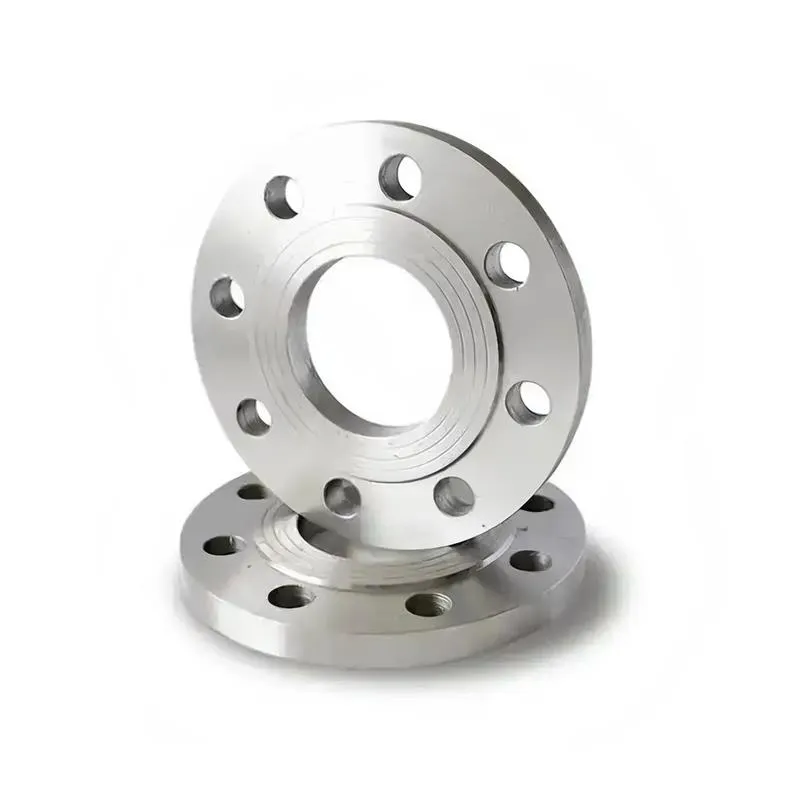
A flange—also referred to as a flange plate or rim—is a component used to connect shafts to one another, or, more commonly, to join the ends of pipes. Flanges are also utilized at the inlet and outlet ports of equipment to facilitate connections between two devices—for instance, the flange on a speed reducer. A "flange connection" or "flanged joint" refers to a detachable joint assembly comprising three interconnected elements—a flange, a gasket, and bolts—that together form a sealed structural unit. In the context of piping systems, a "pipe flange" specifically denotes a flange used for plumbing within the installation; when applied to equipment, it refers to the inlet or outlet flange of that specific device. Flanges feature a series of holes through which bolts are inserted to securely fasten the two flanges together, while a gasket placed between the flanges ensures a leak-proof seal. Flanges are broadly categorized into three types: threaded (screw-in) flanges, welded flanges, and clamp-type flanges. Flanges are invariably used in pairs; threaded flanges are suitable for low-pressure piping applications, whereas welded flanges are required for systems operating at pressures exceeding 4 kilograms per square centimeter. A sealing gasket is inserted between the two flange plates, which are then firmly secured using bolts. The thickness of a flange—as well as the specifications of the bolts used to fasten it—vary depending on the specific pressure rating required for the application. When connecting equipment such as water pumps or valves to piping systems, the corresponding connection points on these devices are often manufactured in the shape of a matching flange; this method of attachment is also referred to as a "flange connection." Generally, any connecting component that utilizes bolts to join and seal the perimeters of two flat surfaces—such as the joints in ventilation ducts—is termed a "flange"; such components may collectively be classified as "flange-type parts." However, since such a connection often constitutes merely a *portion* of a larger device—for instance, the interface between a flange and a water pump—it would be inappropriate to classify the entire water pump itself as a "flange-type part." Conversely, smaller components—such as valves—that feature such flanged interfaces may indeed be appropriately categorized as "flange-type parts."
-:-
For detailed product information, please contact sales.
-:
United Cast Bar Unibar 350 Continuously Cast Iron Flange Product Information
-:-
For detailed product information, please contact sales.
-:
United Cast Bar Unibar 350 Continuously Cast Iron Flange Synonyms
-:-
For detailed product information, please contact sales.
-:
United Cast Bar Unibar 350 Continuously Cast Iron Product Information
-:-
For detailed product information, please contact sales.
-:
# **United Cast Bar Unibar 350 Continuously Cast Iron**
## **1. Product Overview**
**United Cast Bar Unibar 350** represents the premium high-strength grade in United's continuously cast grey iron series, engineered specifically for demanding applications requiring **minimum tensile strength of 350 MPa**. This advanced material combines the traditional benefits of cast iron – excellent machinability, vibration damping, and thermal conductivity – with enhanced mechanical properties achieved through sophisticated alloying and the controlled continuous casting process.
As the highest standard strength grade in the Unibar range, Unibar 350 is manufactured using United's proprietary vertical continuous casting technology, which ensures **exceptional microstructural uniformity, minimal internal defects, and guaranteed mechanical consistency**. The material is designed for critical components operating under high mechanical stresses, where reliability, dimensional stability, and superior wear resistance are paramount.
## **2. Chemical Composition**
Unibar 350 features an optimized alloy composition that promotes a fully pearlitic matrix with refined graphite structure, specifically designed for high-strength applications:
| Element | Composition Range (%) | Metallurgical Function |
|---------|---------------------|-----------------------|
| **Carbon (C)** | 3.0 - 3.4 | Carefully controlled to balance strength and castability; lower carbon content enhances matrix strength |
| **Silicon (Si)** | 1.7 - 2.1 | Precisely regulated graphitizing agent; influences pearlite formation and strength characteristics |
| **Manganese (Mn)** | 1.0 - 1.4 | Strong pearlite stabilizer; provides solid solution strengthening and improves hardenability |
| **Phosphorus (P)** | 0.03 - 0.08 | Minimal content for improved fluidity while maintaining toughness |
| **Sulfur (S)** | ≤ 0.06 | Strictly controlled to optimize machinability and graphite formation |
| **Chromium (Cr)** | 0.35 - 0.55 | Essential for pearlite enhancement, increased hardness, wear resistance, and thermal stability |
| **Copper (Cu)** | 0.8 - 1.2 | Refines pearlite structure, improves section uniformity, and enhances corrosion resistance |
| **Molybdenum (Mo)** | 0.25 - 0.40 | Enhances hardenability, improves high-temperature strength, and refines microstructure |
| **Nickel (Ni)** | 0.2 - 0.5 | Optional addition for improved toughness and hardenability in heavy sections |
| **Tin (Sn)** | 0.08 - 0.15 | Strong pearlite promoter ensuring consistent matrix structure |
**Microstructural Characteristics:**
- **Graphite Structure:** **Type A lamellar graphite** with uniform distribution (ASTM Type II, Size 2-3)
- **Matrix Structure:** **Fully pearlitic** (98-100% pearlite) with virtually no ferrite
- **Graphite Morphology:** Very fine, uniformly distributed flakes with optimized orientation from directional solidification
- **Pearlite Structure:** Ultra-fine lamellar spacing (interlamellar spacing typically 0.3-0.7 μm)
- **Microstructural Consistency:** Exceptional homogeneity throughout cross-section due to controlled cooling rates
## **3. Physical & Mechanical Properties**
### **Physical Properties:**
- **Density:** 7.25 - 7.35 g/cm³
- **Melting Range:** 1150 - 1200°C
- **Thermal Conductivity:** 42 - 48 W/m·K (at 20°C)
- **Specific Heat Capacity:** 0.46 - 0.50 kJ/kg·K
- **Coefficient of Thermal Expansion:** 10.5 - 11.5 × 10⁻⁶/°C (20-200°C)
- **Electrical Resistivity:** 85 - 100 μΩ·cm
- **Damping Capacity:** 4-7 × that of steel (logarithmic decrement: 0.002-0.004)
### **Mechanical Properties (Longitudinal Direction):**
- **Tensile Strength:** 350 - 420 MPa
- **Compressive Strength:** 950 - 1200 MPa (2.7-3.2 × tensile strength)
- **Transverse Rupture Strength:** 550 - 680 MPa
- **Modulus of Elasticity:** 120 - 145 GPa
- **Shear Modulus:** 48 - 58 GPa
- **Poisson's Ratio:** 0.25 - 0.27
- **Hardness:** 230 - 280 HB
- **Elongation:** < 1%
- **Impact Toughness:** 3 - 8 J (Charpy unnotched)
- **Fatigue Strength (Rotating Bending):** 120 - 170 MPa
- **Wear Resistance:** Excellent under lubricated and semi-lubricated conditions
### **Performance Characteristics:**
- **Machinability Index:** 65 - 75% (relative to free-machining steel)
- **Surface Finish Capability:** 0.4 - 2.0 μm Ra achievable
- **Tool Life:** Good; requires proper tool selection and parameters
- **Pressure Tightness:** Excellent due to fine, uniformly distributed graphite structure
- **Dimensional Stability:** Exceptional; minimal thermal growth and machining distortion
- **Thermal Stability:** Excellent resistance to thermal deformation
### **Section-Dependent Properties:**
| Bar Diameter (mm) | Typical Hardness (HB) | Tensile Strength (MPa) | Pearlite Content (%) |
|-------------------|----------------------|----------------------|---------------------|
| 25 - 50 | 250 - 280 | 380 - 420 | 99-100 |
| 51 - 100 | 240 - 270 | 360 - 400 | 98-100 |
| 101 - 200 | 230 - 260 | 340 - 380 | 97-99 |
| 201 - 350 | 220 - 250 | 330 - 370 | 96-98 |
## **4. Product Applications**
### **Ultra-High-Pressure Hydraulic Systems:**
- **Extreme-Pressure Cylinder Barrels:** For hydraulic cylinders operating at 400-700 bar
- **High-Performance Valve Blocks:** For servo-valves and proportional valves
- **Piston Pump Components:** Swash plates, cylinder blocks, and valve plates for axial piston pumps
- **Hydraulic Motor Housings:** For high-torque low-speed motors
### **Heavy-Duty Automotive & Transportation:**
- **Commercial Vehicle Components:** Heavy truck brake components, transmission cases, differential housings
- **Off-Road Equipment:** Excavator, bulldozer, and crane components
- **Railway Applications:** Brake discs, gearbox housings, suspension components
- **Marine Components:** Pump housings, valve bodies, steering gear components
### **Precision Industrial Machinery:**
- **High-Speed Machine Tool Structures:** CNC machining center bases, high-precision grinding machine beds
- **Injection Molding Machines:** Platens, tie-bar nuts, machine bases
- **Stamping Press Components:** Frames, slides, bolster plates
- **Robotic Systems:** Base structures, arm components, mounting platforms
### **Power Generation & Heavy Industry:**
- **Turbine Components:** Steam turbine casings, gas turbine bases
- **Compressor Systems:** High-pressure compressor cylinders and housings
- **Valve Applications:** High-pressure gate, globe, and check valve bodies
- **Pump Components:** Multistage pump casings, diffusers, and wear rings
### **Specialized High-Performance Applications:**
- **Aerospace Ground Support:** Test equipment bases, handling equipment
- **Defense Applications:** Weapon system components, mounting systems
- **Medical Equipment:** Radiation therapy machines, diagnostic equipment bases
- **Semiconductor Manufacturing:** Wafer handling equipment, stage components
## **5. International & Relevant Standards**
### **Material Specifications:**
- **EN 1561:2011:** *Founding — Grey cast irons*
- **EN-GJL-350:** Minimum tensile strength 350 MPa (custom specification)
- **ISO 185:2019:** *Grey cast irons — Classification*
- **Grade 350:** Minimum tensile strength 350 MPa
- **ASTM A48/A48M-22:** *Standard Specification for Gray Iron Castings*
- **Class 45:** Minimum tensile strength 310 MPa (317 MPa)
- **Class 50:** Minimum tensile strength 345 MPa (352 MPa)
- Unibar 350 typically meets or exceeds Class 50 requirements
- **DIN 1691:** *Grey cast iron*
- **GG-35:** Minimum tensile strength 343 MPa
- **JIS G5501:2022:** *Grey iron castings*
- **FC350:** Minimum tensile strength 343 MPa
- **GB/T 9439-2010:** *Grey iron castings*
- **HT350:** Minimum tensile strength 350 MPa
### **Continuous Casting Standards:**
- **DIN EN 16079:2011:** *Continuous cast iron bars*
- Specifies technical delivery conditions for continuously cast bars
- **ISO 1083:** *Spheroidal graphite cast irons* (reference for comparison)
- **United Cast Bar Internal Specifications:**
- UCB-QS-350: Premium quality specification for Unibar 350
- UCB-PS-004: Process standard for ultra-high-strength grades
### **Testing & Certification Standards:**
- **ASTM A247:** *Evaluating the Microstructure of Graphite in Iron Castings*
- **ISO 945-1:** *Microstructure of cast irons — Part 1: Graphite classification*
- **ASTM E8/E8M:** *Tension Testing of Metallic Materials*
- **ASTM E10:** *Brinell Hardness of Metallic Materials*
- **EN 10204:** *Metallic products — Types of inspection documents*
- Type 3.2 certificate available for critical applications
- **ISO 4964:** *Tensile testing of cast iron*
## **6. Manufacturing & Processing Advantages**
### **Continuous Casting Benefits:**
1. **Directional Solidification:** Creates aligned graphite structure enhancing longitudinal properties
2. **Reduced Internal Defects:** Minimal shrinkage porosity, gas holes, and inclusions
3. **Consistent Quality:** Uniform microstructure and properties along entire bar length
4. **Material Efficiency:** Near-net shape production reduces machining waste
5. **Superior Surface Quality:** Excellent as-cast surface (typically 3.0-8.0 μm Ra)
### **Available Forms & Specifications:**
- **Solid Bars:** 30mm to 500mm diameter
- **Hollow Bars (Tubes):** 60mm to 350mm OD with various wall thicknesses
- **Standard Lengths:** 3-6 meters; custom lengths up to 10 meters available
- **Tolerances:** Diameter ±0.2% to ±0.6%; straightness within 0.8mm/meter
- **Surface Condition:** As-cast, rough turned, precision turned, or ground finishes available
- **Heat Treatment:** Stress relieving standard; other treatments optional
### **Heat Treatment Options:**
- **Stress Relieving:** 550-600°C for 1-2 hours per inch of thickness
- **Surface Hardening:** Induction, flame, or laser hardening for enhanced wear surfaces
- **Nitriding:** For superior wear and corrosion resistance
- **Annealing:** For specific machining requirements
## **7. Machining & Fabrication Guidelines**
### **Recommended Cutting Parameters:**
| Operation | Speed (m/min) | Feed (mm/rev) | Depth of Cut (mm) | Tool Material |
|-----------|--------------|---------------|-------------------|--------------|
| Turning | 80 - 140 | 0.15 - 0.35 | 1.5 - 4.0 | C6-C8 Carbide |
| Drilling | 18 - 28 | 0.08 - 0.18 | - | Carbide-tipped |
| Milling | 50 - 90 | 0.10 - 0.20 | 1.0 - 2.5 | Carbide |
| Tapping | 3 - 8 | - | - | HSS-E or Carbide |
| Boring | 60 - 110 | 0.06 - 0.18 | 1.0 - 2.5 | Carbide |
| Threading | 30 - 70 | - | - | Carbide inserts |
### **Tooling Recommendations:**
- **Insert Grades:** C6-C8 carbide with advanced coatings (TiAlN, AlCrN)
- **Tool Geometry:** Positive rake angles with reinforced cutting edges
- **Coolant:** Water-soluble oils at 8-12% concentration; high-pressure systems recommended
- **Chip Control:** Use chipbreakers for optimal chip formation
### **Special Machining Considerations:**
1. **Thread Quality:** Excellent thread quality achievable with proper tool alignment
2. **Deep Hole Drilling:** Requires proper coolant delivery and peck drilling strategy
3. **Fine Boring:** Can achieve bore tolerances of IT6 with proper techniques
4. **Surface Finishing:** Can achieve 0.2-0.4 μm Ra with diamond turning
5. **Thermal Management:** Important to prevent work hardening
## **8. Quality Assurance & Testing**
### **Comprehensive Quality Protocol:**
1. **Raw Material Control:** Certified raw materials with full traceability
2. **Melt Analysis:** Complete spectroscopic analysis for each heat
3. **Process Monitoring:** Continuous monitoring of all casting parameters
4. **Mechanical Testing:** Extensive tensile testing from each production lot
5. **Hardness Mapping:** Complete hardness profiling
6. **Microstructural Analysis:** Detailed assessment of microstructure
7. **Non-Destructive Testing:** 100% ultrasonic testing
8. **Dimensional Verification:** Complete geometric inspection
### **Certification & Documentation:**
- **Full Traceability:** Complete chain from raw materials to finished bars
- **Material Certificates:** EN 10204 3.1/3.2 certificates available
- **Statistical Process Control:** Real-time SPC implementation
- **Quality Records:** Maintained for minimum 20 years
## **9. Economic & Sustainability Considerations**
### **Total Cost Analysis:**
- **Material Cost Premium:** 25-35% over sand-cast equivalent
- **Machining Cost Savings:** 30-45% reduction
- **Tool Life Improvement:** 50-70% longer tool life
- **Scrap Reduction:** 75-90% less in-process scrap
- **Total Cost per Part:** Typically 20-30% lower
### **Sustainability Advantages:**
1. **Material Efficiency:** 93-98% utilization
2. **Energy Conservation:** 35-45% less energy than sand casting
3. **Waste Minimization:** No sand waste generation
4. **Recyclability:** 100% recyclable
5. **Extended Service Life:** Reduced replacement frequency
## **10. Technical Support & Services**
### **United Cast Bar Technical Support:**
1. **Application Engineering:** Comprehensive material selection support
2. **Process Development:** Machining optimization and tooling recommendations
3. **Troubleshooting:** Expert technical assistance
4. **Training Programs:** Technical workshops and training
5. **Joint Development:** Collaborative project support
### **Value-Added Services:**
- **Pre-Machining:** Complete machining services
- **Heat Treatment:** Various heat treatment options
- **Cutting Services:** Precision cut-to-length
- **Surface Preparation:** Various surface treatments
- **Supply Chain Integration:** Inventory management solutions
## **Conclusion**
**United Cast Bar Unibar 350** represents the ultimate in continuously cast grey iron technology, offering exceptional mechanical properties combined with superior manufacturing characteristics. Its guaranteed consistency, premium quality, and excellent performance make it the ideal choice for the most demanding engineering applications.
The material's compliance with international standards, combined with United's comprehensive technical support and quality assurance systems, provides engineers with a reliable, high-performance material solution for critical applications.
**Optimal Applications Include:**
- Ultra-high-pressure hydraulic components
- Heavy-duty automotive and transportation systems
- Precision industrial machinery
- Power generation and heavy industry equipment
- Specialized high-performance applications
For organizations requiring the highest levels of performance, reliability, and manufacturing efficiency, Unibar 350 offers a proven solution backed by United's expertise and commitment to excellence.
-:-
For detailed product information, please contact sales.
-:
United Cast Bar Unibar 350 Continuously Cast Iron Specification
Dimensions
Size:
Diameter 20-1000 mm Length <6651 mm
Size:We can customized as required
Standard:
Per your request or drawing
We can customized as required
Properties(Theoretical)
Chemical Composition
-:-
For detailed product information, please contact sales.
-:
United Cast Bar Unibar 350 Continuously Cast Iron Properties
-:-
For detailed product information, please contact sales.
-:
Applications of United Cast Bar Unibar 350 Continuously Cast Iron Flange
-:-
For detailed product information, please contact sales.
-:
Chemical Identifiers United Cast Bar Unibar 350 Continuously Cast Iron Flange
-:-
For detailed product information, please contact sales.
-:
Packing of United Cast Bar Unibar 350 Continuously Cast Iron Flange
-:-
For detailed product information, please contact sales.
-:
Standard Packing:
-:-
For detailed product information, please contact sales.
-:
Typical bulk packaging includes palletized plastic 5 gallon/25 kg. pails, fiber and Steel Flange drums to 1 ton super sacks in full container (FCL) or truck load (T/L) quantities. Research and sample quantities and hygroscopic, oxidizing or other air sensitive materials may be packaged under argon or vacuum. Solutions are packaged in polypropylene, plastic or glass jars up to palletized 3122 gallon liquid totes Special package is available on request. E FORUs’ is carefully handled to minimize damage during storage and transportation and to preserve the quality of our products in their original condition