1,We Manufacturing processes are primarily classified into four types:
1:Forging,
2:Casting,
3:Cutting,
4:Rolling.
2,We can manufacture in accordance with these standards.
Standards:
GB Series (Chinese Standards), JB Series (Machinery Standards), HG Series (Chemical Industry Standards), ASME B16.5 (American Standards), BS4504 (British Standards), DIN (German Standards), and JIS (Japanese Standards).
Internationally, there are two primary systems of pipe flange standards: the European system, represented by the German DIN standards (including those of the former Soviet Union), and the American system, represented by the US ANSI pipe flange standards. Other common standards include: the Chinese Ministry of Machinery Industry standards (JB series), the Ministry of Chemical Industry standards (HG series), the Chinese National Standard *GB/T 9112–9124-2010 Steel Pipe Flanges*, as well as US standards (ASME B16.5), British standards (BS4504), German standards (DIN), Japanese standards (JIS), and marine standards (CBM), among others.
The nominal pressure ratings for the PN series are designated by "PN" and comprise the following nine levels: PN2.5, PN6, PN10, PN16, PN25, PN40, PN63, PN100, and PN160.
The nominal pressure ratings for the Class series are designated by "Class" and comprise the following six levels: Class150, Class300, Class600, Class900, Class1500, and Class2500.
Flange Classification
1. **According to Chemical Industry Standards:** Flanges are classified as follows:
Plate Flat Welding Flange (PL), Necked Flat Welding Flange (SO), Necked Butt Welding Flange (WN), Integral Flange (IF), Socket Welding Flange (SW), Threaded Flange (Th), Butt Welding Ring Loose Flange (PJ/SE), Blind Flange (BL), Flat Welding Ring Loose Flange (PJ/PJ), and Lined Blind Flange (BL(s)).
2. **According to Petrochemical (SH) Industry Standards:** Flanges are classified as follows:
Threaded Flange (PL), Butt Welding Flange (WN), Flat Welding Flange (SO), Socket Welding Flange (SW), Loose Flange (LJ), and Blind Flange (no specific designation).
3. **According to Machinery (JB) Industry Standards:** Flanges are classified as follows:
Integral Flange, Butt Welding Flange, Plate Flat Welding Flange, Butt Welding Ring Plate Loose Flange, Flat Welding Ring Plate Loose Flange, Lap Joint Ring Plate Loose Flange, and Blind Flange.
4. **According to Connection Method/Type:** Flanges are classified as follows:
Plate Flat Welding Flange, Necked Flat Welding Flange, Necked Butt Welding Flange, Socket Welding Flange, Threaded Flange, Blind Flange, Necked Butt Welding Ring Loose Flange, Flat Welding Ring Loose Flange, Ring-Type Joint (RTJ) Flange and Blind Flange, Large-Diameter Plate Flange, Large-Diameter High-Neck Flange, Figure-8 Blind Plate, Butt Welding Ring Loose Flange, etc.
5. **According to the Component Being Connected:** Flanges can be classified into Vessel Flanges and Pipe Flanges.
6. **According to Structural Type:** Flanges include Integral Flanges, Threaded Flanges, Flat Welding Flanges, Butt Welding Flanges, Lap Joint (Loose/Swivel) Flanges, and Blind Flanges.
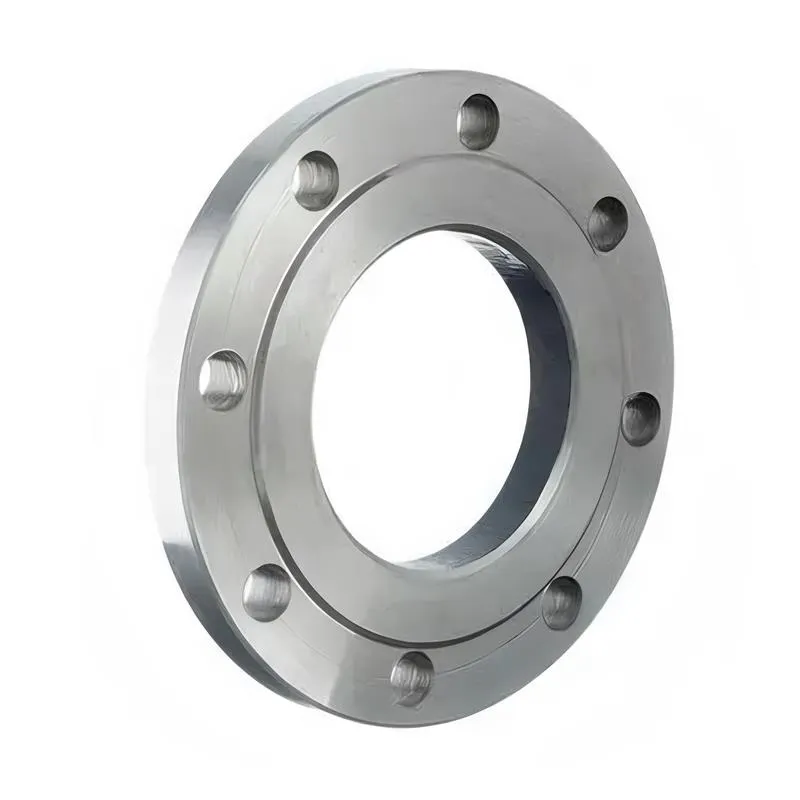
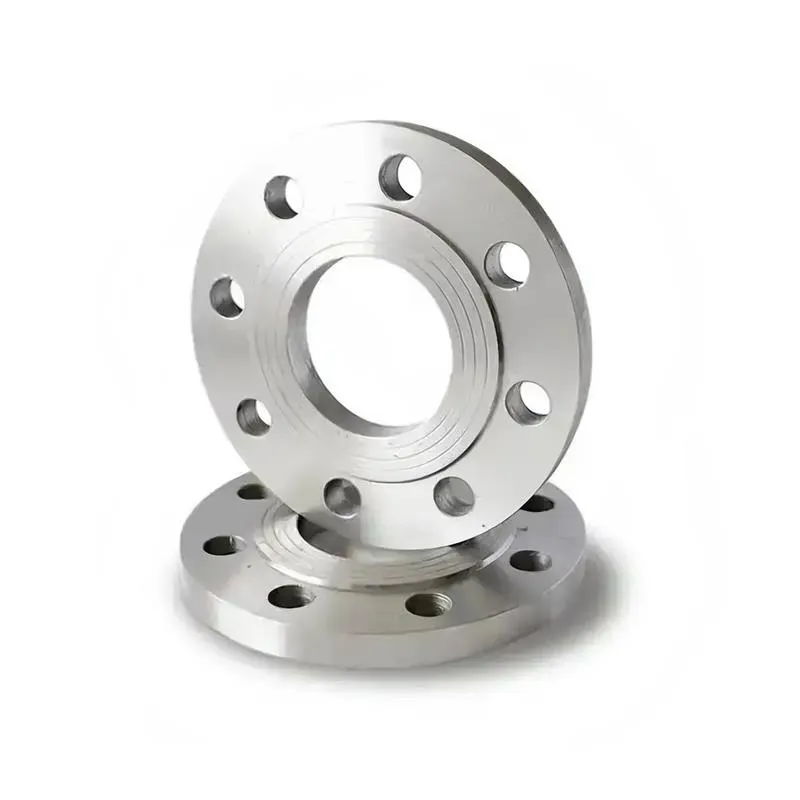
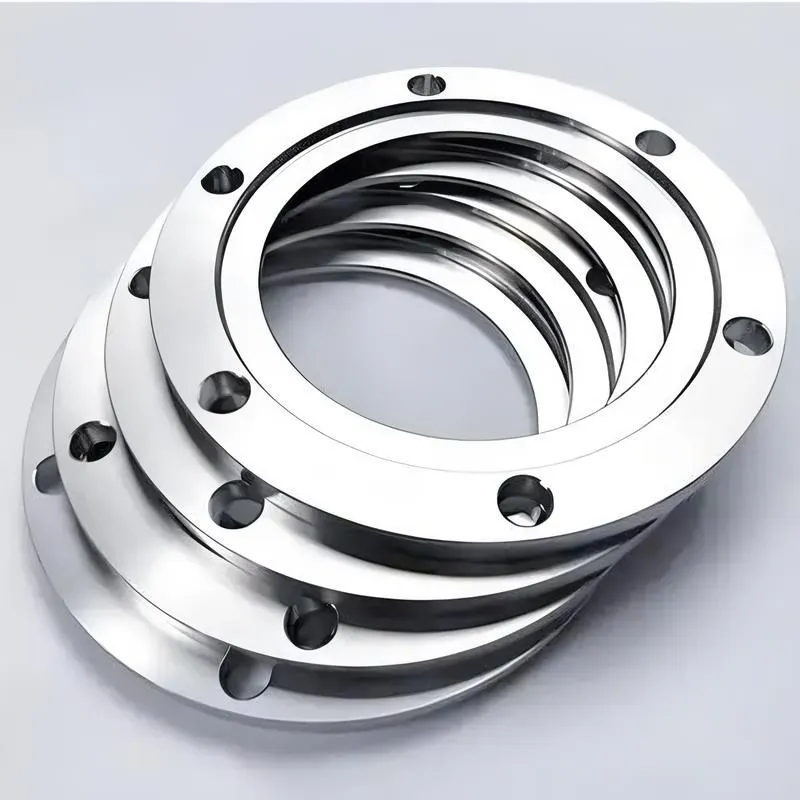
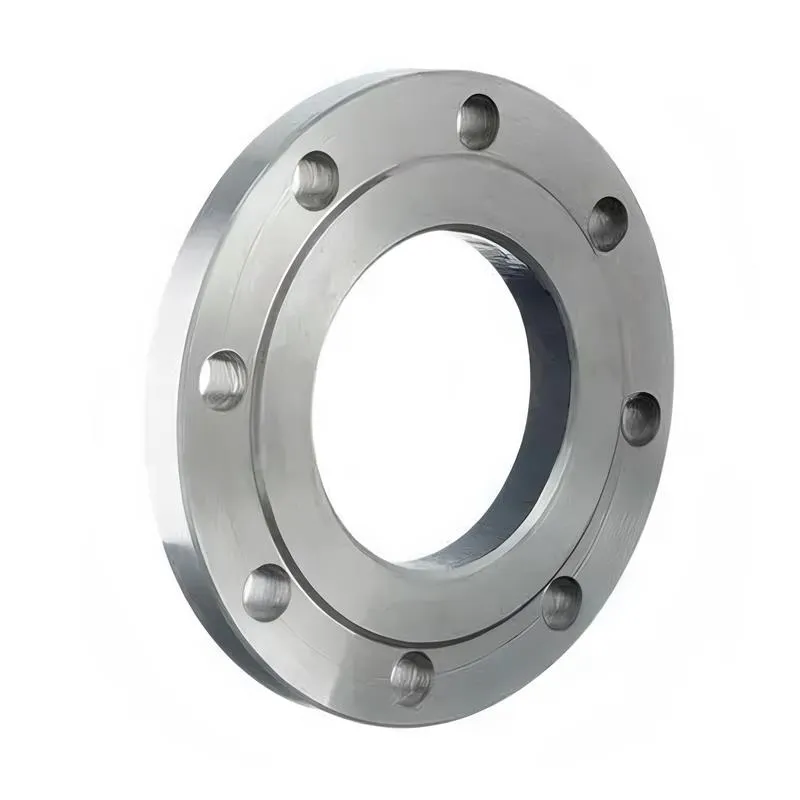
A flange—also referred to as a flange plate or rim—is a component used to connect shafts to one another, or, more commonly, to join the ends of pipes. Flanges are also utilized at the inlet and outlet ports of equipment to facilitate connections between two devices—for instance, the flange on a speed reducer. A "flange connection" or "flanged joint" refers to a detachable joint assembly comprising three interconnected elements—a flange, a gasket, and bolts—that together form a sealed structural unit. In the context of piping systems, a "pipe flange" specifically denotes a flange used for plumbing within the installation; when applied to equipment, it refers to the inlet or outlet flange of that specific device. Flanges feature a series of holes through which bolts are inserted to securely fasten the two flanges together, while a gasket placed between the flanges ensures a leak-proof seal. Flanges are broadly categorized into three types: threaded (screw-in) flanges, welded flanges, and clamp-type flanges. Flanges are invariably used in pairs; threaded flanges are suitable for low-pressure piping applications, whereas welded flanges are required for systems operating at pressures exceeding 4 kilograms per square centimeter. A sealing gasket is inserted between the two flange plates, which are then firmly secured using bolts. The thickness of a flange—as well as the specifications of the bolts used to fasten it—vary depending on the specific pressure rating required for the application. When connecting equipment such as water pumps or valves to piping systems, the corresponding connection points on these devices are often manufactured in the shape of a matching flange; this method of attachment is also referred to as a "flange connection." Generally, any connecting component that utilizes bolts to join and seal the perimeters of two flat surfaces—such as the joints in ventilation ducts—is termed a "flange"; such components may collectively be classified as "flange-type parts." However, since such a connection often constitutes merely a *portion* of a larger device—for instance, the interface between a flange and a water pump—it would be inappropriate to classify the entire water pump itself as a "flange-type part." Conversely, smaller components—such as valves—that feature such flanged interfaces may indeed be appropriately categorized as "flange-type parts."
-:-
For detailed product information, please contact sales.
-:
AISI 1042 Steel Flange, Cold Drawn Bar (UNS G10420) Product Information
-:-
For detailed product information, please contact sales.
-:
AISI 1042 Steel Flange, Cold Drawn Bar (UNS G10420) Synonyms
-:-
For detailed product information, please contact sales.
-:
AISI 1042 Steel, Cold Drawn Bar (UNS G10420) Product Information
-:-
For detailed product information, please contact sales.
-:
# **Product Data Sheet: AISI 1042 / UNS G10420 Steel**
## **Product Form: Cold Drawn Bar**
## **Condition: As-Drawn**
---
### **1. Product Overview**
AISI 1042 (UNS G10420) cold drawn bars represent a precision-engineered form of this medium-high carbon steel, produced through a controlled cold drawing process that transforms hot-rolled stock into dimensionally accurate, high-strength bars. With a **nominal carbon content of 0.42%**, this grade offers **exceptional strength, excellent wear resistance, and superior dimensional precision** through work hardening. The cold drawing process imparts a **bright surface finish, tight tolerances, and enhanced mechanical properties**, making this material ideal for precision components requiring both high strength and excellent geometric accuracy without additional heat treatment. This product bridges the gap between general-purpose medium-carbon steels and specialized high-carbon grades, offering an optimal balance of properties for demanding applications.
---
### **2. Chemical Composition (% by Weight)**
| Element | AISI/SAE Specification | UNS G10420 Range | Typical Cold Drawn Analysis | Metallurgical Significance |
|---------|------------------------|------------------|-----------------------------|---------------------------|
| **Carbon (C)** | 0.40 - 0.47 | 0.40 - 0.47 | 0.41 - 0.44 | Primary strengthening; provides excellent response to cold work |
| **Manganese (Mn)** | 0.60 - 0.90 | 0.60 - 0.90 | 0.70 - 0.85 | Enhances hardenability; improves work hardening response |
| **Phosphorus (P)** | ≤ 0.040 | ≤ 0.040 | ≤ 0.020 | Minimized to prevent cold brittleness during drawing |
| **Sulfur (S)** | ≤ 0.050 | ≤ 0.050 | 0.020 - 0.035 | Optimized for machinability via controlled MnS inclusion formation |
| **Silicon (Si)** | 0.15 - 0.30 | 0.15 - 0.30 | 0.20 - 0.25 | Deoxidizer; strengthens ferrite matrix |
| **Iron (Fe)** | Balance | Balance | Balance | Base metal |
**Quality Control for Cold Drawing:**
- **Consistent Chemistry:** Material selected for cold drawing has tightly controlled composition within mid-range specifications
- **Carbon Optimization:** 0.41-0.44% range provides optimal balance of strength and drawability
- **Inclusion Control:** Sulfur and phosphorus carefully managed to prevent drawing defects
- **Batch Uniformity:** Ensures consistent deformation behavior and mechanical properties
---
### **3. Physical Properties**
| Property | Typical Value | Units | Conditions/Notes |
|----------|---------------|-------|-----------------|
| **Density** | 7.85 | g/cm³ | At 20°C (unchanged from base material) |
| **Thermal Conductivity** | 46.0 - 49.0 | W/m·K | At 100°C (reduced 5-8% due to work hardening) |
| **Specific Heat Capacity** | 475 - 485 | J/kg·K | At 20°C |
| **Coefficient of Thermal Expansion** | 11.5 - 12.0 | ×10⁻⁶/°C | 20-100°C range |
| **Electrical Resistivity** | 0.21 - 0.23 | μΩ·m | At 20°C (increased 10-15% due to cold work) |
| **Modulus of Elasticity** | 29,000 - 30,000 ksi | 200 - 207 GPa | Slight anisotropy in drawing direction |
| **Shear Modulus** | 11,500 ksi | 79.3 GPa | Room temperature |
| **Poisson's Ratio** | 0.29 - 0.30 | - | Room temperature |
| **Magnetic Properties** | Ferromagnetic | - | Up to Curie temperature (~770°C) |
---
### **4. Mechanical Properties (Cold Drawn Condition)**
#### **A. Guaranteed Minimum Mechanical Properties**
*Per ASTM A108 for cold finished carbon steel bars*
| Property | Imperial Units | Metric Units | Test Standard |
|----------|----------------|--------------|---------------|
| **Tensile Strength, min** | 92 ksi | 635 MPa | ASTM A370 / ISO 6892-1 |
| **Yield Strength (Rp0.2), min** | 72 ksi | 495 MPa | ASTM A370 / ISO 6892-1 |
| **Elongation in 2", min** | 12% | 12% | ASTM A370 / ISO 6892-1 |
| **Reduction of Area, min** | 35% | 35% | ASTM A370 / ISO 6892-1 |
| **Brinell Hardness Range** | 200 - 240 HBW | 200 - 240 HBW | ASTM E10 |
| **Rockwell Hardness** | C20 - C28 | C20 - C28 | ASTM E18 |
#### **B. Typical Mechanical Properties by Diameter**
| Diameter | Tensile Strength | Yield Strength | Elongation | Hardness (HBW) | Work Hardening Increase |
|----------|------------------|----------------|------------|----------------|-------------------------|
| **≤ 16 mm (0.625")** | 95-102 ksi / 655-705 MPa | 75-82 ksi / 515-565 MPa | 11-15% | 210-230 | 18-25% over HR |
| **16-32 mm (0.625-1.25")** | 92-98 ksi / 635-675 MPa | 72-78 ksi / 495-540 MPa | 12-16% | 205-225 | 15-20% over HR |
| **32-50 mm (1.25-2.0")** | 90-96 ksi / 620-660 MPa | 70-76 ksi / 480-525 MPa | 13-17% | 200-220 | 12-18% over HR |
#### **C. Through-Thickness Property Distribution**
*For 25 mm diameter bar (representative):*
- **Surface Hardness:** 220-225 HBW (zone of maximum cold work)
- **Mid-Radius Hardness:** 215-220 HBW
- **Center Hardness:** 210-215 HBW
*Property gradient: 4-6% variation from surface to center*
#### **D. Fatigue & Endurance Properties**
- **Fatigue Strength (R=-1, 10⁷ cycles):** 280-320 MPa (polished specimen)
- **Endurance Limit Ratio:** 0.45-0.50 of tensile strength
- **Notch Sensitivity Index (q):** 0.7-0.8
- **Surface Finish Effect:** Significant improvement over hot rolled due to reduced stress concentrations
---
### **5. Processing Characteristics**
#### **A. Cold Drawn Condition Attributes**
- **Surface Finish:** Bright, uniform metallic appearance
- **Surface Roughness (Ra):** 1.6 - 3.2 μm (63 - 125 μin) typical
- **Surface Integrity:** Scale-free, minimal drawing marks, no seams or laps
- **Decarburization Depth:** ≤ 0.15 mm (significantly reduced from hot rolled)
- **Residual Stress Pattern:** Compressive at surface (100-200 MPa), tensile in core
- **Dimensional Accuracy:** Exceptional (see tolerance specifications below)
#### **B. Machinability**
- **Rating:** 40-45% (relative to AISI 1212 steel as 100%)
- **Cutting Speed:** 20-30 m/min (65-100 SFM) with carbide tools
- **Feed Rates:** 0.10-0.20 mm/rev (0.004-0.008 in/rev)
- **Tool Materials:** Carbide grades C2/C3 with sharp edges and positive rake
- **Coolant Requirement:** Essential for heat management and chip control
- **Chip Formation:** Short, broken chips typical
- **Surface Finish Capability:** Ra 1.6-3.2 μm typical; 0.8 μm achievable
#### **C. Weldability**
- **Rating:** Very Poor (generally not recommended)
- **If Required:** Pre-heat 250-300°C (480-570°F); post-weld stress relief mandatory
- **Filler Metals:** E7018 or equivalent low-hydrogen electrodes
- **Cracking Risk:** Very high due to carbon content and residual stresses
- **Recommendation:** Anneal before welding if absolutely necessary
#### **D. Heat Treatment Response**
- **Stress Relief:** 595-650°C (1100-1200°F) for 1-2 hours
- **Full Annealing:** 830-860°C (1525-1580°F) to eliminate cold work effects
- **Normalizing:** 900-925°C (1650-1700°F) to refine grain structure
- **Through-Hardening:** Excellent response due to 0.42% carbon content
- **Surface Hardening:** Ideal for induction hardening (case hardness 58-62 HRC achievable)
#### **E. Forming & Fabrication**
- **Cold Bending:** Very limited; minimum bend radius ≈ 5 × diameter
- **Thread Rolling:** Excellent for high-strength threads
- **Knurling:** Produces sharp, well-defined patterns
- **Grindability:** Good with proper wheels and coolant
- **Cutting Methods:** Band saw or cold saw recommended
---
### **6. Microstructural Characteristics**
- **Grain Structure:** Highly elongated ferrite grains in drawing direction
- **Pearlite Content:** ~65-75% (higher than hot rolled due to carbon content)
- **Work Hardening:** High dislocation density throughout cross-section
- **Texture Development:** Strong <110> + <111> duplex fiber texture
- **Inclusion Morphology:** Type II manganese sulfides elongated 5:1 to 10:1 aspect ratio
- **Surface Condition:** Minimal decarburization (<0.1 mm); clean, oxide-free surface
---
### **7. Product Applications**
#### **High-Strength Precision Components**
- **Automotive Transmission:** Gear shafts, synchronizer hubs, shift forks
- **Steering Systems:** Rack and pinion shafts, steering column shafts
- **Suspension Components:** High-strength bolts, pivot pins, ball studs
- **Engine Components:** Camshafts, crankshafts (medium duty), connecting rods
#### **Industrial Machinery & Equipment**
- **Power Transmission:** High-torque shafts, splined shafts, coupling components
- **Hydraulic Systems:** High-pressure piston rods, cylinder rods, valve stems
- **Machine Tools:** Spindle shafts, lead screws, precision guide rods
- **Pump Components:** High-pressure pump shafts, impeller shafts
#### **Tooling & Manufacturing**
- **Mold Components:** Large ejector pins, leader pins, core pins
- **Die Components:** Punches, die buttons, guide posts
- **Fixture Components:** Precision locating pins, drill bushings, wear strips
- **Gauges & Instruments:** High-precision shafts, arbors, mandrels
#### **Heavy Equipment & Construction**
- **Excavator Components:** Bucket pins, linkage arms, hydraulic cylinder rods
- **Mining Equipment:** Drill steel, cutter shafts, conveyor drive components
- **Crane Components:** Sheave shafts, boom foot pins, load blocks
- **Foundation Equipment:** Pile driver components, hammer parts
#### **Fasteners & Structural Components**
- **Grade 12.9 Fasteners:** Ultra-high-strength bolts, studs, precision pins
- **Bearing Components:** Races, rollers, bushings for high-load applications
- **Coupling Components:** Gear couplings, flexible couplings, universal joints
- **Aerospace Components:** Non-critical structural components, landing gear parts
---
### **8. International Standards & Equivalents**
#### **Direct Standards:**
| Standard System | Standard Number | Grade Designation | Condition Specification |
|-----------------|----------------|-------------------|-------------------------|
| **AISI/SAE** | - | 1042 | Cold Drawn |
| **UNS** | - | G10420 | Unified numbering system |
| **ASTM** | A108 | Grade 1042 | Cold finished carbon steel bars |
| **ASTM** | A29/A29M | Grade 1042 | Condition CD (Cold Drawn) |
#### **International Equivalents (Approximate):**
| Country/Region | Standard | Grade/Designation | Comparison Notes |
|----------------|----------|-------------------|------------------|
| **ISO** | 683-18 | Type 1.0542 | Cold worked (C) condition |
| **EN** | 10083-2 | C42 (1.0514) | +C (Cold formed) |
| **Germany** | DIN 17200 | C42 | Kaltgezogen (cold drawn) |
| **Japan** | JIS G3123 | S42C-D | Cold drawn (D suffix) |
| **China** | GB/T 3078 | 42 | Cold drawn precision |
| **UK** | BS 970-1 | 080M42 | Condition CD (Cold Drawn) |
| **France** | NF A35-551 | XC42 | Drawn condition available |
---
### **9. Dimensional Specifications & Tolerances**
#### **Standard Tolerance Classes (ISO 286-2):**
| Diameter Range | h11 (Commercial) | h9 (Precision) | h8 (High Precision) |
|----------------|------------------|----------------|---------------------|
| **≤ 16 mm** | ±0.110 mm | ±0.043 mm | ±0.027 mm |
| **16-30 mm** | ±0.130 mm | ±0.052 mm | ±0.033 mm |
| **30-50 mm** | ±0.160 mm | ±0.062 mm | ±0.039 mm |
#### **Geometric Tolerances:**
- **Out-of-Roundness:** ≤ 50% of diameter tolerance
- **Straightness:** ≤ 0.5 mm per meter (standard); ≤ 0.2 mm per meter (precision)
- **Length Tolerance:** Cut-to-length ±1.0 mm available
- **End Condition:** Squareness ≤ 0.5°; standard chamfer 0.5-1.0 mm × 45°
#### **Surface Quality Specifications:**
- **Surface Roughness:** Ra ≤ 3.2 μm standard; Ra ≤ 1.6 μm available
- **Visual Standards:** Bright finish, free of rust and discoloration
- **Cleanliness:** Light drawing oil present; degreased available
- **Surface Defects:** Free of seams, laps, and excessive tool marks
---
### **10. Quality Assurance & Testing**
#### **Mandatory Testing:**
1. **Chemical Analysis:** Complete spectrographic analysis per heat
2. **Tensile Testing:** Longitudinal testing per lot
3. **Hardness Testing:** Surface, mid-radius, and center measurements
4. **Dimensional Verification:** Statistical sampling (100% for precision grades)
5. **Surface Inspection:** Comprehensive visual and tactile examination
#### **Enhanced Testing Services:**
- **Microstructure Examination:** Grain size, inclusion rating, decarb measurement
- **Non-Destructive Testing:** Ultrasonic, magnetic particle, or eddy current
- **Impact Testing:** Charpy V-notch at various temperatures
- **Residual Stress Measurement:** X-ray diffraction method
- **Fatigue Testing:** Rotating beam or axial fatigue tests
#### **Certification & Documentation:**
- **EN 10204 3.1:** Mill Test Certificate with test results
- **EN 10204 3.2:** Inspection Certificate with third-party verification
- **Traceability:** Full heat number traceability from melt to finished product
- **Process Documentation:** Drawing reduction schedules, die maintenance records
---
### **11. Technical Advantages & Limitations**
#### **Key Advantages:**
1. **Enhanced Strength:** 15-25% higher tensile strength than hot rolled
2. **Superior Dimensional Accuracy:** Tight tolerances achievable
3. **Excellent Surface Finish:** Scale-free bright surface reduces machining time
4. **Improved Wear Resistance:** Due to work hardening
5. **Good Hardenability:** 0.42% carbon provides excellent heat treatment response
6. **Reduced Machining Allowances:** Lower material waste
#### **Design Considerations:**
- **Residual Stresses:** Must be considered for precision applications
- **Anisotropy:** Properties vary with orientation relative to drawing direction
- **Stress Relief:** Recommended before precision machining operations
- **Temperature Limits:** Avoid heating above 300°C without considering property changes
#### **Comparison with Hot Rolled AISI 1042:**
| Characteristic | Cold Drawn 1042 | Hot Rolled 1042 | Advantage |
|----------------|-----------------|-----------------|-----------|
| **Tensile Strength** | 92-100 ksi | 80-88 ksi | +15-20% |
| **Surface Finish** | Ra 1.6-3.2 μm | Ra 12.5-25 μm | Significantly better |
| **Dimensional Tolerance** | h9/h11 (±0.04-0.16 mm) | Commercial (±0.4-1.2 mm) | Much tighter |
| **Straightness** | ≤ 0.5 mm/m | ≤ 1.5 mm/m | Improved |
| **Machining Time** | Reduced 20-30% | Standard | Cost saving |
| **Cost Premium** | 25-35% | Base price | Higher investment |
---
### **12. Storage, Handling & Safety**
#### **Storage Requirements:**
- Store in dry, temperature-controlled indoor environment
- Keep in original protective packaging until use
- Stack on flat surfaces with uniform support
- Maintain relative humidity < 60%
- Implement FIFO inventory system
#### **Handling Precautions:**
- Use clean gloves or handling tools to prevent corrosion
- Avoid dragging bars across each other
- Use nylon slings or padded hooks for lifting
- Support full length during handling to prevent permanent bending
- Protect precision surfaces from impact damage
#### **Safety Information:**
- **Material Safety:** Non-hazardous solid metal product
- **Machining Hazards:** Use proper ventilation for dust control
- **Sharp Edges:** Cut ends may have burrs; deburring recommended
- **Fire Safety:** Non-combustible material
- **Environmental Impact:** 100% recyclable as ferrous scrap
---
### **13. Ordering Information**
#### **Typical Order Specification:**
```
Material: AISI 1042 Cold Drawn Round Bar (UNS G10420)
Diameter: 25.00 mm ±0.052 mm (h9 tolerance)
Condition: As-drawn, bright finish, degreased
Length: 3000 mm ±1 mm (cut-to-length)
Quantity: 50 pieces
Surface Quality: Ra ≤ 3.2 μm
Certification: EN 10204 3.2 with full traceability
Packaging: VCI wrapped, plastic end caps, bundled
Marking: Heat number, grade, size stamped every meter
Special Requirements: Stress relief available upon request
```
#### **Available Options:**
- **Tolerance Grades:** h11, h9, h8, or custom specifications
- **Surface Conditions:** As-drawn, polished, ground, or turned
- **Heat Treatment:** Stress-relieved, annealed, normalized, or spheroidized
- **Testing Packages:** Standard or enhanced mechanical/chemical testing
- **Special Processing:** Centerless grinding, peeling, polishing, straightening
- **Protective Coatings:** Temporary rust preventatives or special packaging
---
**Disclaimer:** The information provided represents typical properties for AISI 1042 (UNS G10420) cold drawn steel bars. Actual properties may vary within standard specification limits. The cold drawing process induces significant residual stresses that may cause dimensional changes during subsequent machining or heat treatment. The higher carbon content (0.42%) provides excellent strength but requires careful machining and heat treatment practices. Users should conduct appropriate testing to verify material suitability for specific applications. Engineering consultation is recommended for critical applications.
**Revision:** 2.0
**Effective Date:** January 2025
**Document Control:** DS-1042-CD-EN
**UNS Designation:** G10420
**AISI/SAE Designation:** 1042
**Special Note:** This grade represents an optimal choice for applications requiring the strength approaching that of 1045 steel while maintaining better machinability and drawability characteristics.
-:-
For detailed product information, please contact sales.
-:
AISI 1042 Steel, Cold Drawn Bar (UNS G10420) Specification
Dimensions
Size:
Diameter 20-1000 mm Length <6059 mm
Size:We can customized as required
Standard:
Per your request or drawing
We can customized as required
Properties(Theoretical)
Chemical Composition
-:-
For detailed product information, please contact sales.
-:
AISI 1042 Steel, Cold Drawn Bar (UNS G10420) Properties
-:-
For detailed product information, please contact sales.
-:
Applications of AISI 1042 Steel Flange, Cold Drawn Bar (UNS G10420)
-:-
For detailed product information, please contact sales.
-:
Chemical Identifiers AISI 1042 Steel Flange, Cold Drawn Bar (UNS G10420)
-:-
For detailed product information, please contact sales.
-:
Packing of AISI 1042 Steel Flange, Cold Drawn Bar (UNS G10420)
-:-
For detailed product information, please contact sales.
-:
Standard Packing:
-:-
For detailed product information, please contact sales.
-:
Typical bulk packaging includes palletized plastic 5 gallon/25 kg. pails, fiber and Steel Flange drums to 1 ton super sacks in full container (FCL) or truck load (T/L) quantities. Research and sample quantities and hygroscopic, oxidizing or other air sensitive materials may be packaged under argon or vacuum. Solutions are packaged in polypropylene, plastic or glass jars up to palletized 2530 gallon liquid totes Special package is available on request. E FORUs’ is carefully handled to minimize damage during storage and transportation and to preserve the quality of our products in their original condition