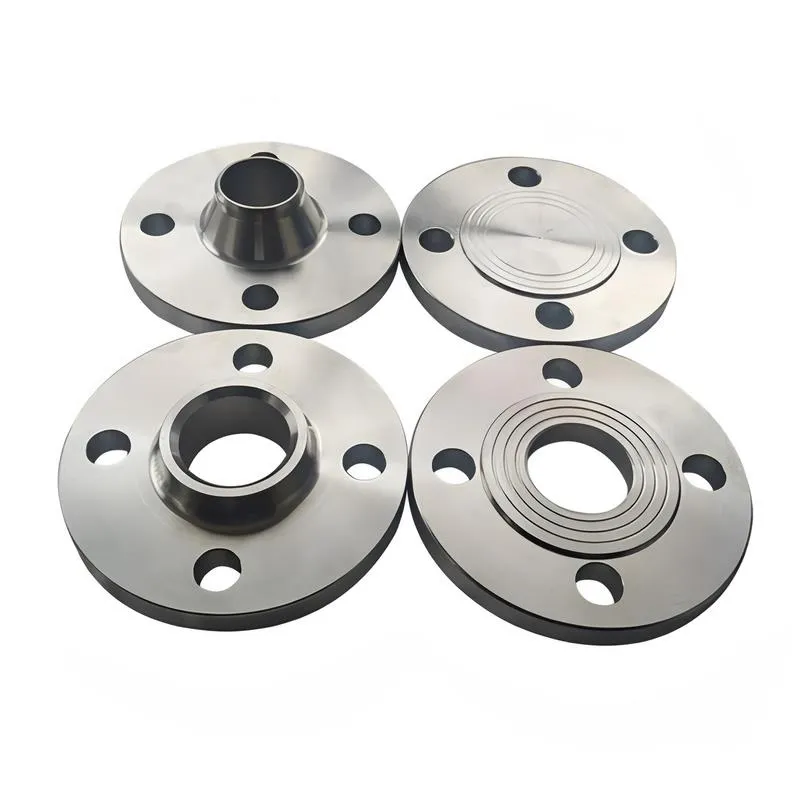
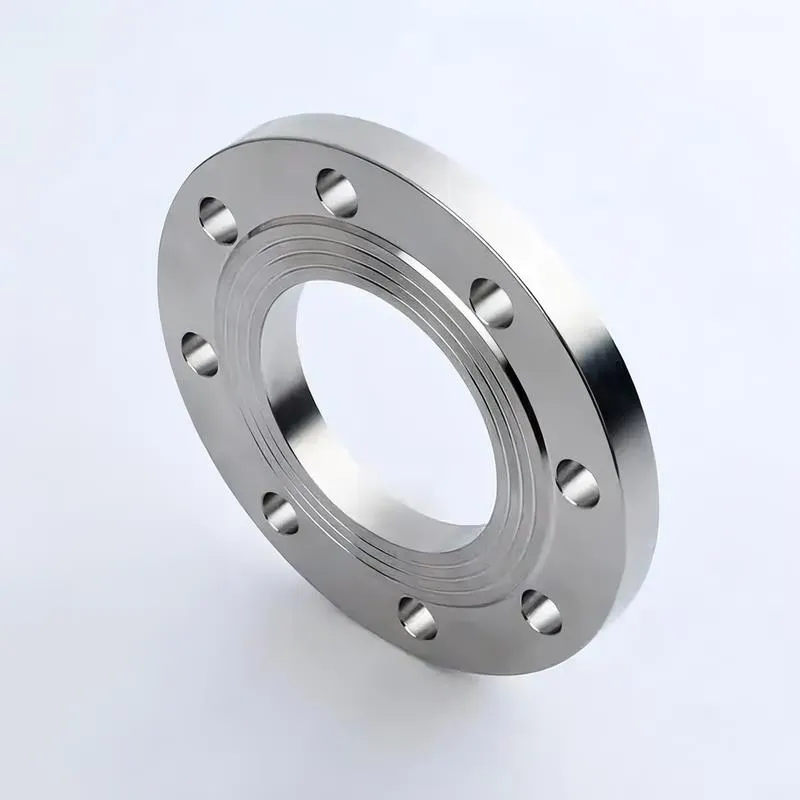
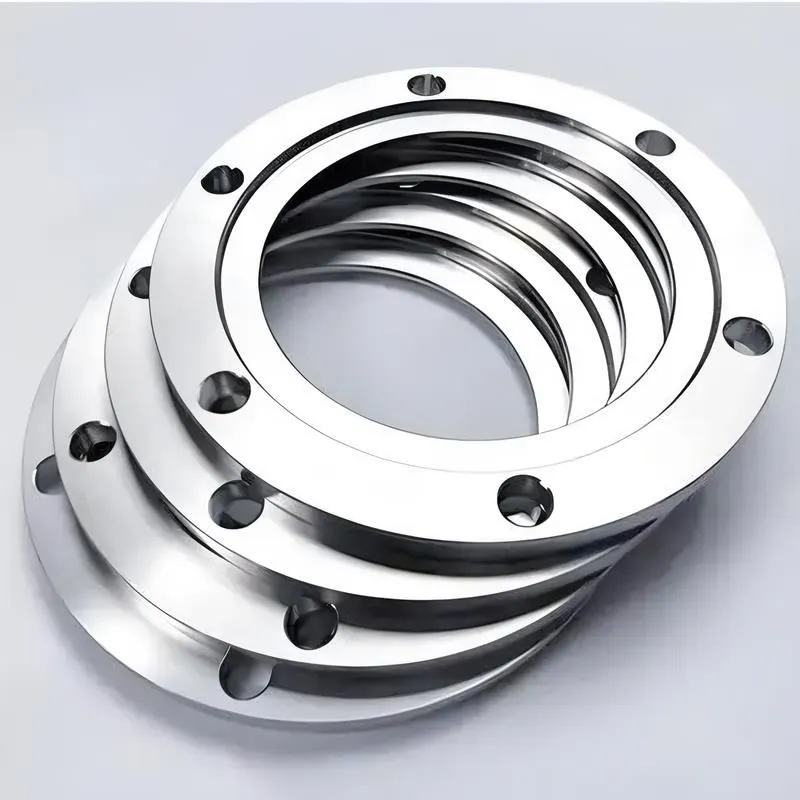
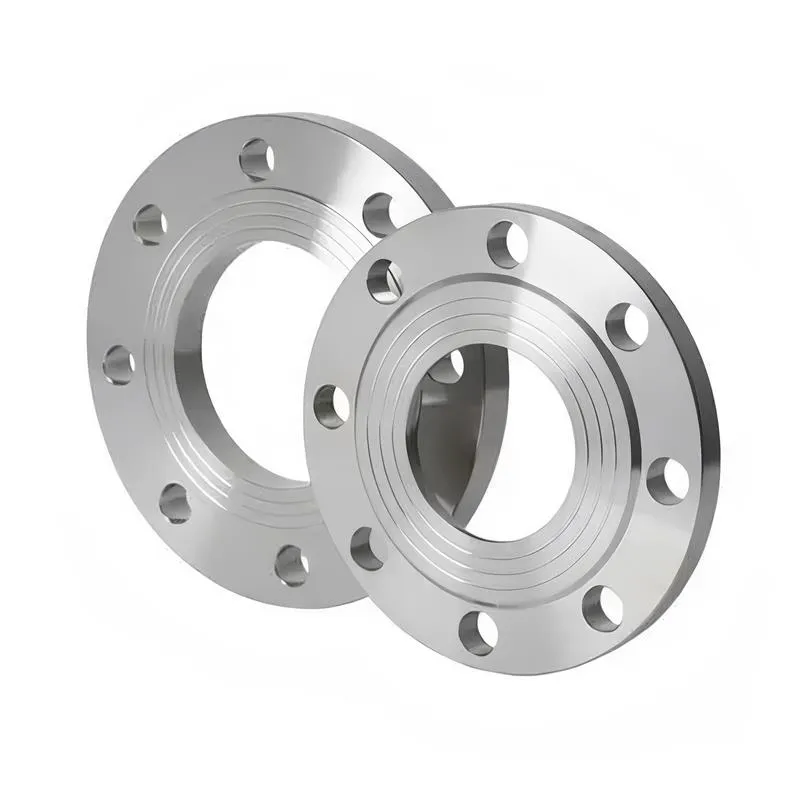
1,We Manufacturing processes are primarily classified into four types:
1:Forging,
2:Casting,
3:Cutting,
4:Rolling.
2,We can manufacture in accordance with these standards.
Standards:
GB Series (Chinese Standards), JB Series (Machinery Standards), HG Series (Chemical Industry Standards), ASME B16.5 (American Standards), BS4504 (British Standards), DIN (German Standards), and JIS (Japanese Standards).
Internationally, there are two primary systems of pipe flange standards: the European system, represented by the German DIN standards (including those of the former Soviet Union), and the American system, represented by the US ANSI pipe flange standards. Other common standards include: the Chinese Ministry of Machinery Industry standards (JB series), the Ministry of Chemical Industry standards (HG series), the Chinese National Standard *GB/T 9112–9124-2010 Steel Pipe Flanges*, as well as US standards (ASME B16.5), British standards (BS4504), German standards (DIN), Japanese standards (JIS), and marine standards (CBM), among others.
The nominal pressure ratings for the PN series are designated by "PN" and comprise the following nine levels: PN2.5, PN6, PN10, PN16, PN25, PN40, PN63, PN100, and PN160.
The nominal pressure ratings for the Class series are designated by "Class" and comprise the following six levels: Class150, Class300, Class600, Class900, Class1500, and Class2500.
Flange Classification
1. **According to Chemical Industry Standards:** Flanges are classified as follows:
Plate Flat Welding Flange (PL), Necked Flat Welding Flange (SO), Necked Butt Welding Flange (WN), Integral Flange (IF), Socket Welding Flange (SW), Threaded Flange (Th), Butt Welding Ring Loose Flange (PJ/SE), Blind Flange (BL), Flat Welding Ring Loose Flange (PJ/PJ), and Lined Blind Flange (BL(s)).
2. **According to Petrochemical (SH) Industry Standards:** Flanges are classified as follows:
Threaded Flange (PL), Butt Welding Flange (WN), Flat Welding Flange (SO), Socket Welding Flange (SW), Loose Flange (LJ), and Blind Flange (no specific designation).
3. **According to Machinery (JB) Industry Standards:** Flanges are classified as follows:
Integral Flange, Butt Welding Flange, Plate Flat Welding Flange, Butt Welding Ring Plate Loose Flange, Flat Welding Ring Plate Loose Flange, Lap Joint Ring Plate Loose Flange, and Blind Flange.
4. **According to Connection Method/Type:** Flanges are classified as follows:
Plate Flat Welding Flange, Necked Flat Welding Flange, Necked Butt Welding Flange, Socket Welding Flange, Threaded Flange, Blind Flange, Necked Butt Welding Ring Loose Flange, Flat Welding Ring Loose Flange, Ring-Type Joint (RTJ) Flange and Blind Flange, Large-Diameter Plate Flange, Large-Diameter High-Neck Flange, Figure-8 Blind Plate, Butt Welding Ring Loose Flange, etc.
5. **According to the Component Being Connected:** Flanges can be classified into Vessel Flanges and Pipe Flanges.
6. **According to Structural Type:** Flanges include Integral Flanges, Threaded Flanges, Flat Welding Flanges, Butt Welding Flanges, Lap Joint (Loose/Swivel) Flanges, and Blind Flanges.
A flange—also referred to as a flange plate or rim—is a component used to connect shafts to one another, or, more commonly, to join the ends of pipes. Flanges are also utilized at the inlet and outlet ports of equipment to facilitate connections between two devices—for instance, the flange on a speed reducer. A "flange connection" or "flanged joint" refers to a detachable joint assembly comprising three interconnected elements—a flange, a gasket, and bolts—that together form a sealed structural unit. In the context of piping systems, a "pipe flange" specifically denotes a flange used for plumbing within the installation; when applied to equipment, it refers to the inlet or outlet flange of that specific device. Flanges feature a series of holes through which bolts are inserted to securely fasten the two flanges together, while a gasket placed between the flanges ensures a leak-proof seal. Flanges are broadly categorized into three types: threaded (screw-in) flanges, welded flanges, and clamp-type flanges. Flanges are invariably used in pairs; threaded flanges are suitable for low-pressure piping applications, whereas welded flanges are required for systems operating at pressures exceeding 4 kilograms per square centimeter. A sealing gasket is inserted between the two flange plates, which are then firmly secured using bolts. The thickness of a flange—as well as the specifications of the bolts used to fasten it—vary depending on the specific pressure rating required for the application. When connecting equipment such as water pumps or valves to piping systems, the corresponding connection points on these devices are often manufactured in the shape of a matching flange; this method of attachment is also referred to as a "flange connection." Generally, any connecting component that utilizes bolts to join and seal the perimeters of two flat surfaces—such as the joints in ventilation ducts—is termed a "flange"; such components may collectively be classified as "flange-type parts." However, since such a connection often constitutes merely a *portion* of a larger device—for instance, the interface between a flange and a water pump—it would be inappropriate to classify the entire water pump itself as a "flange-type part." Conversely, smaller components—such as valves—that feature such flanged interfaces may indeed be appropriately categorized as "flange-type parts."
-:-
For detailed product information, please contact sales.
-:
ASTM A897 Grade 2 (150-100-07 or 150-110-7) Austempered Ductile Iron Flange Product Information
-:-
For detailed product information, please contact sales.
-:
ASTM A897 Grade 2 (150-100-07 or 150-110-7) Austempered Ductile Iron Flange Synonyms
-:-
For detailed product information, please contact sales.
-:
ASTM A897 Grade 2 (150-100-07 or 150-110-7) Austempered Ductile Iron Product Information
-:-
For detailed product information, please contact sales.
-:
# **Product Technical Data Sheet: ASTM A897/A897M Grade 2 (150/100/07) Austempered Ductile Iron (ADI)**
---
## **1. Product Overview**
**ASTM A897/A897M Grade 150/100/07** represents the **highest strength tier of standardized Austempered Ductile Iron (ADI)**, pushing the material to its practical performance limits. This grade delivers **exceptional tensile and yield strength combined with appreciable ductility**, making it a viable alternative to high-strength forged and heat-treated alloy steels in the most demanding applications. Designed for components where **extreme load capacity, maximum wear resistance, and significant weight savings** are critical, this material leverages a highly refined ausferritic microstructure achieved through precise low-temperature austempering. The grade designation may appear historically as **150-100-07** (ksi) or **150-110-7** (MPa rounding), with the modern standard solidifying as **150/100/07**, indicating minimums of **150 ksi (1035 MPa) tensile strength, 100 ksi (690 MPa) yield strength, and 7% elongation**.
---
## **2. Governing Standards & Specifications**
This ultra-high-performance grade is defined within the ASTM austempering standard, with clear linkages to evolving international classifications.
* **Primary Standard:**
* **ASTM A897/A897M** - *Standard Specification for Austempered Ductile Iron Castings* (Grade 2: 150/100/07).
* **International & Historical Context:**
* **ISO 17804:** *Austempered spheroidal graphite cast irons – Classification*. The closest equivalent is **ADI 1050-700-07** or **JS/1050/7/360/12**. The 150/100/07 designation (in ksi) is a legacy of U.S. customary units.
* **Note on Nomenclature:** The dual historical mention of "150-100-07" and "150-110-7" reflects a transitional period. **"150-110-7"** likely represents an early or informal metric conversion (150 ksi ≈ 1034 MPa, rounded to 1050 MPa; 100 ksi ≈ 689 MPa, rounded to 700 MPa; and 7% elongation). The official ASTM metric designation is **150/100/07**.
* **SAE J2477:** Recognizes equivalent high-strength grades.
* **Key Referenced Testing Standards:**
* **ASTM E8:** Tensile Testing
* **ASTM E23:** Charpy Impact Testing
* **ASTM A247:** Microstructure Evaluation
* **ASTM E384:** Microindentation Hardness (for phase analysis)
---
## **3. Typical Base Iron Chemical Composition**
Achieving this performance level requires a highly engineered base iron with robust alloying for extreme hardenability.
| Element | Target Range (wt.%) | Critical Role for Grade 150/100/07 ADI |
| :--- | :--- | :--- |
| **Carbon (C)** | 3.5 - 3.7 | Provides carbon for the ausferritic reaction. At this strength level, the balance is critical to achieve high strength without promoting excessive retained austenite or unstable carbides. |
| **Silicon (Si)** | **2.4 - 2.6** | **Precisely controlled.** Must be sufficient to suppress carbide formation during the rapid quench to very low temperature, but not so high as to over-stabilize austenite, which would lower yield strength. |
| **Manganese (Mn)** | **≤ 0.20** | **Minimal.** Any segregation can lead to martensite/carbide formation in intercellular regions, catastrophically reducing toughness and ductility. |
| **Molybdenum (Mo)** | **0.40 - 0.60** | **Essential for hardenability.** Ensures the austenite transforms to ausferrite throughout the section during the quench to the low austempering temperature, preventing high-temperature transformation products. |
| **Copper (Cu)** | **0.9 - 1.3** | **Primary alloy.** Works synergistically with Mo, providing uniform hardenability and solid solution strengthening. |
| **Nickel (Ni)** | **1.0 - 1.8** | **Almost always required.** Added with Mo to guarantee through-hardening in production castings, especially for varying sections, and to improve toughness at this strength level. |
| **Magnesium (Mg)** | 0.03 - 0.05 | Ensures very high nodularity (>90%).
| **Trace Elements** | **Extremely Low** | Elements like Sn, Sb, Pb, Bi are tightly controlled via high-purity charge materials.
---
## **4. Physical & Mechanical Properties**
Grade 150/100/07 defines the upper boundary of conventional ADI mechanical performance.
| Property | Minimum Requirement (ASTM A897 Grade 2) | Typical Value / Performance Characteristics |
| :--- | :--- | :--- |
| **Tensile Strength (UTS)** | **1035 MPa (150 ksi)** | Exceptional strength, competing with high-strength low-alloy (HSLA) steels like 4140/4340 in the quenched & tempered condition. |
| **Yield Strength (0.2% YS)** | **690 MPa (100 ksi)** | Extremely high resistance to plastic deformation. |
| **Elongation** | **7%** | **Meaningful ductility** is maintained, providing a crucial safety margin against catastrophic brittle fracture. A key differentiator from white irons or poorly processed material. |
| **Hardness (Brinell)** | **341 - 401 HBW** | Typically 361-375 HBW (approx. 38-41 HRC). Provides outstanding resistance to abrasion, galling, and contact fatigue. |
| **Modulus of Elasticity** | **165 - 175 GPa** | Consistent with ductile iron. |
| **Charpy Impact (Unnotched)** | **30 - 60 J** | Good energy absorption for its hardness, though impact values are lower than lower-strength ADI grades. |
| **Charpy Impact (V-notch)** | **Typically 10 - 16 J @ 23°C** | Moderate fracture toughness. **Notch sensitivity is high;** design must eliminate stress raisers. |
| **Fatigue Endurance Limit** | **~470 - 570 MPa** | **Outstanding.** Approximately 0.45-0.55 x UTS. Often superior to through-hardened steels of similar hardness due to compressive surface stresses and microstructure. |
| **Density** | **~7.1 g/cm³** | ~10% lighter than steel, contributing to weight savings. |
| **Damping Capacity** | **Good (~2-3x steel)** | Beneficial in reducing noise and vibration. |
| **Microstructure** | **Ultra-Fine Ausferrite.** Extremely fine, densely packed acicular ferrite with a **low volume of high-carbon austenite** (typically 10-20%). Achieved via a **very low austempering temperature range (~210-250°C / 410-480°F)**. This structure approaches lower bainite in fineness, providing the high strength and hardness. |
---
## **5. Product Applications**
This grade is reserved for ultra-demanding applications where its premium cost is justified by performance gains or system-level benefits.
* **Extreme-Duty Mining & Earthmoving:**
* **Gears and pinions** for the largest haul truck and excavator final drives.
* **Critical track system components** (drive sprockets, roller flanges) subject to extreme abrasion and impact.
* **High-Performance Motorsport & Aerospace:**
* **Critical drivetrain components** (gears, shafts, differentials) in top-tier racing where minimum weight and maximum strength are non-negotiable.
* **Landing gear components and actuator parts** for aircraft and UAVs.
* **Heavy Industrial & Manufacturing:**
* **High-load, high-wear gears** in industrial gearboxes, crusher components.
* **Anvils, dies, and tooling** for metal forming.
* **Defense:**
* **Lightweight armor, suspension components for combat vehicles, and weapon system parts.**
* **Oil & Gas (Severe Service):**
* **Components for high-pressure frac pumps and downhole tools.**
---
## **6. Austempering Process & Fabrication Notes**
* **Heat Treatment Process:** This is a **specialized, tightly controlled process**.
1. **Austenitizing:** 870-900°C.
2. **Quenching:** Very rapid transfer and quench into salt bath at **210-250°C**.
3. **Isothermal Hold:** 2-4+ hours to allow the austempering transformation to complete in the fine, low-temperature regime.
4. **Air Cool.**
* **Process Sensitivity:** This grade has the **most critical processing window** of all standard ADI grades. Minor deviations in time or temperature can lead to unacceptable microstructures (martensite, coarse bainite) and property variations.
* **Machinability:** **Extremely Difficult** in the final condition. **All significant machining must be completed in a soft, normalized or annealed state prior to austempering.** Final sizing is limited to **grinding, honing, or EDM (Electrical Discharge Machining)**. Hard turning with CBN/PCBN tooling is possible but challenging.
* **Weldability:** **Not Weldable.** The heat-affected zone will consist of untempered martensite and is highly prone to cracking. Fabrication is by casting only.
* **Grindability:** Requires careful selection of abrasive wheels and parameters to avoid thermal damage (re-tempering) of the hard surface.
---
## **7. Ordering Information**
**Specify:** **"Austempered Ductile Iron (ADI) Castings, ASTM A897/A897M Grade 2 (150/100/07)."**
**Critical Requirements for Procurement:**
* **Exact Standard and Grade Designation.**
* **Part Drawing & Detailed Specification.**
* **Critical Section Thicknesses & Part Weight:** Non-negotiable for process design.
* **Mandatory Certification Package:**
* Base Iron Chemical Analysis.
* Final Mechanical Test Report (Tensile, Yield, Elongation, Hardness).
* **Comprehensive Microstructure Report:** Must confirm ultra-fine ausferrite, high nodularity, and **absence of martensite, carbides, and pearlite** (per ASTM A247, often requiring deep etch and high-magnification evaluation).
* Charpy Impact Test Data (often specified).
* **Non-Destructive Testing (NDT):** 100% Magnetic Particle Inspection (MPI) or Fluorescent Penetrant Inspection (FPI) is standard. Radiographic (X-ray) or ultrasonic testing is common for high-integrity parts.
---
## **8. Summary: The Pinnacle of Standardized ADI**
**ASTM A897 Grade 150/100/07 ADI is a state-of-the-art engineering material that represents the culmination of austempering technology for cast ferrous components.**
* **Value Proposition:** It provides a **cast-to-shape alternative to high-strength steel forgings and fabrications**, offering weight savings, design complexity, and often superior wear/fatigue performance at a competitive total cost when considering machining and assembly savings.
* **Key Challenge:** Requires a **highly disciplined and capable supply chain** with expertise in alloy design, precision casting, and exacting heat treatment control.
* **Design Imperative:** Engineers must design for casting and ADI's specific characteristics—**generous fillets, uniform sections where possible, and avoidance of stress concentrators**.
**This material is not a drop-in replacement but a strategic choice for re-engineering high-performance systems, enabling breakthroughs in power density, durability, and efficiency.**
-:-
For detailed product information, please contact sales.
-:
ASTM A897 Grade 2 (150-100-07 or 150-110-7) Austempered Ductile Iron Specification
Dimensions
Size:
Diameter 20-1000 mm Length <6563 mm
Size:We can customized as required
Standard:
Per your request or drawing
We can customized as required
Properties(Theoretical)
Chemical Composition
-:-
For detailed product information, please contact sales.
-:
ASTM A897 Grade 2 (150-100-07 or 150-110-7) Austempered Ductile Iron Properties
-:-
For detailed product information, please contact sales.
-:
Applications of ASTM A897 Grade 2 (150-100-07 or 150-110-7) Austempered Ductile Iron Flange
-:-
For detailed product information, please contact sales.
-:
Chemical Identifiers ASTM A897 Grade 2 (150-100-07 or 150-110-7) Austempered Ductile Iron Flange
-:-
For detailed product information, please contact sales.
-:
Packing of ASTM A897 Grade 2 (150-100-07 or 150-110-7) Austempered Ductile Iron Flange
-:-
For detailed product information, please contact sales.
-:
Standard Packing:
-:-
For detailed product information, please contact sales.
-:
Typical bulk packaging includes palletized plastic 5 gallon/25 kg. pails, fiber and Steel Flange drums to 1 ton super sacks in full container (FCL) or truck load (T/L) quantities. Research and sample quantities and hygroscopic, oxidizing or other air sensitive materials may be packaged under argon or vacuum. Solutions are packaged in polypropylene, plastic or glass jars up to palletized 3034 gallon liquid totes Special package is available on request. E FORUs’ is carefully handled to minimize damage during storage and transportation and to preserve the quality of our products in their original condition