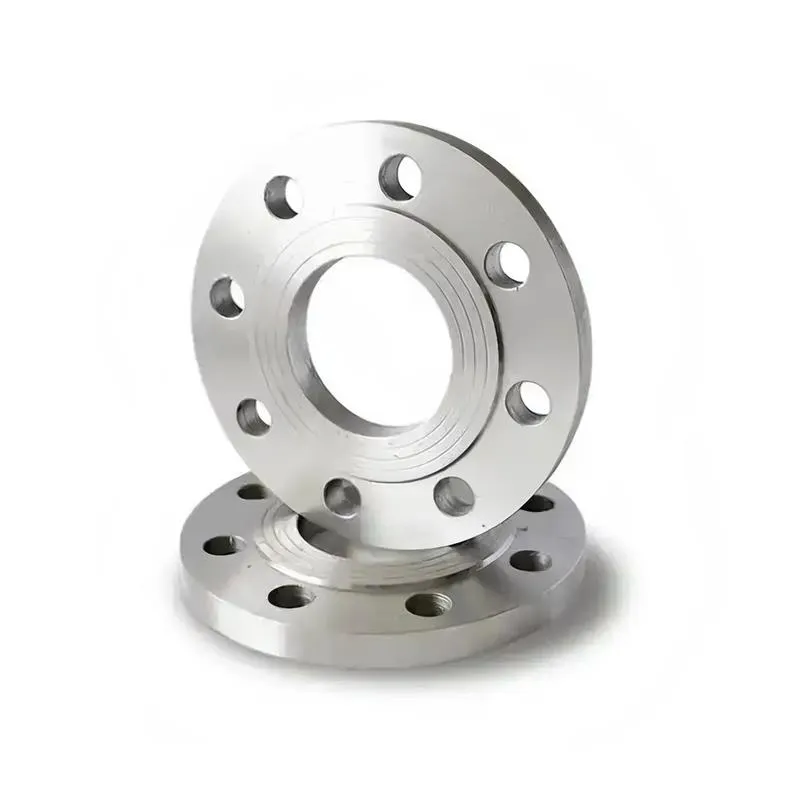
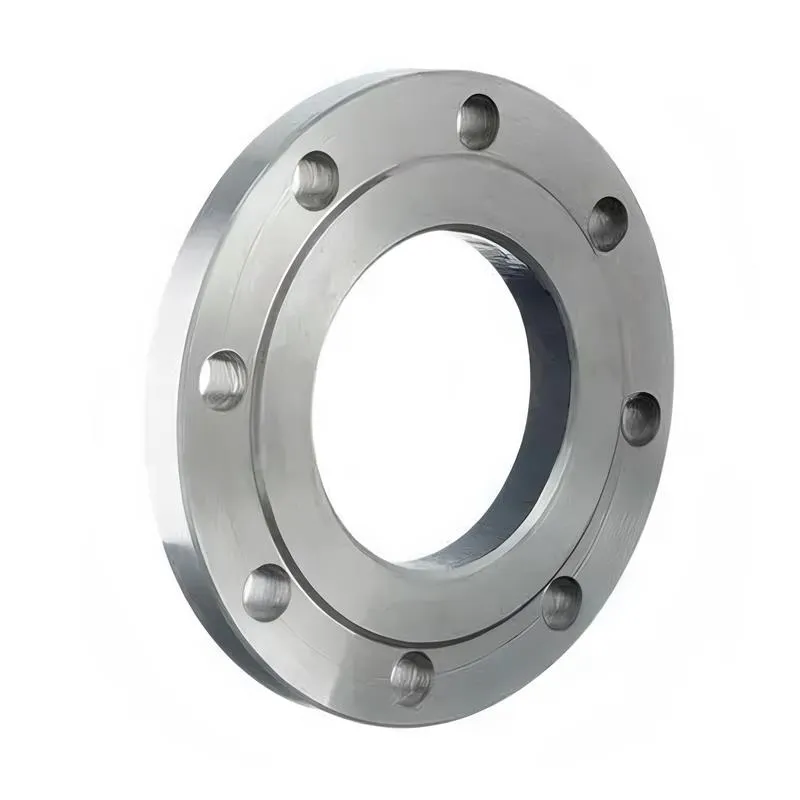
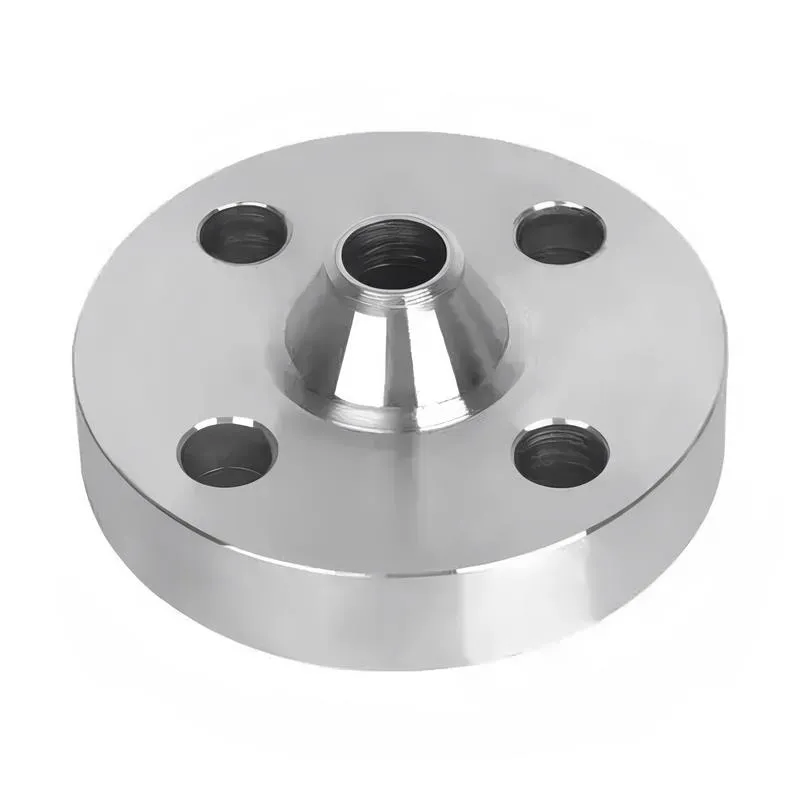
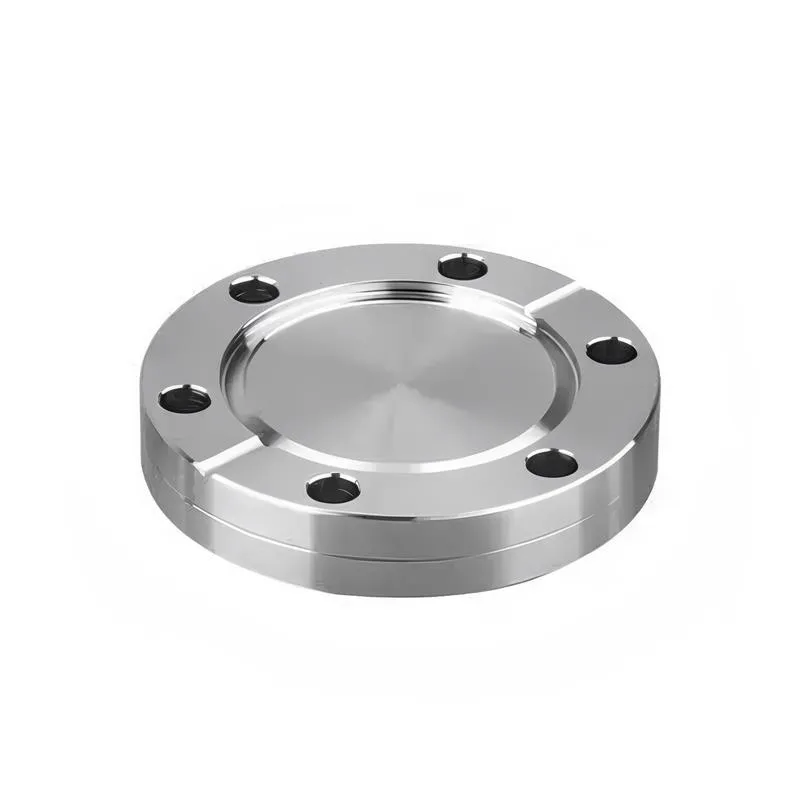
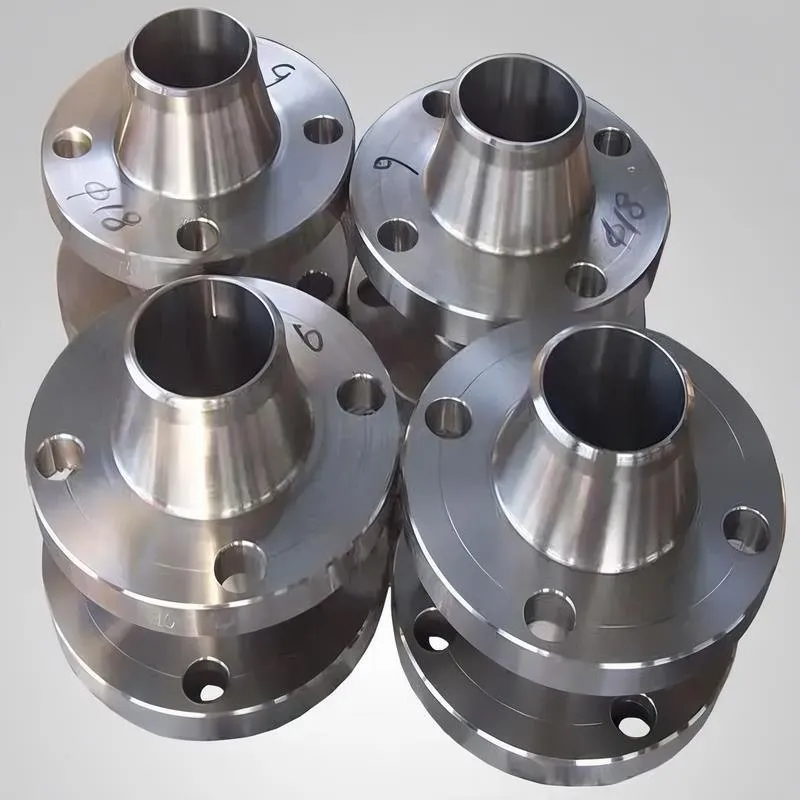
1,We Manufacturing processes are primarily classified into four types:
1:Forging,
2:Casting,
3:Cutting,
4:Rolling.
2,We can manufacture in accordance with these standards.
Standards:
GB Series (Chinese Standards), JB Series (Machinery Standards), HG Series (Chemical Industry Standards), ASME B16.5 (American Standards), BS4504 (British Standards), DIN (German Standards), and JIS (Japanese Standards).
Internationally, there are two primary systems of pipe flange standards: the European system, represented by the German DIN standards (including those of the former Soviet Union), and the American system, represented by the US ANSI pipe flange standards. Other common standards include: the Chinese Ministry of Machinery Industry standards (JB series), the Ministry of Chemical Industry standards (HG series), the Chinese National Standard *GB/T 9112–9124-2010 Steel Pipe Flanges*, as well as US standards (ASME B16.5), British standards (BS4504), German standards (DIN), Japanese standards (JIS), and marine standards (CBM), among others.
The nominal pressure ratings for the PN series are designated by "PN" and comprise the following nine levels: PN2.5, PN6, PN10, PN16, PN25, PN40, PN63, PN100, and PN160.
The nominal pressure ratings for the Class series are designated by "Class" and comprise the following six levels: Class150, Class300, Class600, Class900, Class1500, and Class2500.
Flange Classification
1. **According to Chemical Industry Standards:** Flanges are classified as follows:
Plate Flat Welding Flange (PL), Necked Flat Welding Flange (SO), Necked Butt Welding Flange (WN), Integral Flange (IF), Socket Welding Flange (SW), Threaded Flange (Th), Butt Welding Ring Loose Flange (PJ/SE), Blind Flange (BL), Flat Welding Ring Loose Flange (PJ/PJ), and Lined Blind Flange (BL(s)).
2. **According to Petrochemical (SH) Industry Standards:** Flanges are classified as follows:
Threaded Flange (PL), Butt Welding Flange (WN), Flat Welding Flange (SO), Socket Welding Flange (SW), Loose Flange (LJ), and Blind Flange (no specific designation).
3. **According to Machinery (JB) Industry Standards:** Flanges are classified as follows:
Integral Flange, Butt Welding Flange, Plate Flat Welding Flange, Butt Welding Ring Plate Loose Flange, Flat Welding Ring Plate Loose Flange, Lap Joint Ring Plate Loose Flange, and Blind Flange.
4. **According to Connection Method/Type:** Flanges are classified as follows:
Plate Flat Welding Flange, Necked Flat Welding Flange, Necked Butt Welding Flange, Socket Welding Flange, Threaded Flange, Blind Flange, Necked Butt Welding Ring Loose Flange, Flat Welding Ring Loose Flange, Ring-Type Joint (RTJ) Flange and Blind Flange, Large-Diameter Plate Flange, Large-Diameter High-Neck Flange, Figure-8 Blind Plate, Butt Welding Ring Loose Flange, etc.
5. **According to the Component Being Connected:** Flanges can be classified into Vessel Flanges and Pipe Flanges.
6. **According to Structural Type:** Flanges include Integral Flanges, Threaded Flanges, Flat Welding Flanges, Butt Welding Flanges, Lap Joint (Loose/Swivel) Flanges, and Blind Flanges.
A flange—also referred to as a flange plate or rim—is a component used to connect shafts to one another, or, more commonly, to join the ends of pipes. Flanges are also utilized at the inlet and outlet ports of equipment to facilitate connections between two devices—for instance, the flange on a speed reducer. A "flange connection" or "flanged joint" refers to a detachable joint assembly comprising three interconnected elements—a flange, a gasket, and bolts—that together form a sealed structural unit. In the context of piping systems, a "pipe flange" specifically denotes a flange used for plumbing within the installation; when applied to equipment, it refers to the inlet or outlet flange of that specific device. Flanges feature a series of holes through which bolts are inserted to securely fasten the two flanges together, while a gasket placed between the flanges ensures a leak-proof seal. Flanges are broadly categorized into three types: threaded (screw-in) flanges, welded flanges, and clamp-type flanges. Flanges are invariably used in pairs; threaded flanges are suitable for low-pressure piping applications, whereas welded flanges are required for systems operating at pressures exceeding 4 kilograms per square centimeter. A sealing gasket is inserted between the two flange plates, which are then firmly secured using bolts. The thickness of a flange—as well as the specifications of the bolts used to fasten it—vary depending on the specific pressure rating required for the application. When connecting equipment such as water pumps or valves to piping systems, the corresponding connection points on these devices are often manufactured in the shape of a matching flange; this method of attachment is also referred to as a "flange connection." Generally, any connecting component that utilizes bolts to join and seal the perimeters of two flat surfaces—such as the joints in ventilation ducts—is termed a "flange"; such components may collectively be classified as "flange-type parts." However, since such a connection often constitutes merely a *portion* of a larger device—for instance, the interface between a flange and a water pump—it would be inappropriate to classify the entire water pump itself as a "flange-type part." Conversely, smaller components—such as valves—that feature such flanged interfaces may indeed be appropriately categorized as "flange-type parts."
-:-
For detailed product information, please contact sales.
-:
High-Nickel Ductile Iron Flange, heat-resistant ductile Iron Flange, 20% Ni Product Information
-:-
For detailed product information, please contact sales.
-:
High-Nickel Ductile Iron Flange, heat-resistant ductile Iron Flange, 20% Ni Synonyms
-:-
For detailed product information, please contact sales.
-:
High-Nickel Ductile Iron, heat-resistant ductile iron, 20% Ni Product Information
-:-
For detailed product information, please contact sales.
-:
## **Product Introduction: High-Nickel (20% Ni) Heat-Resistant Ductile Iron**
High-Nickel (20% Ni) Heat-Resistant Ductile Iron is a specialized austenitic nodular iron, engineered to deliver unparalleled dimensional stability and corrosion resistance under severe thermal cycling and moderately high-temperature conditions. With a nominal nickel content of 20%, this alloy forms a stable austenitic matrix that is immune to the phase transformations that cause growth and distortion in standard ferritic ductile irons. It is designed for continuous service in the **700°C to 850°C (1290°F to 1560°F)** range, excelling in applications where resistance to thermal fatigue, oxidation, and certain corrosive atmospheres are simultaneously required.
This material fills the critical performance gap between ferritic Si-Mo ductile irons (excellent for thermal fatigue but limited to ~800°C) and higher-nickel superalloys, offering a balanced solution for complex components that must withstand both mechanical stress and aggressive thermal-chemical environments.
---
### **1. Chemical Composition (Nominal 20% Ni Grade)**
The composition is centered on achieving a fully austenitic structure with 20% nickel as the primary stabilizer, often augmented with chromium and silicon for enhanced performance.
**Typical Composition Range (e.g., D-2M / Type D-2):**
| Element | Content (%) | Primary Function in Heat Resistance |
| :--- | :--- | :--- |
| **Nickel (Ni)** | **18.0 - 22.0** | **Fundamental Austenite Stabilizer.** Creates and maintains a stable, non-magnetic austenitic matrix from room temperature to service conditions. This eliminates ferritic transformation, providing exceptional resistance to thermal growth and distortion. Imparts inherent toughness and ductility. |
| **Chromium (Cr)** | **1.75 - 2.50** | **Enhances Oxidation Resistance.** Forms a protective chromium oxide (Cr₂O₃) layer within the surface scale, significantly improving resistance to scaling, oxidation, and mild sulfidation at high temperatures. Also provides solid solution strengthening. |
| **Silicon (Si)** | **1.00 - 3.00** | **Synergistic Oxide Former.** Promotes the formation of a dense, adherent silicate-rich oxide scale. Raises the scaling temperature and improves overall oxidation and growth resistance. Typically kept moderate in 20% Ni grades to balance castability and machinability. |
| **Carbon (C)** | **2.30 - 2.90** | Ensures full nodularization. Provides graphite for thermal shock resistance and machinability. Content is controlled to avoid excessive primary carbides. |
| **Manganese (Mn)** | 0.50 - 1.50 | Supports austenite stability and acts as a deoxidizer. |
| **Magnesium (Mg)** | 0.04 - 0.08 | Essential nodularizing element for spheroidal graphite formation. |
| **Copper (Cu)** | ≤ 1.50 (Optional) | Sometimes added to further enhance corrosion resistance in specific atmospheres and provide mild strengthening. |
| **Iron (Fe)** | Balance | Base metal. |
**Microstructural Note:** The target microstructure is a **fully austenitic matrix** with a uniform, non-interconnected distribution of **well-formed spheroidal graphite (Type VI, >80% nodularity)**. The matrix should be free of ferrite, pearlite, and undesirable massive carbides.
---
### **2. Physical & Mechanical Properties at Room & Elevated Temperature**
This alloy is characterized by its stability, maintaining good strength and excellent ductility over a wide temperature range.
| Property | Typical Value / Description |
| :--- | :--- |
| **Microstructure** | Austenitic matrix with spheroidal graphite. |
| **Density** | ~7.3 - 7.4 g/cm³ |
| **Tensile Strength (Room Temp)** | **450 - 550 MPa (65 - 80 ksi)** |
| **Yield Strength (0.2% Offset, Room Temp)** | **240 - 310 MPa (35 - 45 ksi)** |
| **Elongation (Room Temp)** | **8 - 20%** – Retains significant ductility. |
| **Hardness (Room Temp)** | **140 - 200 HB** |
| **Impact Resistance (Charpy V-Notch)** | **20 - 35 J (15 - 26 ft-lbf)** at room temperature. |
| **Maximum Service Temperature** | **Up to 850°C (1560°F)** in oxidizing atmospheres. Optimal for long-term cyclic service between 700-800°C. |
| **Growth Resistance** | **Exceptional.** Exhibits minimal permanent growth (<0.05% after 1000h at 750°C) due to the invariant austenitic structure, superior to all ferritic grades. |
| **Oxidation/Scaling Resistance** | **Very Good.** The Ni-Cr-Si alloying promotes a protective, adherent oxide scale. Performance is superior to unalloyed ductile iron and comparable to many cast steels in this temperature range. |
| **Thermal Conductivity** | Moderate (~12-15 W/m·K). Lower than ferritic ductile irons. |
| **Thermal Shock Resistance** | **Excellent.** The austenitic matrix provides high ductility and fracture toughness, while the nodular graphite effectively arrests crack propagation, making it highly resistant to thermal fatigue. |
| **Creep & Rupture Strength** | Good. Adequate for many loaded applications at temperature, though lower than advanced ferritic Si-Mo grades at the very top of their range. |
| **Magnetic Properties** | **Essentially non-magnetic.** A key advantage for specific applications. |
---
### **3. Key Product Advantages & Characteristics**
* **Ultimate Dimensional Stability:** The austenitic structure provides near-zero growth under thermal cycling, critical for precision fixtures and housings.
* **Superior Thermal Fatigue Resistance:** Excellent for components subjected to severe and repeated thermal shocks.
* **Combined Heat & Corrosion Resistance:** Performs well not only in high temperatures but also in corrosive atmospheres (e.g., containing combustion condensates, mild acids, or salts), outperforming ferritic grades.
* **Good Weldability and Machinability:** Generally weldable with appropriate Ni-based filler rods and machinable with standard tools, though work-hardening tendencies require care.
* **Non-Magnetic Property:** Essential for applications in electrical systems or where magnetic interference must be avoided.
---
### **4. Product Applications**
This material is specified for high-integrity components in demanding, cyclic thermal environments where dimensional stability and corrosion are concurrent challenges.
* **Turbocharger & Exhaust Systems:** **Turbocharger housings** for large marine, locomotive, and stationary engines where exhaust gas corrosion (sulfidation) is a concern. High-performance exhaust manifolds and components.
* **Power Generation:** High-temperature valve bodies, pump casings, and turbine components in waste heat recovery and combined cycle plants.
* **Heat Treatment & Industrial Furnaces:** Fixturing, trays, jigs, and fan housings subject to repeated heating and cooling cycles.
* **Petrochemical:** Components for reformers, heaters, and transfer lines handling high-temperature process streams.
* **Marine & Offshore:** High-grade pump and valve components for high-temperature service on ships and platforms.
---
### **5. International Standards**
The 20% Ni heat-resistant ductile iron is covered under austenitic ductile iron standards, with specific types defined for their balanced properties.
| Standard | Title / Scope | Common Designations / Notes |
| :--- | :--- | :--- |
| **ASTM A439** | *Standard Specification for Austenitic Ductile Iron Castings* | **Type D-2** is the most common grade corresponding to ~20% Ni, 2% Cr chemistry. It is the primary reference standard for this material. |
| **ISO 2892** | *Austenitic cast irons* | Designations such as **JS/HR/ANi20Cr2** (Spheroidal Graphite / Heat Resistant / Austenitic with 20% Ni, 2% Cr). |
| **EN 13835** | *Founding – Austenitic cast irons* (European) | **EN-GJSA-XNiCr20-2** (Material Number). The designation explicitly indicates a spheroidal graphite (GJS) austenitic iron with ~20% Ni and 2% Cr. |
| **JIS G5513** | *Austenitic spheroidal graphite iron castings* (Japanese) | **FCD-NiCr202** (indicating Ni-Cr type with 20% Ni, 2% Cr). |
| **GB/T 27748** | *Heat resistant austenitic cast iron* (Chinese) | May include grades similar to **QTNi20Cr2** under the austenitic nodular iron category. |
**Specification Note:** For procurement, specifying **ASTM A439 Type D-2** or its equivalent in other standards is standard practice. For critical applications, supplementary requirements for **high-temperature tensile testing, oxidation resistance tests, or strict microstructural analysis (nodularity, carbide limits)** are often added to the purchase agreement.
---
### **Conclusion**
High-Nickel (20% Ni) Heat-Resistant Ductile Iron is a premium engineering alloy that masterfully balances **austenitic stability, thermal fatigue resistance, and environmental durability**. Its **20% nickel-based austenitic matrix** delivers **unrivaled growth resistance and dimensional stability**, making it the ideal choice for precision components that undergo thousands of severe thermal cycles. While it may not offer the peak high-temperature strength of specialized ferritic Si-Mo grades, its **broader resistance to combined thermal and corrosive attack** positions it as the superior and often essential material for advanced turbo-machinery, exhaust systems, and high-temperature process equipment where long-term reliability under complex stressors is non-negotiable.
-:-
For detailed product information, please contact sales.
-:
High-Nickel Ductile Iron, heat-resistant ductile iron, 20% Ni Specification
Dimensions
Size:
Diameter 20-1000 mm Length <6487 mm
Size:We can customized as required
Standard:
Per your request or drawing
We can customized as required
Properties(Theoretical)
Chemical Composition
-:-
For detailed product information, please contact sales.
-:
High-Nickel Ductile Iron, heat-resistant ductile iron, 20% Ni Properties
-:-
For detailed product information, please contact sales.
-:
Applications of High-Nickel Ductile Iron Flange, heat-resistant ductile Iron Flange, 20% Ni
-:-
For detailed product information, please contact sales.
-:
Chemical Identifiers High-Nickel Ductile Iron Flange, heat-resistant ductile Iron Flange, 20% Ni
-:-
For detailed product information, please contact sales.
-:
Packing of High-Nickel Ductile Iron Flange, heat-resistant ductile Iron Flange, 20% Ni
-:-
For detailed product information, please contact sales.
-:
Standard Packing:
-:-
For detailed product information, please contact sales.
-:
Typical bulk packaging includes palletized plastic 5 gallon/25 kg. pails, fiber and Steel Flange drums to 1 ton super sacks in full container (FCL) or truck load (T/L) quantities. Research and sample quantities and hygroscopic, oxidizing or other air sensitive materials may be packaged under argon or vacuum. Solutions are packaged in polypropylene, plastic or glass jars up to palletized 2958 gallon liquid totes Special package is available on request. E FORUs’ is carefully handled to minimize damage during storage and transportation and to preserve the quality of our products in their original condition