1,We Manufacturing processes are primarily classified into four types:
1:Forging,
2:Casting,
3:Cutting,
4:Rolling.
2,We can manufacture in accordance with these standards.
Standards:
GB Series (Chinese Standards), JB Series (Machinery Standards), HG Series (Chemical Industry Standards), ASME B16.5 (American Standards), BS4504 (British Standards), DIN (German Standards), and JIS (Japanese Standards).
Internationally, there are two primary systems of pipe flange standards: the European system, represented by the German DIN standards (including those of the former Soviet Union), and the American system, represented by the US ANSI pipe flange standards. Other common standards include: the Chinese Ministry of Machinery Industry standards (JB series), the Ministry of Chemical Industry standards (HG series), the Chinese National Standard *GB/T 9112–9124-2010 Steel Pipe Flanges*, as well as US standards (ASME B16.5), British standards (BS4504), German standards (DIN), Japanese standards (JIS), and marine standards (CBM), among others.
The nominal pressure ratings for the PN series are designated by "PN" and comprise the following nine levels: PN2.5, PN6, PN10, PN16, PN25, PN40, PN63, PN100, and PN160.
The nominal pressure ratings for the Class series are designated by "Class" and comprise the following six levels: Class150, Class300, Class600, Class900, Class1500, and Class2500.
Flange Classification
1. **According to Chemical Industry Standards:** Flanges are classified as follows:
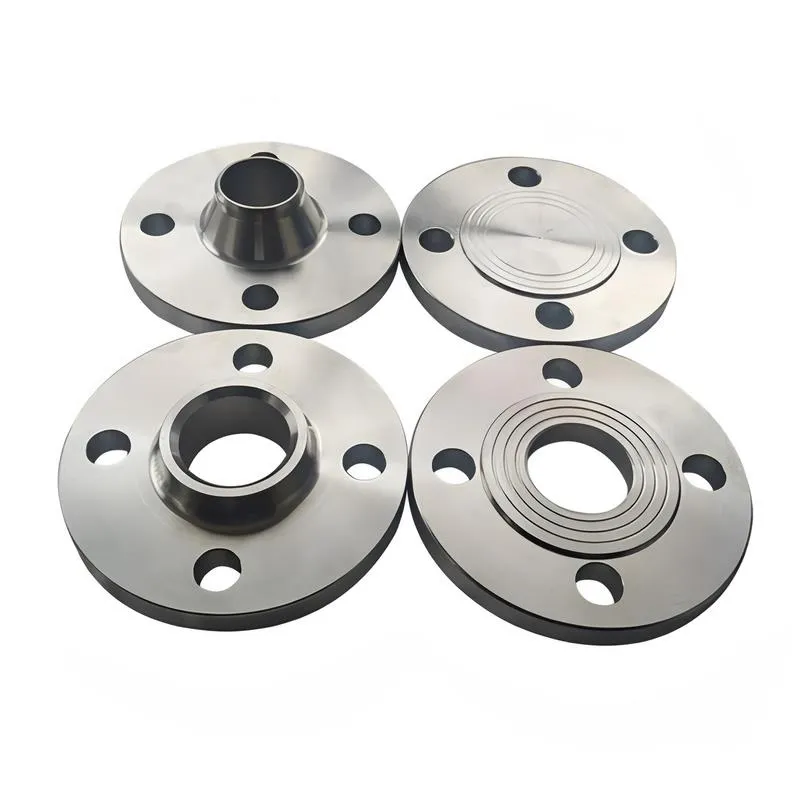
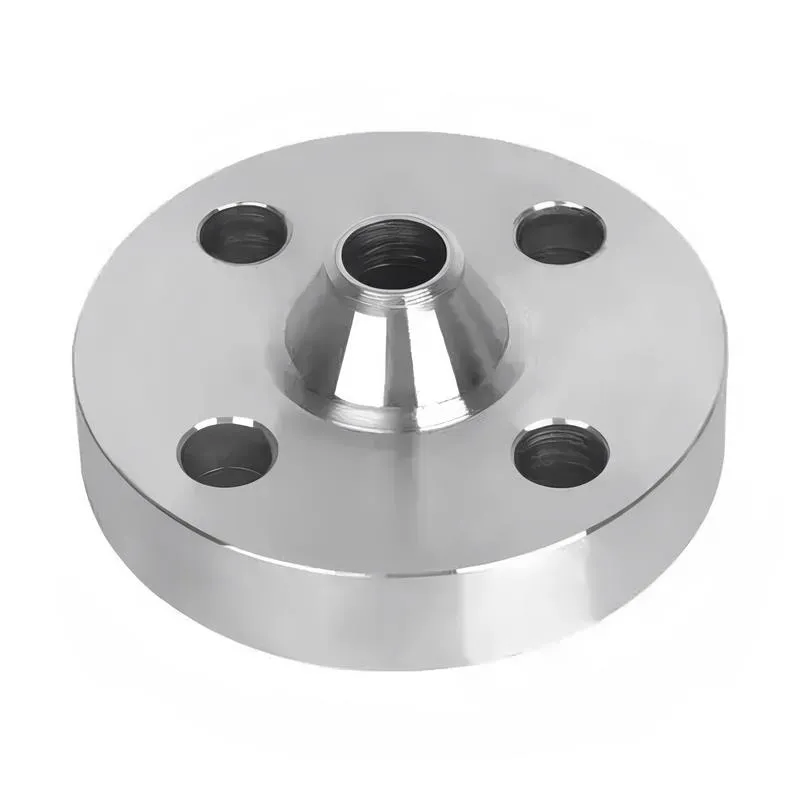
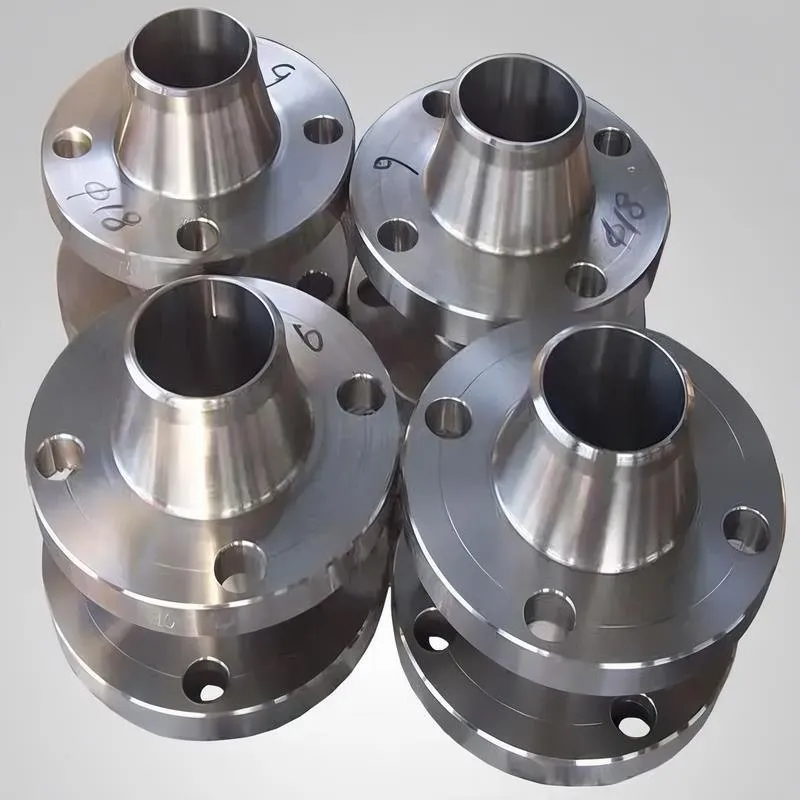
Plate Flat Welding Flange (PL), Necked Flat Welding Flange (SO), Necked Butt Welding Flange (WN), Integral Flange (IF), Socket Welding Flange (SW), Threaded Flange (Th), Butt Welding Ring Loose Flange (PJ/SE), Blind Flange (BL), Flat Welding Ring Loose Flange (PJ/PJ), and Lined Blind Flange (BL(s)).
2. **According to Petrochemical (SH) Industry Standards:** Flanges are classified as follows:
Threaded Flange (PL), Butt Welding Flange (WN), Flat Welding Flange (SO), Socket Welding Flange (SW), Loose Flange (LJ), and Blind Flange (no specific designation).
3. **According to Machinery (JB) Industry Standards:** Flanges are classified as follows:
Integral Flange, Butt Welding Flange, Plate Flat Welding Flange, Butt Welding Ring Plate Loose Flange, Flat Welding Ring Plate Loose Flange, Lap Joint Ring Plate Loose Flange, and Blind Flange.
4. **According to Connection Method/Type:** Flanges are classified as follows:
Plate Flat Welding Flange, Necked Flat Welding Flange, Necked Butt Welding Flange, Socket Welding Flange, Threaded Flange, Blind Flange, Necked Butt Welding Ring Loose Flange, Flat Welding Ring Loose Flange, Ring-Type Joint (RTJ) Flange and Blind Flange, Large-Diameter Plate Flange, Large-Diameter High-Neck Flange, Figure-8 Blind Plate, Butt Welding Ring Loose Flange, etc.
5. **According to the Component Being Connected:** Flanges can be classified into Vessel Flanges and Pipe Flanges.
6. **According to Structural Type:** Flanges include Integral Flanges, Threaded Flanges, Flat Welding Flanges, Butt Welding Flanges, Lap Joint (Loose/Swivel) Flanges, and Blind Flanges.
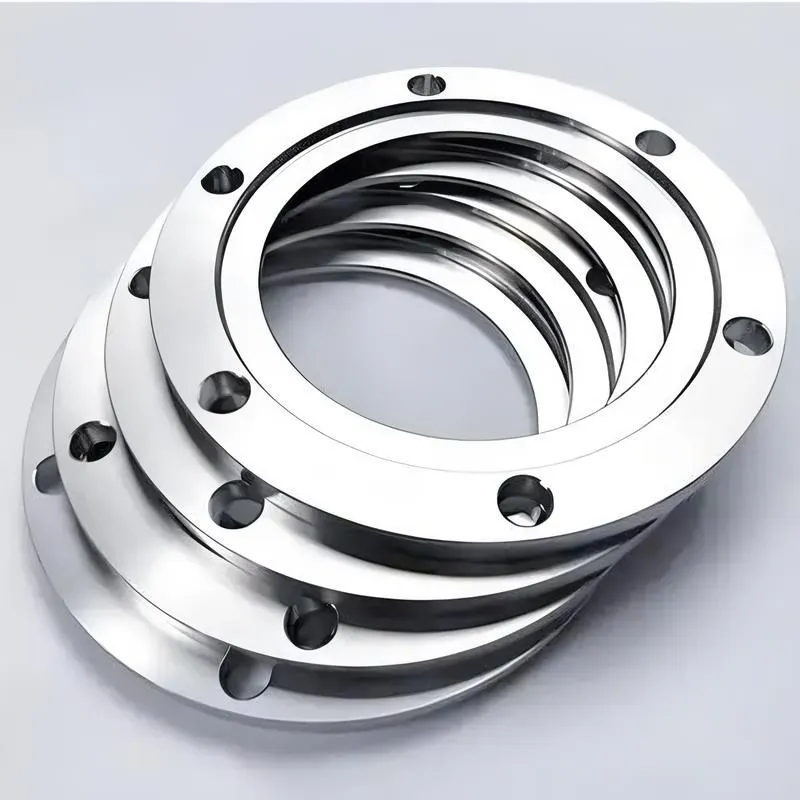
A flange—also referred to as a flange plate or rim—is a component used to connect shafts to one another, or, more commonly, to join the ends of pipes. Flanges are also utilized at the inlet and outlet ports of equipment to facilitate connections between two devices—for instance, the flange on a speed reducer. A "flange connection" or "flanged joint" refers to a detachable joint assembly comprising three interconnected elements—a flange, a gasket, and bolts—that together form a sealed structural unit. In the context of piping systems, a "pipe flange" specifically denotes a flange used for plumbing within the installation; when applied to equipment, it refers to the inlet or outlet flange of that specific device. Flanges feature a series of holes through which bolts are inserted to securely fasten the two flanges together, while a gasket placed between the flanges ensures a leak-proof seal. Flanges are broadly categorized into three types: threaded (screw-in) flanges, welded flanges, and clamp-type flanges. Flanges are invariably used in pairs; threaded flanges are suitable for low-pressure piping applications, whereas welded flanges are required for systems operating at pressures exceeding 4 kilograms per square centimeter. A sealing gasket is inserted between the two flange plates, which are then firmly secured using bolts. The thickness of a flange—as well as the specifications of the bolts used to fasten it—vary depending on the specific pressure rating required for the application. When connecting equipment such as water pumps or valves to piping systems, the corresponding connection points on these devices are often manufactured in the shape of a matching flange; this method of attachment is also referred to as a "flange connection." Generally, any connecting component that utilizes bolts to join and seal the perimeters of two flat surfaces—such as the joints in ventilation ducts—is termed a "flange"; such components may collectively be classified as "flange-type parts." However, since such a connection often constitutes merely a *portion* of a larger device—for instance, the interface between a flange and a water pump—it would be inappropriate to classify the entire water pump itself as a "flange-type part." Conversely, smaller components—such as valves—that feature such flanged interfaces may indeed be appropriately categorized as "flange-type parts."
-:-
For detailed product information, please contact sales.
-:
Ductile Iron Flange grade 60-40-18, low temperature service Product Information
-:-
For detailed product information, please contact sales.
-:
Ductile Iron Flange grade 60-40-18, low temperature service Synonyms
-:-
For detailed product information, please contact sales.
-:
Ductile Iron grade 60-40-18, low temperature service Product Information
-:-
For detailed product information, please contact sales.
-:
### **Product Technical Data Sheet: Ductile Iron (Nodular Iron) Grade 60-40-18, Low-Temperature Service (LTS) Grade**
---
#### **1. Product Overview**
Ductile Iron Grade 60-40-18 for Low-Temperature Service (LTS) is a specially engineered ferritic grade designed to maintain excellent ductility and, most critically, high-impact toughness at sub-zero temperatures. While standard 60-40-18 offers good room-temperature properties, the LTS variant undergoes stringent control of chemistry and heat treatment to **suppress the ductile-to-brittle transition temperature (DBTT)**, ensuring reliable performance in environments as cold as **-40°C (-40°F) or below**. It is the material of choice for critical infrastructure and components exposed to arctic climates, cryogenic service, or seasonal freezing, where sudden brittle fracture must be absolutely prevented.
#### **2. Governing International Standards**
This specialized grade is defined by enhanced requirements within established standards.
* **Primary Designation: ASTM A536** - *Standard Specification for Ductile Iron Castings*. The base grade is **60-40-18**, with supplemental low-temperature impact testing requirements (e.g., SAE J434 G40018F).
* **Key Specialized Standards:**
* **ASTM A874/A874M** - *Standard Specification for Ferritic Ductile Iron Castings Suitable for Low-Temperature Service*. This is the most direct specification, often covering grades like 60-40-18 and 65-45-12 with guaranteed impact properties at -40°F/C.
* **ISO 1083/EN 1563:** Designated with supplementary codes. For example, **EN-GJS-400-18-LT** signifies a low-temperature grade. Specific impact energy values at defined temperatures (e.g., -20°C, -40°C, -50°C) are contractually specified.
* **EN 10293** - *Steel castings for general engineering uses* may also reference low-temperature ductile iron.
* **Key Testing Standards:**
* **Tensile Test:** ASTM E8 / ISO 6892-1.
* **Impact Test (Critical):** ASTM E23 (Charpy V-Notch) at specified low temperature (e.g., -40°C/-40°F). ISO 148-1.
* **Microstructure:** ASTM A247 / ISO 945.
#### **3. Critical Chemical Composition (Ferritic Annealed)**
The chemistry is optimized for low-temperature toughness, with strict limits on elements that raise the DBTT.
| Element | Target Range (%) | Rationale for Low-Temperature Service |
| :--- | :--- | :--- |
| **Carbon (C)** | 3.5 - 3.8 | Standard for castability and graphitization. |
| **Silicon (Si)** | **1.8 - 2.3 (Max)** | **Crucially lowered.** High Si embrittles the ferrite matrix at low temperatures. This is the single most important compositional control for LTS grades. |
| **Manganese (Mn)** | **≤ 0.20 (Max)** | **Stringently limited.** Mn segregates to cell boundaries, promoting brittle carbides/phosphides that drastically reduce low-T impact strength. |
| **Phosphorus (P)** | **≤ 0.03 (Max)** | **Extremely low.** Phosphorus severely embrittles grain boundaries; its control is non-negotiable for LTS. |
| **Magnesium (Mg)** | 0.03 - 0.05 | Standard for nodulization. |
| **Nickel (Ni)** | 0.5 - 2.0 | **Often added.** An austenite stabilizer that significantly improves low-temperature toughness without harming machinability. Common in grades for -50°C and below. |
| **Copper (Cu)** | ≤ 0.10 | Minimized as it offers less toughening benefit than Ni and can promote pearlite. |
| **Trace Elements (Sn, Sb, As, etc.)** | **Tightly restricted** | Elements that promote pearlite or segregate to boundaries are minimized via use of high-purity charge materials. |
#### **4. Physical & Mechanical Properties (Low-Temperature Focus)**
Properties meet or exceed standard 60-40-18, with guaranteed impact toughness.
| Property | Minimum / Typical Value (at Room Temp) | **Low-Temperature Specific Requirement** |
| :--- | :--- | :--- |
| **Tensile Strength, min.** | 415 MPa (60 ksi) | Maintained. |
| **Yield Strength, min.** | 275 MPa (40 ksi) | Maintained or slightly elevated. |
| **Elongation, min.** | 18% | Maintained, indicative of a fully ferritic matrix. |
| **Hardness (Brinell)** | 143 - 187 HBW | Typical. |
| **Modulus of Elasticity** | 165 - 172 GPa | Maintained. |
| **Charpy V-Notch Impact Energy (Key Property)** | ~18-25 J @ 23°C | **Typically specified as a minimum at low T:**
• **≥ 12-15 J @ -40°C (-40°F)** is a common specification.
• For more severe service (e.g., -50°C): **≥ 7-10 J** with Ni alloying. |
| **Ductile-to-Brittle Transition Temperature** | **Typically < -60°C** for optimized grades. | A qualitative measure of the material's inherent low-T capability. |
| **Microstructure** | **>95% Ferrite**, **High Nodularity (>90%),** **Small Nodule Count**.
**Free of massive carbides & excessive pearlite.** | Fine, fully ferritic matrix is essential for consistent low-T performance. |
#### **5. Product Applications**
This grade is specified where failure due to low-temperature embrittlement is not an option.
* **Energy & Pipeline:** **Valve bodies, pump casings, and fittings for LNG (Liquefied Natural Gas) facilities, cryogenic pipelines, and arctic oil & gas installations.** Direct exposure to cryogenic fluids.
* **Infrastructure:** **Ductile Iron Pipe (DIP) for water mains in permafrost regions** (e.g., Alaska, Northern Canada, Siberia). Must withstand ground heave and pressure surges in freezing conditions.
* **Transportation:** **Critical components for railway and heavy vehicles operating in polar climates,** such as brake system parts, couplers, and suspension components.
* **Marine & Offshore:** **Equipment for ice-going vessels, offshore platforms in cold seas.**
* **Industrial:** **Compressor housings, process equipment for chemical plants** handling cooled gases.
#### **6. Special Manufacturing & Quality Notes**
* **Heat Treatment:** A **full ferritizing anneal** is mandatory to eliminate all pearlite and carbides, which are detrimental to low-T toughness.
* **Charge Material Purity:** Requires high-purity pig iron and steel scrap to control residual trace elements.
* **Quality Assurance:** Beyond standard tests, **impact testing at the specified service temperature** is required for certification. Lot testing is standard.
* **Weldability:** Similar to standard ferritic DI but requires even greater care. Use of matching or high-nickel electrodes with strict thermal controls is essential to preserve the heat-affected zone (HAZ) toughness.
#### **7. Ordering Information**
Specify: **"Ductile Iron, ASTM A874 Grade 60-40-18, for Low-Temperature Service"**.
**Mandatory details to include:**
* **Minimum Service Temperature:** (e.g., -40°C / -40°F).
* **Minimum Charpy V-Notch Impact Energy Requirement** at that temperature.
* **Applicable Standard & Grade** (e.g., EN-GJS-400-18-LT, with impact at -50°C ≥ 12 J).
* **Certification Requirement:** Mill Test Report must include tensile properties, chemical analysis (showing low Si, Mn, P), **and full Charpy impact test results at the specified low temperature.**
This LTS grade represents the pinnacle of reliability for ductile iron in harsh environments, where its performance is the result of meticulous metallurgical control from charge make-up to final heat treatment.
-:-
For detailed product information, please contact sales.
-:
Ductile Iron grade 60-40-18, low temperature service Specification
Dimensions
Size:
Diameter 20-1000 mm Length <6519 mm
Size:We can customized as required
Standard:
Per your request or drawing
We can customized as required
Properties(Theoretical)
Chemical Composition
-:-
For detailed product information, please contact sales.
-:
Ductile Iron grade 60-40-18, low temperature service Properties
-:-
For detailed product information, please contact sales.
-:
Applications of Ductile Iron Flange grade 60-40-18, low temperature service
-:-
For detailed product information, please contact sales.
-:
Chemical Identifiers Ductile Iron Flange grade 60-40-18, low temperature service
-:-
For detailed product information, please contact sales.
-:
Packing of Ductile Iron Flange grade 60-40-18, low temperature service
-:-
For detailed product information, please contact sales.
-:
Standard Packing:
-:-
For detailed product information, please contact sales.
-:
Typical bulk packaging includes palletized plastic 5 gallon/25 kg. pails, fiber and Steel Flange drums to 1 ton super sacks in full container (FCL) or truck load (T/L) quantities. Research and sample quantities and hygroscopic, oxidizing or other air sensitive materials may be packaged under argon or vacuum. Solutions are packaged in polypropylene, plastic or glass jars up to palletized 2990 gallon liquid totes Special package is available on request. E FORUs’ is carefully handled to minimize damage during storage and transportation and to preserve the quality of our products in their original condition