1,We Manufacturing processes are primarily classified into four types:
1:Forging,
2:Casting,
3:Cutting,
4:Rolling.
2,We can manufacture in accordance with these standards.
Standards:
GB Series (Chinese Standards), JB Series (Machinery Standards), HG Series (Chemical Industry Standards), ASME B16.5 (American Standards), BS4504 (British Standards), DIN (German Standards), and JIS (Japanese Standards).
Internationally, there are two primary systems of pipe flange standards: the European system, represented by the German DIN standards (including those of the former Soviet Union), and the American system, represented by the US ANSI pipe flange standards. Other common standards include: the Chinese Ministry of Machinery Industry standards (JB series), the Ministry of Chemical Industry standards (HG series), the Chinese National Standard *GB/T 9112–9124-2010 Steel Pipe Flanges*, as well as US standards (ASME B16.5), British standards (BS4504), German standards (DIN), Japanese standards (JIS), and marine standards (CBM), among others.
The nominal pressure ratings for the PN series are designated by "PN" and comprise the following nine levels: PN2.5, PN6, PN10, PN16, PN25, PN40, PN63, PN100, and PN160.
The nominal pressure ratings for the Class series are designated by "Class" and comprise the following six levels: Class150, Class300, Class600, Class900, Class1500, and Class2500.
Flange Classification
1. **According to Chemical Industry Standards:** Flanges are classified as follows:
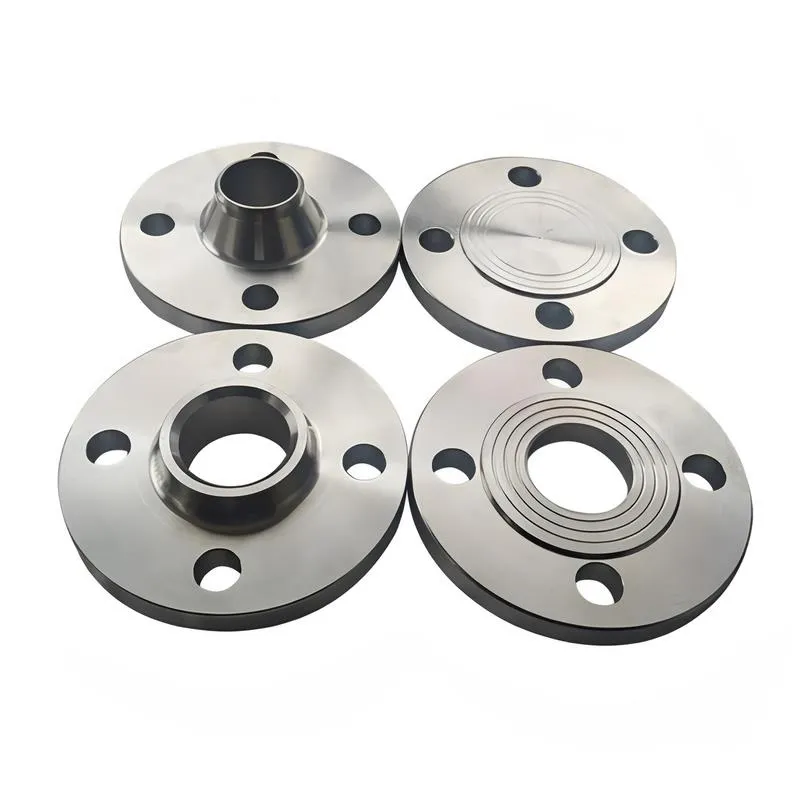
Plate Flat Welding Flange (PL), Necked Flat Welding Flange (SO), Necked Butt Welding Flange (WN), Integral Flange (IF), Socket Welding Flange (SW), Threaded Flange (Th), Butt Welding Ring Loose Flange (PJ/SE), Blind Flange (BL), Flat Welding Ring Loose Flange (PJ/PJ), and Lined Blind Flange (BL(s)).
2. **According to Petrochemical (SH) Industry Standards:** Flanges are classified as follows:
Threaded Flange (PL), Butt Welding Flange (WN), Flat Welding Flange (SO), Socket Welding Flange (SW), Loose Flange (LJ), and Blind Flange (no specific designation).
3. **According to Machinery (JB) Industry Standards:** Flanges are classified as follows:
Integral Flange, Butt Welding Flange, Plate Flat Welding Flange, Butt Welding Ring Plate Loose Flange, Flat Welding Ring Plate Loose Flange, Lap Joint Ring Plate Loose Flange, and Blind Flange.
4. **According to Connection Method/Type:** Flanges are classified as follows:
Plate Flat Welding Flange, Necked Flat Welding Flange, Necked Butt Welding Flange, Socket Welding Flange, Threaded Flange, Blind Flange, Necked Butt Welding Ring Loose Flange, Flat Welding Ring Loose Flange, Ring-Type Joint (RTJ) Flange and Blind Flange, Large-Diameter Plate Flange, Large-Diameter High-Neck Flange, Figure-8 Blind Plate, Butt Welding Ring Loose Flange, etc.
5. **According to the Component Being Connected:** Flanges can be classified into Vessel Flanges and Pipe Flanges.
6. **According to Structural Type:** Flanges include Integral Flanges, Threaded Flanges, Flat Welding Flanges, Butt Welding Flanges, Lap Joint (Loose/Swivel) Flanges, and Blind Flanges.
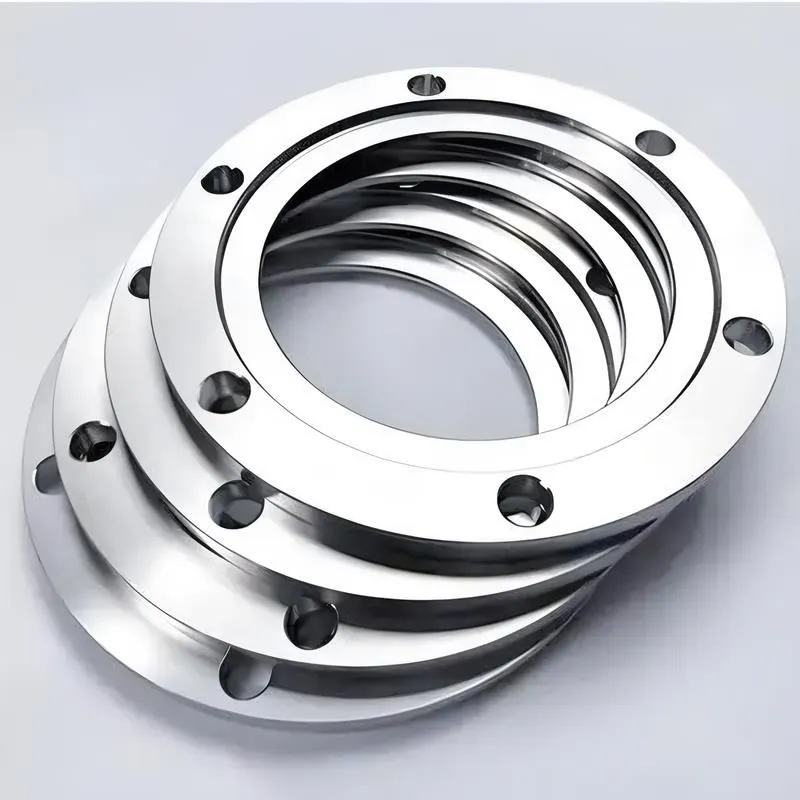
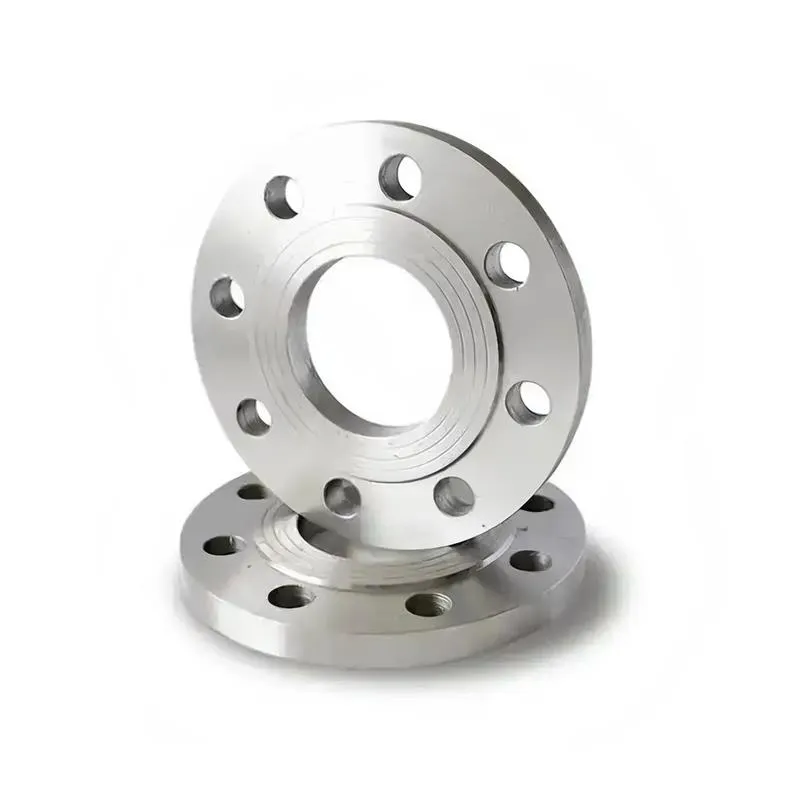
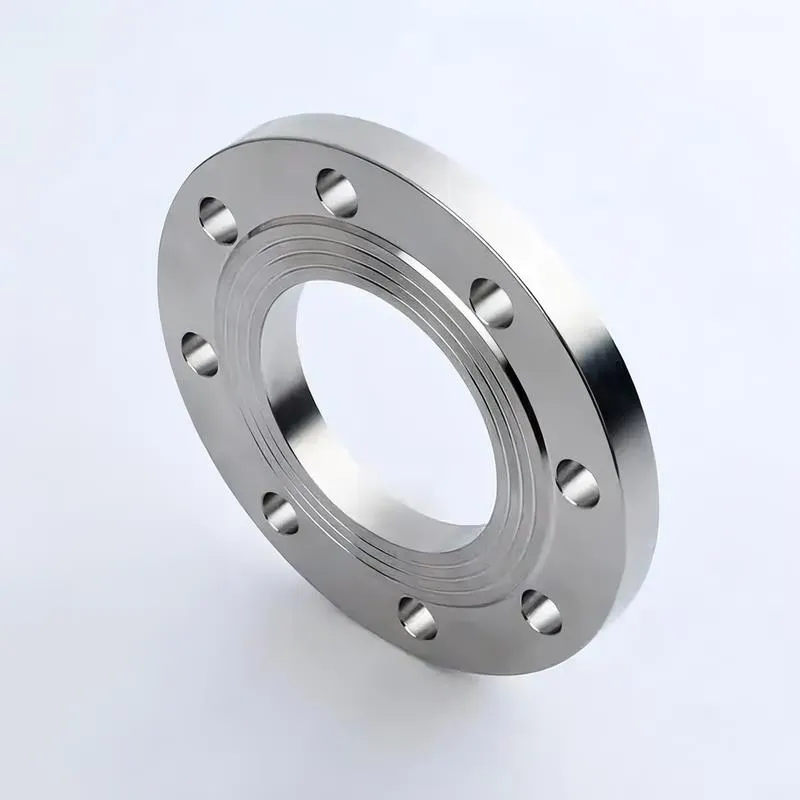
A flange—also referred to as a flange plate or rim—is a component used to connect shafts to one another, or, more commonly, to join the ends of pipes. Flanges are also utilized at the inlet and outlet ports of equipment to facilitate connections between two devices—for instance, the flange on a speed reducer. A "flange connection" or "flanged joint" refers to a detachable joint assembly comprising three interconnected elements—a flange, a gasket, and bolts—that together form a sealed structural unit. In the context of piping systems, a "pipe flange" specifically denotes a flange used for plumbing within the installation; when applied to equipment, it refers to the inlet or outlet flange of that specific device. Flanges feature a series of holes through which bolts are inserted to securely fasten the two flanges together, while a gasket placed between the flanges ensures a leak-proof seal. Flanges are broadly categorized into three types: threaded (screw-in) flanges, welded flanges, and clamp-type flanges. Flanges are invariably used in pairs; threaded flanges are suitable for low-pressure piping applications, whereas welded flanges are required for systems operating at pressures exceeding 4 kilograms per square centimeter. A sealing gasket is inserted between the two flange plates, which are then firmly secured using bolts. The thickness of a flange—as well as the specifications of the bolts used to fasten it—vary depending on the specific pressure rating required for the application. When connecting equipment such as water pumps or valves to piping systems, the corresponding connection points on these devices are often manufactured in the shape of a matching flange; this method of attachment is also referred to as a "flange connection." Generally, any connecting component that utilizes bolts to join and seal the perimeters of two flat surfaces—such as the joints in ventilation ducts—is termed a "flange"; such components may collectively be classified as "flange-type parts." However, since such a connection often constitutes merely a *portion* of a larger device—for instance, the interface between a flange and a water pump—it would be inappropriate to classify the entire water pump itself as a "flange-type part." Conversely, smaller components—such as valves—that feature such flanged interfaces may indeed be appropriately categorized as "flange-type parts."
-:-
For detailed product information, please contact sales.
-:
Meehanite HR Heat Resisting Cast Iron Flange Product Information
-:-
For detailed product information, please contact sales.
-:
Meehanite HR Heat Resisting Cast Iron Flange Synonyms
-:-
For detailed product information, please contact sales.
-:
Meehanite HR Heat Resisting Cast Iron Product Information
-:-
For detailed product information, please contact sales.
-:
### **Meehanite HR Series: Standard Heat-Resisting Cast Iron**
**Product Overview**
Meehanite HR is a widely used and cost-effective grade of flake graphite (grey) cast iron specifically formulated for service in elevated temperature environments. The "HR" designation stands for **Heat Resisting**. Its primary advantage lies in its excellent resistance to **oxidation (scaling)** and **growth** at high temperatures, coupled with good thermal conductivity, machinability, and damping capacity. Unlike high-strength grades, Meehanite HR prioritizes long-term structural stability under thermal cycling over high tensile strength, making it the material of choice for many furnace and heat containment applications.
The controlled Meehanite process ensures a consistent, uniformly distributed Type A flake graphite structure in a fully ferritic matrix, which is essential for predictable and reliable heat resistance.
---
#### **1. Chemical Composition**
The composition is optimized to promote a stable ferritic matrix and a protective, self-healing oxide scale. Key elements are carefully balanced to prevent pearlite formation and minimize growth.
* **Carbon (C):** 3.0 - 3.5%
* **Silicon (Si):** 1.8 - 2.5% (Crucial for promoting ferrite and enhancing oxidation resistance).
* **Manganese (Mn):** 0.5 - 0.8% (Moderate levels to ensure sound casting, but controlled to avoid pearlite stabilization).
* **Phosphorus (P):** < 0.15% (Typically kept low-medium; can enhance fluidity but may slightly reduce toughness).
* **Sulfur (S):** < 0.12% (Standard for grey iron).
* **Alloying Additions:** Generally, **HR is a non-alloyed or low-alloyed iron**. It relies on its balanced C+Si ratio and ferritic structure for heat resistance. For higher temperature ranges, small additions of **Chromium (Cr: 0.2-0.5%)** may be used to further improve scaling resistance without significantly affecting machinability.
**Microstructure:** A fully **ferritic matrix** with a uniform distribution of **medium-size, Type A flake graphite**. The absence of pearlite (iron carbide) is critical, as pearlite breaks down into iron and graphite at high temperatures, causing growth and distortion.
---
#### **2. Physical & Mechanical Properties (Typical at Room Temperature)**
* **Tensile Strength:** 180 - 250 MPa (Lower than ductile iron, but sufficient for many static applications).
* **Compressive Strength:** High (Excellent for load-bearing in fixtures).
* **Elongation:** Negligible (<1%) – it is a brittle material.
* **Hardness:** 160 - 220 HB
* **Thermal Conductivity:** **Excellent.** Superior to most alloy steels and even ductile irons, allowing for efficient heat distribution and reduced thermal stresses.
* **Damping Capacity:** **Exceptional.** Highly effective at absorbing vibrational energy, beneficial for reducing noise and fatigue in vibrating components.
* **Machinability:** **Excellent.**
* **Key Heat-Resisting Properties:**
* **Growth Resistance:** Outstanding resistance to permanent swelling due to graphitization and internal oxidation.
* **Oxidation Resistance:** Forms a tight, adherent silicon-rich oxide layer (SiO₂) that protects the base metal.
* **Thermal Fatigue Resistance:** Good resistance to cracking from repeated heating and cooling, due to its good conductivity and stable structure.
* **Service Temperature Range:** Suitable for **continuous service up to 450°C (842°F)**. For intermittent or lower-stress applications, it can be used up to **550°C (1022°F)**.
---
#### **3. Product Applications**
Meehanite HR is the standard workhorse for a vast range of industrial heating applications where load-bearing strength is secondary to thermal stability.
* **Furnace & Oven Components:** Door frames, hearth plates, base plates, burner quarls, furnace lids, muffle liners.
* **Heat Treatment:** Baskets, trays, fixtures, grids, and jigs for annealing, carburizing, and tempering processes.
* **Glass Manufacturing:** Moulds for glassware, press dies, troughs, and annealing lehr parts.
* **Power Generation:** Ash pans, soot blower parts, stoker parts, boiler baffles.
* **Chemical & Petrochemical:** Parts for reformer furnaces, supports for catalyst tubes.
* **General Engineering:** Brake drums (for thermal capacity and damping), flywheels, and any component requiring good heat soak and wear resistance without high tensile loads.
---
#### **4. International & Relevant Standards**
Meehanite HR aligns closely with several international standards for unalloyed and low-alloy flake graphite heat-resisting cast irons.
* **ISO 185:2019** - *Grey cast irons — Classification*. Provides general grades (e.g., Class 200, 250) but does not specify heat resistance.
* **EN 1561:2011** - *Founding — Grey cast irons*. The primary European standard.
* **ASTM A48/A48M-22** - *Standard Specification for Gray Iron Castings*. Specifies classes based on tensile strength (e.g., Class 25, 30).
* **JIS G5501:2022** - *Grey iron castings*.
**Specific Heat-Resisting Grey Iron Standards:**
* **EN 13835:2012** - *Founding — Austenitic cast irons*. (For reference; HR is ferritic, but this is a key heat-resisting iron standard).
* **ASTM A319/A319M-22** - *Standard Specification for Gray Iron Castings for Elevated Temperatures for Non-Pressure Containing Parts*. **This is the most directly relevant ASTM standard for HR-type irons.** It classifies irons (e.g., Class I, II) based on their high-temperature properties and recommended service conditions.
* **BS 1452:1990 (Historical/Withdrawn)** - The former British Standard for flake graphite iron grades, often referenced historically (e.g., Grade 220/260 with ferritic structure).
**Note:** While "Meehanite HR" is a proprietary brand designation, it is typically supplied to meet the material requirements of **ASTM A319 Class I** or equivalent, or to a specific customer specification calling for a ferritic grey iron with guaranteed oxidation and growth resistance.
-:-
For detailed product information, please contact sales.
-:
Meehanite HR Heat Resisting Cast Iron Specification
Dimensions
Size:
Diameter 20-1000 mm Length <6633 mm
Size:We can customized as required
Standard:
Per your request or drawing
We can customized as required
Properties(Theoretical)
Chemical Composition
-:-
For detailed product information, please contact sales.
-:
Meehanite HR Heat Resisting Cast Iron Properties
-:-
For detailed product information, please contact sales.
-:
Applications of Meehanite HR Heat Resisting Cast Iron Flange
-:-
For detailed product information, please contact sales.
-:
Chemical Identifiers Meehanite HR Heat Resisting Cast Iron Flange
-:-
For detailed product information, please contact sales.
-:
Packing of Meehanite HR Heat Resisting Cast Iron Flange
-:-
For detailed product information, please contact sales.
-:
Standard Packing:
-:-
For detailed product information, please contact sales.
-:
Typical bulk packaging includes palletized plastic 5 gallon/25 kg. pails, fiber and Steel Flange drums to 1 ton super sacks in full container (FCL) or truck load (T/L) quantities. Research and sample quantities and hygroscopic, oxidizing or other air sensitive materials may be packaged under argon or vacuum. Solutions are packaged in polypropylene, plastic or glass jars up to palletized 3104 gallon liquid totes Special package is available on request. E FORUs’ is carefully handled to minimize damage during storage and transportation and to preserve the quality of our products in their original condition