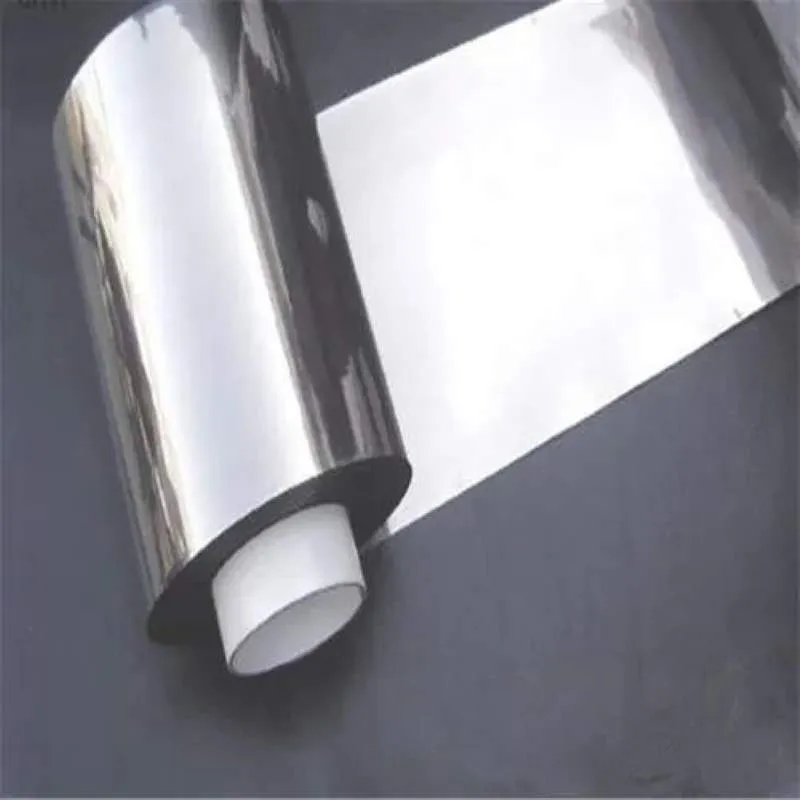
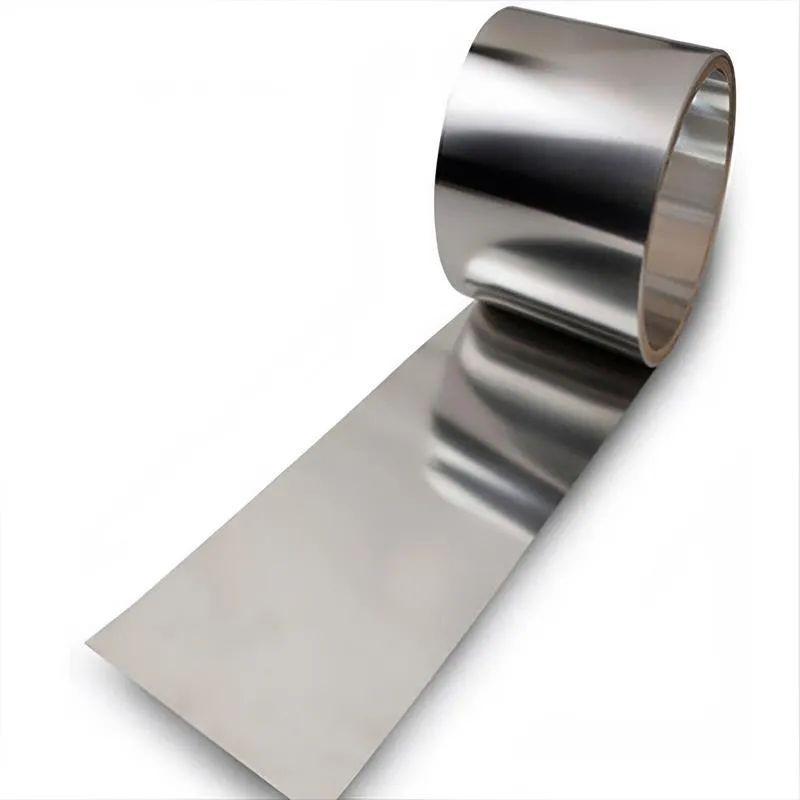
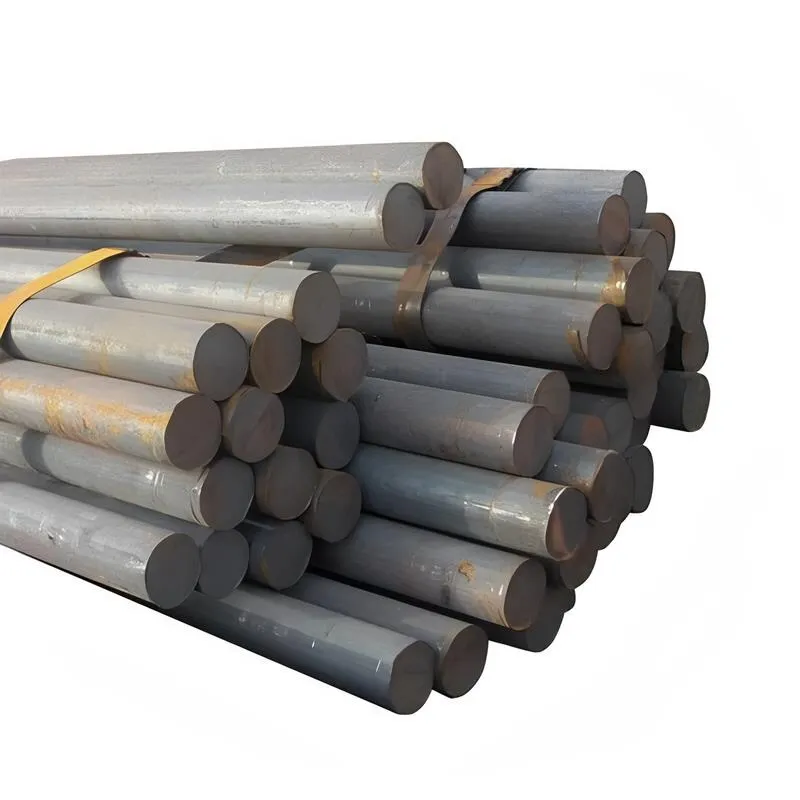
AISI 4147H Steel Foil/Strip
Product Code : STI-CSTI-1487-CU
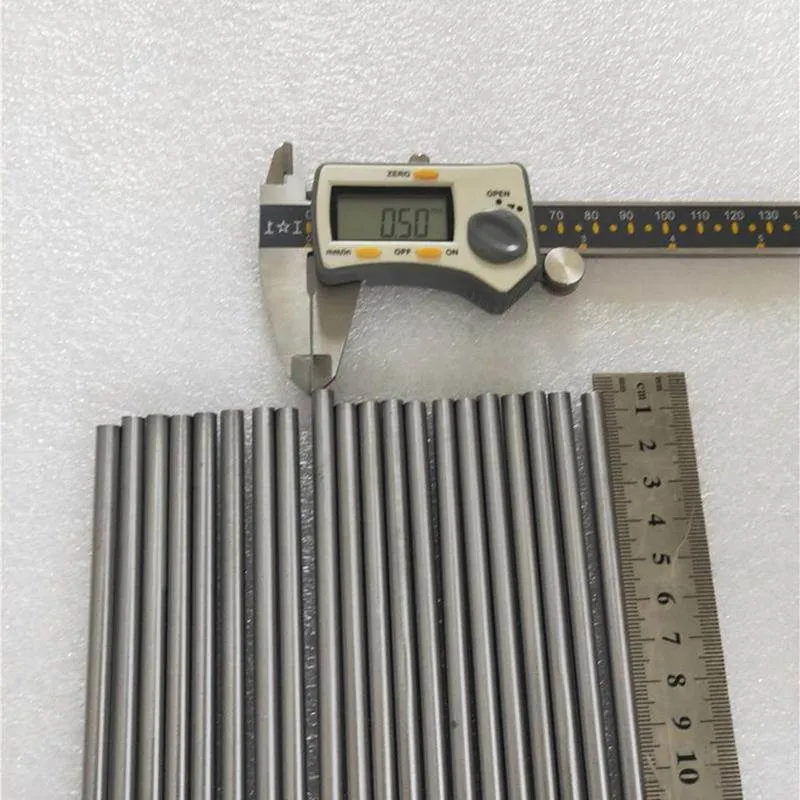
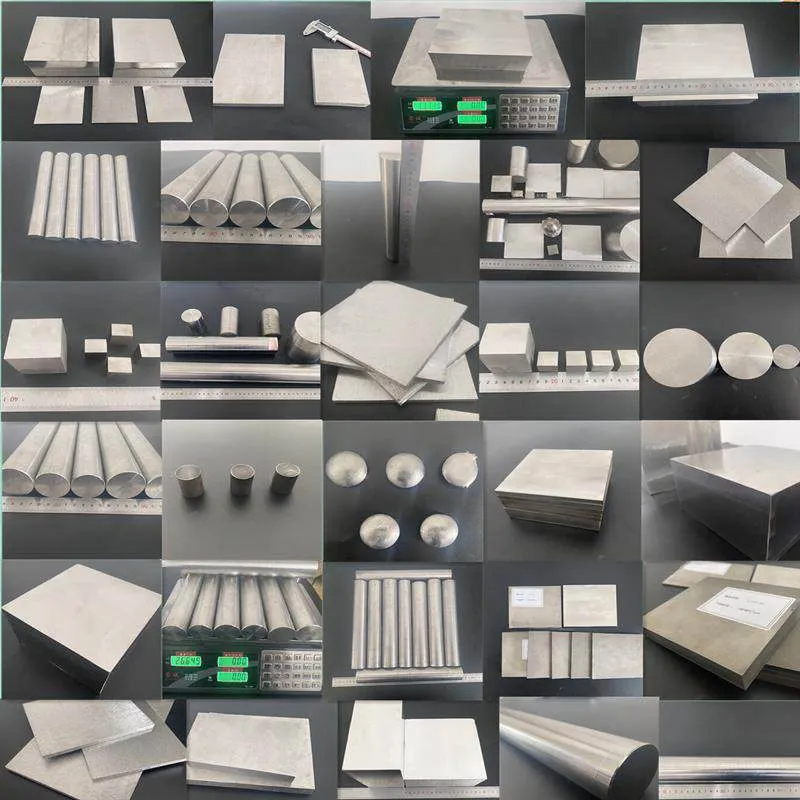
We provide AISI 4147H Steel Foil/Strip is available in Bar (Round bar, Flat bar), Ribbon, Wire, Rods, Tube,Seamless Tube,Pipe, Ingots, Plate, Sheet, Strip and Forging Stock.,Purity, chemical composition, size, etc. can all be customized to meet specific requirements.
Please contact us if you need customized services. We will contact you with the price and availability in 24 hours.
AISI 4147H Steel Foil Product Information
-:-
For detailed product information, please contact sales.
-:
AISI 4147H Steel Foil Synonyms
-:-
For detailed product information, please contact sales.
-:
AISI 4147H Steel Product Information
-:-
For detailed product information, please contact sales.
-:
# **AISI 4147H Steel (Ultra-High Carbon Hardenability Grade) Product Specification**
## **1. PRODUCT DEFINITION & TECHNICAL SIGNIFICANCE**
**Product:** AISI 4147H Alloy Steel
**Classification:** Ultra-High Carbon Chromium-Molybdenum (Cr-Mo) Steel with Guaranteed Hardenability
**Technical Philosophy:** AISI 4147H represents the **apex of the standard 41xx-H series**, combining the highest specified carbon content (0.45-0.50%C) with mandatory hardenability band certification per **SAE J1268** and **ASTM A304**. The "H" designation ensures predictable through-hardening characteristics in massive cross-sections, making it uniquely qualified for the most demanding applications where consistent core properties in ultra-large components are non-negotiable. This material bridges the gap between standard through-hardening alloy steels and more expensive tool steels for certain heavy-section applications.
## **2. CHEMICAL COMPOSITION WITH PRECISION CONTROL**
The composition is engineered to achieve both the highest strength potential of the 41xx family and strict hardenability consistency.
| Element | Composition Range (% by weight) | Hardenability Control Rationale |
| :--- | :--- | :--- |
| **Carbon (C)** | **0.45 - 0.50** | **Maximum strength determinant.** Provides the highest as-quenched hardness in the 41xx series. Content is critically balanced within this narrow band to maintain consistent Jominy curve position while maximizing carbide formation. |
| **Manganese (Mn)** | 0.80 - 1.10 | **Primary hardenability adjustment element.** Range is expanded versus standard 4147 to provide precise control over the hardenability band. Higher Mn also aids in maintaining ductility during forming. |
| **Phosphorus (P)** | ≤ 0.025 | **Exceptionally tight control.** Significantly lower than standard 4147 (≤0.035) to maximize impact toughness at this high strength level and ensure consistency across production lots. |
| **Sulfur (S)** | ≤ 0.025 | **Tightly restricted.** Lower limit minimizes sulfide inclusions that could act as crack initiation sites under extreme loads, particularly important for transverse properties. |
| **Silicon (Si)** | 0.15 - 0.35 | Provides consistent deoxidation and solid solution strengthening. |
| **Chromium (Cr)** | 0.80 - 1.10 | **Major carbide former and hardenability driver.** Forms (Cr,Fe)₇C₃ and M₂₃C₆ carbides that provide exceptional wear resistance. Balance with Mo is meticulously controlled. |
| **Molybdenum (Mo)** | 0.15 - 0.25 | **Critical for microstructural control.** Prevents temper embrittlement completely in the critical 375-575°C range, allowing higher tempering temperatures for toughness without property degradation. |
**Hardenability Control Mechanism:** Producers utilize sophisticated ladle metallurgy to adjust the Mn/Cr balance while maintaining C at the high end of the range, ensuring each heat produces an identical Jominy hardenability curve within the SAE-specified band.
## **3. GUARANTEED HARDENABILITY BAND (SAE J1268)**
The certified hardenability band is the core value proposition, enabling reliable design of ultra-large components.
**Standard Hardenability Band for 4147H:**
| Jominy Distance (1/16 in.) | Hardness Range, HRC (Min - Max) | Metallurgical Significance |
| :--- | :--- | :--- |
| **J1.5** | **59 - 64** | Near-maximum achievable hardness for low-alloy steel |
| **J5** | **54 - 61** | Exceptional hardenability for ~50mm (2") depth |
| **J10** | **46 - 55** | Maintains high hardness at significant depth |
| **J15** | **40 - 50** | Predictable core hardness in very large sections |
| **J20** | **36 - 46** | Critical for components >150mm diameter |
| **J30** | **31 - 41** | Through-hardening capability in massive sections |
| **J40** | **28 - 38** | Unmatched depth capability in 41xx series |
**Design Implication:** This certification allows engineers to design components up to **200mm (8") diameter** with predictable core hardness after oil quenching. The guaranteed band width (typically 5-7 HRC points) represents the maximum property variation between production heats.
## **4. PHYSICAL & MECHANICAL PROPERTIES (Heat Treated Condition)**
* **Physical Properties:**
* **Density:** 7.85 g/cm³
* **Melting Point:** ~1395°C (2545°F)
* **Modulus of Elasticity:** 205-210 GPa (increased due to high dislocation density)
* **Thermal Conductivity:** 39.5 W/m·K @ 100°C
* **Coefficient of Thermal Expansion:** 11.1 µm/m·°C (20-100°C)
* **Specific Heat Capacity:** 460 J/kg·K
* **Mechanical Properties (After Oil Quench + Temper at 525°C/975°F):**
* **Ultimate Tensile Strength:** 1400 - 1650 MPa (203,000 - 239,000 psi)
* **Yield Strength (0.2% Offset):** 1250 - 1500 MPa (181,000 - 218,000 psi)
* **Elongation in 50mm:** 9% - 13%
* **Reduction of Area:** 30% - 40%
* **Hardness:** 40 - 47 HRC (380 - 455 HB)
* **Charpy V-Notch Impact (21°C):** 12 - 22 J (9 - 16 ft-lb)
* **Fracture Toughness (K₁C):** 35 - 50 MPa√m
* **Contact Fatigue Strength:** Exceptionally high due to fine carbide dispersion
## **5. CRITICAL APPLICATIONS**
4147H is reserved for applications where component size, load magnitude, and reliability requirements are extreme.
* **Mega-Mining Equipment:**
* **Gyratory crusher main shafts** and **eccentric assemblies**
* **Ball mill trunnions** > 2m diameter
* **Walking dragline boom foot pins** and **tub connectors**
* **Heavy Power Generation:**
* **Low-pressure turbine shafts** for steam turbines
* **Hydroelectric turbine shafts** and **generator spindles**
* **Wind turbine main shafts** (5+ MW class)
* **Marine & Offshore:**
* **Propulsion shafting** for large vessels (>50,000 DWT)
* **Offshore crane slew rings** and **boom foot pins**
* **Jack-up leg rack and pinion components**
* **Metal Production:**
* **Backup rolls** for plate and hot strip mills
* **Forging press columns** and **rams**
* **Extrusion press stems** and **containers**
* **Specialty Defense:**
* **Naval gun mount components**
* **Armored vehicle suspension torsion bars**
* **Large missile launch system components**
## **6. INTERNATIONAL STANDARDS & EQUIVALENT GRADES**
| Standard / Country | Designation | Status / Critical Note |
| :--- | :--- | :--- |
| **AISI / SAE (USA)** | **4147H** | Governed by SAE J1268. The definitive standard. |
| **ASTM (USA)** | **A304 (Grade 4147H)** | Mandatory hardenability requirements. |
| **UNS** | **H41470** | Unified Numbering System. |
| **DIN / EN (Germany/EU)** | **50CrMo4 (1.7228)** | **Note:** 50CrMo4 (0.47-0.55%C) is the true equivalent, not 42CrMo4. The "+H" version may be specified as 1.7228+H. |
| **JIS (Japan)** | **SCM445H** | Closest Japanese H-grade (SCM445: 0.42-0.48%C). |
| **GB (China)** | **50CrMoH / 45CrMoH** | **50CrMoH** (0.47-0.55%C) is the preferred match. |
| **ISO** | **ISO 683-18: Type 50CrMo4** | Can be supplied to hardenability requirements. |
## **7. HEAT TREATMENT PROTOCOL FOR LARGE SECTIONS**
**For Sections >150mm (6") Diameter:**
1. **Pre-forging Heat:** 1150-1200°C, slow cool after forging
2. **Normalize:** 900-920°C, air cool (may be double normalized)
3. **Rough Machine:** Leave 3-5mm per side for finish
4. **Stress Relieve:** 650°C for 2 hrs/inch, slow cool
5. **Austenitize:** 835-845°C, soak 1.5-2 hrs/inch
6. **Quench:** High-velocity oil (90-110°C) with intense agitation
7. **Temper (Immediate):** 500-580°C for 4-6 hrs/inch
8. **Double Temper:** Reheat to 20°C below first temper temperature
9. **Final Machine/Grid:** Minimal stock removal
**Critical Heat Treatment Notes:**
- **Quench Delay:** Must be <30 seconds from furnace to quench tank
- **Tempering Start:** Must begin within 60 minutes of reaching 65°C
- **Cooling Rate:** After tempering, slow cool in furnace to <300°C
- **Stress Equalizing:** Optional treatment at 300-350°C after final machining
## **8. QUALITY ASSURANCE & CERTIFICATION**
**Mandatory for Each Heat:**
1. Full Jominy Hardenability Curve (12-15 points minimum)
2. Ladle and Check Chemical Analysis (including trace elements)
3. Macro-etch Test (ASTM A381) for soundness
4. Grain Size Report (ASTM E112, typically 7-9)
5. Microcleanliness per ASTM E45 (A, B, C, D inclusions)
**Additional Requirements for Critical Applications:**
- Ultrasonic Testing per ASTM A388 (full coverage)
- Magnetic Particle Inspection per ASTM E709
- Mechanical Tests from actual component prolongations
- Charpy impact curves from -40°C to +100°C
- Fracture toughness testing (CTOD or K₁C)
## **9. DESIGN & SPECIFICATION CONSIDERATIONS**
**When to Specify 4147H:**
- Component diameter >125mm (5") requiring >40 HRC core hardness
- Applications where component replacement cost exceeds $500,000
- Designs where failure would cause catastrophic system damage
- Components subject to gigacycle fatigue loading (>10⁸ cycles)
- Applications requiring certified material traceability for 20+ years
**Performance Advantages:**
1. **Predictability:** Eliminates the "heat treat lottery" for massive components
2. **Consistency:** <5% property variation between production lots
3. **Reliability:** Proven performance in the most extreme applications
4. **Technical Support:** Full metallurgical documentation and support
**Critical Limitations:**
- **Weldability:** Effectively zero in heat-treated condition
- **Machinability:** Very difficult; requires specialized tooling and processes
- **Notch Sensitivity:** Extremely high; all transitions require R>6mm
- **Cost:** Typically 2-3× standard 4140 due to tight controls and testing
## **10. INDUSTRY ACCEPTANCE & CASE HISTORY**
**Proven Applications:**
- **Mining:** Primary gyratory crusher shafts with 30+ year service life
- **Energy:** Turbine shafts supporting 800+ MW generation capacity
- **Marine:** Propulsion shafts for icebreakers operating in Arctic conditions
**Failure Rate:** Documented field failure rate <0.01% in qualified applications
**Service Temperature:** Recommended for -20°C to +300°C continuous service
## **11. CONCLUSION**
**AISI 4147H steel** represents the **ultimate expression of predictable performance** in ultra-high-strength, large-section engineering components. It transcends being merely a material specification to become a **reliability engineering system**, combining the highest carbon content in the 41xx series with guaranteed hardenability certification. This material is specified not for incremental improvements, but for applications where standard materials introduce unacceptable risk. The extensive testing, certification, and process controls inherent in 4147H provide engineers with a level of certainty unmatched by any other through-hardening alloy steel. When the consequences of failure are measured in millions of dollars, months of downtime, or potential safety catastrophes, 4147H is not merely an option—it is the engineering imperative for massive, critically loaded components.
-:-
For detailed product information, please contact sales.
-:
AISI 4147H Steel Specification
Dimensions
Size:
Diameter 20-1000 mm Length <6219 mm
Size:We can customized as required
Standard:
Per your request or drawing
We can customized as required
Properties(Theoretical)
Chemical Composition
-:-
For detailed product information, please contact sales.
-:
AISI 4147H Steel Properties
-:-
For detailed product information, please contact sales.
-:
Applications of AISI 4147H Steel Foil
-:-
For detailed product information, please contact sales.
-:
Chemical Identifiers AISI 4147H Steel Foil
-:-
For detailed product information, please contact sales.
-:
Packing of AISI 4147H Steel Foil/Strip
-:-
For detailed product information, please contact sales.
-:
Standard Packing:
-:-
For detailed product information, please contact sales.
-:
Typical bulk packaging includes palletized plastic 5 gallon/25 kg. pails, fiber and Steel Foil/Strip drums to 1 ton super sacks in full container (FCL) or truck load (T/L) quantities. Research and sample quantities and hygroscopic, oxidizing or other air sensitive materials may be packaged under argon or vacuum. Solutions are packaged in polypropylene, plastic or glass jars up to palletized 2690 gallon liquid totes Special package is available on request. E FORUs’ is carefully handled to minimize damage during storage and transportation and to preserve the quality of our products in their original condition